


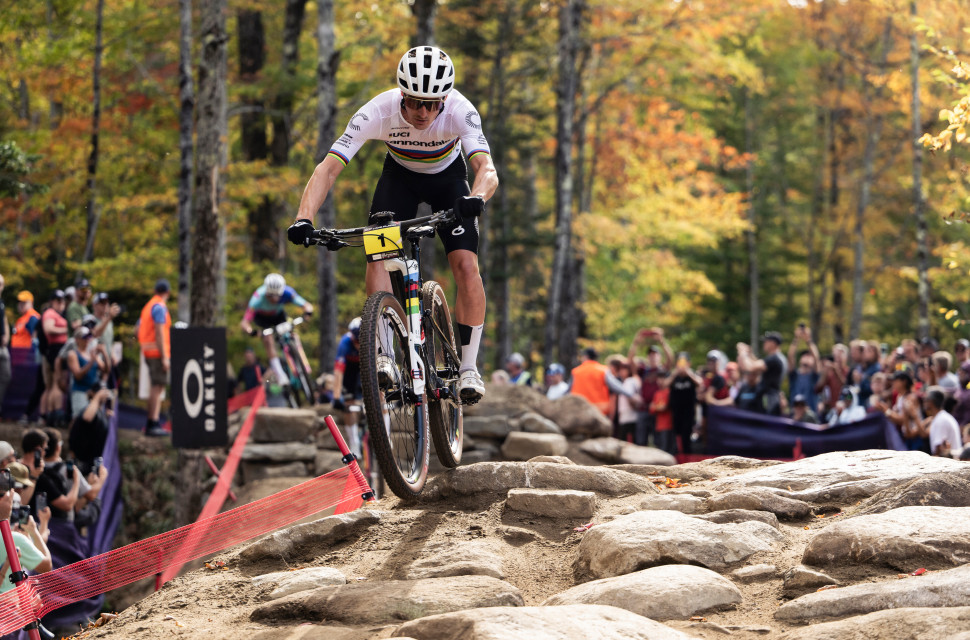

Cannondale is leaving top-level cross-country racing, news that few mountain bike race fans, riders, and rival teams ever wanted or expected to hear. Late last week, the brand announced that 2026 would be its last year of sponsoring and fielding a top-level MTB factory racing team, something it has done since the early 1990s.
This news came hot on the heels of the young French ace Luca Martin’s XCO World Cup victory in Lenzerheide, with which he also snared the overall Whoop UCI World Series lead.
Cannondale’s current CFR team is a compact five-rider cross-country-focused setup comprising Luca Martin, Britain’s Charlie Aldridge, Swiss star Jolanda Neff, Portugal’s Ana Santos and Canadian Cole Punchard, who will all likely be looking for a new sponsor next year.
Cannondale simultaneously announced that from January 2027, it would move into a larger and broader ‘team’ approach with Cannondale Rogues. This will be based around racers across various disciplines (levels not announced), influencers, and community leaders. The approach will not come as a great surprise to many, but it also raises many questions going forward for sponsorship models in the sport in general.
In recent years, CFR has been on a one-legged fork and big-tubed flyer, with Martin and Aldridge making a huge mark on the biggest result boards recently, and in 2024 the team scored three World Championship wins: Alan Hatherly’s XCO win and the double XCM marathon titles of Simon Andreassen and Mona Mitterwallner, so you could say that the team is bowing out on a high.
A tiny bit about Cannondale’s big tube journey
Cannondale was founded way back in 1971, with Joe Montgomery (who passed away early this year) being the prominent figurehead, with his son Scott later taking that role on. They started out making touring bags amongst other things, and produced their first full bike in 1983, which was a big-tubed aluminium road bike, a concept that was to revolutionise how bikes and materials were to evolve in the future.
From producing their first full suspension MTBs in the early 90s to coming out with, then, seemingly wacky concepts like their Lefty fork, HeadShok suspension, and the iconic Super V bikes, they were always at the forefront of innovation.
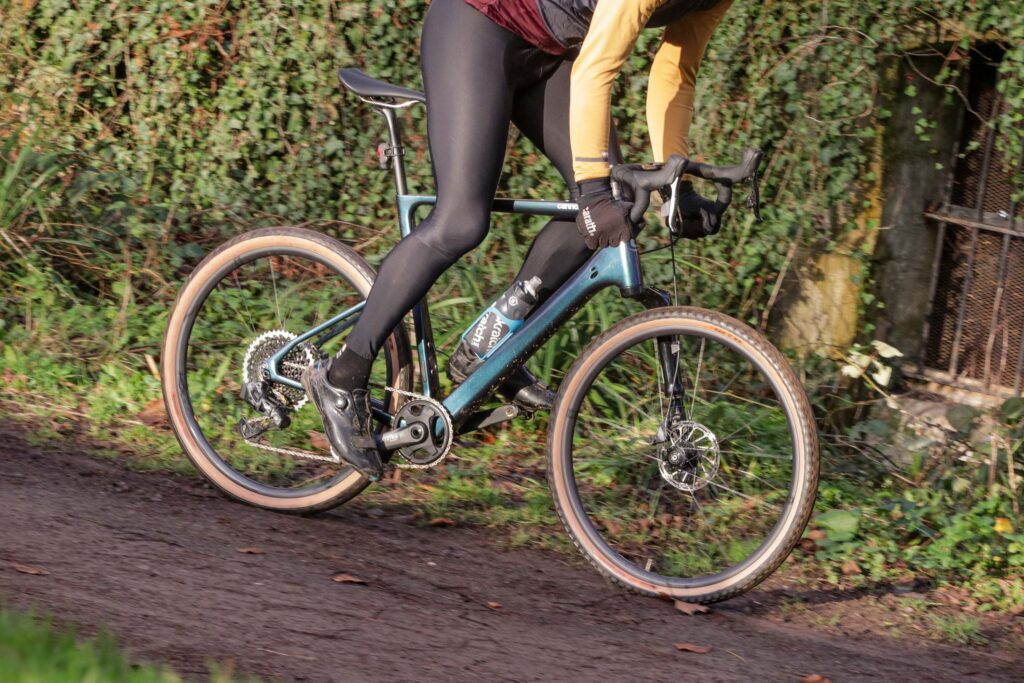
Following a venture into motorcycle manufacturing, Cannondale found itself in financial strife, which led to it being sold at auction in 2003. As with many major bike brands, Cannondale went through a few capital/holdings ownerships, and since 2022, it has been in the hands of Pon Bike/Pon Holdings, a Dutch conglomerate that owns several major bike brands, including Santa Cruz, Cervelo, Focus, and GT.
Volvo-Cannondale, the ultimate glory days
Back in 1994, Volvo-Cannondale arrived on the scene, a true super team, which was set to have a huge impact on the sport over its eight-year span. Although non-cycling brands were already involved in sponsorship, bringing Volvo in as lead sponsor, along with its tasty budget, was a huge coup for the sport.
The team is often considered to be the most successful and greatest MTB race team of all time, although some could take niggly issue with the fine detail there; either way, the team was truly iconic during that era, and broad in reach too.
During its reign, the team’s roster included MTB World Cup Champ and Tour de France winner Cadel Evans, World Champions Missy Giove, Myles Rockwell, Anne-Caroline Chausson, Alison Sydor, Christoph Sauser, as well as Cedric Gracia, Franc Roman, and trials ace Libor Karas. Also on this illustrious roster was the legendary Tinker Juarez, who is still racing mountain bikes and was still Cannondale sponsored until a couple of years back.
There was also a Volvo-Cannondale UK squad run by Clive Goling, and its roster included Tracy Moseley and trials stars Martin Ashton and Martin Hawyes.
As for results, the bling haul included 11 World Championships, 89 World Cup wins, 17 overall titles, 16 National titles, and two Olympic medals. Unfortunately, Volvo shifted sponsorship to other sports in 2002, with Volvo Ocean Race being the most prominent, though Cannondale continued top-level sponsorship with the likes of SoBe Cannondale.
We asked three former team riders about their time with Volvo-Cannondale; this is what they had to say.
Christoph Sauser
Three-time World Champion Christoph Sauser of Switzerland landed a role on the team in the late 1990s, and of all the teams he raced for, this is the era he would most like to re-visit, if he had a time machine that is, as he recounted a while back: “I would like to experience Volvo-Cannondale again. It was a big team, and with Specialized, everything is still so present, and I’m still in contact with all of the people and most of the staff on the team – and that just speaks for the team. But it would be cool to be on the Volvo-Cannondale team again, because we’ve pretty much lost each other, and it would be very interesting to go in a time machine and do a week with the team.
The team was incredibly organised; it was a big team, and everything was very strict. Every rider could bring their own wishes, but that would not work, and when going in there, we were the posh team on the scene. I was so young and wondering “should I already go to the biggest team in the world?”, as I couldn’t then improve team-wise – but it was a good decision”.
Cadel Evans
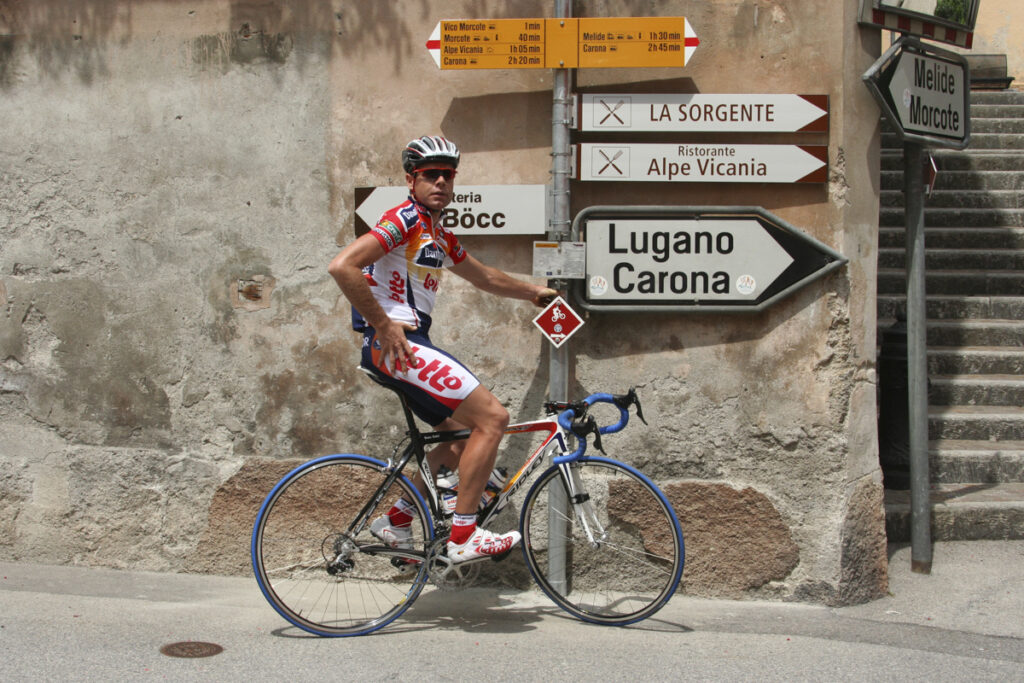
The 2011 Tour de France winner Cadel Evans started out mountain bike racing, and was a double overall World Cup winner in the late 90s while riding for the team, following on from a stint with Diamondback. It was the Cannondale link that led him to the road, as he reminisced to me a while ago: “I moved to the Volvo-Cannondale team who, through Cannondale, had connections with the Saeco road team. Previously, I had been racing road with the Australian U23 team in Italy, a small but well-organised project established by the National Coach Shayne Bannan. I had the experience of racing in Italy with the generation of Ivan Basso, Danilo Di Luca, Rinaldo Nocentini, etc, so the racing was not such a big deal”.
Tracy Moseley
Meanwhile, back in Blighty, a young Malvern-based racer named Tracy Moseley garnered attention from the UK Volvo-Cannondale team, as she told me, “I think I was so lucky to be approached by Clive Gosling and Cannondale UK, at the time I was 16-years old. They were working with a marketing company called ‘Marketing Activity,’ and the Volvo connection on the World Cup team level was also linked with Volvo UK.”
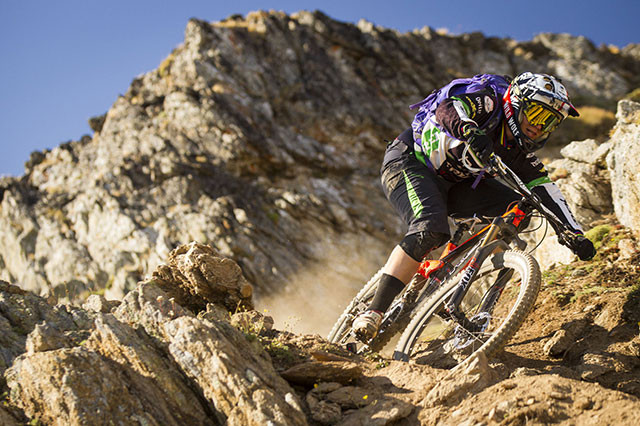
What exactly comes next for Cannondale in mountain bike racing is unknown, but you can’t help but feel that its departure is a poignant loss to the top tier of MTB racing, and perhaps also acts as a directional sponsorship pointer for the future.
Ahh, even 30 years on, some of us still reminisce and lust after those early red, orange, yellow, and purple beauties of a jersey that Volvo-Cannondale strutted back in the day, and the storied history the team wrote. That’s true old-school brand marketing, and with longevity too.



















3 thoughts on “Cannondale Factory Racing pulls the plug, marking the end of a glorious era”
Uh oh, mountain bike news on road.cc
If we don’t fight it now, we’ll all end up forced to wear baggy shorts!
Yeah, it’s great isn’t it……..