


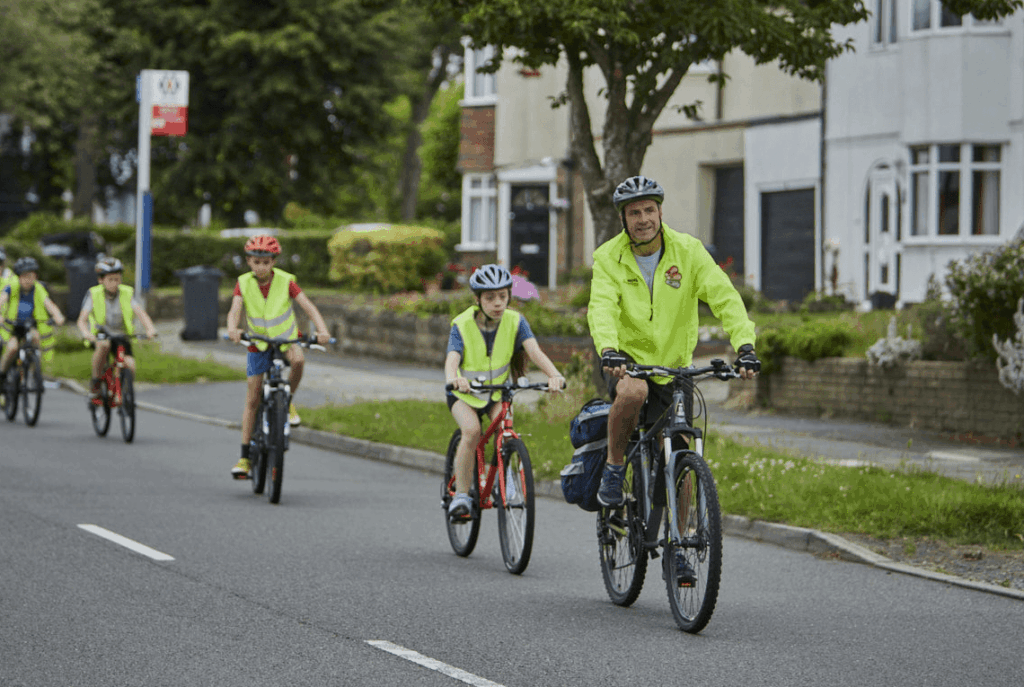

Bikeability has experienced fewer children taking part in its national cycle training scheme sessions in the West Midlands, the trust behind the programme expressing concern that “the discussion around cycling online and in the media is very hostile”.
The trust was keen to stress to road.cc that on a national level it remains “on target to deliver Bikeability to more children than ever this year” and the programme is close to having trained 6 million children since 2007. However, the comments follow a BBC report into falling Bikeability participation in the West Midlands, 11 of the region’s council areas experiencing a percentage of eligible pupils receiving the cycle training below the national average, in many cases by a significant amount.
Bikeability delivers the national cycling training scheme, often formerly referred to as cycling proficiency. In the West Midlands, in council areas such as Walsall, Coventry, Dudley, Stoke-on-Trent and Staffordshire, less than a third of eligible pupils received the training in 2024-25.

Bikeability chair Emily Cherry suggested a significant factor is that “some parents are just scared to let their children on the road with other drivers”. However, she also pointed to the media’s attitudes to cycling.
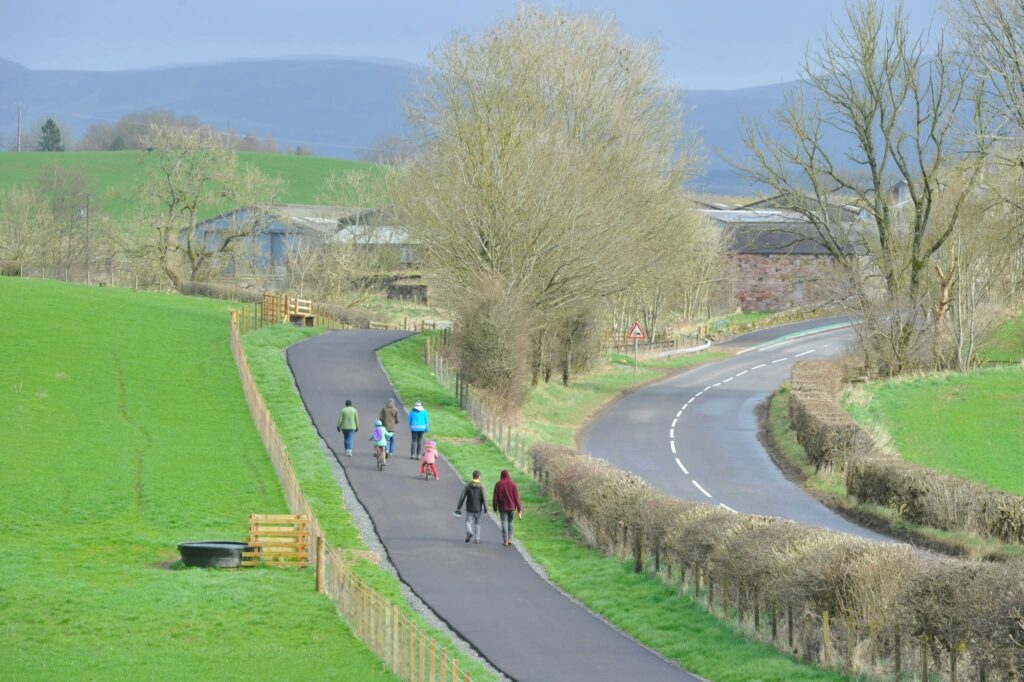
“We are also worried the discussion around cycling online and in the media is very hostile,” she said. “Putting in a cycleway isn’t ‘a war on motorists’, it’s a space to keep children safe and healthy.”
Significantly, the BBC reported that many of the West Midlands councils with declining Bikeability participation are also those with lowest rates of cycleways for cyclists and pavements for pedestrians. The report also cited the Royal Society for Public Health which has predicted the majority of children in some of these areas, such as Sandwell, Wolverhampton and Walsall, would be obese by 2035.
When we followed up the BBC piece with Bikeability chair Emily Cherry, she explained that YouGov polling had shown “59% of parents felt that safe cycle routes and cycle paths would make them more confident in allowing their children to cycle on the roads”.
_0.jpg)
“We believe that Bikeability training is a vital tool to get more people cycling and will have even greater effect when combined with other interventions, including high-quality cycling infrastructure, behaviour change programmes and access to cycles,” she added.
“Cycle lanes make it possible for children to cycle safely and independently. But infrastructure isn’t enough – we need to ensure that all children have the skills and confidence to enjoy active travel, whether that’s by putting Bikeability on the national curriculum to guarantee cycle training for all or increasing access to cycles to make sure no child misses out.”
When it comes to changing parental attitudes, she suggested that the polling is clear: “Parental attitudes to cycling can be directly influenced by Bikeability training: after seeing their child take Level 2 training, 96% of parents are likely to encourage their child to cycle. In areas with low uptake of Bikeability, these benefits aren’t realised.
.jpg)
“There have always been parental concerns over the past 18 years of the Bikeability programme. We know that children are more likely to want to cycle if their parents cycle, and you’re more likely to cycle as an adult if you had cycle training as a child. There is a training gap with some of the current generation of parents who missed out on cycle training as a child and who consequently are more wary of encouraging their children to cycle.”
Nationally, Bikeability remains on target, but in areas where participation is falling behind the trust is “working to boost uptake through a number of interventions”, including road safety campaigning, working to boost positive representations of cycling in the media, and improving access to bicycles.







9 thoughts on ““Putting in a cycleway isn’t a ‘war on motorists’, it’s a space to keep children safe”: Fears “hostile” media coverage is stopping parents let their kids cycle”
It really is a very simple
It really is a very simple equation – training plus infrastructure equals more cycling. Central London is achieving this. Other places may be as well but I live in London so can comment on London.
The difficult part of the equation is getting everyone on board; councillors, highways, residents. But it can be done.
Rome73 wrote:
Infrastructure alone is enough to increase cycling.
Inner London patchy. Outer London not at all.
Pub bike wrote:
Hmm… perhaps, just not by much *.
The real benefits come via many measures – this ultimately involves reducing convenience for driving and at the same time increasing the attractiveness of alternatives, both active travel AND public transport **.
However I agree that “sufficient infra, in a network, of sufficiently high quality” is the cornerstone.
* Unless you do the “now there are *two* cyclists! 100% increase! Bike boom!”
** Many things – motor traffic volume reduction (in part to facilitate alternatives), and often speed reduction. Secure and convenient cycle parking and home storage. Integration of cycling with public transport – and in the UK we need seriously improved public transport also. In fact we need a new take at overall transport policy and public space usage level. Something like “Sustainable Safety” rather than “maximising motor traffic flow, and achieving safety for vulnerable road users may happen at cost of convenience”.
Its not just hostile media,
Its not just hostile media, its fucking dangerous drivers who don’t give a shit whether they are scaring small children with their driving. I have two young children and I want to get an e-cargo bike to take them about and my partner is basically saying no. She doesn’t think the roads are safe. Its honestly quite hard to disagree at times with the things people do.
I always suggest these people
I always suggest these people who complain about cyclists provide the stats that cyclists significantly slow down drivers.
The comparison would be how much are they delayed in their total journey time by cyclists and then also by volume of motorists ie rush hour/school drop off/pick up times/school holidays.
We all know there is a huge difference in driving times between these.
But as a cyclist, my journey times are barely 10% longer during rush hour etc.
Better cycling infrastructure = more people cycling rather than driving = less delays for anyone who HAS to drive.
It is not rocket science.
More people in rockets gets
More people in rockets gets them off the road altogether, though. We should be spending the money on better rocket infrastructure.
Please god no.
Please Dog no.
“Could flying taxis be launched in the near future?”
https://www.bbc.co.uk/news/articles/cdj8r98dywyo
mitsky wrote:
Reminds me of the old joke, what’s worse than raining cats and dogs?
Hailing taxis!
“OMG look at the legacy
“OMG look at the legacy aerospace industries wetting themselves about our activities! Just wait till they see my cool new autonomous rocket chair! ?”