



Bikes have changed quite a lot in the last two decades, particularly road bikes. They now invariably have disc brakes, integration is rife, changing gears is now done with electrical signals rather than a cable, tyres have ballooned… and don’t even get us started on hookless or tubeless tech! This ‘progress’ often divides cyclists. and the road.cc office is no different: I believe that bikes have changed for the better, while road.cc founding father Dave has much more nostalgic views. We decided to head out for a ride to prove each other wrong…
Team Modern
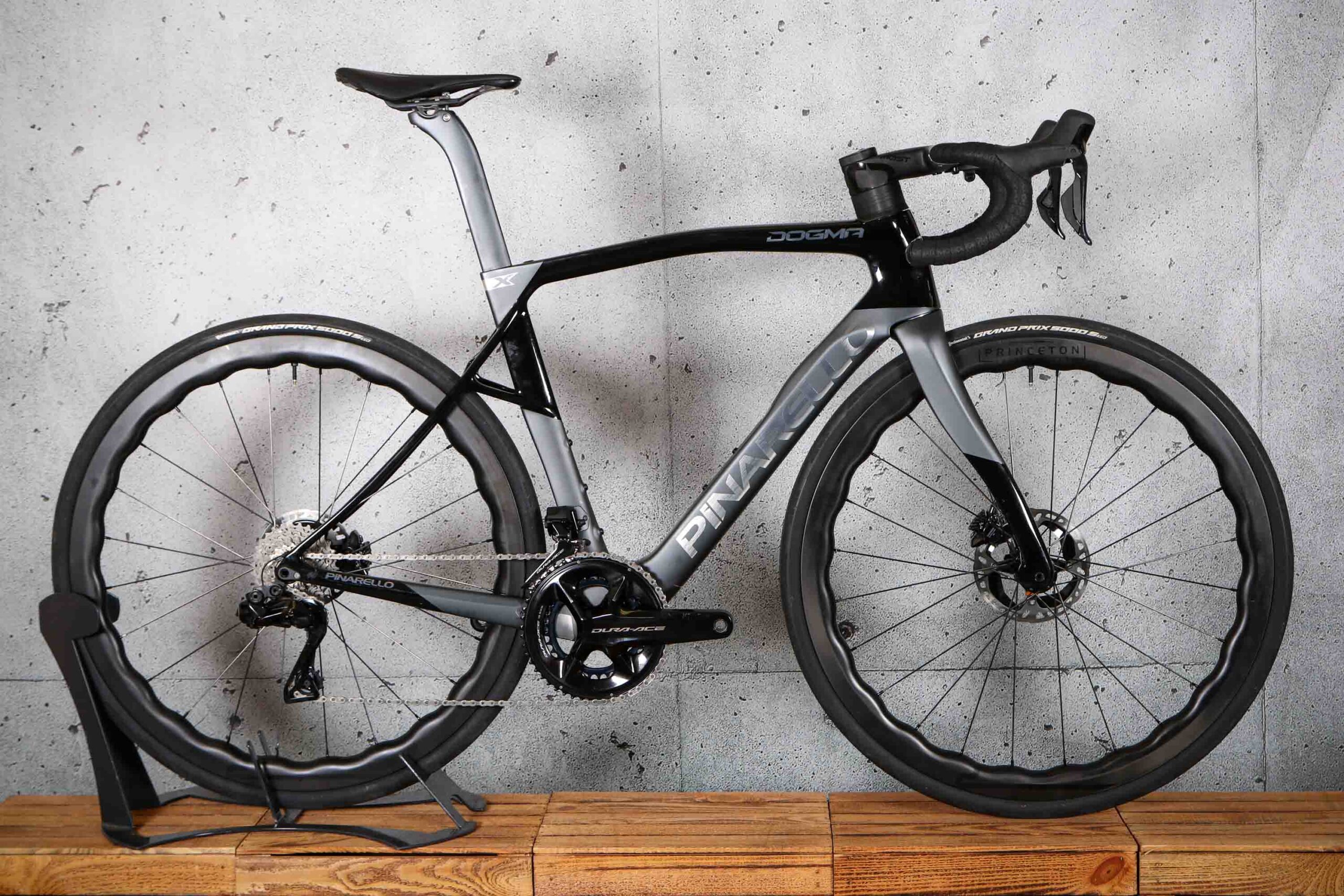
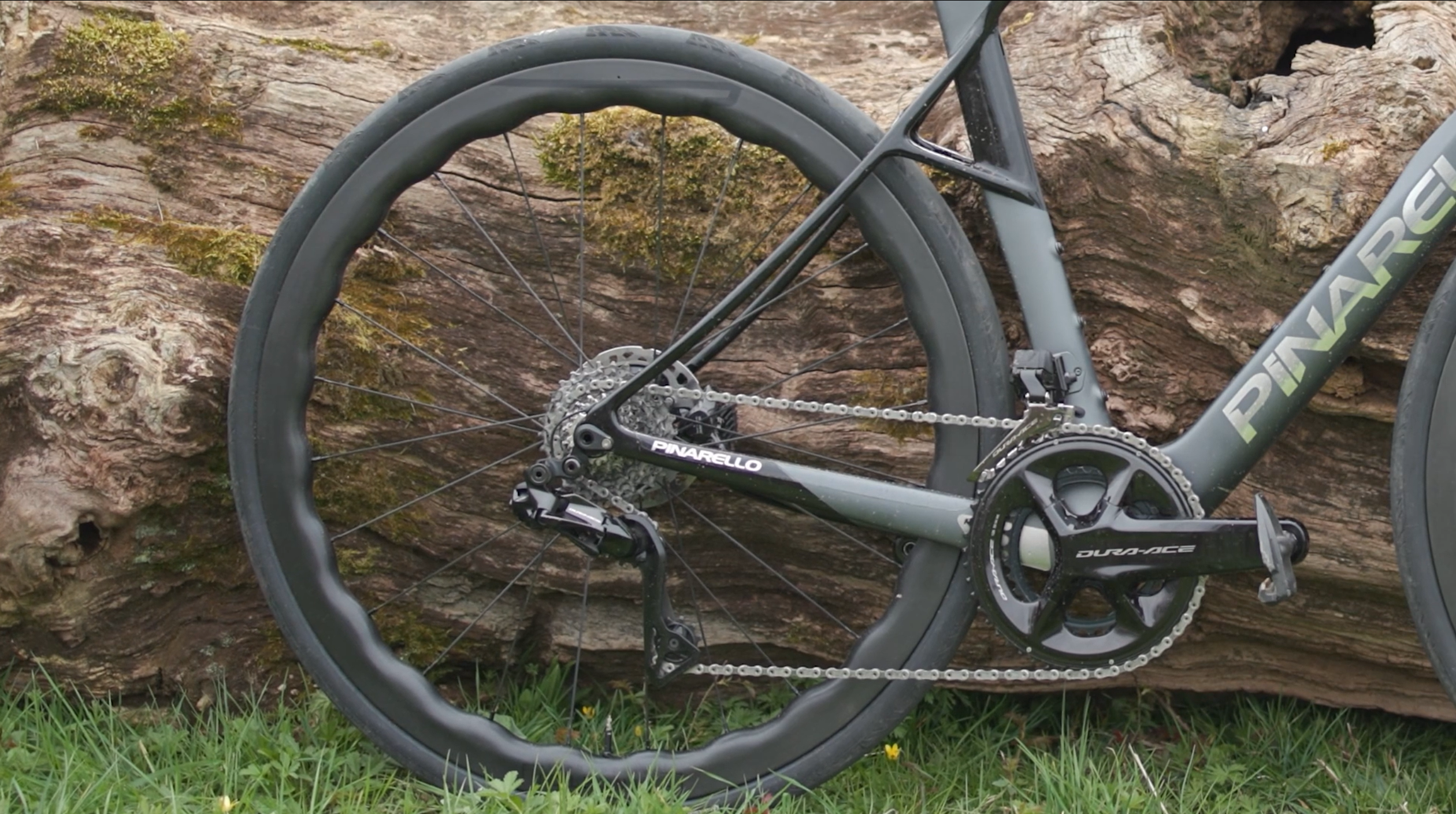
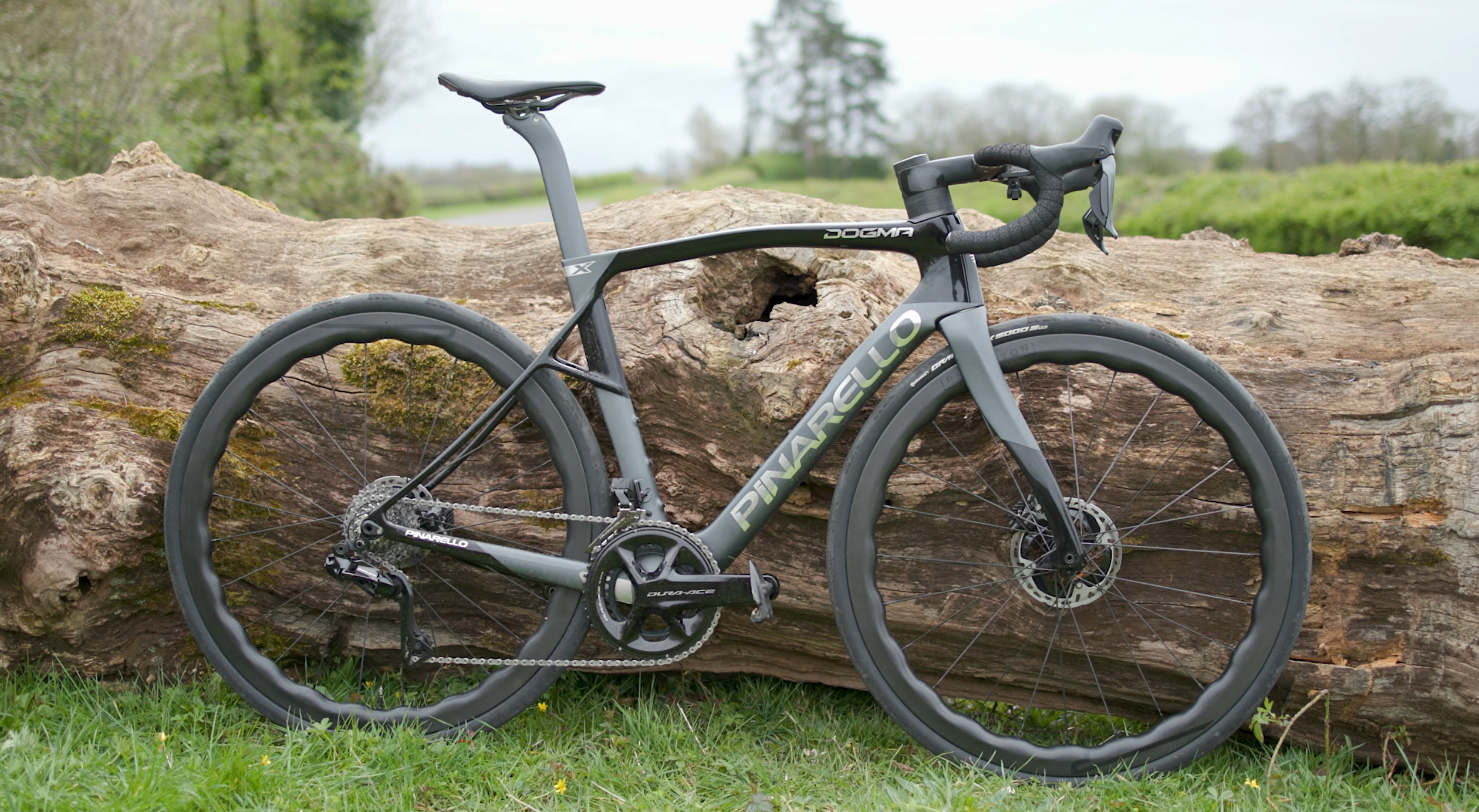
Not everyone at road.cc shared my enthusiasm when the latest Pinarello Dogma X rocked up for its upcoming review. Pinarello says that it “strikes the perfect balance between high-calibre performance and real-world comfort”, and in my mind, it’s the quintessential modern road bike.
The Dogma X has space for wide 35mm tubeless tyres, it has 12-speed Shimano Dura-Ace Di2 electronic shifting, a sleek integrated front end, endurance geometry, disc brakes, and at £13,300 this particular model really should be the ultimate money-no-object road bike for riders want both speed and comfort.
Team Classic
> 8 bygone bike technologies we’re now well rid of
Dave, on the other hand, would argue that the 24 additional years of development have been wasted, and he’d much rather spend his money on something with a bit more history.
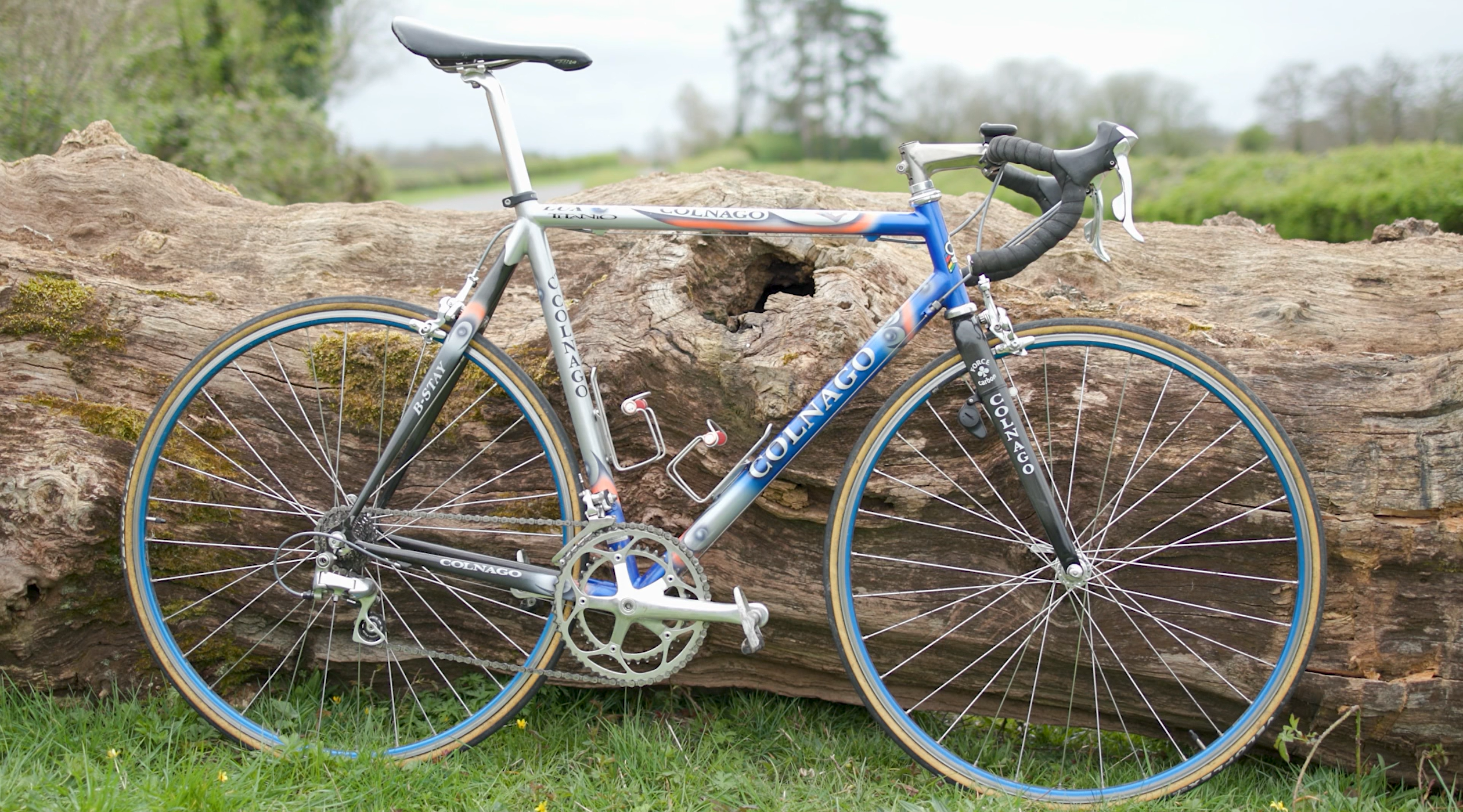
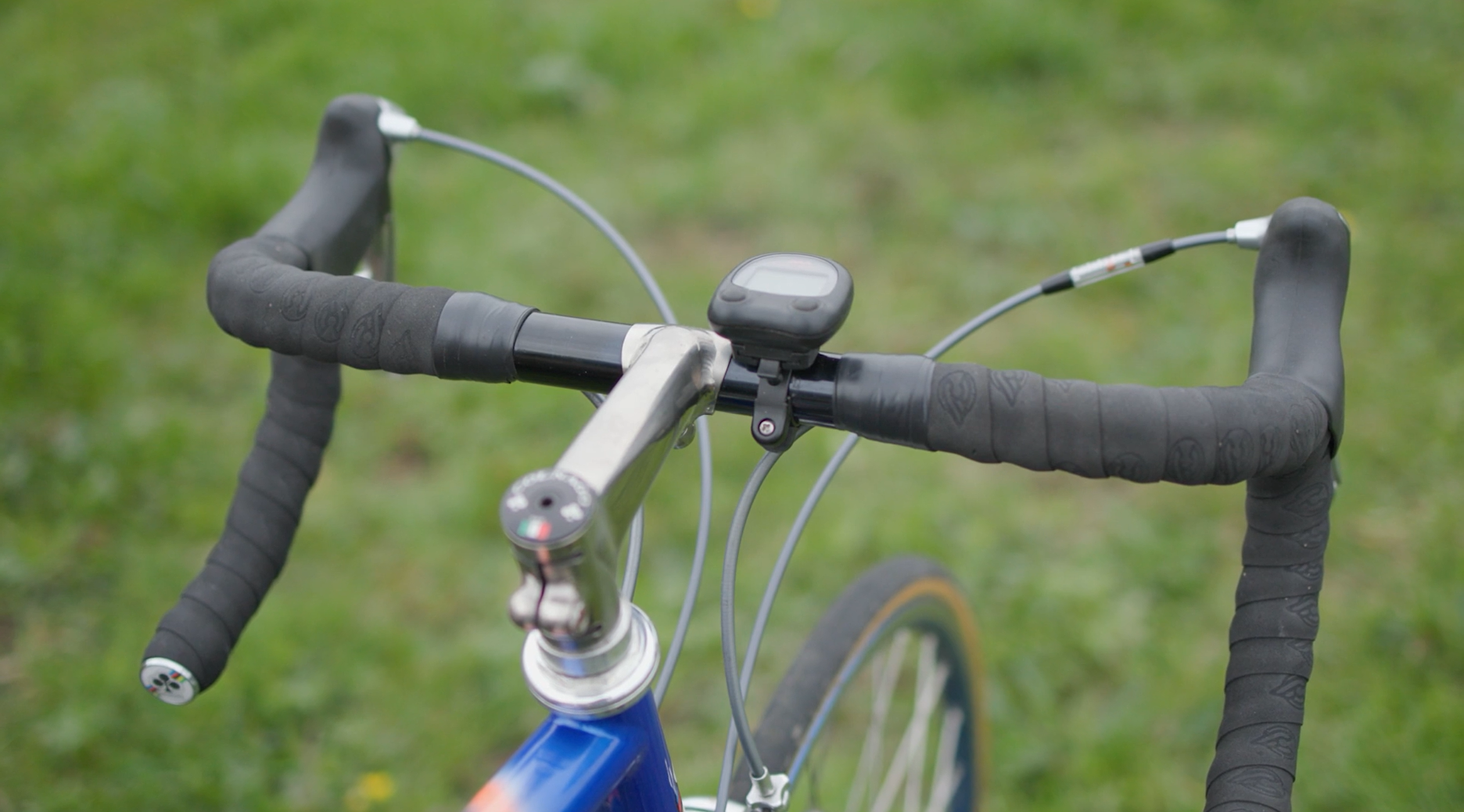
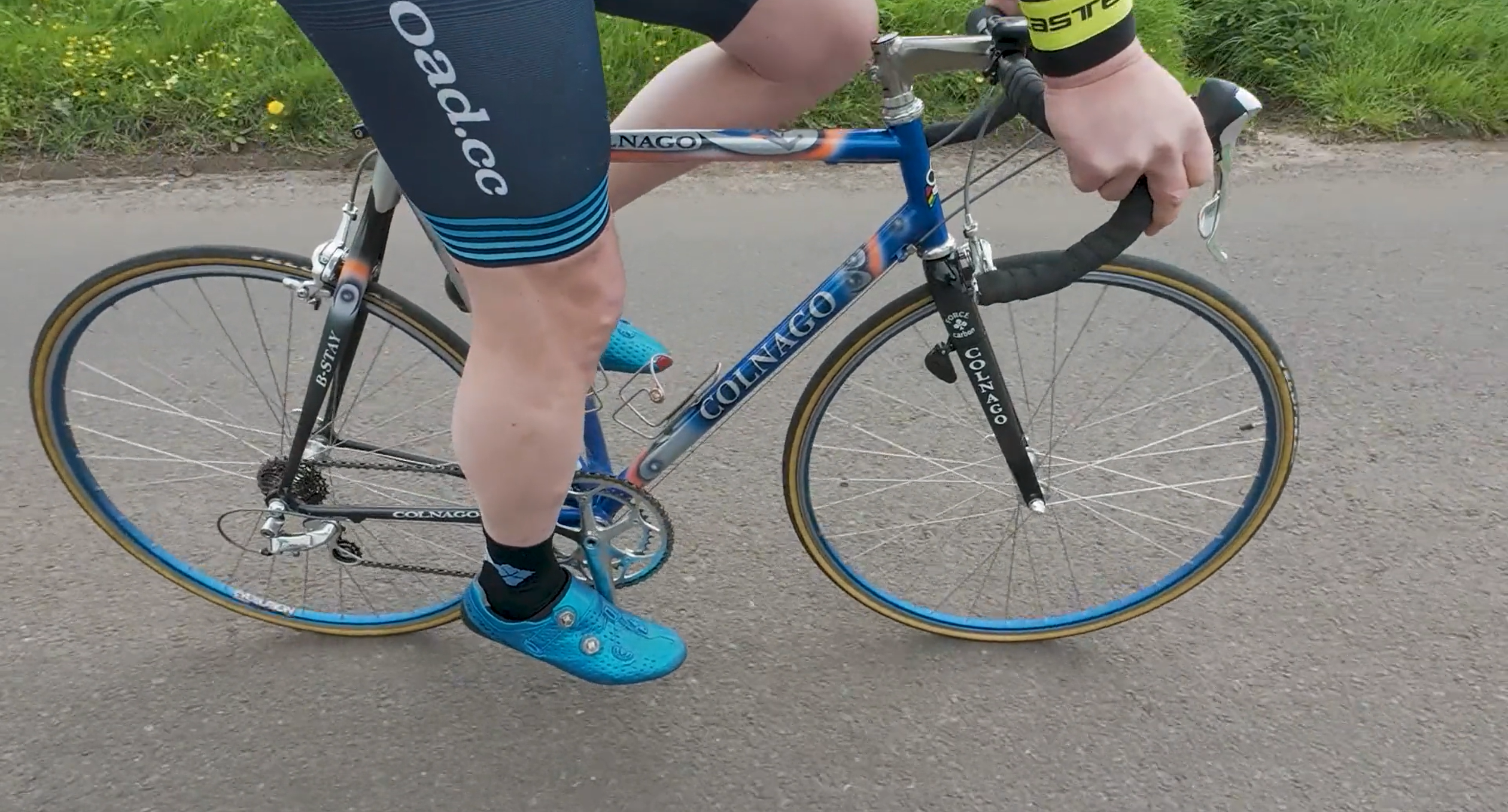
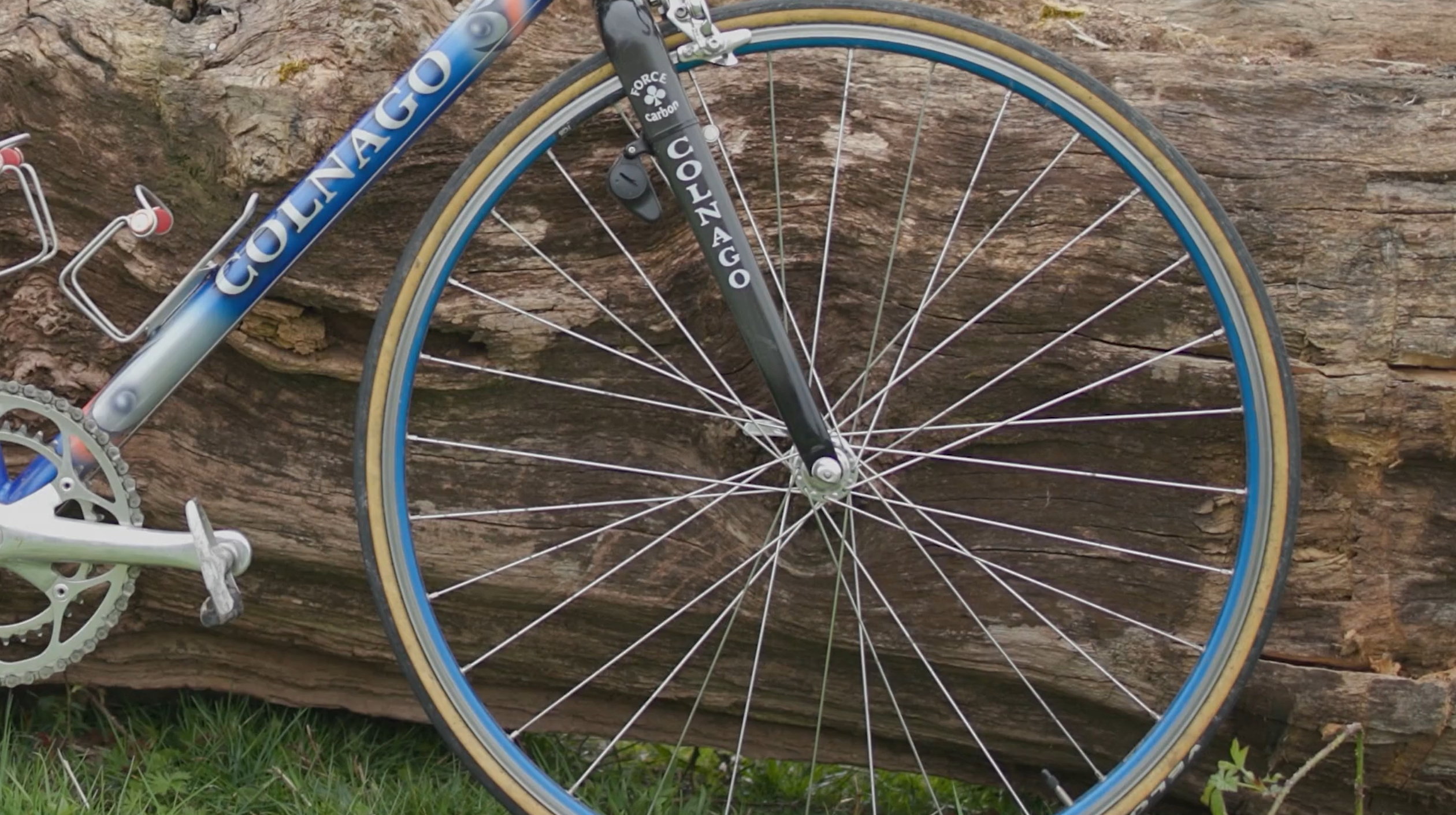
Dave’s bike of choice to turn back the years is the Colnago CT1 Titanio Lux from the year 2000 (yep, that counts as ‘vintage’ now… sorry to anyone born before about 1990). It consists of a titanium frame with a carbon fork and rear triangle.
> Cycling trends and traditions that are gone but not forgotten
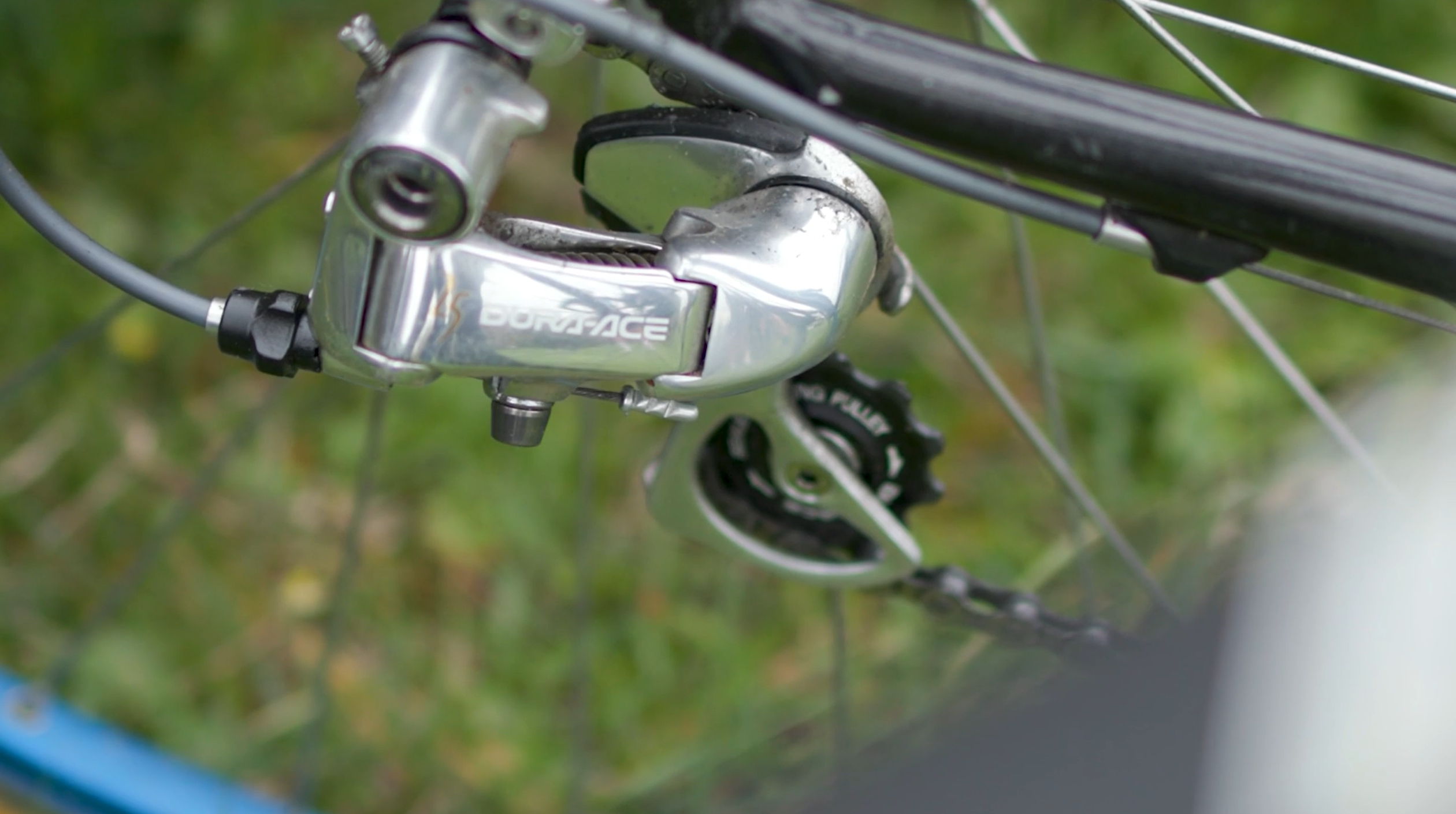
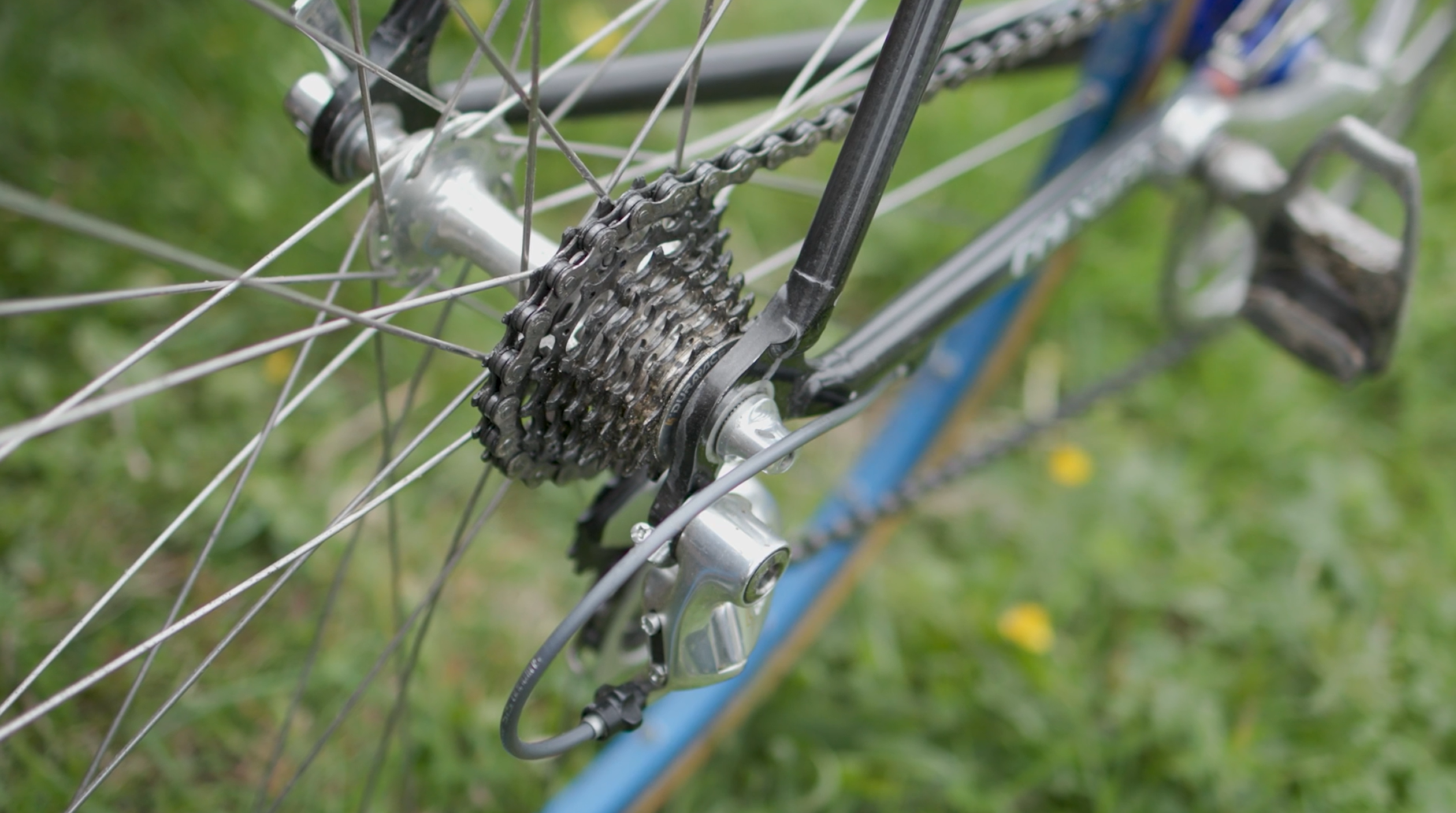
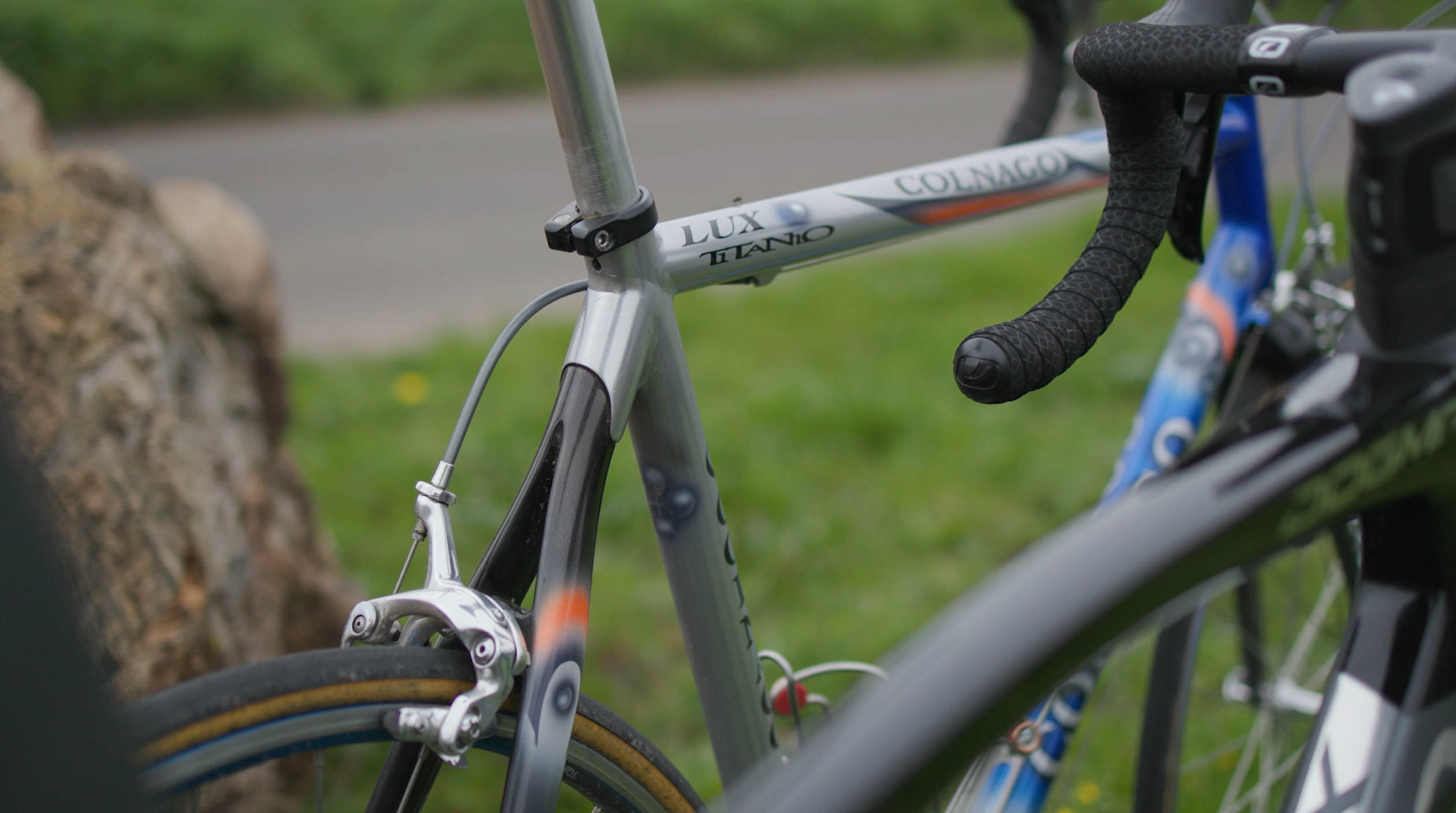
It too has a Dura-Ace groupset (The 25th-anniversary edition) but “like most things from back then” things were a lot simpler. It’s got mechanical gears and rim brakes.
In Dave’s words, the bike “looks absolutely stunning and feels as fast as a knife fight in a phone box.” I was quick to point out that even his analogy was outdated, and he’d highlighted another relic that has been superseded by modern tech…
Having had a good poke around the Colnago, I was sure that it was great in its day, but was fairly confident that my modern bike was simply better in every way.
Weight
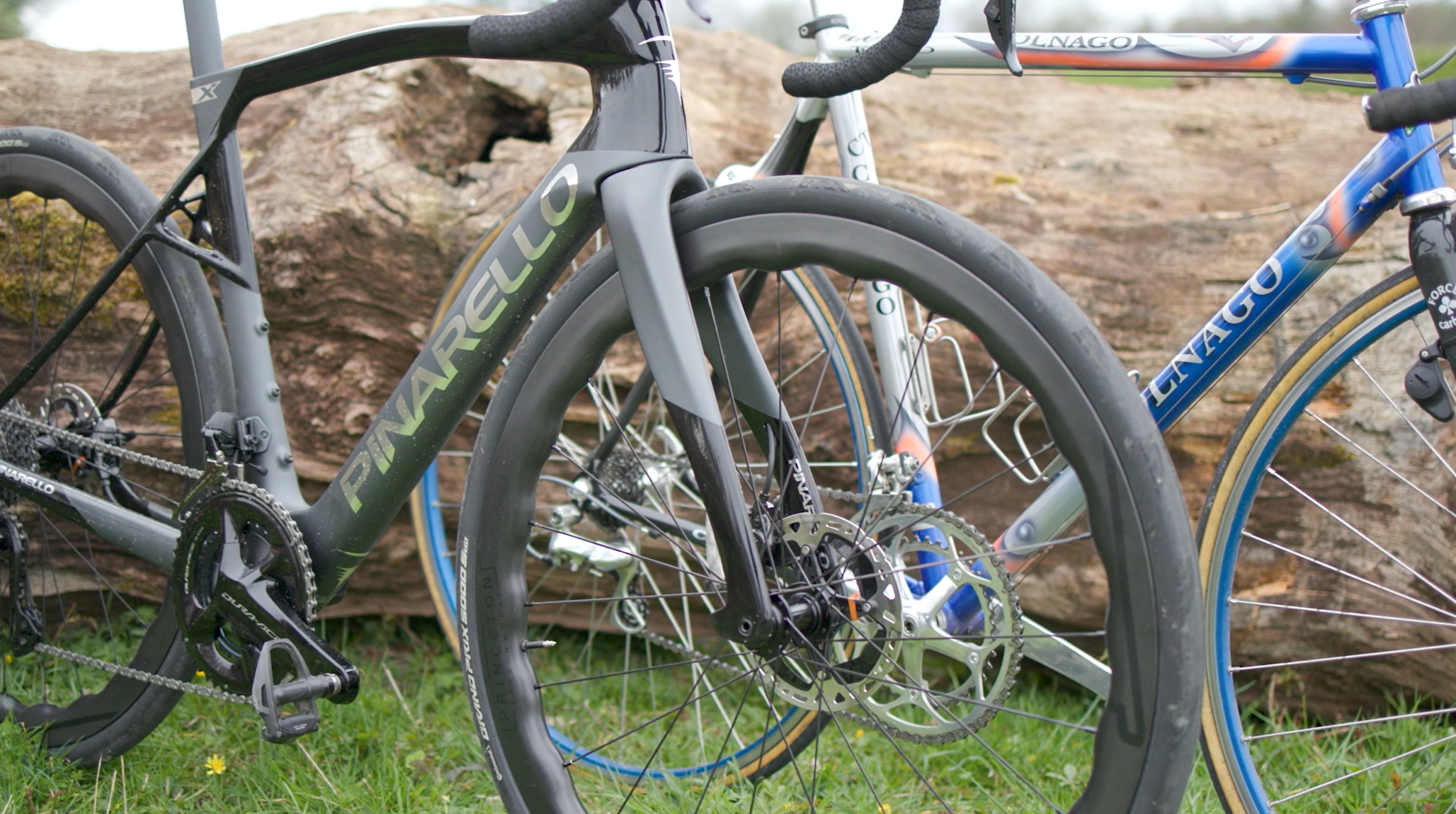
With the advances in materials, computer-aided design and just a few more years of practice, you might think that the Colnago would be significantly heavier than the Pinarello; but that’s simply not true.
The Colnago weighed 8.1kg on the road.cc scales of truth, and the Dogma X came in at 7.18kg.
> How to make your bike lighter
The weight of the CT1 did plummet further, before creeping back up as manufacturers favoured aero tube shapes, disc brakes and fatter rubber. Regardless of the reasons why, we certainly haven’t seen progress come on leaps and bounds in the weight department.
Verdict: With no real progress in this area, round 1 goes to Team Retro
0-1
Gearing
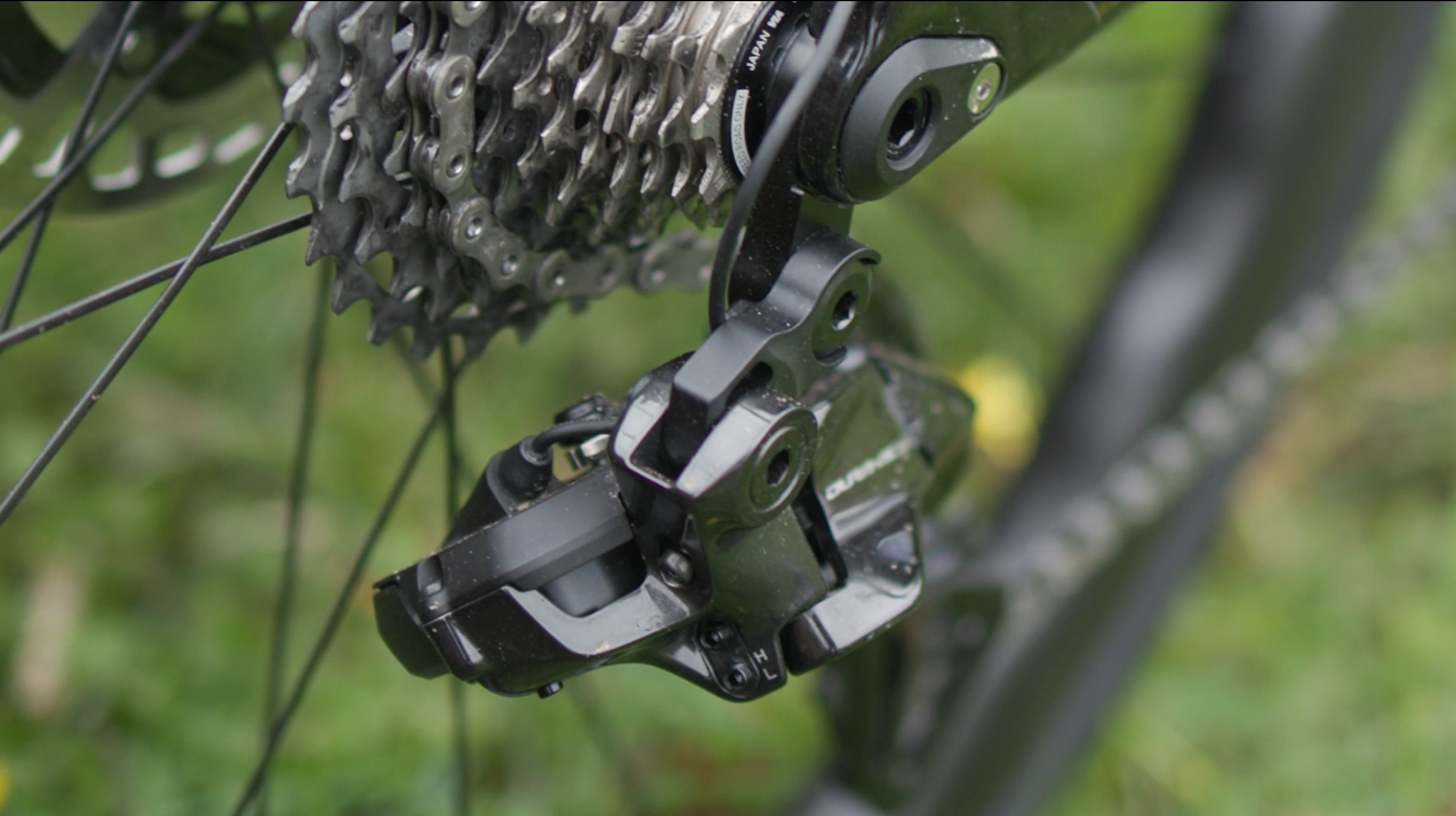
It didn’t take many miles of riding for Dave and I to realise some pretty significant differences in the gearing of our bikes. There’s the obvious differences such as the fact mine is electronic and has 24 gears as opposed to 18, but it wasn’t either of these that surprised us most.
The Dogma X has fairly typical gearing for a modern endurance bike with 50/34T chainrings at the front and an 11/30T cassette at the rear, which gives the smallest gear ratio of 1.13:1.
> Bike gears: find out why bikes have so many, and the surprising way they’re measured
The Colnago is also representative of its time, with full-size 53/39T chainrings and a 12/25T cassette. Dave’s lowest gear ratio is therefore 1.56:1, i.e. much much bigger.
After murmurings that modern cyclists simply need to “harden up”, it didn’t take too many rollers to convince Dave that gearing on bikes has dramatically changed for the better.
Full-sized rings are great if you’re a pro bike racer with legs made of steel, but for the rest of us, semi-compact, compact and sub-compact chainsets make a lot of sense. Pair ,that with today’s much wider range cassettes and you make the terrain of an average UK road ride a lot more manageable without the sore knees.
Verdict: A thorough thrashing. Team Modern wins
1-1
Geometry
> Should I buy a race bike or an endurance bike?
When Giant released the TCR in 1997, it introduced the world to compact frame geometry (I can only assume by the medium of fax and a CD). This new-fangled way of thinking about bike frames didn’t take off immediately though, and the CT1 released in the year 2000 still has what many would call “classic lines”.
Fast forward two decades to the release of the Dogma X, and we’re well used to sloping top tubes and bits of exposed seat post. Recent bikes like the Dogma X have been at the forefront of another revolution though, one towards ‘progressive’ endurance geometry.
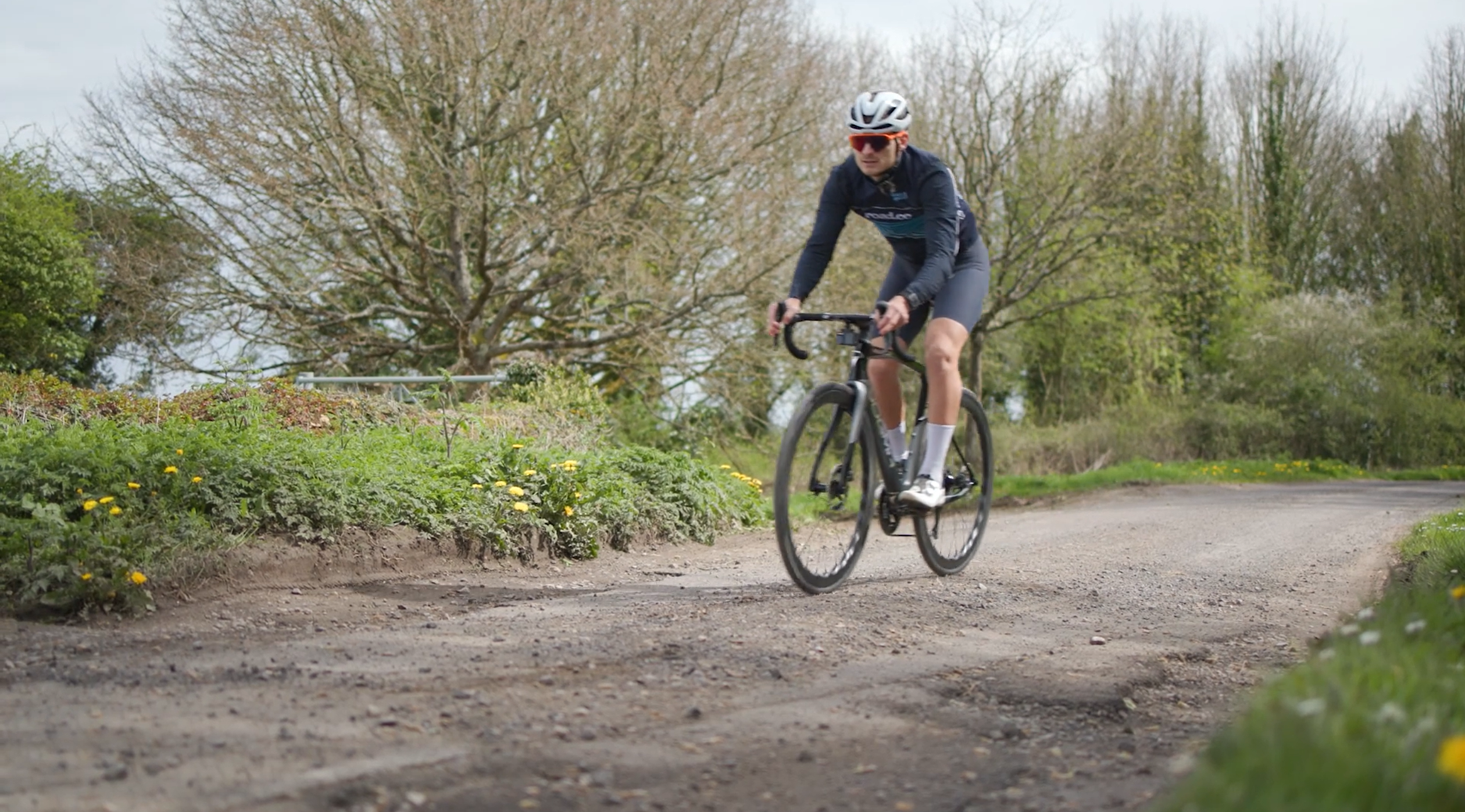
Compared to the CT1, the Dogma X has almost gravel bike-esque geometry, with a much longer wheelbase, longer chainstays and more trail (the front wheel is much further in front of you). Much of this elongation is to accommodate wider tyres, but Dave argues that this has made modern bikes feel a lot less lively.
Excuse the cringe-worthy bike reviewer speak, but the CT1 is far more involving to ride: sometimes for the better, sometimes for worse. On a smooth road, it feels lively and rather fast. Get to a descent though, and this liveliness isn’t always as welcome. You can also fee every single road imperfection.
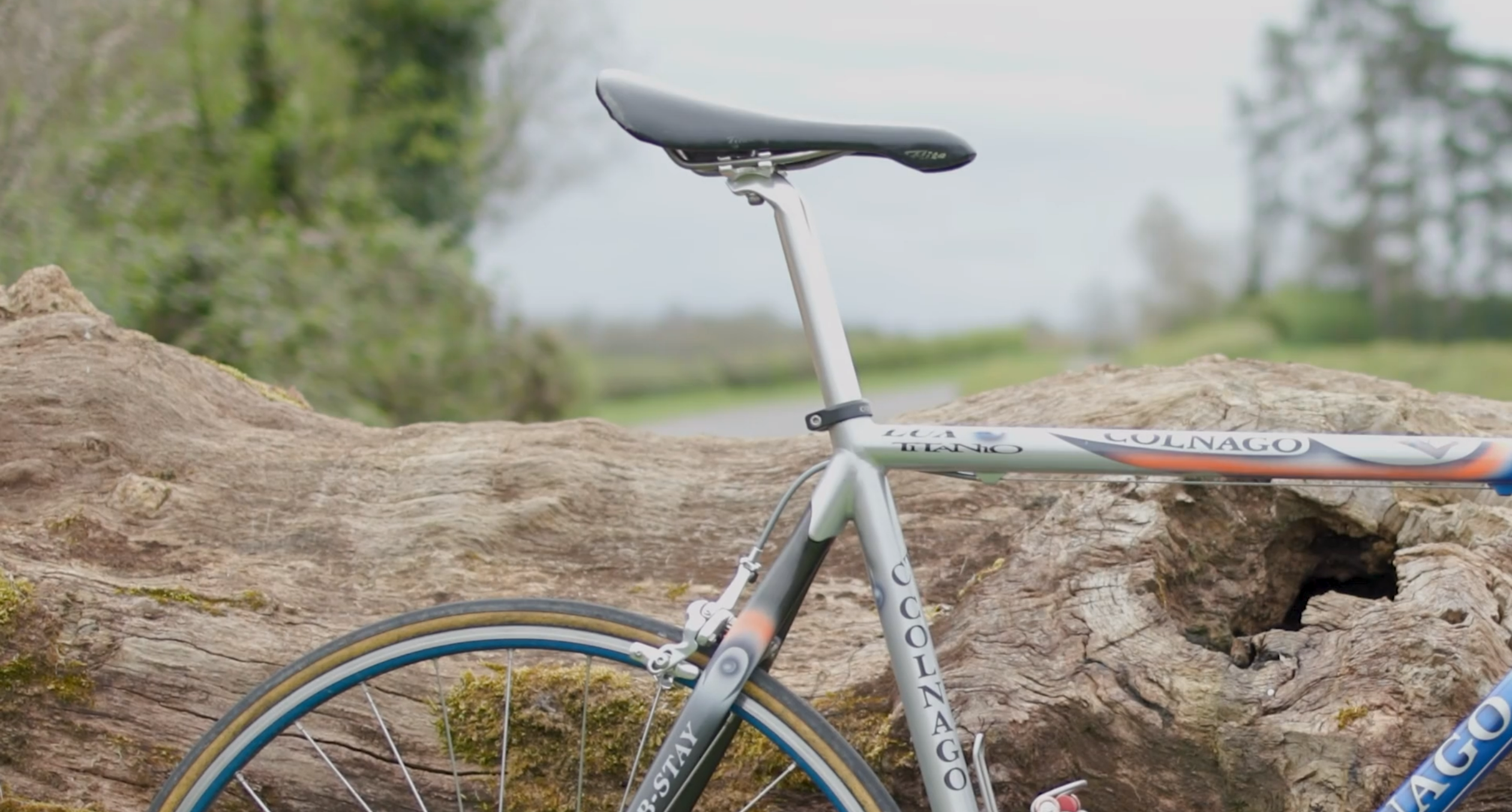
> Bike geometry 101: Learn why frame angles & trail matter
Choose the right road, at the right time of year, and the Colnago is a very rewarding bike to ride; however, on any B-Road the Pinarello’s frame geometry easily comes up trumps, and is overall a much easier bike to ride in more situations.
Verdict: It’s hard to ignore that some dynamism has been lost on today’s endurance bikes. Easy or engaging? Take your pick
2-2
Tyres
> Should you get tubeless tyres?
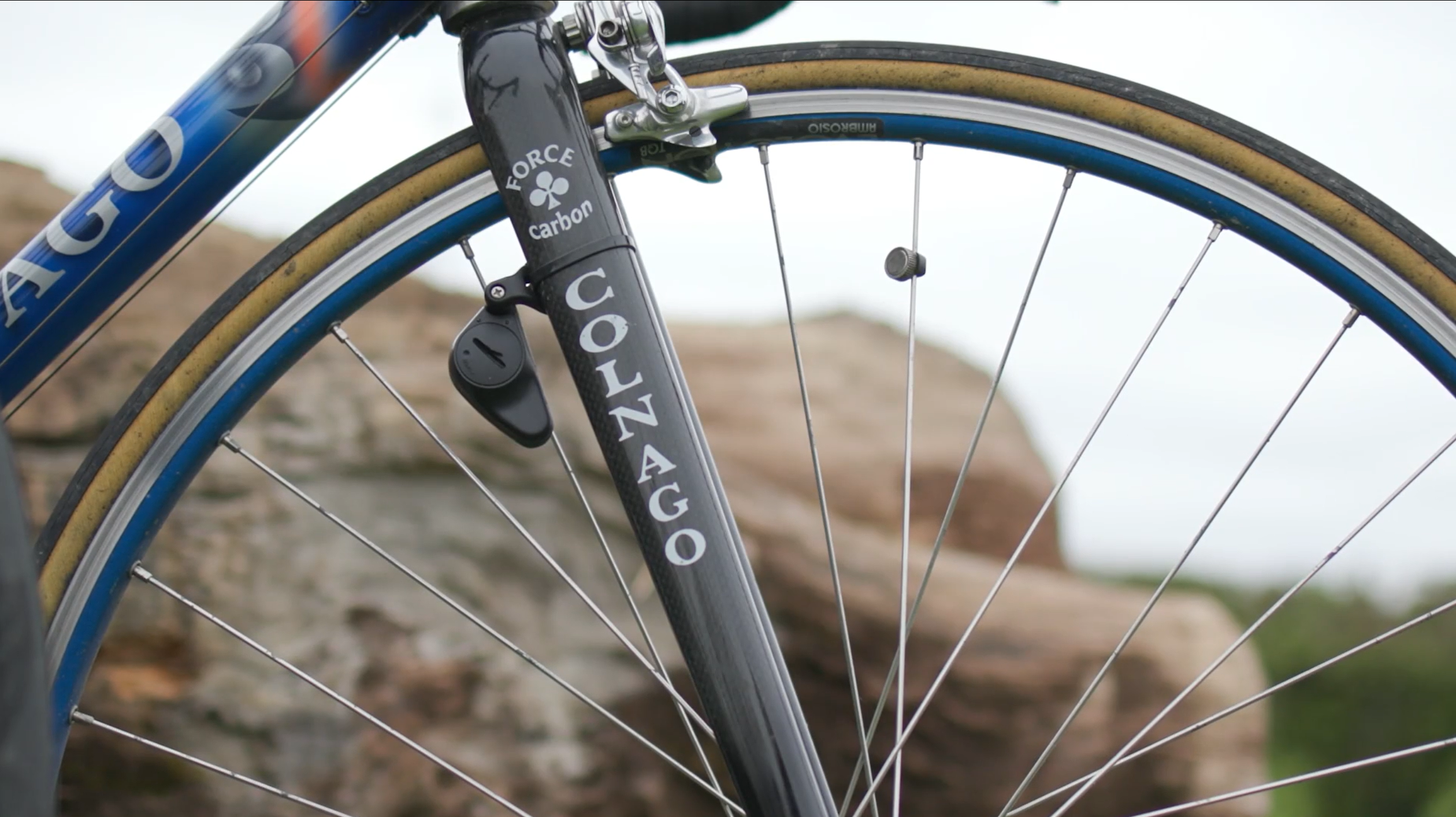
The Colnago CTI Titanio Lux is rolling on a set of 23mm wide Veloflex clinchers (sorry tubular fans). The Dogma X, meanwhile, is on 32mm Continental GP5000 S TRs, set up tubeless with plenty of frame space for even wider.
It’s well documented that tyres are getting wider, but considering how similar certain elements of these two bikes are it’s hard to see how both were designed for the same purpose just over two decades apart.
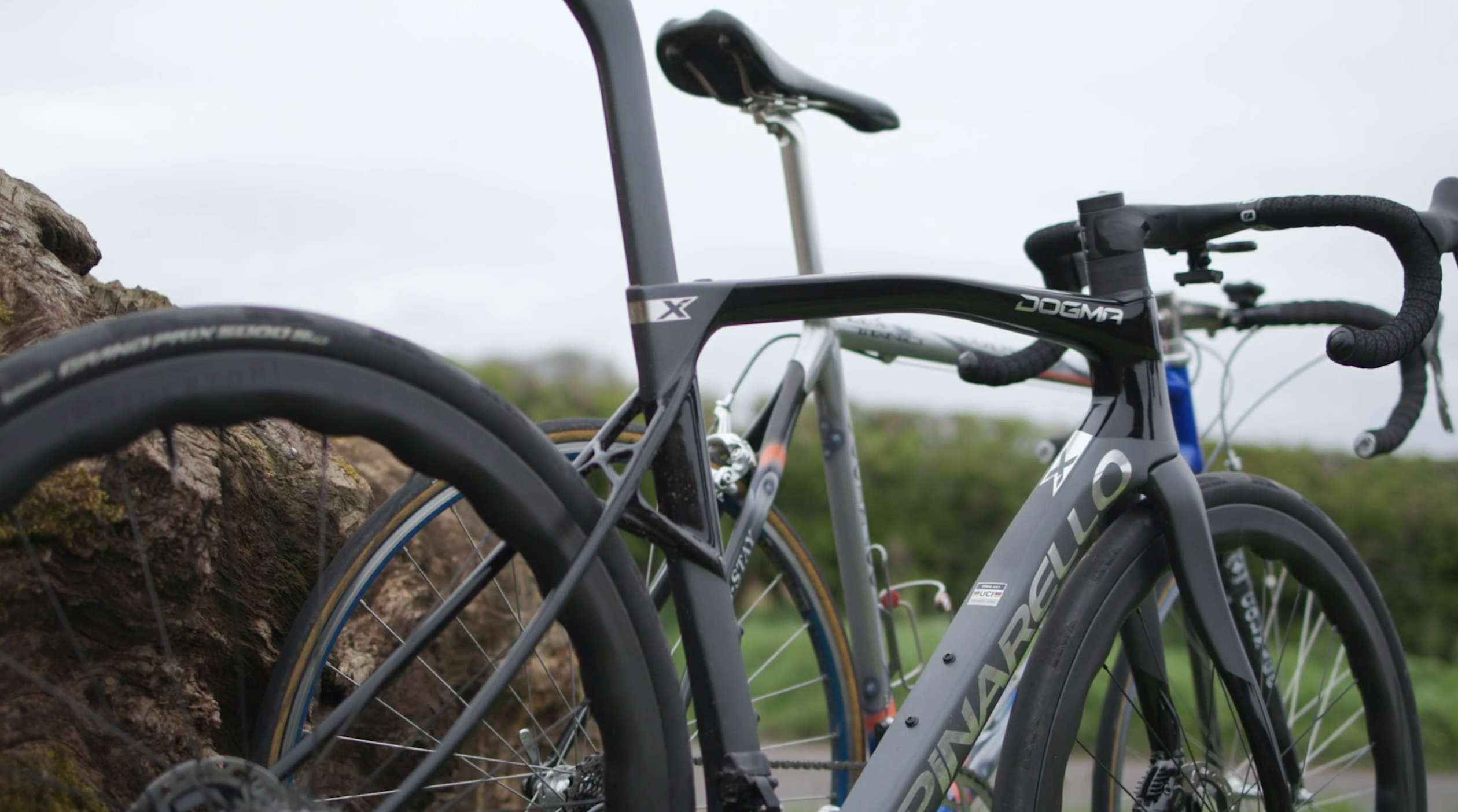
Personally, I think tubeless tyres on gravel bikes and mountain bikes make a lot of sense, and this opinion extends as far as the super wide road bike tyres on the Dogma. Whether tubeless technology is genuine progress, Dave would argue that being sprayed in a latex-based fluid is less than ideal, and I think we’ve got plenty of progress yet to make in this area.
We did both agree that wider tyres are simply the way to go. We now know that in the real world they aren’t any slower (even if they feel it), they’re much more comfortable, and while Dave tip-toed around cracks, debris and potholes in the road, I was able to relax and plough straight through.
Verdict: How didn’t we realise sooner?
3-2
Integration
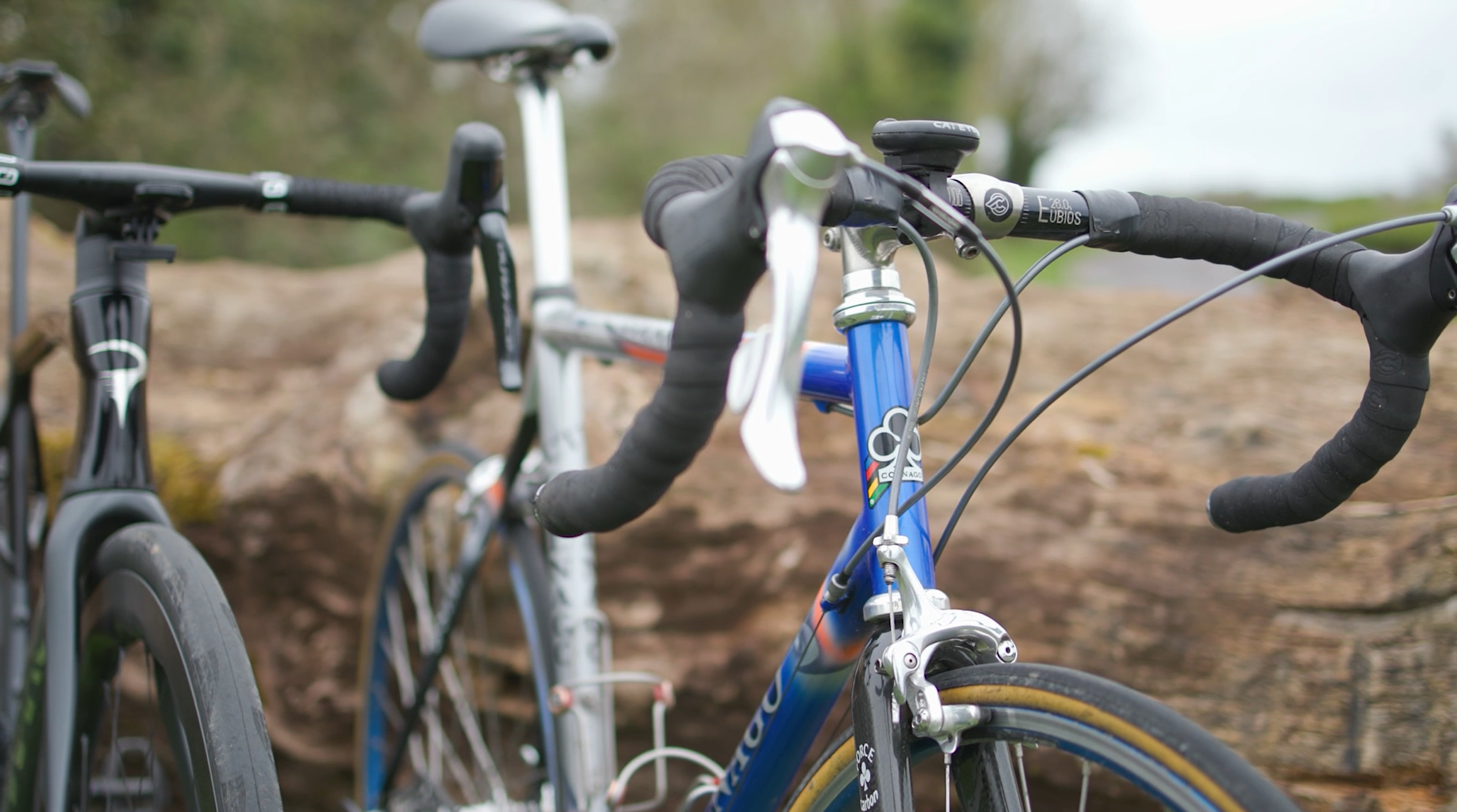
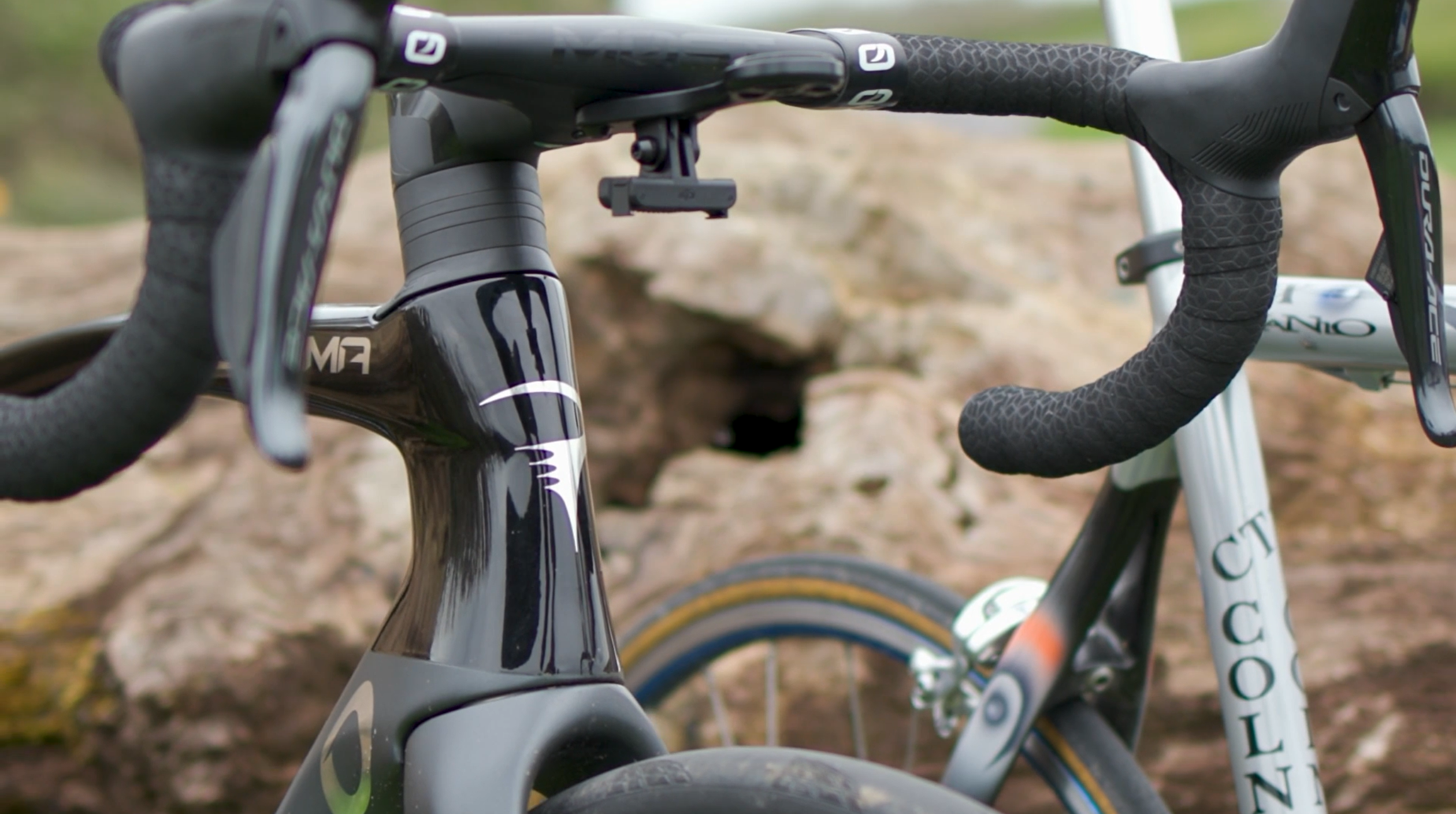
Look at the Dogma X, and you’ll be hard-pressed to find any exposed cable or hoses. They run cleanly through the bars and stem, inside the headset spacers and bearings and then down the inside of the fork and frame. It certainly looks tidy, but is also just about every home mechanic’s worst nightmare.
> Has the move to full internal cable routing on road bikes been worth it?
Dave hammered home the point that if I wanted to make even a fairly minor change in my position on the Pinarello, then it would likely incur several hours of expensive labour costs, or an entire day of nonstop swearing.
Bikes without this fully integrated approach are getting fewer and farther between, choosing to marginally improve aesthetics at the expense of simplicity and maintainability.
Verdict: Sometimes less is more
3-3
Aero
One of the major reasons that bikes haven’t got significantly lighter in the last 24 years or so is that manufacturers have realised that aerodynamics plays a far bigger role in the speed that we can travel than we ever thought.
Aerodynamics don’t just apply to pros or budding racers either, as many of us want to travel further or faster for less effort. This has meant that modern road bikes are sculpted by CFD software and in wind tunnels. Even an endurance bike such as the Dogma X has deep kamm tail tube profiles.
> Aero vs lightweight road bikes
Dave argues that he doesn’t care if he saves 20 seconds over 40km of riding, and not so long ago I probably would have agreed. Aero bikes were cumbersome machines which sacrificed every ounce of comfort in order to gain a few seconds.
The latest iteration of bikes though, such as the Dogma X, manage to combine wind-cheating abilities with all the other parameters that make a good road bike. Although we don’t have a wind tunnel, I don’t think that too many people are going to argue that classic bikes are as aerodynamic as modern ones.
Verdict: Unfortunately for Dave I’m writing this article not him, so I’m giving the point to Team Modern. #freespeed
4-3
Disc brakes
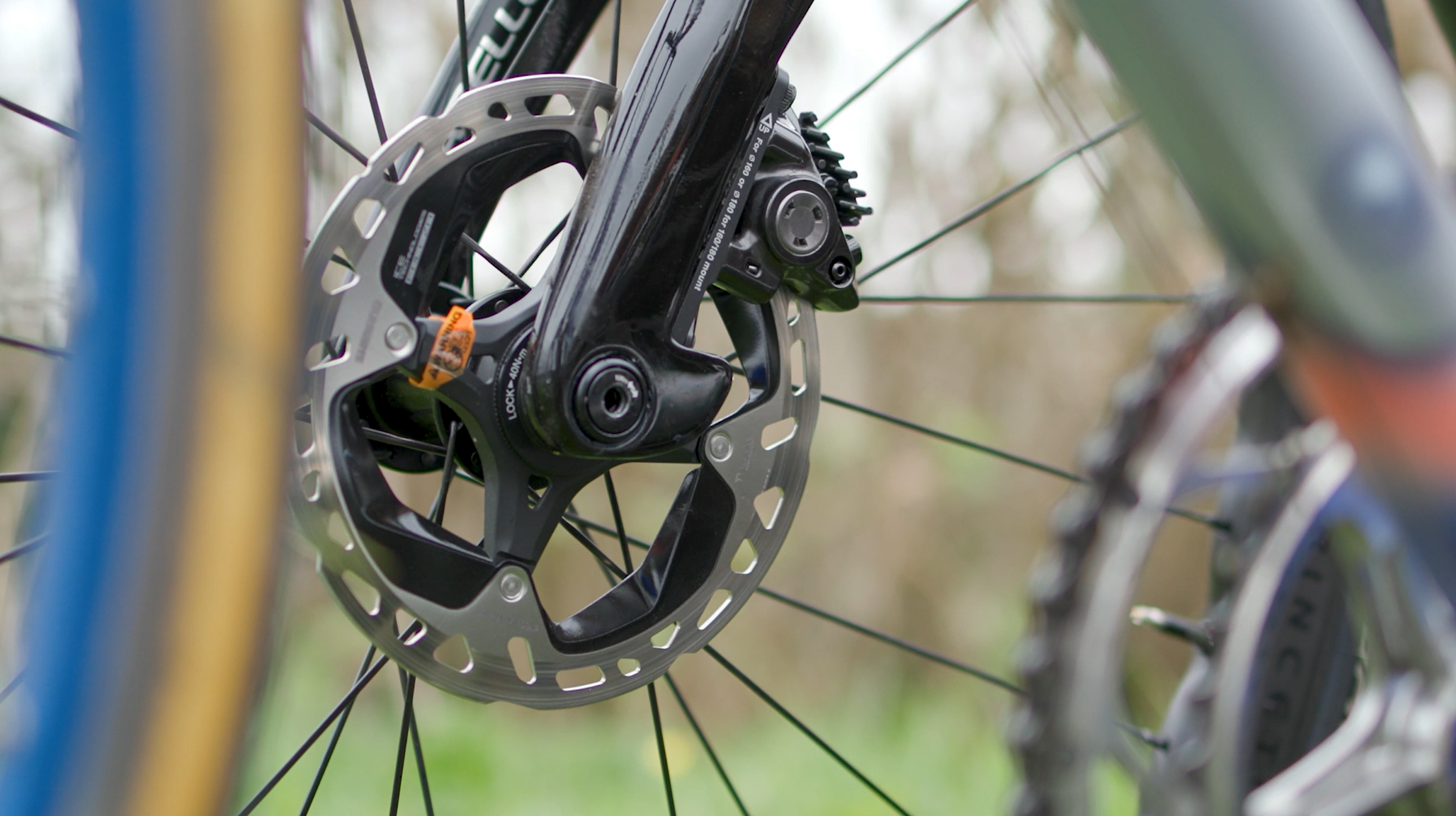
Controversial! Or has that whole debate finally blown over?
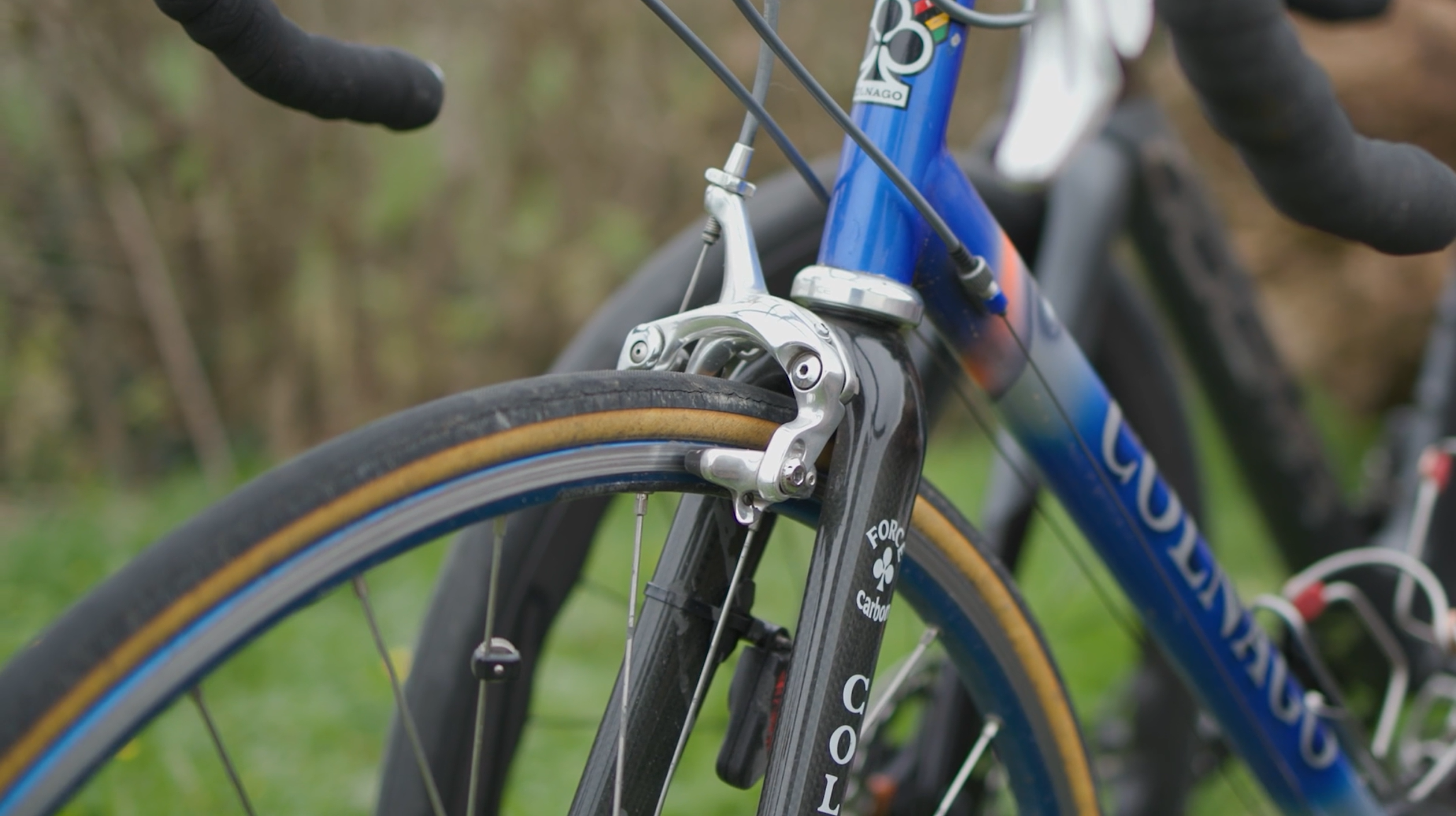
It might surprise you that even when fighting for the disc brake corner, I don’t think that the braking performance is inherently bad on rim brakes. The Colnago has Ambrosio aluminium rims, and it’s hard to believe that the braking system is as old as it is. The limiting factor is most definitely the tyre on the tarmac and not the pads on the rim.
> 8 reasons not to get disc brakes
However, I don’t think that outright stopping power or even the modulation of disc brakes is their biggest selling point. It’s no coincidence that the disc brake revolution has coincided with greater frame clearances, and we can now use wide stable wheels paired with comparatively fat tyres because they no longer have to fit within a calliper that was often limited to 28mm.
A further positive of disc brakes is the fact that although it might seem harrowing to use a set of very expensive wheels on wet rides, disc brakes mean that it’s a far less daunting prospect than in days gone by. Not only is the braking consistent (rim brakes on carbon wheels had…mixed results), but you’re not wearing out your fancy wheels.
Verdict: Disc brakes are progress but not for the reasons you might think
5-3
Materials
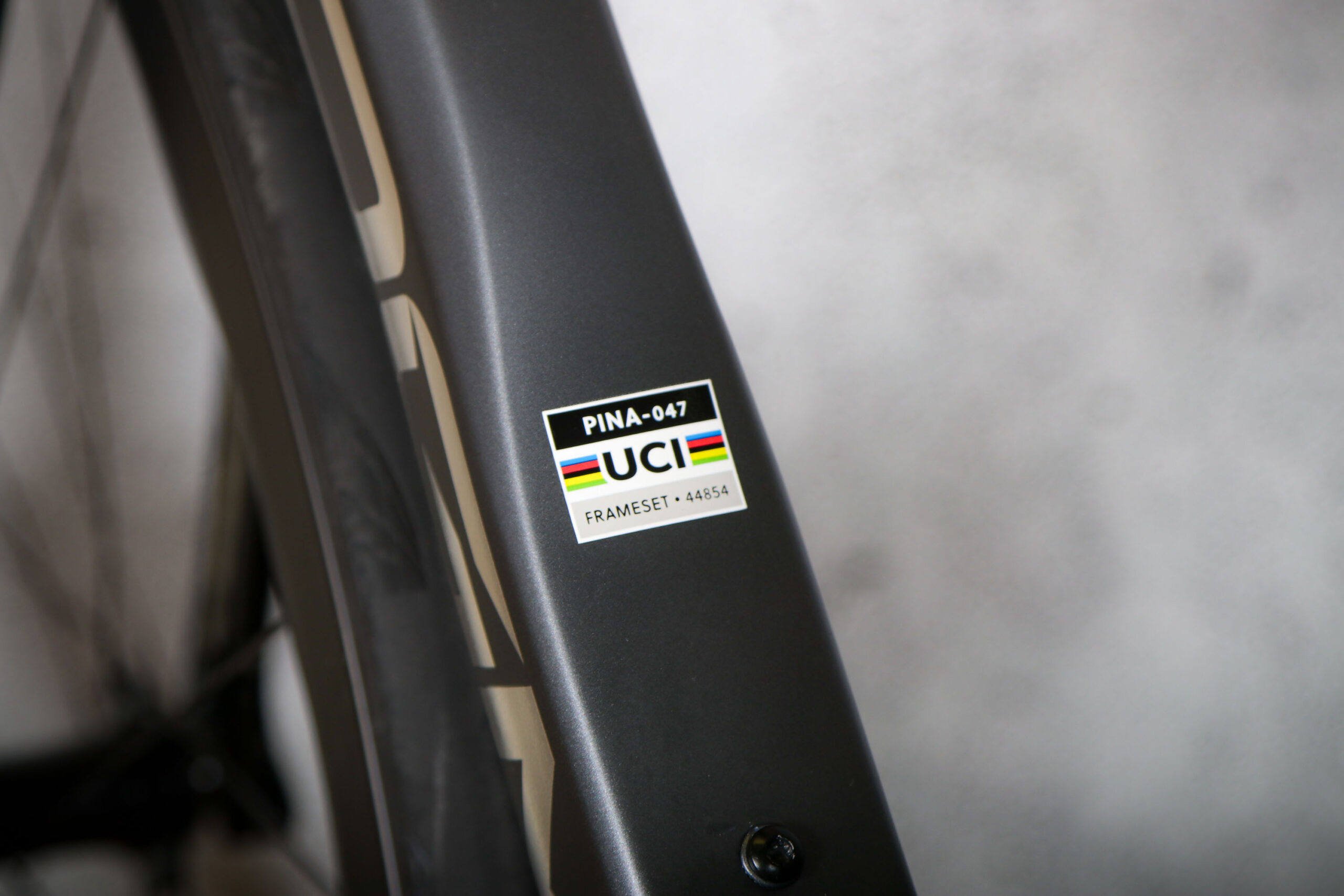
Carbon fibre is a wonder material that is now everywhere; even running shoes now include the stuff. Chances are if you’re buying a high-end performance bike, it will be made of this magical composite. But it’s not completely new.
Even back in the year 2000, carbon fibre was being used in bikes. The CT1 not only has a carbon fork, but also a carbon rear triangle. Carbon is good because it’s extremely light for its strength, and manufacturers can tailor its properties depending on the location within the frame.
> What type of road bike should you buy in 2024?
Carbon fibre has enabled designers to be more adventurous with their designs, sculpting complex shapes which blend both stiffness and compliance. The main drawback of carbon fibre is its impact strength.
In the future, we could see a resurgence of metal bikes as 3D printing comes to the fore. For example, we saw Filippo Ganna break the hour record on a 3D-printed Pinarello Bolide F HR 3D track bike. Could this be the norm in 25 years time?
Verdict: Modern-day materials are simply better. If you don’t like carbon then there’s still plenty of aluminium, steel and titanium options though
6-3
Stiffness

For the final part of our test, we decided to swap bikes. The Colnago certainly felt snappy in comparison to the cruisey Dogma X.
Out the saddle it also felt plenty stiff enough. I was expecting some wallowing from the aged frame, but it felt tight and direct. This was likely helped by the 23mm tyres pumped up to an obscene pressure.
The main difference in my eyes between the two bikes was how comfortable they are. Your wrists tire much quicker on the Colnago, as did my rear end. Sure, the wide tyres, more advanced saddle and carbon bars can all take some responsibility for this increased comfort, but it’s also likely that the frame is more compliant.
Verdict: The stiffness has improved, but it’s the newfound compliance that has a bigger impact on how the two bikes feel to ride.
7-3
So, does retro rule?
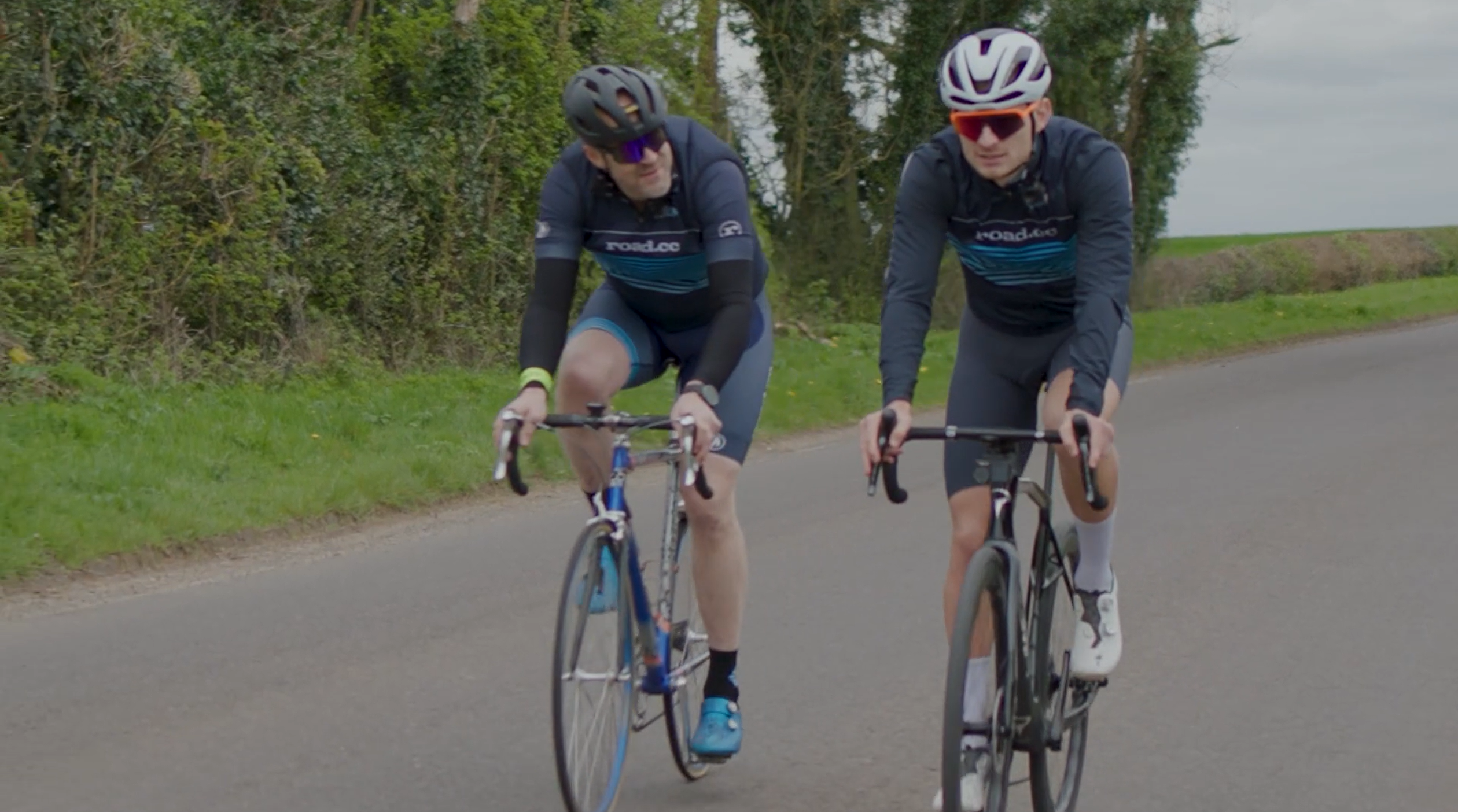
On a day that started with an argument, one thing had become very clear: we both absolutely loved meandering around the Cotswolds on our respective bikes.
There’s now plenty that we can agree on. The simplicity of bikes from yesteryear is undoubtedly a positive, and we both hope that it’s still possible to buy bikes without fully integrated front ends in the future. Mechanical groupsets and rim brakes still work just fine.
We’ve also come to the conclusion that gearing, geometry and tyres are all areas that it’s hard to deny have improved over the last two decades or so. Road bike gearing is now much more appropriate to the average Joe (or Dave or Jamie), the laid-back geometry approach of late allows for more control and comfort over long distances, and it’s a miracle none of us realised that wider tyres are so much better sooner.
So, are modern bikes rubbish? In our opinion, absolutely not; but it is fair to say that they are completely different beasts. Just like a classic car, with a little bit of love and attention, older bikes are still perfectly capable of enabling you to experience the full joys of cycling.
However, for my everyday riding, I’ll be sticking to the here and now. Buy a new bike with your head, buy a classic one with your heart.
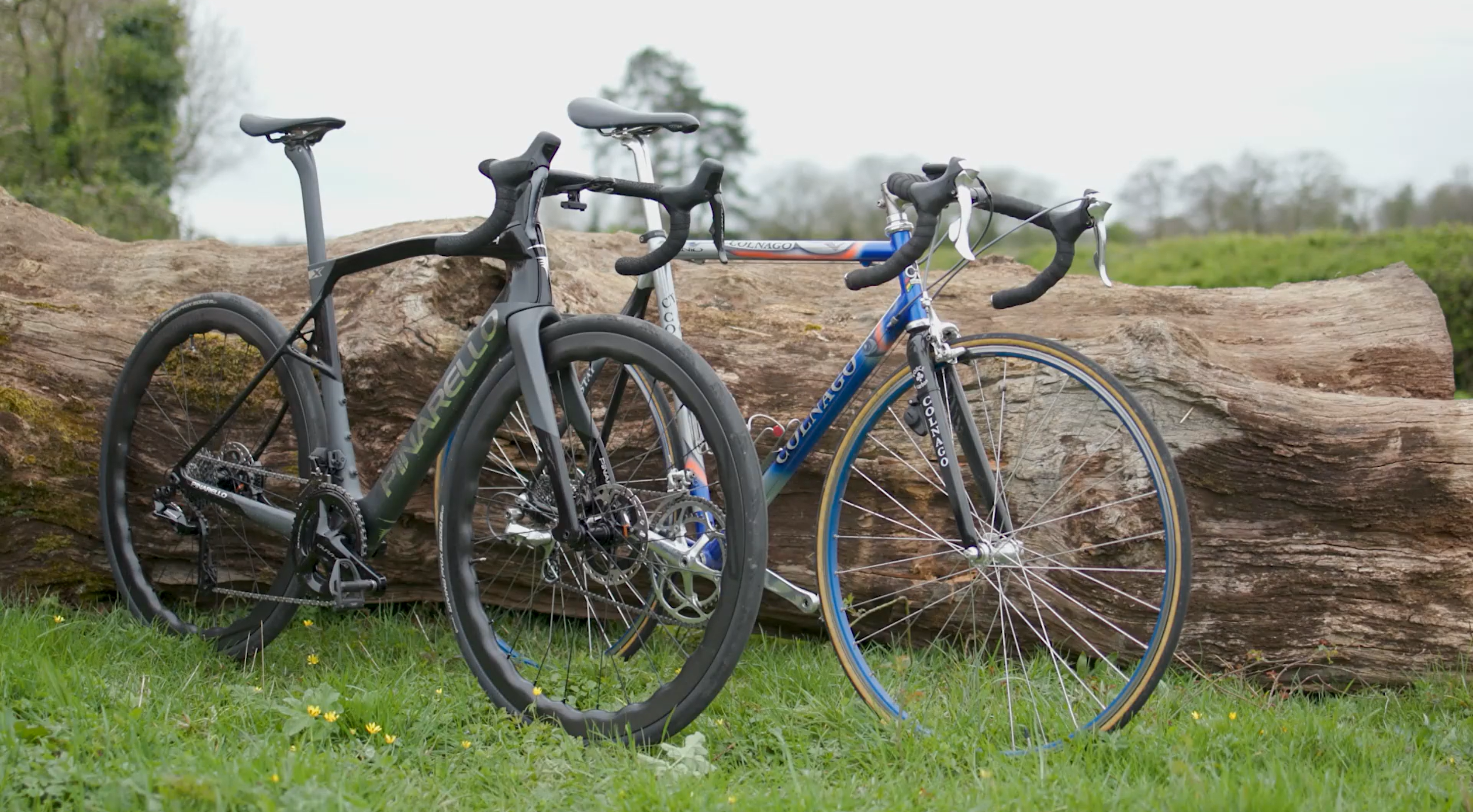
Let us know which of these lovely bikes you’d choose in the comments below, and if you think bikes have changed for the better.





83 thoughts on “Are modern bikes really so much better? Comparing vintage vs new road bikes for ride quality, aero, weight, gearing + more”
Bikes are like cars. In the
Bikes are like cars. In the “good” old days joey learnt to tune a car when he was 16. Today it takes an engineer with a computer. Same with bikes. I could build a bike when I was 10 – now I’m not sure I could getting on to 70.
Not so sure things are so bad
Not so sure things are so bad… my daughters car failed its MOT recently for a mysterious dashboard warning light/engine management problem. A quick Google taught me all I needed to know about diagnostic interface devices and how to use them. I’m sure most 16 Yr olds would have romped though the process.(Although the question does arise…why could my 25yr old daughter with an MA in aerospace engineering not work it out for herself?…once a Dad always a Dad.) As for bikes, I don’t think you can equate the increase in complexity of modern cars with the increase bikewise. Di2 and power meters can be avoided, and even this old geezer has got his head around tubeless tyres, pull ratios and hydraulic discs. As a forinstance, when I realised I’d outgrown my second hand 7speed hybrid I was offered a beautiful Roberts tourer which I tried out for a month. Heart said “buy it”. Head said I could get a used 1st gen. Arkose for much less money and it would be infinitely more rideable and practical. Head won out and my only regret is that I couldn’t buy both. I have no trouble transferring my 5 speed, downtube shifter, cotter pin, screw-on freewheel maintenance skills to newer bikes and it’ll be a very cold day in hell when I swop my 46/30 chainset and BB7s for 52/42 and Shimano 600 single pivot calipers on 23mm tyred rims.
“A quick Google taught me all
“A quick Google taught me all I needed to know about diagnostic interface devices”
Did it also tell you how much it will cost you to buy/lease a tester with all the necessary software, assuming there is one available to the general public that will work with your daughter’s car?
john_smith wrote:
Well, a “quick google” by yourself would have exposed the fact that all road vehicles since the late 90s are mandated to have either OBDII or SAE diagnostics exposed via a common interface. Whilst there’s a requirement for specialist tools for things like resetting crash data and other safety issues such as airbags and seatbelts, the vast majority of DTCs are diagnosable and resettable via a common protocol. Without having to buy expensive manufacturer specific kit, you can buy Bluetooth OBDII plugs for around £20, and use apps such as Carista or OBDEleven to find and reset 90% of DTCs on a car. I’ve used this a number of times of my Caddy, for example VW wanted a fortune to fix a yellow light on the dash, I used Carista to find it was a NOx sensor (Euro6, and not running for commuting anymore), diagnosed, replaced and reset, all good. Likewise for recoding new a battery, no specialist kit needed.
A friend of mine has a garage
A friend of mine has a garage. He regularly spends thousands on testers/software, and there are some things he can’t strictly get hold of at all, since he is independent and the manufacturers in question will only provide it to their own garages.
But you clearly know better.
“All I needed to know” turned
“All I needed to know” turned out to be not that much in the end, but pretty much what Mark1A said below. Certainly enough to ask the right questions of a mechanic, that I wasn’t at the mercy of main dealers and had I been really stuck I could have got a plugin widget. Granted, your garage owning friend will understandably need to know (and spend) a lot more. Times have changed since I helped start up and get running a long abandoned 1955 Ford Popular with just a hammer, plug spanner, emery paper and a tin of Easy Start. One of the reasons why I like bikes more than cars.
She has an MA (Master of Arts
She has an MA (Master of Arts) in Aerospace Engineering not an MEng? Sounds like a design engineer ?
Bikes are like cars.
Bikes are like cars.
In no respect whatsoever are bikes in any way like cars.
Well they are both vehicles.
Well they are both vehicles.
I’m assuming that they were comparing how when you popped the bonnet on an old mini or Capri you could see what was going on and most things were serviceable. Most things on an old bicycle were takeapartable, cleaned, lubed and put back mostly as was. In fact you had to with Shimano bearings. Less so now.
Yup. They were… go back far
Yup. They were… go back far enough and actually cars were kind of an offshoot of the bike business. As indeed were planes (ignoring those like e.g. Hiram Maxim who took the “ship” in “airship” as suggesting a steam engine…)
Perhaps the “ideal” bike is rather economically self-defeating? If looked after, without crashes it lasts a good chunk of a lifetime, while consuming (mostly) generic parts that can be installed by its owner with a bit of knowledge.
The industry must be profoundly thankful for the pros and the inventors of “performance” components, not to mention electronics and digital tech! Though I wouldn’t go back to Everready lights or incandescent dynamo ones.
Compact and subcompact
Compact and subcompact gearing were around from tbe 1930s onwards, so were wide tyres. And so were decent geometries.
Actually in some ways using a road bike from the noughties as your “classic” bike is pretty disingenious.
I’ve been lucky enough to own
I’ve been lucky enough to own a Colnago CT1. I’ve also ridden some top titanium bikes, a Bianchi Infinito CV, Condor Leggero (both carbon), etc.. And the CT1 is still an absolutely excellent bike with impeccable handling and comfort (despite what’s said in this review). Tyres play a large part in comfort after all.
I’ve got the CT2 Colnago –
I’ve got the CT2 Colnago – very similar to the CT1 bar some funky chain stays. It has Campag 9spd, 24/27mm tyres, and 12-28, mated to a 54/42/30. Rides beautifully, handles everything I’ve thrown at it in the 15 years we’ve been living in Scotland. Might only go up the hills at 5mph, but not a lot of bother coming back down at 50… Oh, and I’m 100kg and in my 60s… On the other hand, my modern carbon bike rides like a plank and the internal cables rattle like it’s constantly falling apart.
If you are a decent climber
If you are a decent climber or live somewhere flat then you are rarely if ever going to need something smaller than a 39×23 or whatever. So these supposedly winning modern gears simply mean you are going to be lugging around a load of sprockets you never use and you will often find yourself in a less than comfortable gear because the jumps between gears are too big.
I think it’s always been
I think it’s always been possible to change gearing to suit individual needs?
Definitely. But is it
Definitely. But is it actually possible to buy/assemble a Campagnolo cassette with e.g. a 23 maximum sprocket these days? It’s not something I’ve seen on sale for a while.
john_smith wrote:
Do you actually believe what you write or are you just here to troll the site? The reason you can’t buy an 11-23 cassette anymore is because absolutely no-one would buy them. They’re effectively unsaleable.
Miller.
Miller.
I have nine bikes, none of which have anything bigger than a 23 tooth sprocket (never used), most are a 12-21, although the TT is a 12-19, 8-speed.
42/52 or 39/53 is the only chainrings.
Do I need disc brakes, a stupid high cadence? No.
Some of us want a stretched out top tube and want to be in pain when it comes to cycling.
So, have you ever ridden in shorts in snow with frozen water bottles?
Ever raced?
Some of us want close ratio cassettes, less gears and less crap from people like yourself.
Bit harsh, but go back to your few miles on the Sunday and the coffee stop.
What it is.
Only nine? Amateur.
Only nine? Amateur.
NoOneSpecial wrote:
Takes all sorts…
Ooh, so you are a REAL
Ooh, so you are a REAL cyclist.
All of the things you mention are fine, ride like you want to ride, on bikes you like. You do you. It just gets a bit pathetic when you use stuff like that for bragging rights.
Bit harsh, but go back to your knees and back ruining suffer fest.
Clearly John is an elite
Clearly John is an elite World Tour pro then…
https://www.miche.it/en
https://www.miche.it/en/products/cassettes-sprockets/road/supertype-11-ca
Difficult to get a modern GS
Difficult to get a modern GS with, 53/39 chainrings. Instead you get 10 sprocket that wraps the chain tighter.
fancy a ride in the Peak
fancy a ride in the Peak District tomorrow with your 39×23? I’ll bring my 34×32 if you don’t mind getting dropped on the 10%+ sections – ps I accept no liability for your knees falling apart
john_smith wrote:
The pros on mountain stages seem to be going mainly for 40×30/32 nowadays (except on mad gradients where some have been going 34/32), are they not decent climbers?
As I am not a pro and I don’t
As I am not a pro and I don’t live in the Pyrenees or Alps, I don’t consider that particularly relevant.
john_smith wrote:
That’s fine but you didn’t offer any such qualifier, you simply stated that a person who is a “decent climber” will “rarely if ever” need a lower gear than 39×23, which, given that even professionals, the epitome of decent climbers, use lower than that, is patent nonsense.
I wrote “or whatever”. And
I wrote “or whatever”. And “rarely”. Hope that is qualifier enough for you. If it isn’t I’m afraid I can’t help you.
Grand Tours have been won by
Grand Tours have been won by the likes of Chris Froome on that lower gearing in the mountains. Wouldn’t it be fun watching John v Froome in his prime race up the Zoncolan?
I have no idea how I managed
I have no idea how I managed with 42×21 back in the day. Actually, I do. I honked and I suffered up the hills. Smaller ratios are a revelation.
lesterama wrote:
Same here, I used to climb Box Hill and Leith Hill out of the saddle most of the time suffering like a dog with my 42/23, thirty years later I’m not that far off the times of my much younger and lighter self using a 34/30.
What side was that? The last
If I remember rightly the last time I went up Box Hill I was switching between 17 and 19. Maybe it was a different road.
I like building my own bikes,
I like building my own bikes, so as such the most modern bikes simply don’t appeal to me whatsoever. Started at 7 speed and up to 10 for which I have the tools to deal with, I’ve had to get help from shops in dealing with the specifics of more modern headset/bottom bracket design whereby they can order the relevant bearings for that frame and even do some work to help me on my way.
I’ve tackled some of the Peaks on a classic Bianchi with a bottom gear of 39×23 and had no issues, then again I simply swapped to a 26 on the same bike for Rosedale Chimney in the Yorkshire Moors. I know beauty is in the eye, etc, but to me a classic bike with chrome, shiny groupset and stainless spokes glittering in the sun will always be a thing of beauty, whereas a modern bike just isn’t, no matter what colour chromacoat a modern frame will be, superceding last year’s soulless offering claiming to save you 6 seconds over 40km and 46km/h.
Of course disc brakes are better, big tyres are more comfortable, and I think the jury’s out regarding gears. Dead battery? Dodgy Di2 cable, etc.
These all come at a hefty price,, especially if crashed, far more than for example a bike fit and a retro bike, which lets be honest, will always be cool and stand out when leant against a cafe wall amid a myriad of black modern bikes
Mike Murray wrote:
That’s true, I have a 1985 La Vie Claire Hinault 753R with Campagnolo 53-42 and 14-24 which I restored for L’Eroica Britannia (if it ever happens again), it looks amazing but frankly it’s unrideable around here (Dorset). I think my next old bike project will be a similar era Raleigh 531C in Panasonic livery, but this time it will be a “restomod” with modern drivetrain and cockpit that I can take to the cafe on Sundays ?.
I think a better bike to
I think a better bike to compare would be the Colnago Master X-Light
Is this a competition for who
Is this a competition for who is the hardest?
Some of us have dodgy knees or other medical problems or are just fat so need lower ratios.
“my gears are bigger than
“my gears are bigger than your gears”.
Elsewhere on road.cc forum…
Elsewhere on road.cc forum… pissing contests on who has
the rimmiest brakes
the mechanicalist gears
the skinniest tyres
My tyres are definitely
My tyres are definitely harder than your tyres.
And some of us haven’t, so
And some of us haven’t, so don’t.
No one is suggesting you shouldn’t ride what you want.
john_smith wrote:
It’s true, you haven’t suggested that. You’ve just sneeringly and condescendingly said that anyone who is a decent climber shouldn’t need lower than 39/23 which, as has been pointed out to you with reference to the fact that many pros habitually now use smaller gears than that when climbing, is nonsense.
Crikey. There is certainly a
Crikey. There is certainly a lot of sneering and condescension in this thread. I’m not sure how much of it was from me though. Anyway, you ride what you want. I really couldn’t care less what gears you use.
No just made people feel
No just made people feel inferior.
I was going to ride a few
I was going to ride a few miles and go for a cafe stop today but i feel quite inadequate now.
It was certainly not my
It was certainly not my intention to do that. My point was simply that there is a smallest gear any rider will need. In my case it happened to be the one I mentioned. Any gears smaller than this will be wasted. In view of this I consider the limited or non-availability of smaller cassettes these days a “disimprovement”.
Anyway in the big scheme of things what gears you use or how you ride or indeed whether you can ride at all is insignificant. There are far, far more important things in life. Feeling “inferior” because of what gears some stranger you know nothing about uses (or claims to use) is silly.
john_smith wrote:
And attempting to make others feel inferior, or proclaim your own superiority, by making statements such as a “decent climber” doesn’t need anything smaller than your preferred smallest gear, is sillier still.
Give it a rest, pal.
Give it a rest, pal.
I was actually referring to
I was actually referring to someone elses comment.
You don’t even *need* gears
You don’t even *need* gears if you’re a decent enough climber – but if you use a bike it makes you even more impressive maybe?
chrisonabike wrote:
I thought the potholes round my way were bad
hawkinspeter wrote:
This is actually the diversion put in for cyclists round Edinburgh castle to allow more space for coaches / scaffolding trucks for the Royal Tattoo.
hawkinspeter wrote:
in the chilterns we don’t even get the foot supports. you need to wait for someone to turn up with a rope.
wycombewheeler wrote:
Typical UK rubbish cycle “infra”! They should just copy the Dutch example I’ve shown…
My gears are taller and
My gears are taller and straighter than your gears. My tyres are of finer silk and made by hand. My tubes feature integration. My embrocation smells better.
Poor taste comment about the
Poor taste comment about the knife fight in the phone box.
Kittysaz wrote:
Common slang for a confused and chaotic situation, it’s been around for forty years at least.
Ffs!
Ffs!
Do you ride a bike?
That’s good enough for me.
Everything else is just personal choice. Why the fuck are we trying to set one cyclist against another @roadcc?
I like articles like these –
I like articles like these – light-hearted but with some thought-provoking (or just provoking?) content and some interesting comments. A few people do seem to take it too seriously, or don’t express themselves well – but I don’t think the rest of us should be denied a bit of fun because of it.
It all put me in mind of this joke – but the second one (which I didn’t know) is better. Old jokes are the best – or are they…?
I’ve sometimes wondered
I’ve sometimes wondered whether at road.cc towers, there’s a staff sweepstake; start by chumming the water, put out an article comprising of some or all of the following: brake types, gear technology, frame material, tyre size and/or pressure, trans and/or gender issues, bike prices, brexit, doping, site funding model, and so on, and then the office prize goes to the person who correctly guessed or got nearest to the number of comments.
If there isn’t, there should be…
sorry to anyone born before
sorry to anyone born before about 1990 – apology accepted.
If we are going to have allusions to cars, then the Pinarello is a Nissan Juke (1st generation), looking to my eyes like it’s been 3D printed for a GCSE project or a cheap sci-fi show.
The old “cheap/strong/light: pick any two” doesn’t take into account complexity. Internal routing, discs, D12, arguably triples are all examples of things that work when they work and are a real PITA when they don’t.
It’s me thst needs to lose weight, not the bike.
Not sure what was going on with the Colagno’s decals and those blue anodised rims, but metal tubed bikes have a timeless elegance. There won’t be a comparison against bikes like that in 24 years’ time because they won’t be around, (whereas bikes like the Colagno will be.)
Overall, though it’s a fair evaluation and a lot has genuinely improved although I question the point about brake callipers and wider tyres – IME, its never the callipers that are the limiting factor.
No-one outside the pro bubble really needs more than 10s. I’ve got one 11s Ultegra equipped Ti bike and an at risk chainset (that I’ve now replaced) is my reward there.
I’m neutral on A-head headsets (vs threaded) and the threaded outboard bottom brackets there’s pros and cons too. I don’t think I’ve ever managed to substitute 1″ forks as the steerer and threading height are always different. I’ve just picked up some 531 1 1/8″ forks for the 853 frame I built on a course a few years ago that I can fettle to fit.
Wide ratio gears aren’t anything new if you looked hard enough, even if in the mainstream we spent two decades needlessly trying to emulate the pros with our 52/42 chainwheels and 14-24 freewheels. I’ve got 10s bikes with a top gear of 50t/11t – on the descents I can push that gear on, I’m going way too fast.
Recent builds have been with a Stronglight 46t triple, or where I’m lumbered with a Shimano 50/36 chainset, replacing the cassette with Miche that start at 13t (doesn’t work for my sprung vertical dropout steelies: not enough room).
It looked like you were both running Shimano SPD-SL pedals or similar with the outboard cleats?
It’s mid April and two of my local roads have got water running across them and one with water running along it. I don’t suppose I could bring in the subject of mudguards? And neither bike seems to be carrying anything – great if you’ve got the support van right behind you, but not real world stuff, IME. I find the combination of my gut/girth and loaded pockets puts a lot of strain on the zips of my jerseys.
I find the Carradice Barley a bit flappy for day rides (my usual staple) but the Zipped Roll is just right – I’d recommend attaching some Cyclo bag loops if you’re not running a Brooks saddle.
A lot of those “decals” were
A lot of those “decals” were actually done with an airbrush.
bizarre response with no
bizarre idiosyncratic comment with no relevance to the subject at hand
Bring back Boatsie!
Bring back Boatsie!
how does the modern bike
how does the modern bike being nearly 1kg lighter translate into a win for team retro? Bearing in mind the lighter bike has 3 extra sprockets and disc brakes, still lighter.
Yeah, we know you won, but since you didn’t win by more, you’re taking the loss.
Perhaps someone would like to
Perhaps someone would like to explain why since 1958 till now, in both the Tour de France and the Giro d’Italia, the average speeds have only gone up 3 1/2 mph, with all the technology and expensive bikes that’s all that the speeds have gone up. Was that due to lighter bikes? due to aero bikes? due to more gears? due to disk brakes? How about none of the above? The average speeds went up because from 1958 till 1987 the average distance raced was slowly reduced by about 500 miles on both races, except the Giro was reduced in 2000, so the average speeds only went up because the riders are less tired, and not a damn thing to do with all the expensive crap we have today.
Bicycle Quarterly did an
Bicycle Quarterly did an study on that a while back, aptly entitled “Are modern bikes faster?”, where they compared the long term average speeds in the Tour de France, but also Milan San Remo, where the course hadn’t changed a lot during the time, and those of long distance running, where there’s (was) not much technological influence, over the same period (1903 to 2010 or so). If anything, the speed increase was lower in cycling.
Another interesting finding was that some of the biggest speed increases in cycling came at times when bike technology didn’t change much at all. So answer: No, bicycle technology isn’t responsible for faster speed, athlete performance is.
(Not sure it would be possible to prolong the same study up until now, because of the influence running shoes have had lately.)
P S.: Bicycle Quarterly Summer 2010:
One could say, to those that
One could say, to those that it concerns, compare bikes all you like, draw up championships all you like (winner on the scales, winner in the wind tunnel, winner on whatever stiffness contraption you can come up with, bike with the most carbon parts, bike with the biggest brake discs etc. etc.), but leave actual cycling well out of it.
Fuck me, not again…
Fuck me, not again…
OK. deep breath…
OK. deep breath…
Better doping control
More elevation
Fewer/no transit stages
In the spirit of Groundhog
In the spirit of Groundhog Day (now renamed Froze(n) in Time Day) I’d add, due to increased TV coverage, far greater scrutiny of car/motorcycle drafting and indeed blatant towing – it was amazing, when it was permitted, how many riders seemed to need their cleats adjusting et cetera, necessitating hanging onto the car for a couple of kilometres whilst the mechanic took five minutes over a thirty second job.
froze wrote:
Try riding the TdF distance or even a single stage distance at race speed. Then try riding it “only” 3 1/2 mph faster.
john_smith wrote:
Exactly, according to online calculators the difference between 36 km/h and 41 km/h is approximately 100 W for a 65 kg rider, a 30% improvement. Fair to assume that whilst modern riders are better trained and better fuelled they probably aren’t 30% stronger and so the machinery will have made a significant difference.
BQ (after an actual study of
BQ (after an actual study of the facts) says otherwise.
But don’t let that get into the way….
marmotte27 wrote:
I haven’t seen the report to which you refer but looking at the graph that you shared there it appears only to have looked at speed versus the introduction of technology without any reference to doping or changes in the nature of the parcours, so the “actual study of the facts” appears to ignore some of the most important facts.
ETA Would you actually say, if you believe the tech has made no difference, that if we took Pogacar and Vingegaard (assuming both uninjured and at peak fitness) in the Tour and left Pog on his current Colnago but gave Jonas, say, Eddy Merkcx’s 1968 Tour bike that Pog would not have a very significant advantage?
Claiming an article you haven
Claiming an article you haven’t read ignores some of the most important facts strikes me as somewhat premature, they do asess exactly that.
As for your experiment, yes, that’s exactly what the article’s findings suggest, provided obviously all other things were equal.
P.S. There’s a detailed summary and discussion of the article here, and a comment below from Jan Heine adressing some of the criticisms levelled at it:
https://cozybeehive.blogspot.com/2010/08/modern-bicycles-and-cycling-speeds-any.html?m=1
I said it appears to on the
I said it appears to on the basis of the graph you shared, I was at pains to point out that I hadn’t read the article. Thanks for sharing the blog, it appears that from the analysis that the methodology and assumptions of the authors are open to criticism to say the least. The choice of middle distance running as a comparator I would say is flawed to start with as it assumes that technology has made no improvements to faster times in that area; it’s not my field of interest but 50-something running friends often seem to comment on how much faster they run in the shoes one can buy now are compared to those they started with in the 70s and 80s. I was particularly struck by Heine’s defence that since the 1920s the difficulty level of the Tour has varied “remarkably little”. Really?
This was interesting in one of the comments:
Riders ride on their own, no pacing.
Half of riders ride Pinarello and other half Lapierre.
Comments on Pinarello- Flexes everywhere, especially descents, brakes slow to respond, have to fight the bike on climbs… Cinelli Wedge saddle excellent.
Comments on Lapierre- Excellent, very stiff, responsive…
Test Results- virtually no difference in riders heart rate and cadence on each bike. Key finding is due to stiffness of Lapierre, riders were capable of providing 10 watts more in intense time trial type effort. Pinarello, being less rigid, absorbed 3.1 percent of riders energy. Resulting in difference of 18 seconds. On an ascent of Galibier, difference calculated to be 2min 06sec. between bikes.
Expert estimates in the TDF, difference would be not less than 3-5kph. 1983 Fignon won at average of 36.23kpg, 2008, Sastre won at average speed of 40.492kph. A difference of 4kph over 25 years.
Timed Runs (avg. of 7 riders data/bike)
Lapierre Pinarello
Time 8-56 9-15
Output 317.6 308.1
Speed 18.3 17.7
Cadence 77.7 77.1
Heart bpm 168 167
The change in running shoes
The change in running shoes has come in the last five years or so, the TdF analysis goes until 2010, so before, as I pointed out above.
As for the difficulty level, over more than a hundred years it all evens out, and the graph shows just that. And for exactly that reason they also analysed, as again I pointed out, Milan-San Remo where no big changes had occured, with the same results.
In an almost laughing-out-loud funny way, the comment you cite shows the problem with people criticising stuff they haven’t actually read. In the same issue of BQ, Heine comments on exactly that study (he actually blasts it out of the water, even it’s own author no longer wants to stand by it afterwards), where amongst other shortcomings all riders rode the same, heavier, old bike unfamiliar to them, regardless of their height,leg length etc. What’s more, they knew they were riding a heavier old bike. And their actual power power output on each bike wasn’t factored in, if it had been, they should actually have been even faster on the new bike (which means the old bike given its heavier weight was in reality at least no slower…)
That’s why I said above it would be necessary for “all other things [to be] equal” in such a test…, not easy/impossible to do. An analysis like that of BQ (written by people with scientific training, over no less than 11 magazine pages) is actually far more useful.
Let’s see if I get an answer to this…
Yeah, I thought not…
Yeah, I thought not…
marmotte27 wrote:
I hadn’t seen that you had replied until I saw this comment and went to see to what it referred…but as I see you appear to be getting unnecessarily agitated and personal about what could have been an interesting discussion without any need for rancour I think I’ll give replying, apart from this, a miss, thanks. I’m sure you’ll say that proves you’re completely right and that’s fine by me. Have a lovely Sunday.
?
?
They are not going full gas
They are not going full gas at every point. They would destroy themselves. And tactics, they save themselves for when effort is really needed. Wouldn’t the tech advantage be more visible on the time trial stages, or the ups and downs on the mountains?
I don’t know if they’re any
I don’t know if they’re any better, but they’s certainly become more boring.