



Disc brakes have become an increasingly important part of the road bike world over the past few years, but while the benefits of disc brakes are well documented, they bring with them challenges and problems too.
Here are some of the issues that we’ve experienced and heard about.
1 Disc brakes add weight
The all-up weight of a disc brake bike is higher than that of a rim brake bike.
Levers, brake callipers, hoses, fluid and rotors weigh more than an equivalent rim brake setup. Manufacturers often try to minimise the difference but don’t forget that disc brake hubs are heavier too, and disc brake wheels are often built up with more spokes of a wider gauge, although the lack of a brake track means that disc-specific rims are generally lighter. The thru axles that are used with many disc systems are heavier than quick release skewers.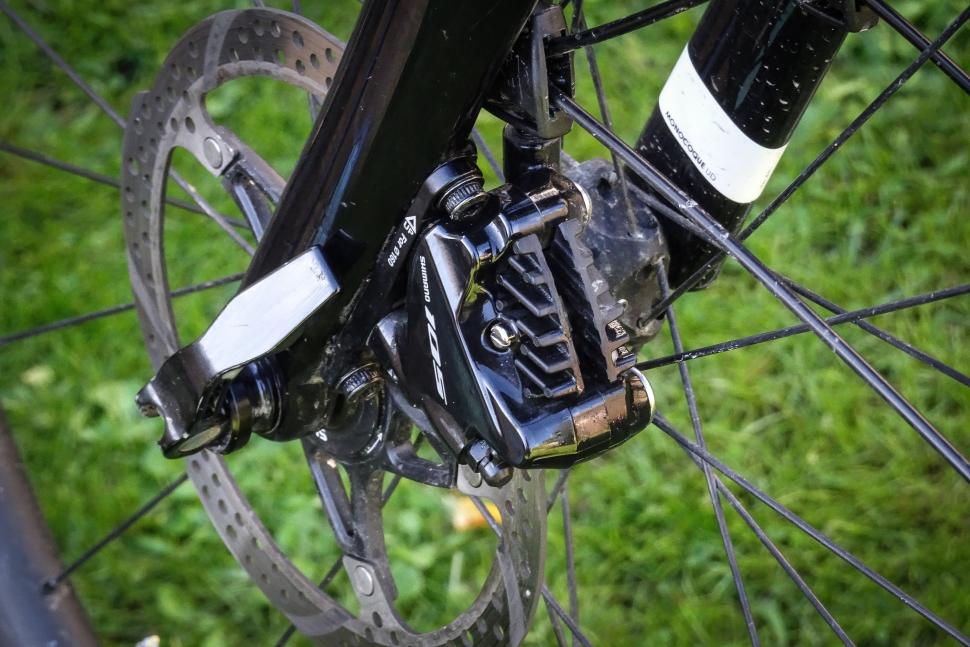
Read Everything You Need To Know About Disc Brakes
The weight difference isn’t huge but it can often be around a pound over the whole bike when everything is taken into account.
2 Disc brake rub can be an issue
Early disc-equipped bikes borrowed the 74mm post mount standard from mountain bikes, where the brake calliper is simply bolted directly onto the frame or fork and adapters are used to accommodate different rotor sizes.
To try and improve the appearance of discs on road bikes, Shimano introduced its flat mount system. It’s an open standard that has been quickly adopted by other disc brake manufacturers. The vast majority of new disc brake road bikes are flat mount.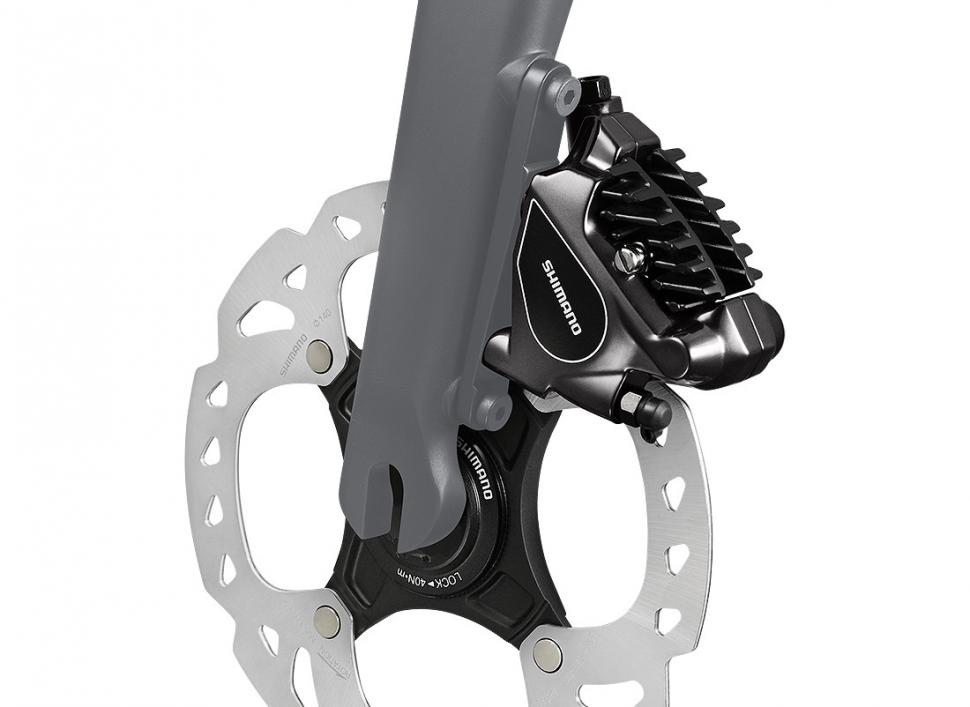
“[Flat mount offers a] smaller and more compact interface with the frame/fork for improved integration, reduced weight and better tool access for easier adjustment,” Shimano told road.cc.
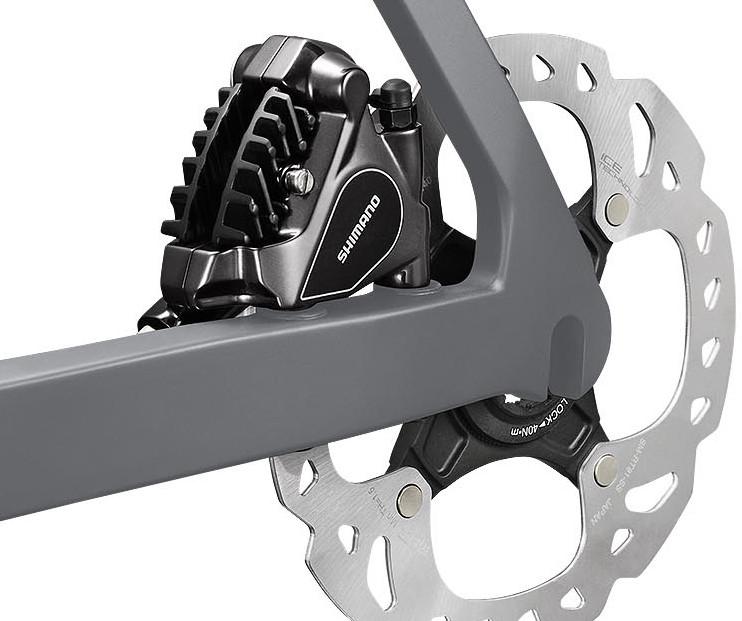
There’s no doubt flat mount disc callipers are smaller, better looking and lighter than the bulkier post mount callipers. The actual calliper mechanism is identical and there are no changes to the way the hose connects and the brake pads are installed. The key difference is in the way the calliper is mounted to the frame.
Where post mount callipers are bolted from above directly into the frame and fork, flat mount callipers sit flush with the frame and fork and the bolts are threaded in from below and directly into the calliper, pulling it down onto the frame. At the front, the calliper is fixed to a thin adapter which is bolted to the fork.
Depending on frame design and disc rotor size, post mount often needs a large and ugly adapter to provide the correct spacing over the rotor. On mountain bikes with many different frame designs and more rotor sizes in use, that versatility is a good thing, but the road market leans towards just 140mm and 160mm rotor sizes, for which flat mount has been designed.
We’ve had mostly good experiences with flat mount on the disc-equipped bikes we’ve tested, but there have been a couple of incidents of brake rub, and there’s nothing more annoying.
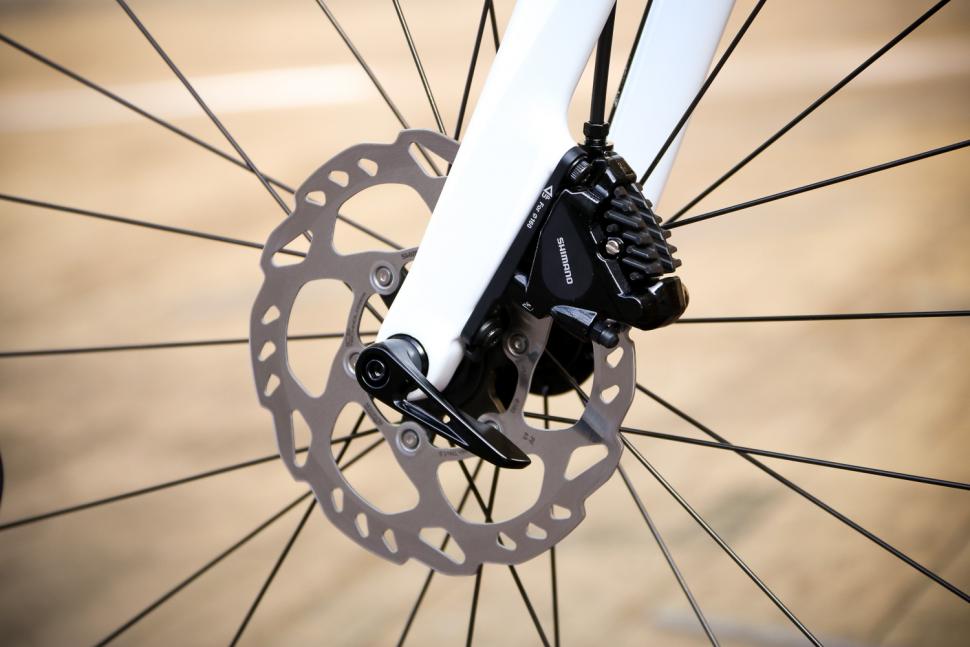
We asked Shimano about this problem and it told us that cleanly faced mounts are very important.
“As with post mount, a plane contact area (facing) always helps, as does the size of the disc (smaller is better). Centerlock rotors on good stable axle bearings (compared to 6-bolt rotors on lightweight hub axles) also help with alignment. The construction of the fork is also important (stiffness balance left/right),” said Shimano.
You’d hope a frame or fork manufacturer would make sure that the contact area was right, but in our experience this isn’t always the case.
Facing tools ensure the brake mounts on the frame and fork are smooth and level and provide perfect alignment. They’re expensive and not really suitable for most home mechanics, although all good bike shops should be able to help you out here. Park Took does an adapter for its DT-5.2 Disc Brake Mount Facing Set and you can see it in action in this video.
The other solution to disc brake rub is to adjust the calliper on the frame/fork. With post mount it’s relatively easy: just slacken off the bolts, pull the brake lever and tighten the bolts to centre the calliper over the rotor.
“The range of adjustment for flat mount is the same as for post mount,” says Shimano. “The difference is that the side-to-side adjustment is no longer on the calliper but in the slot hole instead. Shimano recommends that this hole is 4 x 5.2mm (+/- 0.1mm) but sometimes manufacturers don’t follow these recommendations. For the front calliper the adjustment is in the adaptor plate with the same hole dimensions.”

Not all manufacturers are adhering to the requirements as closely as they should. In many cases, the flat mount range of adjustment appears to be less than in post mount systems. We like flat mount but it does mean you are at the mercy of bike companies ensuring the mounts are manufactured correctly.
3 Disc brakes affect aerodynamics
Like any other external component, disc brakes affect aerodynamics. Some manufacturers have stated that the rim brake version of a particular bike is more aerodynamically efficient than the disc brake model, but it’s not as simple as saying that rim brakes are always more aero.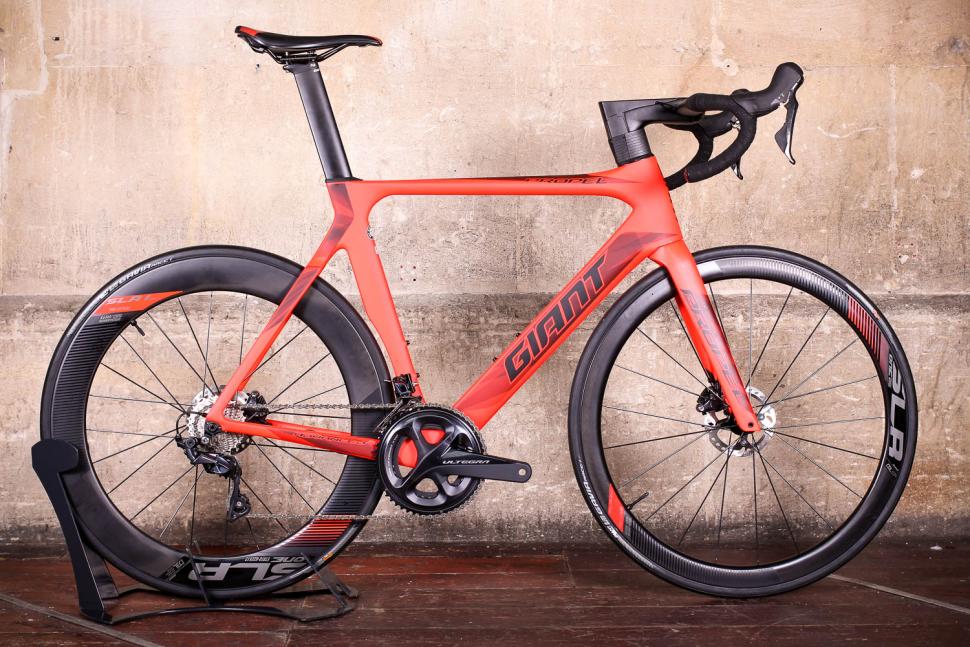
When Giant revealed its Propel Disc in 2017, for example, it said, “Engineers found that, with proper integration, a disc-brake design can actually improve aero performance compared to rim-brake configurations.
“This is because the location of traditional callipers (either in front or behind the fork crown/ legs) creates ‘dirty’ air’. Opening up the fork crown area (by placing the disc-brake callipers down at the hub) means that the air hitting the new disc-brake calliper has already been disrupted by the leading edge of the tyre/wheel. This effect is further enhanced by an asymmetric fork that helps smooth out airflow over the calliper.”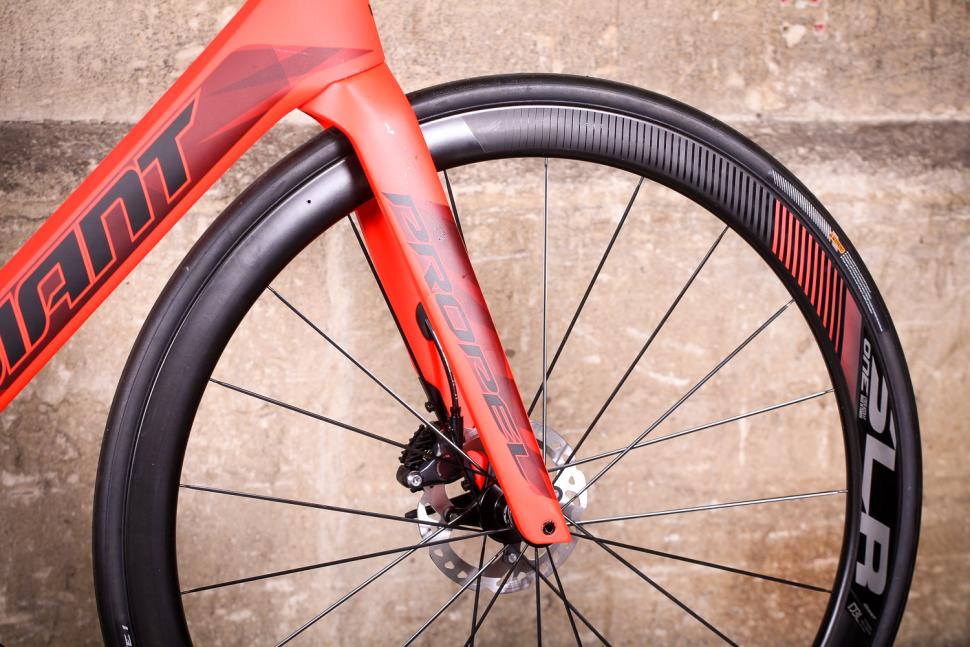
A handful of new aero road bikes, like the Cannondale SystemSix and 2019 Specialized Venge, are disc brake-only.
4 Choosing pads is a minefield
Switch to a disc brake bike and you’ll eventually have to choose new pads… and that’s a minefield.
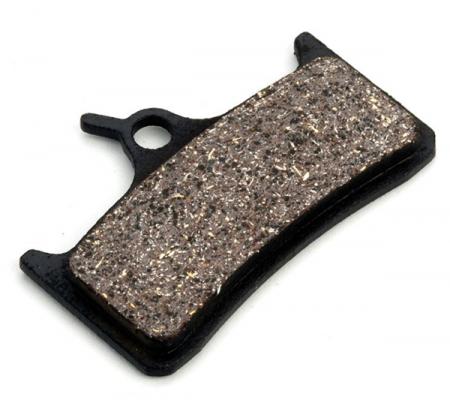
All pads are made by mixing various powdered additives with a binding agent and then squashing it all together at high heat and pressure to form a solid block on the backing pad. What’s in the mix of powders has a major effect on the pad’s properties.
Most new bikes come fitted with resin pads. They’re made from non-metallic additives such as rubber, glass, carbon and Kevlar to provide an all-around pad that works for most people but isn’t very durable under hard use.
Find out more about disc brake pads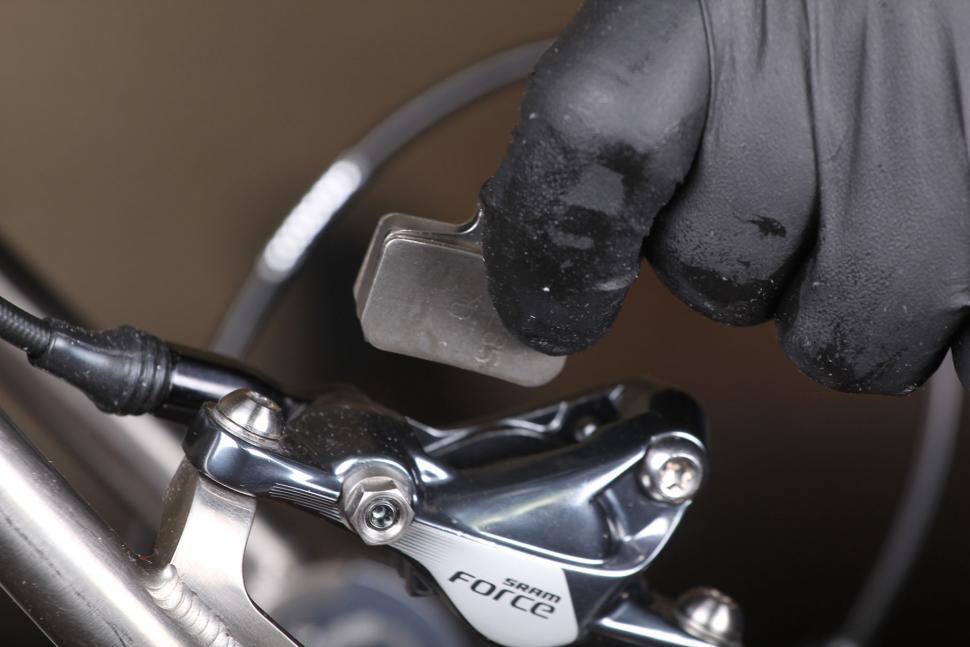
If you live anywhere hilly and/or ride in all weathers then you’re probably better off switching to more expensive but much longer lasting sintered pads. Also known as metallic brake pads, these use a very high proportion of metallic fillers such as copper, steel and iron. They provide strong, effective braking at high pad temperatures although their bite can be poor when they’re cold and they’ll wear out your rotors quicker than resin pads.
5 You need to bed in new brakes
New disc brake pads and rotors don’t immediately perform to their full potential – they need bedding in first. This is a process that distributes pad material over the rotor to increase the friction, and maximises the contact area between the two surfaces.
Here’s how to look after disc brakes to get the best performance out of them
Thankfully, bedding in is pretty straightforward. Here’s SRAM’s advice:
“Accelerate the bike to a moderate speed and then firmly apply the brakes until you are at walking speed. Repeat this process 20 times. Then accelerate the bike to a faster speed and apply the brakes until you are at walking speed. Repeat this process 10 times. It’s important that during this process you never come to a complete stop or lock up the wheels at any point.”
This will improve the performance of your brakes massively and prepare them for normal riding.
6 Maintenance involves a new set of skills
Chances are that you know how to adjust rim brakes and swap the pads, and probably how to change the cables too. You might have been doing it since you were a kid. Depending on your cycling background, disc brake maintenance might be entirely new to you.
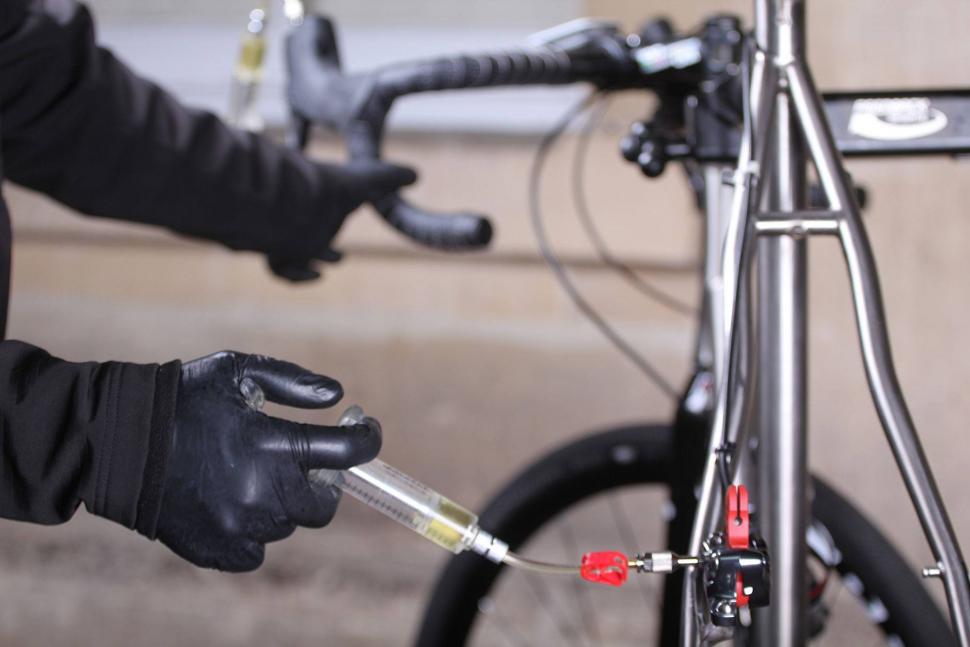 One issue you could encounter with hydraulic disc brakes is a soft and mushy feel because of air in the system. This requires bleeding and means either a trip to a bike shop or shelling out on a bleed kit. Each manufacturer has its own bleed kit. Shimano and SRAM, for example, use different techniques and fluid.
Bleeding a hydraulic disc brake system isn’t the most onerous of tasks but you will need to get the hang of it while following a guide or watching one of our videos.
7 They can squeal!
It’s true that rim brakes can squeal but we reckon that disc brakes are worse offenders.
The most common cause of disc brakes squealing is contamination of the rotor or pads. You have to be careful when using spray lubricants on a bicycle with disc brakes, or avoid them altogether.
Find out how to stop your brakes squealing
“Cleaning your rotors regularly with a specific (oil-free) disc brake degreaser is a good way to avoid squealing brakes,” says Shimano. “Cleaning your pads too can help quieten things down — you can try some sandpaper or grinding the pads — but if the grease has soaked through the pad, you might need to replace them. Don’t use a degreaser or chemicals on brake pads, though.”

It’s harder to clean disc brake pads than rim brake pads, largely because you have to remove them from the bike in the first place.
What’s the best way to clean disc brakes?
Squealing pads can also be a sign that the pads are worn out. It’s a little more tricky to take a close look at disc brake pads than it is with rim brake pads, although taking the wheel out can make the task easier.
8 Rotors wear out… eventually
One of the advantages of disc brakes is that they don’t wear out the rims of your posh carbon wheels, but don’t forget that you will wear out the disc rotors. Thankfully, rotors aren’t particularly expensive.
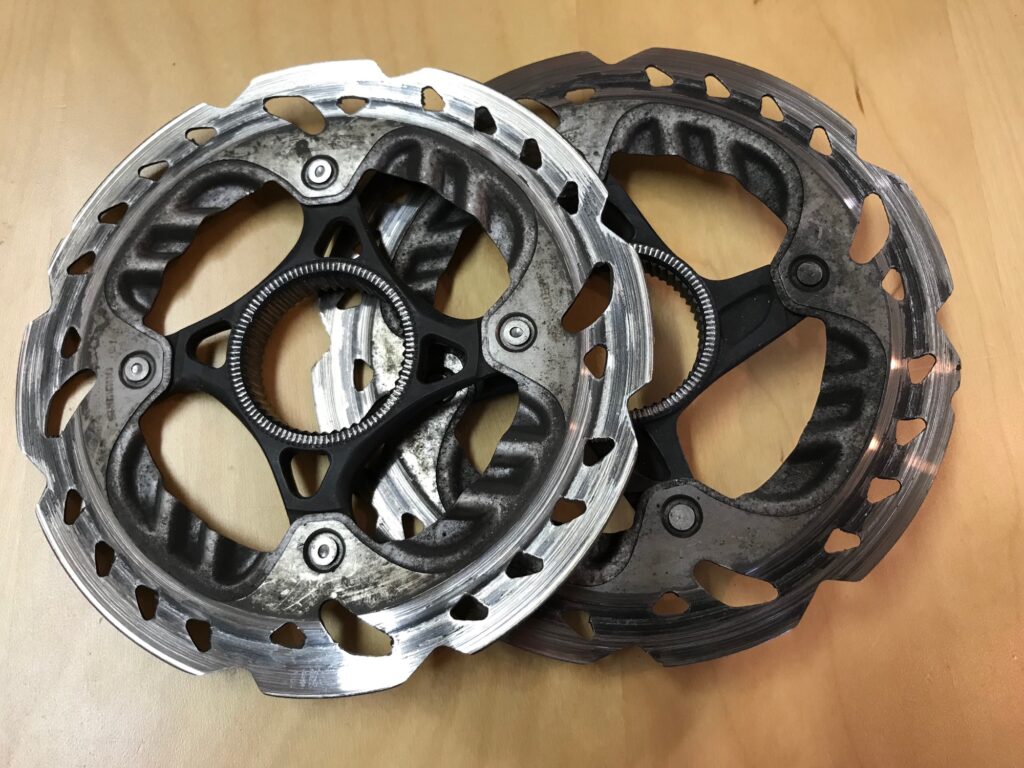
Different brands give different minimum thicknesses for their rotors (the figure is often printed on the rotors). Go beyond that limit and things become dangerous, so keep an eye on ’em.












207 thoughts on “8 reasons not to get disc brakes — find out the hassles before you switch”
The worst thing about disc
The worst thing about disc brakes is that mechanical calipers, due to internal friction and flex, are not as powerful as hydraulics. This would not be too bad if manufacturer did not insist on mounting puny 160mm rotors witht them. Even worse is that flat mount does not have adapters for bigger rotors.
franta wrote:
They are right to do so in most cases. If I can lock up a soft compound 700x40c tyre at low pressure with 160 mm rotors and TRP Spyres with cheap discs, there’s really no reason to go bigger on roadbikes.
FYI though, there are manufacturers that move the mounts a bit so you have the choice between 160 and 180 rotors (e.g. Poison Cynit integrated).
If you get cheap mechanical calipers though you’re in a whole ‘nother world of pain because of the way they clamp on the rotors…
Cowoner wrote:
Is this the front wheel ?
I agree that 160mm is enough at the back.
I’ve had 2 bikes with Spyres and neither inspired me much with the braking.
franta wrote:
If “compressionless” mechanical brake housing was not a fortune I’m sure it would be supplied on mech disc equipped bikes more often than never. Running mech discs without it is a waste IMO. It’s night and day difference.
Even aligning calipers so
Even aligning calipers so they look like they don’t rub, I can’t believe that the majority of calipers don’t rub to some miniscule amount. I can see clear daylight between the pads and rims on my rim brake bike. I *think* I can just about see clear daylight between my caliper pads and disc rotor on the road bike but it seems to be very fickle/susceptible to contact. That’s with thru axles too!….. So there must be some marginal losses there surely? When everyone is talking about watts saved from going aero or watts saved using the right chain lube, surely a little more pad clearance wouldn’t go amiss?
And yes I race, so it does matter to me when I’m racing. Not so much on a training ride though.
I have 140mm discs front and
I have 140mm discs front and back on my Strael with Shimano hydro brakes. The brakes are phenomenally powerful as is, I cannot see ANY need for 160mm rotors at all.
StraelGuy wrote:
Bigger discs don’t give you more braking power, they do give you more heat dispersion though. One of the issues discs have is that heat can build and a rotor doesn’t lose heat as quickly as a rim. Hence a heavier rider on hilly terrain might be better off with a 160f/140r setup. Shim have gone a long way in heat management tech however, Sram recommend 160f I believe.
Stueys wrote:
Basic physics says yes they do – the bigger the diameter the bigger the braking force,
StraelGuy wrote:
Brake disc size has no effect on braking power. If you dont care if your brake discs overheat then get the smallest and lightest possible. If however you want to be able to apply your brakes for as long as possible before they overheat and fail, you will want the biggest discs possible.
bangersnmash wrote:
You must see that your first statement indirectly contradicts everything else you said.
They’re noisy, they’re a faff
They’re noisy, they’re a faff, and they’re entirely unnecessary on a race bike. Cracking for off road, gravel, adventure and commuting though, despite the noise and the faff
Nick T wrote:
But still absolutely not necessary.
Discs for mountain biking IF you have to go hell for leather all the time and get a lot of mud clogging but then you’ve got another set of problems to overcome, but you can do mountain biking on cantilevers or Vs in any case without problems, in fact Tom Pidcock rode to the 2017 junior world cyclocross title in 2017 on cantis in fairly icy/snowy/muddy conditions and the crashes were down to limitations in tyre grip not braking power so that’s proof enough that you don’t need discs for any discipline.
I’ve commuted on/off for 34 years and ridden utility since I was 13 non stop even when I was a car commuter in the 90s/early 00s. Originally started on chrome steel rims and leather pads plus very bog standard side pull calipers, my current daily I’ve used for off road/gravel, commuting, touring incl fast descending in the alps, in all that time with any bike I’ve never not had enough braking. Even doing downhill on my old steel MTB. It’s about judgement, all discs do as with other braking and tyre improvements is allow you to go faster and brake later, they don’t really improve safety because if you’re jusding correctly then whatever braking you do have it should always be enough unless you make an error or there is an external force out of your control.
If people want to use discs that’s fine but it won’t increase safety or make your ride any more exciting.
BehindTheBikesheds wrote:
Nor is a seat, I bet you have one though.
Your legs must be tired by now – why did you pedal power your car?
alansmurphy wrote:
Are you trying to compare two differing brake types to seat belts, now I know you’re a troll!
And to answer your question, no I don’t have a seatbelt now and haven’t for 16 months now and when I did have one fitted in the vehicle I never ever used it in the sense of what it supposedly offered me over not having one. I commuted in and around London at peak times for a decade, sometimes 4 hours a day. Drive to the conditions, read the road, take account for fuckwittery, take account fo the vulnerable, don’t push things to the max … EXACTLY the same as riding a bike and hence why taking into account that seatbelts do as much harm through risk compensation and the internal injuries they cause when seatbelts are needed to retain people in their vehicles, as they save that they aren’t necessary actually.
Amazing how millions of people managed not to die whilst driving with tiny drum brakes, no power steering, 12/13″ tyres, no crash cells, airbags, traction control etc etc. That was what my first car was and the second.
So called improvements in tech do not equal necessary or safer and in fact not improvement but a shift in taking responsibility for ones actions and how you think.
BehindTheBikesheds wrote:
Oh dear, if only you’d read the actual words before your rant about what a fantastic driver you are…
Seat, I said seat.
In response to you saying disc brakes aren’t absolutely necessary. Despite the fact that nobody claimed they were, the point I made is that a seat isn’t absolutely necessary but most will have one.
Now, feel free to rant…
Just came back from a ride on
Just came back from a ride on my “summer” rim-braked bike, after exclusively using disc bike bikes since (I reckon) end of November. Got to love a lighter bike, no brake rub and the rim brakes provided great control. Don’t me wrong, I like my disc brakes, but today’s ride was a hoot…Didn’t even miss my 30mm tyres!
Nearly all of these things
Nearly all of these things are either non-issues or also apply (but worse) to rim brakes. The main provisos are, stay away from cable disc systems as they are generally crap (and people then assume the same issues will afflict hydro systems), and yes, flat mount can bring a whole load of issues, usually only on a new bike though. Rim brakes bring a whole load more issues for the average rider I think; they destroy the wheel, they can easily be set up in a dangerous fashion (typically the wrong pad compound for a carbon wheel, or cheap hard pads which wouldn’t stop anything, or the tolerances and pad alignment and sync are all out, or crap cables which stop the brake being effective… And so on ). A decent hydro system works out of the box as the pads are automatically correct, and it only needs bleeding once in a blue moon if at all, and is overall cheaper to run as you only should need to replace either a rotor or a set of pads, as opposed to a whole wheel rim which then necessitates a new wheel or a hand rebuild. Also, most importantly, it is safe to use in varying conditions and actually stops you in varying conditions, so you dont need to be inducted into the mystical way of the roadie before using them.
Light the fires! Here we go!
My mountain bike disc brakes
My mountain bike disc brakes had annoyed me for so long I dumped the Avids in December and put Hope brakes on. They are better so far but it was a lot of work trying to get the front caliper set so that there was no rubbing. I haven’t dared to take the front wheel out and put it back for fear of it rubbing again because that always happened with the Avids.
Now, it just so happens I’m looking at getting a new bike for touring (I want to try out titanium) and have already been talking to a supplier. Over the last couple of days I was thinking, despite my negative experience with my mountain bike, I should go for discs now that so many are talking about how good they are on road bikes and then this report comes up and I read Nick T’s comment. Now I’m thinking sod it stick to rim brakes, on my road bike the campags on my shamal rims provide all the braking power I need.
The worrying thing is, if I spend a lot of money on this new bike and the disc brakes caused problems, I would be mightily pissed off!
Dingaling wrote:
Avids (elixirs) are fine while they work, once they start playing up they are complete crap, just throw them in a bin and buy Shimano. Odd minor issues (pad contamination when unused) but no DOT fluid to worry about and they work great. I also have mechanical disc on my cross bike (which work perfectly and are a doddle to adjust). But to be fair, I still use rim brakes on my road bike but only because disc werent an option when buying it.
I’ve just built a gravel bike
I’ve just built a gravel bike, the new stuff only really comes disc ready which was fine for me – I fancied a go at building a hydro disc system anyway so it scratched a few itches. Other bikes in the stable are all rim brake, mostly carbon rims – it depends on your rims and pads but honestly I can’t feel the stopping power any stronger or more modular with Potenza discs over Bora rims with Campy’s carbon pads in the dry. Marginally less modulation, if anything. I’ve no doubt they provide better stopping in the wet, but like anyone else I adjust my riding for wet conditions same as when driving a car – rubber on wet tarmac is my biggest concern, I’ve never been left wanting with brakes on carbon rims.
People talk about rim wear, but I just can’t seem to wear out carbon rims with the correct pads. Alloy rims wear out obviously, but they’re cheap – probably as cheap as replacing a disc rotor.
I hate random noises on my bikes, I put a lot of effort into fettling my bikes into smooth shifting, silent machines. Smash through some mud and wet on discs, or ride in the rain, and you’ve got the sound of grit on metal until the bastard things dry off, plus the squeals, plus the constant worry about caliper alignment. It’ll be a dark day when bike manufacturers finally force us all into discs
Nick T wrote:
My last purchase of disc rotors cost £22 for two. Please show me where to buy two new rims with a complete rebuild of the wheels for this price. Silly statement.
kevvjj wrote:
decent rotors, like Ultegra for example, are 50 quid each. Good luck with your 11 pound rotors, stay safe out there
Nick T wrote:
they were Shimano… now a tad more expensive:
https://www.wiggle.co.uk/shimano-slx-203mm-6-bolt-disc-rotor/
God, I hope Shimano know how to make disc rotors!
Even if I paid £50 for ‘decent’ ones can you still show me where to buy two ‘decent’ rims and two complete wheel builds for £100?
kevvjj]
My last purchase of disc rotors cost £22 for two. Please show me where to buy two new rims with a complete rebuild of the wheels for this price. Silly statement.
The point is, you wear out 10 disc rotors at least within a lifetime of an alloy rim.
Walo]
Ride both rim brakes and discs year round and then compare. I do and I can tell you that rims wear as fast if not faster that discs and with a pair of cheap wheels coming in at £100 a pair it’s way more than the cost of rotors.
It’s not really a fair comparison to say ‘if you keep them clean rims last for 30,000kms’ since if you only ride in the dry discs will last forever as well.
Nick T wrote:
That’s because carbon rim brakes don’t work in the wet so no friction to wear anything.
Please tell us where to get cheap rim and wheel rebuilds. I’m fed up with new wheels every 6000 miles.
Much the same a rim brakes then. I’d rather that grit was wearing my cheap discs than my expensive rims.
bikeman01 wrote:
Clearly, you haven’t ridden the latest generation of carbon rims/pads. ENVE SES in particular are quite good in the wet and Zipp’s latest brake track isn’t far behind. Now, please tell us how many miles you log per year in the wet (on a race bike, not a commuter) such that this poor braking you speak of is a major issue for you. If you’re like the majority of cyclist, if it’s raining, you’re inside on the turbo.
OldChipper wrote:
Wow there’s a few sweeping statements there.
I ride 60 miles 3 times a week come rain or shine – typically about 9000 miles a year.
Don’t commute and don’t have a turbo.
When and how much I ride is not really revelant though.
You’re are right on one thing though – I don’t have carbon rims but others in my club don’t speak highly of their wet weather braking.
I was lucky, managed to grab
I was lucky, managed to grab a 2009/10 NOS boxed Specialized Sirrus Carbon Ltd, as gravel bikes go it’s pretty damn perfect and has standard guard and rack mounts to boot as well as a carbon layup as used on specialized World Cup winning downhill mountain bikes. My ’07 Globe Pro will take 55mm tyres, something many modern gravel disc bikes can’t manage.
BehindTheBikesheds wrote:
It wouldn’t be a road.cc thread without this tired old tale being brought out for airing. This, discs, has a helmet been mentioned yet?
Rapha Nadal wrote:
And yet you repeat your tired old trope with zero point to it.
My point of mentioning what I have with respect to the frame is that there are frames still out there to be had that don’t need discs, can and do take wider tyres than many so called ‘gravel’ bikes AND importantly can take standard racks and guards so are multi function without the need for speciality accessories that readers here have mentioned frequently when trying to get bits to fit/work on ‘modern’ disc frames.
They also cost significantly less than their bloated/overweight disc counterpart.
Keep on whining, it’s entertaining to see that you can only throw boring old crap with no point into a useful discussion.
BehindTheBikesheds wrote:
You’ll have to point out the “useful discussion” bit as this thread is an utter train wreck full of BS opinions and made up “facts” based upon beliefs.
And how the fuck did you get to the subject of seatbelts?! Did you see “seat” and “car” then just come up with something that you thought fitted? I have missed your utter stupidity.
Another thing that wasn’t
Another thing that wasn’t mentioned, the extra cost of Disc brake bikes, especially if you’re building a bike from scratch.
Rim brake Ultegra and Disc 105 groupsets are roughly the same cost (According to Vanilla Bikes Ultegra is £40 cheaper). Ultegra is also half a kilo lighter along with the performance benefits. If cost comes into consideration then you can’t compare Ultegra rim brake with Ultegra disc, for example.
Add to that, disc frames are often more expensive and also heavier.
Disc rotors don’t last as
Disc rotors don’t last as long as rims, do you’ll have to change your rotors quite a few times beforemeeting the same mileage as a wheel rim. Roughly 8 times by most calculations. Plus the pads wear faster. And cost more. A Mavic open pro will cost about 40 quid, plus 25 to build it, for about 30/40,000km if you keep things clean. Those rotor and pad replacements could add up to a grand for a pair of wheels in that time, but YMMV obviously
Nick T wrote:
On road bikes the pads don’t wear faster and certainly don’t cost more – I think you are making this stuff up.
kevvjj wrote:
What’s your on road disc brake pad/rotor wear rate? discs do get hammered more because riders do go into corners/braking zones with higher speeds or later braking because of the thinking they are more powerful (but ignore that the limits are down to tyres) so they do get worn more on average like for like, but if you have rotors that last 20,000 miles that would be a very interesting set of rotors you’ve got.
My daily commuter will get about 2500 miles between pads, there’s an awful lot of stop start in that including braking from 30+mph every day. The pads I buy are Fibrax for the most part (genuine not fake crap), the last road brake ones I bought (Ritchey branded Fibrax) were £5.20 for eight pairs, the v brake pads were 10 pair for £5.15, how many branded disc pads can you get for that and how long do they last?
BehindTheBikesheds wrote:
U Wot M8?
Either racers with disk brake can brake later and harder, from higher speed, or they are no benefit. Which is it? You can’t have it both ways. Or are you suggesting that racers with disk brakes are overshooting every corner?
But I’m guessing your facts come from the same place you get your brake pads for £5 for 10. Thin air.
BehindTheBikesheds wrote:
Ive used Clarks VRS 811s as pads in the past,though it looks like Ill have to pick an equiv brand to replace them as they dont seem that available any more 🙂 but I paid no more than £10 for them & in 5 years of riding in all conditions, its a winter and summer bike, only replaced the front pads once in that time, they dont squeal & the rotor is still looking decent for at least another couple of years at its current wear rate, its mechanical disc though, so Im sure hydraulic is a different experience entirely.
whilst my commuter bike is rim brakes, I use Avid wrangler, roughly the same cost though it varies more as sometimes its simpler to buy the whole cartridge,others just the pad insert. but in similar length of time and certainly Id have said less mileage overall, Im probably on my 4th or 5th set of brake blocks front and back, and Im starting to feel uneasy about the rim wear and looking at considering a new set of wheels this year. most weeks in winter I feel Im lucky if I havent had to dig some lump of aluminium pick up out of the blocks.
my next commuter bike will be disc brakes no question, in fact I even looked at converting my current commuter bike, but it looks too much hassle
Nick T wrote:
Where are you getting this data from?
Nick T wrote:
Nick, pretty much every single point you’ve tried to make is provably incorrect. So much so, I suspect you have never actually ridden a disc-braked bike. Anyone considering discs: go for it. The bonuses from mile one far, far outweigh any issues. Life’s too short to argue this, enough rim-braked retro willy-waving here folks.
[/quote]
Nick, pretty much every single point you’ve tried to make is provably incorrect. So much so, I suspect you have never actually ridden a disc-braked bike. Anyone considering discs: go for it. The bonuses from mile one far, far outweigh any issues. Life’s too short to argue this, enough rim-braked retro willy-waving here folks.
[/quote]
I’d say it’s pretty much willy-waving from both camps to be fair. I have both rim-braked and daix-braked bikes, both work, both are great. The squeal fron wet rotors is quite off pissing but not the end of the world.
Nick T wrote:
Dunno what you’re smoking but get me a bag will you.
Nick T wrote:
it’s false claims like this that other people looking for advice may read as legit.
I’m in Vancouver BC and round trip commute is 35kms 4 days a week; sintered pads on 160mm rotors front and rear; trp spyres + compressionless housing. That bike sees at least 5000kms per year in all weather and winters are non stop rain for 5 months. The rear rotor has at least 20000kms on it. I’ve no doubt it should probably be replaced, but since it works fine it stays.
The front probably has same but I’ll be hyper conservative and say it has 15000kms on it.
There is is no way you have to replace rotors as often as you claim and no idea why you’d bother saying as much
My mtn bike is a 2014. Front rotor is original and rear was replaced due to irreparable crash damage.
Bigger discs WILL give you
Bigger discs WILL give you more braking power.. that’s immutable.
“Bicycles should not be
“Bicycles should not be allowed in any natural area. “
I was reading this load of tripe thinking that when I got to the end it would be revealed as some sort of joke post. But no, this person seems to be serious.
I could use the same argument to say that roads should not be allowed, cars should not be allowed, any form if industrialisation shouldnt be allowed and we should all live by subsistence farming with a life expectancy of 20-30 years because we can’t have medical care.
The word than came to mind was Luddite!
mjvande posts this very same
mjvande posts this very same cut and paste crap from time to time. I hope he / she takes as much effort to combat the absolute threats to the environment enacted by the current U.S president.
Discs or rim? I use both and
Discs or rim? I use both and have manifestly not been killed to death by using rim brakes for many years. Though my experience is limited to shimano only, neither give me any issues in terms of maintenance. Running costs of either are trivial in the grand scheme of things.
Whilst I much prefer the braking characteristics of disc brakes and if performance was the only criteria then they would win hands down but if I were building a traditional straight tubed steel bike then I’d probably go rim for the traditional look. For the more organic curves of a composite carbon frame I prefer the more modern look of discs. For carbon rim wheels, I’d sooner clean my eyeballs with jif than use rim brakes.
This guy gets it
This guy gets it
Nick T wrote:
Nah, his opinion just aligns with yours and he uses the same standard of evidence to make his point.
The point is, you wear out 10
The point is, you wear out 10 disc rotors at least within a lifetime of an alloy rim.
That is an exaggeration of epic proportion. I have bikes that are 8 years old, done thousands of miles and still on the original discs. I’ve been through several sets of pads. I only change the rotors if they squeal alot. But i’ve found the reason for this now so havent changed rotors in years.
Bigger discs allow more braking power and bigger pads with bigger discs allow even more stopping power.
CXR94Di2 wrote:
I agree with you. It is a laughable suggestion that rotors wear out 10x quicker than brake rims. Bigger rotors? Correct too.
One of my ‘justifications’ for a new winter disc bike was the cost of a set of wheels every winter. Maybe some people don’t ride outside in the winter? I was a diligent brake pad scrubber (lol) & swarf remover & still ate a set of rims every year.
I’ve spent a lot of time riding in West & North Yorkshire. Time was (on rim brakes) that the 25% downhills instilled fear. In the wet, near terror! Disc brakes have changed that. I now enjoy the mad downhills as much as the insane uphills. There’s a lot of famous climbs around here. Infamous descents too! Discs have transformed my descending. More confidence, better lines, more enjoyment, better times. Top 10 times. KoM times. (Sorry, bragging)
Yeah, everybody stick to rim brakes. Fewer ‘Uh-oh’ messages for me.
CXR94Di2 wrote:
Damn right, rim brakes are more durable thats why every vehicle larger, heavier and faster than a peddle bikes uses them!
Motorbike brake rotors generally last the lifetime of a bike without changing (100,000 miles) and see duty cycles vastly more harsh than a peddle bike. They aren’t that much larger either.
I must be doing something
I must be doing something very, very wrong. Last year I wore out the rims on my rim braked commuter wheels after two years of use, same for the set before that. I have a set of rotors (and Avid BB calipers) from 2002 on one of my mountainbikes that show no signs of wear.
Sounds like you possibly are
Sounds like you possibly are
So for anyone who bought a
So for anyone who bought a POST mount / hydro ‘gravel’ bike a few years ago, are their any Shimano options for upgrades, or even just replacement parts?
The fugly 105 hydro works really well, but mine is battered.
bornagainst wrote:
Shimano MTB calipers will work the same with road levers, if that helps. The problem is the price of the hydro STIs, so I think I’ll be staying with my TRP Spyre mech disc brakes, which are actually really good.
MonkeyPuzzle wrote:
Yeah, it’s all a bit of a pain.
Can’t just replace the whole groupset, ‘cos new flat mount calipers won’t fit. The STIs by themselves are expensive, and I’d need a bike shop to figure out which post mount MTB calipers are compatible.
I’m tempted, when the time comes, to go cable/hydro hybrid TRP (which you can get post mount – I think), and then just run conventional 105 shifters etc.
MonkeyPuzzle wrote:
Bornagainst, sorry to muddy this shitstorm with some simple, factual info that might help you out. The Shimano BR-R785 (https://bike.shimano.com/en-EU/product/component/ultegra-6870-di2/BR-R785.html) is the bastard child of the range. Not really aligned with any groupset level (although they currently awkwardly group it in with Utelgra on their site), it’s an XT or XTR post-mount caliper labeled as a road caliper. It has, and hopefully will continue to, run alongside the road flat mount calipers as an option for those running road bikes with post mounts. I have a Focus Cayo disc from about 2016 or 2017, which was among the first of that type to have discs, and got on board with post mounts before flat mounts were developed. I run them with 8070 di2, and used them with 505 mechanical shift levers before that and they work fine. As Monkey Puzle said, they’re all compatible.
StewartM wrote:
Thank you.
That’s the caliper that came with my Jamis 2016/17? ‘gravel’ bike (505 shifters R785 calipers) – I use it as a winter bike / commuter. I wanted a spare caliper, as my rear brake wasn’t quite working like it used to (soggy feel / pistons not retracting quickly*)
But to be honest, it wasn’t very straightforward to find anywhere that actually sells them. UK internet retailers seem to have very patchy stock. I managed to get one, but it did concern me that pretty much everything has moved over to flat mount so quickly. Hopefully Shimano will keep producing them…
* – I just needed to stop being lazy and actually clean the caliper + replace pads & rotor
MonkeyPuzzle wrote:
Bornagainst, sorry to muddy this shitstorm with some simple, factual info that might help you out. The Shimano BR-R785 (https://bike.shimano.com/en-EU/product/component/ultegra-6870-di2/BR-R785.html) is the bastard child of the range. Not really aligned with any groupset level (although they currently awkwardly group it in with Utelgra on their site), it’s an XT or XTR post-mount caliper labeled as a road caliper. It has, and hopefully will continue to, run alongside the road flat mount calipers as an option for those running road bikes with post mounts. I have a Focus Cayo disc from about 2016 or 2017, which was among the first of that type to have discs, and got on board with post mounts before flat mounts were developed. I run them with 8070 di2, and used them with 505 mechanical shift levers before that and they work fine. As Monkey Puzle said, they’re all compatible.
MonkeyPuzzle wrote:
Bornagainst, sorry to muddy this shitstorm with some simple, factual info that might help you out. The Shimano BR-R785 (https://bike.shimano.com/en-EU/product/component/ultegra-6870-di2/BR-R785.html) is the bastard child of the range. Not really aligned with any groupset level (although they currently awkwardly group it in with Utelgra on their site), it’s an XT or XTR post-mount caliper labeled as a road caliper. It has, and hopefully will continue to, run alongside the road flat mount calipers as an option for those running road bikes with post mounts. I have a Focus Cayo disc from about 2016 or 2017, which was among the first of that type to have discs, and got on board with post mounts before flat mounts were developed. I run them with 8070 di2, and used them with 505 mechanical shift levers before that and they work fine. As Monkey Puzle said, they’re all compatible.
I have three bikes and they
I have three bikes and they all have rim brakes. The two road bikes have calipers and the MTB (converted for road) has V brakes. I’ve never used discs.
I’ve never worn out a rim either. One of my bikes still has 27″ Weinmann alloy rims from the 80s and they’ve been built into two pairs of wheels in their lifetime. I expect them to outlive me.
Call me a Luddite if you will but I prefer cycling to run on simple technology which is easily repaired out on the road.
michophull wrote:
I have 5 bikes, a Canyon endurace, Specialized Venge pro, Cube attain (commuter) and a trek remedy 9.9 MTB…all on disc brakes, all with zero problems and never left stranded or needed major maintennance.
I’ve had plenty of caliper bikes over the years. I have had carbon rims delaminate on descents, I have had tyres blow out due to high rim temps on descents, I’ve had a pad come loose and fall off mid ride, cables snap leaving me with one brake + numerous other small issues. I’m not saying all of these are negatives against rim brakes, some of them are my own fault…but since moving all bikes to hydraulic disc I have had zero issues in any department. I had an 80k ride on saturday on the endurace in driving rain and could brake with confidence on every descent.
I used to bash disc brakes on road bikes on every forum..but now the purist in me is gone, Disc brakes are better (for me at least).
r.glancy wrote:
.
Wow, a cycling magazine
Wow, a cycling magazine/website actually admitting there might be drawbacks to disc brakes?! What happened, advertisers not pay their bills this month?
I wish I could love disc brakes, I want to run wide tyres and mudguards on an otherwise light/modern frame. The combo is pretty much impossible these days without going custom or going disc.
My problem is with squealing in wet conditions. I’ve tried any number of combinations of manufacturer, pads and rotors, but the basic issue is if you’re riding in proper wet conditions (rain coming down, road spray coming up) then the rotors end up wet, and unless you’re constantly braking hard from speed (soo… not commuting and not winter base miles riding) you’ll never get the brakes hot. Result? Squeaaaaaaaaaaaal! Plus a bit of judder for good measure if you’re really trying to slow quickly.
I’m told it’s ‘contamination’ but I only ever use finish line wet lube and drip it on to chain before wiping off excess, so there’s no way it’s getting on to pads. Others knowingly nod their heads and say ‘ah but, the pads are getting contaminated with diesel/oil getting picked up off the road surface’. To which I say what the hell??. The exact conditions under which disc brakes are supposed to excel are the same conditions which apparently result in contaminated pads within a couple of wet commutes?
It’s not biggy though, apparently I can just take the pads off, burn them/flame them/cook them and all the contaminents will vaporise and all will be well. For a couple of rides until they get splashed with a bit of dirty water again…
I’ll stick with rim brakes…
A strange piece of editorial
A strange piece of editorial this. I guess it makes a change from the usual “why your next bike will have disc brakes and the end is nigh for rim brakes” articles! I guess this sort of title will always generate a good deal of web traffic/hits when needed though!
It could equally be titled “The stuff they never tell you about Pizza”. However, if Pizza works for you as a food source then great, keep on eating it. If you don’t like Pizza, don’t eat it, stick to other foods! There are pros and cons for most foods!
I personally have disc braked bikes and rim braked. Over the years, as road discs have improved, got a bit lighter and developed further from mountain bike disc systems I have steadily migrated more to discs on road bikes. I just prefer the way they feel under braking, in all conditions.
In the past I have worn out some aluminium rims (with rim brakes) on my daily commuter bikes within four-five seasons, but I have never worn out a disc, even after 10+ years use. In fact I find that disc brake pads on my commuter last about as long rims used to when I ran rim brakes – i.e. at least four to five years (approx 3k miles a year). For year-round commuting in all weathers, cable discs are the sweet spot for me. Ample power, zero maintenance (unlike hydraulics, with which I have experienced sticky pistons, fluid expansion due hydroscopicity of the fluid and other niggles that I don’t get on hydraulics used predominantly in drier conditions) and the ability to easily tune the pad clearance to suit the amount of crap on the roads at different times of year. I now have carbon rims on my commuting bike, which has made a big different to my rides, but I would never have done this with rim brakes and the constant grinding paste wearing my expensive rims down each time I brake! A horrible feeling to me on any rim! (then again, it never ceases to amaze me how many cyclists I see/hear with expensive bikes but with an awful squeaky and even rusty chain – I would rather get off and walk than ride with it sounding like that!)
I still have rim brakes (on carbon rims) on my bestest/lightest bike but I don’t intentionally ride that bike in wet or gritty conditions, I use soft (carbon specific) blocks, and I check the blocks after each (long) ride to remove any debris. This just wouldn’t work on my commuter. Too much faff.
At the end of the day there are pros and cons for both systems, whatever type of bike you are riding and in whatever conditions. Overall though, I just prefer the way discs ‘feel’ under braking.
There is something about
There is something about Shimano/caliper combo which make rotors squeal. I have changed to cheap lifeline rotors and I no longer get squeal. Also my bike with Hope calipers(4 pots) dont squeal either.
Bored of this subject now.
Bored of this subject now.
Get them if you like them, like me.
Don’t get them if you don’t like them.
Just ride your bike and enjoy it.
Thank you Road.cc for not
Thank you Road.cc for not drinking the Kool-aid and providing an honest and objective assessment of the many issues with road discs. Disc-pushers are always on about how much “better” they brake and/or modulate. The relevent question isn’t whether they are “better,” but, rather, whether rim brakes are good *enough* for the intended application, which they demonstrably are.
In the wet, sure, but honestly how many average cyclists log big miles when it’s pouring rain? Is it worth the many down-sides when it’s *not* raining?
Also I suspect that these companies that claim their disc bikes are as or more aero than rim bikes are testing a zero-degree yaw angle. Any wind that’s off-angle, and there’s no way a bike with pie plates on the front and rear axle is as aero as one without.
All that said, I would be fine with manufacturer’s *adding* disc brake bikes to their offerings. It’s the discontinuation of rim brake bikes that I object to; especially on the flawed basis that discs are better.
We’ll never see discs in the
We’ll never see discs in the pro peleton. Hang on a minute…
Reading this article about
Reading this article about disc brakes and rim brakes, I must say, at least IMO, it is remarkably well balanced and objectively written. I would never have expected that somebody still has the guts to do so in such an obsessive environment where mountain bikers trying to convince roadies to forget about rim brakes.
I do prefer rim brakes, and
I do prefer rim brakes, and have never owned a disc braked road bike, although I have ridden a few. However, having owned my current winter bike (Hewitt Alpine) for 11 glorious years and covered around 60-70,000 miles on it, I have decided to treat myself to a new bike this summer. And I am going to buy a disc bike, purely because I have had new rims on the Hewitt almost every year due to them having been ground away with the paste from wet winter riding. I would never consider them on my best bike though. They just seem to make more sense on a bike which will be used in the wet most of the time.
Refreshingly honest article
Refreshingly honest article about disk brakes, have we now passed that silly period where you HAVE to have disks and everything else is just crap?
I hope so, as we can now gave serious discussions about positives and negatives. Like many things in life both systems are better in different scenarios.
I used my CX bike with road
I used my CX bike with road tyres when my road bike was hit by a car and was written off. I thought I would use it for the winter. But didn’t like the on/off nature of the braking. Prefer the modulation of a nice rim brake.
Have been MTBing for years and discs make sense for me off-road where braking is more binary than on the tarmac.
I’ve replaced my fair share of alloy wheels with rim wear but I’ll stick with them because I like the feel of rim brakes them and are less hassle for me.
What a discussion about silly
What a discussion about silly things.
I have had several issues with disc brakes, Shimano calipers leaking oil (BR-RS785 on my cross bike, both calipers dead in the same week, several calipers leaking on mountain bikes, brake pad contamination) but I have also experience broken hip due to not being able to brake on time with rim brakes on my road bike (dog jumped out of the bushes, I am certain that I could brake on time with disc brakes – not because of better braking power, but due to smaller force required to engage brake, and consequently better reaction time).
There is no absolute conclusion, as everything in the world, both brake systems have their own issues, but disc brakes are better in most significant metrics.
Markopic wrote:
This!
I rarely have any disc squeal
I rarely have any disc squeal on either my road bike or mountain bike. On occasions where it occurs, it usually just needs the calipers re-aligned. An adjustment I make once every other year probably.
I’m running the same rotors on my roadbike for past 2 years with plenty of life left, they look new. Mountain bike hasn’t needed new rotors ever, though I did upgrade them maybe 3 years ago and moved those between frames since.
Rotor rubbing can be an occasional problem, requiring the rotors to be trued with a couple of spanners once a year.
People discussing power are missing the point. I get that there’s only so much power you can apply before the wheels lock up, disc or rim brake. The significant advantage of disc is the effort required to deliver that power – light 1 finger braking means you can focus on line, speed, and modulation, without the braking effort being a distraction – when I rode rim brakes or mechanical disc brakes I found the actual stopping vs discs a lot more stressful requiring much more focus on the braking action than on looking at the corner or obstacle I was slowing for. WIth 1 finger braking, the brakes disappear. Even more important on MTB, but still relevant on a steep descent towards a blind hairpin.
You should also note that
You should also note that installing a disc brake on a fork requires that the fork be much stiffer. Particurlly for road use, this makes for a harsher and thus slower ride.
cbratina wrote:
Can we stop these stupid, bullshit “facts pulled out of my arse” now please ? Use discs, use rims, use both or neither – just cut the crap FFS.
fukawitribe wrote:
Where’s the fun in that?! These threads are akin to “my bike’s making a noise; what is it?”.
For the majority of cyclists
For the majority of cyclists it’s all academic and they don’t care as long as they stop… I don’t ever remember my Deore cantilever brakes being that bad on my early 90’s mountain bike…I thought v brakes were too grabby and lacked modulation when they came in…I now have Shimano (cable – shock horror!) discs on my bike – they’re absolutely fine for the varied range of riding I do amd I don’t have a clue what size the rotors are! I think people are all too content to follow the line that x is better or worse than y – but not always based on direct experience…
BTBS
BTBS
My point of mentioning what I have with respect to the frame is that there are frames still out there to be had that don’t need discs, can and do take wider tyres than many so called ‘gravel’ bikes AND importantly can take standard racks and guards so are multi function without the need for speciality accessories that readers here have mentioned frequently when trying to get bits to fit/work on ‘modern’ disc frames.
I’m trying to get to a bike with wider tyres and rim brakes, like a J.Ack. Can you tell me which caliper brakes work over wider tyres operated from a drop bar? Or is it back to cantis or v-brakes?
Thanks for any help.
Why do disc brakes have
Why do disc brakes have rotors? What does the word ‘disc’ refer to? Surely disc brakes would have brake discs and brake calipers, so if the rotating surface is called a rotor, surely they should be called rotor brakes, which would have brake rotors and brake calipers?
Sad to say, I think the car world has it right. In the day when I had a car with disc brakes, as part of an upgrade I swapped out the standard part for some cross-drilled brake discs.
Hit me with your put-downs…
Rotor is the US-english word
Rotor is the US-english word for disc, where brakes are concerned. In motor vehicle terminology, the two terms have stayed separate, but the US term seems to have spread to Europe in the bike world.
Type17 wrote:
So do they call them “rotor brakes” in the colonies?
This thread just gets better!
This thread just gets better!
.. and where did ‘seatbelts’ come from?
I just feel sorry for anyone ‘new’ coming on here looking for some genuine impartial advice and guidance!!
So do I. You won’t get
So do I. You won’t get impartial advice from either the disc brake or rim brake camps.
Having been on trips to
Having been on trips to Tenerife, with the long fast descents, I’ve only heard the riders with carbon wheels worry about the braking performance in the dry. The alloy rim and disc brake riders are happy, until it gets wet then disc brake riders are the only ones happy.
I descended Alpe d’Huez a few
I descended Alpe d’Huez a few years ago on my Ultegra and Ice Tech disc brakes, they were ticking and a bit blue at the end of the descent but no fade and worked perfectly. Incidentally my rim brake friend ran into the back of me trying to stop. New discs and pads are cheaper than wheel rims and brake blocks.
Looking for a new bike it
Looking for a new bike it seems I have to have disc brakes if I want wider tyres. In looking into the arguments for and against ( on top of everything in this thread) I thought this article was interesting.
https://www.honeybikes.com/blog/2018/3/25/disc-brake-vs-rim-brake-performance-on-road-bikes
Dingaling wrote:
You don’t, it’s just that the selection isn’t that great or is hidden amongst the forest of the disc braked types.
I was eyeing up earlier this week a Scandium Voodoo CX frameset with carbon seat stays/carbon forks as a basis to build up from. 2.4kg incl headset and the bonus of a std threaded bottom bracket and will easily take 45mm tyres if not more.
V pegs, but that means you can use mini V brakes which are a great combination with STIs – I use TRP CX9s with Ultegra. or you could even go the cantilever route, as I mentioned upthread, if it’s good enough for Pidcock to win the junior world CX title in rough conditions then it’s good enough for everyone here at least.
I’ve also gone flat bar route with full size Vs on my gravel bike.
You can also fit up to 35mm tyres under 57mm standard drop dual pivots without mudguards on many steel/titanium frames, that’s more than enough for off road in most conditions, even pro CX rides.
Kinesis CX1 will take rim
Kinesis CX1 will take rim brakes, wide tyres and fits the bill for gravel/CX.
Kinesis 4Seasons also takes long drop brakes and would fit a 30mm wide tyre.
Van Nicholas Amazon CX or touring would take rim brakes and decent width tyres but is pricey!
Gunnar Crosshairs is like a steel version of the CX1, would love one but don’t really buy into steel for steel’s sake any more and would probably be the wrong side of £1500 by the time you got it imported from the states.
Various CX frames still out there but they all err on the racier side of geometry.
As for me I’m just accepting the inevitable and trying to grow to love disc brakes with half an eye on the new Giant Revolt bikes. Am waiting for some wet weather (strange thing to say in Scotland) to try the latest hydraulics out on my commuter, but fully expect them to be just as noisy as the previous three sets…
If I can put my two penneth
If I can put my two penneth in. How I see it is if you want to have the ultimate setup, run carbon rims, use discs. If you are an average rider (like most of us actually are, besides what many want to believe) then good alloy wheels with rim brakes are actually more than capable. But hell, who gives a sh*# what anyone else is using as long as what you have works well enough for you. There’s certainly no point in arguing amongst ourselves about it. There is no right or wrong answer.
Well said. An impartial and
Well said. An impartial and common sense response at last.
Such a shame that these rim
Such a shame that these rim/disc threads always talk about braking. Its NEVER been about braking. Both systems stop bikes really well when correctly set up. No, disc brakes are all about wheels and tyres. The ability to design wide aero rims of any material, beyond the limitations of the rim brake and it’s parallel braking tracks.
Such a shame that these rim
Such a shame that these rim/disc threads always talk about braking. Its NEVER been about braking. Both systems stop bikes really well when correctly set up. No, disc brakes are all about wheels and tyres. The ability to design wide aero rims of any material, beyond the limitations of the rim brake and it’s parallel braking tracks.
Such a shame that these rim
Such a shame that these rim/disc threads always talk about braking. Its NEVER been about braking. Both systems stop bikes really well when correctly set up. No, disc brakes are all about wheels and tyres. The ability to design wide aero rims of any material, beyond the limitations of the rim brake and it’s parallel braking tracks.
DaveS wrote:
Nonsense. You just made that up.
ENVE, Zipp, Shimano, Mavic etc have pretty much maxed out the width required for an aerodynamic road wheel. They also suggest a 25mm tyre for optimum aerodynamics on their aero wheelsets. That’s the reason the vast majority of Pro teams run 25’s, be it tub or tubeless, disc or rim. The only time a 28/30 gets a look-in is on the Pave.
Shame you loose thise aero
Shame you loose thise aero gains when you factor in the loss due to the discs you need to add to brake.
and wider isn’t more aero
I find it dificult to accept
I find it dificult to accept that discs are necessary, I don’t buy into the must have the latest tech, making cycling more expensive every time you upgrade. Pro racers don’t have to worry about the cost as the teams provide the bikes and new tech. I’ll stick to rim brakes on my road bikes. I do have discs front and back on my Kawasaki. I reverse bleed these every year when replacing DOT 5 brake fluid. Disc brakes are great for motorbikes.
And here it is, article
And here it is, article regurgitated again so the inevitable furthering of the rim vs disc argument.
Have what you want, but please stop the bullshit claims. Disc rotors last forever (a bloody long time at least!) and disc pads wear out – depending on matrix, some quicker than others. That’s the way you want it to be because pads are cheap, especially aftermarket such as Uberbike.
Cable disc operated brakes are variable in performance and require much more maintenance to keep them at their optimal. Hydraulic discs perform very well and once set up correctly are pretty much maintenance free apart from changing out warn pads and the occasional re-align, usually after said pad replacement.
Brake squeal with discs is usually caused by either contaminated pads, miss aligned calipers or very moist air on a cool day. I’ve got three disc equipped bikes and squeal is almost non existent.
You can overheat a disc brake with heavy/ constant braking. But it’s all a matter of mathematics and thermo dynamics. I prefer the look of 140mm discs on a road bike but found I cooked a six bolt mounted disc, using correct braking technique (hard and short to scrub speed before a bend, then off to turn and then continue the descent). The disc actually dished itself due to the heat. I got home after adjusting the caliper and not using the brake on the trip home.
After that I fitted centrelock Dura Ace Freeza discs which drop the temperature by about 100 degrees C. Problem solved. If I ever went to somewhere like the Alps or Pyrenees I would fit a 160mm to the front. Horses for courses.
The braking with discs cannot be faulted. I can brake harder and later with minimal effort, in the dry or in the wet. That is undeniable. I can get full braking from the hoods with just a finger or two. From the drops I don’t need any more than one finger to get full braking effort. Braking is instantaneous and strong and I can modulate it better. Fact. Better than rim brakes, of which I have 30+ years experience including Dura Ace and Super Record.
So, on to some of the other ‘points’ that have been brought up in this and other threads.
Rotor rub. Only occurs if the rotor is not straight, the caliper is not correctly adjusted or the caliper mounts aren’t perfect. Just like any other parts, if they are not fitted/ set-up correctly they won’t work properly. Solution? Set them up correctly. This includes pushing the pads back out before bleeding them so that they sit in the correct position when ‘off’.
More complex maintenance. Not really, just different. Setting the caliper using one Allen key and two bolts is easy. Bleeding the system with the correct tools is again pretty easy – just like anything else, if you don’t know how to do it you will probably cock it up and they won’t work. Solution? Use the correct tools and learn how to bleed brakes properly. Even setting them up from scratch including cutting hoses, fitting olives and routing hoses is not really very hard, you just have to learn how to do it! So, regarding complexity for the average ‘user’ who has a bike with it all set up from the get go, well, maintenance is actually simple and no more complex than cable operated caliper brakes (fitting or changing pads, toeing them in, aligning them properly with the rim, adjusting the cable length to allow the correct free stroke and biting point etc etc). Plus of course as the pads wear down with a rim brake the lever pull will get closer and closer to the handlebar. With disc pad wear the caliper automatically adjusts for the wear.
Not necessary. Indesputable. Disc brakes are NOT necessary. Neither are electronic gears, 11 speeds (or even 12 speeds!) carbon frames, handbuilt wheels, ceramic bearings, aero handlebars, Garmin (or any other brand GPS’s) etc etc etc. This however, is not an argument against them. It just means that they aren’t necessary. End of. It does not mean they aren’t better, especially in marginal conditions etc etc. Saying tha roadies don’t ride when it rains, they go on their turbo, therefore this ‘benefit’ of discs is negated, is complete bollox. I ride my winter bike with disc brakes and full guards if I go out in the rain, or anticipate lots of rain during a ride, no matter what season it is. However, I have often been caught out in rainfall whilst out on my summer bike(s). My summer bikes get ridden in the rain. I would rather do that than sit on a turbo which is mind numbing.
Rim wear vs rotor wear. Rim brakes wear the rims of the respective wheel. Undeniable fact. Disc brakes wear the disc rotor. Undeniable fact. The rims of disc braked bikes get no wear from braking. Undeniable fact. Therefore, if you have expensive wheels, with expensive rims, rim brakes are going to shorten the life of these rims and they will need replacing when they reach their wear limit. This is even worse if you have clincher rims, which most roadies do as the braking surface is structurally integral to holding the tyre and its inflated pressure in. Fact.
Rotors last absolutely ages, especially if you change the pads before one wears out completely and causes ‘metal on metal’ contact and a horrible noise on braking. So, sure you can get cheap rotors, just as you can get cheap rims (aluminium), but factor in the cost of changing a rim, possibly the spokes as well and getting the wheel rebuilt and that starts to add up. All of a sudden those cheap aluminium rims don’t look such a bargain when it comes to ongoing maintenance. And if you ride a lot in the wet and crap this will come round more often as grit, grime and aluminium shards grind away your aluminium rims in winter/ wet conditions. Cables will periodically need replacing as they corrode/ gum up/ fray etc. Hydraulic hoses will only really need changing if they get damaged as they don’t really degrade in the same way.
Aerodynamics and weight. Firstly, how much difference do you really think either of those make to your average roadie who rides, stops at junctions and waits for his mates (or catches them up), has a cafe stop, could lose a few kilograms off his midriff etc? It’s negligible. Sure a complete disc brake package weights a bit more than a rim brake setup, but seriously, enough to make a discernible difference? And aerodynamics? Really? As part of a full on aero package maybe there is a call for rim over disc brakes, but to the average roadie? Nah, bollox. It’s indiscernible.
Looks. Beauty is in the eye of the beholder. Some think a road bike should look traditional with rim brakes. Fine, good for them. Others care more for function over form. Fine. And others think disc brakes look better! Fine. Whatever. Still not really an argument against the technology. Have what you want. It’s like the pathetic argument that an Italian bike must have Campagnolo. FFS, it’s just someone’s opinion. Have what the hell you want and fcuk what anyone else thinks!
Functionality. Some have commented about RS785 calipers leaking, which I’ve read before. I’ve had them on a bike for 4 years and never had an issue. Other have. So what? Some bits (not just brakes) aren’t perfect and some are better and more reliable than others. Fact. Doesn’t mean disc brakes are shit, or a faff, or less reliable. Flat mount has become the standard, post mount will gradually decline. If your RS785 calipers need replacing and you can’t find any on the market, simply fit a Shimano MTB post mount caliper such as Deore. They all work with road levers.
So, are rim brakes dead? No of course not. Horses for courses. Those who prefer them can have what they want, but the willy waving coming out with tripe about how they are better, how discs aren’t necessary, how people don’t ride carbon rims with rim brakes if it’s raining etc etc is all bollox. It’s all excuses for not wanting to accept that there is a better technology available now for road bikes. Just accept it and also be happy riding on your rim brakes and adjusting your riding style/ speed appropriately, we are all happy for you, but please, stop trying to denigrate road disc which is here to stay whether you like it or not. Embrace it, or don’t, others don’t care, but please, stop sprouting shite about it.
PP
Pilot Pete wrote:
Disc brakes don’t need a lot of maintenance – then goes on to list all the maintenance disc breaks require.
Jimmy Walnuts wrote:
Disc brakes don’t need a lot of maintenance – then goes on to list all the maintenance disc breaks require.— Pilot Pete
“all the maintenance” being two things…
* Pad replacement, like replacing pads with rim brakes. Takes similar time typically. Even people with rim brakes will actually replace their pads every now and then.
* Re-alignment, very infrequent – i’ve only needed to do it a handful of times – and also typically takes sod all time. Like tweaking the pivot on rim brake calipers to get gap even, bit longer but less frequent. If the rotors are floating, you may never even need to do it unless you’ve smacked your caliper really hard.
Jimmy Walnuts wrote:
Disc brakes don’t need a lot of maintenance – then goes on to list all the maintenance disc breaks require.— Pilot Pete
Which is not a lot of maintenance. Which you obviously have trouble interpreting. I never said they are maintenance free…
PP
Pretty much spot -on. I
Pretty much spot -on. I currently ride fairly vintage ( c.25 year old) steel framed bikes with, of course, rim brakes. I ride all year round, and the roads in my part of the world are pretty dire (water, mud, cow s**t, you name it). I ride, quite unconsciously, within the limits of my equipment. I am thinking of getting a new bike this year for my 68th birthday, and it will almost certainly have disc brakes, even though I actually prefer the “look” of rim brakes: function before fancy! Each to their own. Whether you are riding a shopping bike or a state-of-the art carbon flyer, if cycling puts a smile on your face you are on the right machine!.
Pilot Pete wrote:
You said “not really” but basically went on to demonstrate that it is actually more complicated to get the system work correctly.
My custom Guru sub 4 kilos my
My custom Guru sub 4 kilos my cervelo is just about there as well “depending on the wheels I use . Simple brake cabling. ( powercordz) one chain ring 53 t and a red 10 speed ( tuned out for light weight ) rear mech . No fuss easy peasy .both frames are naked carbon i mean naked no clear coat just aero 303 for protection so no need to worry about scratches ,nothing to scratch .
Disk brakes aero frames electronic shifting ,over complicated cables , batteries computers and plugged into the fucking matrix , ugly fucking frames that are painted like clowns ride them and riders who were team kit and special clothes that cost the earth and look ridiculous and think they are in sky or whatever they call themselves and check there gps navigation system to get a cup of coffee and spend two hours preparing them selves for a ride on a “fucking bike”
i wear a tech shirt a pair of mbt shorts , bonts on my feet. and a small bum bag I got at John Lewis and it’s small I can tell you for spare inner tube ( continental supersonic folds up tiny ) Allen key tool. credit card and mini pump and it’s mini I can tell you and phone sometimes , that’s it I’m ready and out the door .
This set up I’ve used all over the world no problems . Life is has hard as you make it .
Xena wrote:
You’ve really not grasped how to troll properly have you. It’s quite sweet, but you’re trying way too hard. Your bike list has evolved several times now, as have their weights. The ‘ticking off a list of things that people bring up on forums to cover all troll bases’ is also a bit meh.
Consistencey is the key. Also, drop in the odd spelling mistak or grammur fail to rile them up and actually try and sound like you know what you’re posting about.
You’re just coming across as a bell end.
Xena wrote:
Honestly, I’m happy for you, glad you enjoy riding your bike wearing your bum bag. Just because you think other people make life hard for themselves doesn’t make it true. What makes you think that someone riding an aero bike with electronic gears and hydraulic disc brakes is making life hard for themselves? I just get my kit on and go and ride it. I can dress myself in a pair of bib shorts and a cycling jersey with a pair of socks as quickly as you can, and I don’t have to clip my bum bag on, so make life easier for myself there.
My bike(s) are ready to rock and roll as I do basic maintenance and clean them (which I would do whether it had electronic gears, cable gears, discs or rim brakes, single or double chainrings etc). It’s not hard and believe it or not some of us like bike fettling.
I plug a charger into my bike and a usb once every 1500miles or so and leave it for a few hours whilst I do something else. That’s not hard. It’s easier than charging my phone which I have to do every day.
So I haven’t heard a coherent argument against any technology from you yet. Sure, if I was touring around the world I might consider my options and probably not go for electronic gears, or rechargeable lights. But I’m not, so what I and many others have is perfectly adequate, suits our needs and doesn’t make our lives ‘hard’ as you seem to think.
Opinions are like arse-holes, everyone has one.
Sp once again, I’m genuinely happy for you riding your simplistic bike with your bum bag on, just be reciprocal in your happiness for fellow cyclists riding what, and how they want.
PP
So, I’m all for disks. But
So, I’m all for disks. But facts are facts. And in my case, I wore out my disk brake rotors after about 3,000kms. I’m fairly heavy (~100kg) and I was doing a lot of elevation (about 100,000m worth in those 3,000kms), with some long, fast, at times rainy descents. But they were 180/160mmm Shimano SLX rotors, and I was using the bike almost exclusively on the road. And I was changing my (ceramic) pads every ~700-800kms. Meanwhile, my rim brake pads lasted around those same ~3,000kms on the same roads if usually slightly better kilometers. And the XT finned pads cost as much as the Swisstops.
On the flip side, disk brake wheels should last virtually forever, and rotors aren’t all that expensive next to nice wheels. But that’s a much longer-term saving.
Carton wrote:
You’ve got me worried about my rotors now. I’ve done over 15,000kms on the same set of rotors that I got with the bike and have never thought to check them for wear. I don’t do as much braking as yourself, but I do ride year round (and the brakes do like to howl when wet).
hawkinspeter wrote:
I mean, given some of the other posts here you might be seeing a massive difference in durability due to your usage conditions. However, in my case, those are the very same conditions where disk brakes offer the greatest advantage. So I’ll gladly pay a little extra in parts and maintenance time.
But yeah, after 15,000kms, they’re probably howling because they’re worn. Odds are they won’t both fail at the same time, so a failure might not be catastrophic, but I’d definitely check them for wear (or even just swap them out, honestly, its a simple job and they’re £50 a pair for pretty good ones down to £15 for a decent set).
Carton wrote:
I’ve had a look at my rotors and they don’t look to be very worn as I couldn’t feel any ridge between where the pads grip (shiny) vs the rest of the rotor (not so shiny). I would have thought there’d be a noticeable ridge as they’re only 140mm. Maybe I don’t go quick enough to require much braking.
hawkinspeter wrote:
You should measure them up with a caliper to see if enough material remains (how much is noted on the box that the discs come in, usually it’s 1.5-2 mm but do check). Vastly depends on where you’re riding but it would really surprise me if you’d worn them out in 15k km. They’re steel and are a lot more durable than a rim.
I had a laugh reading some of the ‘arguments’ against discs. I’m never going back to rim brakes. Used to wear out one set of rims/year-18 months, riding in all weather. Disc brake maintenance is simple, just need to change the pads and -very occasionally- re-align. Pad life? Slapped in some metallic pads for winter, they’ll easily last until march. I used to eat rim brake pads in autumn/winter.
Worst thing that usually happens is a rotor that gets warped due to a fall or bump and that needs straightening out or changeing. Bleeding? Once every 18 months, if you’ve done it once it becomes childs’ play provided that you take it slow and steady.
Quote:
Substitute ‘moist air on a cool day’ with ‘riding whenever it’s wet and not braking much’ and you’re pretty much spot on.
It should be up to the manufactures to develop a system that doesn’t make so much noise in the wet rather than the consumer having to try all sorts of aftermarket stuff or adapting their riding to suit the brakes (I’ve been advised I should be pulling some hard stops on steep hills to heat up the brakes and burn off any contaminants, but my commute is too flat for that so I’ve just bought a blowtorch instead, can give the pads a good toasting whenever I remember, add that to the list of disc brake maintenance!).
IanEdward wrote:
Substitute ‘moist air on a cool day’ with ‘riding whenever it’s wet and not braking much’ and you’re pretty much spot on.
I don’t disagree with the conditions you quote, but must admit my disc brakes (3 bikes worth) only very occasionally howl even in the conditions you mention. So again, some are more prone than others, much like carbon rims and rim brakes – some work better than others in the wet, but none of them work as well as a disc in those conditions. Certainly room for further development improvement with both technologies though…
PP
Disc brakes all day long,
Disc brakes all day long, what a load of rubbish this article is.
In my experience the worst
In my experience the worst thing about discs is the noise, and all the maintenance that entails. They can squeal like pigs, especially in the wet, and you need to be a master of the black arts to silence them.
Re Brake Rub – why are brand
Re Brake Rub – why are brand new rotors never flat/true. New rotors = 30 minutes with a rotor tool. I suppose the extra clearance on a MTB means an untrue rotor is less of an issue.
Doctor.Bob wrote:
Id be interested to hear which brands of rotor you are buying that are not true out of the box. I’ve never experienced this with cheap or expensive rotors.
PP
Re Brake Rub – why are brand
Re Brake Rub – why are brand new rotors never flat/true. New rotors = 30 minutes with a rotor tool. I suppose the extra clearance on a MTB means an untrue rotor is less of an issue.
Re Brake Rub – why are brand
Re Brake Rub – why are brand new rotors never flat/true. New rotors = 30 minutes with a rotor tool. I suppose the extra clearance on a MTB means an untrue rotor is less of an issue.
My 6-bolt XT rotors developed
My 6-bolt XT rotors developed a little wobble after bedding in. I did 20 or so gard almost-stops on a local hill to bed the pads in and voila! wobbly rotor.
It was only minor thankfully.
My fun but filthy commute
My fun but filthy commute destroyed my very precious set of 26 inch rim brake Mavic xc717 rimmed wheels in 11 months. It had been very wet and muddy, even during that summer. I had one rim left (I had brought 3 from SJS) and the mechanic at my LBS managed to find a built wheel on a german web site so had the LBS make me up a matching wheel. Thankfully the last winter was relatively dry and the new wheels survived. I have now mostly retired that wonderful bike and built up my new ultimate commuter. She has disk brakes.
The rear squeaks a bit, which I hope might end if I change the pads for sintered ones for the upcoming winter, and a clean, and maybe some copperslip. I do have true one finger braking, which has given me more control going down bumpy hills, and I can cover the brakes more because of this. My ceramic rims with xtr Vs, nokon cables and brake booster, on the front, didn’t quite give me that, let alone my quality early 90s cantis.
I like them, and I can run either wide 27.5 or slightly thinner 29 inch rims and tyres if I want. And I would rather grind my disks away, which are also further away from the filth, than my aluminium rims. And have more power. I will soon have to buy lots m ore tools and learn new techniques. Yeah.
I ride mtbs as a utility cyclist, using roads, and to get to the off road bits. The disk thing was decided a long time ago for mtbs and it was just me running my retro bicycles that meant I hadn’t had disks. It was when Mavic stopped making the XC717 in rim brake form that meant I to get something new. I have attempted to future proof my new one as much as possible.
Interesting discusson.
Interesting discusson.
Being a ‘commuter on a bicycle’ I’ve no axe to grind here. All I care about is being able to stop, quickly and under control, in all weather conditions. So it’s disk brakes for me.
Coming from a solid mechanical – motorcycles and cars – background I can’t understand all these comments along the lines of “disk brakes need constant maintenance and faffing”. Why? Hydraulic disk brake systems are sealed and self-adjusting. The only maintenance needed is a pad change, which, on a bicycle or motorcycle, is a ten minute job. Fluid change? Once in a blue moon when it gets dirty. And it’s true the larger the disk and greater the pad surface area the more stopping power under your fingers. Why do you think sports/heavy tourer motorcycles run huge twin front disks and 4 to 6 pot calipers?
I’ll give one concession to maintenance. Motorcycles ridden through several winters can have problems with piston seals forced hard against pistons causing them to seize. This happens because the (alloy) slot in which the seal sits is prone to salt corrosion which builds up over time pushing the seal outwards. It’s a can’t be bothered to check/lack of knowledge thing, really. I recall one motorcycle I worked on, a Triumph Tiger, that the owner was very proud of and maintained himself. This bike has twin disks and two 4-pot calipers on the front and one disk and one 2-pot caliper on the rear. Out of the 10 pots just one, on the front, was unseized and working. Oh dear.
The little plastic wedge that
The little plastic wedge that comes with the brakes from new usually has a little slot in it that is a no-go gauge. If it fits over the disc, it’s time to replace it. It was many years before I realised that.
Drinfinity wrote:
I did not know that.
I’ve just eye-balled my rear rotor against a ruler and it looks pretty close to 1mm, so now I’m going to hunt round to see if I’ve still got that plastic wedge. Maybe I should get hold of some measuring (not brake) calipers as well.
hawkinspeter wrote:
I’ve bought some cheap digital calipers (they’ll probably be useful for other measuring tasks) and my rotors are around 1.6mm and the minimum thickness written on the rotors is 1.5mm, so I’ve probably got a few more thousand kms before needing to replace them.
Agreed, just measured mine
Agreed, just measured mine after ~2,200 miles and the brake track is 0.04 mm (or 1.6 thou) thinner than the edge so I think I’ve got a many thousands of miles left on them!
I have no personal experience
a
I have no personal experience
I have ridden a copuple of hire bikes with discs but have no personal experience of riding with disc for any length of time. I have friends who use them and they love them but then they also moan alot about brake rub, refilling them, travelling with them etc. I’ve also had a couple of mates who’ve broken front spokes through the extra torque the rotor creates – regardless of the wheel design.
I can read weather forecasts and have far too nice a summer bike to want to ride in the wet. I would use discs on a winter bike but having crashed on ice more than once I ride in the attic on Zwift all winter these days. It’s easier, more enjoyable and I get more miles in on Watopia than I would on the roads of Lancashire betwween November and April.
Sure, of course discs brakes bite better in the wet but being able to brake later on discs would be a false comfort because if the road is slippery and the wheel slows too quickly you are coming off regardless of the braking system. Stopping distance is always trumpeted by road converts to disc and they always point to cars and mountain bikes but cars are braking from faster speeds and mountain bikes use disc brakes to keep the braking surface cleaner – not to brake more suddenly on slick surfaces. I wouldn’t be going fast enough on wet roads for braking distance to really make a life saving difference as I avoid wet roads. The last time I got caught on wet roads was descending off the Peyresourde into Louchon last September during the Raid Pyrenees. I wasn’t racing down the descent as I wanted to finish the 5 days – not pretend I was Chris Froome. With discs I may have been able to save 20 seconds on my descent but feathering my rim brakes was just fine.
In hot weather and as a heavier rider I am more likely to appreciate the better heat loss from rim brakes and being able to get the bike out of the bike box and straight on the road with no potential hydraulic issues. Happy that disc brakes are available but happy to stick with rim brakes.
Just watched that very damp
Just watched that very damp Elite Mens’ World Champs road race and noticed the discs howling away from the on-bike footage, so they must’ve been loud. Makes me feel less bad about mine, which in those conditions would also be announcing their presence.
Related issue: how do you best measure rim wear? I have a few old rim-braked wheels, a digital caliper and old fashioned micrometer. I’d like to know which are terminally gone and which might be worth saving.
TheBillder wrote:
Normally -for alloy rims- there’s a reference mark or a groove machined on the rim braking surface. If that’s gone, the rim’s toast and you continue riding it at your peril. I’ve had a couple develop logitudinal cracks before the indicator was gone though.
Ain’t never going back to rim brakes. Don’t tell me you never had a rim brake howl bloody murder. It’s true that generally it’s worse with disc brakes but I’ll take that in stride, considering the advantages (for me, many miles, lots of bad weather, carbon rims)..
Says it all really, even the
Says it all really, even the pro mechanics can’t stop the bloody things squeeling!
Disc brake threads make me
Disc brake threads make me laugh. I’m still on rim brakes, but if someone else wants to ride them, who cares?
I can’t help but think it’s a bit of the same green eyed monster that rears its head in Rapha threads. Someone else has something newer/shinier/dearer.
I agree with that. The only
I agree with that. The only reason I went with discs is to reduce potential rim wear, that’s pretty much it.
‘a pound heavier’? WTF? This
‘a pound heavier’? WTF? This is 2020. Weight is in metric unless your live in a weird place or read the Daily Express. Why not quote the price in groats and measure distance in furlongs?
Good to see the failing for
Good to see the failing for discs.
I have a disc Winter training bike but I’d be fine if it were rim brake. All my other bikes are rim brake and very happy with them.
I have four steeds, all rim.
I have four steeds, all rim. The newest was a custom steel machine, with Rim brakes.
I like the idea of tubeless, but not sure about the current implementation.
I like the idea of electronic shifting, yet the cost and complexity don’t warrant it over the latest sweet shifting mechanical group sets.
I don’t even think about braking. With dual pivot callipers and modern pads/blocks and milled braking surfaces, I can lock up wheels easily, it’s just a non event.
I would be very interested in some sort of efficient direct drive as chains and sprockets are the thing that takes most time and trouble to keep working efficiently.
Two bikes, one with rim
Two bikes, one with rim brakes, one with discs. Rim brake one stops more consistently and is much easier to adjust and fettle, even on a ride if you ding a wheel. I have mine set up with really tight clearances and they happily stop my considerable bulk at speed enough to do a stoppie. Admittedly I don’t ride that bike much in wet weather, but if it’s wet I’m riding slower and taking more care anyway. I think the “but rim wear” argument for aluminium wheels isn’t an issue unless you’re stop-start commuting in traffic. And clearly that, along with full carbon wheelsets, is where discs really come into their own on the road.
Never had any incidents or
Never had any incidents or problems with rim brakes after riding and racing for over 30 years… that more or less sums up how much I feel I need them….
You don’t need disc brakes,
You don’t need disc brakes, you don’t need rim brakes, or gears or pneumatic tyres or any manner of things. Whether you might like to have them, that’s something else.
What a load of guff. Done 5k
What a load of guff. Done 5k on my disc bike now and can say that hydraulic discs are objectively better in almost every respect than all other forms of braking. Not necessarily enough to make you sell a bike and buy one with discs, but definitely reason to never buy a new rim brake bike again.
Actually one thing they are worse at is being twatted by idiot baggage handlers. Arrived in Bormio ahead of the Stelvio Santini and discovered a bent rotor. Managed to get another one OK, no problem with fit, just whacked it in there and was great, no rub or owt (existing shimano ultegra calipers, new dura-ace rotor as that’s all the shop had). I always take them off before travel now.
Mechanical discs are a bunch of arse though, and the hybrid mechanically activated hydraulic caliper thing that TRP do is only marginally better.
Long drop calipers are really useful (28s and full guards) but absolutely jarg at braking. Been doing a lot of miles on the disc bike recently, got back on the kinesis with long drops and rode into the back of a van at some traffic lights. Night and day difference.
in summary:
hydraulic discs >> rim brakes >> mech discs >> long drop rim brakes
“Objectively better” is a
“Objectively better” is a good choice of phrase. I’m sure discs work better in the wet than my rim brakes, but I still enjoy riding the rim brake bike more in wet conditions due to the lack of squeal from cold wet rotors.
Do I have to descend slightly more cautiously? Possibly. Will I have to replace my rims after 3 seasons? Probably. Do I still enjoy riding it more? Definitely. Perhaps that makes rim brakes ‘subjectively’ better for me.
Sounds like you are enjoying
Sounds like you are enjoying well sorted brakes (rim brakes not squealing) better than poorly sorted brakes (squealing disc brakes). Who doesn’t?
Wish it were so, my disc
Wish it were so, my disc brakes are as well set up, cleaned, adjusted and bedded in as possible, and I’m no newbie to discs having ridden and raced mountainbikes for more than 10 years.
Discs just seem inherently prone to squealing in wet cold conditions. Am happy to accept it’s some combo of my weight and frame size that’s maybe contributing to increased resonance or something, but I had to give up spending money on new pads, rotors and even different manufacturers of brake (SRAM, TRP and Shimano) as they were all the same in those conditions.
I await the brave journalist or manufacturer who acknowledges the issue and attempts to offer a solution, perhaps a system which offers enough space behind the pads to allow a layer of automotive anti-squeal tape, I tried it but even TRP Spyres didn’t have enough adjustment to squeeze it in.
I think that is an important
I think that is an important point. Discs are great, but are not something you can upgrade to without buying a whole new bike. I’d not buy a new bike without them, but I would not buy a new bike just to get them.
For this reason, it seems a bit short-sighted for manufacturers (looking at you Shimano) to have thrown in the towel on rim brake wheels and groupsets.
What a load of guff. Done 5k
What a load of guff. Done 5k on my disc bike now and can say that hydraulic discs are objectively better in almost every respect than all other forms of braking. Not necessarily enough to make you sell a bike and buy one with discs, but definitely reason to never buy a new rim brake bike again.
Actually one thing they are worse at is being twatted by idiot baggage handlers. Arrived in Bormio ahead of the Stelvio Santini and discovered a bent rotor. Managed to get another one OK, no problem with fit, just whacked it in there and was great, no rub or owt (existing shimano ultegra calipers, new dura-ace rotor as that’s all the shop had). I always take them off before travel now.
Mechanical discs are a bunch of arse though, and the hybrid mechanically activated hydraulic caliper thing that TRP do is only marginally better.
Long drop calipers are really useful (28s and full guards) but absolutely jarg at braking. Been doing a lot of miles on the disc bike recently, got back on the kinesis with long drops and rode into the back of a van at some traffic lights. Night and day difference.
in summary:
hydraulic discs >> rim brakes >> mech discs >> long drop rim brakes
Disc brakes – unnecessary
Disc brakes – unnecessary hassle with virtually little improvement in braking – in the wet.
I have a hydaulic disc brake Winter bike. It would be fine if it was rim braked like my other bikes.
NZ Vegan Rider wrote:
Wtf does that even mean.
doubt they know.
doubt they know.
in wet conditions disc brakes perform so much better than rims and here is a person claiming the opposite >.>
Some of the comments on here
Some of the comments on here beggar belief; you don’t have to like/use discs, but they ARE just better. Offering consistent braking in all weathers. So they may squeak in the wet. So what?
And I say that as someone who has just bought a 2019 TCR Advanced, with rim brakes; but that is for summer/dry conditions. Any sign of rain/wet and the disc braked bike comes out.
“Disc brakes – unnecessary
“Disc brakes – unnecessary hassle with virtually little improvement in braking – in the wet.”
Try reading with understanding!
I have Kool stop salmon pads on another rim brake bike and they
are as good as my Ultegra hydraulic disc brake bike.
NZ Vegan Rider wrote:
Have to say my experience is the complete opposite. Disc brakes in the wet are far superior than rim IMHO.
That’s not to say that rim brakes don’t work OK in the wet depending on your rim / pad combination it’s just that IME discs are better.
Well change it then
Well change it then
I agree entirely. I have
I agree entirely. I have never had braking issues on my rim brake road bikes. They are so easy to maintain, too. I have discs on my gravel bike, which are great for off-road. But…. they are a pain to maintain by comparison and highly prone to damage in transport. Pro teams use them as much because their bike sponsors require them to as for better braking. Huge compatibility issues with neutral service and slower wheel changes. There is no need for the average roadie to have discs except to follow the fashion.
I bemoan the weight of 6 more
I bemoan the weight of 6 more spokes on disc. What a pain. Really 75 grams. Awful penalty
I was out on a rainy, muddy,
I was out on a rainy, muddy, gritty ride in North Norfolk with a mate yesterday. We both have Ultegra Di2. He has discs. I have rim brakes – on alloy wheels for rain riding.
His braking ability was far superior to mine, and though I’m the taller, heavier rider I don’t think that this is the major factor.
I didn’t like the grinding noise coming from his disc area as the grit started to get stuck between the discs and pads….I could barely listen to it. When it happens on my brakes they get a squirt from my water bottle… whatever is in it…
I dislike the noises that my
I dislike the noises that my diskbrakes make, the little whine on the rear, and the howl that the front gives when wet or at the bottom of a descent. But the noise I really hated on my canti brakes (apart from the screams when badly aligned, mostly on the front) were the grinding noises when in any way wet or muddy, which I knew was the sound of my rims being eatten away.
The last set lasted less than a year of commuting, admittedly a shockingly wet and muddy autumn, winter and spring.
totally agree, my disk brakes
totally agree, my disk brakes can be as noisy as they like,though sintered pads quiets them down alot, because that grinding metal noise the rim brakes make during the winter months are my wheels slowly self destructing. my next commuter bike will be mechanical disk brakes for sure as it just cuts the hassle of constant rim block maintenance for 6 months of the year.
Why is noise such a big
Why is noise such a big problem?
If it was an article about a Campag freewheel, y’all would be waxing lyrical that the sound of a washing machine full of bricks is actually one of Italy’s most treasured exports, and it would bring a tear to old Tullio’s eye when he recognised the telltale sound – like a misfiring cement-mixer crossed with a hippo firing a machine-gun – from 10km away.
Yes, disc brakes sometimes make noise in the wet. No biggie. So do rim brakes, quite often. I prefer disc brakes because they’re better at braking in the wet, and surely braking performance when you need it most is a pretty important criterion when you’re choosing the brakes on your next bike.
Discs all the way, bleeding
Discs all the way, bleeding is a bit of a faff but not difficult and only needs doing if changing a lever or calipers which is not very often. Perfomance is leaps and bounds better than rim brakes in every situation.
Because noise is a sign of
Because noise is a sign of mechanical ineptitude. Noise is dumb. Noise is how a lorry with drum brakes sounds. Noise is the worst thing in the world, if I want my mutil thousand dollar high performance machine to sound like I purchased it from some big box store and had it assembled there, I might as well purchase one there. I don’t tolerate the brakes squealing in my car, why would I tolerate it on something I purchased for pure enjoyment. I paid my money for my bike and it is MY requirement that my bike does not sound like some old piece of construction equipment, AND, the rim brakes I have been riding have been proven for multiple decades to be just fine. So I lose a little wet perfomance. Been cycling in the wet for 45 years, I think I know how to handle it, especiallly since I am not being paid to ride my bike. Why is choice bad? I want rim brakes, you want disc so what each to their own.
I agree with noise and disc
I agree with noise and disc brakes. Who needs a bell? A touch of the brake levers and my MTB sounds like a 10 ton gravel truck making a panic stop. Pedestrians jump out of the way in panic.
That’s a question of
That’s a question of maintenance rather than kit. I’ve got rim brakes that squeal and discs that don’t. My rim brakes need some attention.
Disc brakes: What a faff!
Disc brakes: What a faff!
I’ve only had one bike with
I’ve only had one bike with disc brakes- I had never even tried any out until it arrived. TRP Spyres were immediately a revelation. The original pads lasted a year of heavy use over a lot of hills and big trips with a trailer- to my surprise the front and rear expired at the same time. They’re much easier to change and centre than rim blocks. The front squealing in the wet soon abates on any individual occasion, but I used to have insoluble squealing problems with rim brakes. Mainly, the braking is always there, wet or dry, road muck or no, and that rim-destroying grinding noise is gone. I don’t even get any rotor destroying noise because it’s only a gravel bike which hardly even goes through off-road mud. I’m not intending to ever buy a new bike without discs.
Most of my cycling is urban
Most of my cycling is urban commuting.
The main benefit (for me) of disc barkes is the almost instant stopping power.
Disc brakes from my
Disc brakes from my experience have been an absolute nightmare, and personally would never have a road bike or commuter bike with them again. Oil leaks, padd contamination, rotor replacement, disc brake replacement, rubbing, ive had it all and its expensive. Especially as i commute through urban streets where pads get easily contaminated with various residues from vehicles, and when that happens you might as well have no brakes.. Im happy with rim brakes, they have always worked fine, are cheap and easy to service. But the bike industry have to keep selling you something dont they, from lightweight carbon bikes to aero bikes to (now) all round bikes, gravel, tubeless (also a waste of time on high pressure road wheels)
Never had a disc brake bike,
Never had a disc brake bike, but hired an orange alpine 5 2018 for a day in forest of dean, that had discs and it was awesome. Offroad we are never going to see a serious bike with rim brakes ever again. Dont recall any brake squealing and it was a bit drizzly on the trails. I find with sti levers i cant get enough leverage to fully apply mechanical rim or disc brakes when on the hoods, so next drop bar bike i buy will probably come with hydro discs. Also when grit gets caught in a rim pad and grinds a chunk of rim away, that is super annoying. Had to replace a couple sets of hydro discs for mechanical discs for some friends that used their mountain bikes so infrequently that all the brake fluid drained out between using them. One bike had hope hydros and the other i think shimano, but both suffered the same fate of disappearing brake fluid. Biggest problem with discs and rigid forks is that the only practical fork is carbon and i dont trust forks held together with glue.
1:and?
1:and?
2: correct setup and maintenance eliminates brake rub, period..
3: disk brakes are known to be aerodynamically efficient because frame builders can make frames aerodynamically efficient BECAUSE of the presence of disk brakes
4: choosing pads? Come on, it is not health insurance plan to choose! There is one type that fits your calipers, you know it, you buy every time, thats it.
5: yes you have to bed them in but that is not rocket science, a few brake pulls during ride will bring them to adequate shape, and after a couple of rides in full shape.
6: yes, you need some skills, as with everything on modern bicycles. You will gain some level of wisdom too..
7: they will squeal, maybe, (mines don’t, I don’t know about yours) but they will brake! Rain snow, you name it. Regular brakes? Oh noooo…
8: yes they will, thank God! Imagine that your rims wear! Oh wait…
Disk brakes decelarate better and linearly that rim brakes, pads wear out faster on hilly and mountainous areas than rim brakes, the do brake when wet, they are more prone to overheating, they are more expensive, they have cleaner cooler looks, they help wheel manufacturers build better and stronger wheels that look cool too, and at the end of the day, they help us move forward into the 21 century cycling.
Not sure what rim brake
Not sure what rim brake caliper/pad combination you were using, but all my rim brake bikes stop in rain, snow or mud. They don’t squeal either. Easy to adjust on the fly as well. Rim brakes are aesthetically nicer.
fixit wrote:
How anyone can say they look better is staggering. This design is just hideous.
Like most things in life, there are good and bad versions of everything. My Giant Propel has fantastic rim brakes, easily enough power to stop me dead in the dry. When I bought the bike, a disc braked version didn’t exist, but it would have cost more and would have meant going without something else on the bike. Probably 105 instead of Ultegra, and I am more than happy with the rim brakes it has and Ultegra.
Personally I think they are
Personally I think they are aesthetically nicer on and compliment the organic curves of composite framed bikes or those with large section profile tubing. Certainly anything with composite rims, it’s a no brainer to go down the disc route.
Skinny, straight steel however? I’d probably stick with the old fashioned style of rim brakes and performance be damned.
If you have a great bike with
If you have a great bike with rim brakes there is no need to bin it and buy a disc brake bike.
If you’re in the market for a new bike, not buying one with disc brakes is like asking for a car with drum brakes.
Road CC Luddites best sums up
Road CC Luddites best sums up this article.
Seriously, is this article
Seriously, is this article from 2014? Author was up against a deadline and had no new ideas for a topic? And how did they forget “they will cut you to the bone every time you crash?”
I have tried disk brakes and
I have tried disk brakes and apart from for wet, off-road, they are a pain in the arse. For road bikes I’d always recommend rim brakes.
Lighter, easier to maintain and more aero (on most framesets). I use Campag Skeleton brakes and can stop hard enough to throw myself over the bars. I definitely have no need to brake harder.
If you cycle in heavy rain a lot then get disks. If not then don’t waste time, money or add weight to your bike. There is no point on a road bike.!
And don’t tell me that Ineos don’t use the best equipment.
Trivia question: How many grand tours have been won on disk brakes?
I’m not going to get into any
I’m not going to get into any debates about how effective disc brakes are in comparison to rim brakes but I haven’t seen anyone write about the aesthetics.
It’s only my opinion but I find frames without rim brakes ugly. It looks like something’s missing. I assume this is due to a half century of only having and seeing rim brakes but I can’t imagine changing my view now.
Rim brakes have served me well so I’m sticking to them – and I prefer how my bike looks with them.
It’s been a couple decades
It’s been a couple decades since I pinned a number on, US Cat. 2 when I retired, but I’ve come to be very skeptical of what comes out of the industry as ‘the next big thing’, and disk brakes and tubeless tires validate my suspicions.
I haven’t tried either simply because they both appear to unnecessarily complicate and pollute what for me, was the beauty of a bicycle; its simplicity. I did graduate to brifters and find them adequate, though when I had to pay US$200 for a new right Shimano lever (because I went a step too far in trying to repair it and rendered it useless, because I didn’t have the insanely complicated machine required to reassemble it), I seriously questioned why these were that useful. If I still raced maybe I’d see it.
Another thing I’ve come to learn about the industry is that they see cyclists as a demographic with money to spend and googly eyes for shiny things (which is somewhat true). So I see them a bit as predators, in that sense.
Now give me back my beautiful Modolo carbon downtube shifters!
I prefer rim brakes:
I prefer rim brakes:
1. If disc brakes rub slightly it can be hard to detect, rim brakes much louder and I will stop and adjust.
2. I can stop perfectly OK with rim brakes to the point of locking up both wheels. I can’t see disc brakes doing any more than that.
3. I can modulate my braking power more effectively with rim brakes.
Horses for courses: I have rim brakes on my road bike, hydraulic discs on my MTB, and cable operated hydraulic discs on my loaded tourer.
They all work OK – the latter option gives me the finer control of cable with power of hydraulic.
why do you use disc brakes on
why do you use disc brakes on the tourer, if rim brakes give equal performance, and with the benefits you list, why would you accept worse brakes?
I wanted some rirm brakes but
I wanted some rirm brakes but
I have been finding that my wheel bearings have (mavic aksium) been wearing out as fast or slightly faster than my wheel rims so I guess disks would not provide the longievity that I had hope from them (unless I find a way of chaning bearings).
I find that tyre to road traction is the limiting factor when braking — I can make myself skid with my rim brakes — especially in the wet, so I wonder how rim, or any other, brakes would improve stopping speed.
I find, like you, I don’t
I find, like you, I don’t have any issues with locking up wheels on rim brakes, especially in the wet.
I have ridden hire bikes with disc brakes and they stop just like rim brakes. Certainly not in any way better, in fact I didn’t really notice them after the first couple of hours.
But it is getting more difficult to buy a new steed with rim brakes unless you go the custom route, which I did two years ago.
timtak wrote:
Rear wheel skid or front wheel lock up? I suspect the rear, because a front wheel skid normally results in a crash. I assume you are aware that weight shifts forward when braking, and this is even more significant when going downhill.
I have never accidentally locked up the front wheel on tarmac, I have frequently wished for better braking in the wet from bikes with rim brakes.
I am lucky enough to have 2
I am lucky enough to have 2 road bikes at the moment. But no space :).
1 bike has some well regarded dura ace 9x rim brake callipers. The other with Ultrgra disc brakes. Both have carbon wheels.
The braking performance is barely comparable between them. In the wet it’s not fun at all on the rim brake bike
if the discs and callipers are not set perfectly though then the braking can be ineffective, noisy or both on the second bike. I’ve owned 2nd hand bikes with the same ultegra disc setup previously where the brakes were worse than good rim callipers.
No need to change your bike unless there is a problem, or attempting to ride carbon wheels in the wet! (Mine are Roval clx32 without the special rims like zipp etc)
I worry that these types of
I worry that these types of articles, including the “Why your next bike should be an XYZ bike”, could be potentially misleading to beginner cyclists who are actually looking for proper advice? Just the headline alone might be all some people look at!
Obviously this is a contentious subject and everyone has their preferred system but I think a more balanced headline and article could be more useful? For those of us who already have our opinions it is obvously just good ‘clickbait’ for the site, to drum up a bit of healthy ‘debate’!!
At the end of the day, in dry
At the end of the day, in dry weather (i.e. most rides that normal people participate in), disk brake road bikes are basically slower. They are heavier and less aero. so considering rim brakes are easier to maintain, cheaper and don’t make irritating noises there are plenty of reasons to prefer them.
The industry trying to force us onto a slower technology is irritating. Expect to see companies that support riders who prefer rim brakes to sell a lot of bikes. I have a Merck bike which has threaded bottom bracket, external cable routing and rim brakes. It is lighter, more aero, easier to maintain and doesn’t squeal when you brake, creak at the bottom bracket, cause me problems installing new bottom bracket, need hydraulic fluid, I don’t have to faff about guiding cables inside the frame, its cheaper to maintain, the brakes never rub, I don’t have to clean rotors etc., etc.
Loads of modern “improvements” are being pushed onto you by manufacturers. The latest is 12 speed. Not needed. Electronic shifting? Not needed. More expense for zero performance improvement and additional maintenance requirements like batteries. You can build a 10 speed bike lighter than the UCI weight limit without any of these expensive rip -offs. And it will be quicker to boot. And you can just get on it and ride. Stop feeding the monster. I’m all for technologies that are a genuine improvement in performance. But not if they are just hassle.
Oh, and the answer to my trivia question below: How many grand tours have been won on disk brakes? The answer is none.
Are rim brakes an advantage? Well the team who focuses most on marginal gains (Ineos/Sky) think so. They are convinced that rim brakes are faster than disks when it isn’t raining on any parcour! That is the truth.
Daniel Norton wrote:
I thought the whole point of brakes was to make a bike slower?
Apart from the spelling, a
Apart from the spelling, a 100% correct post. Don’t forget tubeless tyres, 1x drivetrains and integrated handlebars in the litany of fake improvements.
Original article from 2014
Original article from 2014 and the arguments are still the same, though the subject is now so past its best that they are heading towards delightfully retro.
People who have disk brakes mostly get on with them, people who don’t like them, even if they have never tried them, are not being forced to change their current bicycle and even have options for buying new with rim brakes.
Daniel Norton wrote:
Talking from my own point of view (and as someone who has not – yet – got a bike with disc brakes) you’ve lost me there. Certainly pre-pandemic, most of my cycling was my 14 mile e/w daily commute – so a lot of my cycling would be in wet weather, and I certainly couldn’t pick and choose.
There seem to me to be two big advantages to disc brakes for the average rider – better braking in the wet, and longer life for your wheels. These seem pretty big advantages to me, and that’s why I’m buying a bike with them.
I do, however, tend to agree that the advantages for the pros seem less clear.
Daniel Norton wrote:
This I can’t argue with, and the bikes look better to boot, even though there are more attractive options than waveydavey has referenced.
However we live in a country where it rains a lot of the time, and often unpredictably. While some claim rim brakes are as good in the wet as discs that is certainly not my experience, and is even less true with carbon rims.
The fact that some luddites argue bikes with disc brakes and bikes with rim brakes shouldn’t mix on safety grounds shows that even disc-phobes accept the braking is superior.
Daniel Norton wrote:
Since when are most rides that people participate in full gas “in the red efforts” where the aim is to be the fastest? 99% of the time it’s the rider not the bike. You’ve created a strawman specifically to have a rant about what the marketing depts of the bike industry thrust upon us.
It’s a while on this topic
It’s a while on this topic since we had one of these, so it’s time for a balancing refresh: for people riding routine non-flashy bikes in rural areas with muddy roads in what might well turn into bad weather it’s no competition. Disc brakes are the biggest cycling safety advance for decades. I have a cheap bike with cable TRP Spyres- absolutely wonderful, trouble free, no grinding noises from the rotor, hardly ever squeak, much easier to adjust for perfection than the rim brakes I have had to put up with for 50 years. I have just had to do something to the rear hub, and found the disc rotor was in a slightly different position and was rubbing on the inner pad. I thought I might have to alter the cones a tiny bit on the 14 mm hollow axle (which takes the 12 mm through-axle), but Mr Shimano thought of this when he invented the flat mount: loosen the bolts with 4 mm hex, nudge the caliper a bit, job done. All this and reliable braking whatever the weather. Joy!
I wouldn’t go for disc brakes
I wouldn’t go for disc brakes, after I’ve finally worked out how to fettle V-brakes to my liking!
brooksby wrote:
I do like the V-brakes on my ageing MTB though I suppose it’s just a matter of time until my rims decide they’ve had enough of them.
I think road disc brakes really come into their own with carbon wheels – the designers don’t need to worry about the braking surface and can just go for strength and aerodynamics.
Not taking sides in the disc
Not taking sides in the disc brake safety debate as I have never personally used them. But several years ago when the pro peloton started to use them the mantra then was that it would make riding in the peloton much safer. What a load of bollocks that turned out to be!
Happy to see both sides on
Happy to see both sides on this. I’m a converted disc braker after 5 years of all weather commuting and about 15500 miles and three pairs of wheels.
Same mileage 2 pairs of discs circa £90 v 3pr wheels at circa £825. Try getting rims on their own plus build costs….nah!
Performance is waayyy better on discs but yes binding rub and damp sqeaking are irritating. Rims squeal is as bad.
Just traded in my 2021 TCR
Just traded in my 2021 TCR Advanced disc on the previous model so I could get one WITHOUT disc brakes (The only 2021 Advanced available in Australia is the SL). Despite 12 months of repeated visits to my bike shop, they were not able to eliminate disc brake rub. It was only intermittent, but came at the worst time – climbing at maximum effort. I am surprised that Shimano took a product to market with an unfixable problem.
I am surprised that Shimano
I am surprised that
ShimanoGiant took a product to market with an unfixable problem. FTFY.I’ve got a word of warning
I’ve got a word of warning about rim brakes. I used them for 40 years with only one problem, buckled rims, so I just had my local bike shop build me wheels with the cheapest alloy rims and got them trued if needed.
Then I converted one of my bikes to a front motor e-bike and fitted Schwalbe Marathon Tour Plus tyres as they can take a lot of weight (heavy e-bike & fat me).
In a few months my rear rims braking surface was about 50% worn and it exploded around the wear line nearly spearing me in the leg. I’d just left work and had barely touched the brakes and i put it down the the high pressure in the heavy duty tyres, high weight and cheap rims. I had the wheel rebuilt with a cheap but name brand rim and in less than a year that rim had a small crack at the wear line so I binned that rim too. I ended up with a Ryde Andra 30 CSS rim which has never worn at all but it put me off rim brakes forever.
I know most cyclists aren’t over 17 stone, don’t ride heavy commuter e-bikes and probably don’t put the max pressure in their tyres like me but personaly I’d never buy another bike with rim brakes, whatever the downsides.
A salutary warning but as you
A salutary warning but as you suggest in the last paragraph it seems to be much more to do with exceeding the weight limit for the wheelset; even good quality gravel wheels often have a max weight limit of around 120kgs, cheap ones will be much lower. I’d suggest that the same rim with a disc brake hub would probably do the same. I helped a heavier friend a while ago source tandem wheels for his bike and they have worked perfectly for him (with rim brakes). Still, discs are definitely the best option for in-wheel-motor ebikes as they spin up a lot more torque than most riders can put through the system.
I agree. If You exceed the
I agree. If You exceed the weight limit and add wear to the rim it’s bound to fail. Running 2.0 tyres at 60 to 70 psi probably doesn’t help much either.
Ryde Andra 30 or 40 rims take it all in their stride though.
I thought I had made peace
I thought I had made peace with disc brakes, after all, nobody is forcing me to use them.
Oh, but wait, they are ?? Basically any frameset I might want to buy that would fit me and I can afford is now disc only, so I am now being invited to spend significantly more on a heavier system (wheels brakes and frame) that I neither need not want. Not impressed.
Am still baffled that people struggle so much with rim brakes, I somehow survived some mad, rubble strewn descents during a biblical downpour at a recent Lake District gravel event on my rim brake gravel bike, and with zero squealing, unlike most of the folks with disc brakes ?
Did you complain this much
Did you complain this much when your favourite frame suppliers replaced center pull for side pulls? Or when V-brakes replaced canti’s?
Life moves on – so should you.
Manufactures and shops need to make money. Chances are when you see something massively discounted its the rim braked model. They just dont sell anymore.
No, I’m only 39, ?
No, I’m only 39, ?
I’ve only had to live through the transition from V-brakes to disc brakes on MTBs, which at least made significantly more sense from a braking power/arm pump point of view (I remember trying the Ft William World Cup DH track with V-Brakes)
V-brakes and cantis are interchangeable so that’s irrelevant, and you can still buy high quality cantis quite easily.
But I’m Ill qualified to try and rebut your last argument which seems to boil down to ‘capitalism’. Don’t want to be branded some sort of pinko commie just because I don’t like squeaky brakes ?