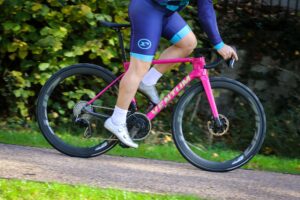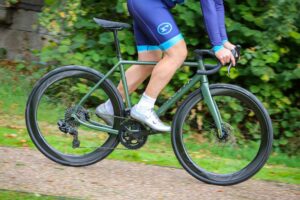


The Ventum NS1 Force AXS arrives somewhere in the middle of the firm’s race bike line-up. Its balance of immense stiffness, aero styled tubing and racy geometry means it’s a great performer, and it’s dripping with bling kit too. When it comes to ride quality though, it could learn a thing or two from its competitors.
Ventum NS1 Force AXS: The ride
On any bike I review, those first couple of miles give you 95 per cent of the feedback and data on what that particular machine is all about. From then on, it’s about finessing the details.
The NS1 screamed race bike. That first kick on the pedals as I left my estate highlighted how stiff the NS1’s frame and fork are, and it really wants to get a shift on. At 7.4kg, it’s not a superlight bike, but it definitely feels nippy and eager, with brisk acceleration away from a standing start or when you are already rolling.
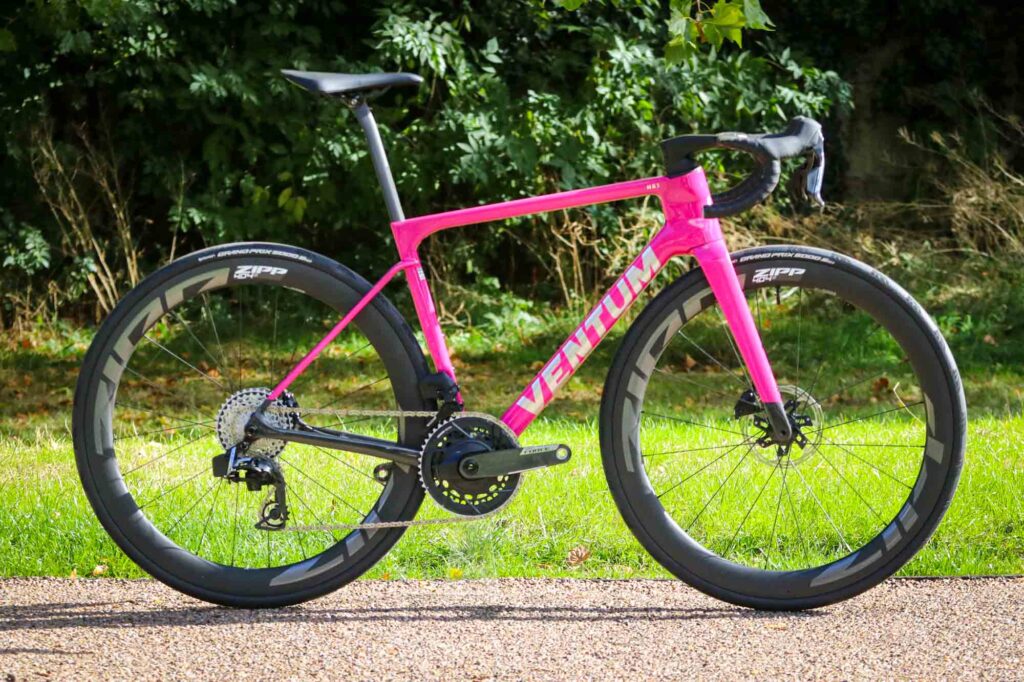
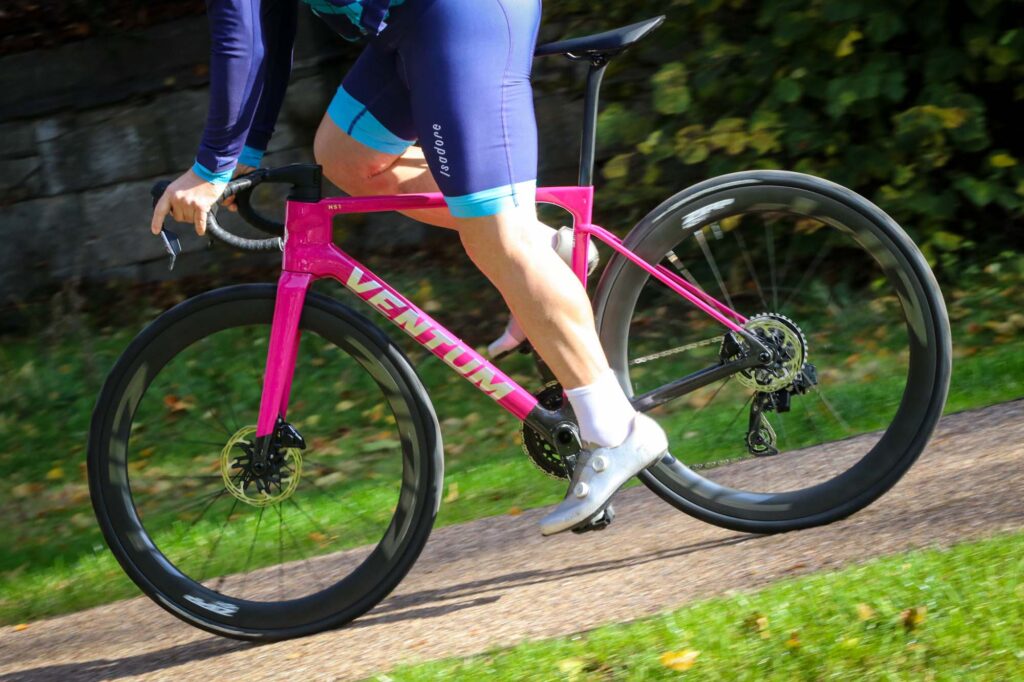
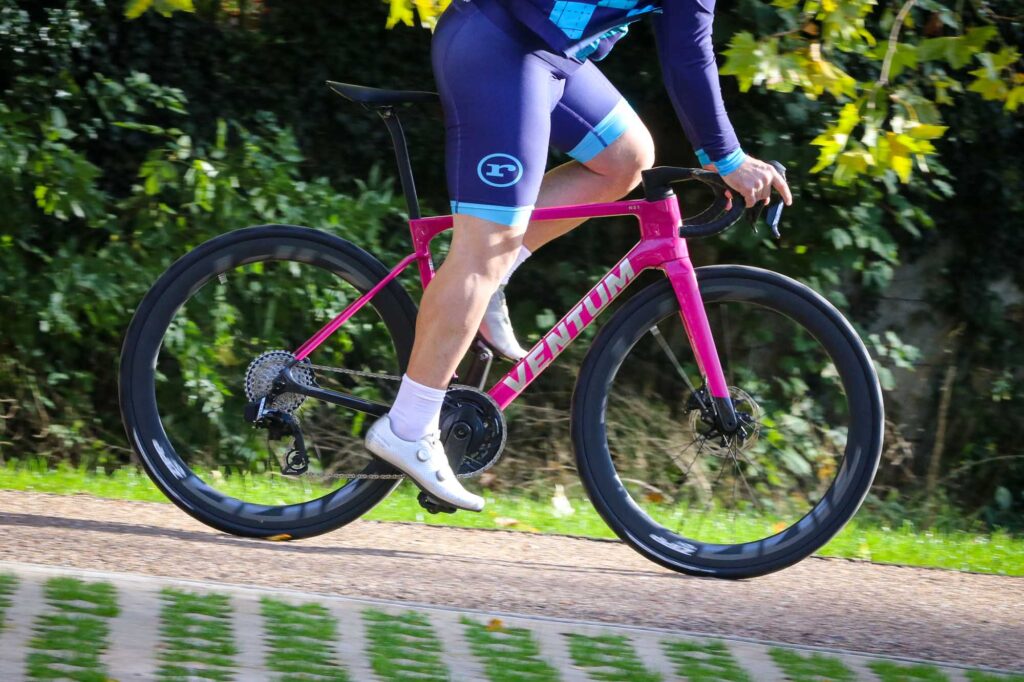
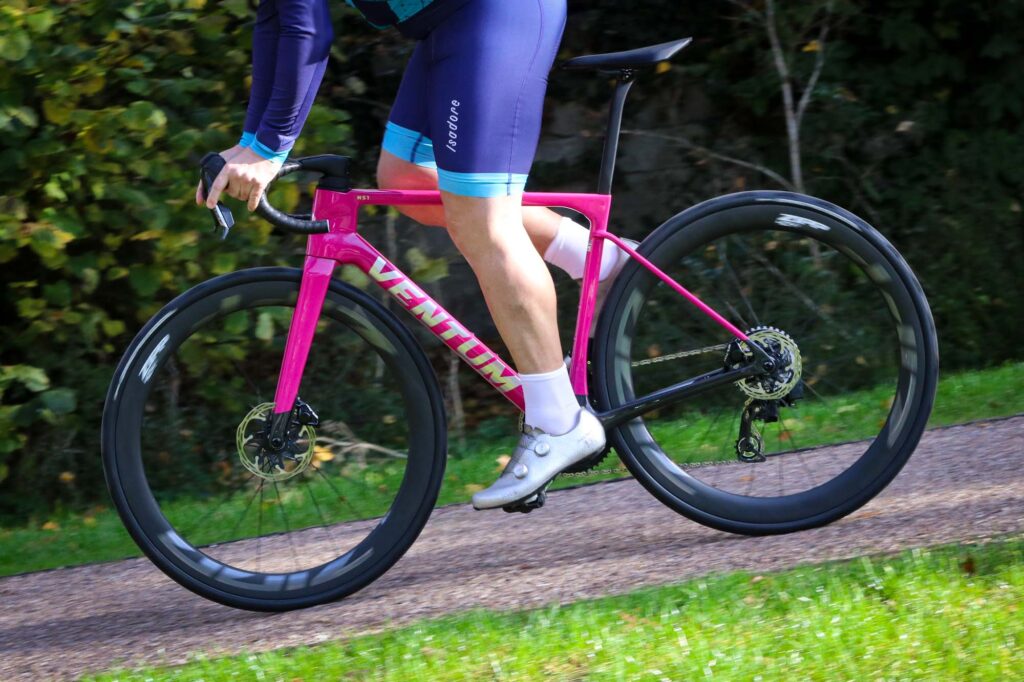
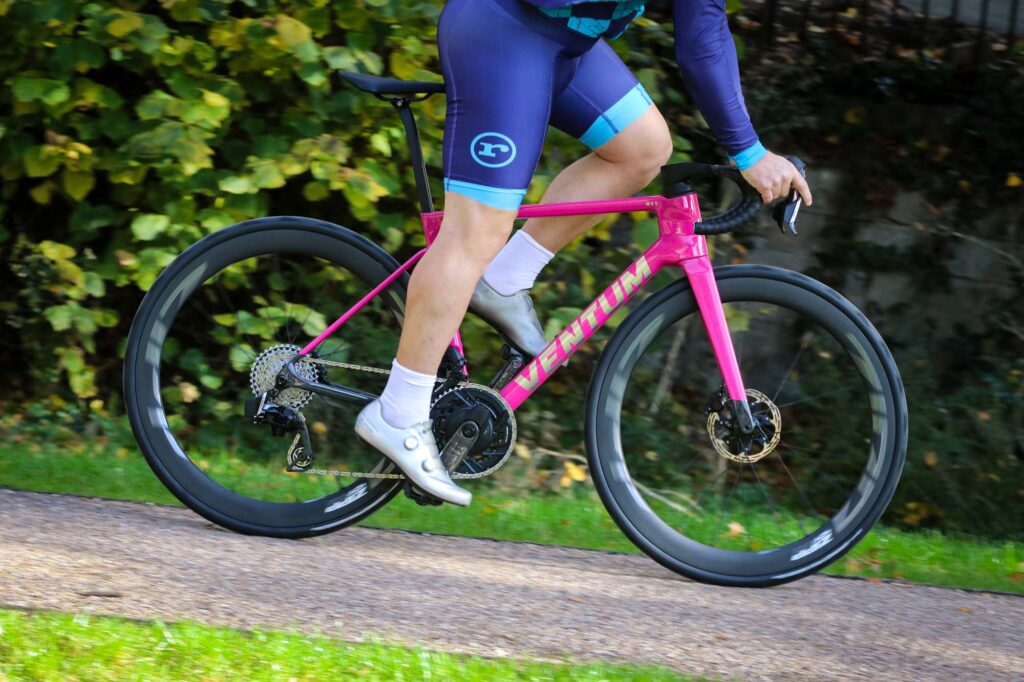
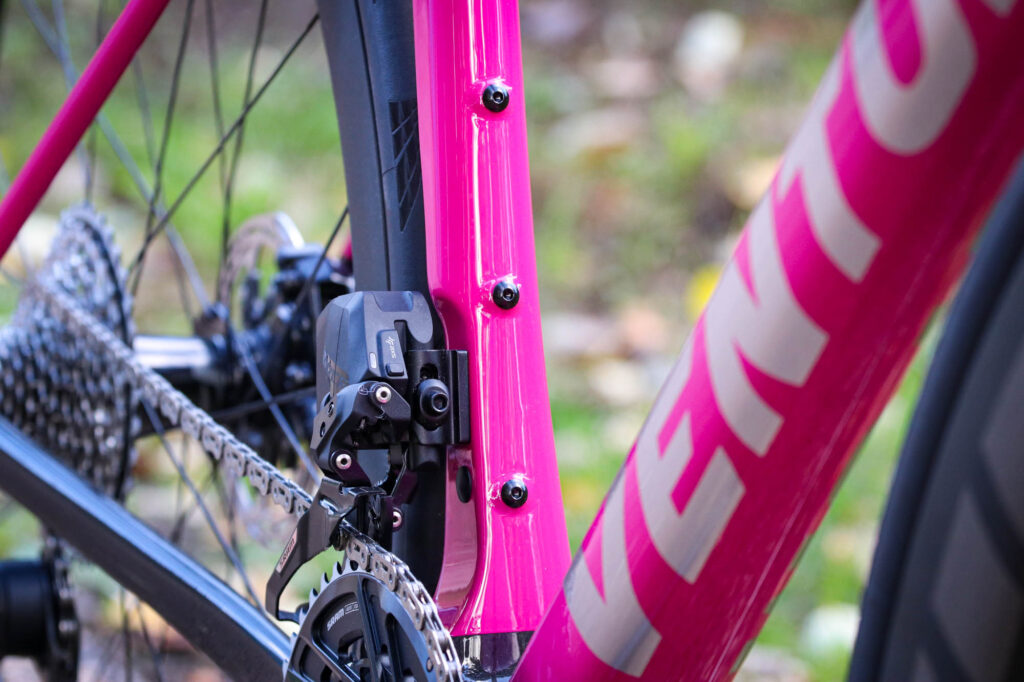
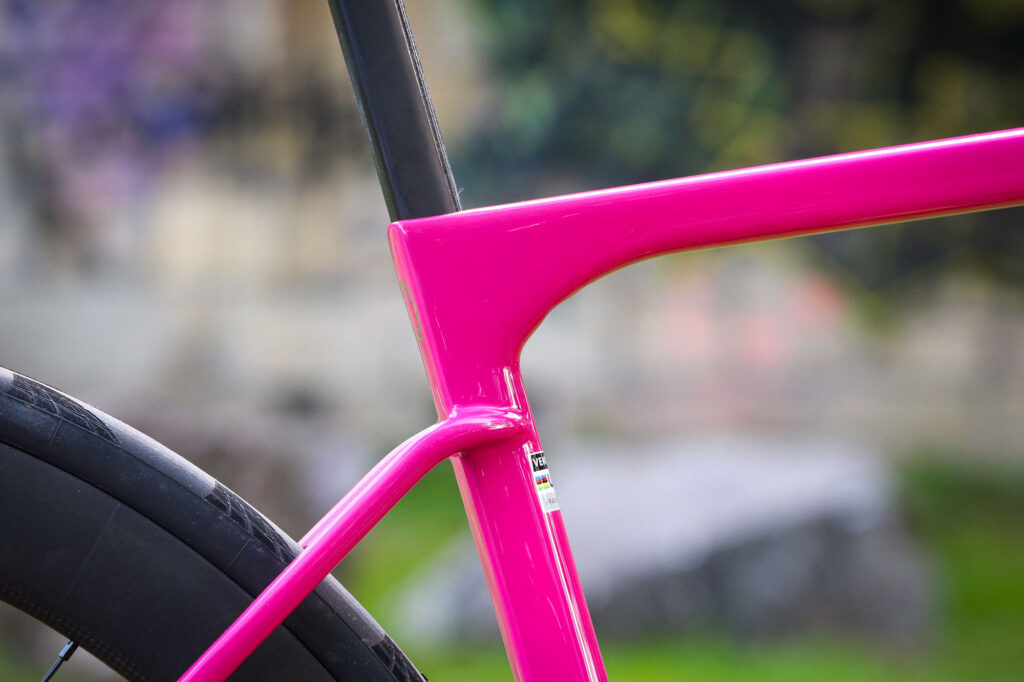
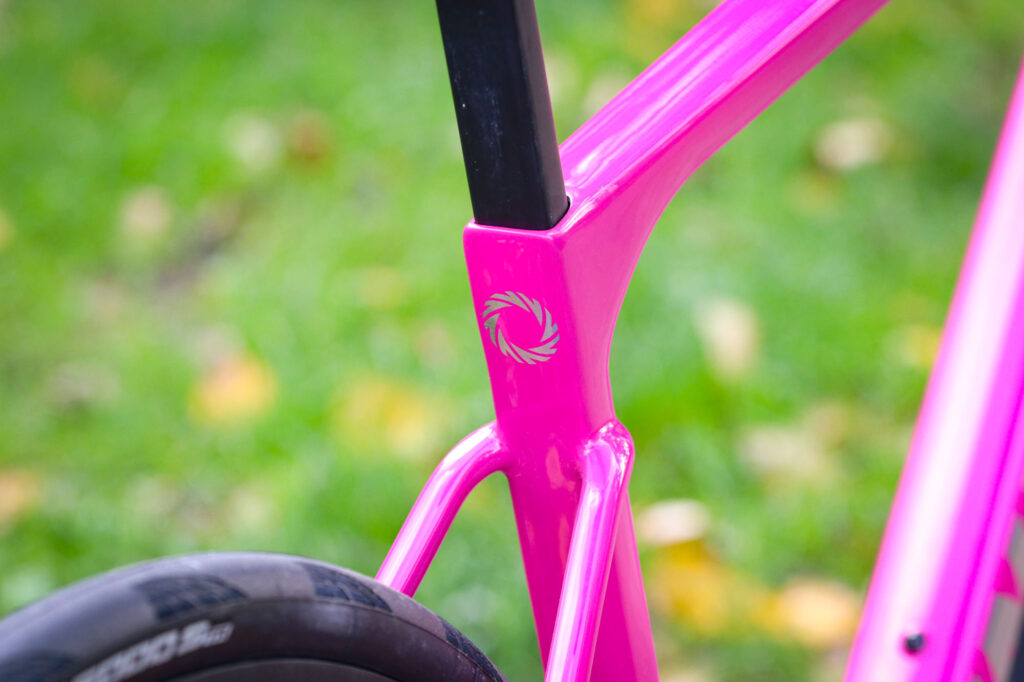
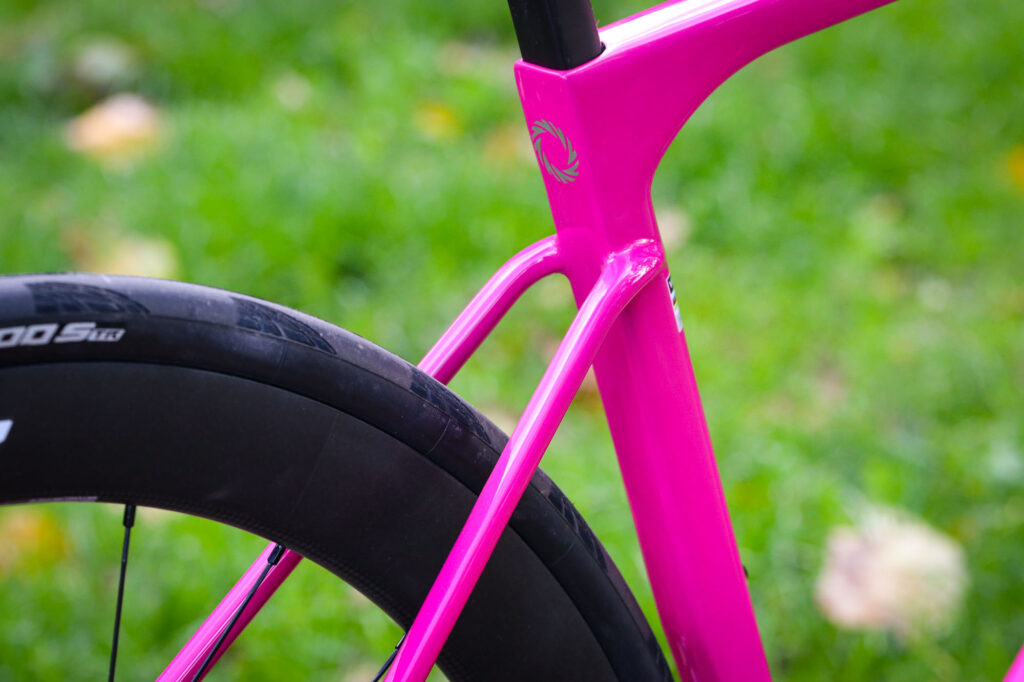
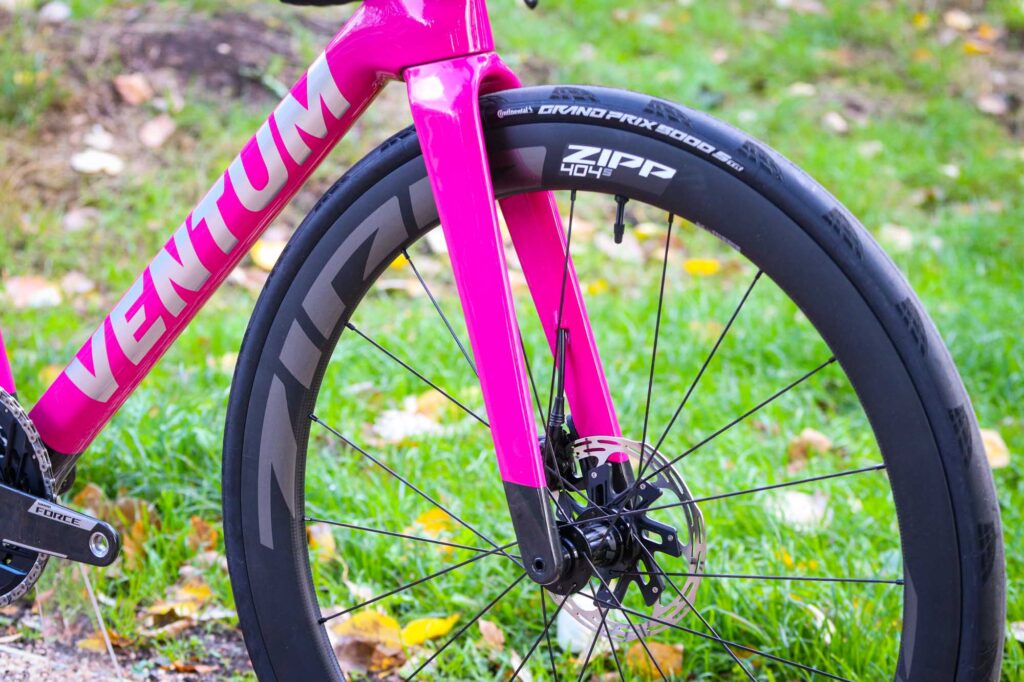
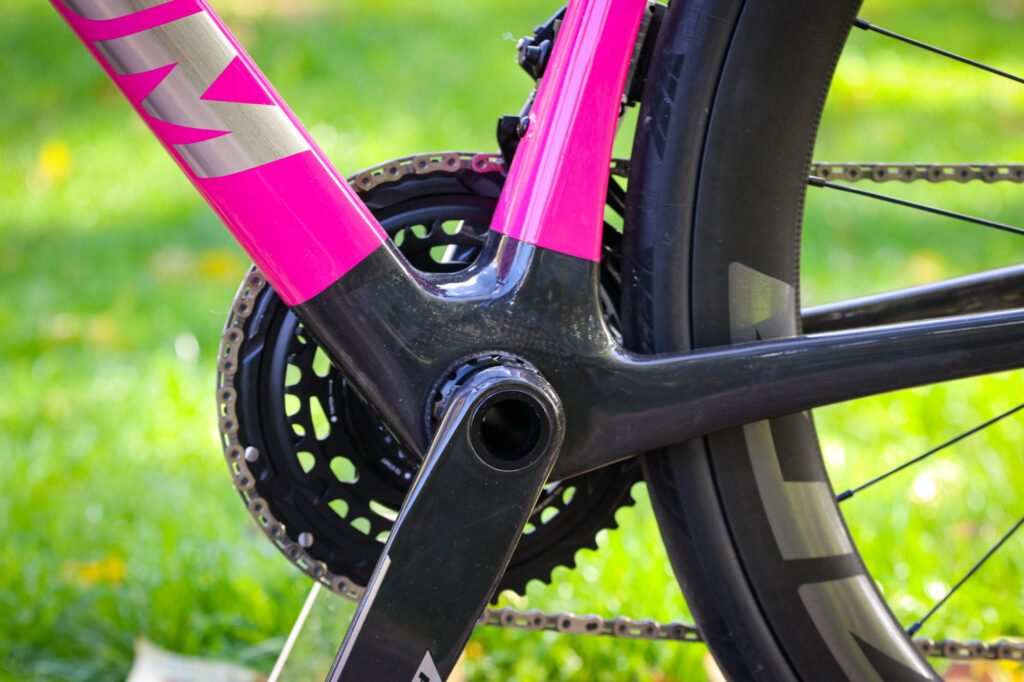
An all-out effort showed how tight the NS1 is around the bottom bracket area and when banking the bike left to right from an out of the saddle position, I couldn’t detect any lateral flex from the fork legs either. The NS1 is certainly an efficient machine.
The stack and reach figures put me in a race position; long and low, but without being too extreme. For reference, the reach is exactly the same as my medium sized Giant TCR, with the stack of the NS1 coming in 4mm lower. That meant that I could get hunkered into the drops for some speed work without having a couple of ribs removed, and without my lower back screaming for relief after 30 minutes.
The NS1 offers a position that I could feel comfortable in and hold for many hours at a time. It’s an ideal balance for those of us who don’t necessarily need a bike to race on but still want a race bike.
The steering, as you’d expect, is quick, but not overly so. Head into a technical descent and the Ventum changes direction precisely and quickly, and it’s responsive to body position and pressure applied to one side of the bars or the other to tighten or widen your chosen line.
A sub-metre wheelbase gives the NS1 an all round nimble feel and when faced with a pothole or a patch of gravel on your chosen line, its planted feel and ‘flickability’ gave me confidence to push hard into the corners knowing I had a lot of manoeuvrability should I need it.
SRAM’s Force offers a huge amount of braking power, and if there is too much flex in the fork legs it’ll soon show up by way of vibration under hard and heavy braking. The NS1 showed no such issues with everything feeling tight, right down to the dropouts.
The only place I found that the NS1 isn’t quite as refined as others is in its ride quality. One of the trade-offs of a very stiff frameset is that comfort can be compromised. With carbon fibre though, you can tweak the way the frame behaves by mixing composite grades, laying up the carbon fibres in certain directions and using things like tube profiles and wall thicknesses to manipulate the ride.
I’m not saying Ventum hasn’t done that. It’s just that the NS1 is very much on the firm and borderline harsh side of things compared to a lot of similar bikes I’ve ridden this year.
If you live somewhere with good road surfaces, then it won’t be a problem. In the UK though, where a lot of the roads I ride on are in a poor state of repair, it becomes jarring, as I felt every single bump and ripple in the road.
My first ride on the NS1 was three hours and I certainly knew it when I climbed off the bike. I could feel the battering in my hands, wrists and other contact points. Even the amount of exposed seatpost on offer couldn’t take the edge off.
The NS1 will take up to 35mm tyres, so you could soften the blow by running some big rubber at low pressures if comfort is your ultimate goal, but then I find that other sacrifices are also being made in terms of muting feedback from the road surface and a slight loss of precision in the handling.
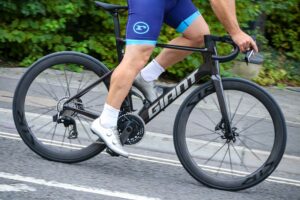
Something that I always stand by is that you can’t hide a frame’s ride quality through tyre pressure. My Giant TCR has a much smoother ride quality and matches the Ventum for stiffness, and so does the Propel, Giant’s boxy-tubed aero offering.
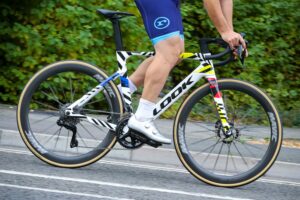
Others like Merida, with its latest aero Reacto, and Look with its Blade 795 RS 3 go even further, offering incredibly stiffness matched to sublime ride comfort.
Purely from a ride point of view, the NS1 is so close to being awesome for me, but while I’ll happily sacrifice comfort for speed, the Ventum’s competitors are showing that you don’t have to make that compromise any more.
Ventum NS1 Force AXS: Frame and fork
Ventum says this is the lightest version of the NS1, the weight of the frame down by 200g compared to the previous model. For a M/L (a size bigger than the M I have here) the weight is a claimed 852g.
This has been achieved by a new carbon layup, use of higher modulus carbon fibre and by reducing mass from the front end and the seat stays.
There are also the obligatory percentage claims of increased stiffness. Ventum says it’s up 7.7 per cent at the head tube and 11.9 per cent at the bottom bracket.
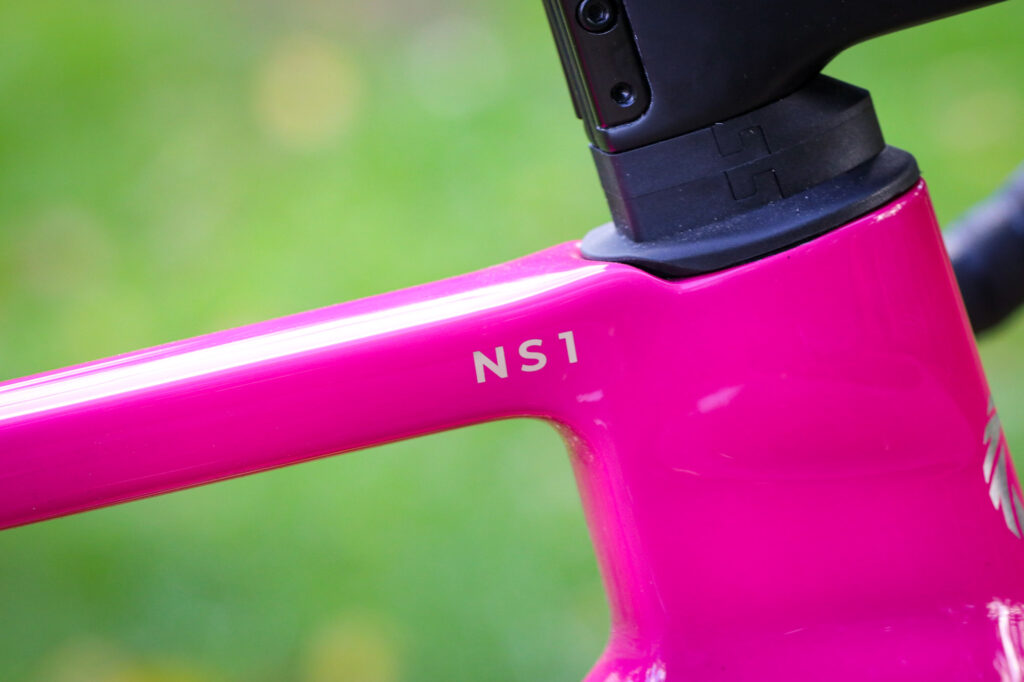
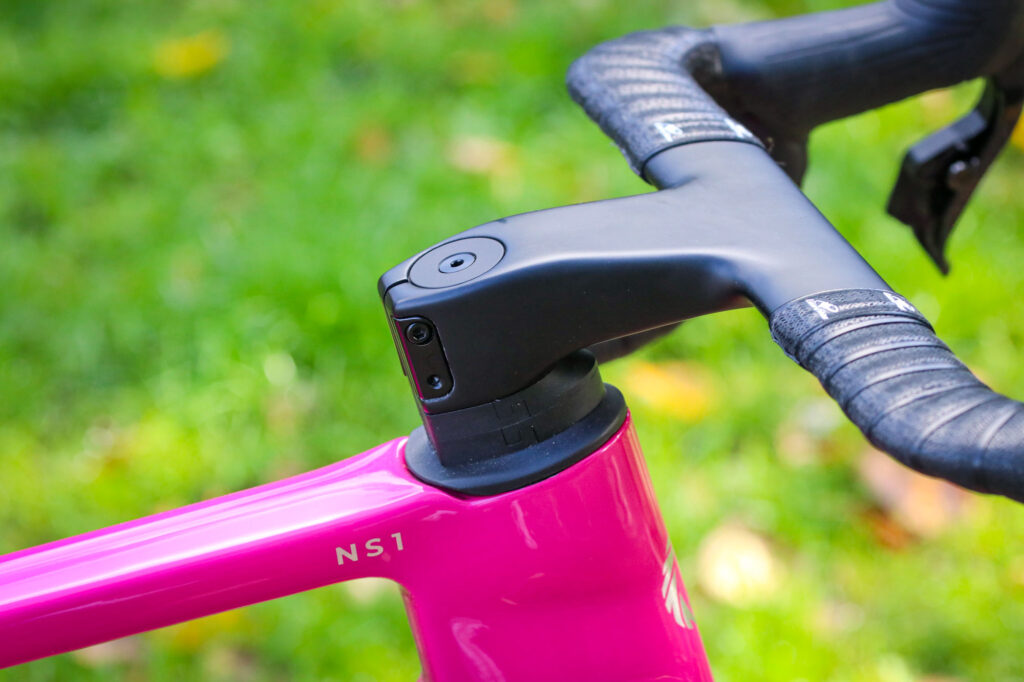
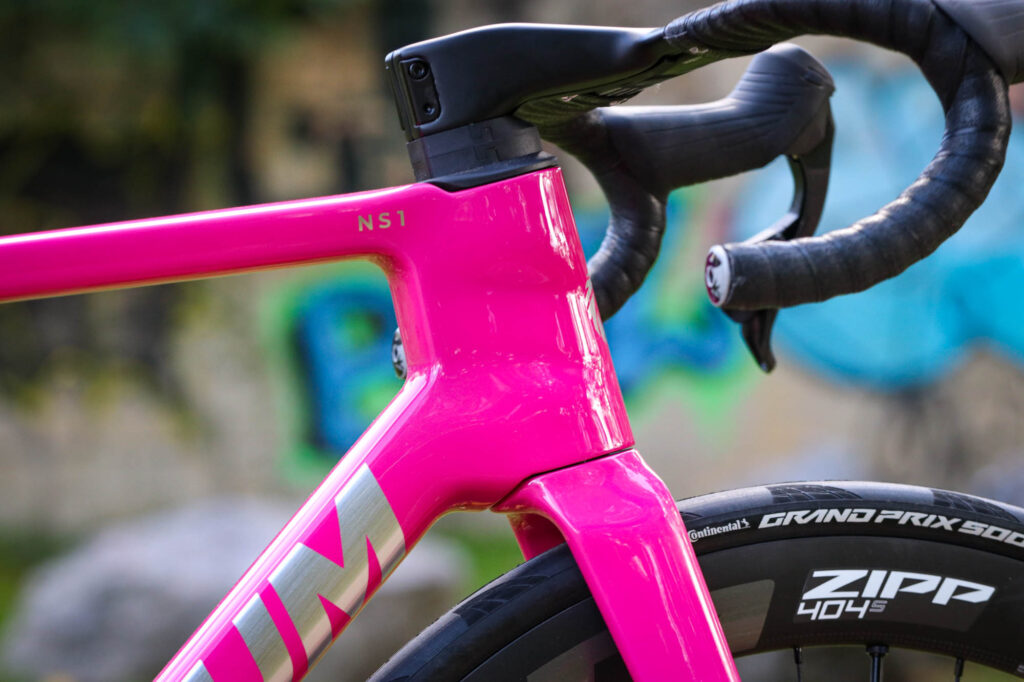
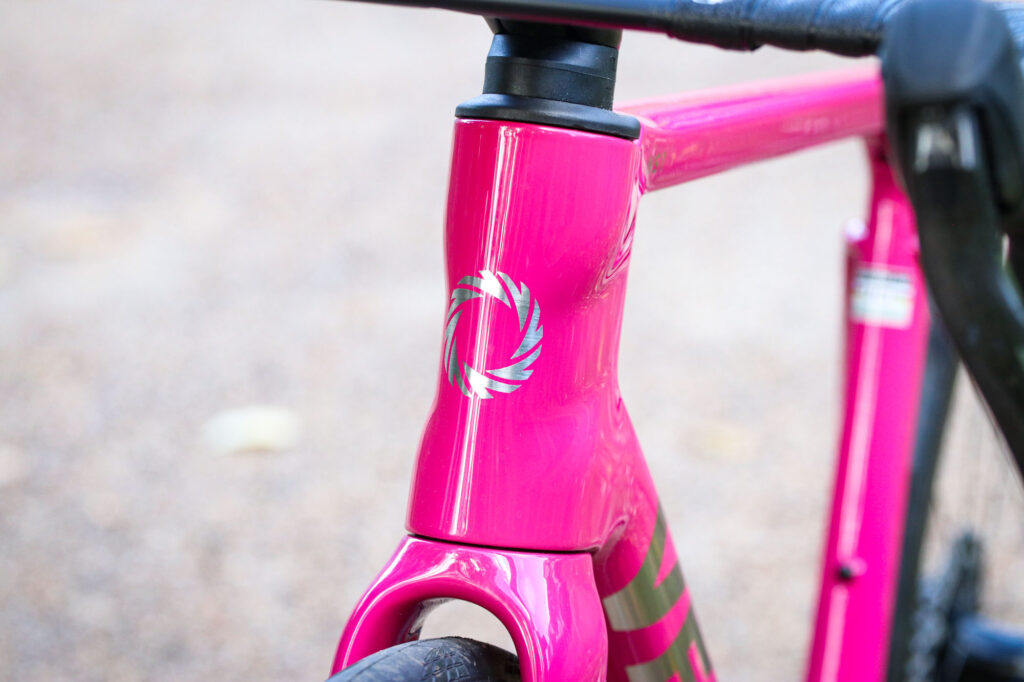
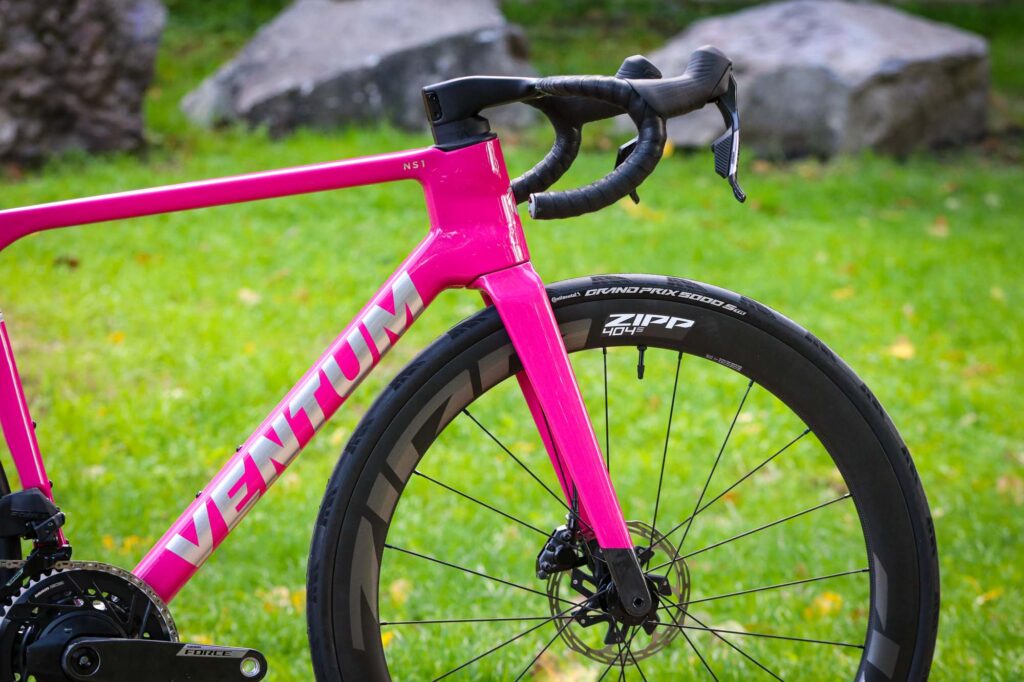
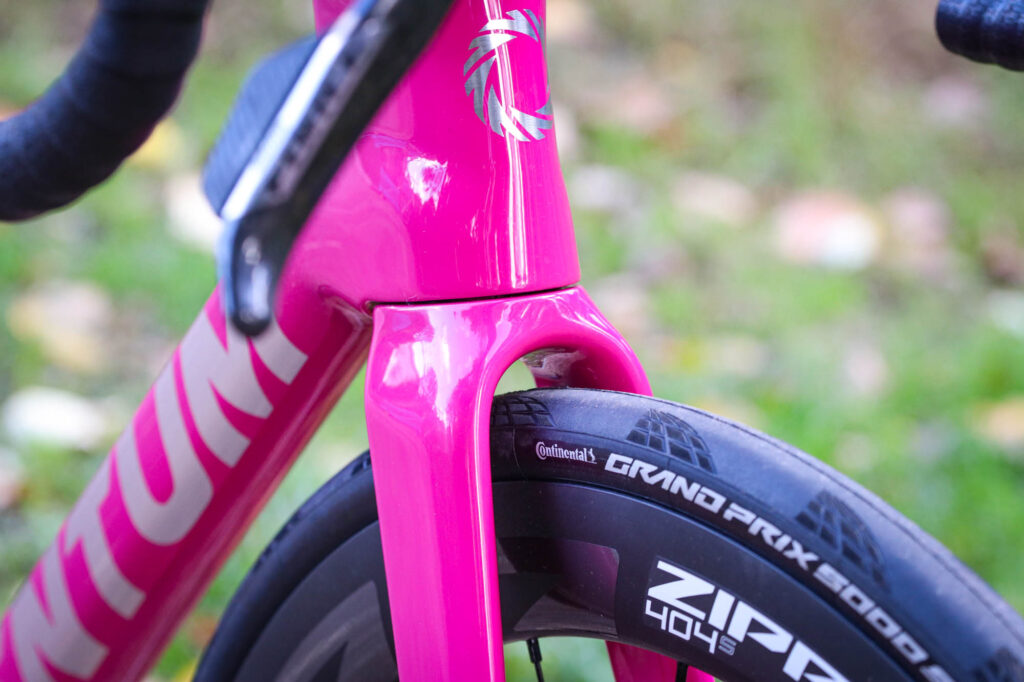
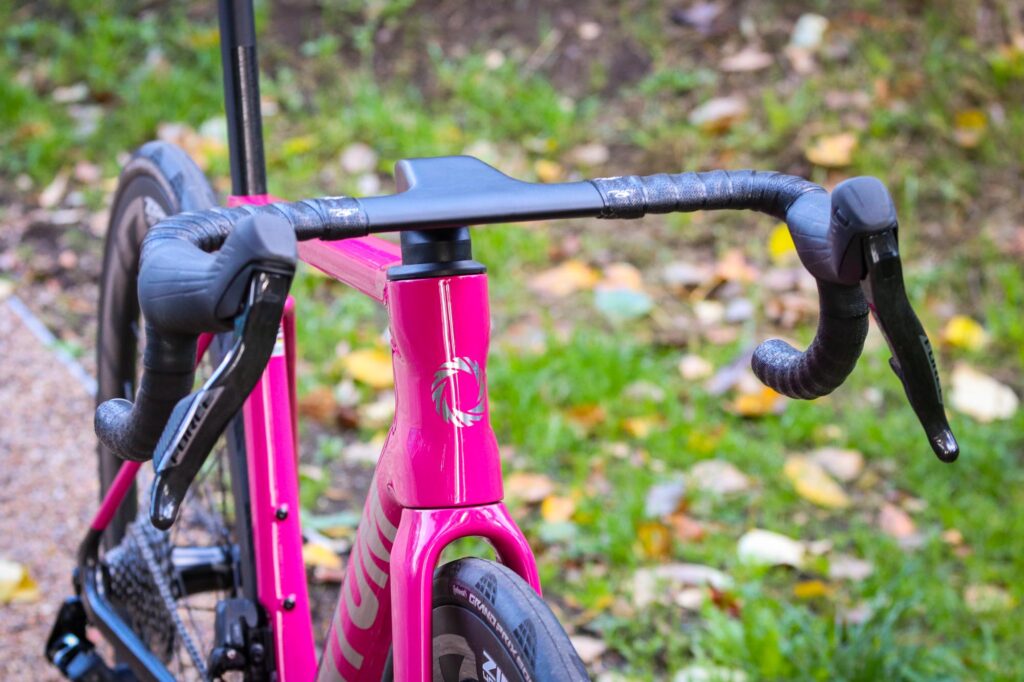
The chunky head tube area has been nicked from its Tempus time-trial bike, the leading edge now sitting forward of the steerer, creating space for a cleaner, more efficient airfoil. The waist of the frame has been narrowed by using an hourglass head tube, reducing the frontal area.
That’s all lifted from Ventum’s website by the way, not an insightful analysis by me.
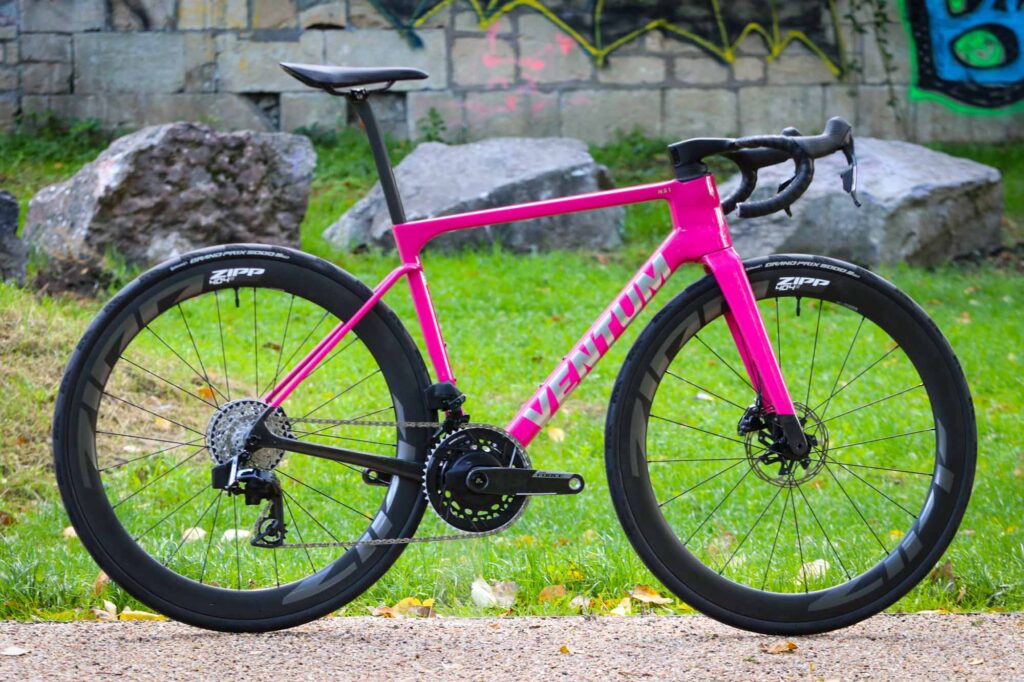
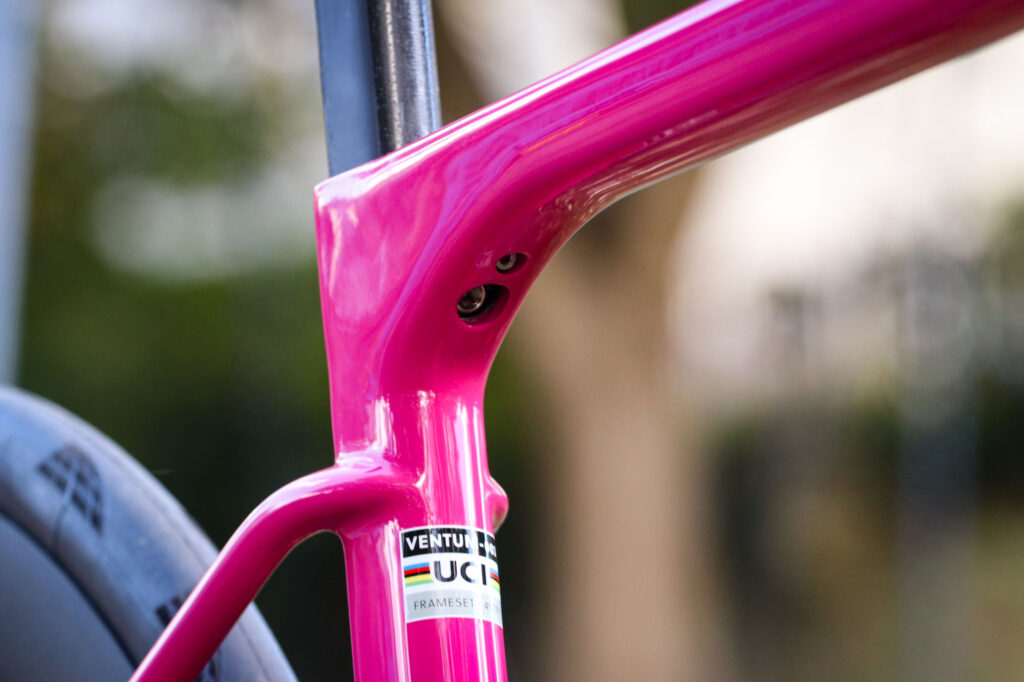
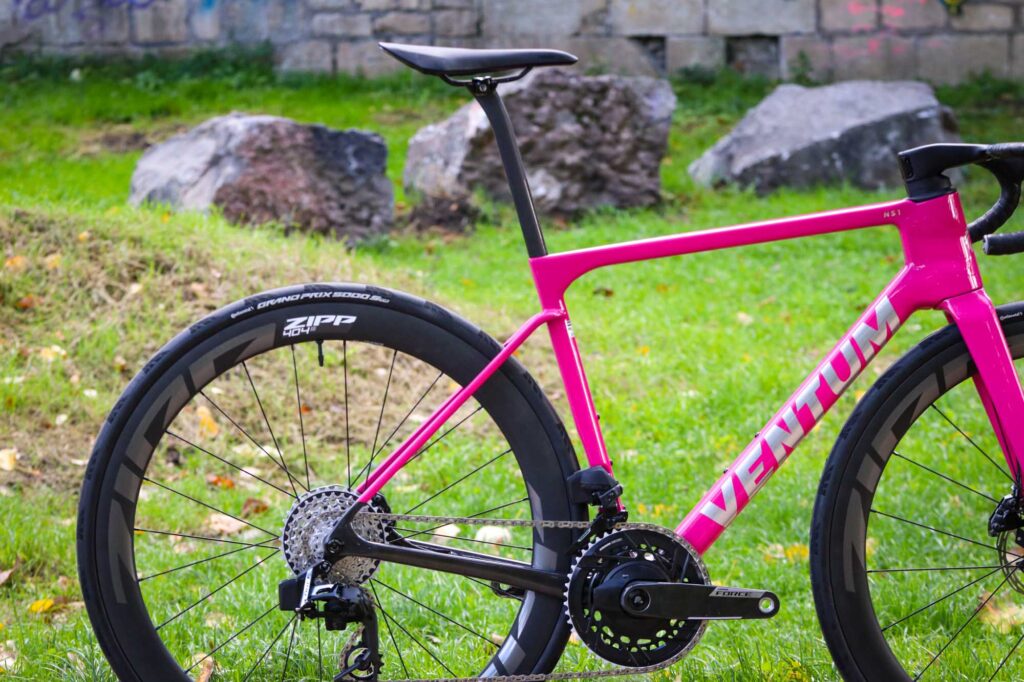
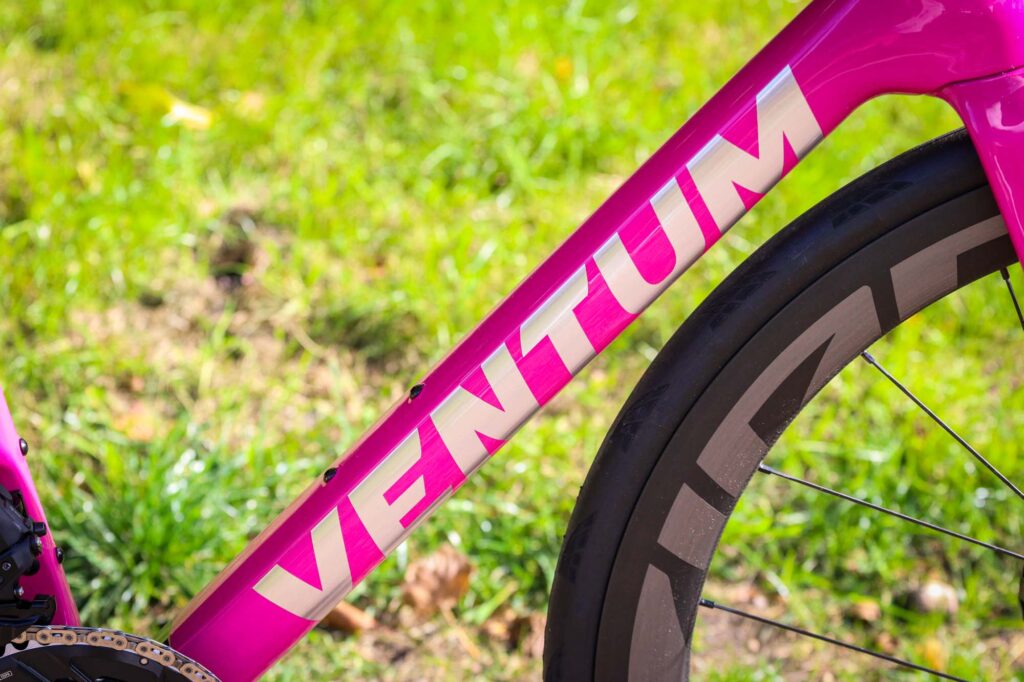
In this pink, black and chrome colourway, I think it’s a good, if not a little generic looking road bike, with its smooth lines and complete lack of cables or hoses on display – something that is obviously commonplace these days, but still stands out when you get the frame shape and paint colour working together.
The NS1 is available in six sizes in total, ranging from XS to XL with top tube lengths spanning 516mm to 601mm.
This medium model has a top tube length of 553mm and a head tube measuring 133mm sitting at 73 degrees. When mated to a fork length of 373mm, the stack is 541mm, while the reach comes in at 388mm with a seat tube angle of 73 degrees.
The wheelbase is 984mm with a 410mm chainstay length and a front centre measurement of 584mm.
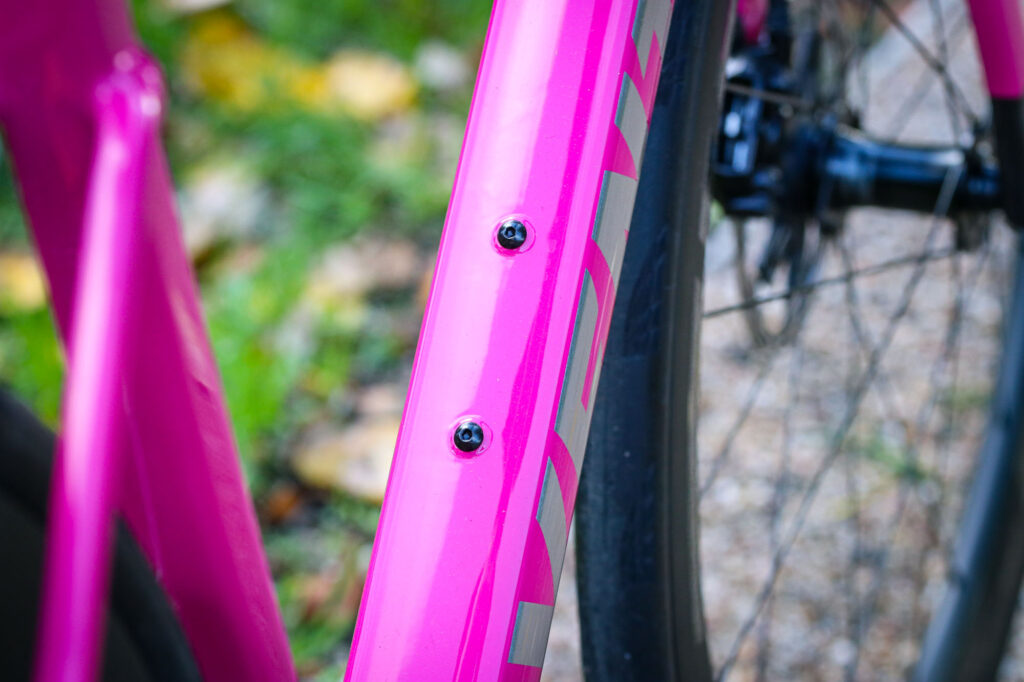
As I said above, you get tyre clearance for 35mm rubber, plus two bottle cage mounting points. The seat tube mounted position has three bolts instead of two to give you some flexibility.
Ventum has gone for a T47 bottom bracket which is arguably the best of both worlds: threaded for ease of maintenance and maintaining tight tolerance between BB and frame, while offering the same oversized dimensions for stiffness offered by pressfit. The frame is also compatible with UDH – universal derailleur hangers.
Ventum NS1 Force AXS: Finishing kit and pricing
The NS1 is available in a range of builds starting with a frameset for £2,599. It includes the frame and fork, the headset and the carbon seatpost.
Builds start at £3,499 for Shimano 105 Di2 and go up to £8,899 for the range topping SRAM Red equipped Bordeaux model. Rival AXS will set you back £4,199 while Dura Ace costs £7,999.
This Force AXS model is £5,999 – the same price as the Ultegra Di2 option.
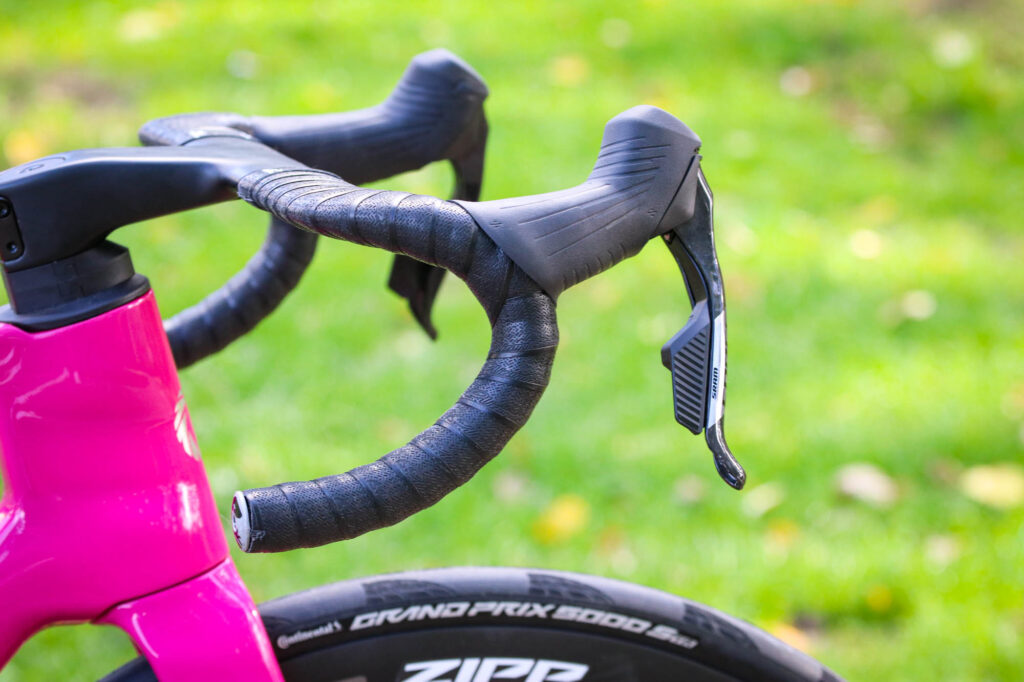
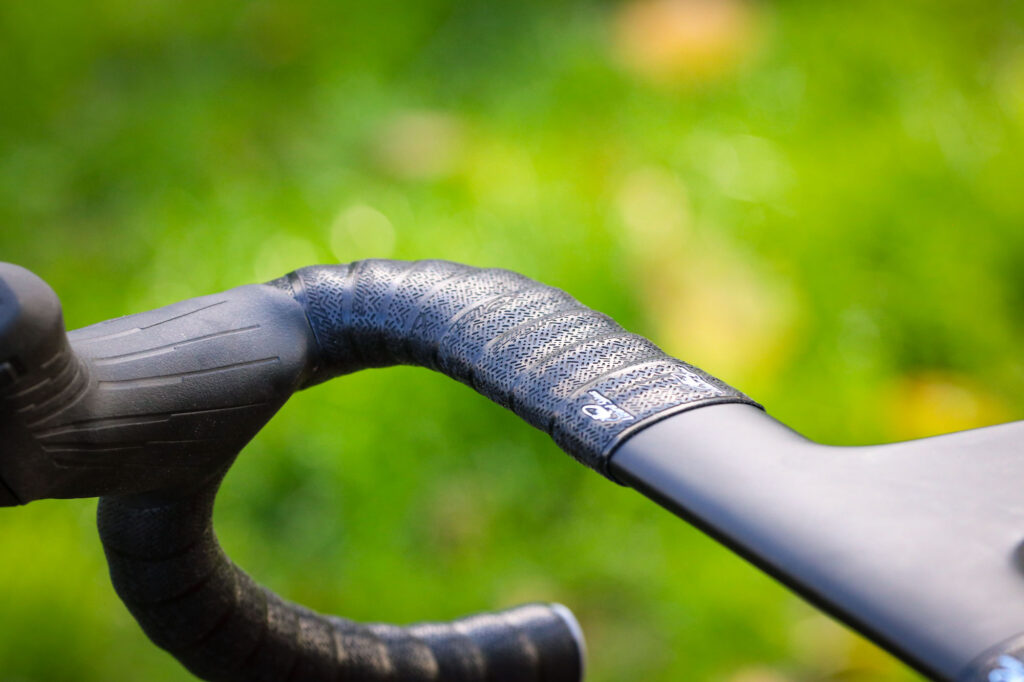
For the money, I’d say this bike offers good value when you look at the specification, and there are extra little details too, like not scrimping on the bar tape, for instance – the FSA Powertouch has a premium feel to it and it’s plush.
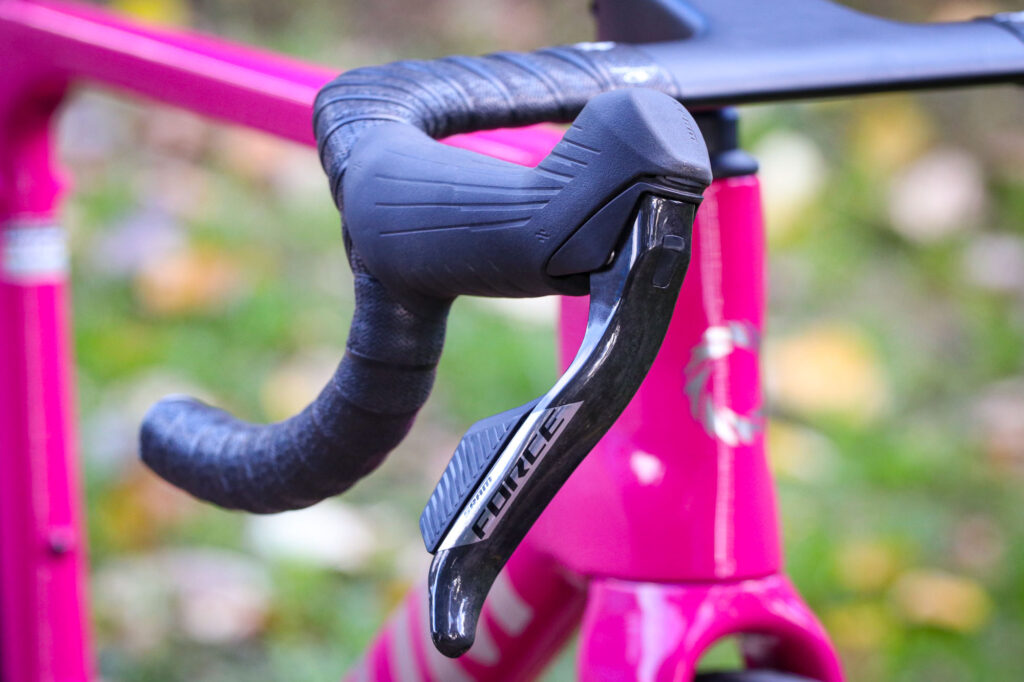
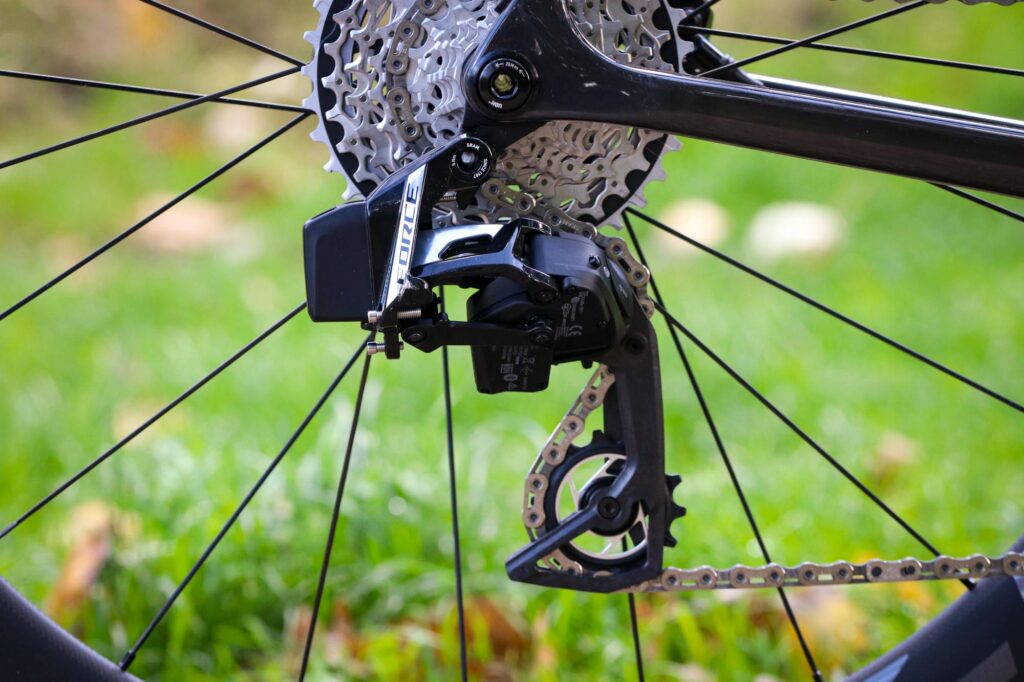
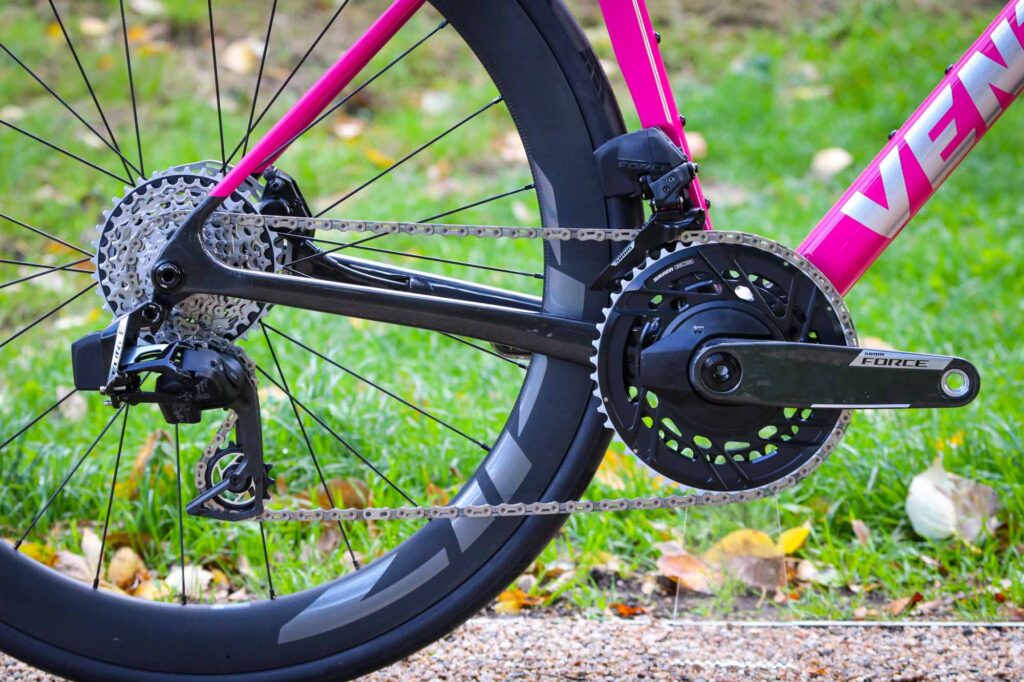
The latest Force AXS groupset is brilliant (full review coming soon – but you can read our Rival AXS review here, which has a lot of similarities), especially from an ergonomics point of view.
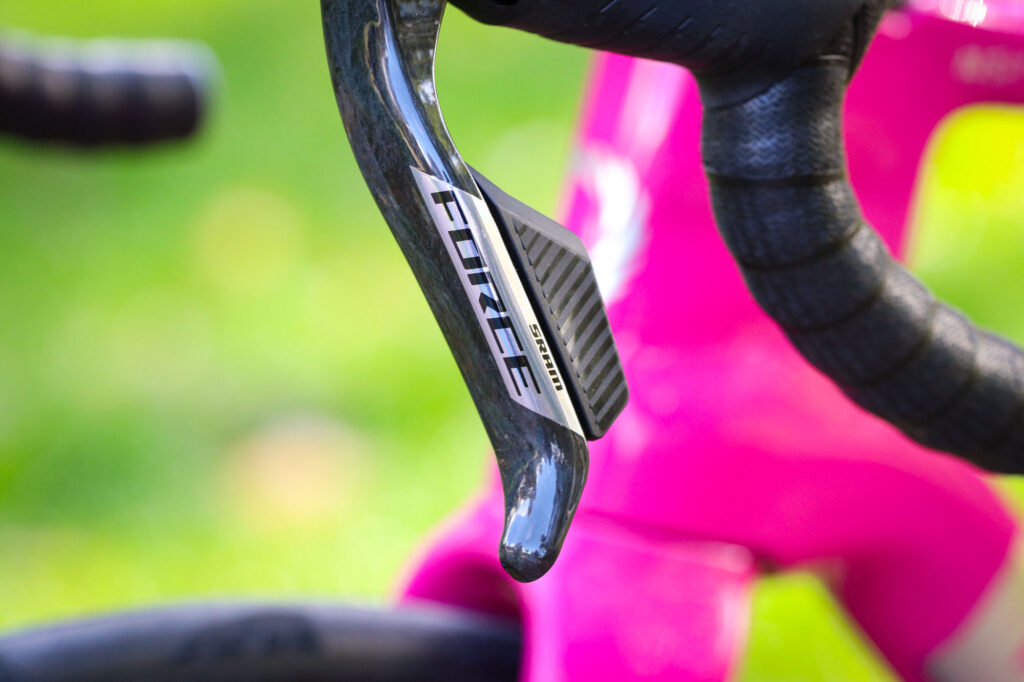
This latest E1 shifter design has a much smaller surface area, harking back to the days of mechanical shifting and braking set ups.
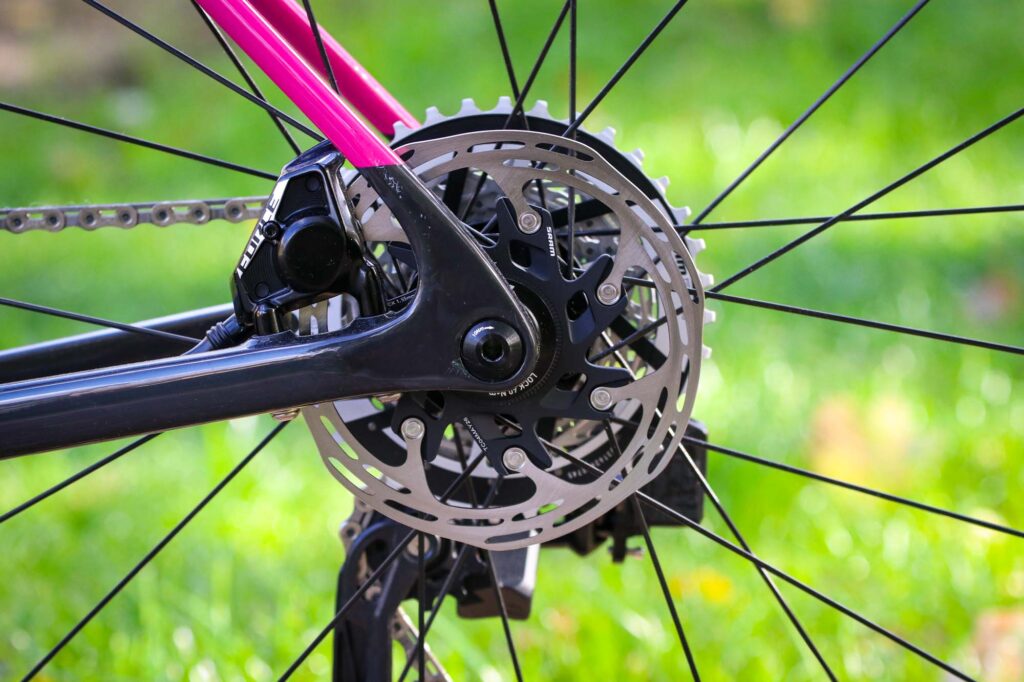
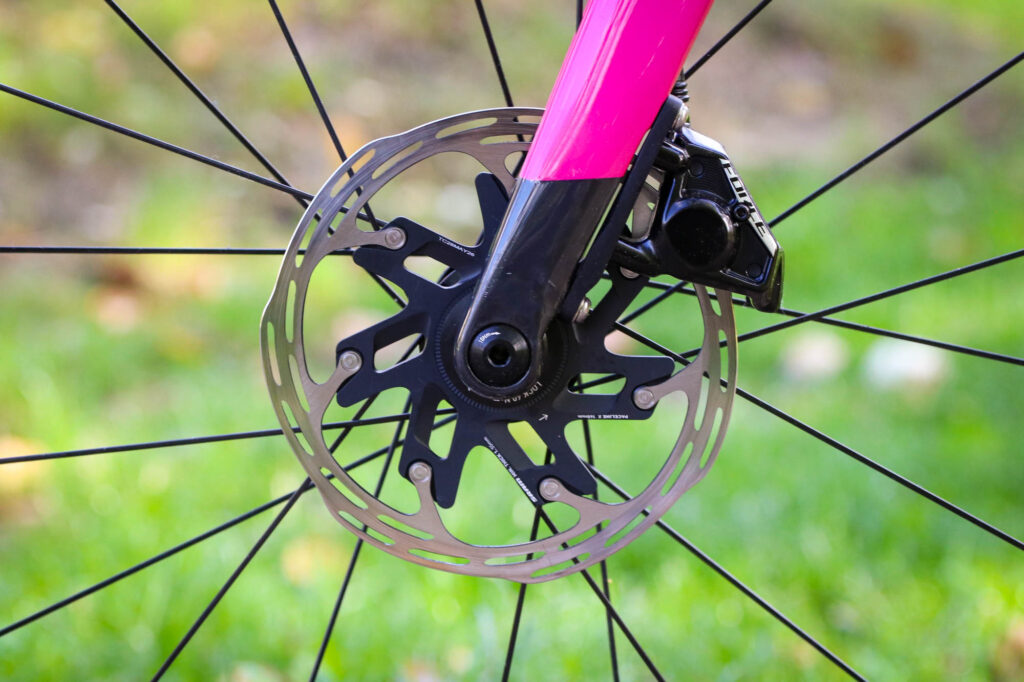
The new position of the internals also means that braking power has been massively increased, allowing you to stop from high-speed with just the use of a single finger. That’s not just a claim – I can guarantee it works!
The NS1 runs a 160mm front rotor and a 140mm on the rear – the perfect setup for a fast road bike and SRAM’s design gives loads of feel and modulation.
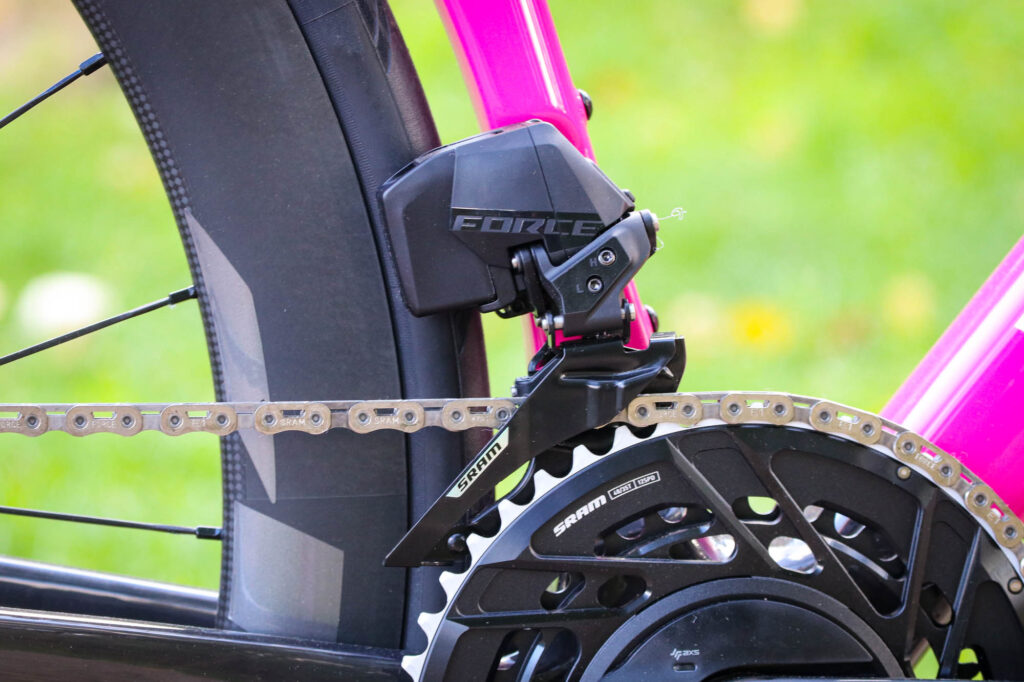
The shifting units use SRAM’s proprietary gear changing of one lever for dropping the chain down the cassette and the other lever bringing it back up. You change between chainrings by pressing the button on both shifters together. It’s simple to use and really intuitive.
Compared to Shimano systems, SRAM tends to use smaller chainrings and a wider ranging cassette. I find it suits my riding style. I pretty much use it as a 1x system, with the smaller chainring only used for really steep climbs. I find it very efficient.
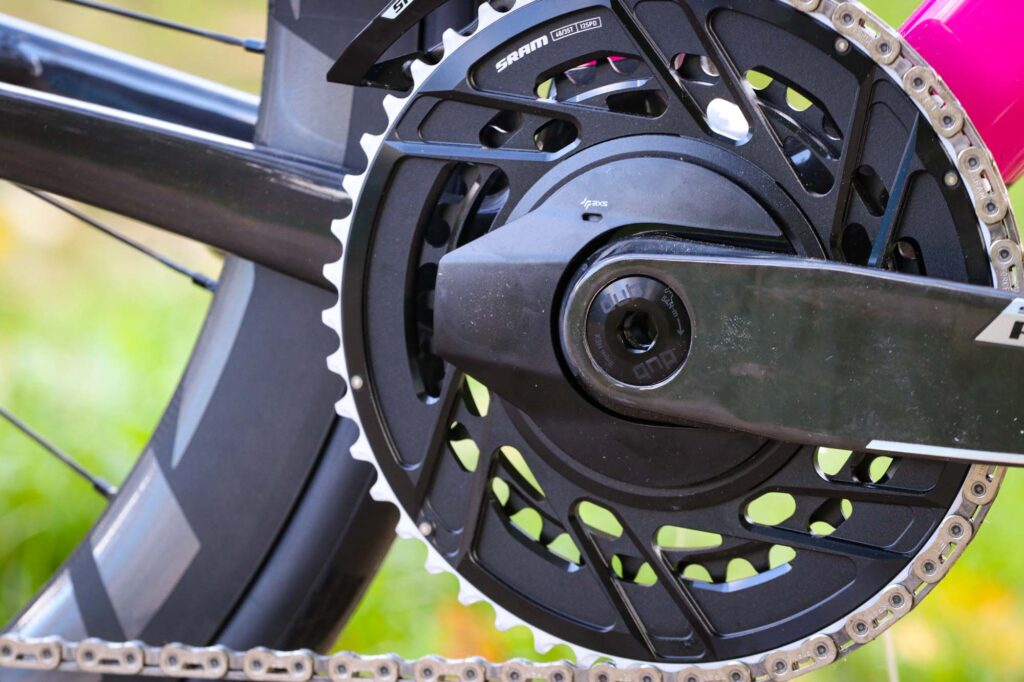
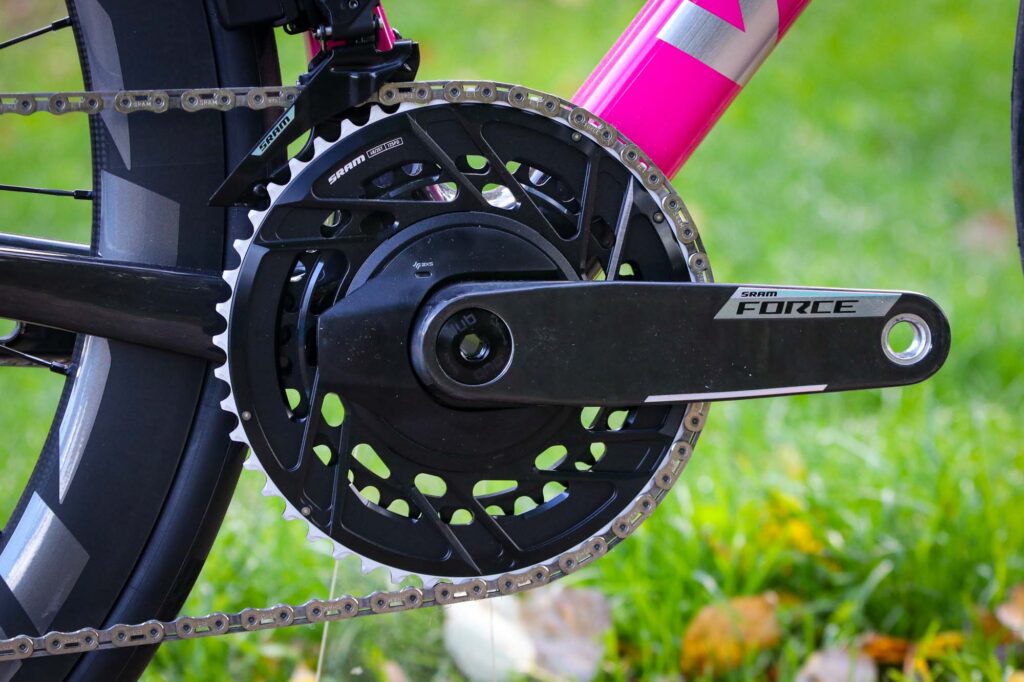
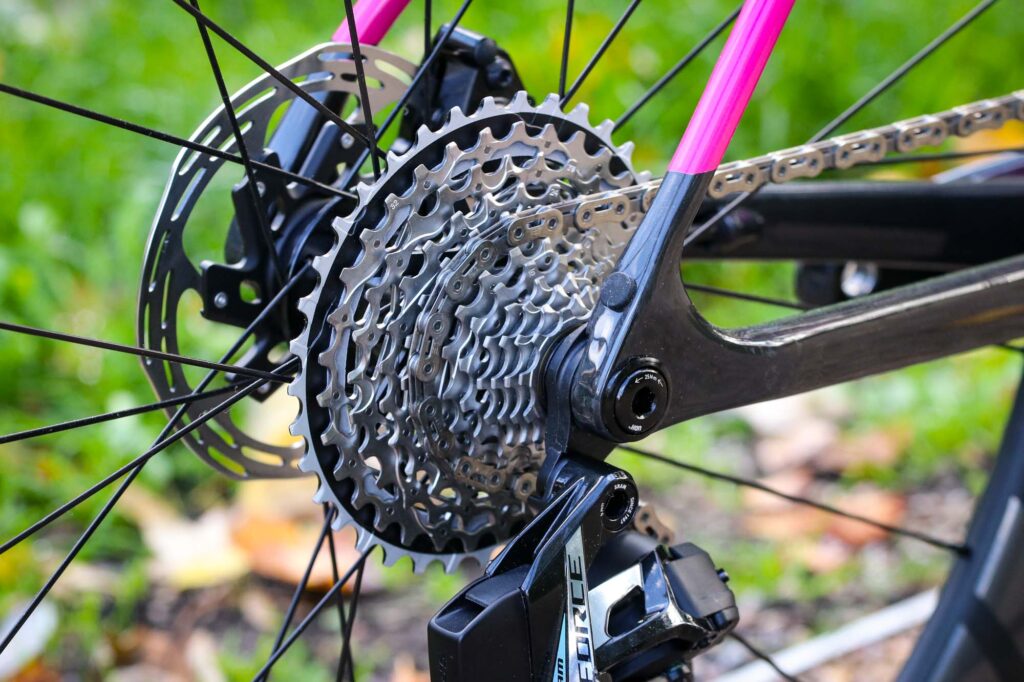
Specifically, the NS1 uses a 48/35T chainset with a 10-36T 12-speed cassette. You also get a power meter included.
Moving to the cockpit, you’ll find an all-in-one system with a carbon fibre handlebar/stem combo with this medium model using a 90mm stem length and a 42cm wide handlebar. That could be seen as quite wide by modern standards, but it’s something I’m happy with.
I have quite wide shoulders, so a 42cm bar for me is comfortable on a long ride, plus going narrower can increase the speed of the handling. This is ideal if you are in the middle of the bunch or trying to take every corner flat out as part of a breakaway, but everywhere else it can just make the bike feel overly twitchy.
The bar shape is comfortable and allowed me to switch my hand position around easily. I tend to ride on the tops a lot and I found the wide, aero shape of this one to be comfortable.
Underneath the bar is a fixing position for a computer mount which you can purchase separately for £30 from UK distributor Merlin Cycles.
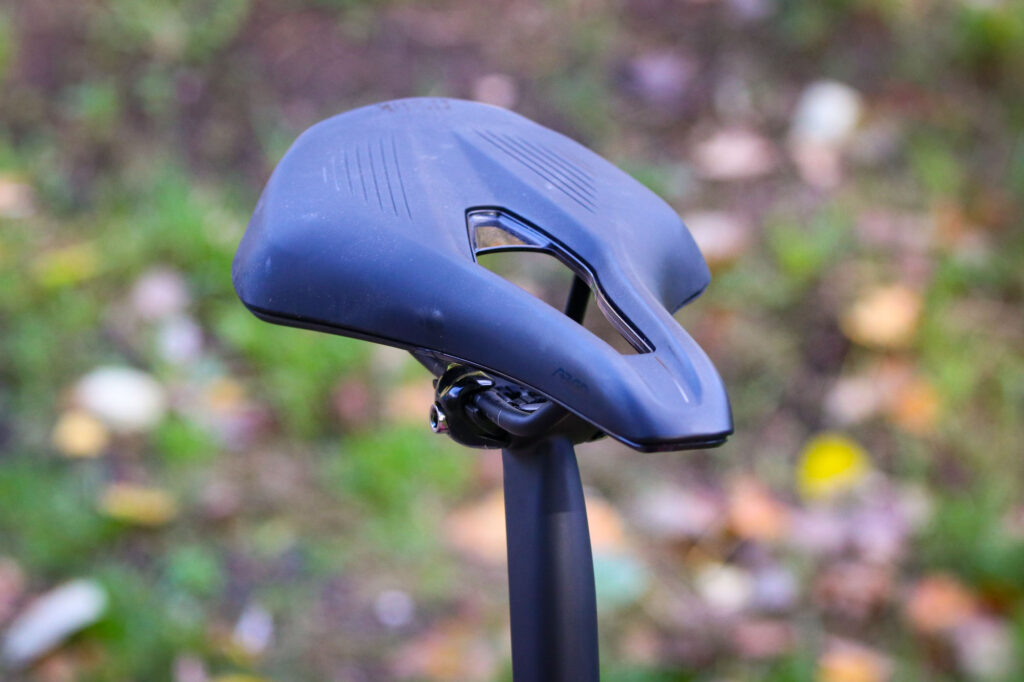
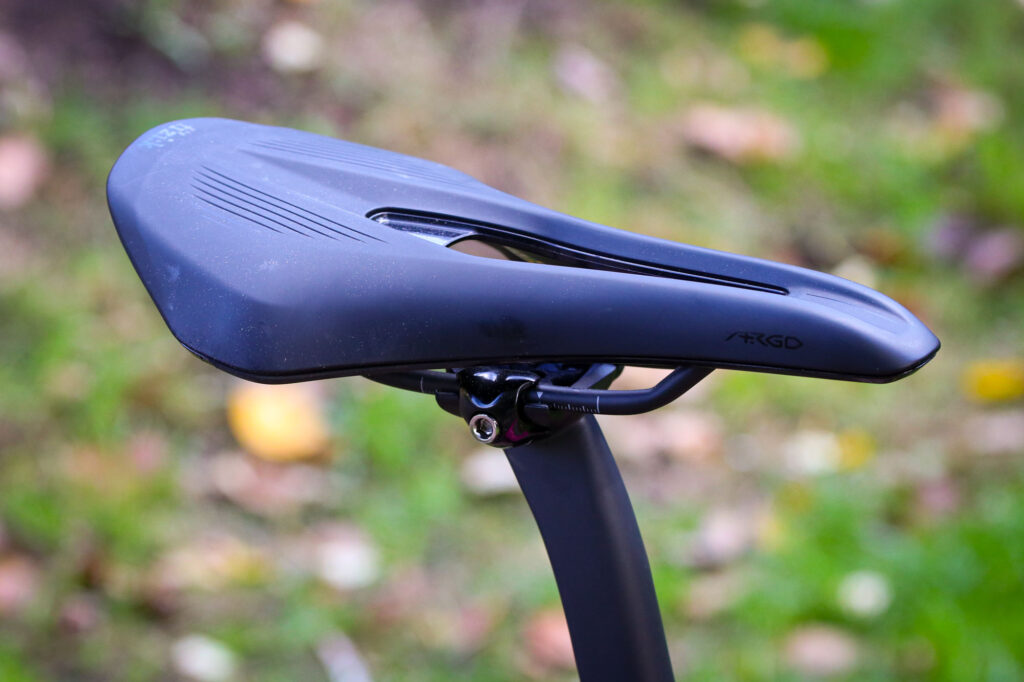
The saddle specced is a Fizik Vento Argo R5, which I would put in a category of not my favourite saddle shape, but it works for me – so I wouldn’t be in a hurry to change it.
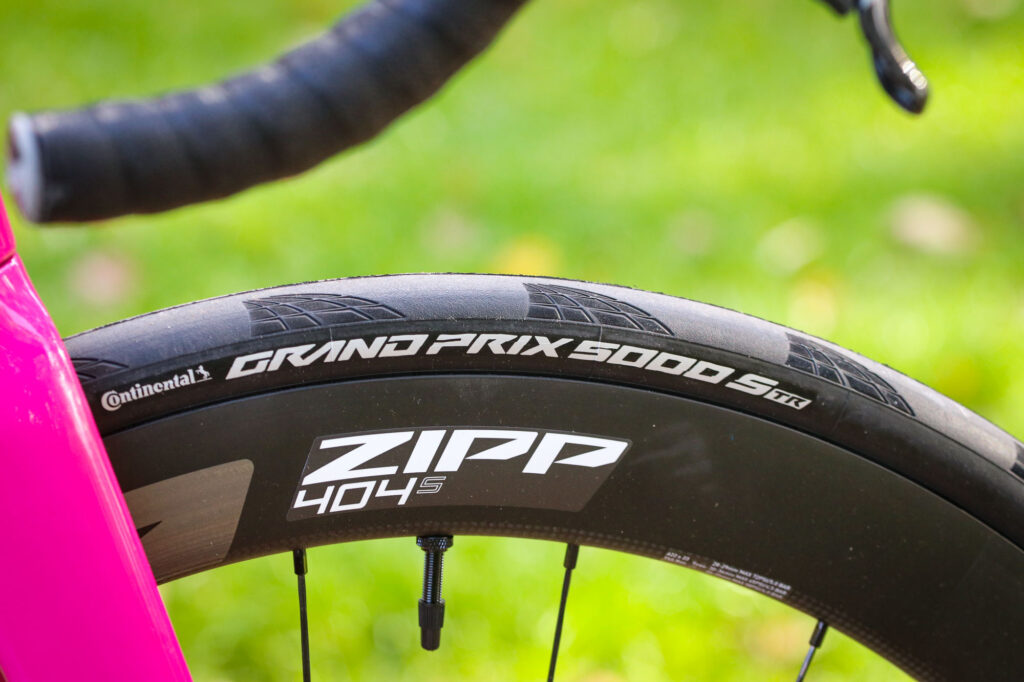
For the wheelset, Ventum has gone for a set of Zipp’s 404 Ss. The set I’m currently reviewing weighed 1,536g on our office scales, including tape and valves.
They have a 50mm rim depth and being lower down Zipp’s pecking order (£985 RRP) they don’t have the swanky shark fin thingy profile. They use a 20-hole, 2-cross lacing system front and rear using Sapim’s CX-Sprint spokes and Zipp’s own hubset giving 36-points of engagement at the freehub.
The 23mm inner rim width is a match for wider road tyres. The only drawback for some riders might be the hookless rim design. This limits your tyre choice to tubeless only, even if you are using inner tubes, so there’s no option to run standard clincher tyres which can often offer a more supple ride feel.
It does put a limit on tyre pressures too, capping them at 73psi. This is not a major issue for wider tyres approaching the Ventum’s limit, but for me on 25mm or 28mm tyres, I’d want to go higher.
Anyway, it’s a decent set of wheels and considering their middling weight, they feel sprightly and lateral stiffness is great.
The tyres specced on Ventum’s website are Schwalbe’s One, but our review model came with Continental’s GP5000 TR tyres which I rate as some of the best performance tyres on the market.
Ventum NS1 Force AXS: Conclusion
Comparing the NS1 for value shows that it is in the right sort of ballpark when you take finishing kit and everything else into consideration.
The equivalent Giant TCR is the Advanced Pro 0-AXS which is £300 cheaper at £5,699. That’s a lot cheaper than the £6,699 asking price when we reviewed this model back in 2024. It includes the same groupset, including the power meter, and comes with Giant’s own 40mm deep carbon fibres wheels and Cadex tyres – which I generally find to be a bit meh right across the range. Max tyre clearance on the TCR is 33mm.
I’m currently reviewing the latest Specialized S-Works Tarmac, the SL9, and it is really rather good – although that model is virtually twice the price of the NS1. More in line with the Ventum is the SL9 Expert which comes with either Ultegra Di2 or SRAM Force for £5,999.
It lacks the power meter of the NS1, and you are getting a shallower set of carbon rims at 38mm, while the Roval C38 wheels have a narrower rim bed of 21mm. You also don’t get a carbon cockpit as the SL9 comes with an alloy handlebar and stem.
On the flipside, the ride quality of the SL9 is excellent, in much the same way as the SL8 Expert was when I reviewed it last year.
Canyon’s race option, the Ultimate, is available with its second-tier frame (comparable with the above SL9 and TCR) and a SRAM Force groupset including powermeter for £5,699. The CF SLX 8 AXS model also comes with the same Zipp 404 S wheelset, a carbon integrated cockpit and a Selle Italia saddle. I reviewed the CFR model back in 2024 and was very, very impressed.
Overall, the NS1 gives a positive experience in terms of the way it rides and handles. It feels just like a race bike should: nimble, responsive and above all else fun to ride. The downside though is that it is overshadowed by many other bikes of a similar ilk when it comes to compliance and comfort. Those may not be defining factors when it comes to buying a race bike, but if they’re achievable (which many brands have proved they can be) then I’d be choosing a bike that offers them. Summing it up, it’s a good race bike overall, but far from the best – especially on UK roads.
> Best aero road bikes — get yourself a wind-cheating bike for an extra turn of speed
Test Report
What does the manufacturer say about this product?:
The all-new Ventum NS1 road bike is built for those driven to go further, faster.
Tell us some more about the technical aspects of this product:
A FEATHERWEIGHT FRAME
The third-generation NS1 frame is more than 200g lighter than its predecessor, weighing in at just 852g in a M/L.
That reduction comes from a new carbon layup, use of a higher-modulous carbon fibre, and by shaving mass from the front end and seat stays.
Less weight doesn’t come at the expense of ride quality. In testing, the new chassis is 7.7% stiffer in the head tube and 11.9% stiffer in the bottom bracket. It’s livelier on the climbs, more responsive through corners, and stiffer where it matters.
MORE AERO
An all new front end, inspired by the Tempus TT bike, cuts through the wind.
The leading edge of the NS1 has been extended forward of the steerer, creating space for a cleaner, more efficient airfoil. We’ve also narrowed the waist of the frame by using an hourglass head tube, reducing the frontal area.
The fork has been redesigned to match. Deeper airfoils on the fork legs extend down from the new head tube, improving airflow management while also increasing stiffness.
IMPROVED FIT, SAME SNAPPY HANDLING
Speed is easier to find when the position is right. The NS1’s geometry has been updated to help riders hold an aerodynamic position more comfortably for longer.
The stack and reach figures have been increased slightly over its predecessor — particularly on larger sizes. But aside from that change, we’ve protected the NS1’s racy handling.
Nimble in corners. Stable at speed. Lively everywhere.
How does the price compare to that of similar products in the market, including ones recently tested?:
It’s priced similarly to the competition.
List the components used to build up the bike:
WHEELS: ZIPP 404 S
TYRES: Schwalbe One Performance RaceGuard 700x30c (Review bike fitted with Continental’s GP5000 TR)
SHIFTERS: SRAM Force AXS HRD shifters 2×12 speed
FRONT DERAILLEUR: SRAM Force AXS
REAR DERAILLEUR: SRAM Force AXS
CRANK: SRAM Force AXS Power Meter Crankset, 48/35T chainrings
BOTTOM BRACKET: SRAM DUB T47
CASSETTE: SRAM Force XG 1270, 10-36T
CHAIN: SRAM Force E1 12-speed chain
SADDLE: Fizik Vento Argo R5, 140mm
SEATPOST: Ventum carbon post, 10mm offset
HANDLEBAR / STEM: Ventum CR2 one-piece cockpit
HANDLEBAR TAPE: FSA Powertouch
BRAKES: SRAM Force AXS hydraulic disc brakes
BRAKE ROTORS: SRAM Centerlock Paceline X, 160mm Front /140mm Rear
Tell us what the bike is for and who it’s aimed at. What do the manufacturers say about it?:
Ventum says, “More than 200g lighter than its predecessor, stiffer, and more aerodynamic, the third iteration of the NS1 is an all-rounder that’s equally at home in big mountains as it is on windswept tarmac. Race it. Train with it. Get lost with it. The new NS1 is not meant to be an N+1 killer, but it will be the bike you reach for most. Weight, aerodynamics, fit, and handling — all in perfect balance. That’s Ventum’s Formula for Speed.”
Where does this model sit in the range? Tell us briefly about the cheaper options and the more expensive options:
This model sits in the middle of the range. A 105 Di2 model is the entry level and things top out with a SRAM Red build. All model prices are explained in the full review.
Tell us about the build quality and finish of the frame and fork:
Well made and finished to a high standard throughout.
Tell us about the materials used in the frame and fork:
The frame and fork use high modulus carbon fibre.
Tell us about the geometry of the frame and fork:
The geometry is typical race with a long and low position, but Ventum haven’t gone too extreme on either of these things.
How was the bike in terms of stack and reach? How did it compare to other bikes of the same stated size?:
The stack and reach is in the same ballpark as many bikes of a similar size and design.
Was the bike comfortable to ride? Tell us how you felt about the ride quality:
The ride quality is bordering on the harsh side of things, which didn’t suit UK roads. It was fine on smooth sections of tarmac, but there wasn’t enough compliance in the frame or fork to cope with road ripples and broken asphalt.
Did the bike feel stiff in the right places? Did any part of the bike feel too stiff or too flexible?:
The NS1 has loads of stiffness, especially through the lower part of the frame, and the fork too.
Was there any toe overlap with the front wheel? If so, was it a problem?:
No.
How would you describe the steering? Was it lively, neutral or unresponsive?:
Lively.
Tell us some more about the handling. How did the bike feel overall? Did it do particular things well or badly?:
Quick handling, without edging into the twitchy area.
Which components had the most effect (good or bad) on the bike’s performance? Would you recommend any changes?:
I’m a big fan of SRAM’s groupsets in terms of efficiency and the Continental GP5000 tyres are very supple and grippy which certainly helped in the corners.
Any issues with drivetrain durability?:
No.
Tell us some more about the drivetrain. Anything you particularly did or didn’t like? Any components which didn’t work well together?:
A great drivetrain choice thanks to gear ratios that work well for me, smooth shifting and loads of braking power.
Any issues with wheel durability?:
No.
Tell us some more about the wheels. Did they work well in the conditions you encountered? Would you change the wheels? If so, what for?:
Middling weight, but feel responsive and no issues at all with durability or build quality.
Tell us some more about the tyres. Did they work well in the conditions you encountered? Would you change the tyres? If so, what for?:
Not the same tyres specced on the Ventum website, but the GP5000s can’t be faulted. The standard Schwalbe Ones offered are also top notch tyres in terms of performance, suppleness and grip.
Any issues with brake durability?:
No.
Tell us some more about the brakes. Did they work well in the conditions you encountered? Would you change anything? If so, why?:
Excellent braking power with loads of modulation.
Tell us some more about the controls. Any particularly good or bad components? How would the controls work for larger or smaller riders?:
A good list of components, and all of them worked well for me in terms of size, shape and comfort.
Did you enjoy using the product?
Yes – on smooth roads.
Would you consider buying the product? No.
Would you recommend the product to a friend? Yes.
Use this box to explain your overall score
Take the ride quality out of the equation and the NS1 ticks all of the boxes. It’s a great road bike that is primed for fast, aggressive riding without taking things like ride position to the extreme. On UK roads though, I just found that its frame compliance can’t match its competitors.
About the tester
Age: Height: cmWeight: kg
I usually ride: My best bike is:
I’ve been riding for: I ride: I would class myself as:
I regularly do the following types of riding: