


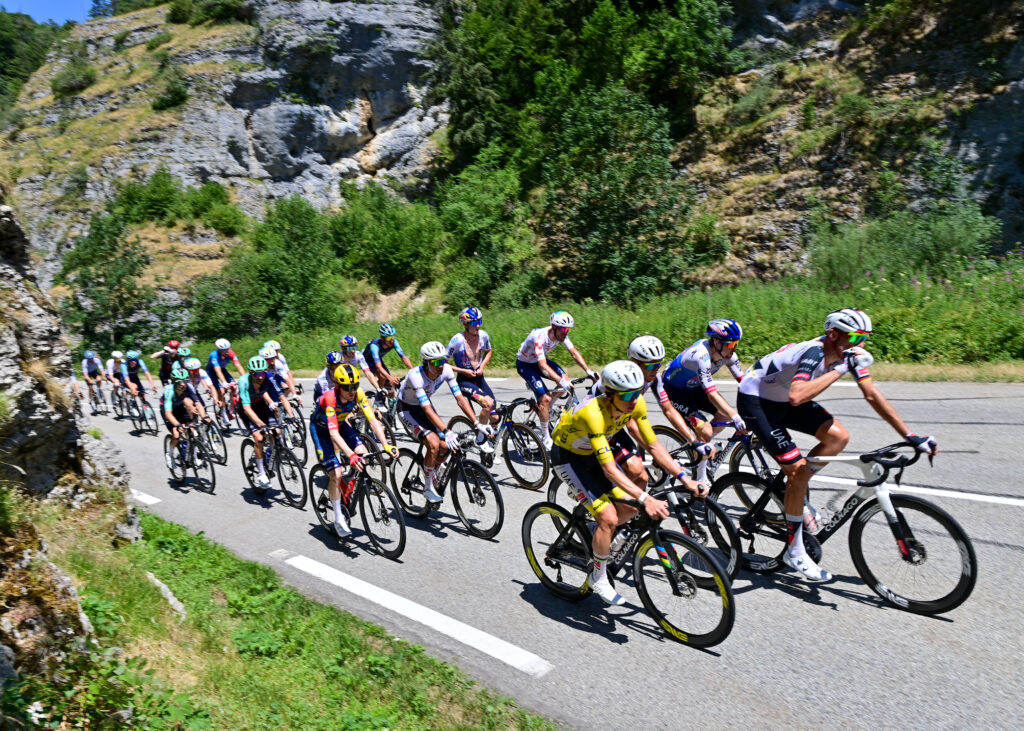

Visma-Lease a Bike CEO Richard Plugge has criticised what he describes as the “lack of anger” among cycling’s stakeholders in response to Finlay Tarling’s death, arguing that too many compromises are being made when it comes to race safety.
Plugge also suggested that local circuits, like those seen at world and national championships, could become standard in the future, as 200km A to B race routes become too difficult to marshal properly and ensure the safety of the peloton.
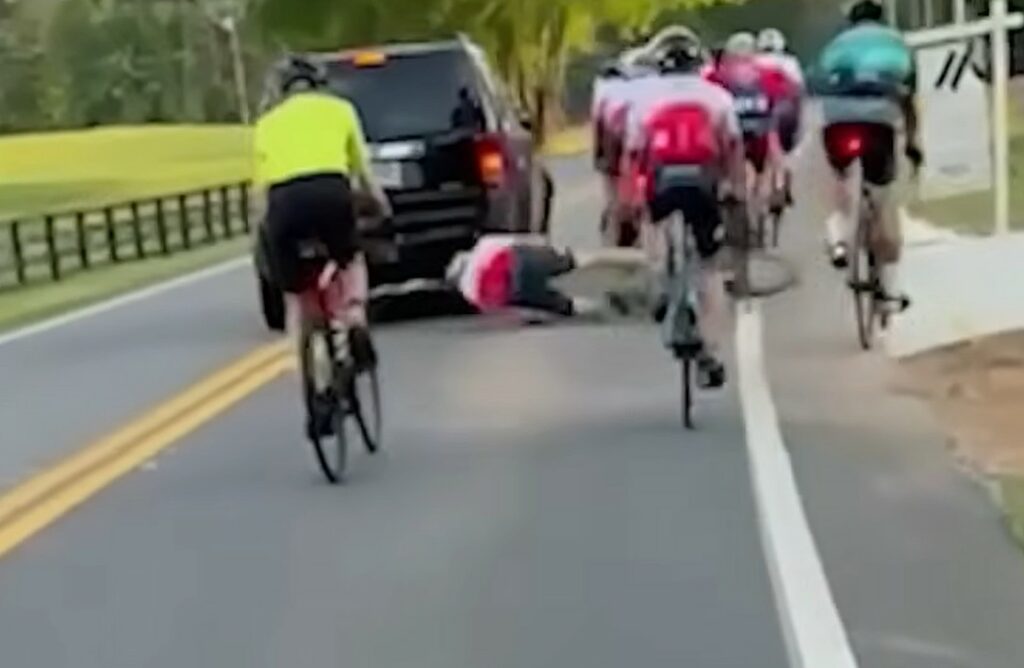
The Visma general manager’s comments come just over a week after the death of Fin Tarling, the 19-year-old British NSN development rider, who was killed during the eighth stage of the Volta a Portugal in a high-speed, head-on collision with a member of the public who drove his van onto the course, travelling in the opposite direction to the peloton.
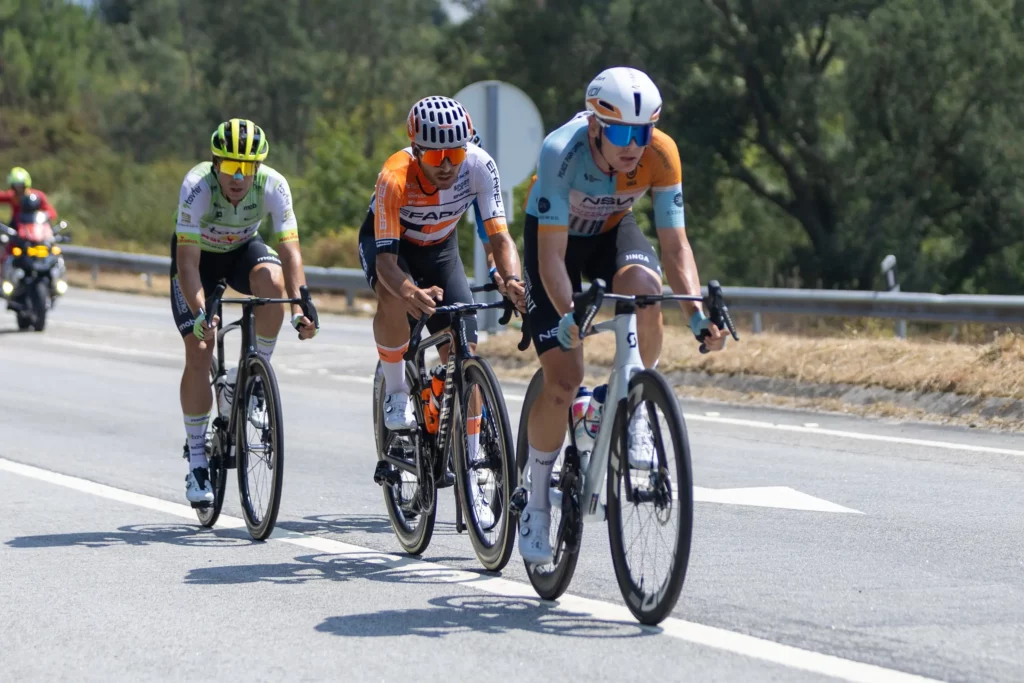
Speaking to Wielerflits at the Vuelta a España, Plugge argued that the response to Tarling’s death – caused by a motorist who was able to drive onto the course from an unmanned junction – has been too muted, claiming that the cycling world is unwilling to fully face up to its own safety failures.
“This simply cannot happen! The entire cycling world needs to be aware of that,” he said. “We are just carrying on.
“What disappoints me enormously is that everyone says it is terrible, but then immediately a ‘but’ follows. I would say we need to skip everything after the ‘but’. This simply cannot happen. That is the attitude we must adopt as the cycling community.”
He continued: “This boy encounters a car on a descent. Can you imagine this happening during Formula 1 in Zandvoort? That a car is suddenly driving on the track in the opposite direction?
“Of course, everyone says that this doesn’t happen at Zandvoort. But this actually does happen in a cycling race.”
Plugge, who took over the Dutch Visma-Lease a Bike team in 2012, is also the former head of the AIGCP, a union representing professional cycling teams, and has been a public face of the Saudi Arabian-funded One Cycling proposal that seeks to reshape and organise the professional cycling calendar.
In the interview, he also questioned the current influence of SafeR, the safety initiative established by the UCI in the wake of Gino Mader’s death at the 2023 Tour de Suisse.
“What surprises me is that neither UCI President David Lappartient nor anyone else from the umbrella organisations stands up and says: ‘Yes, but wait a minute, we really need to get together now and think about how we are going to prevent this from happening in the future?’,” he said.

“We had a fantastic initiative with SafeR, but I don’t hear much about that anymore either. Maybe we as teams need to take responsibility for safety in races ourselves again. I don’t know, but the lack of anger about what has happened again is very disappointing to me.
“I have said it before: SafeR has become a political construct where compromises are made simply to keep the church in the middle [a Dutch idiom meaning to maintain the status quo]. But it is about ensuring that riders can do their job safely.
“It is about safety. It is about ensuring that you can do your job safely. And that is uncompromising! It is either safe, or it is not safe. We provided a fantastic starting point for this when SafeR was founded, but it is no longer being acted upon. It has since become a completely different construct.”
According to Plugge, the answer may lie in completely overhauling how races are organised, including scrapping the traditional A to B route in favour of localised circuits.
“We have already indicated to the authorities, organisers, and teams, if cycling from A to B over public roads over 200 kilometres is no longer feasible, then we must ride laps of 15, 20, or 25 kilometres,” he said.
“Provided those routes can be secured one hundred percent. Ultimately, it is simply about our riders. They must be certain that they can race on a safe course.
“We are standing here at the start of the Vuelta a España in Monaco. The area around Nice and Monaco is full of traffic. We need to think now about how we can still organise a cycling race here in five years. What will our sport look like in five years?
“Will we still be able to ride 200 kilometres from A to B? Probably not, because then you would need a thousand traffic marshals. Whereas, if you ride laps of 20 kilometres… Everyone is super enthusiastic about the world championships being held on a local circuit. And rightly so! Because that is at least manageable.”
Plugge’s remarks come after his fellow team manager, EF Education-EasyPost boss Jonathan Vaughters also criticised the UCI’s focus on “ridiculous little” measures while failing to ensure safety at races.
“What I’m really not enjoying is this sentiment that’s coming from very powerful people in cycling, that says: ‘What can you do? Sometimes cars just end up on the road, this is just part of doing competitive sport on the open road’. That is not true. This is preventable,” Vaughters told the BBC.
“People look at the Tour de France and see a bunch of riders going through the beautiful French countryside, but fundamentally it’s a very dangerous sport. From the start of my career I can’t tell you how many people we’ve lost.
“I’m tired of the governance in charge of this sport introducing changes around ridiculous little issues, when they prove themselves to be unable to govern a sport to keep traffic off the road.”






6 thoughts on ““We are just carrying on”: Visma-Lease a Bike boss slams “lack of anger” over Fin Tarling’s death and suggests safer circuits to replace “A to B” race routes”
I think this approach of circuits is worth considering for less well resourced events, however, it will remove the “tour” aspect and reduce the amount of scenery viewed. In my opinion the landmarks etc is one of the enjoyable aspects of events such as the Giro and TDF, which presumably are much better funded.
I am not sure though how foolproof the circuit course will be though. Most circuits will pass through villages and other residential areas. Presumably the organisers contact residents beforehand re vehicle restrictions on race day?
However, I can’t help recalling the day my poor mother in law once drove the wrong way down a dual carriageway near Stockton town centre, shortly before she was diagnosed with dementia. She would presumably have been fully capable of driving off her driveway and towards a cycle race peleton.
@Mr Blackbird “it will remove the “tour” aspect and reduce the amount of scenery viewed. In my opinion the landmarks etc is one of the enjoyable aspects of events such as the Giro and TDF”
– Many of us get to the point where we realise it’s all about the scenery, not the racing : )
I think Plugge is right to demand that no race should ask riders to run this risk. It seems that we’re accepting fatal car RTA as a risk of road riding and racing. It can never be zero risk but perhaps it should be lower. Circuits needn’t be boring or short and they can lead to immortalised stage routes that are more popular with riders as destination rides. I’d argue for it having potentially greater tourism benefit for a ville d’etape as well as better for spectators (if they can be accommodated on less total roadside). It could reduce the logistics cost if a few circuits are based in one area. But it’s a big cultural change, for sure.
I am not arguing against circuit racing. It is a good idea for less well resourced events.
I am arguing that for better resourced events, the introduction of circuit racing would achieve no significant improvement as well as totally change their nature and appeal to television viewers.
I can see compromise coming. Droning round a 20k or whatever lap 10 times will bore the pants off riders, spectators & so ultimately sponsors. That said, we cannot continue putting lives at risk from lack of funding. Maybe some funding from the stupidly expensive streaming services. Maybe cutout some of the tediously long bits, have a combination of laps but keep the sense of adventure, like rallying compared to roundy roundy racing.
Can Plugge explain how his circuit idea would accommodate Alpe d’Huez, Mont Ventoux etc? It obviously wouldn’t. I suspect this is just a smokescreen for his doing a Gianni Infantino in wanting to monetise the sport – circuits would in his view mean he could end the tradition of cycling being free to watch by charging on circuits, which he has actually talked about previously. It might be cycling, but not as we know and love it.
Erm, both Ventoux and Huez can and have been ridden as part of a circuit. Ventoux famously has a challenge that involves climbing (and descending) multiple different routes in the one ride.