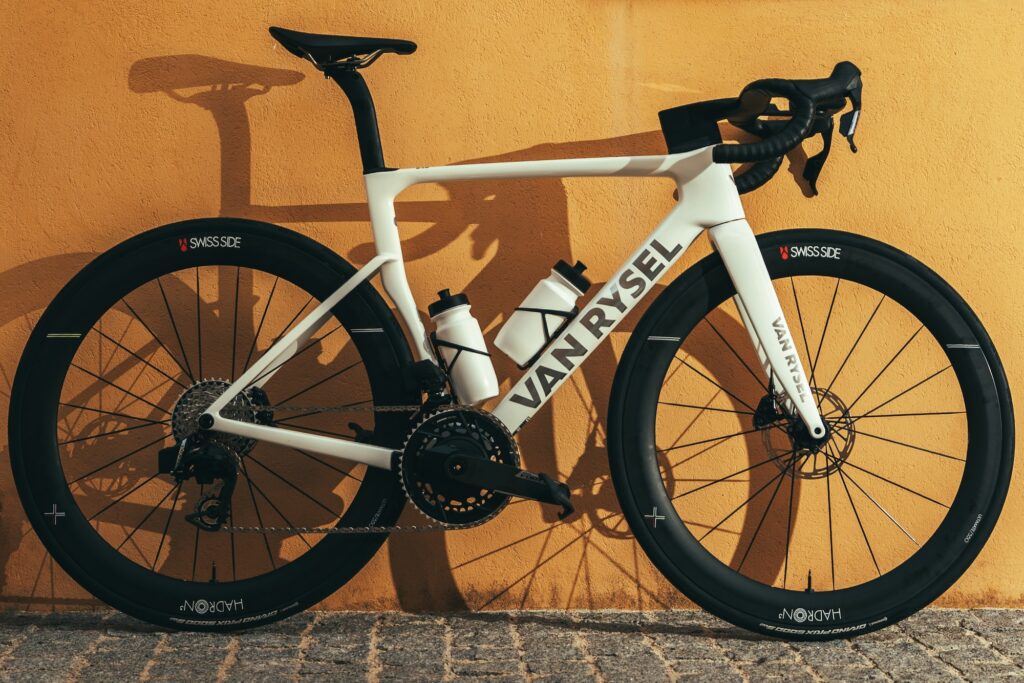

Van Rysel has launched its new RCR-R Pro and RCR-R, two lightweight aerodynamic road bikes designed to perform on everything from mountain passes to flat and fast roads. The higher-level RCR-R Pro comes with a claimed frame weight of just 705g and complete bike prices start at 6.6kg, and Van Rysel claims a measured aerodynamic gain of 6.3 watts at 45km/h (28mph) over the previous generation.
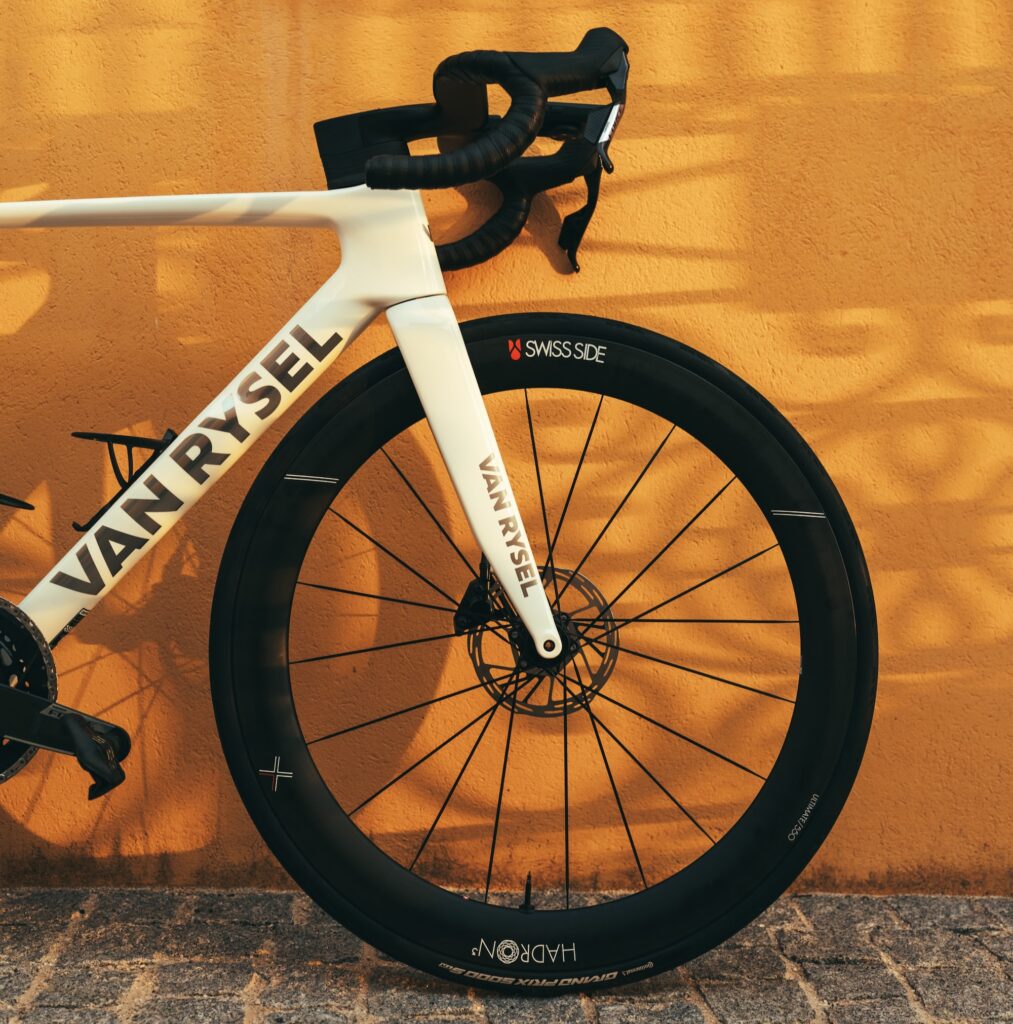
The RCR-R Pro is yet another example of the increasingly blurred distinction between lightweight climbing bikes and aerodynamic all-rounders. Whereas manufacturers once offered relatively specialised platforms for different types of racing, the latest generation of top-level race bikes is increasingly expected to perform across the entire spectrum. The challenge is to achieve that without compromising weight, aerodynamic efficiency or handling.
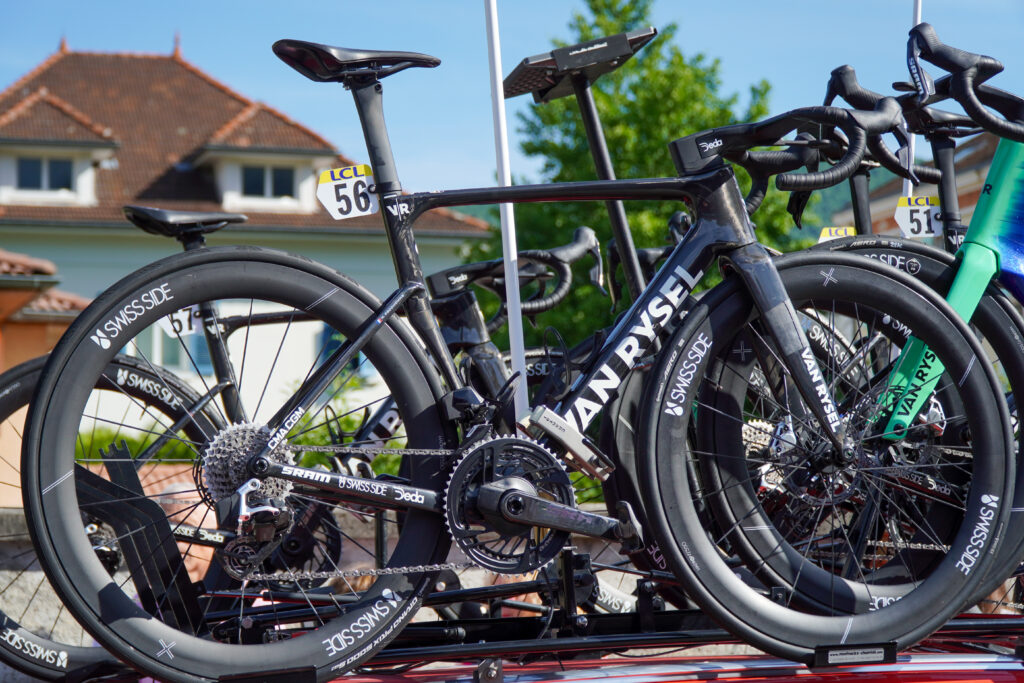
The RCR-R Pro is the bike that we first spotted Paul Seixas riding at the Tour Auvergne-Rhône-Alpes – the Dauphiné in old money – back in June, and he and other members of the Decathlon CMA CGM have been using it since then. It’s the bike that Seixas rode to become the youngest-ever winner of the Tour of Lombardy last month.
> A New, Aero-Looking Van Rysel RCR-Pro Spotted At Criterium du Dauphine
What’s new, then?
Van Rysel says, “Developed and designed in Lille, France, in close collaboration with the Decathlon CMA CGM team, the two models are the culmination of a two-and-a-half-year development programme. Combining computational fluid dynamics (CFD), wind-tunnel testing and invaluable feedback from the professional riders, the collaborative process focused on achieving the optimal balance of aerodynamics, lightness and responsive handling.”
Let’s be honest, that’s pretty much a checklist of what brands always say when launching a new race bike, so let’s get down to specifics…
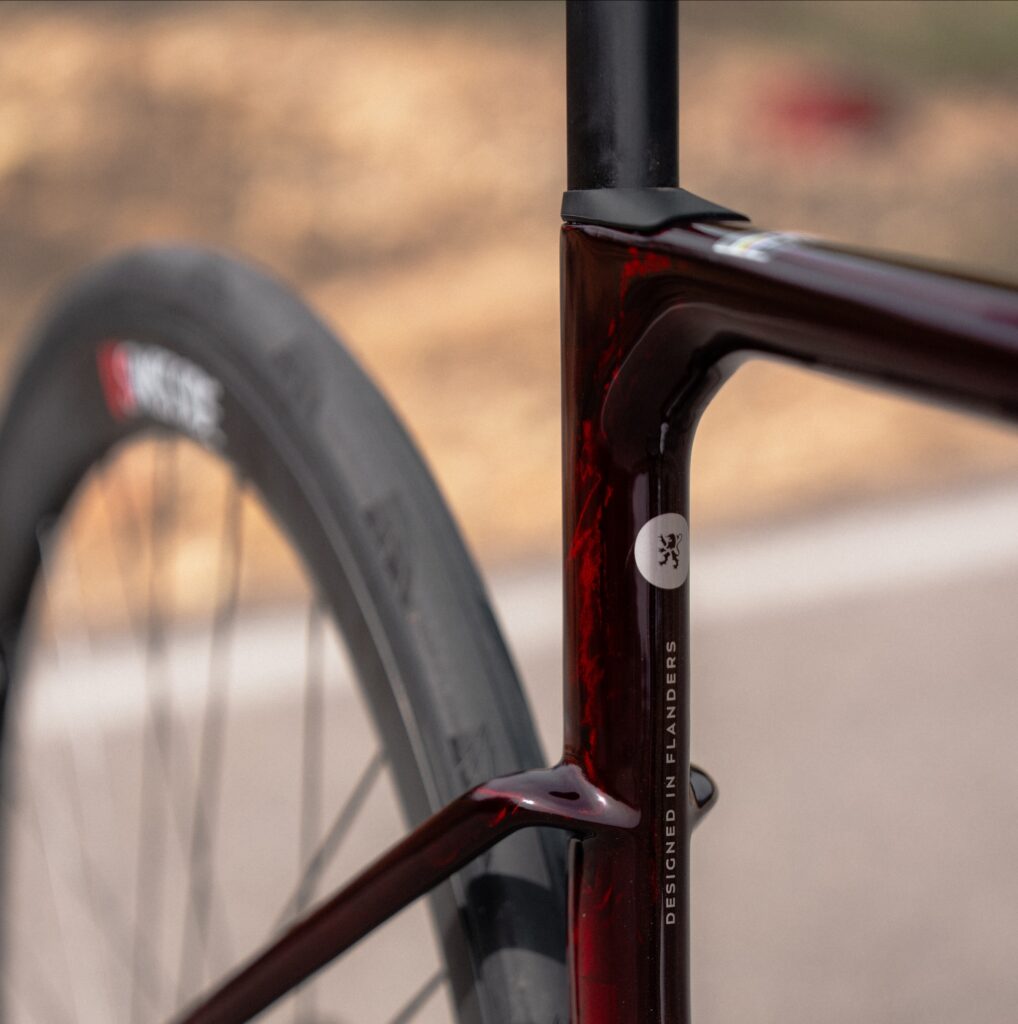
Van Rysel says that the design process involved 13 CFD prototypes, five wind-tunnel prototypes and seven frame lay-ups, all dedicated to aerodynamic optimisation. This allowed it to “evaluate the trade-offs between weight, aerodynamics, stiffness and handling throughout development to find the winning combination”.
The design includes a custom-designed aero bottle and cage, which is something we’ve seen on other bikes in the past few years, including the Trek Madone SLR and the Wilier Filante ID2. Switching from standard bottles and cages to a system that works aerodynamically with the bike as a whole is a relatively straightforward way of improving aero efficiency – although it can be less easy to get replacements. The aero bottles will be released separately from the bikes.
Van Rysel says that the new bike can save up to 6.3W at 45km/h (28mph) compared with the previous-generation bike in wind tunnel testing with turning legs and turbulence. It hasn’t given us any more detailed wind tunnel figures, although a white paper is said to be on the way. We’ll be interested to see whether the 6.3W claim compares a new bike with the aero bottles and cages to the old bike with conventional bottles and cages. We just don’t know yet. And, of course, 45km/h is a very high speed for most amateur cyclists. The absolute wattage saving will be lower at more typical riding speeds.
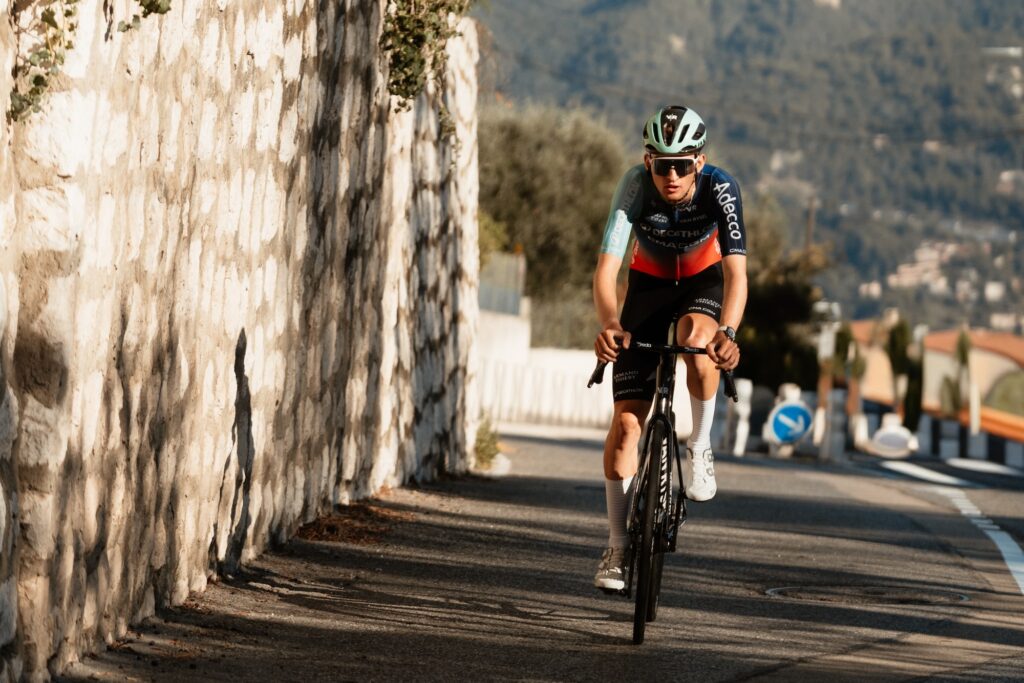
Van Rysel says, “The new RCR-R Pro has been tested by riders from the Decathlon CMA CGM professional team in training camps and races. During training camps in Sierra Nevada, climbing specialists such as Paul Seixas, Nicolas Prodhomme and Matthew Riccitello tested RCR-R PRO prototypes, focusing on handling and the demands of climbing and acceleration, providing direct feedback to engineers as they refined the final design. The new frame design focuses on power transfer, the balance between front-end stiffness and rear-end flex, and stability through fast corners and descents to meet the demands of today’s top-level racing.”
Jérémie Debeuf, Van Rysel’s race product manager, says, “The new RCR-R brings Van Rysel’s ambition to fruition – to design the world’s highest-performing equipment with the aim of securing victory at the Tour de France. The brief was clear: to create the perfect synthesis by integrating the cutting-edge aerodynamics of the RCR-F Pro onto an ultra-responsive and lightweight platform, tailored for mountain stages. From wind tunnel testing to feedback from riders in the field, every detail of the frame has been designed with victory in mind. Winning a Monument as early as this season validates our technical approach and we are excited to see what the bike can achieve in 2027.”
Of course, Seixas might have won the Tour of Lombardy on any other bike for all we know.
RCR-R Pro versus RCR-R: what’s the difference?
The RCR-R Pro and the RCR-R share the same overall shape; it’s just that the carbon lay-ups and prices differ.
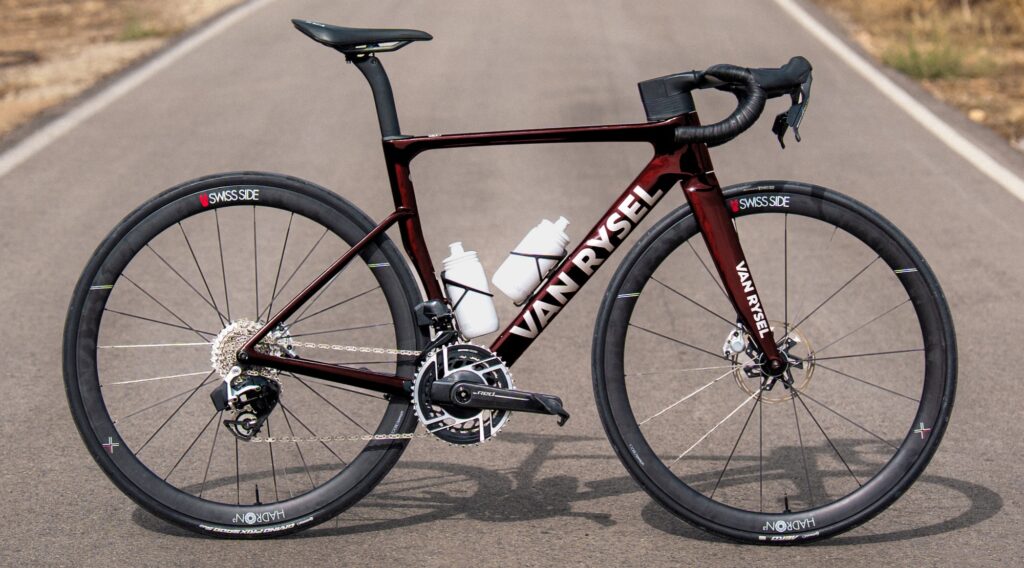
The RCR-R Pro is the higher-level option with a frame made from what Van Rysel describes as super-high-modulus carbon. The only other detail we have is that the RCR-R Pro frame has a claimed weight of 705g (+/-5%) in a size medium – compared with 790g for the previous model.
The RCR-R frame (without the ‘Pro’ suffix) is made from high-modulus carbon (again, we have no more detail than that) with a claimed weight of 883g (+/-5%) in a size medium.
The two models share the same high-modulus carbon fork with a claimed weight of 360g.
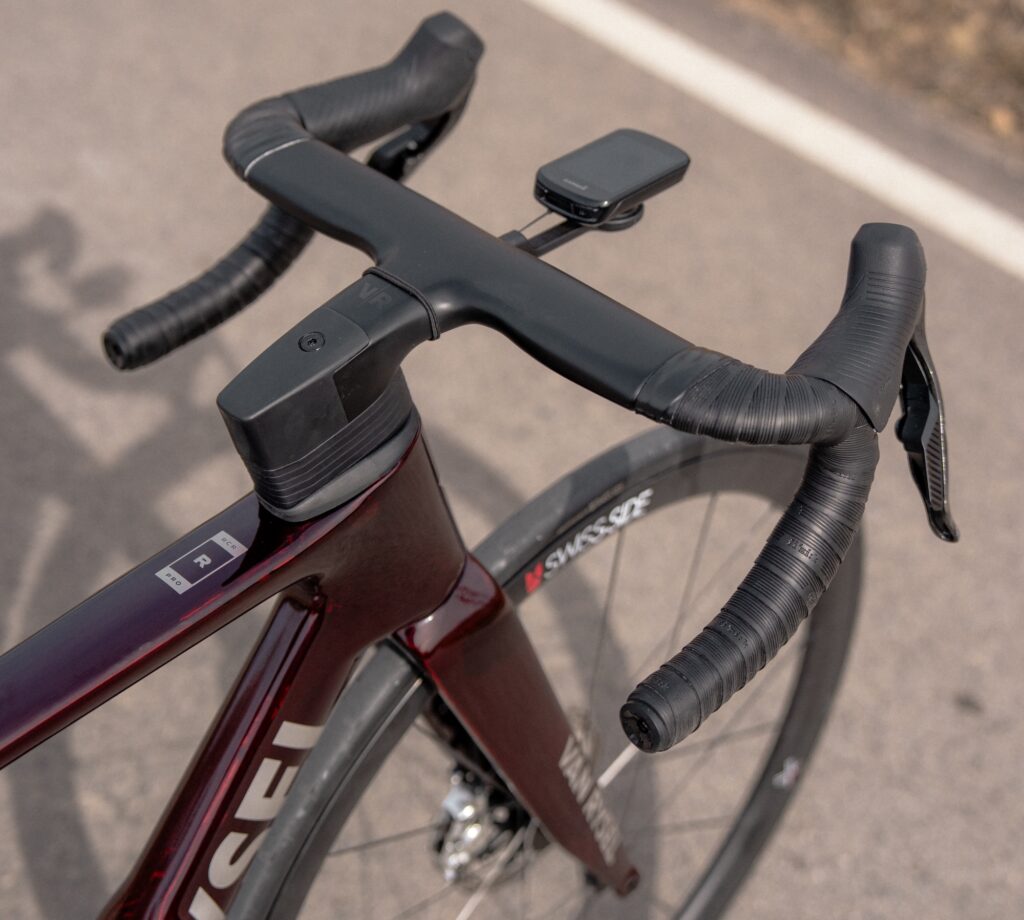
The RCR-R Pro is offered in Shimano Dura-Ace Di2 (claimed complete bike weight: 6.9kg), Shimano Ultegra Di2 (7.1kg), SRAM Red AXS (6.6kg) and SRAM Force AXS (7.1kg) configurations – the top two road groupsets from each of those brands.
The RCR-R is available in Shimano Ultegra Di2 (7.4kg), Shimano 105 Di2 (7.8kg), SRAM Force AXS (7.5kg) and SRAM Rival AXS (7.9kg) builds.
Van Rysel hasn’t yet given details of the complete builds.
Paul Seixas’ 2027 bike
Paul Seixas will race on a Van Rysel RCR-R Pro built up with a SRAM Red AXS groupset again in 2027. Although the wheels and other components might be different from the ones included in Van Rysel’s 6.6kg weight claim (above), it seems likely that Seixas’ bike will come in close to the UCI’s 6.8kg minimum limit once pedals and a computer mount have been added.
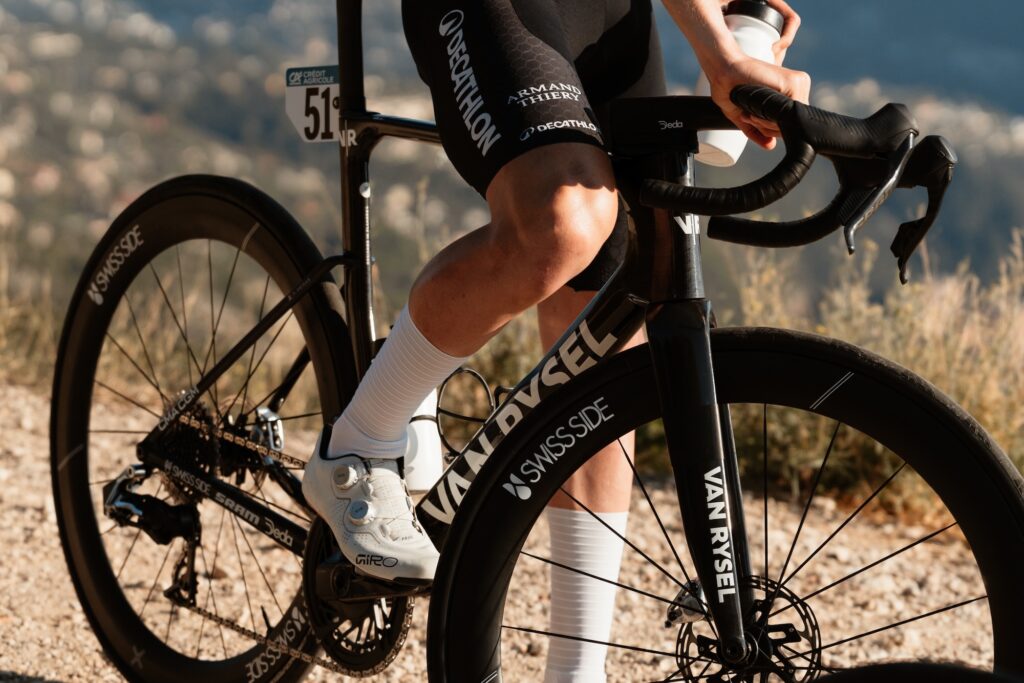
That’s a little lower than the reportedly 7.25kg Colnago Y1Rs that Tadej Pogacar used to win this year’s Tour de France, for example, although any weight advantage that Seixas has in 2027 won’t be significantly different from the one he had when riding the bike since June 2026.
Speaking of Paul Seixas… Whenever a top-tier bike is launched, we’re given quotes from the star rider who will be racing on it and – apologies for being ungrateful – we routinely bin ’em. Why? We’re never completely sure if they really did originate with the named rider, and even if they did, that rider is hardly an impartial observer, are they?
We’ll make an exception for Paul Seixas; a small dispensation, seeing as how he won a Monument (Il Lombardia) and another classic (La Fleche Wallonne) in 2026, and finished fourth in the Tour de France at just 19.
He says, “The [new] bike is lighter, more aerodynamic and, above all, more stable on descents. When you’re travelling at over 100km/h [62mph], confidence in your kit is paramount.
“I clocked up the kilometres in training and worked closely with the Van Rysel engineers to fine-tune the final settings before switching to race mode for the second half of the season.
“Winning a Monument on this bike is the ultimate validation, with the bike responding instantly when I attack, whilst maintaining speed on the flat and on technical descents.
“As a rider, having the opportunity to work hand in hand with the Van Rysel engineers to co-develop the kit with which we’ll win tomorrow is a source of pride and a huge advantage.”
Prices and availability
You’ll be able to check out the new Van Rysel RCR-R Pro if you’re heading to this week’s Rouleur Live show in London, although the new bikes will not go on sale until 5th January 2027 (subject to regional model availability).
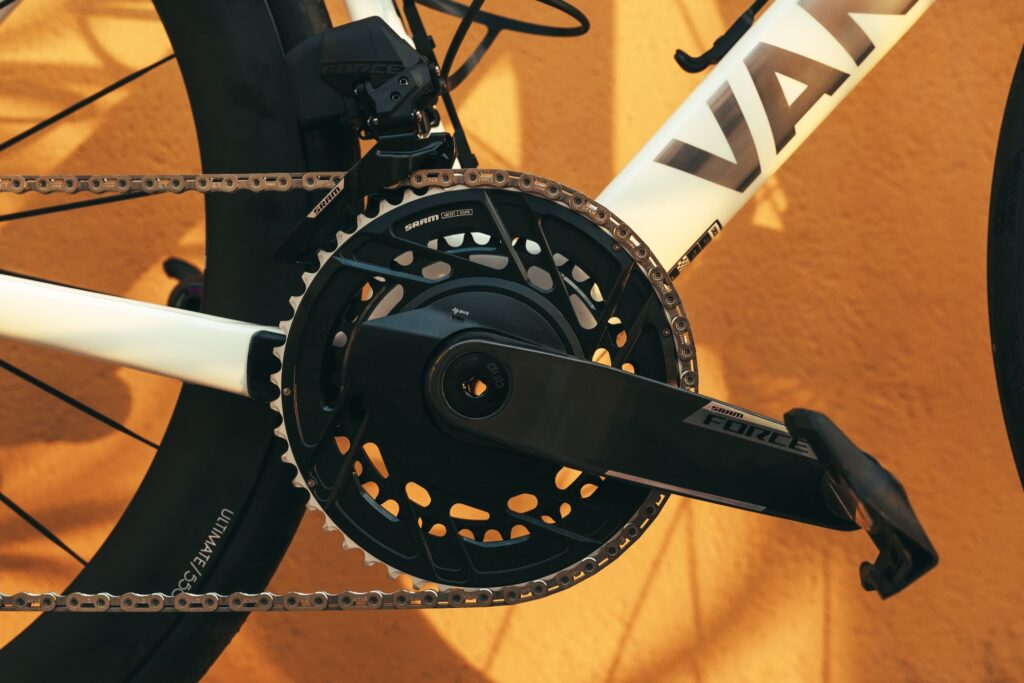
Prices will be from €3,299 to €8,499 in Europe, although we don’t have the prices of specific models, and UK prices have yet to be announced. They’ll be released, along with further spec details and a white paper, ahead of January’s commercial launch.
You can get further information on the new Van Rysel RCR-R and RCR-R Pro over on the brand’s website.