


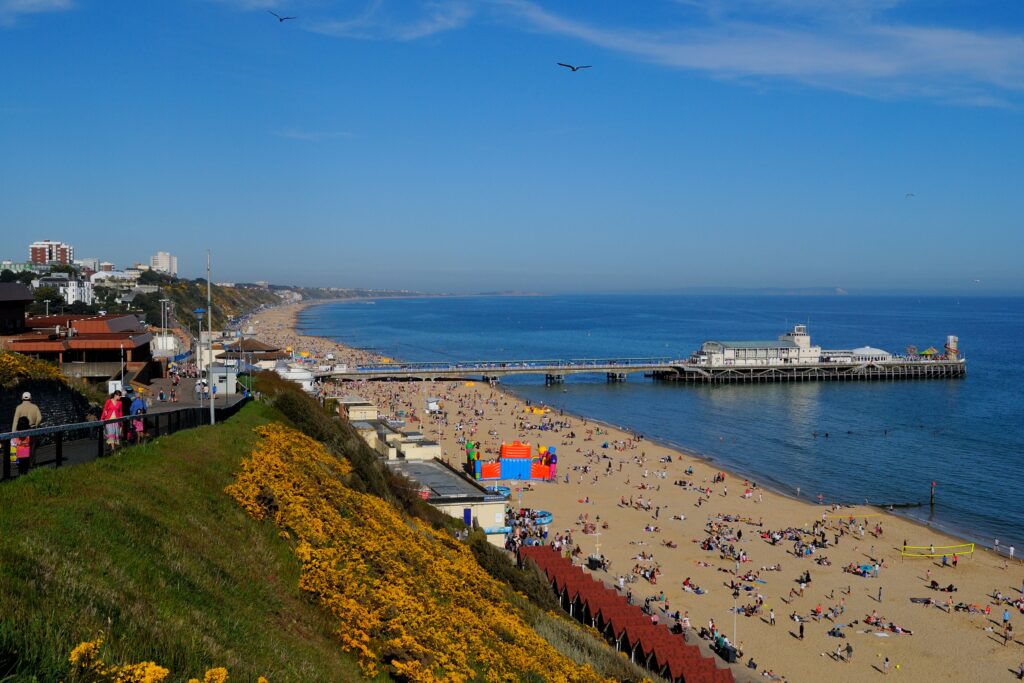

A seaside council claims they’ve been “very successful” in getting people to walk and cycle, but that the rise has caused a shortfall in their budget.
Bournemouth, Christchurch and Poole (BCP) Council report that parking income is around seven percent below budget targets, despite the deputy leader of the council admitting, “the amount of money we receive for parking charges actually increased, but it hasn’t increased by as much as we were forecasting,” the Bournemouth Echo reports.
Mike Cox, a Liberal Democrat, told a council meeting, “What we haven’t done, and what other people have not done, is take account of people’s changing habits because of the cost-of-living crisis.
“People are changing their habits and the way they do things. We are trying to encourage people to walk and cycle as much as possible, and that would automatically mean lower parking revenue.
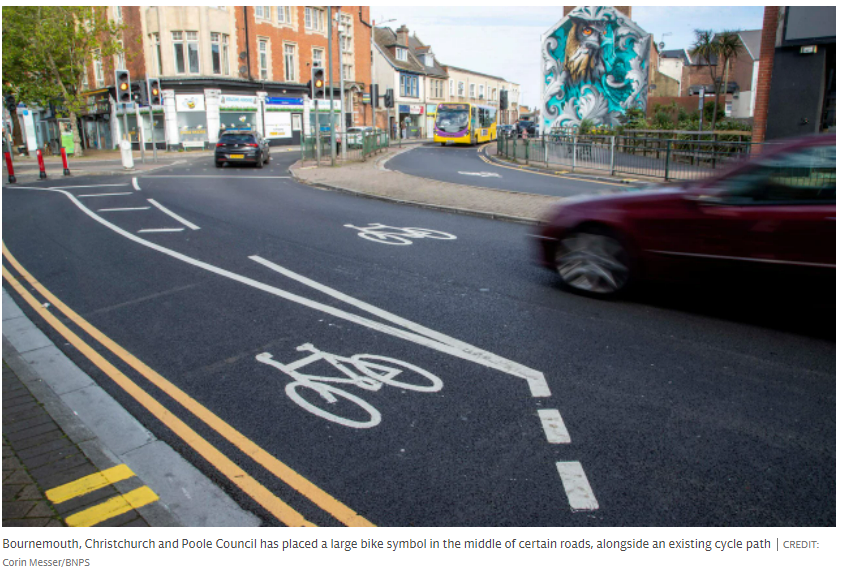
“To an extent, you might turn around and say we’ve been very successful in getting people to cycle and walk. Unfortunately, the issue has been, there has been less parking income.”
BCP Council has long suffered with some of the highest rates of traffic congestion in the country during holiday seasons. In response, the council, which has been Liberal Democrat-run in coalition with local resident’s associations and independents, has launched a £102 million Transforming Travel initiative aimed at promoting residents to switch to walking and cycling in the area.
The council’s official Tourism Strategy, published in 2023, also includes delivering “co-ordinated investment in cycle/ walking/ heritage/ culture wayfinding infrastructure” by the end of 2026, and longer-term pledges to develop “convenient, integrated and sustainable and environmentally friendly transport meeting the needs of visitors to and across major visitor hubs.”
Included within that pledge is a “town centre parking strategy”, though it’s unclear what the aims and ambitions of the strategy would entail. The latest parking report published by the council shows the total number of on-street parking places remained unchanged from 2024 to 2025, whilst the number of off-street parking places declined by 40 to 18,537. The same report found that council car parking generated more than £27 million in revenue and £16 million in income.
However, not every piece of active travel infrastructure has been universally welcomed, including a £17 million cycle lane with a single zebra crossing stripe at one point. The cycle lane has been criticised as a waste of money by local motorists and Reform UK supporters.
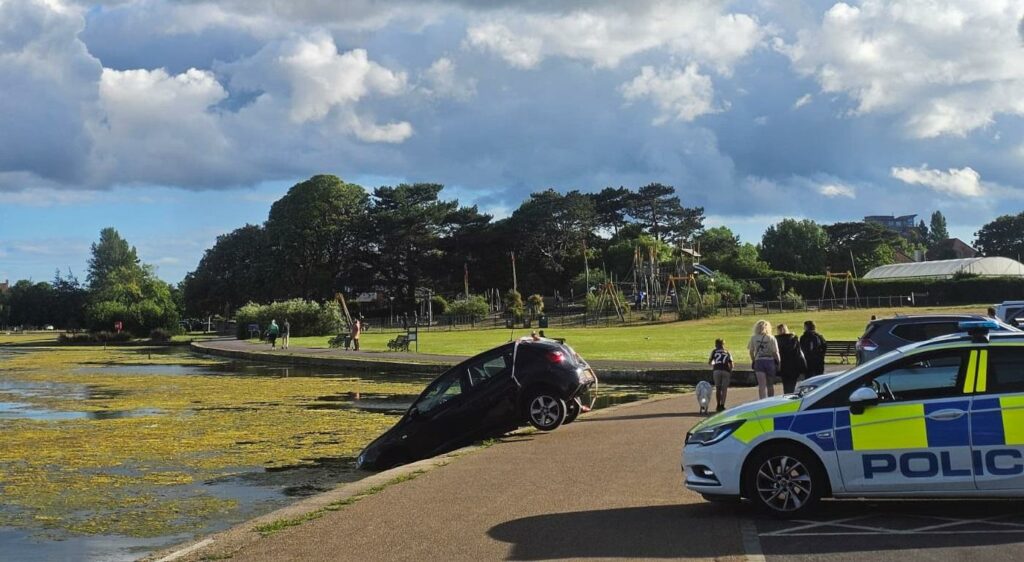
The party, which did not contest the last elections in the area but is believed to be targeting the council in next year’s local elections, has also pledged to re-open a through road to vehicles in Poole Park that was frequently used as a rat-run before it was shut to cars in 2024. The same day Poole Town Councillors announced their proposal, a motorist drove into the park’s lake.








16 thoughts on “Council claims more people cycling causing budget shortfall, despite car park income increasing”
Its strange to budget off of money you never had. There is no way they could ever know how many of those cyclists would have otherwise visited the town. In fact many may of visited precisely because they could cycle and not be burdened with extortionate parking charges. In which case they probably made more money in the town from visitors paying into the local economy. But they fail to see that side. Better to have money trickle through you economy benefitting businesses than just a parking tax.
@Smoggysteve
Financial planning, and I speak from bitter, bitter experience is an incredibly inexact science. The bean counters insist on a number against every variable, which are often just plucked out of the air (last year’s number plus or minus a bit, but never an obviously rounded percentage usually placates them).
Then, at end of the year they send reports to the Board saying you missed your made-up target (overlooking the fact that you had no control over the outcome) and you are summoned to explain yourself.
@panda To which point they decide to play the blame game and find an obvious target.
As we know, active travel benefits economies and society in many ways which is often difficult to see in cold hard £ cash figures.
Given the health benefits (less cost to the NHS), lower congestion and motorist delays, road maintenance etc can they factor those figures in to their budget?
No? Why not?
@mitsky You are quite correct. Unfortunately there is no joined up thinking in local and central govt. Separate incomes and expenditures are considered as stand alone profit or loss entities without joined up thinking
@mitsky in fact I think eg. Dutch shopkeepers and business owners could point to cold hard cash figures! And there’s at least one UK government document (some years back now – “the value of cycling” – via University of Birmingham and the DfT) where they go through the numbers.
But with motoring crucially we normally discount all or most of the *costs* *.
Then, since different monies are accounted for (or not…) under different budgets / departments / different levels of government changes can get always be argued over. (“My department is ultimately measured getting more *motor* traffic to flow, ergo active travel always looks like a problem”).
* eg. Perhaps we just focus on “road taxes” vs. the “road budget” and ignore all the “externalities” (which are normally “off-budget” by design). This is a comfort to those who may not wish us to know that driving is a net cost to all taxpayers whether they drive themselves or not. (Where active travel is calculated as a net benefit). There are arguments for everyone paying this, but much better not to have them!
@chrisonabike ‘The Value of Cycling’ was indeed an excellent document:
https://assets.publishing.service.gov.uk/media/5a74ad3aed915d7ab83b5a59/value-of-cycling.pdf
And your points about externalising or ignoring the costs of motoring is well made.
@mitsky
I actually have some experience of this. In short, no.
I once found myself on a mental health commission and one of our proposals was a parallel of what you describe – if you give some budget to this initiative now then the clear evidence is that the police, prison service, primary and secondary healthcare services, social care etc will collectively save a large integer multiple of that money in the future.
But none of those departments will give up any budget for the next period because they know they’ll be even more underfunded now and they’ll be re-baselined for the future so won’t see any benefit then. So nothing happened, but everyone is happy.
What you really need is a dictatorship, benign or otherwise!
BCP Council should introduce charges for cars parking in a lakes and ponds. That may help make up the shortfall.
Council claims more people cycling AND walking causing budget shortfall.
Corrected it for you.
“The cycle lane has been criticised as a waste of money by local motorists and Reform UK supporters.”
With those two groups attacking it, the cycle lane is 100%, cast iron, guaranteed right. You couldn’t ask for a more authoritative endorsement.
@eburtthebike Two groups? Or one group and a subset of that same group?
Congrats on writing some bullsh#t ragebait road.cc team. The councillor was asked why revenues were lower than forecast and he answered the question. There as no outrage or seeking to pass blame. They forecast a level of income and then it turned out that raising the price of parking and encouraging walking and cycling did what it was meant to do. This is Daily Mail level trash.
The council seems to be trying to give the impression that it has made less money from parking when in fact it has made more but not as much as they had budgeted for. Entirely different things.
@Surreyrider It depends on whether or not you consider inflation.
But as a4th points out, this is more a case of explaining the budget shortfall.
And as panda points out, these kinds of schemes that are demonstrably good for people and can reasonably be claimed to be saving public money somewhere, if not now, then over the coming years, don’t necessarily refund the section that made the initial outlay or that are having to justify the drop in their income.
We need a much more holistic approach to setting public budgets. But with everything squeezed what inevitably happens is people retreat into their silo mentality where they will cling onto everything they have. No-one here needs persuading that expanding active travel will cut costs for health and social care going forward, but good luck persuading anyone to actually take budget from an underfunded NHS to pay for a new bike lane with the promise of a future reduction in prescribing costs.
@FionaJJ You miss the point. Revenue from parking charges increased. People are trying to frame it as “the issue has been, there has been less parking income.” Clearly that is a lie.