


Ford has come up with a solution to the problem of car roof bars that spend most of their lives collecting dust in a corner or adding drag when you’re driving: make them disappear into the roof when they’re not needed – and the motor giant also proposes power delivery up there in a new patent application so you could charge an e-bike battery or an electronic shift system while driving.
Ford’s latest ideas have been presented in a patent application with the snappy title: “Selectively deployable vehicle roof rail assembly having power delivery interface”, first reported by Patentlyze.
Essentially, the roof rail assembly sinks into the car roof when not required, sitting flush with the top of the vehicle to improve aerodynamic efficiency and miles per gallon.
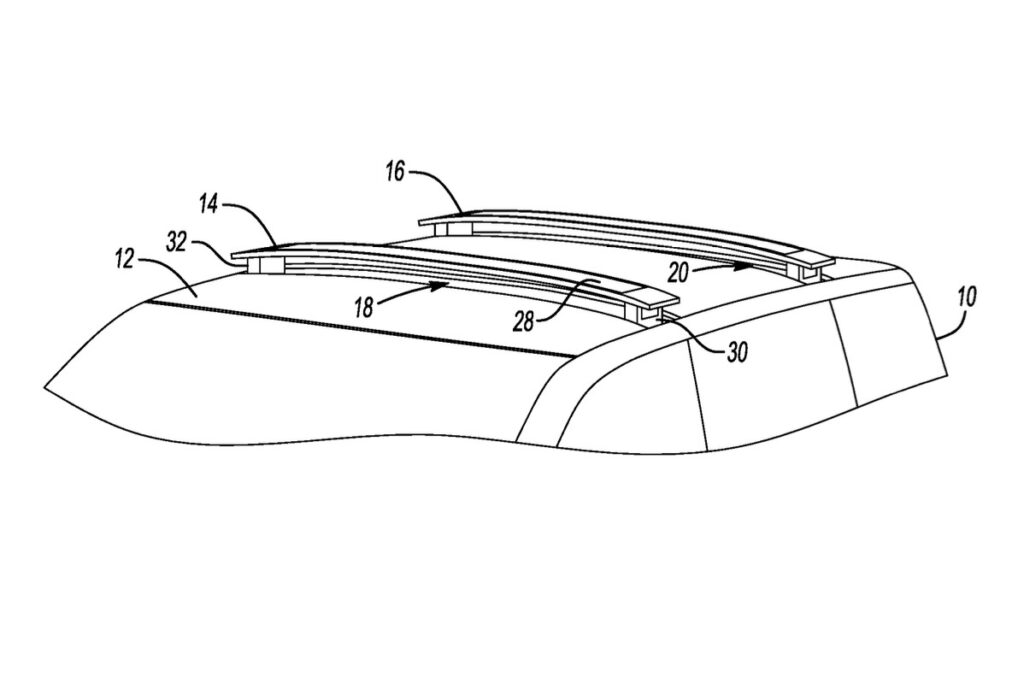
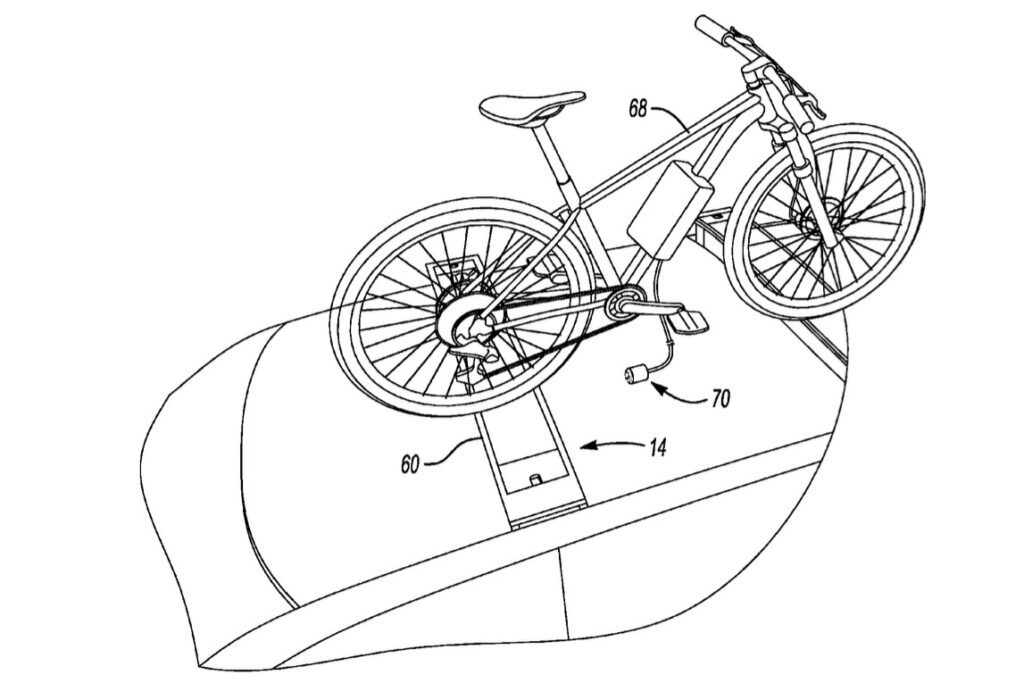
When you do pop the roof rails up, Ford plans to provide at least one light and “power delivery interface” – some form of socket or port, or an inductive charging pad – so you could charge an e-bike as you drive, for example, or even top up your Di2 battery.
Ford says that at least one power delivery interface would be positioned within a roof rail support pillar, so it wouldn’t be accessible in the system’s retracted state.
The rack itself would be raised and lowered electrically. You’d be able to operate it using a key fob, smartphone, button on the vehicle or an in-car touchscreen. The front and rear bars could move together, and the system could even stop at intermediate heights.
For cyclists, the most interesting part is the prospect of charging batteries – for an e-bike or electronic components – while travelling. Ford’s application specifically illustrates an electric bike connected to a power outlet, with electricity supplied by the vehicle’s battery.
Of course, there are some practical questions. A motorised roof rack adds mechanical complexity, electrical connections and moving parts to an exposed area. The patent doesn’t go into much detail about how these components would be protected.
And this is a patent application, not a granted patent, let alone a real-life product; we can’t tell you whether this tech will ever see the light of day. Still, we reckon it’s an interesting proposition. What do you think?