



17 January 2022, 10:09
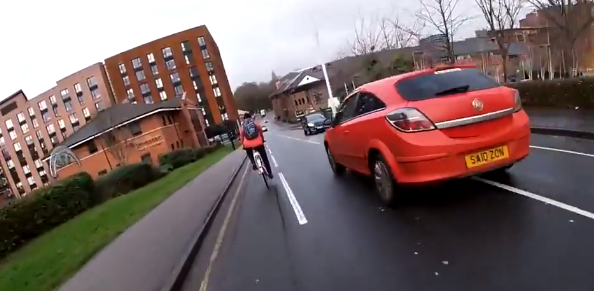
Is that narrow strip of bike path really to blame?
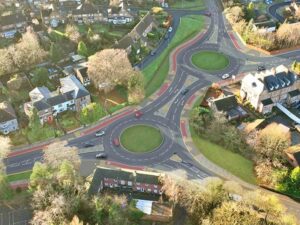
New cycle lane blamed as family home to be demolished for roundabout redevelopment
Under plans to redevelop the A68 near Cockerton the road would be widened with a new cycle path and pavement passing where the Austin family's home currently sits
17 January 2022, 10:09

17 January 2022, 10:09




















93 thoughts on “Are the roads to blame? Britain’s “killer roads” under investigation; Fabulous turnout for women’s Winter Wonder Ride; Artist’s bike maps of London go viral; Vaccine required to race in France; Beeb’s bike lane bulletins catch on + more on the live blog”
Regarding JV’s map of
Regarding JV’s map of Kensington and Chelsea, RBKC council are undoubtedly the biggest group of cycle haters in London, if not Britain, and they can get in the sea, but there are safe ways around the borough if you look for them. I know this because Mrs H works on the western edge of the borough so we spent many hours scoping out the safest way for her to ride there, there are a number of quietways where streets are one-way for cars but two-way for cycles, with cyclist-dedicated lights where they cross main roads.The main roads are a complete nightmare and highly dangerous and should be sorted out at once, beginning with the reinstatement of the High Street cycle lane, but if anyone’s thinking of commuting in the borough by bike don’t assume that it’s impossible to find a quiet safe route.
Rendel Harris wrote:
so bad that the royal parks look preferable in comparison.
Meanwhile, I see the BBC are
Meanwhile, I see the BBC are blaming roads for an increase in fatalities, along with a lack of police.
Whilst more enforcement and better road design could help, all of the dashcam footage of accidents in the report appears to show people driving like tw@ts. I cant be bothered to watch Panorama tonight to see whether this is mentioned. Maybe we can have an update on tomorrow’s blog?
I was thinking the same.
I was thinking the same. Really don’t think I can be bothered to spend half and hour getting annoyed and shouting at the TV tonight. If somebody else could do it for me and post the review in tomorrow’s blog that would be perfect.
It looks like Ryan’s on the
It looks like Ryan’s on the case! And apparently we are “responsibility pedants”!
@Ryan just to be clear my wife would be happy to confirm that it isn’t just responsibility that I am pedantic about!
I knew you would enjoy that!
I knew you would enjoy that!
And just right too – Responsibility Pedant is definitely a badge of honour.
This is clearly why the Govt
This is clearly why the Govt hates the Beeb. I mean: peddling conspiracy theories about maneating tarmac! Ridiculous. 😉
SimoninSpalding wrote:
Repeating what I said on the forum discussion –
Just seen a bit on BBC news about it – they balmed the increase in deaths on
– fewer dedicated traffic police
– fewer breathalysers
– significant number of speed cameras switched off.
Resulting in a road network with fewer checks; leading to some drivers being more likely to drive more dangerously; and therefore making roads more dangerously.
And to add – they didn’t blame road design.
From the trailer, it appears
From the trailer, it appears that they will be blaming lack of police, and bad road design, not drivers. Sorry to be pedantic (is my responsibility pedant’s badge in the post?) but it’s drivers. Will they be focussing, or even mentioning, the increase in mobile phone calling, the government’s abject failure to legislate properly on phones, or to provide safe infrastructure for cycling?
Will they even mention cyclists at all? Probably not, as we all know, it’s as much as the BBC can do to admit that we exist.
I wonder if they will mention
I wonder if they will mention SUVs as a contributing factor towards the increase in fatalities. Being that you are more likely to die in an SUV
Sssssshhh…
Sssssshhh…
Don’t tell them that, they often buy them because they feel safer…
‘responsibility pedants’
‘responsibility pedants’
Perhaps you coudl put a small marker next to the avatar so we know who these people are.
DOOR
I’ve tried!
I’ve tried!
When is the Govt supposed to
When is the Govt supposed to be voting through the HC changes?
Or will they decided to throw them out and cancel them, as a further distraction from partygate?
“the ‘responsibility pedants’
“the ‘responsibility pedants’ among the site’s readers.
We all know the type – the ones who jump into the comments section of a news story to point out (and rightly so) that it wasn’t a car that struck the cyclist, but the motorist driving the car.”
I’m with the pedants on this one.
marmotte27 wrote:
It’s interesting that people are starting to figure out that RTC reporting is horribly skewed to favour the motorist. This is not accidental (!) but a result of campaigns by the motoring lobby stretching back to the 1930s to influence media to deflect blame away from poor driving and categorise them as ‘accidents’ and de-personalising them with language such as ‘hit by a car’.
I see it more as a push-back than being pedantic.
marmotte27 wrote:
I’M Pedanticus!
No I’m Pedanticus
No I’m Pedanticus
Erm, I’m Pedanticus.
Erm, I’m Pedanticus.
Captain Badger wrote:
Statisticus, Statisticus, Statisticus Pedanticus.
marmotte27 wrote:
Unless someone gets out of their car and physically hits a cyclist, the pedants are of course 100% wrong (as usual). But since when do facts matter when you have emotions?
On the button as ever – it is
On the button as ever – it is obviously the ROADS in the BBC story that are killing people, not drivers breaking the law, as that is something they never do.
The correct form of words would be that a motorist drove a car into a pedestrian/ cyclist/ other car.
Roads don’t kill people –
Roads don’t kill people – Garages do.
I didn’t stab him m’lud it
I didn’t stab him m’lud it was the knife (wot I was holding)
Got to love NG. Pedantically posts about pedants being 100% wrong “(as usual)”.
Looking forward to the Netflix special
No, he was referring to the
No, he was referring to the fact that WING MIRRORS can’t possibly be hitting cyclists, because of course there are only DOOR MIRRORS now. Or something. (With the exception of Captain Badger’s badgerwagon if I recall).
He’s basically going for the automotive equivalent of the NRA slogan – “cars don’t kill people, people kill people”. Of course this trope was perpetuated by journalistic backside-covering – the car can’t sue…
quite clearly the roads are
quite clearly the roads are not becoming more dangerous. Unless we are talking about extreme potholes and landslips.
Lack of enforcement is allowing drivers to become more dangerous. But we can’t criticse drivers can we?After all they are out viewers.
Meh easy answer to a complex
Meh easy answer to a complex topic from the BBC there.
I’m unconvinced Rozzer priorities are the major cause tbh. By definition enforcement is a lagging metric. They catch people committing crimes and take them off the road, so they are only effective after the fact. So for lack of enforcement to have an impact people have to be consciously thinking 2 things
“There are no rozzers”
“I’ll drive like a tosser”
As much as I’d like to see better enforcement I just dont buy it as a major cause of change.
Far more likely that drivers general attitudes have changed and thats unconscious behaviour. More stressed, less experienced due to lock down, lighter traffic causing higher speeds and more reckless driving.
Secret_squirrel wrote:
It’s been going steadily downhill since time in memorial, I don’t think lockdown has much to do with it.
Secret_squirrel wrote:
I’m not sure that’s entirely true – it could have an impact on general social attitudes, and thereby on people’s unconscious approach to driving. That said, it is probably a much more indirect effect that it’s often credited for, and less of a factor than, for example, car design trying constantly to make the car more like an extension of the living room.
Secret_squirrel wrote:
But we want to take them off after the fact of driving poorly, not after the fact of hitting someone. Because if we catch and punish dangerous/carless driving, speeding, phone use etc. The the accidents will fall. As the bad drivers will either amend their ways or be banned.
But as we see there is no appetite within the police to action bad driving, until there is blood on the tarmac, then they appeal for information about the lead up. Of course the information they want to recieve isn’t “we have given you 10 complaints of bad driving by this individual and you have not actioned them, this is a significant cause”
wycombewheeler wrote:
Amen to that. The “accident” is the thing we want to prevent in the first place. I think this is missing from the whole picture and it goes together with “pass your test and have a rest”. There is effectively no “feedback” for drivers to tell them they’re doing a poor job – up to the point which someone / something gets damaged. And yes – that might not “stop” you either. The exceptions I can think of:
a) You were *very* unlucky and police spotted you (e.g. no lights) and had a word. b) You got a speeding / parking penalty – which people largely consider socially acceptable and an imposition by the authorities. c) Feedback from other drivers – is problematic considering what most think is “how you should drive” and in any case highly unlikely to trigger anything other than “what a @$%t!” in the recipient.
We even shy from the issue of people being medically incapable to drive. Is it not still the case that effectively they have to volunteer to turn in their licence, doctors can’t suggest the DVLA make enquiries etc.?
chrisonatrike wrote:
The DVLA model of responsibility is that every driver is responsible for self reporting on a set of disabilities.
Once you do that, they will tell you which test centers can test and tell DVLA that your sight meets the standard required to resume driving, for example.
So realistically there will be a minority who are not fit to drive and don’t comply with their responsibility to self report.
It’s such weak regulation that you couldn’t make it up… Without the Traffic Division standards and compliance will only fall.
Secret_squirrel wrote:
Having learnt to drive and having driven in N.I. for a good chunk of “The Troubles” one was very much aware our police cars were unmarked and to drive like a tool inevitably meant you got pulled in. You could of course try and outrun a Land Rover, though you ran the risk of being rammed by another LR at the next junction!! You did get used to little clues that would give either the following or preceding vehicle away. I remember being in London with the Scouts as a young teen and we were crowding round a ‘jam sandwich’ taking pictures as none of us had seen a marked police car before.
Sadly the country had some of the highest KSI figures in the U.K. but that was mainly on empty rural roads where young lads had a tendency to floor it and loose control on roads that normally would be driven pretty safely. We also had some really brutal and graphic public information films regarding road safety which makes the GB ones pretty tame in comparison.
giff77 wrote:
…and did that work?
I think so. I know they
I think so. I know they heavily influenced a number of my peers. Some of the ads have been banned pre watershed and when shown in the cinema tend to be rated to the same certification as the main feature. In 1971 there was 371 road deaths. Forty years later that had dropped to under 50 in 2012. Whilst there has been advances in tech. There’s also been huge advances in attitudes of drivers. Whenever I cycle back home I actually feel safer than I do here in Scotland. I’ve attatched a couple links. One is a report about the public info films. The other is a link to YouTube with a number of the films over the years. It’s quite long but will give an idea. Some of them my heart goes cold at the beginning as I know what’s coming.
https://www.irishcentral.com/culture/irelands-history-of-graphic-safe-driving-ads-do-they-work-videos
Thanks for posting, I
Thanks for posting, I remember these. The early ones were filmed near where I grew up, the boy racer in the Fiesta passes my old primary school on the wrong side of the road, the collision was filmed at a nearby crossroads. And the barrelrolling drunk footballer was filmed in a garden on my bus route home from secondary school.
Didn’t realise fatalities had fallen as far as 50-ish, was still high 100s in the early nineties.
No probs. The DoE and RUC
No probs. The DoE and RUC/PSNI have made massive inroads regarding road safety. Sadly the figures have crept back over 50 for 2020. Though they’re attributing that to less traffic during the lockdowns.
I remember seeing a Road Safety film in Scotland when I first moved and thinking. Is that it? Where’s the heart in mouth? But they really did the job.
When it comes to
When it comes to responsibility, I definitely lean towards personal responsibility. How many crashes occur in which all road users involved were complying with the Highway Code to the letter?
But I don’t think that means we should ignore road design. People aren’t perfect. If we can improve road design to reduce crashes despite the fact that some people drive badly, then that’s a good thing.
OnYerBike wrote:
I understand what you mean. Only you don’t have to follow it to the letter – to the spirit is enough.
You have to cock up absolutely monumentally to stand any appreciable chance of causing a fatality, or even an injury.
Agree. And we already do a
Agree. And we already do a *lot* to reduce crashes and their consequence. This mostly applies for drivers however. Traffic lights and lighting on roads for two.
Unfortunately having achieved a globally “safe” transport system – but at other costs – we all seem happy with where we are on that in the UK.
What could a better way look like? That would be “sustainable safety“! Principles:
a) Humans are fallible b) We can predict that they’ll regularly make certain mistakes – no matter how “good” / “well trained” c) We can totally eliminate certain types of mistakes by design – remove the hazard for example (general principles here) d) Where this is not possible we can make it easier for people to get right e) …and knowing how people go wrong, we can make systems “forgiving” so people get “another chance” (rumble strips to wake you up if you fall asleep at the wheel) and so mistakes don’t have drastic consequenced (e.g. sand traps / run-off areas, energy-absorbing crash barriers, extra reinforcement to stop crashing cars falling onto railway tracks etc). f) When things have gone wrong we don’t just say “accident” or “random occurrence” – we look to see all the causes and if a reasonable design changes / rule tweaks could have prevented this.
One country has implemented this very thoroughly for decades. But don’t worry, they haven’t discared the concept of personal responsibility. There are still highway police and prosecutions etc.
Now it may be that a very small percentage of drivers cause the majority of the chaos. I don’t know. (The rest would be due to the large number of “careful law-abiding drivers” times the occasional mistake rate for humans). If that’s true then I’d still rather leave “how can we penalise / remove them from the roads effectively” as a secondary question. Because by that point at least one person is usually dead or injured. The penalty question and tackling these folks probably leads us into much bigger social / organisational questions anyway.
My view is it’s still worth going with better, safer road design – which aids the rest of us and may mitigate the effects of the reckless also.
Roads are typically built to
Roads are typically built to increase road speed, such as high radius kerbs on junctions. So in that respect they are more dangerous. Seems a bit daft to expect everyone to drive at the correct speed that conditions dictate when you design those cherries in.
visionset wrote:
Minor pedantry – I think it’s the “capacity” that they’re trying to maximise (while keeping costs down – I’ll not say “minimizing” as that begs the whole question). Yes – in places this would equate to increasing speed (especially “arteries”).
Agree on our default being to design for higher speeds. In the UK we also fail to make our road designs help cue / enforce the speed limit or rather we put high-speed designs in inappropriate places, then try to “sign it better” which is pretty hopeless.
Mass cycling infra design is of course also concerned with capacity but the slight difference is that bikes work best if momentum can be maintained. Slower speeds are OK but stopping is a real turn-off. Of course we should be making cycle paths you can go a decent speed on safely if you want. Despite awareness of the TdF lots of people are shocked that the average human being can get above 15mph on a bike!
Have said this for years.
Have said this for years. Planners solution to fixing roads is to iron out bends, lay anti skid surfaces etc which don’t discourage drivers scrubbing speed. I have noticed though on sections of the 17 they’ve narrowed the lanes by placing chevrons with solid lines which seems to help. Though you still get the occasional tool that ignores this feature.
RE: Jeremy Vine and the
RE: Jeremy Vine and the Dangerous Borough – but doesn’t he ride a high-wheeler? (Presumably as an alternative to being on a high horse).
Re. Quebec – ironically the
Re. Quebec – ironically the main effect of those screens seems to be to make people involuntarily leap towards the road…
I love how they use it as an
I love how they use it as an Anti ped crime thing, and not use it as an anti speeding thing to remind drivers that the things they driver towards and not actually stop for is bone and flesh and stands no chance against steel and plastic.
According to DfT data from
According to DfT data from previous years, speeding, driver distraction and DUI remain key factors in road crashes. Speeding did increase slightly in 2020 as drivers took advantage of quieter roads during the lockdown measures due to the pandemic. Drink driving has been at a plateau for some time but drugged driving has been on the increase and needs to be addressed better. Distraction from the use of mobile phones at the wheel has increased exponentially. Yes, a minority of crashes are caused by poor road design. But in most instances the crashes that would’ve happened anyway are exacerbated by poor design.
On the one hand I hear Nadine
On the one hand I hear Nadine Dorries spout on about how rubbish the BBC is and how it must be privatised and have its standards and service reduced, for a higher price to the consumer. On the other hand I see the BBC produce a programme called ‘Britains Killer Roads’.
I always thought it was bad driving that caused collisions when it was that pesky tarmac all along…
On the other other hand, BBC
On the other other hand, BBC Three does now have the Ogmios School of Zen Motoring up & available on iPlayer.
Clem Fandango wrote:
Excellent – I didn’t know he’d done more than the three on YouTube.
If I ever find time to watch
If I ever find time to watch some telly I will have a look at this, I see one of the episodes features my sleb neighbour (well just around the corner) Mr Benjamin Zephaniah.
SimoninSpalding wrote:
I watched the last 3 episodes last night and didn’t enjoy them as much as the first three. He seems to be focussing less on the driving, though I did enjoy his scootering in Milton Keynes.
Mr Zephaniah is in the last episode – god on a quad.
Edit: I just looked up Mr Zephaniah (https://en.wikipedia.org/wiki/Benjamin_Zephaniah) and he’s been in Peaky Blinders too. Also of note is that he righteously turned down an OBE
Just found him! Double-wave
Just found him! Double-wave to you!
Although unfortunately they
Although unfortunately they have now “scripted” some of it. I suppose he definitely wants to get his music into it but now but I’m wondering how much is the real roads and natural like he did in the first two (and I didn’t mind his road marking man game in the 3rd).
Pothole man 3000?
Pothole man 3000?
Must admit, the TV version isn’t quite as good IMO. Has its moments though.
It does, probably the normal
It does, probably the normal bits without the scripted scenes.
Sade passage my friend
Safe passage my friend
Québec; unbelievable,
Québec; unbelievable, staggeringly stupid, and guaranteed to stop people walking. The ultimate in driver power and victim blaming of pedestrians. Not very comforting to find out that in some places, peds are treated worse than cyclists.
Mind you, I’m assuming that their cycling safety measures aren’t worse.
eburtthebike wrote:
Isnt it all those countries which gave so-called “jaywalking” laws?
Nudge marketing in the 1920s that people crossing the road wherever they wanted were being stupid jay birds who basically deserved to die.
Luckily (so far!) the UK doesn’t have those laws, as we all know.
(Imagine what TfLs advertising team would have got up to if we did…)
Jaywalking is an offence in
Jaywalking is an offence in Northern Ireland. Though it is rarely enforced. I do know a police constable who has actually charged an individual for it!
Didn’t know that; thanks.
Didn’t know that; thanks.
I wonder why NI has jaywalking when the mainland doesn’t…
brooksby wrote:
Must be all the marching.
brooksby wrote:
I’d guess that it’s a handy law that can be applied according to the whims of the police – a handy authoritarian tool.
Goes back to when we had our
Goes back to when we had our own govt between the twenties and seventies when it was dissolved. There’s quite a few differences right across the board a lot of which have been brought into line with the rest of the U.K. Interestingly it is still a legal requirement to have a bell fitted at all times. This has never to my knowledge been enforced beyond a peeler growling at you to fit a bell.
Road users were also responsible for clearing hazards from the road if they could safely and ably do so. I’ve seen me stop and pull light branches and packaging off the road to the verge and jam it into the hedgerow or somewhere safe. Can’t figure out why people would sooner swerve round a hazard at speed than stop and clear it.
Can Road.Cc please stop going
Can Road.Cc please stop going on about Peloton? It has nothing at all to do with cycling.
Last time I checked you have
Last time I checked you have to ride a bike and they only get mentioned once in a while. I’m quite happy to see an occasional mention.
I’m pleased to see that the
I’m pleased to see that the Road.cc website has been namechecked today in middle-market best selling newspaper The Daily Mail.
In a story (https://www.dailymail.co.uk/news/article-10409901/Frank-Lampard-AVOIDS-prosecution-despite-caught-driving-mobile-phone-coffee.html) covering top lawyer and road safety campaigner Nick Freeman’s representation of Frank Lampard, the Mail states the case was dropped by the CPS due to a lack of evidence that Frank was using it for interactive communication.
Britain’s killer roads?
Britain’s killer roads? Bollocks. There is no such thing as a killer road. All roads are just tarmac. The killers are the imbeciles who drive on them.
biker phil wrote:
Could be maneating tarmac? 😉
Or a cyclepath! That’s the
Or a cyclepath! That’s the craziest tarmac.
I’ve just watched Britain’s
I’ve just watched Britain’s killer roads. What utter bollocks. So the A82 at Loch Lomond is Britains most dangerous road? Don’t they mean that there are more dangerous drivers up there? The journalist talks about the water on the road, the narrowness which means trucks pass you very closely, then says there are no speed cameras on that stretch. So would a speed camera stop the puddles? Would it make the truck drivers drive east and go down the A9? No. So they have admitted, in a roundabout way, that speed is the killer. Which we all, as cyclists, know full well. All the video footage the programme showed only showed collisions as a result of bad driving. I didn’t see any collision which was caused by the tarmac or by a dangerous road. The sad story about the lad killed by a drunk speeding driver, that wasn’t as a result of a dangerous road. It was as the direct result of a dangerous driver with no respect for the law, and they get away with it because we have no traffic police presence on our roads.
I remember when I passed my driving test in the early 80s. The traffic police were a fearsome bunch, the police motorcyclists were absolute bastards. They were notorious in Lancashire and were everywhere. And the standard of driving was much higher.
Our roads today are inhabited by and large by sizeable minority of fuckwits, dangerous drivers, drunk and drugged drivers, ‘drivers’ without a licence, insurance, drivers intent only driving whilst their eyes are glued to their phones. Then we have what we see on this site every single day. Appalling standards of driving, with glorious HD footage, and yet it is still deemed as ‘not enough evidence’ What do they bloody need? More deaths? I despair.
Yes, yes, I know we have less police on our roads, but we also have a lot of police who couldn’t give a fuck and are happy to do as little as possible. If some scroat is being chased by the police past my house, there’s usually a gaggle of BMW 5 series, 3 series and X5s scream past, one after the other, but apart from that we never see them. If we got back to the police standards of 1980s traffic officers it wouldn’t take long for the message to sink in.
Rant over, I need a drink.
I liked the way Lancs police
I liked the way Lancs police coned off the cycle lane so they could pull drivers over.
With the number of speeding motorists, you’d think the cameras would have a quick payback on the investment required.
Yeah, I know that stretch of
Yeah, I know that stretch of the A6 well, and ride or drive on it regularly. I have never seen that, ever. I suspect the Panorama cameras may have had a bearing on them being there? Or am I just cynical? Or do I just know Lancs police too well? I live ten minutes drive from Lancashire police headquarters, so you would think we would see a lot of police in the area. You would be wrong.
hirsute wrote:
Yeah, I noticed that too, and the fact that the reporter said not a word as the police illegally blocked the cycle route.
It was also noticeable that they kept calling collisions “accidents”. I thought the BBC had signed up to the reporting guidance that says “don’t call them accidents.”? And that there was only a single mention of a vulnerable road user, a pedestrian child, but nothing on cyclists or motorcyclists. A bit strange as I thought that the biggest rise in road deaths was to cyclists, but hey, this is the BBC and cyclists officially don’t exist.
Overall, it wasn’t quite as bad as I expected, and it could have been worse, but if it hadn’t been for Edmund King, it would have been a lot worse. Didn’t start well with the reporter opting to drive a large van to prove how dangerous the roads are; maybe take a bicycle next time?
They broke it down into four
They broke it down into four big problems; disappearing traffic cops, speeding, not so smart motorways and fewer drink driving checks.
But really, it’s two big problems, low enforcement and bad driving.
The speeding, drink driving and ‘smart motorway’ (aka distracted driver) issues are all bad driving, things that greater enforcement should discourage.
All the A82 does is amplify the consequences of this bad driving, as it’s a demanding road that is unforgiving of mistakes.
HoarseMann wrote:
really it’s just one – Bad driving
Enforcement would reduce that problem
Yep, it’s not complicated is
Yep, it’s not complicated is it!
There’s no doubt that road design can mitigate some of the effects of bad driving. Such as:
I can understand the people who have been affected by tragedy campaigning for road changes, as it is something tangible. However, by calling so vocally for such changes, they are glossing over the bigger problem that is driver behaviour and by deflecting attention from it, peversely could be making it worse.
As us cyclists know, you can’t always be riding on high quality segregated cycling infrastructure. You have to dice with these drivers most of the time.
The belief in Northants is
The belief in Northants is that the Police threw up loads of speed cameras when they could collect part of the revenue and then switched them off again when the rules changed and they weren’t ‘profitable’. Panorama boil this argument down to ‘funding’. This is a result of BBC allowing talking heads to make statements without any challenge.
Bicycle brand solution to the
Bicycle brand solution to the second wall on Only Connect this evening, 3rd place runner up edition.
I got it early, they didn’t.
Damn! I forgot that OC was on
Damn! I forgot that OC was on (was watching something on Netflix)
Quote:
Are the roads to blame?
I think you’ll find that the roads themselves are utterly blameless.
It’s only when you get people driving along them that crashes occur.
Whether it’s colliding with other cars, cyclists, wild animals or even roadside furniture, it’s always a MOVING vehicle (with a DRIVER supposedly in control) that these things take place. And many of the f*ckers are driving faster than they should be.
Incidentally, at the same time as the BBC’s Paranormal road-blaming programme Channel 5 was scheduled to show Motorway Cops: Catching Britain’s Speeders followed by Traffic Cops who “track down dangerous offenders and illegal cars, vans and lorries”. Sadly, there seems to be no shortage of material for either of these programmes – Traffic Cops is on episode 8 of series 10.
And it seems Mark Hodson, one half of the dynamic duo at WMP Traffic, was not expecting to enjoy watching it:
https://twitter.com/markandcharlie/status/1482981031120617472
You can design speed out of a
You can design speed out of a road. Take a look at junctions, for example. All the curbs are curved so motor vehicles can turn into / out from a junction at speed. If you square that off and add a bollard then motor vehicles would have to do a 90deg turn into / out from a junction. Which would reduce their speed. They would have to ‘tip-toe’ their way around corners.
Look at the pictures on World
Look at the pictures on World Bollard Twitter or the Car Drives into Building thread. Plenty of examples of the exact junction design you mention with cars sitting on the Bell Bollard or flipped because slowing down to negotiate a tight 90Deg bend does not seem to be taught anymore.
Both you and Lukas are
Both you and Lukas are correct – you can and we should design the roads so they clearly indicate and reinforce the appropriate speed. But also plenty drivers are currently over speed and distracted. So both lots infra change (retraining engineers – although they understand this principle when building motorways…) and culture change needed. Neither quick!
If someone trashed on a bollard then in a sense it’s done its job. Though it’s sort of an admission of systemic failure that it’s needed. I do wonder if it would help reinforce things if the offending car was impounded. If only for a period, assuming it wasn’t written off anyway. Or the driver was given a stop-go for weeks / months.
The car trashing bollards are
The car trashing bollards are normally to blame for trashing the cars with locals then claiming “The council need to remove this bollard as it is dangerous”. I think the cultural side is alot further behind then the infra side in most cases.
You can design speed out of a
You can design speed out of a road
Yet, the other topic about the doomed house by the roundabouts in Darlington shows that they’re actually designing increased speed into roads so the little darlings don’t have to go to all the trouble of slowing down, turning that heavy steering wheel, etc.
Lukas wrote:
Have you seen how many cars overturn/crash on straight roads and on rural A-roads? No point putting kerbs and bollards there.
Driver behaviour is the problem, whether people like it not. It’s entirely possible to drive safely, it’s just that many people have been fooled into thinking that they don’t need to.
Simon E wrote:
Yes… but. Can we better train drivers? A bit.
Can we provide rapid feedback to them when driving badly? We effectively don’t now – after you’ve done your test that’s it unless you crash and / or get arrested? Yes – via enforcement mostly but also maybe regular driver restests, “tech” in cars and prompts from road infrastructure. After all we have bends on motorways to try to keep ’em awake and rumble strips…
Can we make everyone an advanced driver / a saint? No. Humans are human, follow rules more or less, are always distractable. I’m quite happy with more enforcement but don’t want too many police. After all if they solved the problem you can be sure they wouldn’t just all retire!
One way to get round the problem is by having much less driving. I believe that this does in part need infrastructure however (even if just pinched from existing car infra). If we can move that way there there are some virtuous circles to be entered into: more use of walking, cycling / public transport -> better provision for them -> fewer trips driven -> fewer drivers on the road so less pressure / stress in towns and better understanding of cyclists / walkers (because drivers and their loved ones are also) -> easier to identify / address the “problem” drivers -> better driving -> more pleasant to be walking / cycling at the points you interact with drivers etc.
So the right questions always are how many indeed? Salience is not the same as frequency. Also what’s the cost (to driver, to others, to taxpayer having to fix the damage including to driver)?
On a road behaviour continuum of “wild west” (e.g. the roads in India which I believe are fairly dangerous) to “total order / control” (doesn’t exist – or it’s a railway) where are we? I agree there is definitely a long way to go in making driving a less casual affair both in regulation and culture. I think infrastructure has an important part to play in that too – I don’t believe we can just leave the roads as they are and e.g. police our way to an ideal on the roads, even if money could be found and culture could be changed to favour this.
Maybe not a simple answer – a tangle of what’s culturally acceptable and not, the legal system, people’s desired transport choices and how we provide for them.
chrisonatrike wrote:
If the desire is there we can do a hell of a lot more than “a bit”!
At the moment there is very little incentive for people to drive more safely. That could (and should) change.
But it needs a change in priorities, refocus on how car use affects everyone else in lots of negative ways (instead of blaming the road, the cyclist who “came out of nowhere” or asking people not to exercise outdoors due to air pollution. FFS).
This culture change, along with other interventions, can help reduce driver numbers and alter the current perception among so many that driving is a ‘right’ and the default mode of travel.
Simon E wrote:
If the desire is there we can do a hell of a lot more than “a bit”!
At the moment there is very little incentive for people to drive more safely. That could (and should) change.
But it needs a change in priorities, refocus on how car use affects everyone else in lots of negative ways (instead of blaming the road, the cyclist who “came out of nowhere” or asking people not to exercise outdoors due to air pollution. FFS).
This culture change, along with other interventions, can help reduce driver numbers and alter the current perception among so many that driving is a ‘right’ and the default mode of travel.— chrisonatrike
Agree – although change needs “pull” as well as push. People are already prepared to pay what they feel is lots of money and suffer boredom and stress to drive. And their cars mostly sit in on place, immobile! They need to believe that there are alternatives to their car use. Rightly or wrongly many people don’t currently. And often it’s not a like-for-like – patterns of travel will by necessity change.
Change isn’t easy. And we’re looking at changing the majority, even if it’s a minority of people who actually drive. To aid them people need quick positive rewards. Those of us who already cycle for transport know there are plenty! The question is how to best help people over their personal barriers and ensure they don’t have early negative experiences which put them off. Like driver aggression / close passes, inconvenient journeys, stolen bikes.
Have you seen how many
Have you seen how many collisions occur on a motorway? Three, sometimes four lanes of traffic, and the fuckers are all going the same way!!! How the hell can they collide with each other?
I echo most comments on here.
I echo most comments on here…. it’s not the roads that are the issue but the people behind the wheel of the vehicles that travel on them, for example if there is a single car crash involving a tight corner….. it is not the fault of the road it is the driver driving too fast for the conditions.
One definition of accident is “an event that happens by chance or that is without apparent or deliberate cause.”
There far too many Road Traffic Collisions which are caused by driver error and a tiny number of genuine accidents that the driver could not do anything about. A SMIDSY is not an accident…. it is the fault of one driver not paying adequate attention
TriTaxMan wrote:
Again – not either / or. Yes – we have an overly permissive approach to drivers – they are the definition of “entitled” currently (cf “entitled cyclists”). However road design can – and must – play a part going forward. Much of our road infrastructure is historic – it has “evolved” (and not much) based on what was there before – which was suitable for walkers, carts etc. We’ve “upgraded” that and also added new stuff but with a pretty narrow focus. That’s to cheaply (for very expensive infra!) provide for a high capacity of motorised traffic. We do some specific safety features (which definitely make a difference!) e.g. traffic lights. We improve safety for pedestrians and cyclists essentially by keeping them off the roads (barriers, restrictions) rather than considering their needs.
However because UK laissez-faire culture (that’s my best guess) it doesn’t do a great job at helping guide people. That’s where the infrastructure itself lets you know what you should do. There are some rudimentary things like speed humps but generally we go so far and then cover ourselves legally by putting up a sign.
We could both guide drivers and reduce potential consequences. In the Netherlands many smaller roads are now one carriageway only with separated carriageways. No overtaking possible! There’s a hazard completely eliminated. (Naturally cyclists and pedestrians have their own separate paths here.) There are plenty things our current engineers understand about working with fallible humans *. The will from above to change things / provide money is lacking. (It also requires the population at large to think this is worthwhile).
Consider this infamous junction – it’s entirely possible to engineer out the current high rate of fatal SMIDSY. In other countries junctions in particular are treated with a lot of thought to ensure that people (drivers or others) only have to deal with one hazard at a time.
* Consider rumble strips alongside some roads. Waste of money! Shouldn’t be required if we’re all careful drivers! However people do veer off and these provide feedback which can prevent a crash.