



Cycling and disability groups have called for the UK’s police forces to be properly trained and educated on the laws surround e-bikes, after officers in Birmingham seized and destroyed a fully legal electric cargo bike hired as part of a council-funded scheme, claiming it was an illegal e-motorbike.
Campaigners, who have helped support the rider and the shop which loaned him the bike in their appeal against the decision, have argued that the methods used to test the legality of e-bikes are faulty, after bodycam footage showed the officers raising the back wheel of the bike and spinning its pedals, before determining that the bike’s speed had exceeded the legal limit.
However, West Midlands Police has said that the cyclist, believed to be a delivery rider, was stopped and handed a fixed penalty notice for “riding without insurance” – despite cyclists not being required by law to have insurance in the UK.
But the Birmingham Bike Foundry, the bike shop and co-operative who rented the bike to the rider, claim that the police’s decision – which they argue was based on a “bogus” test – could have wider implications for both the cycling industry and law-abiding individuals who are “simply looking to get around on their bicycles”.
The cyclist was stopped by police on 24 April 2026 at 8.15pm on New Street, Birmingham, the officers claiming that he was riding an illegal e-motorbike.
In recent years, e-bikes have been the subject of widespread confusion and misinformation, with national newspapers as well as flagship BBC programmes such as Panorama erroneously referring to illegally modified electric-powered motorbikes as e-bikes on numerous occasions.
The term E-bike refers to an electrically assisted pedal cycle (EAPC), legal electric cycles that can be treated the same as a conventional pedal cycle, provided the user is age 14 or over.
They must have pedals that can propel the bicycle, have an electric motor with a maximum continuous rated power not exceeding 250 watts, and cut off electrical assistance when it reaches 15.5mph. Riders of these compliant e-bikes do not need to register or insure their bicycle.
Last June, the All-Party Parliamentary Group for Cycling and Walking warned that dangerous “fake” e-bikes are undermining the UK’s cycling efforts and putting the bike industry at risk.
The cross-party group said “reputational damage to a critical mode of transport” must be addressed, while urging the government to protect “exploited” food couriers.
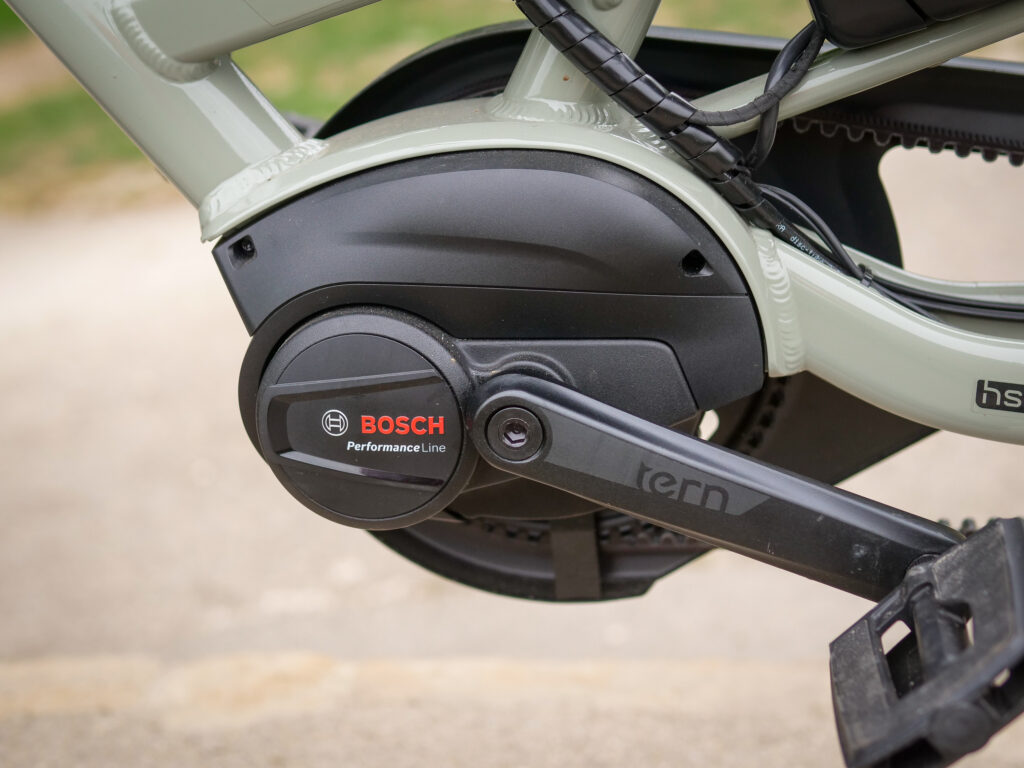
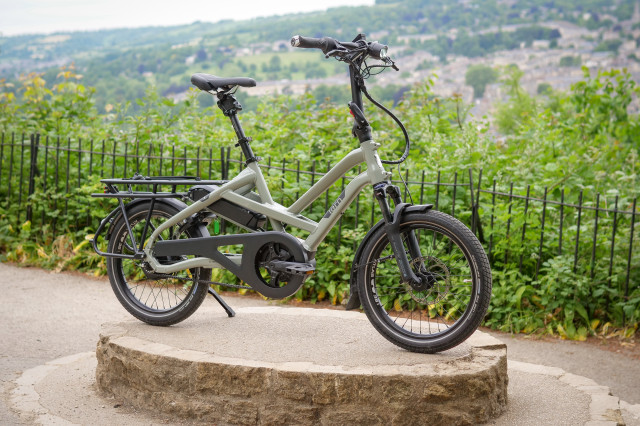
On the day he was stopped on Birmingham’s New Street, the cyclist was riding a Tern HSD S00, a £6,000 electric cargo-bike he had rented out for a few months as part of Birmingham Bike Foundry’s Gear Shift scheme, funded by the city council.
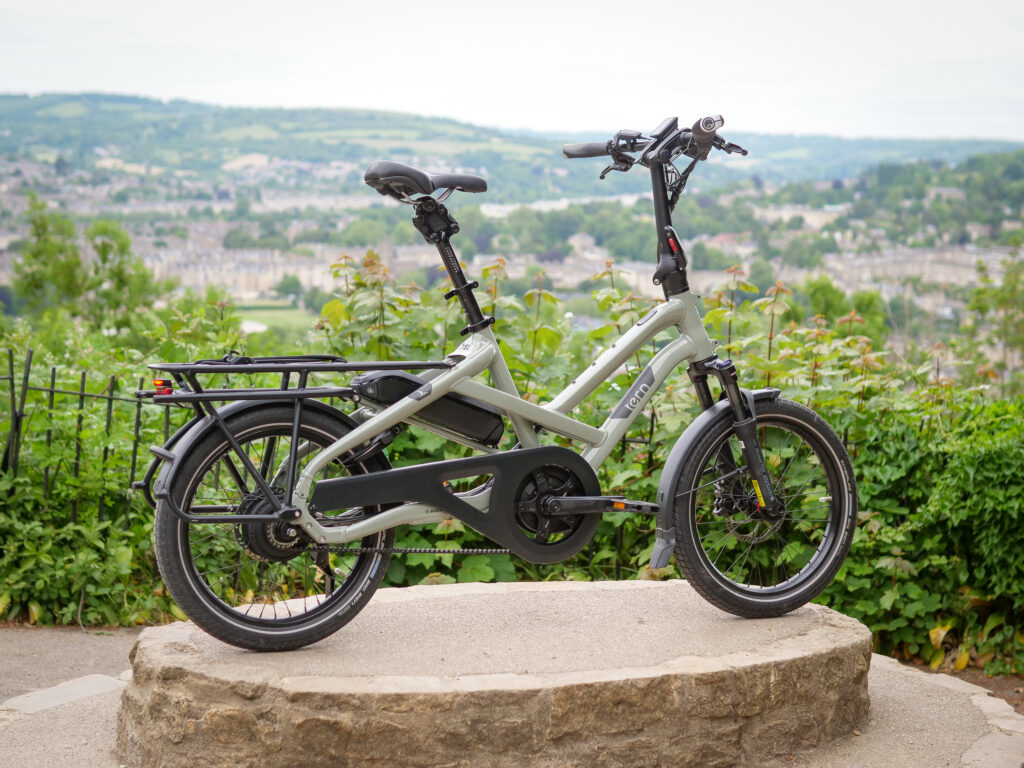
The shop, which sells, hires, and repairs bikes, has been running the e-cargo bike scheme for several years, after receiving £80,000 in funding from Birmingham City Council, allowing them to have a fleet of around 30 e-cargo bikes, as well as accessories such as child seats.
“It’s aimed to reduce car journeys within the local community,” Allama from the Birmingham Bike Foundry, told road.cc. “And it’s been really popular, loads of people have taken us up on it.
“Some people have even bought cargo bikes from us as well. The bikes are constantly out, so lots of people really enjoy using them. We all live local to the area where the shop is, and we’ve definitely seen an uptick in the number of people cycling cargo bikes around.
“It’s good. It’s what we want. Birmingham’s roads are very congested and it helps.”
The Tern e-cargo bike was seized by police, Allama says, as part of the force’s Operation FRISLEN, a “targeted initiative” aimed at “addressing the growing concerns surround the misuse of e-bikes and electric scooters in Birmingham city centre”.
In bodycam footage obtained exclusively by road.cc, three officers can be seen talking to the cyclist, who repeatedly tells them that the bike is legal.
“Just try riding it, it’s no problem,” he says, while one of the officers tells his colleagues: “Get the speed up again, I’ll get a photo”.
At that point, one of the officers raises the back wheel of the bike and spins the pedals, causing the bike’s computer and rear wheel sensor to purportedly record a speed of 47kph – which they deemed evidence that the cargo bike was legally powered, despite the cyclist telling them: “It’s off, there’s no assist”.
In audio of the incident heard by road.cc, the rider tells the officers on several occasions that the electric motor is not even running as they carry out the test. Nevertheless, the officers proceeded to hand the rider a fixed penalty notice, including a £300 fine and six points on his driving licence, and seized the bike.
“He wasn’t breaking the law,” Allama says. “I do suspect that he might have been using it for courier riding, such as Deliveroo, but I can’t firmly prove that, it was just a suspicion based on the setup of his bike.
“But nonetheless, he wasn’t breaking the law. The police targeted this man and I think it was somewhat racially motivated because he’s not white, his first language isn’t English, he doesn’t speak it very well.
“I think they probably just saw an ethnic man on a bike doing delivery and sort of falsely presumed it to be an illegal bike because there are a lot of couriers, especially in and around Birmingham city centre, who do use throttle e-bikes and the like.”
He continues: “It was a bogus test, too. They lifted the rear wheel off the ground and spun the cranks quite vigorously as well.
“Any bike would fail that test, even the regular non-electric bike, because it’s not subject to resistance or friction or anything.
“And the thing with Bosch electrics is sometimes the motor doesn’t even start when the rear wheel is off the ground. He was pleading with them that the motor wasn’t even on and they were just ignoring him.”
According to Cycling UK, the testing method employed by the officers is “incapable of determining whether an e-bike complies with regulations as any bicycle equipped with a rear-wheel speed sensor can display speeds above 15.5mph when the wheel is spun freely”.
Allama says the rider informed the Birmingham Bike Foundry about the seizure, who then found themselves hitting a dead end when it came to tracking down the bike – before they were later told it had been destroyed.
“There was no process for appeals if we thought they’ve made a mistake,” Allama notes. “The bike was just taken away and the customer wasn’t given any sort of police contact information or was told that he could go to this police station to talk to someone. None of that.
“So we’ve essentially spent a month going back and forth with West Midlands Police, trying to ring around, trying to get in contact and having to resort to quite extreme measures in some cases because we got nowhere with actually calling the police.
“BBC News had published an article about it and in that article they have a photo with the recovery vehicle. So, we actually found out the name of the recovery company, called them and they gave us one of the officer’s names who was involved and that’s how we ended up making contact because 101 just couldn’t help us.
“And then after trying for three, four weeks to establish contact and sending them proof that the bike was legal, we then had an e-mail from the sergeant to say that our bike had been destroyed.”
He continues: “We were never really presented with the opportunity to get the bike back because we were never able to speak to the appropriate people. In terms of people we tried to contact, it was mostly through 101 who just weren’t able to find it on their systems because they’re much more equipped to deal with cars.
“We emailed one of the officers involved to say that the bike was legal, attached with a manual that proves it. We never received an email back, and he didn’t pass it on to his colleagues. And we emailed the West Midlands Police and Crime Commissioner, as well, but it didn’t get passed on.”
Both the rider and Birmingham Bike Foundry have launched a legal appeal, supported by Cycling UK’s Cyclists’ Defence Fund, arguing that the process employed which led to the destruction of a £6,500 legal e-bike was “fundamentally flawed”.
But despite a range of appeals and complaints to West Midlands Police, Allama says the force has continued to provide little information about their testing procedures and the reasons behind them, though the law (RTA1988 s165A) as it stands surrounding ‘invalid carriages’ effectively permits such seizures and destruction in general.
“They’ve just maintained that is their test and they can confirm that the test was carried out correctly,” he says. “But they’ve not actually shown us any paperwork as to what they use.
“We’d like compensation for the destroyed property and loss of earnings. And we’d like them to recognise that their testing methodology is not scientifically accurate and to work with trade bodies to change it.
“We’d also like them to drop the penalty charges against the customer. So we’re waiting to hear back from them. We’ve had acknowledgement that the appeal has been received, that it’s being reviewed by a supervisor.
“And I suppose if they’re not receptive to that, we’ll just sort of have to take them to court.”
“Why would he want to go through that again? Why would he consider buying a good quality e-bike?”
Referring to the officers’ apparent flawed understanding of the legality of certain e-bikes, Allama says: “The law around electrically assisted pedal cycles is very clear. And the bike was definitely not in any violation of that, we have quite a lot of evidence to prove that. I feel quite confident that he could win that case.
“When we submitted our Freedom of Information request, we asked what training officers had received. They said that there were modules available on e-bikes, but it’s not mandatory for people unless the officers in question use bicycles as part of their policing work.
“So, there’s definitely a lack of education around the topic, and that’s quite a big factor. It’s just a gross misinterpretation of the law, because the law, the way that the officer who sees the bike dealt with it was they saw the top speed and they deemed the bike to be illegal. Whereas what the law actually states is that the motor has to cut out at 15.5 mph.
“But of course you can pedal beyond that, even on a non-electric bicycle.”
According to inclusive cycling group Wheels for Wellbeing, the New Street incident isn’t the first of its kind, with several legal e-bikes being incorrectly seized by police in recent years.
“Again, a lot of these people are migrants who are using e-bikes, they’re not in the strongest sort of financial position,” Allama says.
“That might be their means of work or their means of transport. So it just kind of feels a bit like kicking people when they’re down, and these people are depending on the bike, they’re not doing any harm.”
Allama also believes that the police’s botched handling of their supposed crackdown on illegal e-motorbikes could have a detrimental effect on the legal e-bike industry.
“It harms us because we’re trying to sell e-cargo bikes as a small independent shop,” he says. “We also operate as a not-for-profit, so we just barely pay ourselves minimum wage and we’re just trying to get people cycling.
“This person just wanted to use the bike for work, and I suppose why would he want to go through that again? Why would he consider buying a good quality e-bike from us?
“Or why would he consider even buying a legal bike, when he could just buy a cheap £500 illegal e-bike and be at the same level of risk. So, I think it definitely stands to harm our business.”
When approached for comment by road.cc, a spokesperson for West Midlands Police said: “We stopped a rider on 24 April in Birmingham city centre and issued a fixed penalty notice for an offence of riding without insurance.
“The rider was advised of his rights to challenge the decision in court and the bike was seized. We have since received a complaint about the seizure, and that is being reviewed.”
According to Wheels for Wellbeing, the police’s misinterpretation of what constitutes an illegal e-bike could negatively impact those who use legal machines as mobility aids.
“The recent seizure and destruction of Birmingham Bike Foundry’s legal Tern HSD is one of a series of similar cases Wheels for Wellbeing have worked on in the last year,” a spokesperson for the group told road.cc.
“Huge pressure on police to reduce risks from illegal e-motorcycle use is combining with outdated laws and inadequate police training. The result is Disabled and other minoritised people are increasingly at risk of having our ‘invalid carriage’ mobility aids and legal e-cycles wrongly seized and impounded.
“Once police seize a legal e-cycle or ‘invalid carriage’ using motor vehicle laws, it’s almost impossible to get it returned. E-cycle and mobility aid seizures can cause serious physical, financial and legal harms directly to the people affected, and more widely harm people’s ability to make necessary journeys such as for work, education, healthcare and caring responsibilities.
“We urgently need national guidance and training to support police in identifying mobility aids and legal e-cycles which should not be seized by police, and we need all police forces to implement simple, rapid ways that people can get their mobility aids and legal e-cycles returned when mistakes happen, as mistakes always will.”
Meanwhile, the Bicycle Association, the UK’s cycle industry trade body, said it “fully supports the difficult work of the police as they enforce the e-bike regulations”, but noted that the testing procedures need to be reviewed.
“Enforcement of these well-established rules safeguards both road users and the whole legitimate, road-legal e-bike category,” the BA told road.cc. “Consistent training, robust test procedures and clear guidance are needed to enable the police to be as effective as possible in taking illegal vehicles off the streets, and also to minimise inadvertent incorrect seizures of road legal e-bikes or powered mobility aids.
“The industry is already engaged to help develop these resources. We also support a review of procedures to ensure that any incorrect seizures can be promptly challenged by legitimate users, many of whom rely on their road legal e-bikes or powered mobility aids for transport.”
Finally, Duncan Dollimore, Associate Director at Cycling UK, added: “This year marks the 25th anniversary of Cycling UK’s Cyclists’ Defence Fund supporting cases that matter for people who cycle. We’ve seen real progress in defending people’s freedom to cycle for their journey.
“While cycling and technology have changed significantly in the last quarter century, the need to stand up for people who want to cycle when things go wrong remains the same. Especially in cases where there is real confusion around the law and how to apply it.
“Cases like this underline the need for clearer guidance for police on how legal e-bikes are identified and assessed, as distinct from illegal electric motorbikes. Pair that with better public understanding of the rules of the road, and we can make our streets safer for everyone who walks, cycles, or drives.”


















37 thoughts on “Police seize and destroy delivery cyclist’s legal e-bike hired through council-funded scheme after “bogus” test – but officers claim rider didn’t have insurance”
FACT I got my bikes rear wheel to 115kmh by putting it upside down and spinning the cranks by hand. It doesn’t have a motor. The bike could probably go even faster if flung off a tall building. Hashtag science.
This is what happens when inadequately trained and ill-equipped enforcement staff go out and ‘do checks’. They’ll settle and pay.
That said, many of these bikes ARE in fact illegally modified, turning them into illegal electric motorcycles that ride around without compulsory insurance so there definitely should be more oversight. And although not a matter for the price, I don’t think it’s allowed to rent out bicycles subsidised under that scheme for commercial use. This Allama fellow sounds like an activist with a chip on his shoulder but I’m not sure his activism has anything to to with cycling.
That is a sorry tale; ignorance, gig economy, petty minded officials, tinges of bigotry, targeting of the wrong ‘issue’, subsidy, deaf and dumb law enforcement, no accepting of culpability, lies and deceit. Almost a microcosm or metaphor for the UK at the moment.
This needs to be taking to court and an example made of these officers before this type of illegal seizure and destruction becomes a regular occurence. This also appears to be racism. If a car is taken by police it is impounded and the driver is required to obtain special insurance to collect it. There is a period of grace before the car if perfectly roadworthy is sold, or otherwise scrapped. I bet this bike wasnt even scrapped, and was sold on. Come on, a £6k bike would have taken 5 minutes for someone to work out its saleable. Very, very dodgy police.
@Xenophon2 Just sounds like someone who’s quite reasonably angry that his organisation is £6.5k in the hole for no good reason to me.
They didn’t. They’re quoted in the article as saying
“I do suspect that he might have been using it for courier riding, such as Deliveroo, but I can’t firmly prove that”
Which pretty clearly implies that they weren’t supposed to be. But that’s a violation of the terms of agreement between the rider, Bike Foundry, and the council, and a matter for them – it’s entirely irrelevant to the police action and the harm that’s caused to both the rider and the company.
The Rider would be well within their rights to sue for lost earnings.
The bike company for the cost of replacement and lost rental earnings.
I know there are some thick plod about but this one must be a record.
Hit the plod in their budget – that might wake up the PCC.
Cops making up the law to make cyclists feel less “special” – check!
wtjs here with examples of some other powered “illegal vehicles” for which drivers *do* need to have insurance (and tax and MOT) but where that hasn’t happened in some years? Not yet…
Still – these ones appear active… Can they get retrained then redeployed where some posters complain about an “ebike plague”?
@Xenophon
What, because he says he thinks there may be a racist element in the police assuming that an ethnic minority person on an ebike must be a courier on an illegal machine? This is lived experience for many in the UK even today, I have a black friend who has given up his expensive car in favour of something more modest because he’s fed up with being stopped and asked to prove it’s his. Nationally, BAME people are four times more likely to be stopped by the police; in some wealthy areas of London that ratio rises to an astonishing, and shameful, forty-eight times more likely. So it’s quite likely that the ethnicity of the rider had something to do with the stop and his subsequent ignorant and illegal treatment and it’s neither activism nor “having a chip on his shoulder” to point it out. Ask yourself this: if that legal Tern was being ridden by a white middle class woman taking Jemima and Henry to school, do you think she would have been stopped, subjected to the same “testing” and had her bike illegally seized and destroyed? Not a chance in hell and it’s not having a chip on one’s shoulder to say so.
Ignorant and arrogant police who don’t know the law or basic physics, and can’t admit they are wrong? Well, what a surprise (/sarcasm)
many police officers are hard working and honest, but by no means all of them. I’m proud to support CyclingUK and the Cyclists’ Defense Fund.
Maybe he should have called the police saying that some dodgy characters were stealing his bike? That is effectively what happened here.
A guide was recently produced to assist the police in identifiying illegal motorbikes. However, it omits the crucial detail of _how_ the 15.5mph cut off is tested, leaving this up to the individual officer to determine. If the officer is not a proficient cyclist or equiped with a basic understanding of physics, there’s going to be trouble!
https://d2zif723tly95y.cloudfront.net/2144/A-Guide-To-Identifying-Non-Compliant-E-Bikes.pdf
I’ve spoken to at least 6 police officers who deal with video submissions by cyclists in West Yorkshire, and none of them were even occasional let alone regular cyclists. Can’t comment on their physics qualifications, but a few didn’t understand bike physics.
He should have been using a 150 MPH motorbike; that would have been OK.
“the force has continued to provide little information about their testing procedures and the reasons behind them”
Either there is proper guidance/training in place or there isn’t.
So if there is then the officers in question ignored it or, as seen in the clip, the guidance and test is flawed.
The police force should be sued for this (alongside other similar cases) and if it is the first option (proper guidance in place) then the officers in question should face serious disciplinary procedures.
Sounds like theft and criminal damage to me.
This is what the media frenzy about the “dangers of e-bikes” led us to.
Meanwhile, drivers kill one pedestrian a day in general indifference.
The article states that: “The term E-bike refers to an electrically assisted pedal cycle (EAPC)”
YES & NO.
It can refer to any electrically powered cycle or motorbike. That would include EAPCs.
An “E-bike” is not a legally defined thing.
@Rendel Harris my “lived experience” is of delivery drivers riding around on illegal modified motorbikes. In fact, I don’t think I’ve ever seen anyone riding around with a silly blue delivery bag riding a road-legal bike, let alone having insurance. I don’t see any evidence in the article to support the idea that the seized bike was unmodified and road legal.
These e-motorbikes are a menace to the road. Just yesterday I went to my local bike shop and the poor owner nearly killed himself when some fat bloke riding what can only be described as a motorbike drove to the door asking for help with his brakes. Bike shop owner went to have a look and inadvertently turned a throttle, causing the machine to roar into life and drag him along the pavement in an undignified manner.
We regularly hear of a traffic police officer giving confident opinions in court cases regarding such things as ‘speed at the time of collision’, and their opinions seem to be taken seriously. We also know of a police officer’s opinion, when being told by a dying man that he has been stabbed, saying ‘I don’t think you have, mate’. Why are people still surprised that stupid, ill-educated but very self-confident police officers are as thick as two short planks, as well as being criminal (think Couzens, Carrick and many of the officers at Charing Cross Police Station) and/ or as bent as a £9 note- this method of assessing whether a bike is a legal EAPC is so stupid as to be beyond belief, unless you have personal experience of the UK police, that is. Many of them really are malevolent, cyclist-hostile thick, out-of-control b******s
@jackcycles I don’t see any evidence in your comment that you’re not a paid lobbyist posting anti-e-bike comments on behalf of the motor and oil industries.
As far as the bike in the article goes, though, there is pretty strong evidence that it was road legal, in that it was hired from a reputable scheme.
I don’t think jackcycles has provided any evidence that the bike shop owner dragged onto the pavement didn’t then continue down the footway on the wrong side of the road way over the speed limit through a red light two-abreast and run over poor wheelywheely in his wheelchair again.
@jackcycles
1. No evidence that the rider was a delivery driver or carrying a “silly blue delivery bag”;
2. There is no legal requirement for bicycle delivery riders to have insurance any more than any other cyclist;
3. People who want illegally fast ebikes don’t rent £6K Terns, which are difficult and expensive to hack to exceed 25 km/h, when they can get a cheap bike and conversion kit for about £400 that will do silly fast speeds.
4. Re bike shop owner dragged down the street by an ebike, I’ll take things that never happened for $500;
5. Are you Nigel?
If anyone wants to do something to help, the Cyclists’ Defence Fund is appealing for donations. Can’t post a link without ending up in comment purgatory, but easy enough to find if you just google (well, easy enough to find how to donate to the CDF; the specific appeal related to this case is a bit harder to find, but “cdf appeal e-bike” seems to work for me. If you go through the appeal page, you get a free mug featuring Dave Walker’s drawings).
That said – there are no shortage of delivery riders in my part of Edinburgh riding “clearly illegal” machines (because throttle being used at speed so almost certainly not EAPCs).
OTOH I’m slow and they’re not all blowing by me; so in practice perhaps less drama?
I think the problems tend to be limited by “most delivery riders don’t make much money”. Indeed I believe the most common scheme is for several people to *hire* a bike together and then ride the heck out of it in shifts.
The really high-power ebikes are (currently) more pricey. So … i guess it’s harm minimisation by capitalism? (Not that the sellers care even enough to eg. pass on “you can’t use this on the road mate”).
The real “looks like a motorbike to me” ones seem to be limited to those presumably on more profitable errands than delivering groceries. Or scrotty yoof – I’m guessing of the local “dodgy families”.
But maybe that changes around eg. Chelsea or Sloane and it’s a plague of racing rahs?
Crowd fund a court case against Birmingham Police. They need to be held accountable for the bike and their dodgy science
@chrisonabike wtjs here with examples of some other powered “illegal vehicles” for which drivers *do* need to have insurance (and tax and MOT) but where that hasn’t happened in some years?
As if by magic! With the connivance of Lancashire Constabulary officers up to the rank of Inspector, HN21 VXB is today still driving around Garstang without being bothered by the police- despite being reported first on 28.8.25 for what is now the year without MOT (must be officially without insurance by now?) and over two years without VED.
Edit- today’s photo hasn’t appeared and the editing system doesn’t yet include a means of dealing with photos.
Try again
And again- looking like photos don’t work on ebiketips. Take my word for it- Marcus Wright’s Transit is shown just up the road from the Old Garstang Police Station with his gear outside, on a joinery job
@jackcycles
What a coincidence! I was at my local bike shop only last week, a Tuesday I think it was. I’d been watching my tomato plants not growing all morning so I said to my pal “it ain’t no use to sit and wonder why Dave” and off I went. On the way back two cyclists were approaching and the wind began to howl. I’d seen them earlier knocking on Evans’s door so I invited them in to take shelter from the storm. After the idiot wind had subsided and one more cup of coffee they were on their way again.Anyway, I don’t think I saw any e-bikes at all, just a bloke on his way to a cello class. I’ll tell you what though – I ain’t buying any plants from Maggies farm no more. No sirree Bob.
Moronic coppers seize and destroy third-party property without notifying the actual owners. Not to worry, compensation to be paid by public money, i.e. the taxpayer.
When did the Police openly become the English people’s enemy?
@perce The new troll, my friend, is solely piss and wind, the new troll is solely piss and wind.
I have been stopped on my velomobile and reprimanded for not having a number plate. The police desisted after I showed them that there was no motor at all, and were surprised as they’d followed me for a mile or two on the flat and hadn’t realised that cyclists could go that fast – velomobiles are devastatingly quick on the flat, and slow heavy bikes uphill.
I’m fairly sure that I would have found myself in a lot of trouble had I had any motor at all – even a legal one that would be very useful on the Welsh hills. It’s very much put me off installing one.
Never mind the police – many cyclists (at least in the UK) would be totally unfamiliar with a velomobile, so perhaps police can be forgiven for ignorance there. (I’ve “normal” recumbents and even those cause lots of head-turning).
And for “e-things” the tail of the market is very much wagging the dog of regulation. Or rather there’s almost zero political interest in that.
In an ideal world someone would find the money and time to get the police trained – but I wonder if most of them even keep abreast of things like the highway code wording tweaks? (Do those not specialised in road policing / pursuit driving get any more training than the average driver eg “enough to pass the test, once per lifetime”?)
@chrisonabike It’s one of these, right?: https://tinyurl.com/2vxb8xw4
“Both the rider and Birmingham Bike Foundry have launched a legal appeal, supported by Cycling UK’s Cyclists’ Defence Fund, arguing that the process employed which led to the destruction of a £6,500 legal e-bike was “fundamentally flawed”.”
Good to see my money being put to good use. Keep it up!
As others have said, if the police can just confiscate and destroy something which has broken no laws with no attempt to contact the owners, there is something seriously wrong that needs to be sorted out in court. I hope the owners are adequately compensated, including legal costs, and the police learn how to test an ebike.
The only way to tackle this is to put the liability for the financial impact of this action onto the officer who wrongly took the bike. When officers find themselves being billed and taken to county court for the value of the bike plus compensation they may start taking more care and make better efforts to get it right.
This case has nothing to do with knowledge of the law or testing methodologies. Rather, hiring policemen with an IQ lower than their shoe size. Glad I left the UK and am living abroad…