
Not too many years ago, the belt drive was a decidedly niche e-bike component. You might have found one on a really high-end bike or on some wilfully quirky crowdfunded project, but the vast majority of electric bikes still had chains. Things have really changed quite a lot though. These days belt drives aren’t at all the sole preserve of expensive e-bikes. They are in fact possibly most common on the user-friendly single-speeds at the budget end of the market.
- Tenways CGO600 – £1,299
- Estarli e28.X – £1,895
- MiRiDER 16 GB3 – £2,995
- Orbea Diem 10 – £5,299
- Tern GSD S00 – £5,700
What is a belt drive?
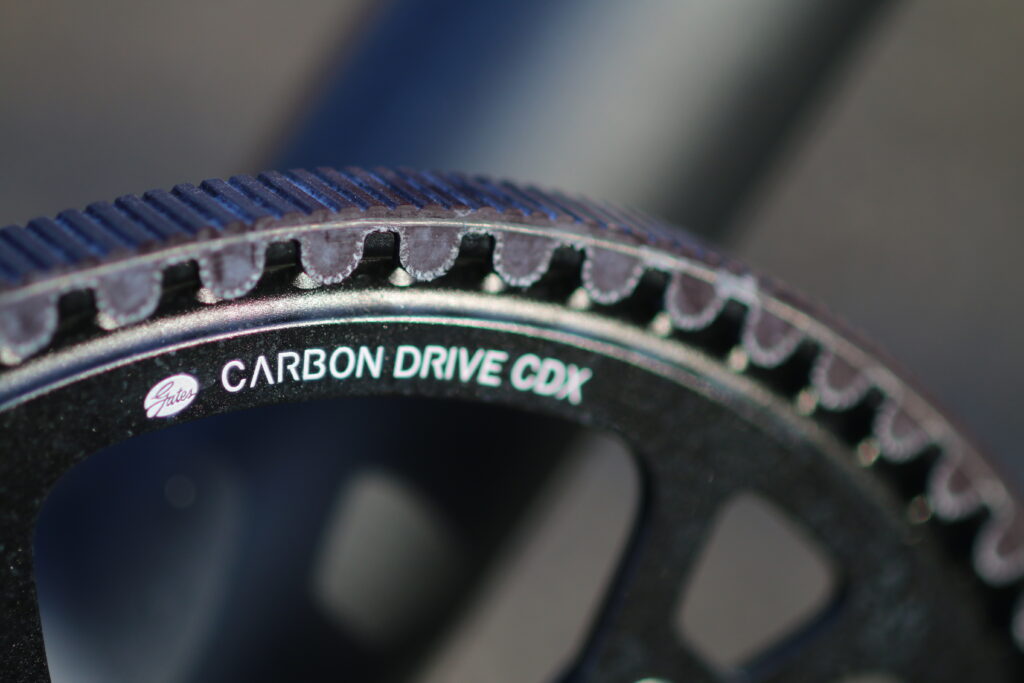
A belt drive is a kind of toothed belt that can be employed in place of a bike chain. They’re typically made from polyurethane or similar, reinforced with carbon fibre.
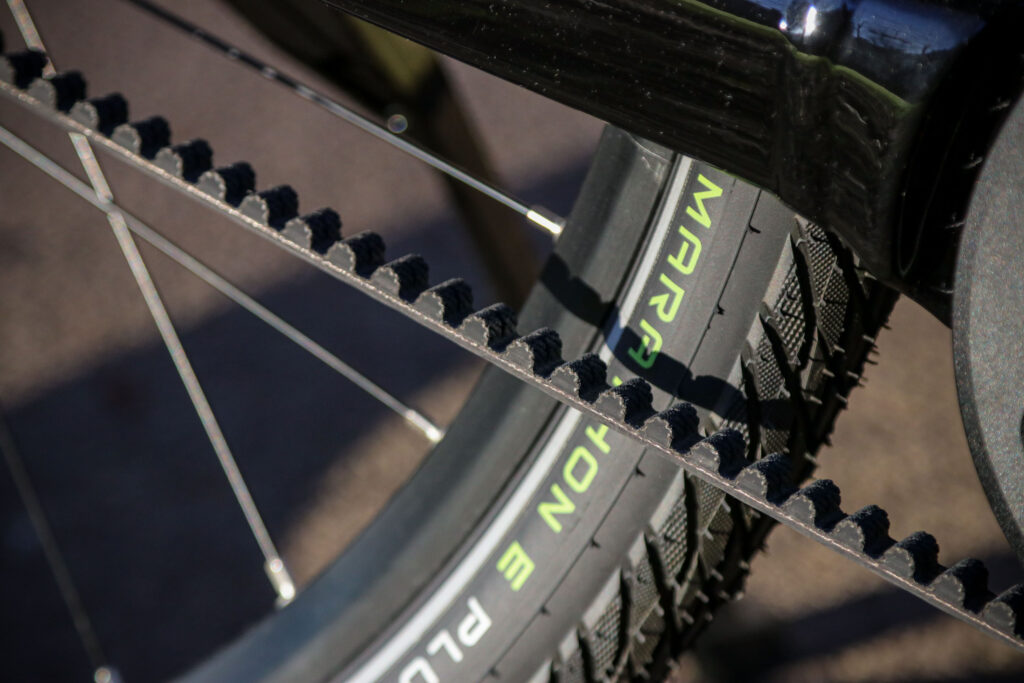
From a mechanical perspective, a key aspect is that they are not compatible with derailleur gears. The belt connects the crankset directly to the rear sprocket. This means that single-speed e-bikes are common. Gearing is however available via the use of internally geared hubs, gearboxes and multi-speed bottom brackets.
> Tested: The best electric single-speed bikes 2025
What are the advantages of a belt drive?
- Clean
- Low maintenance
- Durable
- Light
For the most part, belt drives are significantly easier to live with. While a bike chain needs to be routinely cleaned and lubricated and intermittently replaced, a belt drive can for the most part be forgotten about.
It needs no lubrication, so it is cleaner anyway, but then even if it does get dirty, you can simply hose it down with no fear of rust developing.
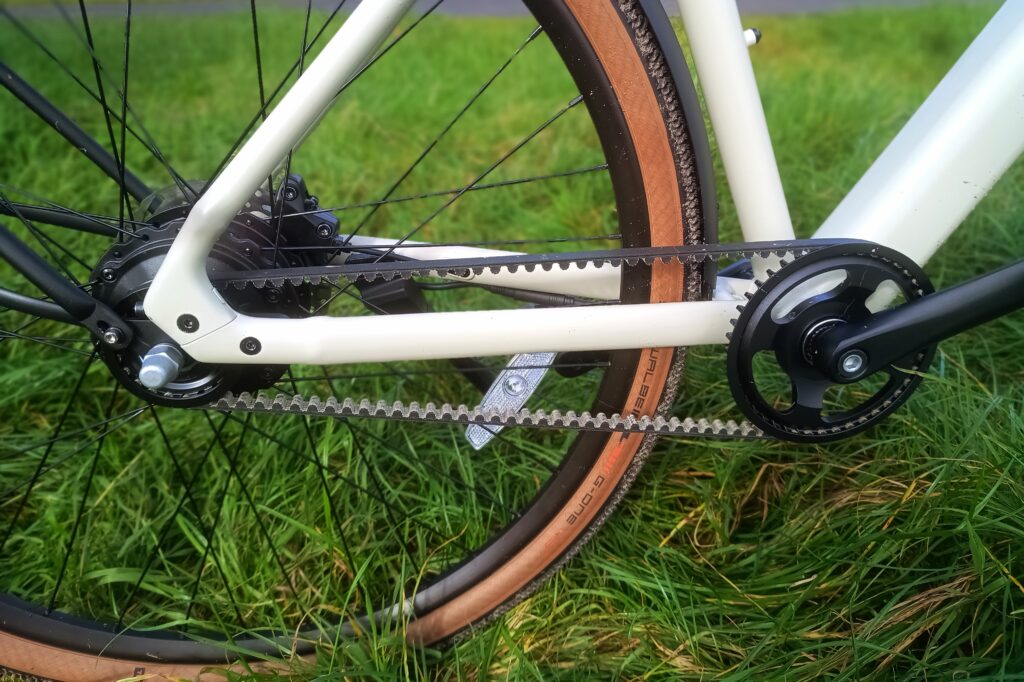
They are also far more durable. The best-known brand, Gates, says its carbon drive has been found to last more than twice as long as a chain. Based on what we’ve seen and heard, that’s a very modest boast indeed. A more common claim is that they’ll last 10,000 to 20,000 miles versus the 2,500 miles typical for a chain.
Belt drives are lighter than chains too – although note that the weight of hub gearing will likely make for a heavier package overall if you choose to go down that road.
What are the disadvantages of a belt drive?
- Expensive
- Less efficient
- Incompatible with derailleur gears
- Servicing is trickier
A belt is more expensive than a chain. It is however worth reiterating that they’re more durable, so that isn’t likely to be a cost that recurs too often once you’ve bought your bike.
They’re also less efficient, which is one of the main reasons they haven’t massively caught on for unassisted bikes. Any reduction in efficiency is most unwelcome when pedalling is the only source of power. It’s less of an issue to the rider when they have a motor to lean on to pick up the slack.
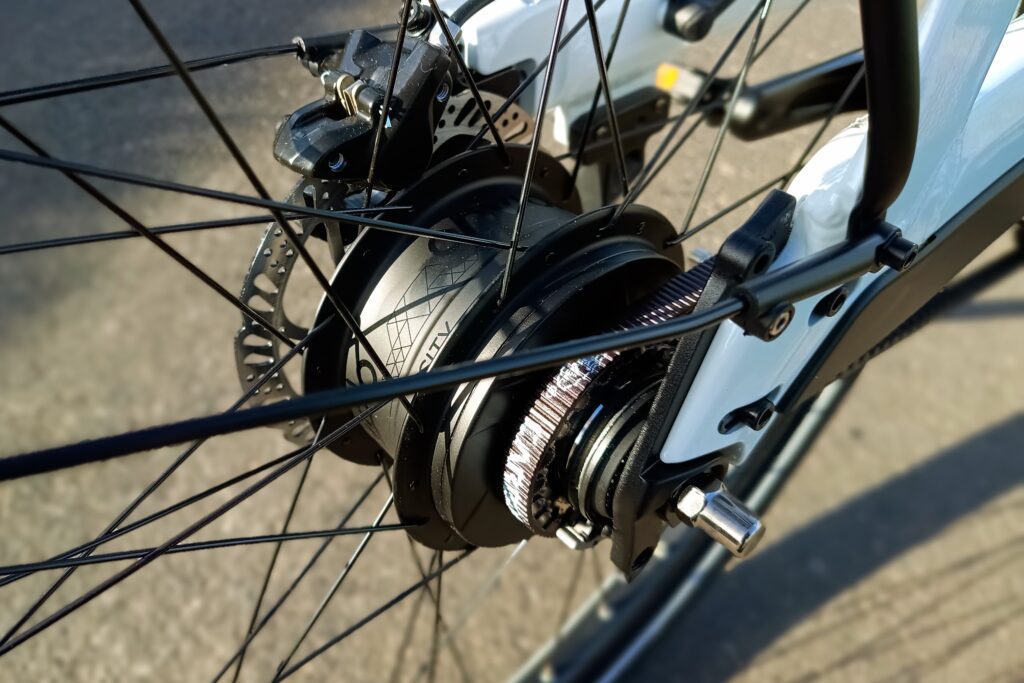
On a related note, hub gearing is also less efficient than derailleur gearing and, depending on the system, there may also be a limit on how much torque it can tolerate, which might result in noticeable limitations being imposed on your bike’s motor output.
Repairs are not too big an issue, in the sense that belt drives are so robust and durable, but if you do suffer a fault or breakage, it will be a lot more difficult to address. Most likely you’ll need to go down to your local bike shop, where replacement belts, sprockets and hubs will all be more expensive than the equivalents for a chain-based system.
Who are belt drives for?
If you’re looking for a clean, quiet, low maintenance system for casual or everyday riding and don’t need a particularly wide gear range, a belt drive might well be a better option for you.
Our reviewers have tested all of the bikes listed below. Take a look at our page about how we review e-bikes to find out what that entails.
Tenways CGO600 – £1,299
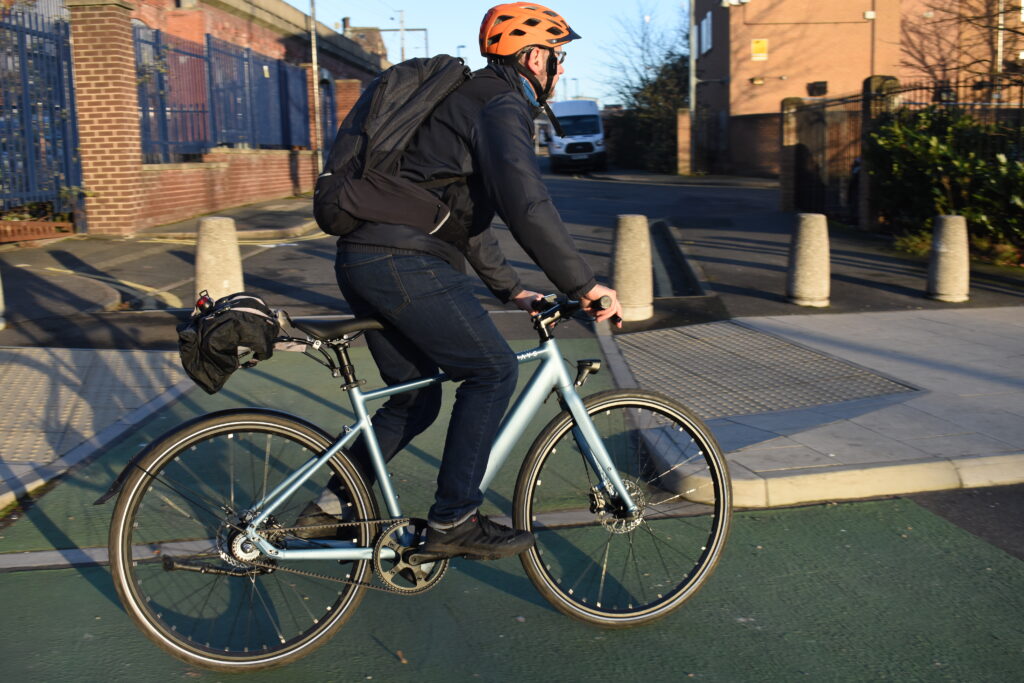
Buy now for £1,099 from Tenways
Tenways’ CGO600 has often made it into our buyer’s guides – most recently via an honorary mention in our guide to the best e-bikes for under £1,000. While it didn’t technically meet the criteria for that one, it struck us that it delivered a marked step-up in quality for not signifantly more outlay.
At the time of writing, the CGO600 is available for just £1,099 – a budget price for an e-bike by any measure, let alone for one with a belt drive. While the Dutch brand’s since added Pro and Plus models, for many people the base version is all the bike they’d ever need.
Single-speeds are a lot more viable in the world of e-bikes where the presence of a motor means you’re likely to do a large proportion of your riding at much the same speed, regardless of inclines, wind direction and fatigue. (Don’t expect miracles though. If you live somewhere properly hilly, you’ll still need gears.)
The lack of gearing on the CGO600 combines with the smallish 250Wh battery to keep the weight down to just 16kg, while a double sided torque sensor helps deliver incredibly natural-feeling assistance.
Read our review of the Tenways CGO600
Estarli e28.X – £1,895
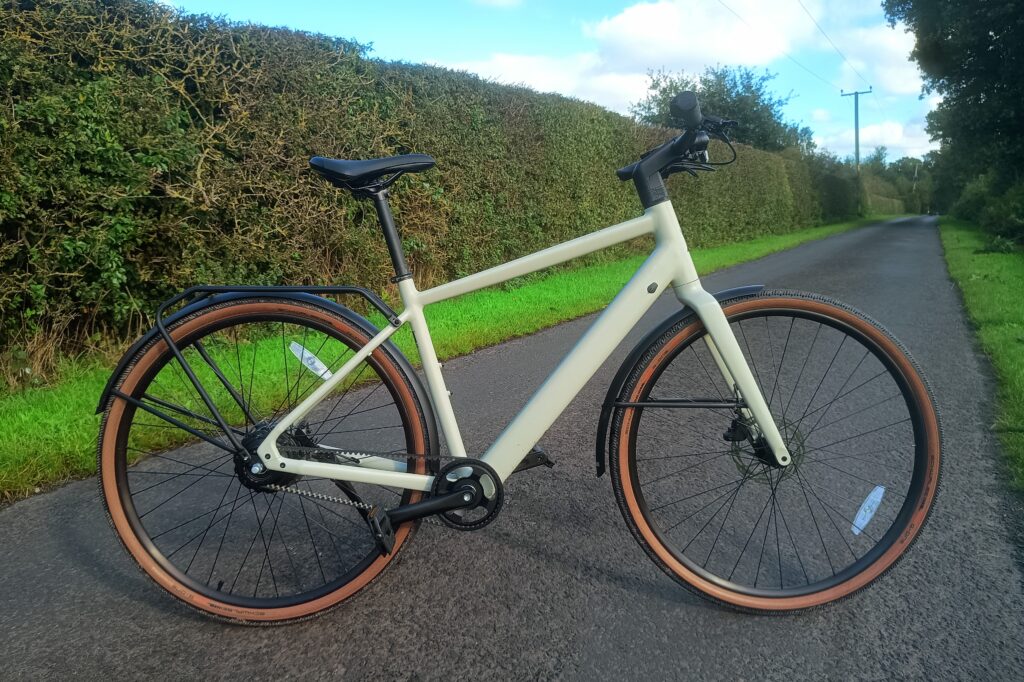
Buy now for £1,895 from Estarli
Estarli’s e28.X looks a fairly straightforward proposition at first glance: available with either a step-through or diamond frame, it’s a lightweight urban hybrid with practical touches, like a rack, mudguards and integrated lights. What you can’t see, however, is the dual-speed nature of Bafang’s hub motor.
As mentioned above, the beauty of e-bikes is that they can make gearing so much less important. If your bike motor’s decent and you live somewhere not too hilly, you’ll probably spend almost all your time in whatever gear works best for you at or near the 15.5mph motor cut-off limit. But what happens when you do want to go slower? Here the motor addresses that by automatically shifting to a lower gear.
This doesn’t make it a hill machine, but it makes setting off and manoeuvring at slow speeds a great deal easier and it certainly helps whenever you do approach an incline. We found it worked well as the central component of a well-made bike. It’s also worth saying that Estarli brings the reassurance of being a British brand with a growing network of dealers.
Read our review of the Estarli e28.X
MiRiDER 24 GB3 – £2,995
-1024x683.jpg)
Buy now for £2,995 from MiRiDER
Another British offering, but this time with three gears. We’ve picked MiRiDER’s 24in wheel model here, but in truth we could just as easily have gone for the MiRiDER 16 GB3, the folding e-bike that employs the same G3ARED transmission system that sits within the chainwheel body.
According to MiRiDER, the first gear is for climbing or riding without assistance; the second is for ‘typical’ riding; and the third is for cruising at or near the assistance limit. The system also allows you to change gear when stationary.
If you go for the 24in wheel bike, you’ll benefit from stable handling and large volume tyres that are more suited to bumpier off-road conditions. It can carry more too, thanks to the optional and capacious front and rear racks.
The throttle is another standout feature, making hill starts easier and also providing easy access to full power if the road steepens for a short stretch (provided you keep pedalling).
Read our review of the MiRiDER 24 GB3
Orbea Diem 10 – £5,299
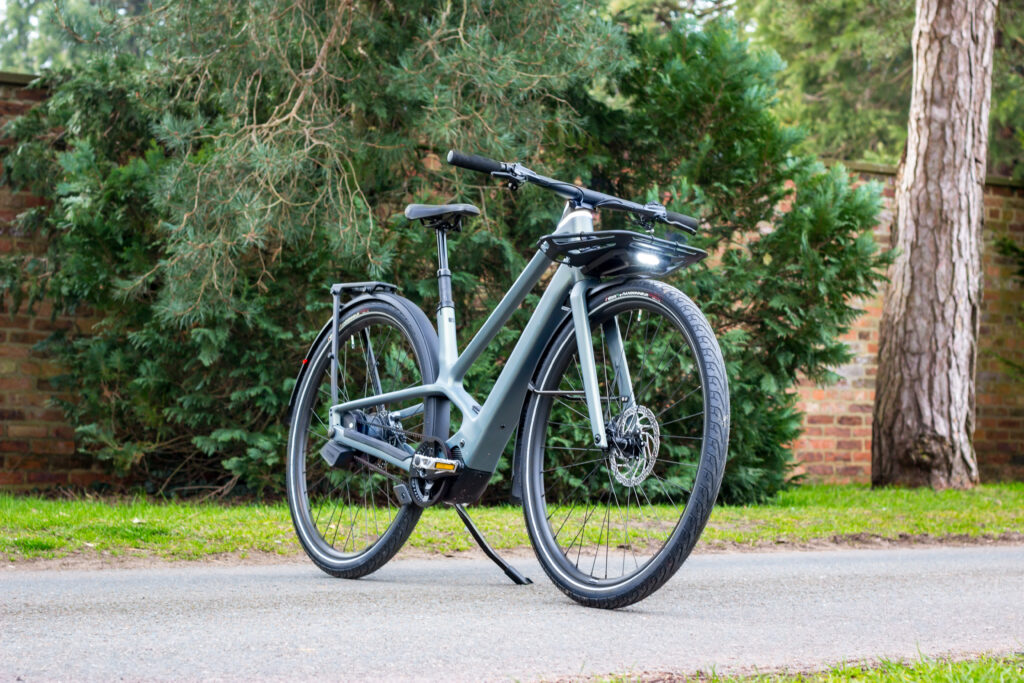
Orbea’s Diem 10 might call for a quick assessment of pocket depth, but if you’re happy to spend this much, you’ll get far more than just striking looks.
The bike’s built around a powerful mid-drive Shimano EP801 motor, which is allied with a sizeable 630Wh battery, plus the option of a 252Wh range extender. You also get an Enviolo Automatiq gear hub, which Rebecca found to be responsive to pedalling cadence whenever she wanted the bike to shift up or down. Crucially, this can be tweaked within the Enviolo app, so you can set it to suit your natural pedalling style.
Elsewhere, you get integrated lights, a dropper post, a rear rack and a front pizza-style carrying rack, which comes with a very useful bungee net covering. What you don’t get, somewhat bizarrely, is a screen – which may be a deal breaker for many people. There’s a phone mount instead.
Read our review of the Orbea Diem 10
Tern GSD S00 – £5,700
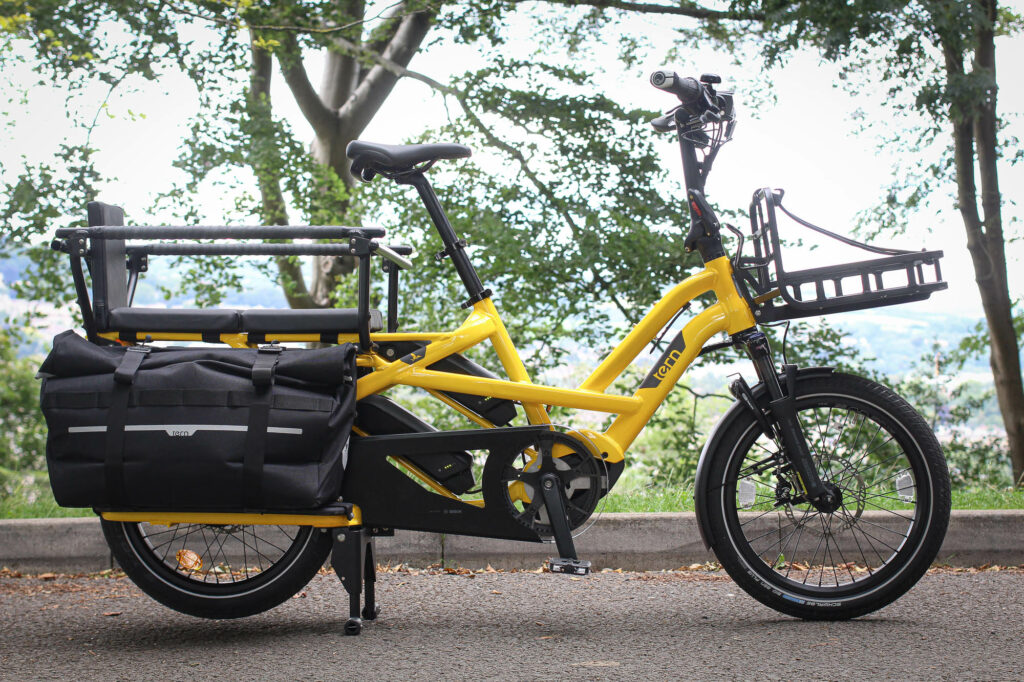
Tern’s GSD is still our favourite e-cargo bike – and probably our favourite e-bike full stop. It’s a brilliant, do-it-all vehicle that will be a viable replacement for a second car for many people.
The 20in wheels and compact riding position mean that you get masses of load space in a package that isn’t any longer than a standard city bike. The long tail will even accommodate two passengers if you get the optional padded cushions and foot runners.
The S00 is a more expensive GSD build where the belt drive combines with Enviolo’s continuously variable hub. That means you don’t get discrete gears. Instead, you twist the shifter one way to move to progressively smaller, easier gear ratios, and the opposite way to move into larger, harder ones. You also get a slightly bigger battery: 500Wh (or 1,000Wh if you opt for a dual battery setup.)