


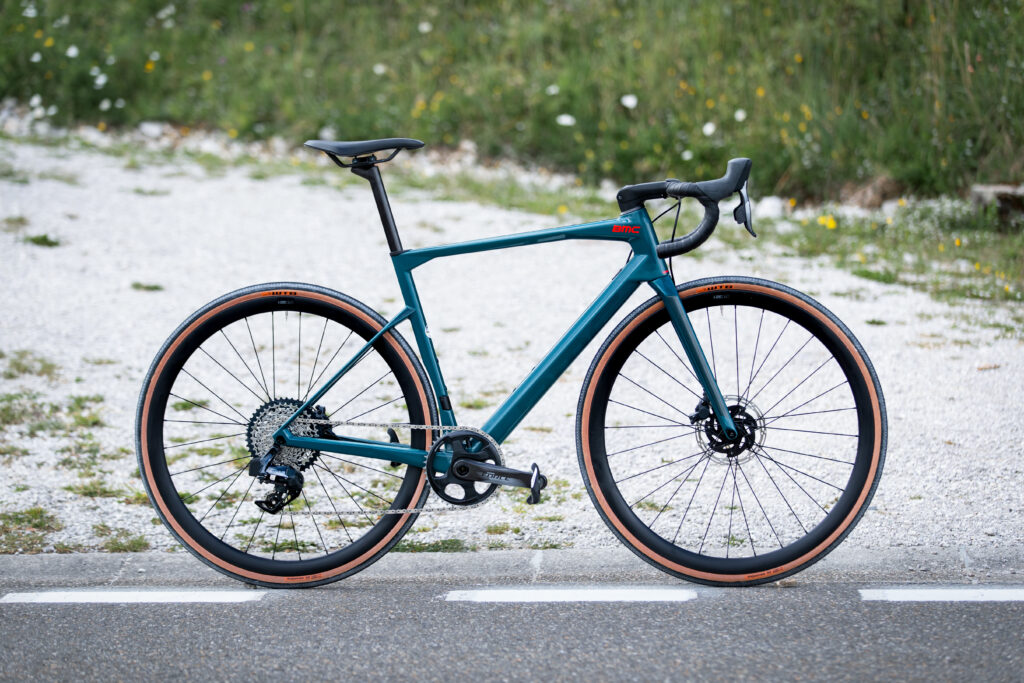

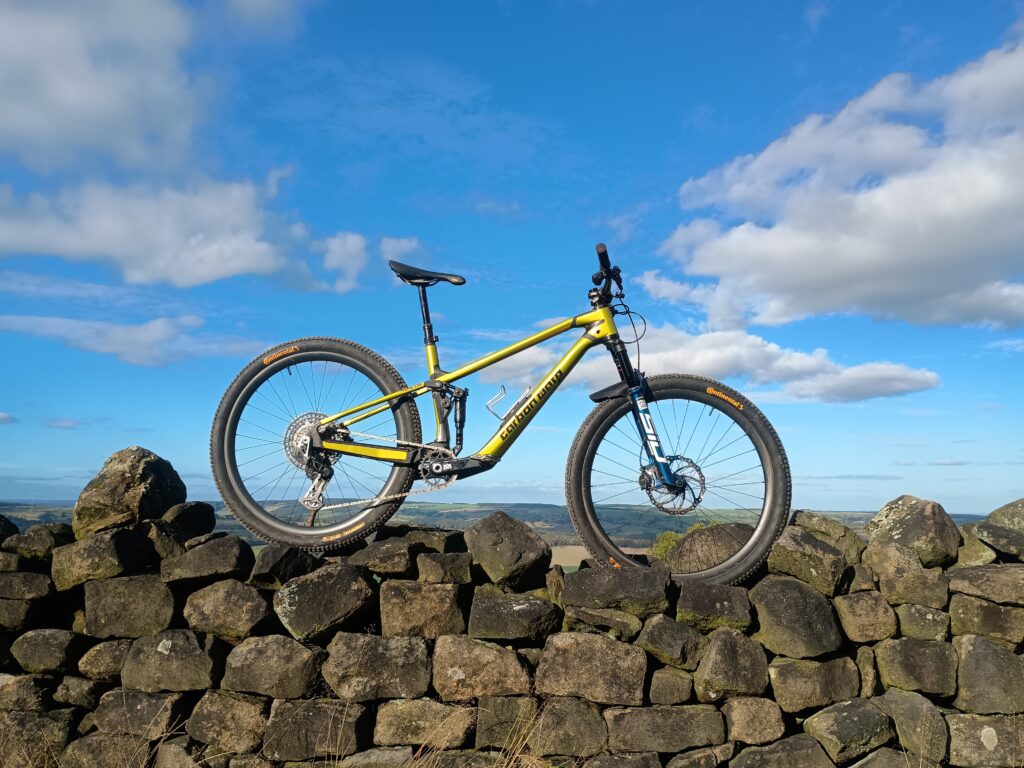
BMC has introduced two new carbon models of its all-road Roadmachine X for increased performance while keeping the mixed terrain capabilities and comfort of the original.
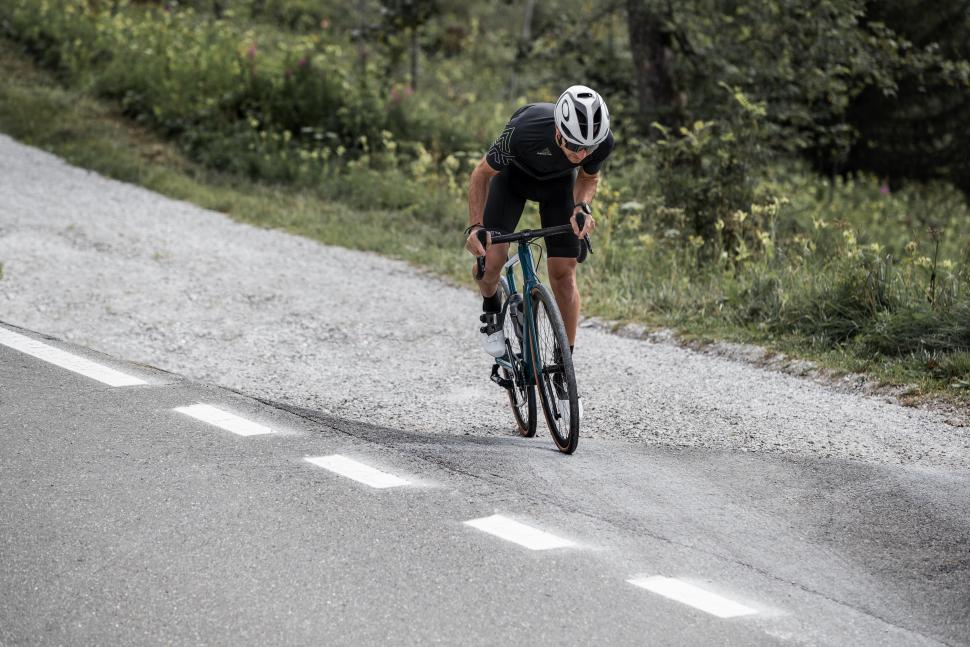
Swiss outfit BMC first brought out the X version of its existing endurance focused disc brake bike, the Roadmachine, in 2018. Only an aluminium and carbon fork model was released then, but now BMC has expanded this adventure road riding range to include two new carbon models.
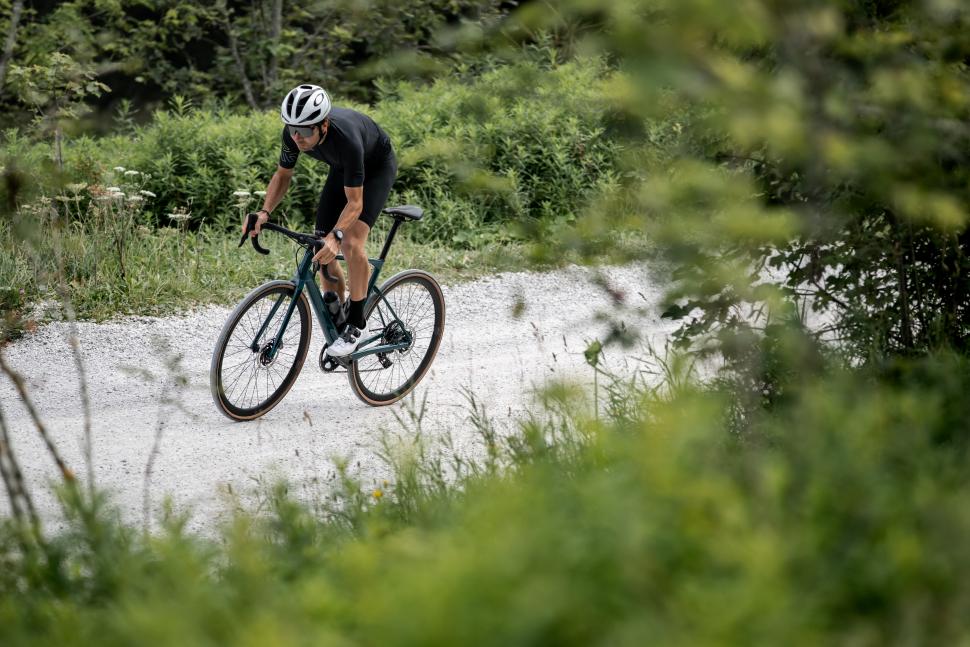
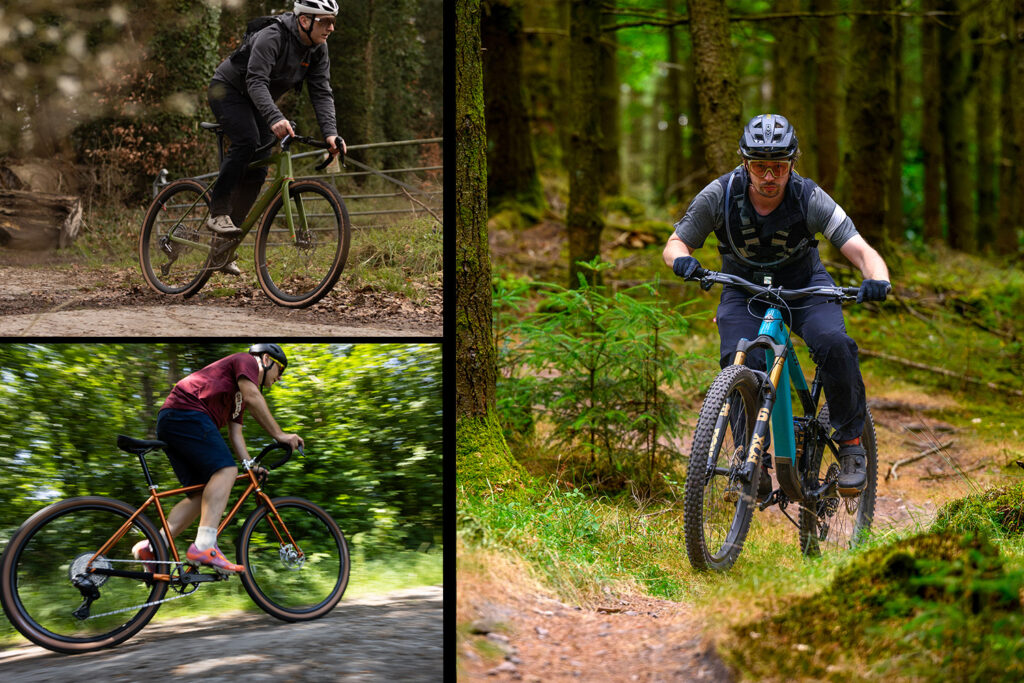
“With extended versatility, it is capable of bridging the gap between endurance road and gravel riding, from racing the clock on a b-road blast through to a multi-day, multi-surface adventure ride,” says BMC.
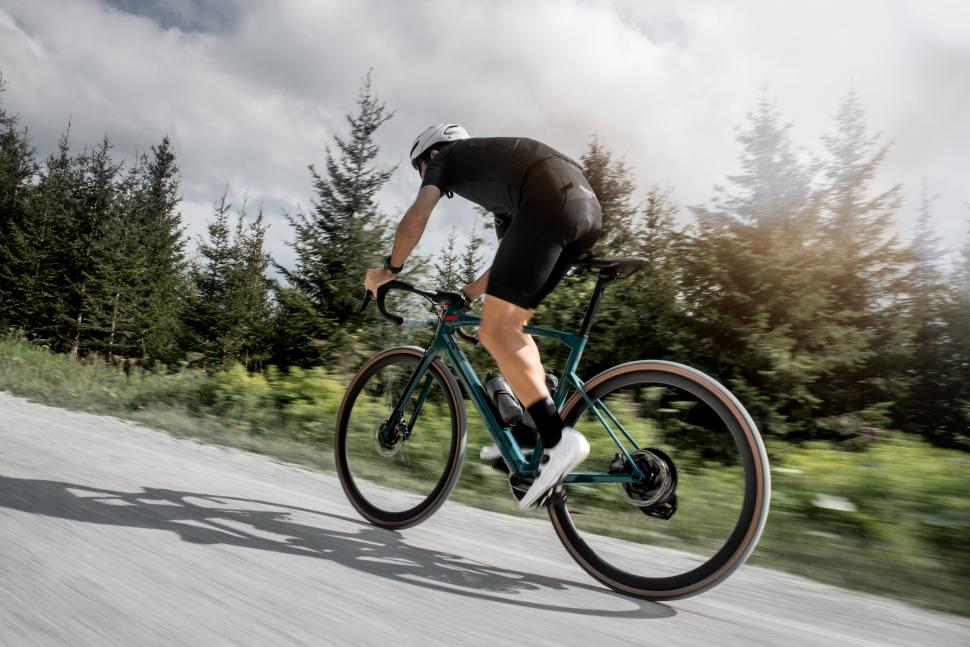
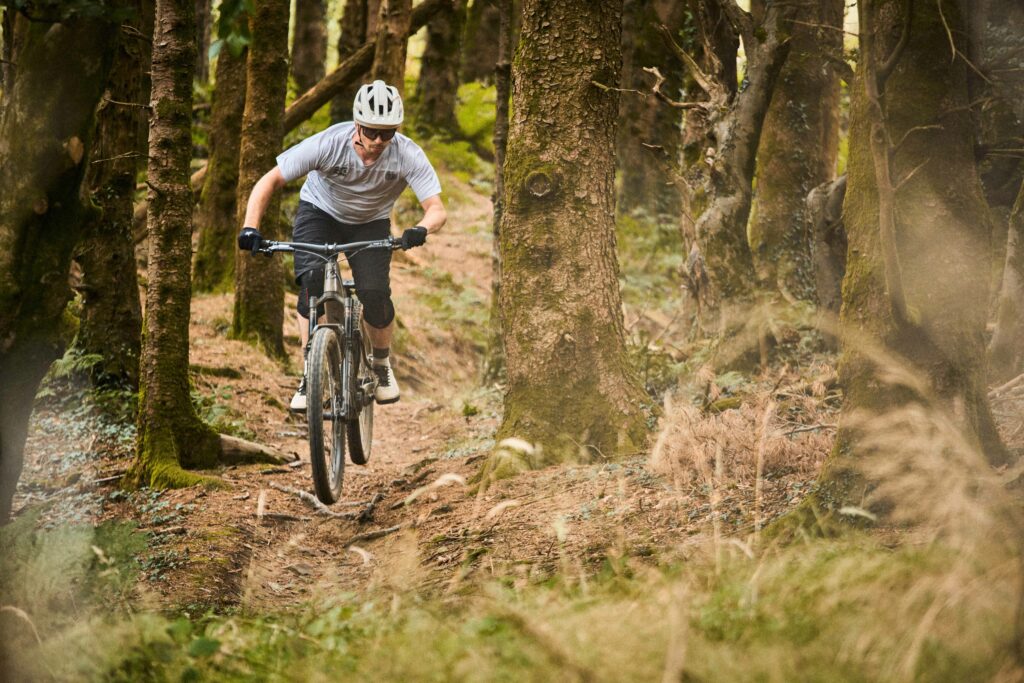
“The long front-end improves control on any terrain, while the short chainstays reward you with rapid accelerations,” says BMC.
The Roadmachine X shares BMC’s signature endurance geometry as found in its road Roadmachine line-up. Basically, with its carbon frame the Roadmachine X is the brand’s gravel-specced endurance model.
> Review: BMC Roadmachine 02 Two
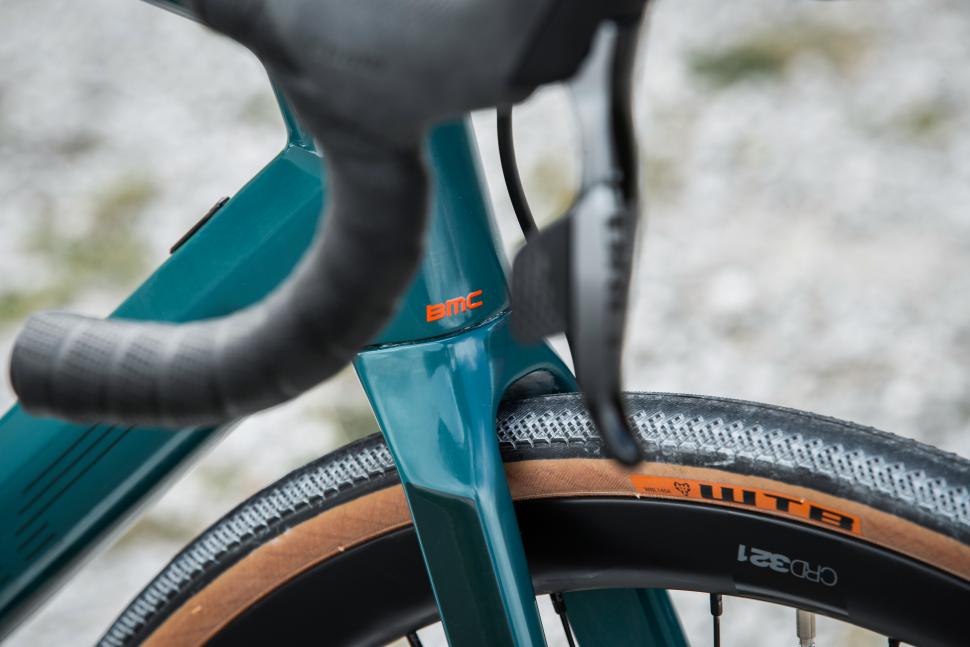
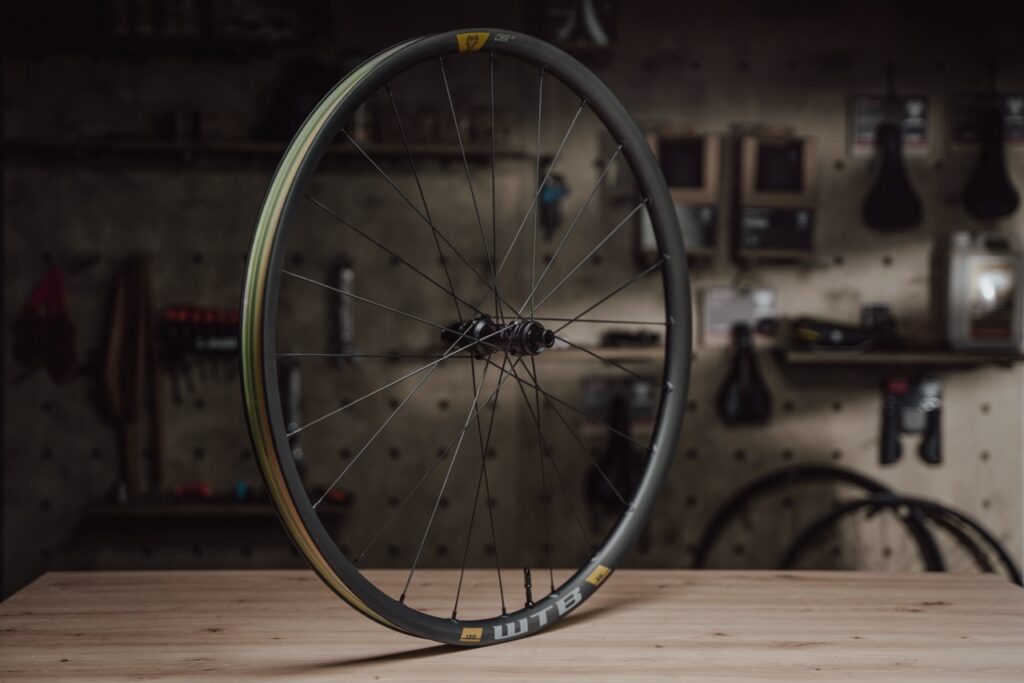
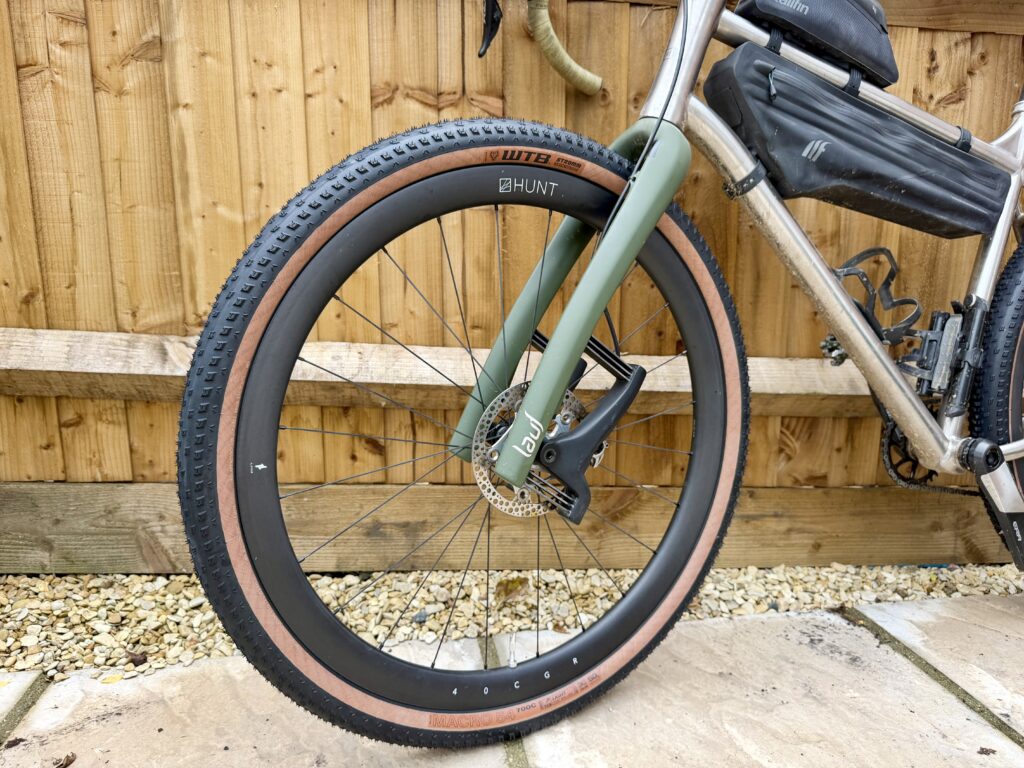
The WTB Expanse 32mm tubeless ready tyres fitted are suited to mixed terrain with its smooth slick centerline for rolling fast on tarmac and minimalistic outer knobs that should provide some extra grip on the dirt terrain.
> 29 of the best gravel bike tyres for 2021 — get the right go-anywhere rubber
It also comes with Fizik’s gravel-specific Terra Argo X3 saddle that’s designed to put riders in a more planted position for greater stability. This saddle has a short-nose design and cut-out for reducing pressure in sensitive areas, while the compliant shell should help with comfort by absorbing vibrations from the rough stuff.
> How to choose the correct saddle for you and your riding
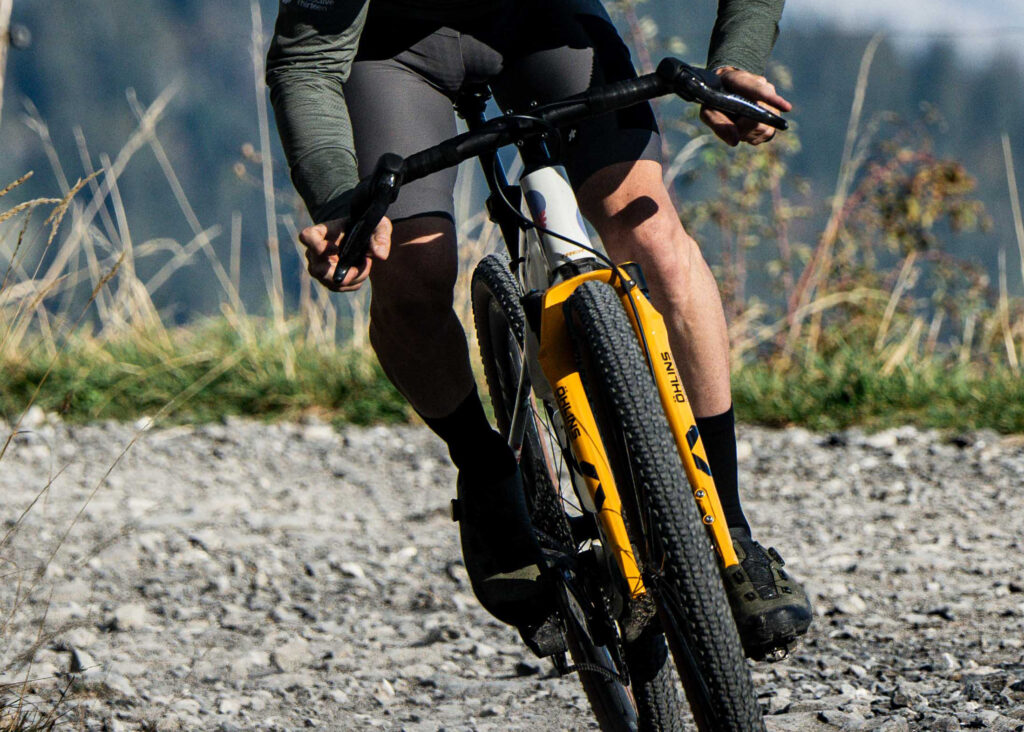
The specially constructed Tuned Compliance Concept (TCC) fork, according to BMC, provides added vertical compliance and lateral stiffness for superior control and comfort on rough terrain.
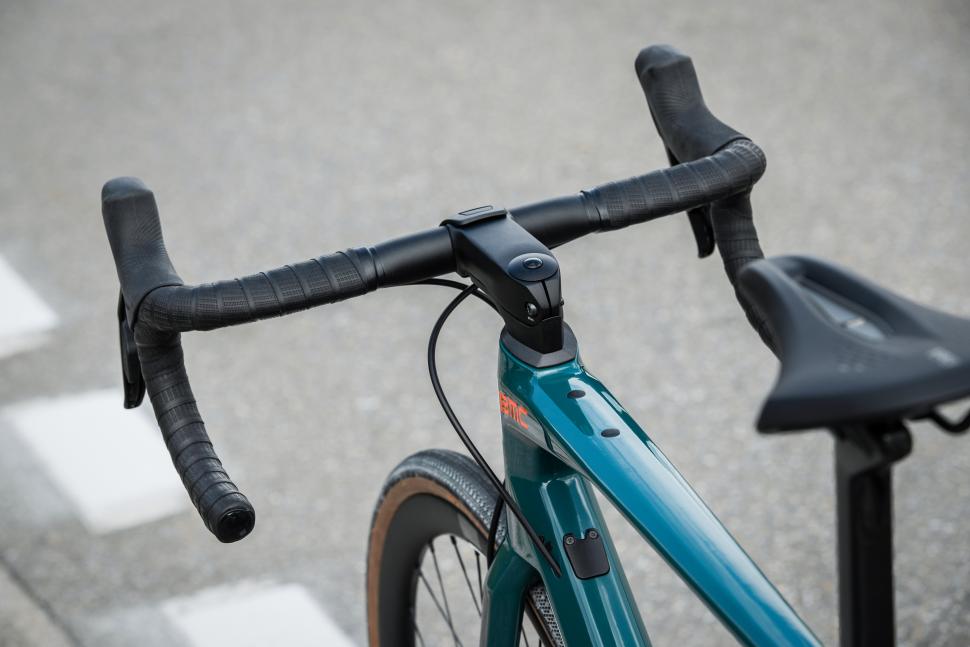
There’s a wide range of fit options to suit each individual rider as stem length, stack height and bar width. All are adjustable and integrated.
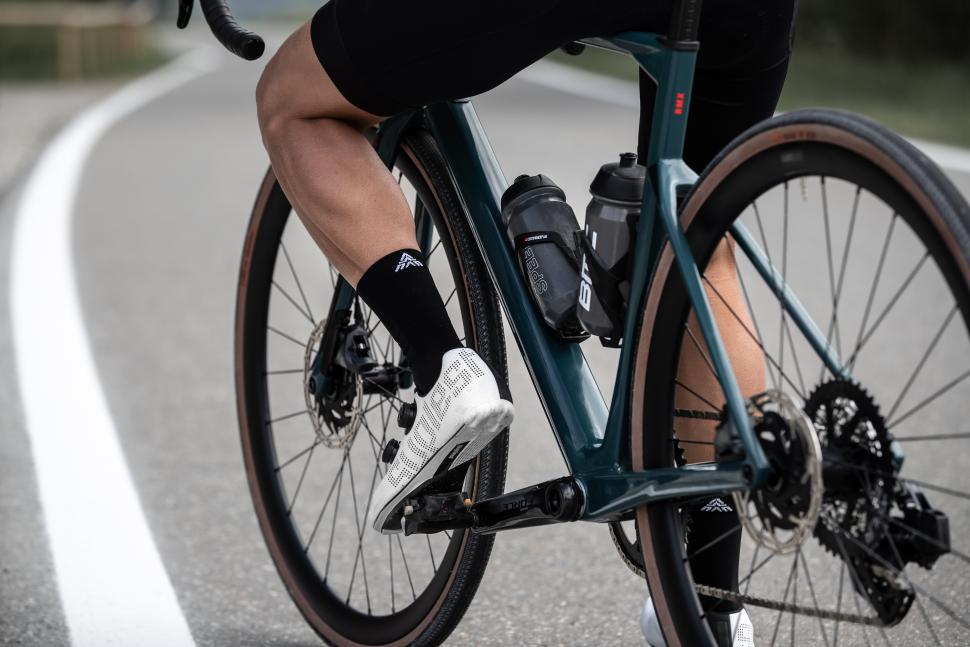
BMC’s Roadmachine X ONE comes equipped with SRAM’s Force eTap AXS groupset, while the TWO model is a Rival eTap AXS build.
An aluminium model does remain in the range, the Roadmachine X AL ONE, which has larger tyre clearances up to 35mm, although it comes equipped with the same 32mm WTB Expanse tyres.
Images: David Schultheiss









15 thoughts on “BMC brings out carbon frame versions of all-road Roadmachine X”
Can anyone tell me why “the
Can anyone tell me why “the short chainstays reward you with rapid accelerations”? Seems like marketing blah-blah. As far as I know, short chainstays affect agility/stability. Unless the chainstays are made of overcooked spaghetti (*), power transfer and thus acceleration has nothing to do with chainstay lenght.
(*) BTW, with carbon you can, more than ever, exactly determine how stiff chainstays are, regardless of (real-world) lenght.
Presumably the shorter the
Presumably the shorter the chainstay the lower the flex for the same material and so the quicker the response?
Hi Rendel, as said, at this
Hi Rendel, as said, at this lenght and with this material, flex is engineered, not inherited from the material.
More so, a chainstay lays very much in line with the top of the chain, so there isn’t that much more flex you will create by adding 10-20mm more chainstay. Even less so for riders who do not put down >1000Watts of power.
Please also note that drag bikes/motorcyles – where acceleration is key – have very long “chainstays”.
Makes sense – as with so many
Makes sense – as with so many cycling matters, all about perception I guess!!
JL77 wrote:
Interesting point. I presume this is to lengthen the wheelbase to lessen the front wheel lifting due to the massive torque.
Problem I have when cycling all the time…
Captain Badger wrote:
problem I might have if I weighed 65kg instead of 85kg
wycombewheeler wrote:
You’re clearly not pedalling hard enough
Captain Badger wrote:
Should probably give up wearing the massive torc while cycling.
mdavidford wrote:
You’re all torc…
Imagine riding a bike that
Imagine riding a bike that had comically long chainstays, say 1.5 metres long, imagine it’s super stiff (and perfectly vertically compliant).
It’s hard to imagine a bike like that really shifting when you stamp on the pedals. Handling aside once you’re up to speed it’d be fine but it’s not the bike you’d choose for a sprint.
When you pedal hard most of the force comes from vertical-ish pushing on the pedal. The “ish” bit there is important. As the bike rocks from side to side (sprinting) the more the back wheel is underneath the rider the more direct the forces are from pedal to road and the less the rocking matters.
In a perfect model none of this matters. But bike performance is a mess of physics, physiology and psychology. Which bike do you choose for the sprint?
skeuomorph wrote:
I think your last paragraph is spot on, although gets us no nearer as to why short stays are preferable.
The bit about the direct forces though I’d disagree with. as the forces are mechanically transferred from the crank to the tyre/road interface, the position of the rider in relation to the wheel is ( I think) pretty irrelevant. That is not to say that the rocking may have an affect on the efficacy of the rider as an engine, however once forces are applied to pedal they are converted to very strict directions (assuming little play or flex in the mechanical parts) – rotational (crank), then direct (chain) then back into rotational (wheel) back to direct (tyre/road).
I’m really keen to understand why short stays are advantageous, however I don’t believe direct forces is it. In the dynamic described long stays merely lengthens the chain, forces remain the same.
Now if the short wheelbase makes the bike more nimble, and the rider can throw the bike around easier, this may allow more net force to be applied to teh pedals (even if inefficiently), then that might seem credible.
perhaps shorter chainstays
perhaps shorter chainstays allow for a chain with fewer links, which leads to a chain with less ‘slack’ and a diminished sense of input lag.
the infamous grouse wrote:
there will be no slack in the top section of chain under load, regardless of length (within reason) we’re talking abou 400-500mm here after all. Not the difference between 400mm and 2m.
all chain inefficiency comes from the bending and straightening as it goes round the sprockets, which is unchanged.
wycombewheeler wrote:
i suspect that would only be true under constant load.
anecdotally, i have a ‘short chainstay’ carbon bike, and its pedal response is noticably less immediate than a belt-driven IGH i also own — despite weighing much much less.
https://youtu.be/lRj5ZlwyKls
https://youtu.be/lRj5ZlwyKls
Frame builder that’s pro long chainstays