


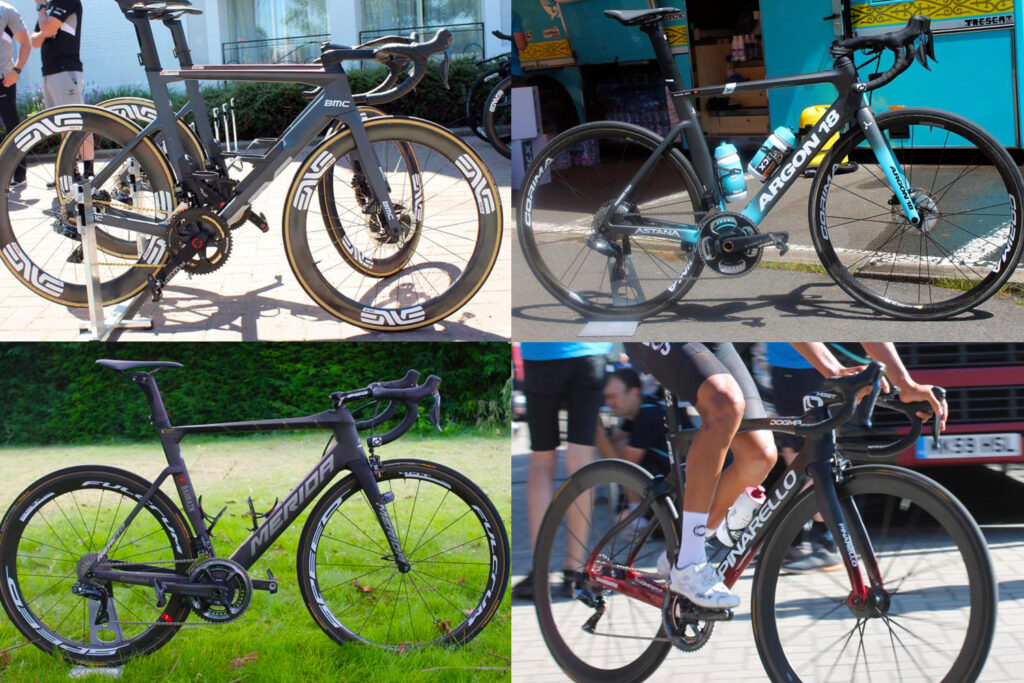

Most riders in the Tour de France have the option of an aero road bike that’s all about speed for flat and undulating stages. Here are some of the most interesting…
Trek-Segafredo: Trek Madone Disc
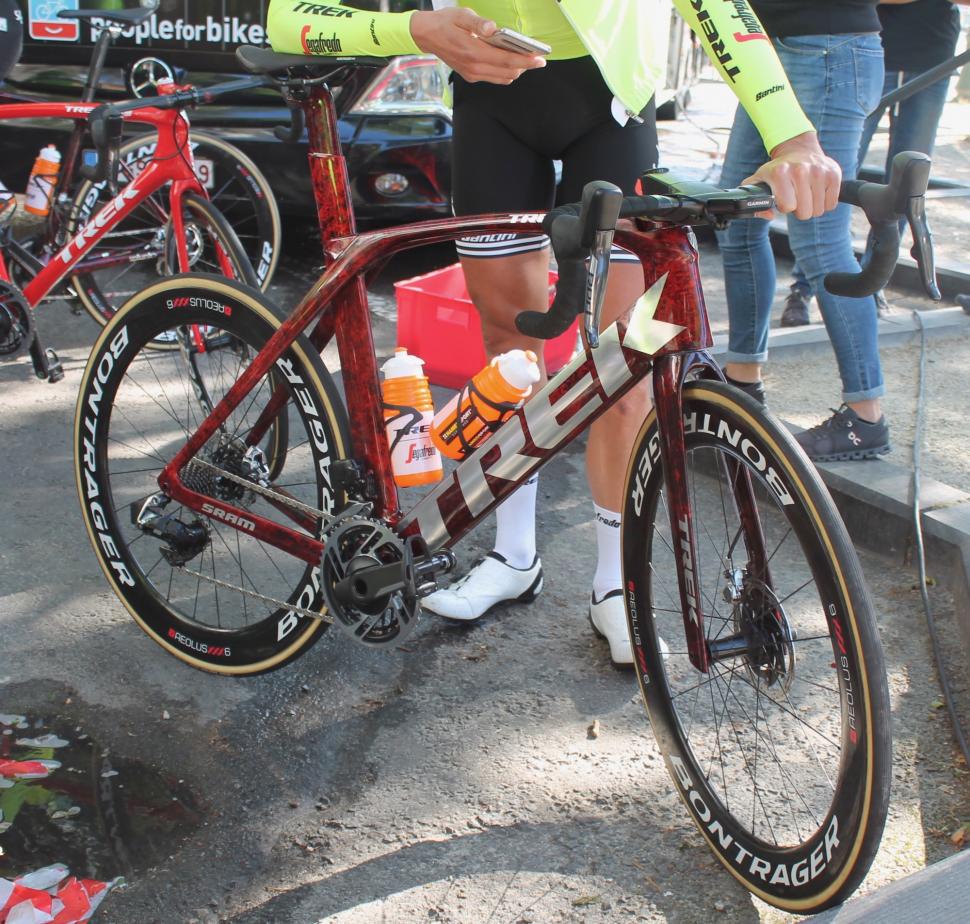
A lot of aero road bikes look almost identical – the designers are seeking to achieve the same result, after all – but the Trek Madone Disc has its own distinctive appearance. One of its key characteristics is the Adjustable Top Tube IsoSpeed system that lets you fine-tune the frame compliance (the seat tube can move slightly relative to the rest of the frame).
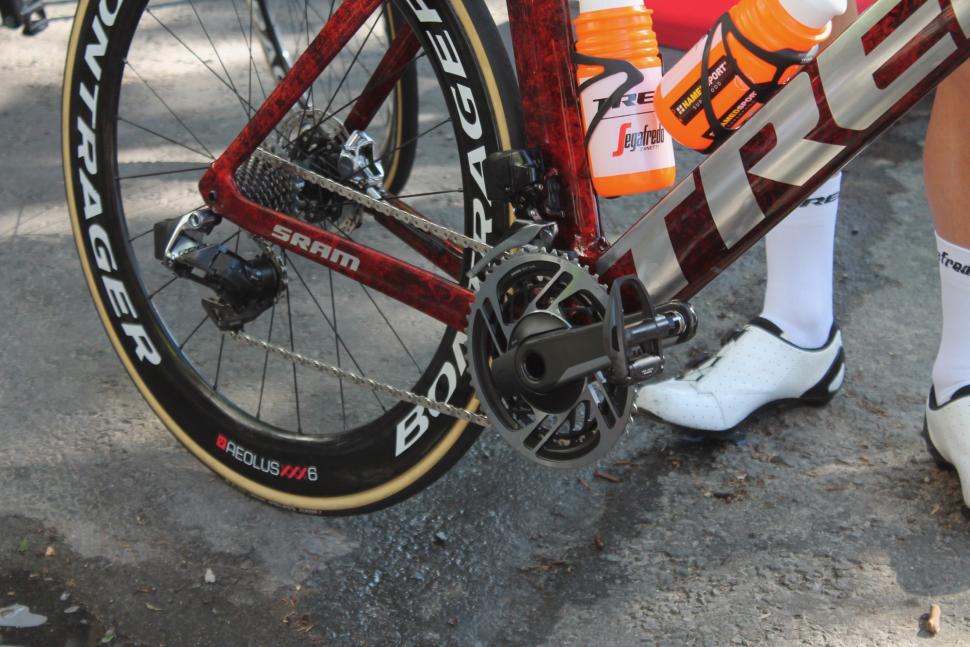
Trek-Segafredo have switched from Shimano to SRAM Red eTap AXS groupsets this year (SRAM doesn’t make pedals so these still come from Shimano). Most other components come from Bontrager, Trek’s in-house brand.
Read our Trek Madone SLR 9 Disc review here
Vincenzo Nibali: Merida Reacto KOM
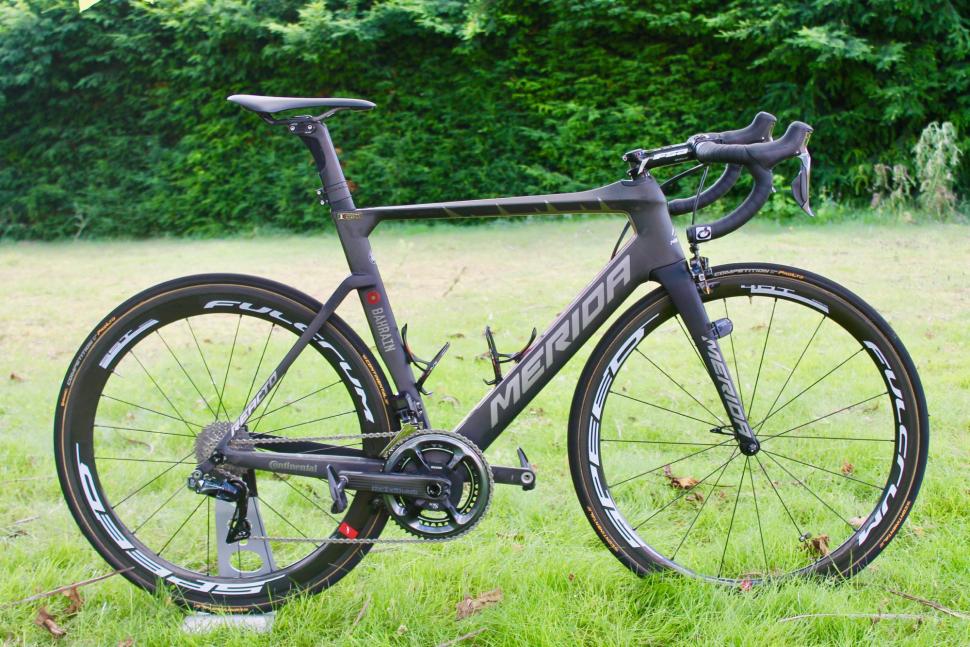
The Reacto is Merida’s aero road bike while the Scultura is the lightweight model. However, in order to give Vincenzo Nibali the best of both worlds, Bahrain-Merida and its sponsors have worked hard to reduce the weight of the Reacto from 7.2kg to 6.8kg, the UCI’s minimum limit for racing.
Merida hasn’t changed the layup of the frame but says it has used the lightest possible carbon strains, and it has kept the paintwork to a minimum. Nibali also uses a separate handlebar and stem rather than the integrated Vision Metron 5D design to save a few grams.
Read all about the Merida Reacto
Team Ineos: Pinarello Dogma F12

The Dogma F12 (this one belongs to Geraint Thomas) might not look like an archetypal aero road bike but Pinarello says that it worked hard on reducing drag during the design phase, claiming that it saves the equivalent of 8 watts at 40km/h (25mph) over the Dogma F10.
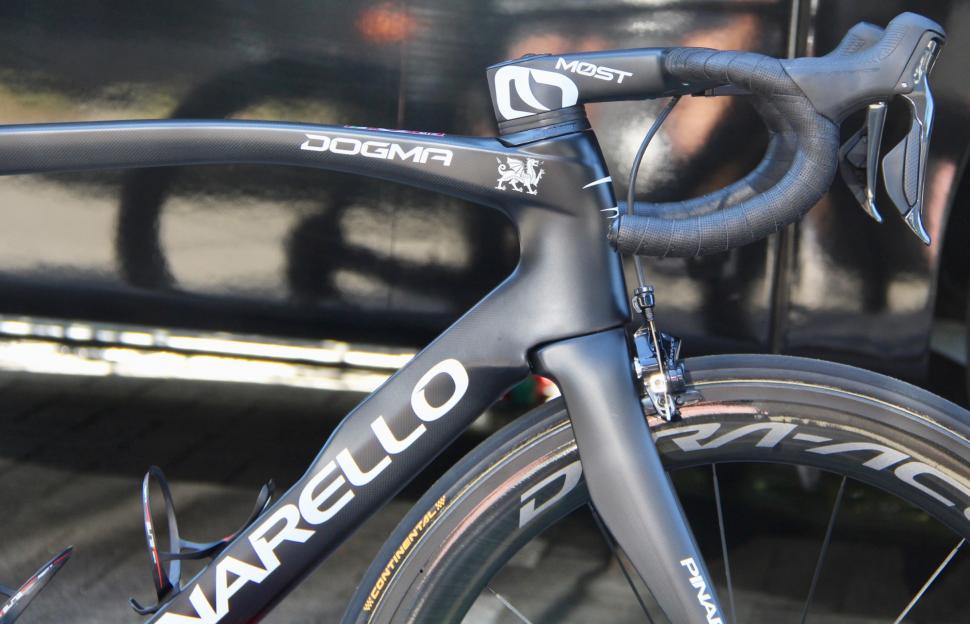
The Flat Back down tube profile has been narrowed. A key aim of the design when it first appeared on the Dogma F10 was to reduce drag around the water bottle. With the F12, Pinarello has reshaped the bottom bracket to allow the bottle cage to be mounted 5mm lower, helping to improve airflow.
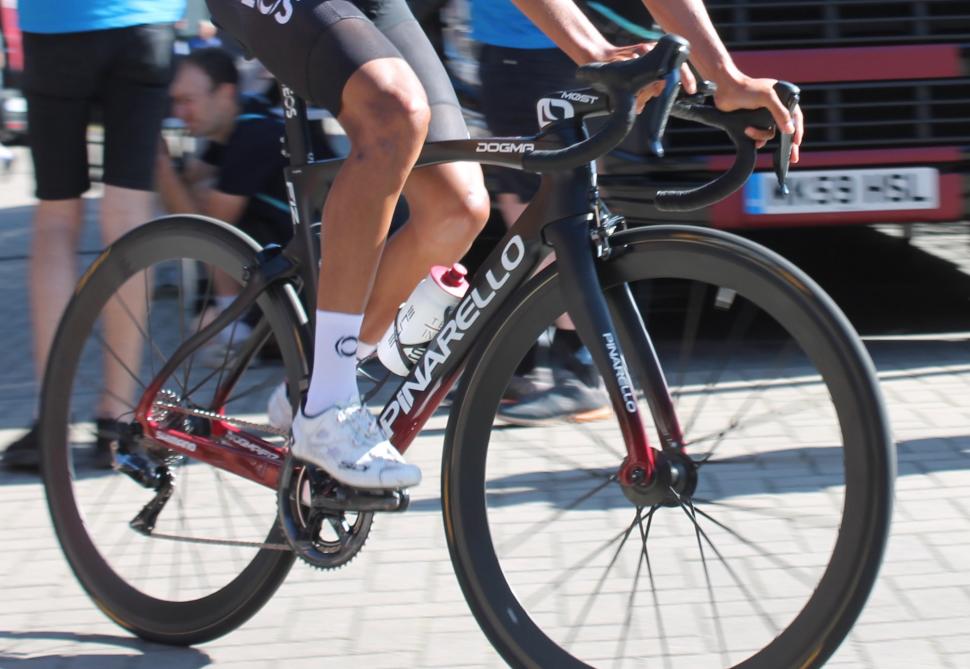
Team Ineos use groupsets and wheels from Shimano, although Egan Bernal’s bike is here fitted with Lightweight Meilenstein Obermayers. The team has confirmed that it is using these wheels alongside Shimano’s in the Tour de France.
Find out all about the Pinarello Dogma F12
Team Sunweb: Cervelo S5

The Cervelo S5 is one of a new wave of aero bikes that are available in disc brake models only.
Cervelo says that as well as being more aerodynamically efficient than its predecessor, the latest version of the S5 is stiffer at both the bottom bracket and the head tube and 100g lighter than before.
The brake hoses and the wires for the Shimano Dura-Ace Di2 shifting run internally through the handlebar/stem and into the frame.
Astana: Argon 18 Nitrogen Disc
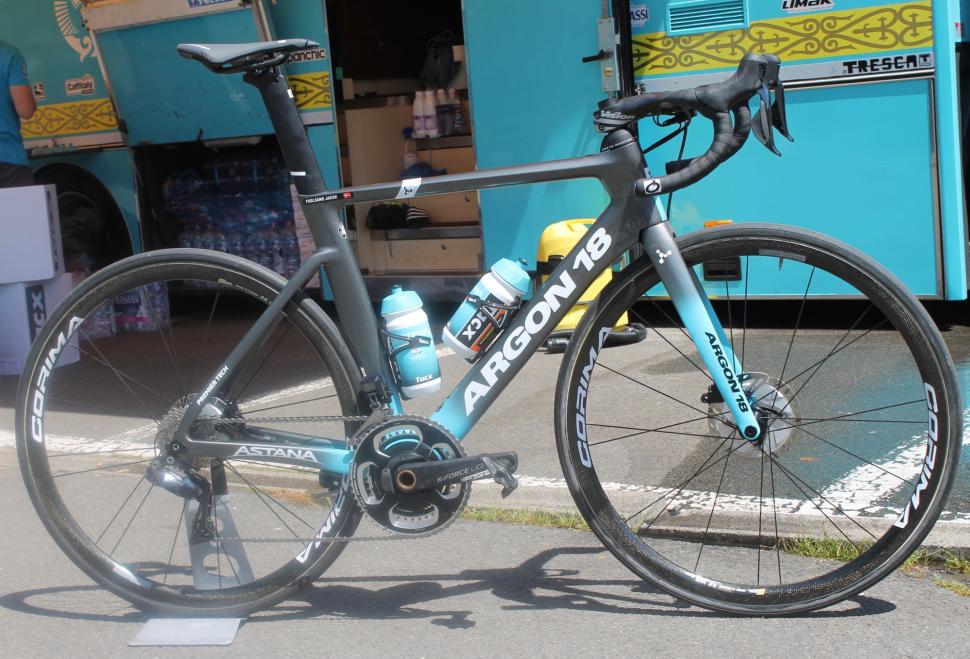
This is the Argon 18 Nitrogen Disc being ridden by Astana’s GC hopeful Jakob Fuglsang.
Rather than simply altering the Nitrogen rim brake bike to take discs, the Nitrogen Disc was developed from the ground up. Argon 18 says that a key feature is its increased torsional rigidity. The brand claims that the carbon monocoque fork has an 80% increase in lateral stiffness compared with the Nitrogen Pro.
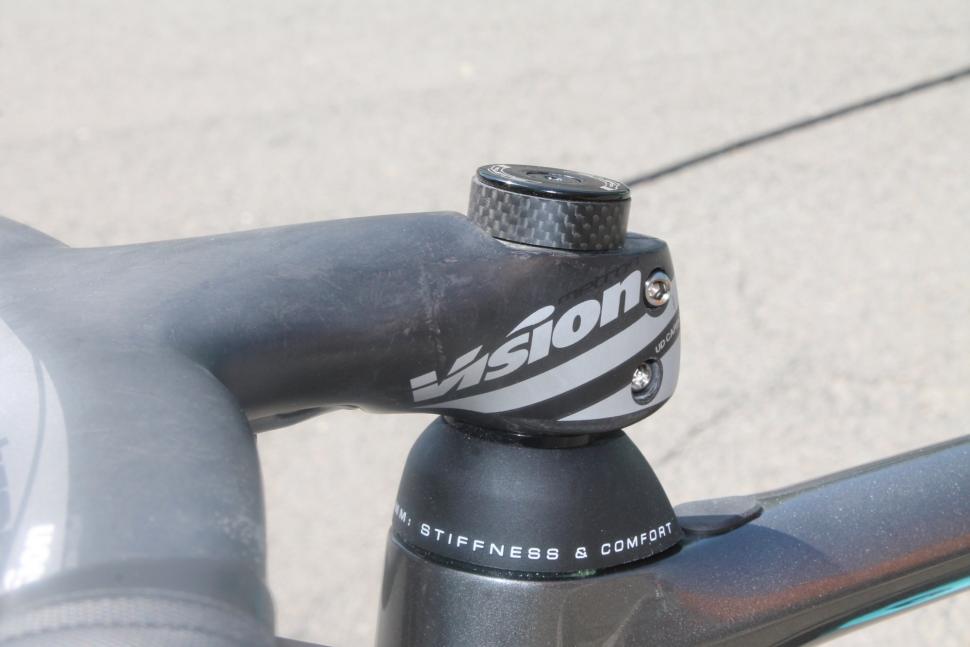
Fuglsang’s bike features Argon 18’s clever 3D System, providing extra head tube height without the increased flex associated with standard headset spacers.
Find out about the Argon 18 Nitrogen Disc here
Bora–Hansgrohe: Specialized S-Works Venge

Peter Sagan rides the Specialized S-Works Venge, a bike designed solely for disc brakes and electronic shifting.
Specialized started designing the latest version of the Venge by first developing its own Free Shape Optimisation software that could generate millions of tube shapes and analyse them based on aerodynamics, surface area and stiffness.
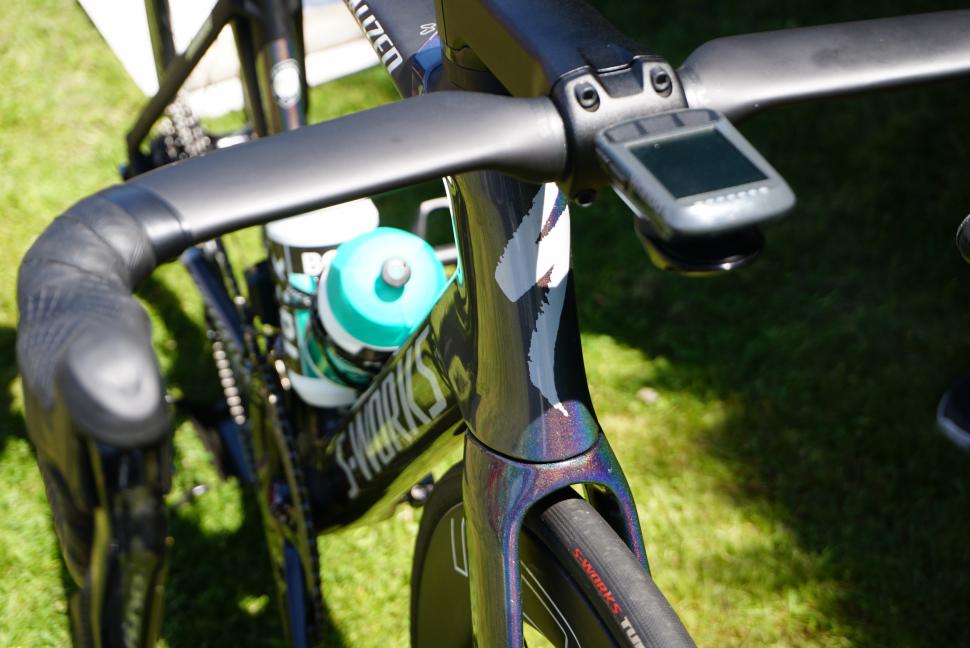
The bike features an Aerofly II handlebar with an aero profile to the tops and internal cable/ brake hose routing. Specialized claims that the stem is stiffer than any other it has tested, including the Zipp SL Sprint that Sagan previously used.
Read our review of the Specialized S-Works Venge Di2
Dimension Data: BMC Timemachine Road
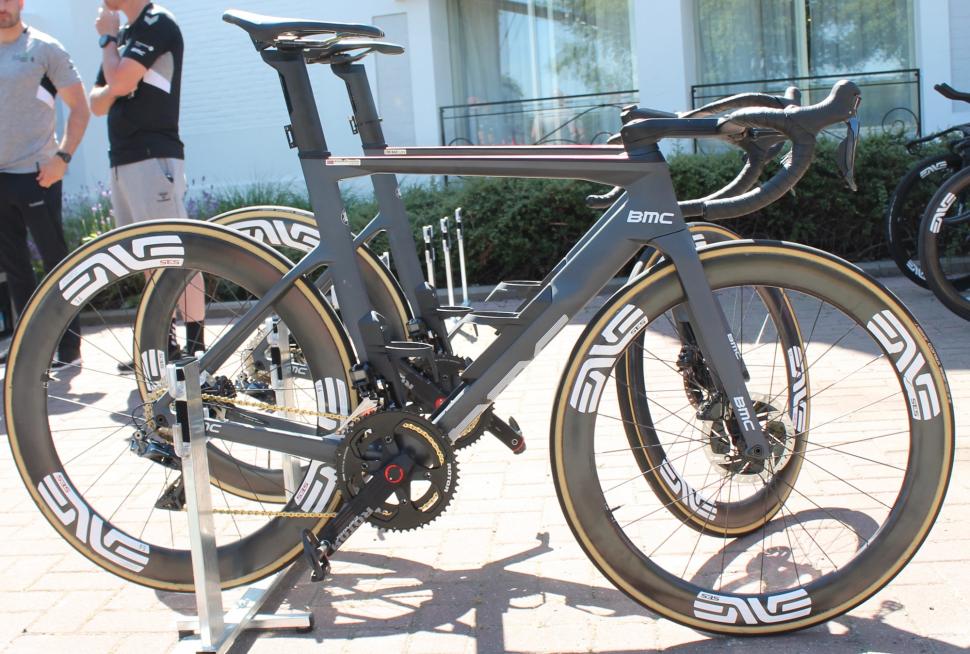
BMC’s Timemachine Road is another of those aero road bikes that is designed solely around disc brakes.
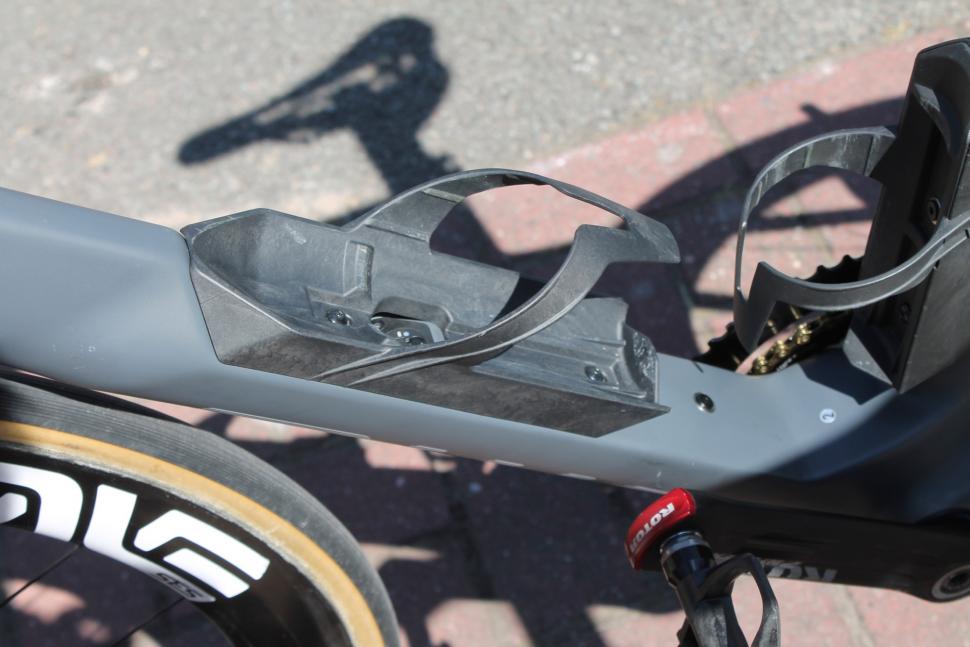
Integrated water bottles are a key part of the design, in what BMC calls the Aero Module. The aim is to eliminate the drag created by a traditional water bottle cage, smoothing the transition from the frame to the water bottle. BMC has worked with Elite to develop special cages and 550ml water bottles (not pictured).
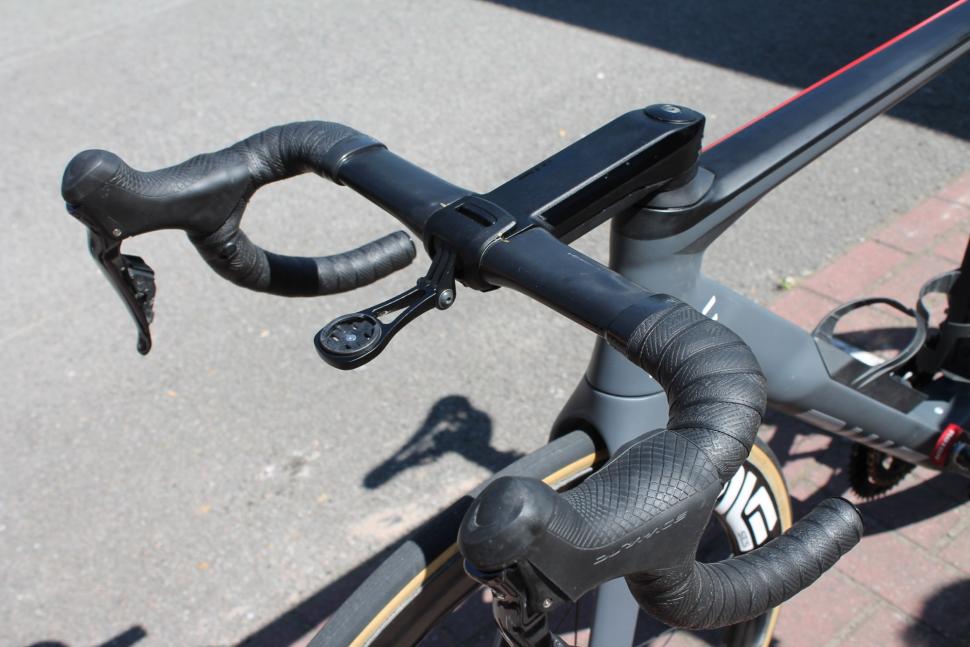
The bike features BMC’s ICS (Integrated Cockpit System) Aero handlebar and stem which route the Di2 wires and brake hoses internally. The system allows easy fit adjustment with removable steerer tube spacers, although Edvald Boasson Hagen’s bike has none fitted.
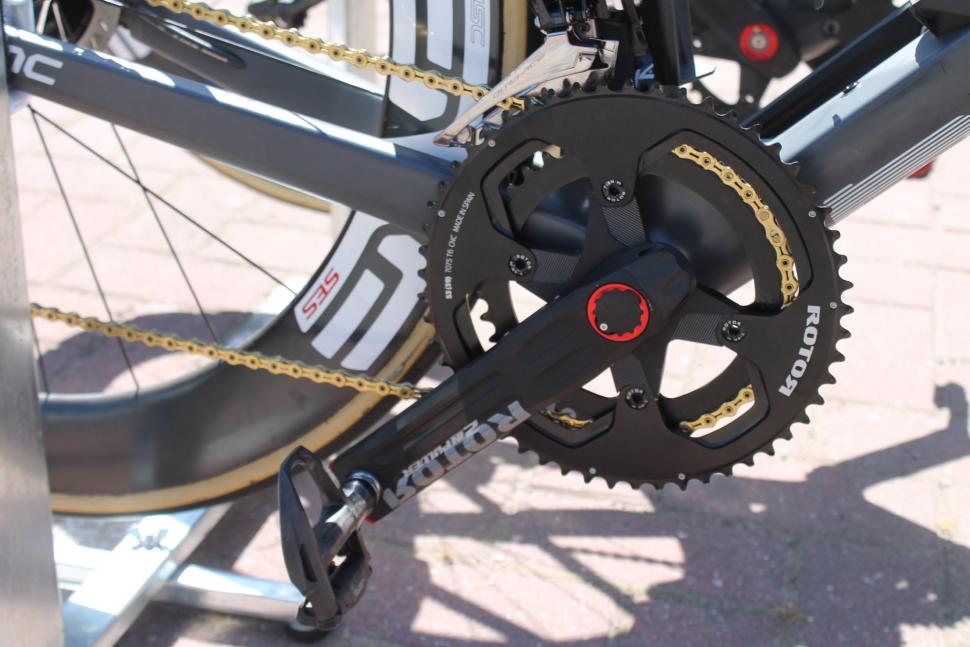
The distinctive gold chains that Dimension Data use with their Rotor chainsets are KMC X11SL.
Find out all about the BMC Timemachine Road here
Arkea Samsic: BH G7 Pro
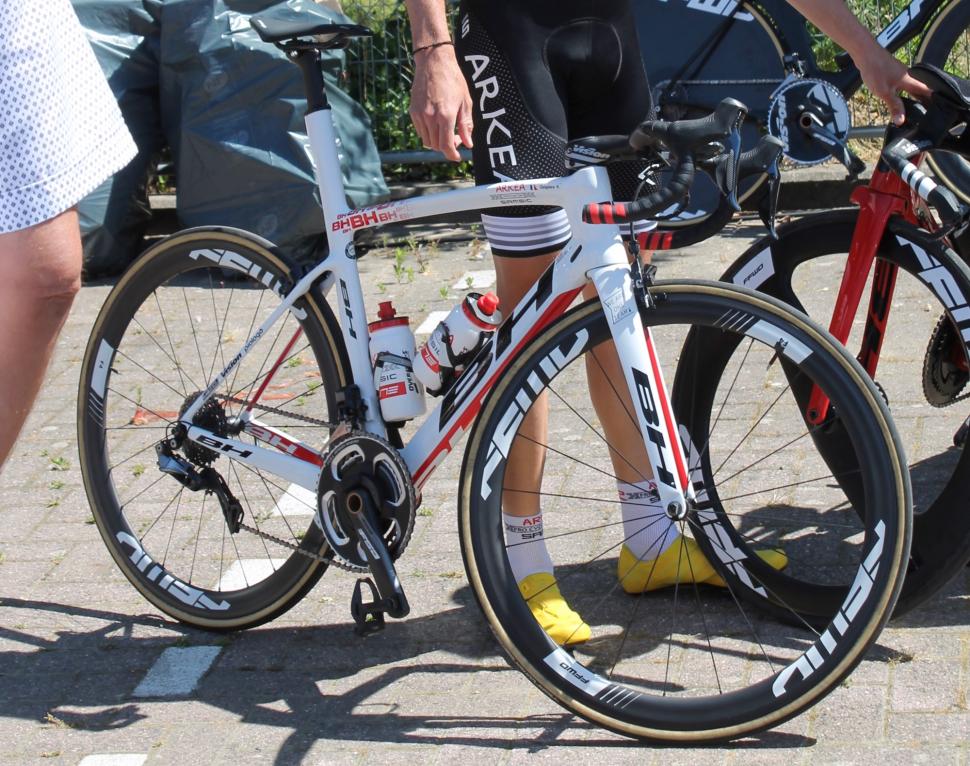
BH launched the G7 Pro – a direct mount rim brake version of an existing disc brake bike – a couple of years ago when the future of disc brakes in the pro peloton was still uncertain. BH says that it was able to improve the tube shapes over those of the disc brake model.
The frame is made mainly from T800 and T700 carbon fibres and has a claimed weight of 840g.
Cross-chaining: is it really all that bad?
Anthony Delaplace’s bike is built up with a mainly Shimano Dura-Ace Di2 groupset with an FSA chainset, and a Vision Metron 5D combined handlebar and stem. The FFwd F4 wheels have 45mm deep rims.












4 thoughts on “Tour de France pro bikes: 8 of the hottest aero road bikes”
That 300 foot tall Trek logo
That 300 foot tall Trek logo is offensive….
StoopidUserName wrote:
Shame there aren’t any LOOK bikes in the lineup. Then we could argue about one huge logo or ten thousand small logos.
The whole frickin’ bike is
The whole frickin’ bike is offensive. Garish thing. Rubbish name.
I would have preferred a
I would have preferred a larger logo on the Madone.