


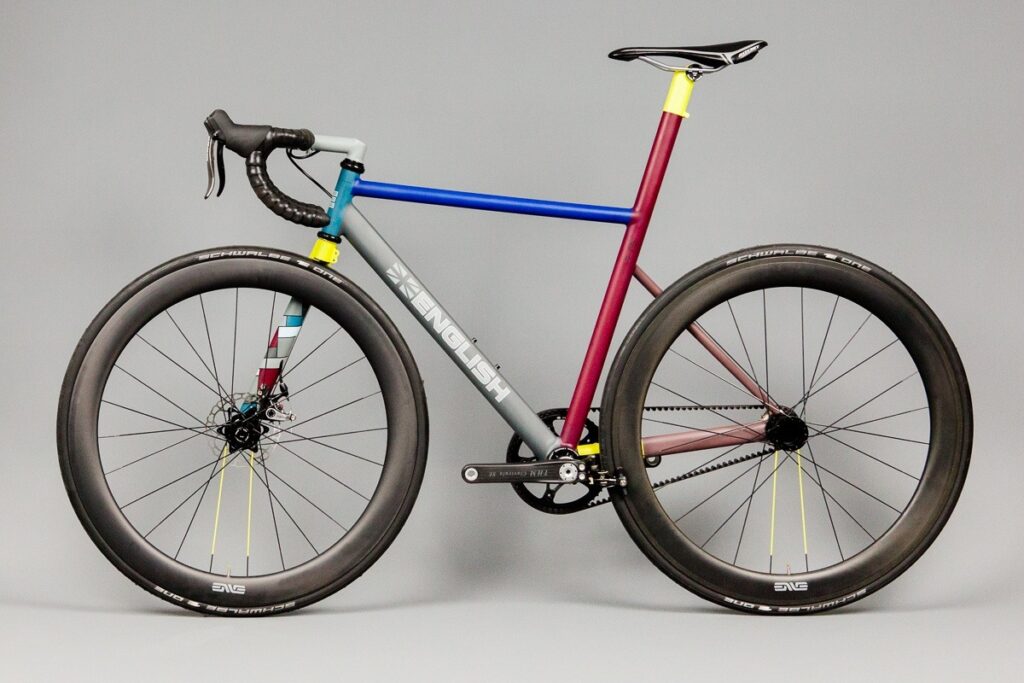
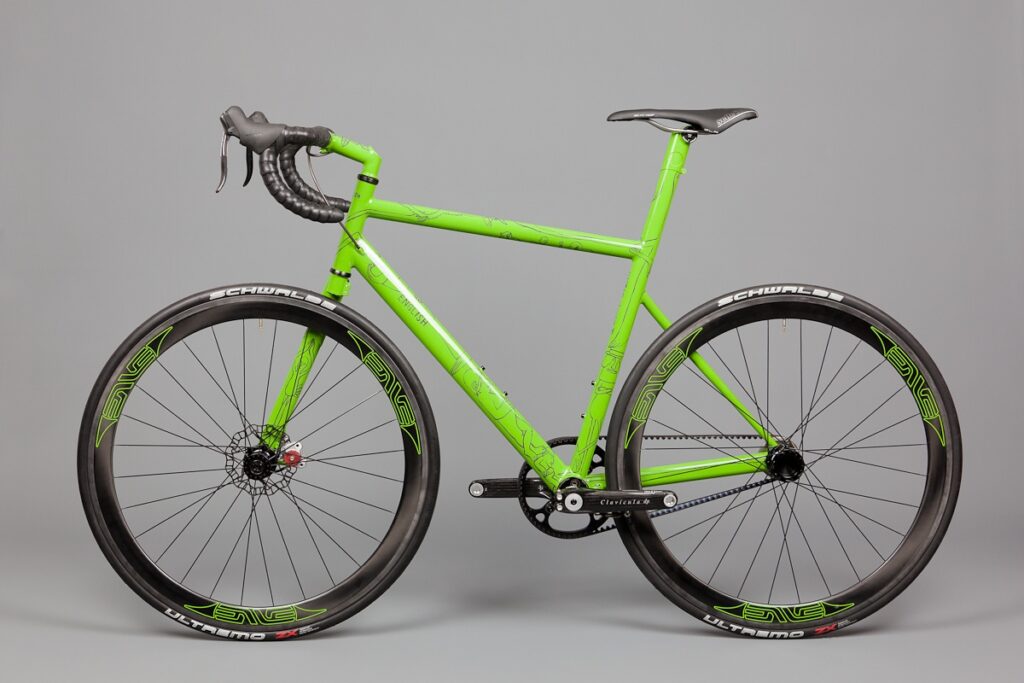
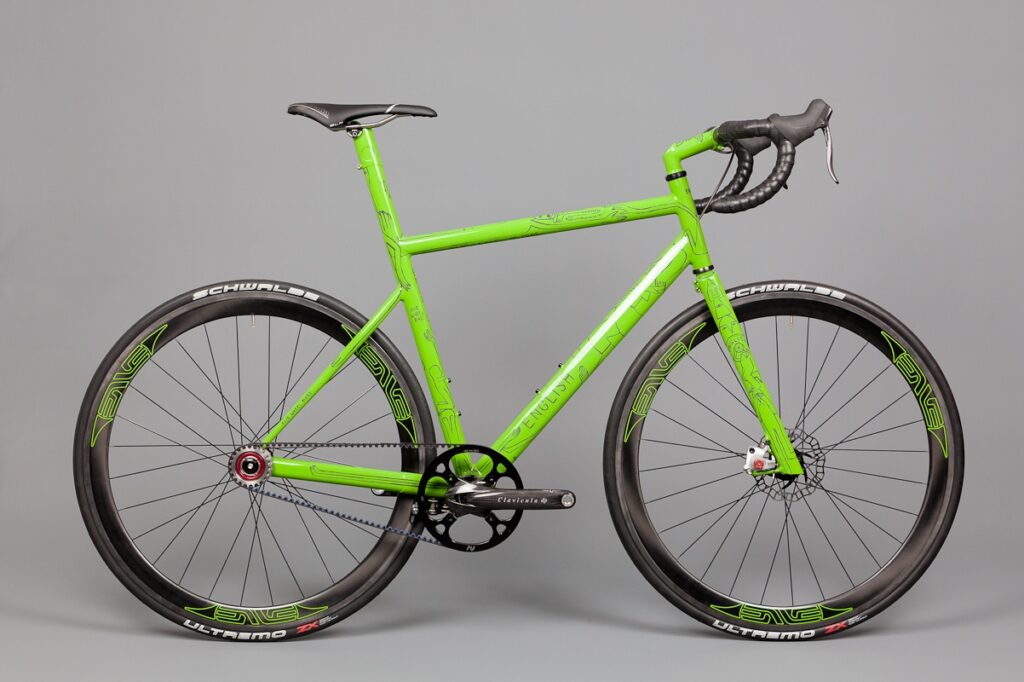
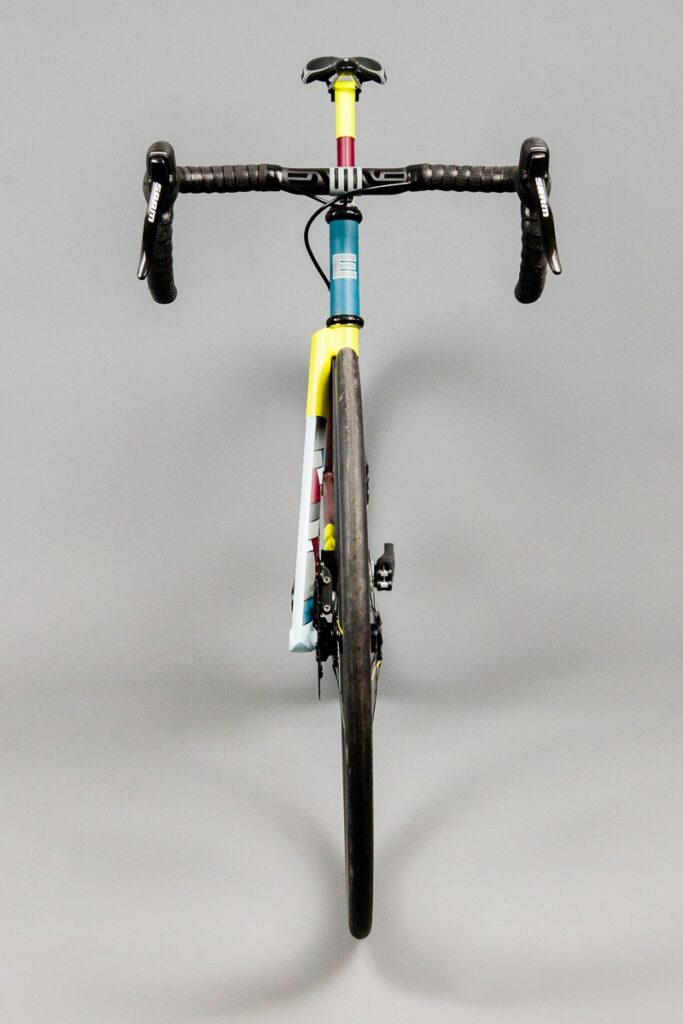
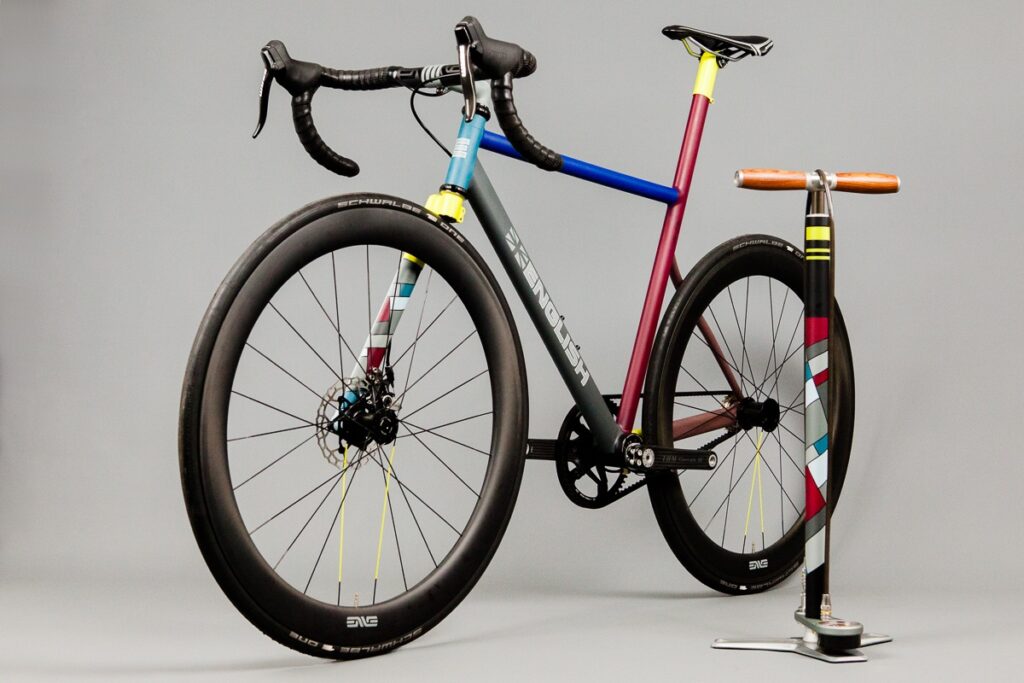

Rob English has been consistently making some of the finest steel road bikes over the years. We’ve highlighted a fair few of them, including his NAHBS winners, as they have always been bikes that have stood out for some reason or another. Whether it was the 5.8kg superbike or the Naked time trial bike, they’ve always turned heads. His Project Right bikes are something else, though, because half the frame and fork is missing!
– English Cycles 5.8kg carbon and steel superbike
The idea for producing a single-side frame and fork came about in 2012 at the request of a customer who asked Rob to produce something a little bit different. And different the bike certainly is. We can’t think of many bikes that only have half a fork and no seatstays to chainstays on the non-drive side. Well, apart from the famous Lotus 108.
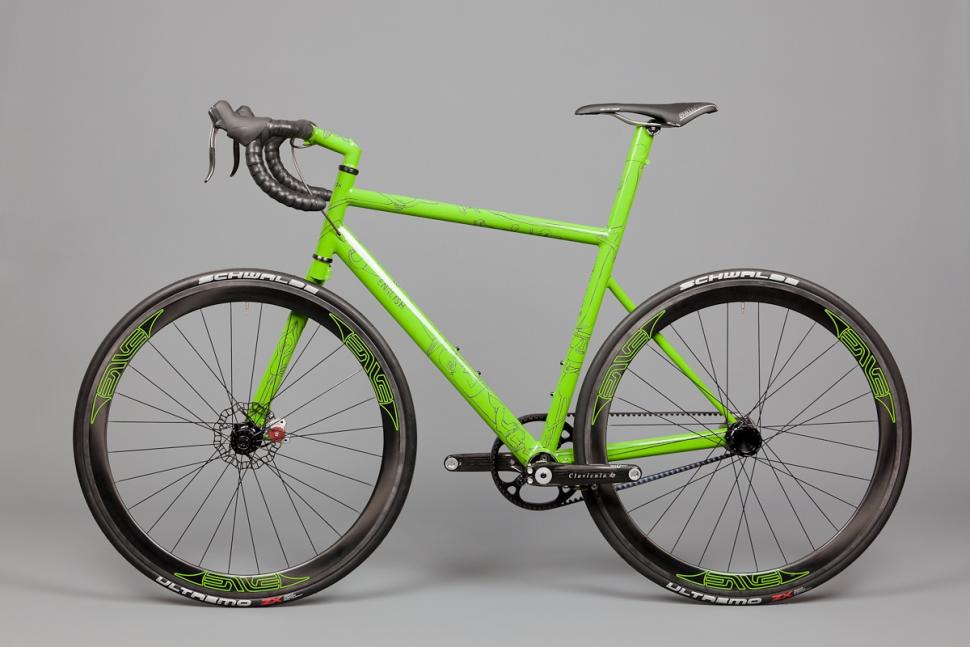
To make it possible, Rob first modelled the frame using 3D CAD computer software to ensure it was possible to build a frame with several key parts of it missing. He tells us that the high stiffness of steel means that increasing the tube diameters actually made it fairly straightforward to produce a single-sided bike, but he still had to make some changes compared to a regular frame to make it all work.
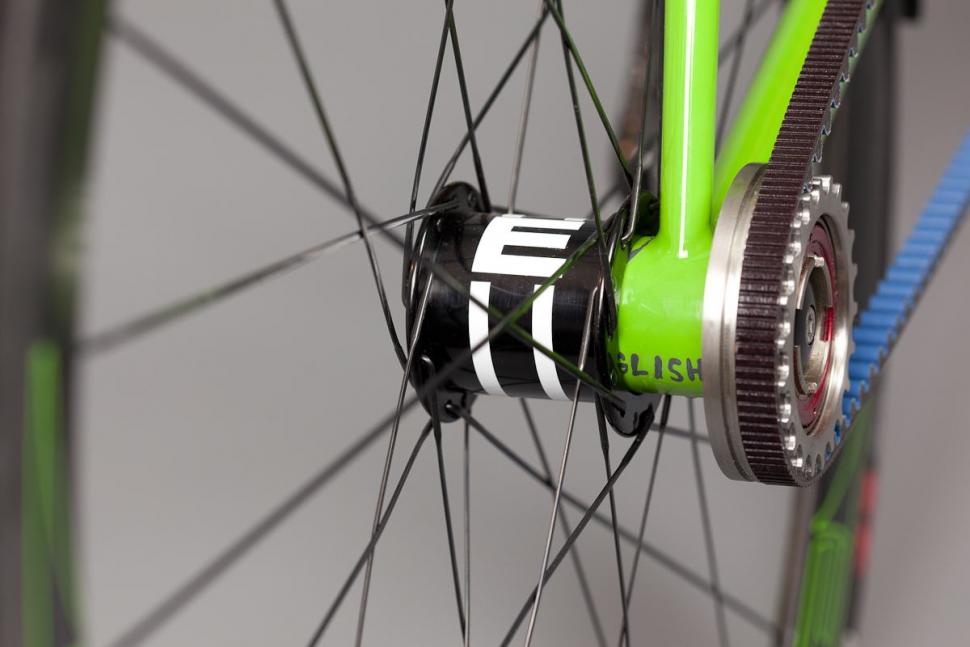
He built the frame and fork using oversized tubing sleeved at the base to add extra stiffness and strength, with a triangular profile for the chainstay where it meets the bottom bracket, providing additional stiffness. Because the chainstay sits between the drivetrain and rear wheel, Rob tells us “the drive has hardly any leverage to exert lateral forces onto the axle.”
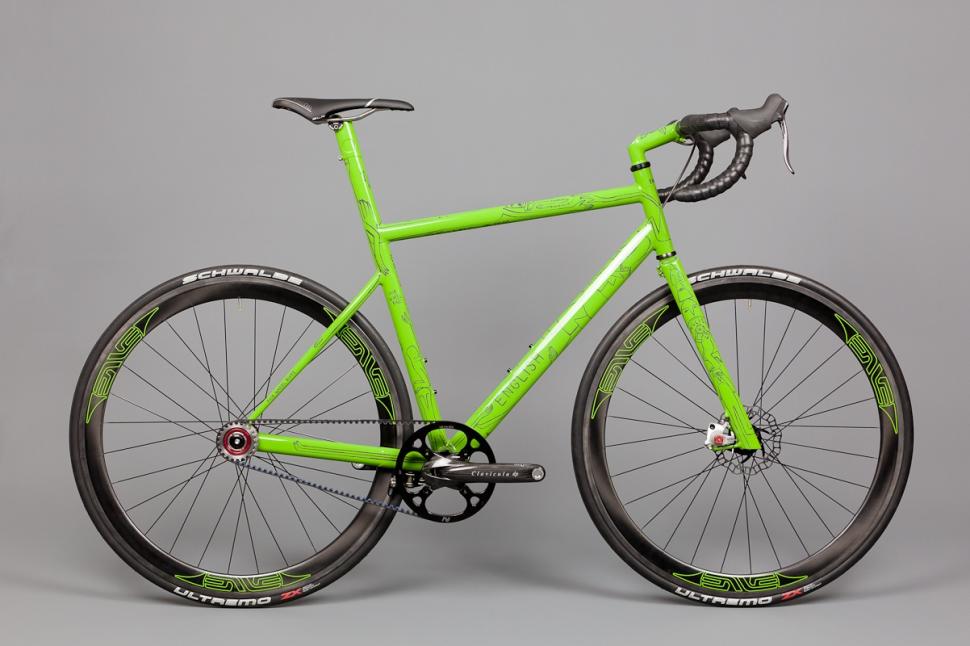
– Rob English’s single-sided Project Right bike
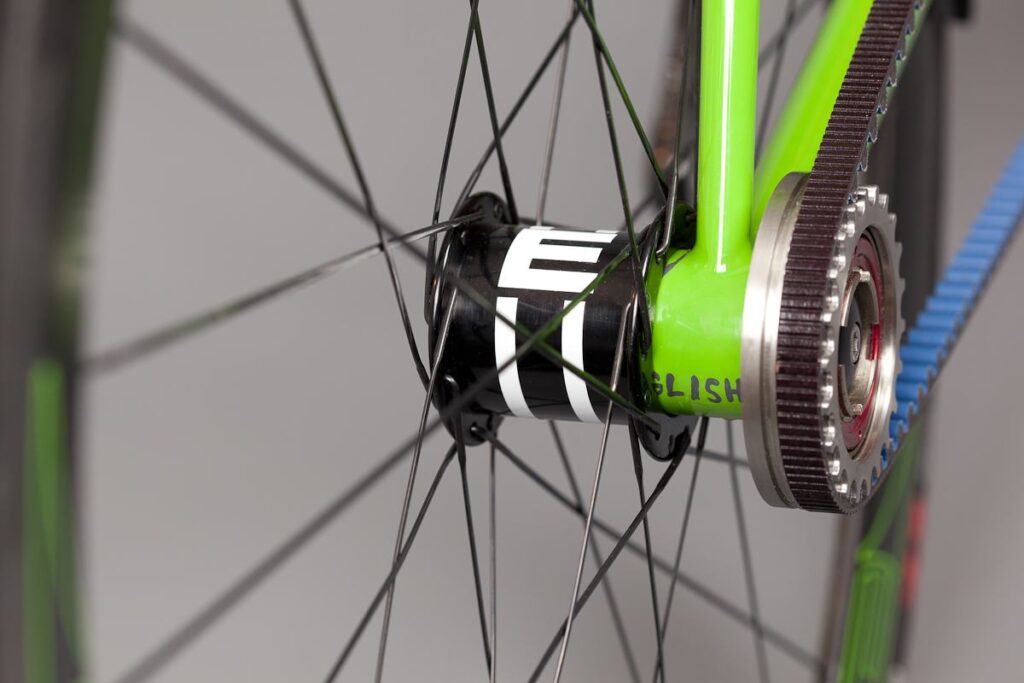
The rear hub is a custom design with a one-piece axle and shell. “The bearings are press-fitted into the tube at the end of the chainstay – the axle slides through this, then the freewheel carrier is splined onto the end of the axle with a cap bolts in place to hold everything together,” explains Rob. The bike pictured is a singlespeed with a belt drive, and the design allows easy belt installation.
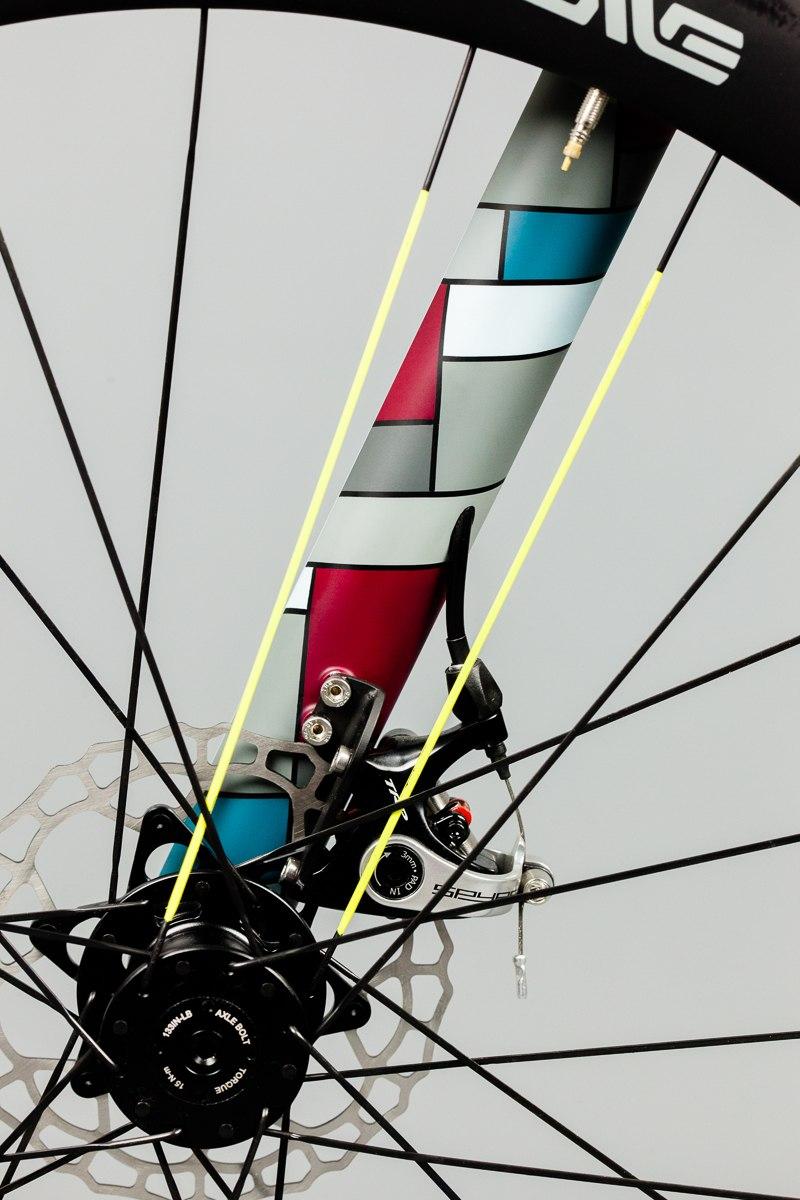
Compared to the lengths he went to in developing the frame, he says the fork was much easier. One-sided forks are nothing new, Cannondale has been pushing its Lefty, both suspension and rigid, forks for many years now. Rob has used a Lefty-style aluminium axle which press fits straight into a socket at the base of the leg and the fork crown clamps onto a one-piece stem and steerer tube.
You can see more details on that original bike right here.
Any concerns that the bike will be all floppy and flexy are quickly dispelled by Rob. “I haven’t actually measured any deflection to give you stiffness data; I can just report that there is no flex when riding,” he tells us.
He adds: “stub axles are very common on vehicles – when was the last time you saw a car with the hub supported on both sides? I think we are just not used to seeing them on bicycles, although it has been done before, notably, on many of Mike Burrows designs (from the original Lotus to the Giant Halfway).
We also asked Rob if there are any weight savings with this unique design. “No real weight saving,” he says. “With further refinement, this might be possible, but the oversize single tube ends up weighing about the same as a regular pair of tubes.
“Honestly there is not a compelling reason to build a bike this way (apart from fixing punctures without removing the wheels), but for the rider who wants something completely eye-catching and unique, it is an option. For me, it was a nice challenge to tackle both as a design and fabrication project”
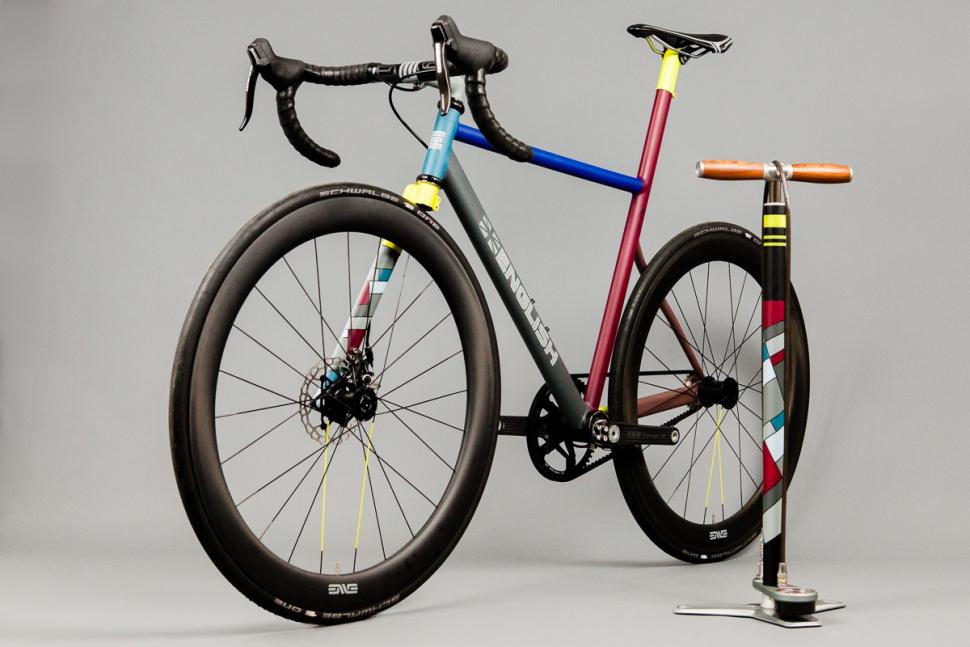
Yet it appears to have become popular. Rob has built a few since that original bike four years ago. There was even a 29er mountain bike version which was displayed at NAHBS and looks absolutely stunning. And he’s since built two more road bikes, the latest has been painted to match the Paul Smith Land Rover Defender. The one-off Defender was created by Sir Paul Smith to celebrate its heritage, and features 27 different colours across the various body panels. There’s a good video with Sir Paul Smith talking about the reasons for the creative direction of the special Land Rover here.
Rob will be over for the Bespoked show next April, and hopefully, he’ll bring a few bikes with him. You can see more of Rob’s work at www.englishcycles.com









25 thoughts on “Rob English’s head-turning single-sided Project Right bikes”
No. I’m sorry, but, just: no
No. I’m sorry, but, just: no
I love Rob English’s stuff,
I love Rob English’s stuff, how unique and interesting his bikes look. This is no different, but that colour scheme is pure cancer.
The Lotus 108 and, errrr,
The Lotus 108 and, errrr, quite a lot of the stuff Mike Burrows has made since. The 8 Freight cargo bike, the Giant Halfway folder, for example.
It makes good structural sense if you do it properly. Those “car” and “truck” things you occasionally see about the place with one-sided wheel support seem to manage okay…
Good solution for belt drive.
Honestly there is not a compelling reason to build a bike this way
Actually if you want to use a belt to drive rather than a chain (that can be split) there is EVERY reason to do so, in fact it is an elegant engineering solution… otherwise you need a way of splitting the frame to replace the belt. Motorbikes have a lot more power going through them and quite a few have a single trailing arm.
What about rear brake? And
What about rear brake? And how he managed front brake on the right side?
Artem wrote:
Looks like the rear brake is a direct-mount rim-brake affair nestled behind the bottom bracket.
Clever, but not for me! I hope the owner is very happy with it though.
TheLonelyOne wrote:
..and the front is just a normal caliper put on the other side (so the pad adjustment wheel that is usually next to the spokes is now on the outside).
The rear hub is interesting,
The rear hub is interesting, even on a conventional frame that might be a cheaper/simpler/stronger way to handle a belt drive without a break in the chainstay. It looks slim, probably 100mm as a front wheel. Is alignment less of an issue with belts than chains?
The one thing I can’t figure out, is what’s going on with the brakes. Two brake levers, with a cable visbile entering the downtube, but no rear brake. It’s a fixie, so what’s that cable doing?
bikebot wrote:
If you maximise the first photo you can see an under the chainstay brake, as used on TT or aero bikes.
bikebot wrote:
Look at the first pic; it’s under the chainstay/BB
hennahairgel wrote:
Yep, found it, thanks. That was simple.
I think it looks great, face
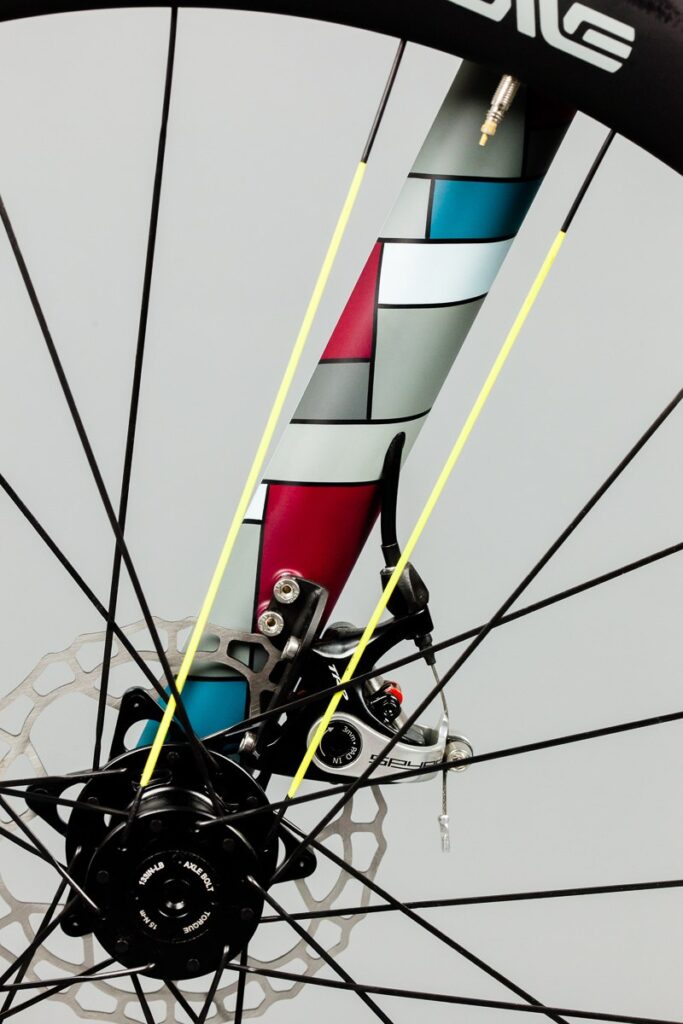
I think it looks great, face it anyone who’s going to buy a bike like this is never going to want it in stealth colours.. however I do think mixing the brakes disc and rim is a bit franken-bike – can’t think of a way around it though.
Really cool. I like the
Really cool. I like the detailing on the fork on the multicolured one.
So the downtube says ‘ENGLISH
So the downtube says ‘ENGLISH’ next to a design of the Union Flag, someone needs to sit through Sheldon’s ‘fun with flags’ until they educate themselves as to the appropriate design to use.
muhasib wrote:
English is the name of the designer/builder of the frame not the origin of the bike. I am not aware of many surnames carrying their own flag 🙂
muhasib wrote:
I could be wrong but despite his current location I think that Rob has the surname English and originated in the UK so the flag might represent his background rather than his surname.
muhasib wrote:
So the downtube says ‘ENGLISH’ next to a design of the Union Flag, someone needs to sit through Sheldon’s ‘fun with flags’ until they educate themselves as to the appropriate design to use.
— muhasib
Someone needs to dig a little deeper.
Fantastic and very
Fantastic and very interesting design exercise, but unless it saves weight, adds stiffness or reliability, I can’t see it becoming mainstreem. But I guess the fact it will never be mainstreem is part of the attraction.
Cannondale’s Lefty gear has it’s fans, but they are very “niche”
Ziptie wrote:
not sure the lefty should be called niche, but even if it is it’s not because of the design having fundamental flaws, but more the fact that they can’t be fitted to many frames so sell few aftermarket, and my guess is that cannondale have the patents tied down pretty tightly meaning it’s hard for anyone else to produce a single sided suspension fork that could compete.
the lefty fork is actually very good.
My engineer father would have said, “It may be clever but is it necessary?” And, in the case of the Lefty, I agree with him. But this is different. Somehow.
Front disc and fixed, why
Front disc and fixed, why bother with the rear brake at all?
DrJDog wrote:
The hub is described as having a freewheel carrier I’m guessing it’s not a fixie.
Standing on one leg
Read Mike Burrows on the rational reasons here
It’s alright….
It’s alright….
Standing on one leg
Mike Burrows’ explanation of the advantages is here