



Transport Secretary Mark Harper said tougher legislation to prosecute cyclists who kill or injure pedestrians is “under review” and will be considered “with an open mind”. Sir Iain Duncan Smith, the former leader of the Conservative Party, has this week tabled a series of amendments to the Criminal Justice Bill that would see cyclists, as well as riders of electric scooters and “personal transporters”, subject to stricter laws if they ride dangerously and kill or injure.
The topic has attracted widespread national print and broadcast media coverage this week in the aftermath of a news story published at the weekend about a coroner’s inquest being told that no charges would be brought against a cyclist who was riding laps of London’s Regent’s Park when he crashed into a pensioner, causing her fatal injuries.
Harper told the Telegraph newspaper he “will look at his [Duncan Smith’s] amendments and we will consider it with an open mind. I have been clear that we are keeping this legislation under review”. He also commented that there are already some “specific offences on the statute books” that cyclists can be prosecuted under if they ride dangerously and kill or injure a pedestrian.
In 2017, London fixed-wheel cyclist Charlie Alliston was sentenced to 18 months in a young offenders institution after being convicted of causing bodily harm through wanton and furious driving, in relation to the death of pedestrian Kim Briggs, the woman whose widower Matthew has been campaigning for dangerous cycling laws since and yesterday appeared on Good Morning Britain.
‘People are surprised to know that cycling is a lawless activity when it comes to the Road Traffic Act’
Families of victims of speeding cyclists demand action for a ‘dangerous cycling’ law. pic.twitter.com/hevRH8jOlK
— Good Morning Britain (@GMB) May 8, 2024
Harper also claimed his government remains committed to promoting active travel schemes, a claim many will question given the ongoing funding controversies and lack of mention of cycling policies during his party conference speech of the autumn that was slammed an “ill-fated attempt to win” votes with pro-motoring policies “undermining” active travel success by Cycling UK.
Duncan Smith’s proposed amendment to the Criminal Justice Bill would also require bikes to be “equipped and maintained” to certain legal standards, although the Telegraph also noted that any chance of it becoming law is reliant, in part, on the government backing it and the Speaker of the House Lindsay Hoyle putting it up for a debate in the House of Commons.
It would replace the legislation under which cyclists can currently be prosecuted by the 1861 “wanton or furious driving” law and would see the introduction of a specific “offence of causing death or serious injury by dangerous, careless, or inconsiderate cycling” and killing through “inconsiderate” cycling.
“After seven years of campaigning alongside other families who have lost loved ones, I’m delighted and very grateful to Sir Iain Duncan Smith for his support,” Briggs said of the week’s increase in attention to his cause.
“It finally seems we are making some progress. This amendment could bring a degree of comfort for families in knowing that they may not have to face the same legal trauma that my family – and others – have had to face after cyclists have caused fatal injuries.
“It would also act as a much-needed deterrent to ensure cyclists obey the rules of the road in the same way motorists are required to do.”
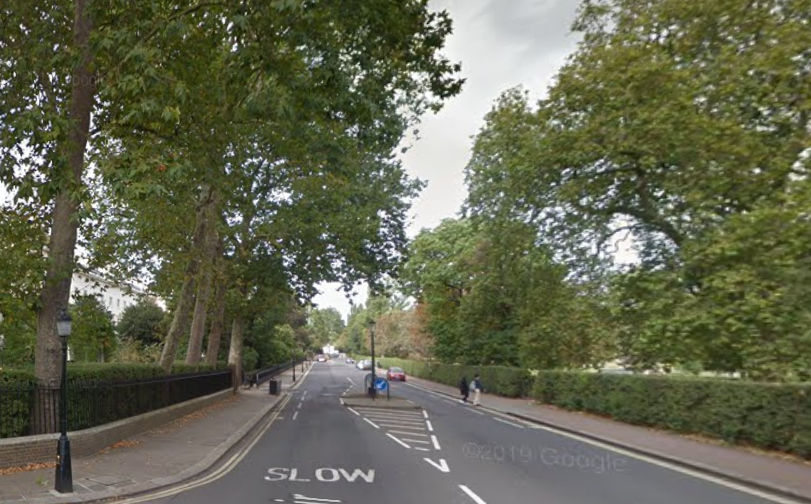
As Briggs referenced, the debate around tougher dangerous cycling laws is not a new development, even if it has attracted increased political and media attention this week following the Regent’s Park case, a coroner’s court hearing that Brian Fitzgerald had been riding at a speed of between 25mph and 29mph as he undertook laps of the park in a pace line when he hit 81-year-old Hilda Griffiths, who died from her injuries two months later.
Former Transport Secretary Grant Shapps first raised the idea of dangerous cycling laws in January 2022, before declaring his intention to introduce it again later that year during his infamous summer of backpedalling and U-turns that saw him suggest – and almost immediately retract – that cyclists should have licences, number plates, be insured, and subject to speed limits.
Last summer, it appeared that there was little chance of such a law passing due to a lack of parliamentary time before the next general election, the Department for Transport reportedly telling campaigners as much. In the autumn, Justice Minister Edward Agar said the government was still considering a dangerous cycling law “to tackle those rare instances where victims have been killed or seriously injured by irresponsible cycling behaviour”.

















43 thoughts on “Transport Secretary says tougher laws for dangerous cyclists “under review” and will be considered “with an open mind””
10…
10…
Don’t hold your breath. Time is running out for this government to give any time to spurious legislation. How much time have they got left?
9…
8…
They could promise to “stop
They could promise to “stop the scrotes” by deporting three takeaway delivery cyclists to Ruthenia? Or that if you drive to a polling station in a petrol or diesel vehicle and quote the special discount code “Sunak” they’ll sub your fuel?
Well exactly. Anything they
Well exactly. Anything they say now is hot air. They’ll all be washed away at the general election and not a moment too soon.
Miller wrote:
That’s no good. They’ll end up in the water system, and you can see what they’ve helped that to become.
“under review and will be
“under review and will be considered with an open mind” sounds very much like kicked into the long grass and won’t happen before the election.
Nice to see Good Morning
Nice to see Good Morning Britain inviting families of victims of speeding cyclists into their studio to air their views on road safety. Presumably, they are going to hire out Wembley Stadium tomorrow, so that they can invite a similar sample of the families of victims of speeding motorists to have their say too?
I think I speak for every
I think I speak for every cyclist when I say that we more than welcome being treated the same as drivers. I shall start ignoring the safety of pedestrians and when I plough into one because I couldn’t be arsed to pay any attention I will expect to have my wrist slapped. If, god forbid I kill someone I will take my punishment like a man and not cycle for a few years and start making up my excuses as I get a host of friends to testify as to my character. I’ll probably try and blame the pedestrian first obviously. Just in case there isn’t any evidence that can probe me a liar.
Its quite tragic that people genuinely believe that A) cyclists are a danger on any scale to anyone. B) That drivers are even remotely punished adequitely when they kill someone driving dangerously.
Killed a pedestrian? Just say
Killed a pedestrian? Just say the sun was in your eyes. Unless it was midnight in which case they weren’t wearing high vis. Or if they were wearing high vis, say the reflections on the high vis dazzled you.
in Scotland, you can just say that you can’t remember anything. That works for drivers
I thought it was a deer. I
I thought it was a deer. I thought it was a sack of potatoes.
This current govt are the
This current govt are the pits. They attack the homeless, the poor,the sick and the disabled. Now they’re into attacking us cyclists. There are approximately 3 deaths per year when a cyclist collided with a pedestrian. It’s three too many but it’s minuscule compared to deaths due to RTCs in 2022 thee were 1,695 fatalities with 136,002 casualties of all severities involving motor vehicles. I’d say this govt are a bunch of incompetents and aren’t fit for office.
Cycling is not a totally
Cycling is not a lawless act, because its totally lawful to kill a cyclist.
Using a bicycle is wild in this country because you get home from a day of being abused on the roads only to log on to your computer only to be confronted with even more rubbish. You read that a “dangerous cycling” law is the government’s transport priority in the same week that a pedestrian was set free on a technicality, after pushing a 77 year old cyclist into the path of a car, killing her – because if the she hadn’t died then there would have been ‘no crime’.
So people try and kill you all day long, BUT there’s no way for them to be punished for it because if you don’t die then nothing was wrong, but if you do die, then nothing would have been wrong if you had not have died. But according to the government, the law favours cyclists too much….
…right
When posted speed limits do
When posted speed limits do not apply to you under the law, you cannot, by definition, be a “speeding cyclist”.
When posted speed limits do not apply to you under the law, you cannot, by definition, be a “lawless cyclist” when exceeding the posted speed limit.
Cycling without due care and attention or reasonable consideration for other road users (Careless Cycling) is covered under Section 29 of the Road Traffic Act 1988.
Under Section 28 of the Road Traffic Act 1988, a cyclist can be charged with dangerous cycling if their cycling is far below what would be expected of a competent and careful cyclist and it would be obvious to a competent and careful cyclist that riding in that way would be dangerous.
So, there are already sufficient laws to apply to cyclists, and as most cyclists would be hard pressed in most circumstances to exceed most speed limits, and there is no possibility for a standard for bicycle speedometers that anybody would find workable, the issue is more or less irrelevant.
“People are surprised to know
“People are surprised to know that cycling is a lawless activity when it comes to the Road Traffic Act”
Did the reporters, programme makers or anyone else associated with this item bother to even look at the Road Traffic Act 1988? (see also Road Traffic Act 1991). I’m guessing that they didn’t looking paragraphs 28 to 32.
War on cyclists.
War on cyclists.
I read the piece in the telegraph (it landed in my news feed) where they blamed the cyclists riding at speed (25+ mph). Elsewhere they ridicule Wales’ 20mph speed limits and state drivers can go 25mph in 20 zones without being punished.
And whilst we have to go back to 2017 for the last pedestrian death by cyclist on average one a day are killed by cars.
“… killed by cars” or “…
“… killed by cars” or “… killed by drivers” … ?
Unless the cars were self-drriving/autonomous. Knightrider?
We would never say “… killed by a gun.”
http://rc-rg.com
“Killed with a gun” so
“Killed with a gun” so “killed with a car”
festina wrote:
.
The cyclist in the pace line
The cyclist in the pace line was cycling dangerously when considered objectively. He didn’t have full concentration on the safety of where he was going. He was essentially racing. He was more concerned about his speed and his position in the line than he should have been. He should have been charged IMO. The roads are not a race track.
“When considered objectively”
“When considered objectively” – your objective consideration being based solely on what you have read, you were not there, you have seen no video and you are disregarding the witness reports. This comment and your comments on Mrs Ward’s death would appear to show that you have a fairly hefty anti-cyclist agenda.
“I’m a cyclist myself”
“I’m a cyclist myself”
We’ve had a long gap of let’s
We’ve had a long gap of, let’s say provocateurs. Had to end sometime!
Off to my cello lesson soon.
Hirsute wrote:
Well for God’s sake take your car, don’t you go showing disrespect by turning up in those clumpy shoes with helmet hair looking like an explosion in the Decathlon aisle.
From what I have read in the
From what I have read in the press it does seem that the cyclist was essentially racing on a public road & not giving his full attention to his surroundings. That said, reports suggest that Mrs Ward stepped out without warning, which would suggest that it was solely her fault. The fact that a normal competent cyclist (or driver) might have given any pedestrian near the kerb edge more space is, I think, the point that needs to be made.
ChrisA wrote:
What do you mean by “essentially racing”? Who was the cyclist racing against and how do you know that he wasn’t giving full attention to his surroundings?
I also don’t see how paying more attention to your surroundings is going to help when a pedestrian suddenly steps off a pavement just 2m in front of you. How much space did the cyclist leave between himself and the edge of the road and how much space should he have left?
Do you understand what “without warning” means?
Do you understand what
Do you understand what “without warning” means?
Yes, but it seems to mean different things to a lot of commentators on this site depending on wether a cyclist or motorist was involved.
NotNigel wrote:
I don’t really get your point – can you be more explicit?
ChrisA wrote:
You have your cases mixed up, the unfortunate lady in this case was a Mrs Griffiths, Mrs Ward was the cyclist killed in the Auriol Grey incident. Regardless, I think there are rather too many assumptions on your part, with all respect: firstly, riding in a chain gang is not the same as racing on a public road. If they were racing and, for example, the cyclist had hit the pedestrian because he was pulling out to try and get round another rider, I would entirely agree they should be condemned, but training in a paceline is not racing. Furthermore, who is to say that he was “not giving his full attention to his surroundings”? A competent cyclist is perfectly capable of riding in a group and paying attention to the environment at the same time. As far as your point about giving pedestrians on the kerb edge more room goes, take a look at the picture of the incident location above: the lane there is approximately 2m wide with the narrowing for the pedestrian island and for all we know there may have been pedestrians on the other side as well, certainly not enough space to get more than a metre away from the kerb in either direction, given that half a cyclist is about 30 cm even a cyclist riding in the middle of the lane might not have a chance to stop for a pedestrian who is only 70 cm off their shoulder if they decide to step out without warning.
Apologies for the naming
Apologies for the naming error. This is all assumption. I am simply asking if some mitigation might have been possible; as I said below, possibly not. After all if you glance at your watch/computer or look at another hazard, or anything else, your two metres is up. But that 30cm you mention might be the difference between head on and a glancing blow; or it might not.
ChrisA wrote:
“essentially” appears, in my experience, to be a euphemism for, “I can’t prove it, but it feels a bit like…”
We don’t need to define racing through a bias-filtered retrospectoscope. The Road Traffic Act 1988 s31(1) says,
(organised exceptions apply).
If what was actually happening was a group riding in formation for training purposes, then there is no evidence that they were “racing” because s31(1) implies a competitive element.
Fast ≠ Racing
I am merely questioning
I am merely questioning whether riding in a group, whether competetive or training (one might even suggest social) might influence your road positioning/spacing and your awareness of your surroudings.
Without warning, to my mind means without any prior indication, no time involved. In this case, I think, two meters is mentioned. Allowing one second to initiate a reaction, once you notice the hazard, time is probably up.
My point was; could this have been mitigated by a change of position, speed, awareness? The answer, possibly, is no. But I think it is worth asking the question.
ChrisA wrote:
You weren’t asking a question, but making a false point:
Ok, I’m happy to rephrase
Ok, I’m happy to rephrase that – Should a normal competent cyclist (or driver) have given the pedestrian near the kerb edge more space is, I think, the question that might be asked.
Surely our aim should be to minimise these accidents, where reasonably possible. Not simply say “it wasn’t our fault”.
,
ChrisA wrote:
I’m all for looking at ways to minimise traffic collisions, but some incidents are so rare and difficult to mitigate that they’re not worth dealing with until the far more common risks are dealt with.
In this incident, the root cause as I see it was the pedestrian stepping out straight into traffic without looking. To mitigate that kind of scenario would involve something like fitting a pedestrian crossing, but even so that’s not guaranteed to make any difference as pedestrians can still step into the road without the traffic having enough time to react.
What bugs me is the number of people questioning the behaviour of the cyclist when it’s very clear that 2m is not enough time for any cyclist or driver to react and avoid the collision. The cyclist’s speed would seem to be irrelevant unless the force of the collision was the main cause of the pedestrian’s injuries as opposed to the fall being more injuring – usually it’s the fall and hitting concrete that causes more damage in cyclist-pedestrian collisions.
If we want traffic to not be travelling close to the kerb, then we’re going to have to re-design a lot of cycle lanes as that’s typically exactly where they’re positioned. We could try installing a buffer zone between all pavements and all roads, but that seems extravagantly expensive (price-wise and space-wise) just to help with traffic spotting when a pedestrian is about to enter the roadway.
It just seems to me that some people are going out of their way to blame the cyclist when it doesn’t seem appropriate in this instance.
carefulrider wrote:
Having ridden in a paceline regularly I can confidently respond that he would have had full concentration on his surroundings, looking ahead of the rider in front so that he could try to anticipate any braking being needed, he was absolutely not racing because he was not competing against his companions, they were co-operating. The people who try to illegally use the public roads as a race track are generally motorists or motorcyclists. Please save your opinions for things you have some experience of!
If you want to kill someone
If you want to kill someone and get away without going to prison and have a mediocre punishment imposed upon you, make sure the victim is riding a bicycle.
This has been demonstrated time and time again on a worryingly regular basis over the years, yet when a cyclist sadly kills a pedestrian (which thankfully is a very rare event) cyclists are the most evil people on the planet all of a sudden.
It is sad that there are such incredibly stupid people in society who fall for this baiting by the media (and others who have a vested interest in the motoring industry), the aim of which is to take the heat of the motor vehicle carnage that kills people every single day.
All the reports I’ve seen
All the reports I’ve seen/heard on this mention how many pedestrians have died after a collision with a cyclist, but none of them attribute fault, the automatic assumption being that it was the cyclist at fault. AFAIK, the data shows that pedestrians are at least as culpable as cyclists, and cyclists are at least as likely to come off worst in such collisions: but the media can’t mention anything that might show cyclists to be the victims, and the BBC doubly so.
eburtthebike wrote:
IIRC the averages were something like 60% pedestrian fault and 40% cyclist fault
This is from some time ago
This is from some time ago
STATS19 reported road casualty data between 2011-2016 confirms that during this
period there were a total of 2,491 collisions between cyclists and pedestrians
resulting in a pedestrian casualty (but not necessarily amounting to fault on the part of the cyclist):
20 resulted in a pedestrian fatality
546 resulted in a pedestrian serious injury
1,931 resulted in a pedestrian slight injury (6 of these cases were the
same collision where there was a pedestrian serious injury)
44 had two pedestrian casualties and 1 had three pedestrian casualties
For completeness, not all of these fatalities were attributed to cyclist error:
“15/20 fatalities were assigned at least one contributory factor, with 6/20 assigning a factor to the pedestrian only, 5/20 assigning a factor to both the pedestrian and the cyclist, and 4/20 assigning a factor to the cyclist only.”
Ha, ha, ha, ha, ha: a tory
Ha, ha, ha, ha, ha: a tory with an open mind.
Pedestrians killed on footway
Pedestrians killed on footway or verge, 2010 – 2020 (DfT statistics):
Motor vehicles = 383
Cyclists = 3
hmm, and which one is the
hmm, and which one is the ‘lawless’ activity?
Open mind ?
Open mind ?
Meanwhile
Meanwhile
The head of roads policing in the UK is calling for greater punishments for motoring offences to cut the number of people driving dangerously.