



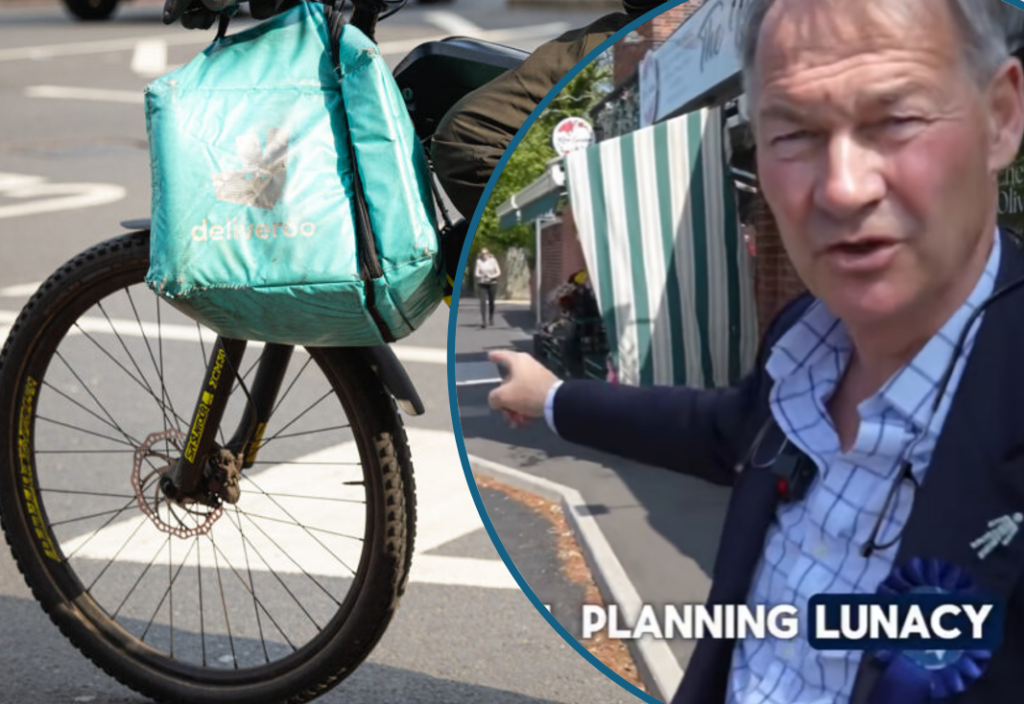
The Telegraph, which in the past year has not been shy when it comes to publishing critical and often questionable stories about cycling, has once again been accused of promoting a “nasty, culture wars” agenda against cyclists, after the newspaper’s head of money claimed this morning that “middle-aged men in Lycra earning six figures” were “shamelessly” exploiting the government’s Cycle to Work scheme to buy “fancy new toys”.
In the article, titled ‘Rich cyclists are getting brand new bikes – courtesy of you, the taxpayer’, Ben Wilkinson argued that since the Cycle to Work scheme was revamped six years ago, enabling employers to offer bikes worth over £1,000, it is now being “routinely abused by wealthy cyclists who have no intention of using their expensive gift from the taxpayer on their commute”.
Introduced in 1999, the UK government’s Cycle to Work employee benefit scheme offers a tax-friendly initiative which enables people to buy a bike and cycling accessories through salary sacrifice.
Effectively, the initiatives see employees ‘loan’ a bike from their employer tax-free, initially for a year. That loan can then be extended, with employees able to eventually buy the bike at a nominal price, calculated factoring in the bike’s depreciated value over time.
During its first 20 years, tax-free purchases using Cycle to Work were nominally capped at £1,000 (though some providers did not impose this limit and former cycling minister Michael Ellis pointed out that the £1,000 ceiling never officially existed for larger employers registered with the Financial Conduct Authority).
Nevertheless, in 2019, the Conservative government announced a revamp of the Cycle to Work scheme, making it easier for bikes worth over £1,000 to be purchased using the initiative, as part of a drive to “increase the use of e-bikes to help tackle congestion, speed up commutes, and cut travel costs”.

However, six years on, the Telegraph’s Wilkinson has called for another rethink of the scheme, arguing that “commuters simply do not need a bike worth more than £1,000”.
“The next time you see a Lycra-clad cyclist tearing through a red light, consider this: their hugely expensive bicycle was likely paid for by you, the taxpayer,” Wilkinson’s column begins.
But despite that provocative opening paragraph, the journalist maintained that “this isn’t an anti-cyclist article”.
“I own three bikes, none of which the taxpayer helped pay for. The world would be a better, and healthier place, if more of us rode bicycles,” he continued.
“Cyclists should stick to road rules like anyone else, and any suggestion that cyclists should pay road tax is moronic. Roads are maintained using money from all taxes, and vehicle excise duty is levied on emissions.
“However, there are gaping holes in this tax break that mean your money is not being spent as it should be.”
According to Wilkinson, since the cap was lifted in 2019, the cost to taxpayers has been £615m, the writer also noting a “spike in demand” for the scheme in 2020 and 2021, which he links to increased leisure time during the Covid-era lockdowns.
While admitting that more expensive e-bikes should be subject to a higher ceiling, Wilkinson argued: “There can be no justification for asking the taxpayer to give a dentist earning £200,000 a £4,200 discount on a £10,000 bike. My commuter bike cost £300 and has saved me thousands in Tube fares.”
He continued: “I suspect Whitehall and the City are full of top earners who have exploited this scheme to buy an expensive bike that they would not dare to bring into London for fear of it being stolen.
“And there’s no doubt that some have used it to drop their incomes below £100,000 so they can still continue to qualify for tax-free childcare.”
> “Unfair” Cycle to Work scheme “problems” need to be addressed, admits government minister
The financial journalist also pointed to a report published by cycling and walking charity Sustrans in September, which found that 38 per cent of people in the UK on low incomes or in unemployment (or around 1.9 million people) are currently priced out of buying a bike due to the high costs and lack of discounts available.
Sustrans noted that, in its current guise, Cycle to Work excludes anyone who would earn less than the minimum wage of £17,000 a year once the scheme’s salary deductions are taken into account, as well as those who are not in work, self-employed, or work for a non-participating employer.
The consequence of the scheme’s minimum entry point, the charity pointed out, is that just 30 per cent of people on a low income or not in employment have access to a cycle. On the other hand, data from Sustrans’ Walking and Cycling Index found that 59 per cent of people in professional occupations have access to a bike.
The report prompted Simon Lightwood, Labour’s Parliamentary Under-Secretary of State for Transport, to admit that the government “absolutely recognises” there are “problems” with the current Cycle to Work scheme.

In his article in the Telegraph today, Wilkinson concluded: “It’s a good example of a policy that came with good intentions that has been allowed to mutate into something it was never supposed to be.
“Cycle to Work should not be scrapped, but ministers should consider if taxpayer cash should really be going towards fancy new toys for middle-aged men in Lycra earning six figures.”
However, despite his insistence that his criticism of Cycle to Work didn’t amount to an “anti-cyclist article”, Wilkinson’s depiction of “Lycra-clad” cyclists “tearing through red lights” has been resoundingly criticised by cyclists on social media.
“I couldn’t read it behind the paywall, I could only see the first sentence. But as that mentioned Lycra and red lights, I knew I didn’t want or need to read any more,” Christopher Day wrote in response to the Telegraph’s story.
Referring to Wilkinson’s assertions that expensive bikes are being paid by “the taxpayer”, Adespoto said: “Because cyclists and taxpayers are distinct demographics? It’s a nasty culture-wars article from a petro-industrialist Tory shit rag.”
“‘Now, let’s be clear. This isn’t an anti-cyclist article’. It absolutely is,” added Wiebes.
Of course, as noted above, this isn’t the first time that the Telegraph has been criticised for its attitude towards cyclists.
In August, press regulator IPSO (the Independent Press Standards Organisation) ruled that the newspaper was in breach of its Editors’ Code for an inaccurate front page story claiming cyclists are riding at 52mph in London’s 20mph zones while chasing Strava segments.

The headline appeared on the newspaper’s front page last May and told readers “Lycra lout cyclists are creating death traps” and riding at 52mph in London, a bizarre claim that turned out to be the result of dodgy GPS data taken from Strava that would, if true, have meant that people are cycling through London’s streets at speeds faster than what Olympic track sprinters hit in the velodrome.
Unsurprisingly, the story was much criticised and ridiculed, Active Travel Commissioner Chris Boardman calling it “bonkers” and the IPSO receiving 96 complaints.
However, despite the IPSO’s intervention, which described the error as “significant”, many expressed frustration that the newspaper was not required to publish a front-page correction, as the regulator instead accepted that the original acknowledgement made six days after publication and hidden away in the Telegraph’s ‘Corrections and Clarifications column’ was sufficient.
But just two months after the IPSO’s intervention, the Telegraph was again accused of manipulating and blurring photos of cyclists riding at 15mph through Regent’s Park to make it look like they were travelling at faster speeds than they were, for a column titled ‘Let’s get tough on the scourge of rogue cyclists’.
And later in November, the Telegraph published information from a “dossier of collision data” from The Royal Parks in London and claimed it revealed “the full threat posed to pedestrians by dangerous and illegal cycling in the country’s most famous parks”.
In the article, titled ‘How rogue cyclists in London’s parks have knocked down children and the elderly’, the Telegraph published information from the dossier and said it referenced “speeding” and “aggressive” cyclists being involved in hit and runs, ignoring zebra crossings, travelling on illegal bikes, and hitting pedestrians so hard they are “catapulted into the air”.







118 thoughts on “Telegraph claims “rich, Lycra-clad cyclists tearing through red lights” are riding “hugely expensive” bikes paid for by taxpayer in “nasty” tirade against Cycle to Work scheme”
He does have a point. I have
He does have a point. I have often pointed out that C2W is regressive in that low earners are not entitled and high earners save more than standard rate tax payers.
I agree with your point. And
I agree with your point. And he does mention that cyclists contribute through vat & income tax (although he should mention that around 80 percent of cyclists also own a car). It just annoys me that any article about cycling in the Torygraph, has to be tempered with phrases such as “Lycra clad”, “Tearing through red lights”
If those key phrases weren’t
If those key phrases weren’t included:
A. No-one would read it
B. The article wouldn’t show up on search engines.
Of course, the writer could just be a cocksocket.
Disgraceful. Something must
Disgraceful. Something must be done. Maybe forcing cyclists to pay income tax and VAT, so that they are paying their share in funding this ludicrous loophole would be a start.
It seems unfair that many cyclists are automatically paid a 6 figure salary.
“Next time you see a driver
“Next time you see a driver fly through a red light, think about the fact they could be uninsured, untaxed, unlicensed and are costing you thousands a year in the costs to maintain our roads and in the health costs associated with pollution and the poor health of the population. Now this isn’t an anti-driver rant, I myself drive a car….”
Hes not wrong that plenty of people take advantage of this tax break to buy themseves nice new bikes that never see a commute. And thats absolutely fine. These people are likely far fitter and healthier than their non-cycling counterparts and likely wouldn’t buy that bike in first place without the tax break. All putting money into the economy and saving the NHS money due to their better health.
People stick money into their pensions to avoid losing child tax benefits as well. This is nothing new. I would place a large wager that if you worked out the cost to the treasury of people getting a tax break from cycle to work vs the reduced cost the people using it burden the NHS with (along with all the other benefits to the economy like reduced illness, time off work less pollution etc) then they could probably give away these £10k bikes and still be ahead.
Personally I don’t like a large chunk of my taxes going to look after people who take zero care of themselves and would happily drive from their living room to their kitchen if they could. The people who will cost the NHS a smidge over a few thousand pounds due to all their long term health issues we are all on the hook for.
If it’s not an ‘anti cyclist
If it’s not an ‘anti cyclist tirade’ then why the bollocks about lycra clad red light jumpers? I do agree that anyone earning enough to pay 40% tax is not in need of government subsidy to buy a bike. You could spend the money saved on secure bike parking, the lack of which is one of the biggest obstacles to cycle commuting and utility cycling in general.
Yep it’s certainly the reason
Yep it’s certainly the reason I’m riding an sworks, but i don’t see how it’s any different to other tax breaks, such as pension tax free allowance.
Pension tax relief does
Pension tax relief does disproportionately benefit higher rate tax payers to the tune of up to 60K pa but it’s a carrot to reduce state pension reliance which is a net benefit to the tax payer in the long run (especially considering income tax is charged on pensions taken other than the 25% tax free).
You could argue that tax relief on bikes makes the nation healthier (true imo) but it would be true for £1000 bikes as much as £10K.
So on the whole, the gist of the DT piece is, I think, correct. But I doubt closing it would raise significant revenue – however, it might bring down the price of top end road bikes which have risen to ludicrous levels for reasons of which I am 100% certain this is one (knowing a few who have taken advantage).
To be fair, I know loads of
To be fair, I know loads of people who’ve bought bikes on the cycle to work scheme who never had any intention of riding them to work. They all work from home for a start.
bensynnock wrote:
I fully intended to, I just haven’t quite done it yet due to Fear of Theft.
I haven’t used mine yet due
I haven’t used mine yet due to fear of being hit by another vehicle, breathing in fumes, falling off the bike, getting soaked in a sudden downpour and getting attacked by a random assailant..
Better stay indoors then, as
Better stay indoors then, as around 40 pedestrians killed on the footway every year in the UK and around 28,000 killed or seriously injured on UK roads every year, most of whom were vehicle occupants.
Mind you, I believe that many, if not most, injuries that end up needing a visit to A&E happen in the home or garden, so I’m sorry to say you’re stuffed.
And I should add that a
Thought I’d delete that.
My wife is ’employed’ by the
My wife is ’employed’ by the management company I own to manage our rental properties – her Trek Domane is 5 years old now so perhaps I should look to get her a newer, faster bike. (Tongue in cheek in case it’s not clear!)
Although, as she is over 20kg lighter than me and drops me uphill, maybe that’s not such a good idea. Do lead weights count as accessories?? 😅
Hmm… 20kg is going to be
Hmm… 20kg is going to be hard to make up. Was going to suggest getting her a recumbent (you can sell it as “comfort” and “easier to maintain the same speed on the flat”) but while generally heavier they’re not that much… unless you got her a velomobile? (You can drop quite a few grand on those).
But then you’ll just get dropped going downhill.
Perhaps a tandem?
A tandem might work if it was
A tandem might work if it was specially made so that she was at the front. Realistically, I’d probably enjoy staring at her bum more than she would staring at mine 😉
I never had a bike on cycle
I never had a bike on cycle to work because I commuted in my company car.
Company cars are either used
Company cars are either used for work, like mine is, or are part of the employees remuneration, unlike the cycle to work scheme..
If it’s part of the employee
If a company car is part of the employee’s remuneration and not used for work, just commuting, then it’s a perk, albeit a taxable one, though it’s still a lot cheaper than the employee funding it themselves. Much like the C2W scheme there is no obligation to commute in it.
Whilst the employee isn’t paying company car tax they still have to pay a monthly fee to use it and don’t own it, the fee being deducted from their gross salary just like CC tax. So it’s essentially the same, except favouring a much more environmentally friendly and sustainable method of transport.
Salary sacrifice is available
Salary sacrifice is available for cars too (albeit electric). The big differences are that you don’t need to use the car for work/commute but there is an annual tax charge (benefit in kind) for it (income tax & NIC based on the value of the car x 2% rising to 5% by 2028).
https://www.loveelectric.cars/blog/electric-car-salary-sacrifice-a-guide-to-tax-bracket-savings
I know a number a sales
I know a number a sales people that had hybrid cars and actually never charged the battery, just to pay less tax. Wait until the Torygraph find out about that.
I retired 20 years ago! The
I retired 20 years ago! The car was taxed as benefit in kind but it was a lot cheaper than running my own car.
Colleagues used to moan about the tax, but none of them refused the car.
Personally I wish road.cc
Personally I wish road.cc wouldn’t give the Telegraph any publicity but the value of knowing what the enemy is thinking shouldn’t be underestimated
Are you implying that road.cc
Are you implying that road.cc treats the Telegraph as the enemy? is that why the phrase ‘Tory shit rag’ is quoted in the article? my, my, I suppose the Guardian only publishes unvarnished truth and isn’t a resting home for socialist anarchists..
grOg wrote:
Feel free to post some examples of the Grauniad posting lies if you wish to give your point some credence.
Not wishing to open that old
Not wishing to open that old can of worms again, but the Grauniad openly admitted in their own article before the 2016 referendum that their coverage of the leave campaign, or at least people saying they would vote leave, was unfair, biased and did a dis-service to those who had genuine reasons for doing so rather than them all being racist bigots.
OK, not an example of an outright lie, but certainly guilty of embellishing the truth or ignoring painful facts to suit the narrative.
PS for the avoidance of doubt I have been on 2 of the Rejoin marches in London, but appreciate that some people feel strongly about the EU’s faults, which do exist.
Jakrayan wrote:
They’re definitely biased which shows in their selection of stories to report on (and the prominence of those articles) and also their choice of titles. However, they’re pretty good on the factual side of things, which is why it’s unfair to compare them to the Torygraph which frequently makes up entire stories out of nothing.
I’m not a particular fan of The Gurnaaid – I find their opinion pieces annoying and I don’t agree with most of their film/music reviews. However, their reporting on bikes/cars/traffic seems to be far less biased than e.g. the BBC
e.g.
https://www.theguardian.com/world/2025/mar/22/wales-20mph-speed-limit-cut-road-deaths-why-debate
So if, for example, a Daily
So if, for example, a Daily Telegraph employee makes AVC contributions into their is this being paid for by Tax Payers. What about if a television presenter buys farm land as a means of avoiding inheritance tax?
Of course, I think reducing Vat on cycles would be a fairer means of encouraging people to make the right decision and get cycling.
The Telegraph wants rich
The Telegraph wants rich people to pay more tax?
Think I need to go and have a lie down.
Tom_77 wrote:
They just want the other rich people to pay more tax. Not all rich people.
Has anyone on here introduced
Has anyone on here introduced a C2W scheme at their own company if a business owner, or at their employer?
I’m keen to make a case for it at my workplace, but want to get my story straight in terms of admin load and cost.
Yes, I have put one in place
Yes, I have put one in place (in fact one at two different places). Very straightforward. Is actually cashflow (and cost positive) for the employer – basically from your point of view you sacrifice salary and save income tax and NI on that sacrificed salary – the same is true for your employer: they save NI on the salary you sacrifice. Win win.
Also – say your employer is
Also – say your employer is small they may want to look into a financed scheme – the company will get the voucher issued to you and then pay in instalments (obviously interest on top) but that interest is less than the NI savings for the company.
Thanks, I’ll ask the finance
Thanks, I’ll ask the finance controller to see if our payroll outsourcer might even have a scheme in place we could use.
PRSboy wrote:
If there’s no scheme in place, and your finance controller agrees, you could use Instant GCI – no need for employer to sign up, simply fill in the form online, and your company is sent a proforma invoice. One this is paid, your collection voucher is emailed directly to you. Take that to the bike shop with photo ID and you can ride away (having previously arranged with the shop to take the voucher of course).
https://www.greencommuteinitiative.uk/instant-quotes/
From the company point of view, the only admin overhead is the deduction on your payslip, which is no more onerous that any other, e.g. pension, student loan, CSA, etc.
If the company wishes to retain cash in the business and would prefer to finance the proforma payment, GCI can arrange this with the interest compensated for by the NI saving.
How does the Torygraph feel
How does the Torygraph feel about every single taxpayer in the country subsidising the cost of petrol/diesel, regardless of the wealth of the motorist in question?
No, no, no! We’ve explained
No, no, no! We’ve explained it to you countless times – the cost of petrol on an open market would be a fraction of what we pay now were it not for the imposition of a regressive tax and the freezing of the “escalator” is merely a ruse of the government to hide the fact there’s a war on the motorist, because motorist taxes more than cover the cost of the road budget and in fact driving literally drives the economy making us all richer, healthier and life better than it was in a cave which some people want to drag us back to because of some woke agenda or pulling up the ladder behind them but at any rate keeping everyone miserable and … (continues for another 94p per gallon)
“this isn’t an anti-cyclist
“this isn’t an anti-cyclist article”.
Putin is a peaceful, benign leader.
The earth is flat.
Liz Truss was our best PM.
eburtthebike wrote:
It’s a “special investigation”.
“this isn’t an anti-cyclist
“this isn’t an anti-cyclist article”
The Earth isn’t flat?? Damn,
The Earth isn’t flat?? Damn, what happened to the ice wall, did climate change melt it? 😉😁
The earth isn’t flat.
Except, the earth isn’t flat.
It’s a cube.
I’m a tax payer. I bought my
I’m a tax payer. I bought my own bike. Therefore, my bike was funded by a tax payer! Politicians, of whatever colour, are experts at manipulating information/data.
I’d love to read a Guardian
I’d love to read a Guardian article critical of (whatever Telgraph staff hold dear to their hearts) bereft of facts just to see if they suddenly care about reality. Ha!
Torygraph journo in “makes a
Torygraph journo in “makes a couple of valid points in but in a fashion designed to stoke a culture war to sell more of his filthy rag” shock.
Lets be honest if he had a jot of integrity or a moral compass he wouldnt be writing for that rag.
Id be quite happy to see RTW capped at £1500 for a pushbike and £3-4k for an ebike but I can do that without making irrelevant points about who rides them and what they wear.
Absolutely disgusting article
Absolutely disgusting article!
As the Government announces plans to reform the unsustainable burden of benefits increasing at an unprecedented rate (paid by tax payers) this lame excuse for a journalist chooses to…..
Focus on a largely unclaimed tax relief incentive for bicycle use!
Bizarre, perhaps some comparison of tax relief and tax deductable depreciation on ICE motor vehicles may have assisted but obviously that would completely destroy his wafer thin point entirely???
8 years ago, as a self
8 years ago, as a self-employed sole trader, I bought a brand new BMW i8 which, at the time, qualified for 100% extended capital allowances on its full purchase price, excluding options, being a PHEV. Probably not what the scheme was aimed at, but it means I’m the last person who would ever criticise a rich city trader for buying, for example, a Pinarello Dogma F with Campagnolo Super Record Wireless 😁😁
TBH it’s not a great way of
TBH it’s not a great way of subsidising bikes as it provides the biggest subsidies to those on the highest incomes, who need them the least. It’s also open to abuse, because many people buy bikes that they never actually intend to ride to work on.
Just because it was published in the Telegraph with a clickbait headline and a few anti-cycling bingo lines doesn’t mean the argument is wrong.
Absolutely, and I kind of
Absolutely, and I kind of agree C2W is a square peg trying to fit a round hole of a scheme.
But we can have that debate without resorting to name calling or outgrouping a bunch of people, why can’t a supposedly serious journalist in a broadsheet newspaper not do the same ?
Looking at some of the other
Looking at some of the other posts on the article, I’m not sure that we can have this debate without name calling!
With you. A straightforward
With you. A straightforward way to reduce the price* of cycling for everyone, that might work for local bike shops as well as Halfords, would be to make bikes VAT exempt, up to some cost threshold. So I have never understood the hoop-jumping of C2W unless the intention is to provide tax avoidance for higher earners and extra custom for bigger businesses.
*Ok, it is possible that suppliers would feel confident in raising exc. VAT prices or offering only higher spec stuff, but that is equally true of C2W.
On the other hand, if your
On the other hand, if your primary concern was reducing the unfairnesses of tax-efficient schemes that bring the biggest benefits to those that need them least, you probably wouldn’t start with the Cycle to Work scheme.
I talked to my boss about C2W
I talked to my boss about C2W when I was looking to buy my commuter/ winter/ gravel bike. In the end I didn’t follow through because it effectivelt ties you into buying new stuff all from a single source. In the end I bought a BNIB frame from ebay (40% off list price), Fulcrum wheels at 50% off from CRC who were desperate for cash flow, with most of the rest being bits I already had on other bikes.
I know my sister in law has used C2W for a couple of her jobs, getting £400 hybrids that then get nicked
Of course what would be
Of course what would be hilarious if someone were to go check the Telegraph Media Groups job benefits
https://careers.telegraph.co.uk/what-we-offer
And spotted they run a cycle to work scheme
Does it state what the limit
Does it state what the limit is? Maybe the journo could get a shiny new carbon steed and some lycra, get to the office faster so he can have an extra 5 minutes in bed and not be such a nob.
Wilkinson is such a polished
Wilkinson is such a polished nob no amount of sleep could undo his track record of rabid hate articles. Our hope is his sedentary lifestyle catches up with him sooner than later.
polainm wrote:
I wonder are you always quite so rude about working class white people and journalists you disagree with? Typical Grauniad reader, Private eye shows you “liberal” hypocrites for what you really are!
So a financial journalist
So a financial journalist working for a paper that expends 90% of it’s financial advice effort telling people how to avoid tax and yet he doesn’t take advantage of one of the easiest tax breaks available to him, one that’s even highlighted as a benefit by his employer.
He is either a saint happy to pay more tax to support his principled stand or incompetent at giving financial advice. Either way, he probably should look for another job as he can’t be long for the DT.
Also the paper that has been
Also the paper that has been wailing constantly since the last election about the prospect of people who send their children to public and private schools having to pay VAT on the services they buy just like everybody else.
The Toryarse Paper isn’t
The Toryarse Paper isn’t interested in quality accurate ‘reporting’. Like most so-called ‘news’ it’s a sewer of rabid click bait sound bites overstepping the mark of common decency and trashing the term ‘journalism’.
Hacks never let truth/facts
Hacks never let truth/facts get in the way of whipping up hatred to increase click throughs.
Ben Wilkinson is an utter can
Ben Wilkinson is an utter can’t. He can’t grasp the damage his toxic vitriol does, nor does he care. Like many arrogant hacks his objective is click bait; at any cost. So much of his feeble mind has raced through Gammon Bingo he must be having a competition with the Daily Fail for mass hate speech of the month. THIS is why I spend many months a year cycling in Europe. The UK is by far the most hateful, spiteful, ignorant culture I’ve known, towards anyone who is riding a bicycle. We have to thank decades of pro-driver governments who have reinforced this narrative to the point where drivers can kill & maim people on bicycles and it barely makes the news. News scribbled by hacks like Ben the can’t.
He does, its about engagement
He does, its about engagement with this type of writing, doesn’t matter what kind of engagement – the more hate the better.
I fail to understand – as
I fail to understand – as does Chris Boardman – why this level of hate speech towards anyone using a bicycle is legal and acceptable, yet posting criticism of race/religion/sex on Farcebook gets a visit from armed tactical police in minutes. Is it because as a nation, we are mostly Elon supporters pining for our own Cybertruck and goosestepping leader?
To be fair to the UK not
To be fair to the UK not everywhere is like that. I went for a 5 hour ride in Cornwall yesterday, making the most of the weather. Absolutely stunning scenery, quiet (mostly) well-surfaced roads and not a single close pass, many went right over to the opposite lane where they could. In addition, many pulled in and waited for me in narrow roads or thanked me if I did the same when I was close to a wider point.
Bliss 😊 Though the tough wind and 16% climbs weren’t so much fun!
To be fair, most of the SE,
To be fair, most of the SE, London, SW, and Midlands is a racetrack of Range Rover can’ts without any policing, and the police are mostly as bad. So in Cornwall you’re probably OK. The Highlands also great, just the weather/midges a bit grim sometimes.
However for me, Austrian Tyrol mountains can’t be beat. Better single track road surfaces at 3,000m than the best in the UK. Only drivers with UK plates are d1ckheads out there, with Italian and Belgian drivers not great either.
Germans/Austrians/French shout encouragement on the mountain climbs where the English would throw a used drink can at you….
polainm wrote:
Cornwall from mid April till late September is terrible especially Friday to Monday.
When London comes west!
polainm wrote:
Gammon? Would you use a similar term to describe someone Asian or carribean
decent?
You should read Paul Emburys excellent book Despised why the modern left loathe the working class ! It describes you to a tee! Typical Grauniad reader
Stephankernow wrote:
Well obviously it wouldn’t be used if they were decent…this has been done to death by the right wing desperate to claim some form of victimhood: “gammon” is not racist because it does not insult a race, it describes a particular type of middle-aged, middle class white male with a florid complexion (generally the result of too many double brandies at the 19th hole) who wattles up furiously at the mention of the EU, feminism, homosexuality, or anything else he regards as “woke”. A physical characteristic resulting from overindulgence is not a racial characteristic and therefore it is not a racist term. You’re quite at liberty to find it offensive – it’s meant to be – but suggesting that it’s racist is simply foolish. It’s rather amusing that the accusation of racism generally comes from those who scream “political correctness gone mad” the second any attempt is made to deal with genuine racism.
Devil’s advocate for a moment
Devil’s advocate for a moment – but it would seem to be somewhat racially related. Can’t recall it being applied to people of other ethnicities.
But … perhaps that’s because – in the UK at least – the number of men of a certain age * who have the confidence to emote in the expectation the world will agree with or care about their opinions and the prominence for them to carry far are probably not terribly racially diverse. Exceptions? The late Mr. Fayed of Harrods, perhaps?
Of course globally there are no shortage of people of all ethnicities with opinions that would make people on the fringes of Reform look meek.
* They mostly seem to be those – though again as the internet shows there are some gleeful younger haters making a living from the disaffected.
chrisonabike wrote:
Well, because people of other ethnicities don’t display the same characteristic, but then neither do the majority of people of white ethnicity. It’s a facial characteristic brought about, in the majority of cases, by a particular unhealthy lifestyle. To be racism it would have to be antagonism or discrimination based on a characteristic inherent to their race or ethnicity, which it clearly isn’t.
What an idiot. Most or at
What an idiot. Most or at least some of the companies that offer cycle to work will also offer car schemes from companies like octopus. So instead of 2 wheels you get 4 and pay for this out of your salary pre tax. Is this not hugely expensive cars paid for by the taxpayer?
Have to say I agree with the
Have to say I agree with the article but not how it’s written. The country needs people to pay their fair share and salary sacrifice is robbing the state of funds. The scheme should be available to the lower paid or a tax reduction on cheaper machines.
It was only recently there was an article about the rising cost of cycling. Surprisingly this may be due to the C2w scheme as other similar government funded schemes only seem to line the pockets of the suppliers.
I was talking to a fund manager at the gym and he said his firm allowed a max of £12k for a bike and equipment. This is just giving rich people the opportunity to cut costs at the taxpayers expense. My current employer is offering £5k which is bonkers too.
By all means help out the lower paid workers with a bike but those of us who earn more can afford to pay. Don’t even get me onto the subject of salary sacrifice cars….. What a joke.
Exactly.
Exactly.
A decent Ebike, lights,
A decent Ebike, lights, clothing, helmet, arguably cameras if you’re commuting, a decent lock etc and you won’t have a huge chunk of change from £5k. Agree that £12k is extracting the liquid waste product, though.
This isn’t ‘robbing the state
This isn’t ‘robbing the state of funds’ because successive UK governments have MASSIVELY misspent tax £s and not dealt with corporate giants avoiding reasonable taxation nor private utilities raping the public for every penny to support massive bonuses for (eg) running Thames Water into the ground.
A single dual carriageway roundabout in Bedford has cost £1.2bn, to facilitate the baying drivers a time saving of a few minutes.
My wife effectively pays 52% income tax because of the bonkers tax trap that takes place removing the personal tax allowance completely, removes all benefits of any kind, except salary sacrifice and pension allowance.
Yes, she bought a £6k eBike so she can ride with me, and yes, she saved a few £100s. She would be paying £98,800 in income tax a year to an incompetent series of governments to spiff it on more roads, bogus PPE, MPs benefits, and propping up failed privatised infrastructure.
Far better for ‘her’ tax to be spent ‘on herself’ on a healthy activity than on a salary sacrifice PCP on a Wankpanzer 500 turbo.
If you’re a dentist earning
If you’re a dentist earning £200000, you’ll be paying about £83000 a year in tax, I’ll sleep ok if they’re getting 4 of that back on a bike
More than that, because that
More than that, because that £200,000 income removes their tax allowance. Effectively making it 52% tax, to be handed to Thames Water directors.
polainm wrote:
I think it’s worth pointing out that (as many people don’t seem to realise) around 60% of income tax revenue comes from the top 10% of earners, and you only have to earn around £65k per annum to be in that top 10%. So yeah, a tax break to buy a salary sacrifice bike which (assuming it gets ridden) will contribute to overall fitness and good health isn’t necessarily a bad thing, and definitely not depriving the exchequer of funds, particularly as VAT on the bike is still paid. These notional £10k bikes with £4200 “discount”, given the reduction in net pay, aren’t being bought by people at the lower end of the salary scale. If anyone is buying these, they’re already paying large amounts of money in tax.
Personally I don’t have a problem with paying the tax I’m required to, my two children went through a state funded education, my wife works in the public sector (teacher in a state school), and we all need the NHS & other services to be paid for. But when it came to buying an ebike so I could leave the van at home on office days, I didn’t think twice about getting through a C2W scheme.
https://articles.obr.uk/income-tax-and-the-earnings-distribution/index.html
https://www.ons.gov.uk/employmentandlabourmarket/peopleinwork/earningsandworkinghours/bulletins/earningsandemploymentfrompayasyouearnrealtimeinformationuk/march2024
Never mind 52 mph: I briefly
Never mind 52 mph: I briefly managed 602,913 km/h.
Only 3 x kudos? I suppose you
Only 3 x kudos? I suppose you were only riding for 10 seconds 😂
Please send me your aero
Please send me your aero position and bike kit tips.
They were using L-shaped
They were using L-shaped cranks.
Well…
Well…
He’s right on the system being totally abused. At the beginning their was an upward limit of £1000 of the amount you could finance with the scheme. Now a days plenty of my cycling friend buy fancy bikes with it but you won’t see any of these bikes on your commute. They still use the train or worse, drive to work while their bike is only for weekend rides.
You can barely buy a bike
You can barely buy a bike worth riding for £1000.
thats rubbish, I got a
thats rubbish, I got a perfect hybrid commute bike for under 500quid last year, big brand manufacturer, hydraulic disc brakes.
your next bike doesnt have to be made of carbon or have electric gear change
Nonsense. I’m looking at
Nonsense. I’m looking at replacing my road bike once I’m back in the saddle (fell off on diesel and ended up with a hip replacement) and my budget is around £800. There are loads of perfectly good bikes within that range. Attitudes like this (like the comparable ‘can’t get a playable guitar under £1000’, ‘can’t get a decent camera under £3000’) just make people think they can’t afford to cycle.
Well said – slightly above
Well said – slightly above your budget but the Triban RC520 with Shimano 105 at £899 is as much bike as 90% of riders are really ever going to need and there are plenty of other lovely bikes still in three figures.
even when the limit was there
even when the limit was there, & note some schemes still enforce it, there was probably as much abuse of the setup, ie people just buying bikes and not using them to commute, as there is now, I remember some of the guidance we got when our scheme started that TT bars were not acceptable accessories to add to the bike
stonojnr wrote:
If someone wants a bike for commuting that they can also use on their weekend triathlons and is using their commute as training, why not? The logical extension of that would be to say no road bikes, flat bar hybrids only.
More anti-cycling bigotry
More anti-cycling bigotry from The Telegraph.
Perhaps Mr Wikinson would write an article about the social cost of cycling vs motoring. Spoiler alert – motoring is heavily subsidized by all the taxpayers.
that “commuters simply do not
that “commuters simply do not need a bike worth more than £1,000”.
what?? He should see the cars that drop the kids off at the private schools round my way. The wheel rims cost at least £1000 each. And the cars are the size of a small house. And they clog up all the roads. And they pollute.
Nothing in your little rant
Nothing in your little rant addresses the fact that commuters simply do not need a bike worth more than £1,000. C2W is a nonsense scheme. I worked at a large London firm and the overriding use of it was the weathly getting a part free very expensive bike they didn’t use for commuting ever, courtesy of the tax payer, and laughing at the idiocy of the scheme.
People don’t ‘need’ the big
People don’t ‘need’ the big expensive cars either, but people like nice things.
The point of C2W isn’t to cover a ‘need’ at all, it’s to encourage a change in behaviour, and offering well-paid people a trivial discount on a cheap bike isn’t going to do that.
Except they do – I used the
Except they do – I used the cycle to work scheme to buy an e-bike bike priced at £1100 (very much at the lower end of the usual price range for an e-bike) and it has been transformational for me. I cycle a 16 mile round trip into work, in an area with steep hills, and use it day-to-day for shopping in my local town centre. I have been able to get rid of my car. I couldn’t do that on a standard bike. Btw my salary is in the mid 30s.
Which makes the case
Which makes the case perfectly for a sensible limit on the price of the C2W bike, and the relief on it. No one on north of £100K a year needs to be able to buy an expotic carbon bike a £8K+ with a juicy tax break attached. It’s insane.
But why worry if a few people
But why worry if a few people do? It’s just not a big deal.
And it’s still serving an overall goal of getting more bikes sold and ridden – the C2W scheme isn’t attempting to solve a problem of workers being unable to get to work, it’s trying to encourage cycling.
And making the scheme more complicated, more limited, having to check what people are buying with it, or having to means-test it all adds to the costs, and it’s often the case that making tax reliefs or benefits more tightly targetted winds up wasting more on admin than it saves.
More complexity for everyone just to avoid the handful of people who are in the market for a £10k superbike anyway is real sledgehammer/nut stuff – it’s just not sensible policy.
Simplicity goes a long way.
Simplicity goes a long way. Means testing will make it expensive to administer and ultimately defeats the purpose in the same way that the Torygraph’s demand for bike registration plates would. Yes there’s some abuse almost certainly, but I’m sure the cost/benefit analysis has shown good outcomes overall (healthier populus, modal shift….)
Our system in Ireland is slightly different in that the amount allowable under the scheme is capped at €1250 for a normal bike and €1500 for an e-bike every 4 years. That doesn’t limit what you can spend – if you want to buy an SL-8 you can pay the excess directly to the shop yourself at the time of purchase.
Because its probably not just
Because its probably not just a few people doing it.
https://www.theguardian.com
https://www.theguardian.com/lifeandstyle/2022/aug/30/why-do-some-people-hate-cyclists-so-much
Successive governments’ lack of engagement on this sends a clear enough signal.
I never thought I would ever
I never thought I would ever see myself agreeing with the editorial stance of the Telegraph, bit I’m afraid here they have a very valid point. Simply, the scheme is being abused by being taken advantage of by buyers using it to access expensive bicycles. It would be naive of government not to recognise the fact.
My bigger beef though is with the excessive commission charges the scheme operators are charging bike shops for administering the process. This can be up to 15% of the gross (i.e. the fee includes the vat content of the bike) cost of the bike. So, the scheme operator will take up to £150 on the sale of a £1000 bicycle, which accounts for approximately 50% of the retailer’s profit. This is simply unfair and I am sure led to the demise of some independent stores who have relied heavily on their BTW sales. Halfords commission charges are probably the worst.
The ACT seem to have gone very quiet on the subject. Surely, their purpose is to protect their member’s interests and in this case it is to constantly lobby the government for a wholesale review of how the scheme is administered, because at the moment it simply is not fair to retailers.
The place I got my new bike
The place I got my new bike from on a C2W scheme were quite open about that and said that while they’re more than happy to sell a bike being paid for on such a scheme, they would charge an extra £150 to cover the scheme fees. Given that they were explaining where the extra charge had come from, I was fine with paying it.
brooksby wrote:
Most, if not all, scheme providers make it clear in their T&Cs that retailers are not allowed to surcharge to cover their scheme commission with the threat of exclusion.
rivitman wrote:
A bike shop is under no obligation to sell a bike if they don’t want to. If the deal doesn’t work, the shop can say no. In my experience, many bike shops like the GCI scheme as it’s 5% commission, and more than one LBS has remarked that it’s bike scheme sales that keep the lights on during winter & spring months.
If the scheme didn’t work for the retailers as you seem to think in the 26 years since it was introduced by Tony Blair’s Labour government in 1999, then they would have all abstained or gone out of business by now.
mark1a]
The fact is that many have who have relied on the extra business BTW brings in but then find they cannot cover their overhead with significantly reduced gross margins.
I appreciate that other factors have conspired to make the viability of independent bike shops questionable, but BTW commission charges hasn’t helped.
If he had just said that the
If he had just said that the Cycle to Work scheme ain’t fit for purpose, he would’ve been right. Rip-offs by the scheme operators; no scheme for the self-employed; bigger benefits to those paying the most tax. It needs an overhaul.
How about this for negative
How about this for negative stereotyping :
“Beige, elasticated waist trouser-clad Daily Telegraph reader, wearing brown shoes that look like Tesco Cornish Pasties and a blue and yellow rainproof jacket, ambles slowly across pelican crossing on the way to the Conservative Club.
My workplace is a one of the
My workplace is a one of the biggest users of the c2w scheme in our city, and I can tell you now that this article in no way reflects the nature of those using it. Most of those who use it now are in the 18-40 age range. Older cyclists like me are riding bikes they bought years ago such as my 20 year-old Dawes Karakum. Furthermore, no-one turns up in lycra. It’s either ordinary clothing or shorts/tracksuit bottoms/baggies with a t-shirt and cycling jacket and keep a change of clothes in work.
This is nothing more than a Tory rag doing it’s usual scapegoating trick. It’s either minorities, asylum seekers or cyclists. Reminds me of a story I heard of a Rabbi in Czarist Russia who was confronted by a drunken Cossack. “The whole worlds in a mess!” he shouted “and it’s all the Jews’ fault!” “And the cyclists” The Rabbi replied. “Why the cyclists?” asked the Cossack, puzzled at his reply. “Why the Jews?” the Rabbi replied.
This just highlights one of
This just highlights one of the things I hate about modern UK journalism to its absoloute core.
Of course you will get a tiny minority who figure out a way to exploit a perk or subsidy. It happens all over the place. Sure there are people who commit welfare fraud, or tax avoidance etc etc, they are the few who are sensationalised and the fact that the service is used by millions fairly and honestly are painted as all being a bunch of criminals or scroungers etc. Askthis same journalist about financial perks given to MPs or bankers, lawyers etc who earn well over the median and what they think about it, they will most likely shrug and ignore it. I couldnt care less if 1 or 2 rich people abuse the system to get themselves a shiny new bike costing 5 figures, I care that for every one of them, there are thousands of others who get a bike for a modest sum that makes a world of difference to their lives.
Regardless of the
Regardless of the gratuitously nasty tone which of course is typical of the Telegraph, Wilkinson has a point about the tax relief situation in question.
Yes, you can effectively buy yourself a £10K Pinarello with £4200 off the price if you’re a higher rate taxpayer. And that’s pretty obscene imo.
The easy way around that would be to make the tax relief a fixed rate of 20%, and to also introduce a cap over which you receive no tax relief. Say, £3K?
And then the govt could perhaps even find a way of using the saved money to assist low paid workers in buying a modest bike to commute on.
The current system is simply too blunt an instrument.
Don’t you mean with 4,200 off
Don’t you mean with 4,200 off the price rather than 420?
I did indeed!
I did indeed! 🤦♂️
Corrected now, thank you.
You can also get an electric
You can also get an electric company car and get what, ~1/3-2/5 off the lease costs…
Which is more than the £4200 saving discussed above…
Bike saving is over 5 years. Company car is in a year (and continues…)
Raising the maximum price
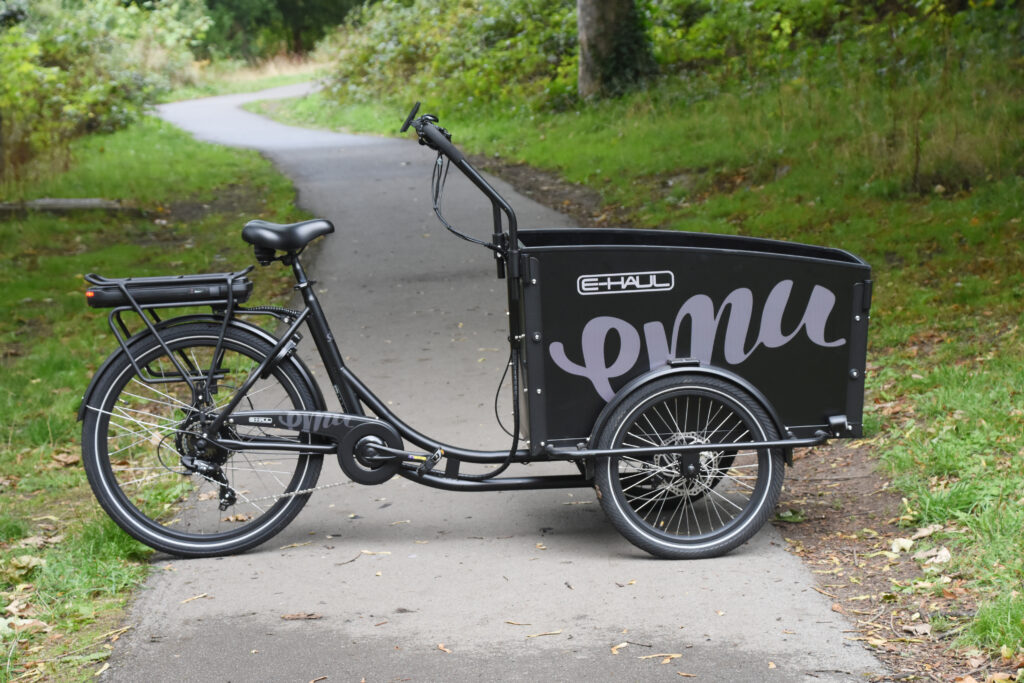
Raising the maximum price limit a few years ago may be providing an avenue for abuse but I now see more and more parents delivering their children to nurseries and schools in cargo bikes of various descriptions before work, those cost considerably more than the old £1000 limit. Perhaps rather than the middleman heavy current system we should just allow zero VAT rates on such bikes.
I wanted to respond to the
I wanted to respond to the article thanking him personally for susbsidising not only the 4 bikes we have bought on the CTW scheme but also for personally paying for the multiple gold-plated, risk-free, constantly inflating DB pensions we have coming into payment over the next few years.
To also explain how we were really looking forward to having a choice of expensive machines, (bestowed with various unecesasary gadgets, widgets and bling covered by CTW to ensure we got maximum benefit) to ride as we put on our sharp lycra before going out onto the public highway riding two abreast and dominating the middle of the road, ensuring none shall pass.
And also ensuring he was aware that we would be pullling up at the trendy cafe after only a few miles to sit outside smugly admiring our achievements as we sip soya lattes and eat carrot cake, or parhaps as we feel like splurging a bit maybe lime and pistachio cake, toasting the travails of Mr Wilkinson esq for his personal contriubtion to our wonderful life and his efforts to incite his intellectually challanged readers into a frenzy of spittle. My how we chuckle
But I couldn”t be arsed setting up an account!
Who actually cares if “bike
Who actually cares if “bike to work” bikes aren’t actually used for daily commuting ? (Apart from The Telegraph, of course) The fact that you can get a bike and get some tax relief on it simplygets more bike out there. The tax relief is nothing compared to the massive (multi-million £££) subsidies (by tax relief and allowances) given to buyers of electric cars, for example.
Well the taxman does, because
Well the taxman does, because at heart it’s a tax relief scheme and just like company cars, benefits in kind, gifts, ir35 etc etc systematic abuse of a tax relief system can often lead to big sums of money disappearing out of government coffers as things don’t go as they intended.
Plus when the scheme originally came in the manufacturers/bike shops all used the limits on the scheme to boost their pricing models. And the 1k bike was born, so you’d didn’t get more bike, you got the same bike paid more for it, then got tax relief on it, broadly ended up outturn in the same place money wise.
stonojnr wrote:
They really don’t, though. They might say they do, but in reality the amount of money involved is a rounding error in the tax budget, and not worth the effort it would take to police.