



A major new report published by MPs has called for greater use of lifetime driving bans and stricter mobile phone laws to address the justice system “failing families of those killed in road crashes”.
The report was published by the All-Party Parliamentary Group on Cycling and Walking (APPGCW) and the All-Party Parliamentary Group for Transport Safety (APPGTS), the two groups warning that the justice system’s response to fatal road crashes is failing bereaved families.
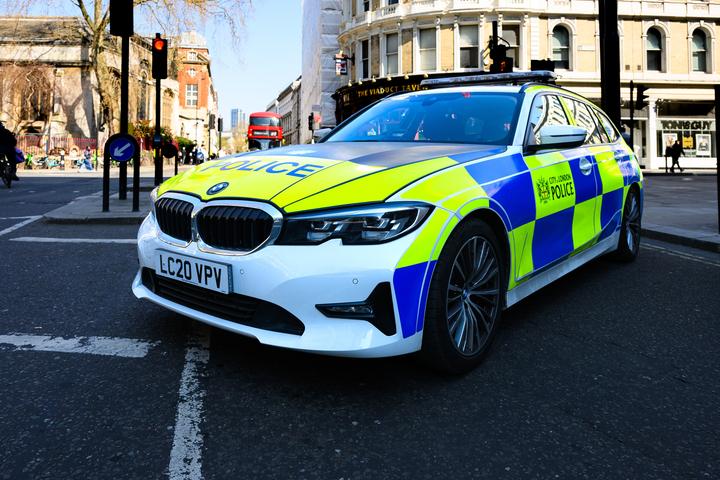
It comes as the Labour government continues to work on its upcoming Road Safety Strategy, the first update in over ten years, MPs from different parties and the two Parliamentary groups coming together in a call for “key recommendations aimed at improving outcomes and road safety”.
The full report — titled ‘Behind the Headlines: Sentencing After Fatal Crashes’ and supported by RoadPeace and Leigh Day law firm — examined 200 cases across England and Wales and found that sentencing guidelines are generally followed but “potential inconsistencies” in charging decisions and court practices “mean that some dangerous drivers are not being held properly to account for their actions”.
Specifically, the report suggests the Crown Prosecution Service (CPS) is at times failing to bring the most appropriate charge. It also suggests delays in cases, with some taking years to reach court, are “compounding the trauma” for bereaved families and undermining public trust.
MPs recommend greater use of lifetime driving bans, noting they currently remain “extremely rare”, even for repeat offenders who pose an ongoing threat to the public.
They also suggest amending the law so that police have powers to act against drivers touching a phone at the wheel, regardless of if it is in a cradle or not.
The report suggests there should be “stronger licensing requirements” for young drivers, the definitions of ‘dangerous’ and ‘careless’ driving should be altered to close legal grey areas, and Serious Collision Investigation Units should be better resourced to reduce “unacceptable” delays.
Fabian Hamilton, an MP and the Chair of the All Party Parliamentary Group on Cycling & Walking suggested that “if someone has taken a life through dangerous driving, we have to ask: why should they ever be allowed to drive again?”
“Too many repeat offenders show open contempt for the punishments handed down by our courts and yet we still hand the keys back,” he said. “It’s time we treated driving as the privilege it is, not a right without consequence. Lifetime bans and electronic tagging should be on the table to protect the public and make sure those who have already proved they can’t be trusted behind the wheel play by the rules.”
Andy Macnae, an MP and Chair of the All Party Parliamentary Group on Transport Safety suggested the justice system as it is “too often compounds tragedy with delays, lenient outcomes, and a failure to hold dangerous drivers fully to account”.
“This report shines a light on the urgent need for reform,” he said. “It’s unacceptable that drivers who take lives through recklessness are allowed back on the roads while grieving families are left without a sense of justice.”
> Cycling fatalities fall by 6% to lowest ever recorded level, new government figures reveal
Sally Moore, joint head of the personal injury department at law firm, Leigh Day, which supported the report, added: “Every fatal crash is devastating, and this report highlights the need for sentencing which reflects the seriousness of these tragedies and makes roads safer for everyone.
“We know from our work with bereaved families and victims of serious collisions that justice must go beyond punishment and offer recognition and deterrence. To achieve this, it is vital that victims are heard throughout the legal process, and that whichever police force they speak to, they are met with consistent and compassionate communication. We hope this report marks a vital step toward meaningful change.”
A RoadPeace representative, from the national charity for road crash victims, also commented: “Every day we hear from families whose lives have been shattered by dangerous drivers — and who then face a justice system that too often fails to recognise the gravity of what’s happened. Losing a loved one in a road crash is not an ‘accident’; it’s a life taken, and the response should reflect that.
“We welcome this report’s call for reform. Families deserve a process that delivers real accountability and lasting change. Stronger sentencing, lifetime driving bans for repeat offenders, and consistent investigation standards would not only deliver justice, but also help prevent other families from experiencing the same heartbreak.”


















33 thoughts on “MPs demand lifetime driving bans and stricter phone laws to address justice system “failing” families of those killed in collisions”
Did this report aslo look at
Did this report aslo look at cases where drivers were acquitted by the jury, even in the face of overwhelming evidence of driver negligence? Some recent cases come to mind where a driver doing 45 in a 30mph limit, who just opened an App to view his home cctv, hit and killed a cyclist who was crossing over a Toucan crossing; or the 18year old triathlete who was killed by a driver who was composing his umpteenth text message on a phone he was holding in his left hand. Both acquitted!!!
It’s a problem. If a typical
It’s a problem. If a typical jury includes people who drive like that and think it’s fine, you can’t get a conviction.
Its exactly this. Bad driving
Its exactly this. Bad driving and using your phone behind the wheel is so normalised that “a jury of your peers” is unlikely to treat such behaviour with the severity it should.
Whenever these stories come up, the defence lawyer always makes the same arguments and I assume thats for good reason. To appeal to the jurys sense that they could be in that seat so easily.
“Just a momentary lapse of judgement”
“An upstanding member of the community”
“Came out of nowhere and didn’t spot them”
“A clean driving record”
All these things are done to relate the person sitting in the dock with the jury who all know that they don’t pay that much attention when driving and have nearly been caught out a number of times.
This requires CPS to bring
This requires CPS to bring the DVSA Driving test examiner Expert witness to state the failed actions in black and white. Accountability for serious negligence should not be ‘relatable’ when presented clearly.
Have CPS got the bottle to do their job..
Mr Anderson wrote:
There are 2 cases mentioned where drivers were charged with Causing Death by Dangerous Driving but the jury found them not guilty and they were convicted of the lesser charge of Causing Death by Careless Driving. In the first case the driver was doing 50mph in a 30 limit, in the 2nd case the driver was doing 50mph in a 20 limit and had jumped a red light.
“The prosecution of these cases for CDDD cannot be criticised, given the evidence of the standard of driving involved, even if the jury did not agree with
the CPS assessment.” Which I think is something of an understatement.
“They also suggest amending
“They also suggest amending the law so that police have powers to act against drivers touching a phone at the wheel, regardless of if it is in a cradle or not.”
But its obviously ok to use the car’s entertainment screen because that would affect the MPs Mercedes.
They also suggest amending
They also suggest amending the law so that police have powers to act against drivers touching a phone at the wheel, regardless of if it is in a cradle or not
What’s the point of that when the police simply refuse to exert the powers they certainly already have?
For instance, this vehicle in
For instance, this vehicle PK06 AAF in Garstang Sainsburys tonight failed MOT on 27.5.25 for 6 ‘repair immediately’ serious defects, has probably had 2 bent MOTs in the last 2 years, must be uninsured, VED expired 4 months ago. This can’t be reported to DVLA because they insist on a postcode where the vehicle is usually parked (I don’t know that postcode, but they could find out), it has been reported through 2 portals to Lancashire Constabulary already, and those reports will certainly be ignored
And, Hey Presto, the report
And, Hey Presto, the report of this vehicle PK06 AAF below has been immediately (it doesn’t give an actual time) closed by an un-named officer. That’s how they do things at Lancashire Constabulary. From the MPs’ report:
The current mobile phone offence provides some deterrence to those who hold a mobile phone in their hand and use it whilst driving- not here, it doesn’t!
Mobile phone use is one of the ‘fatal four’ offences on which the police focus their enforcement efforts, knowing that it is one of the most dangerous distractions to drivers- Ho! Ho!
As such, the death of cyclists may result in comparatively lower sentences to reflect the lower level of culpability involved
Gillian Dungworth (40) pleaded guilty to CDDD. She was sentenced to 2 years’ custody suspended for 2 years and disqualified for 5 years. D turned her car across the path of an oncoming cyclist- judge said the killer is a ‘respectable woman’
In the current sample, there were seven cases in which the Crown accepted a plea to CDCD on a charge of CDDD. Of these seven, two involved the death of cyclists, and four involved the death of motorcyclists– It’s their own fault!
This is a pretty good report because it collects together many cases, including those where a cyclist is killed, but there’s only a suspended sentence because, essentially, it’s their own fault for being on the road
wtjs wrote:
Why not give them Garstang Sainsbury’s postcode PR3 1EL ?!
You are not familiar with
Why not give them Garstang Sainsbury’s postcode PR3 1EL ?!
You are not familiar with DVLA dodges, DVLA hopeless ineptitude and DVLA idleness then? They refuse to accept photographic evidence anyway because they’re like the police and just can’t be bothered dealing with the millions of evaders- they do absolutely nothing whatsoever even on the rare occasions where I know the address of the long term VED evader.
This is a recent picture of BF64 TGE outside his house- I can film it any evening I choose. I first identified this crim in May 22 and reported to DVLA. Lancashire Constabulary refused to have anything to do with it. I have even written to Cat Smith MP about it and she wrote to DVLA. Lilian Greenwood, a Minister from her own party (!), fobbed her off just the same as anybody else with a pathetic letter including ‘we make VED easy to pay and difficult to evade’, while claiming that GDPR prevents her from discussing whether any offence had been committed in this case. She has now been moved to the Whips Office. The offender is so confident that the company livery has only recently been painted on and the company address is available.
Given all the other leniency
Given all the other leniency in the legal system for motorists (NIP, points system, judges accepting feeble excuses/lies etc.) could it be that the law is written in such a dumb way that the DVLA need to see evidence of a vehicle being driven on the road in order to be able to prosecute the owner or seize the vehicle?
could it be that the law is
could it be that the law is written in such a dumb way that the DVLA need to see evidence of a vehicle being driven on the road in order to be able to prosecute the owner or seize the vehicle?
No
She has now been moved to the
She has now been moved to the Whips Office
I was wrong about this! Lilian Greenwood has taken a job at the Whips Office, while continuing to be Local Transport Minister and presumably still batting for DVLA
https://road.cc/content/news/cycling-live-blog-24-october-2025-316527?page=1
GDPR compliance is an utter
GDPR compliance is an utter red herring since the vehicle registration is not Personal Identification Information. PII only applies once a Registered Keeper has been identified from the DVLA database however is a valid primary purpose for Police Service investigation or enforcement.
It’s correct that they won’t disclose the Registered Keeper to the crime victim or witness reporting it. Your Insurance company should still be able to get it in the process of resolving your claim. Convictions help with that.
GDPR compliance is an utter
GDPR compliance is an utter red herring since the vehicle registration is not Personal Identification Information
The DVLA reasoning in the case of BF64 TGE below, which will soon achieve the landmark 4 years without VED, appears to be that they can’t take any action because I would then know they had done so, and I already know the driver’s address (well, it’s one of two houses where it’s always parked), the nearby business address of the company which is named on the vehicle and it’s me who has been annoying them by harping on about it for years and annoying them even more by writing to my MP, and it would then violate the offender’s rights under GDPR! What interests me is that it appears they can’t just solve the problem by ticking a few boxes on a database page and magically render him as having correctly paid his VED for the last 4 years. If they could, they would have done so already, and dismissed all the screenshots I have taken over the years showing that he hasn’t as ‘just mistakes’
So DVLA attempting to rival
So DVLA attempting to rival your local police service for administrative incompetence. They know full well that the police service has a legitimate primary purpose in requesting the PII of these perps, and providing that is doing the job they are paid to do. Information Commissioner should be informed of this failure to process that data properly. 10% of annual revenue is at risk for GDPR Breaches..
Because DVLA will have a
Because DVLA will have a residential address on their database. Contributory negligence on their part..
Some recent cases come to
Some recent cases come to mind where a driver doing 45 in a 30mph limit, who just opened an App to view his home cctv, hit and killed a cyclist who was crossing over a Toucan crossing; or the 18year old triathlete who was killed by a driver who was composing his umpteenth text message on a phone he was holding in his left hand. Both acquitted!!!
And that doesn’t even touch on the greater problem of handheld mobile-using drivers who are pre-acquitted by the police refusing to take action against obviously phone-offending drivers. This is the female driver of VW Transporter BK67 OFU this morning at exactly 08:48:40 GMT (OK, it could be a couple of seconds out either way). The phone use was obvious, and I turned my head to film it. I can guarantee that the sniggering coppers at Lancashire Constabulary will do nothing at all about the offence.
“… sentencing guidelines
“… sentencing guidelines are generally followed but “potential inconsistencies” in charging decisions and court practices “mean that some dangerous drivers are not being held properly to account for their actions”. …”
As I’ve said a few times now, this ultimately goes back tot he discrepancies between the driving standards that would quickly lead to someone failing their practical driving test, versus merely getting a few points and a fine after they had passed but still being allowed to continue driving.
If the law gets stricter and drivers know that they face the loss of their licence (and PRIVILEDGE) to drive then hopefully more will start driving safely.
Of course there will be a, hopefully only, very small minority that would still not care.
The current test you
The current test you mentioned should oblige CPS to call an expert witness who is a DVSA driving test examiner. Failure to do that consistently is contributory negligence by CPS so explains their institutional cowardice in using the Dangerous Driving charge, preferring Careless Driving to boost their conviction stats.
The bias of UK Juries or Magistrates must be countered with the relevant expert witness. Pretty cheap compared to the harms caused..
A tip of the hat to Roadpeace
A tip of the hat to Roadpeace. And indeed all those campaigning on these issues (Road Danger Reduction Forum, Brake, Cycling UK etc).
It’s more than just “higher penalties” and “more chance of conviction at trial” of course. The obvious example being driving bans. Without a good chance of detection these are worth little. (Of course they also need more serious consequences for the repeat offenders we read about…)
Which would mean in part people paying more for more police. And also being prepared to eg. criticise those so doing or even pass on info.
… which ultimately comes back to how the populace view driving and the alternatives to it. And this is where I think until a much greater fraction see themselves as having “more skin in the game” eg. perhaps their own families cycling regularly, nothing changes.
Could it be that our success at reducing the consequences of the poor driving that seems inevitable because humans has made further improvement very difficult? Road death is now just not significant for enough people to care by comparison to the convenience – and growing *requirement* – of driving. (Of course until it directly affects them).
I suspect the answer is “yes” – *if* we continue with the model of “safety via reducing the numbers of vulnerable road users around, by giving them safety at the expense of convenience”.
But not if we could change to something more like the “sustainable safety” / Dutch re-visioning of transport as not just being about the movement of *motor traffic*…
Fabian Hamilton wrote:
Well, that sounds like something I would say
You both are correct to ask.
You both are correct to ask.
IMHO it defines motonormativity that a licenced activity should be in all practical areas seen as a right, not an unacceptable public health threat…
Despite having a sensible law
Despite having a sensible law that forbids mobile phone usage in cars, most modern cars now come with an iPad on the dash to save the manaufacturers a lot of money by getting rid of easy to use buttons and dials, which is just as distracting. And somehow that is legal. ??♂️
I find them distracting even
I find them distracting even cycling alongside them so goodness knows what they do to drivers.
I think we should take away
I think we should take away the arbitrary – and poorly legislated* – difference between carelsss and dangerous driving, and the cinderella charge (also under s3 RTA1988) of driving without reasonable consideration. The jury, where present, should be presented with a general charge to try: a Hazardous Driving charge, let’s say.
The facts of the case will need to be established, but whether the facts of the driving are below or far below (such that “it would be obvious to a competent and careful driver that driving in that way would be dangerous”[s2A(1)(b)] ), and whether they cause injury or death, and whether there are any other factors, should then be considered as aggravating ot mitigating factors for the judge to consider in sentencing. The range of sentence would, as now, be subject to a table of factors.
I find it somewhat absurd that causing death [s2B] or serious injury [s2C] by careless driving exist as separate offences from doing so by dangerous driving [s1 & s1A respectively], or even that causing serious injury or death could, by any measure, be anything other than dangerous.
There might, on appeal, be a question of whether certain facts were established within the verdict to be included in the sentence, but the sentencing report would be clear (or else, flawed) in what is taken into account and an appeal could review that decision.
As well as harmonising those Hazardous Driving charges to a common scale, a judge should also be able to refer the case to a more serious charge if facts of intent emerge raising the questions of murder, manslaughter or some degree of assault. In that case, the question of Hazardous Driving would remain on the table if intent was not proved.
And that, my dear electorate, is my manifesto.
GMBasix wrote:
There was case on the BBC series Crash Detectives [s5ep3] where a driver in a car doing 70mph had rammed a bloke on an e-scooter doing 19mph who subsequently died of his injuries.
The police did a reconstruction at night and showed that the driver would have only seen the e-scooterist 1 or 2 seconds before the collision.
The scene was confusing because the low height of the dim rear lamp of the e-scooter was easily mistaken for the red cats eyes on the left of the lane, and the round logo on the back of the jacket was easily confused with signage on the road.
The e-scooterist(?) was riding on a 70mph unlit dual carriageway in a dark jacket in the middle of lane 1. He was found to be 2.5 times over the drink drive alcohol limit. The police did recognise that it was illegal to ride the e-scooter anywhere but private land with the landowners permission but this didn’t have any bearing on the outcome of the case.
No charges were brought against the driver of the car. This is an example where the police said causing death wasn’t due to dangerous or even careless driving by the driver.
PS: It would seem that the driver whose car was extensively damaged could sue the highways dept. for faulty road design and allowing the e-scooterist onto the road in the first place.
If they are saying that the
If they are saying that the driver was not criminially at fault, then that would fit with a revision of the current absurdity. The e-scooterist had presented arisk that the driver was not reasonably able to anticipate while driving with due care.
I would question whether there was no case to answer: a careful driver should proceed if he can see that the road within his stopping distance is clear, not proceed if he can’t see anything within his stopping distance. That applies at night, and if his lights/vision don’t give him that certainty, he should adjust them or slow down.
In that case, it would present an exception to my generalisation – was 70mph on an unlit road below the due care but not dangerous? I’d say that to say yes would embed probability into the equation, rather than an objective measure of whether proceeding into an unclear braking zone is inherently dangerous or not.
However, I’m speculating without conclusion in the absence of looking at the programme or the collision report.
Whilst there isn’t a legal
Whilst there isn’t a legal minimum speed limit on UK motorways, it would seem that Police can stop you for driving too slowly on motorways (“dangerously slow”). Vehicles on motorways must be able to sustain 25mph unladen and the e-scooter could only do 19mph so it would fall foul of this restriction
You mentioned dual
You mentioned dual carriageway earlier – the rule is different and, importantly, dual carriageways (non-motorway class) normally permit pedrestrians and cyclists, so no minimum speed should be presumed.
It was a motorway standard
It was a motorway standard dual carriageway e.g. A1(M) where motorway rules apply.
How many times, recently,
How many times, recently, have I seen warnings of; “pedestrians”, “animals”, “objects”, “debris”, on the motorway? Or found them without any warning?
If you are driving, or riding, you should be able to stop within the distance that you can see, without exception.