



“You want to keep the radios on to give instructions, not for safety. Take responsibility for it!” War of words breaks out over race radios after Tour of Poland crashes and chaos

> “Can’t continue with radio ban”: Pro cyclist breaks back in horrific crash as Visma-Lease a Bike manager slams “complete farce” and “chaos” lack of race radios created, but UCI President hits back at “fake news”
Anyone got a spare two grand?
Remember Rapha and EF Education-EasyPost’s first cartoon duck-themed collaboration with skateboarding brand Palace at the 2020 Giro d’Italia?
Well, if you just loved JV and the gang’s zany approach to alternative grand tour kits, you’ll be absolutely delighted to learn that the iconic, trippy jersey – along with accompanying bib shorts, socks, cap, bottle and musette – is now available once again (if you’re a size small) on eBay… with the starting bid coming in at the low, low price of £1,599.

Classic Rapha.
Well sure, if you’ve got a spare two grand, what’s stopping you getting all nostalgic about that weird, Covid-accentuated autumn Giro, and the very first Rapha/EF/Palace collab?
Common sense, probably.
Also, how is this the first time I’ve noticed the people on the sleeves?!
Tour de France Femmes set for Kool-Wiebes rematch as race finally reaches France?
It may have taken three-and-a-half days and four-and-a-half stages, but finally, finally the Tour de France Femmes peloton will roll into France this lunchtime, 60km from today’s stage start in Bastogne, yet another nod to Liège-Bastogne-Liège after yesterday’s Ardennes classics tribute act.
So what’s on the menu for today’s mostly French stage five to Amnéville? Well, after yesterday’s GC-reshaping epic in the rain, on paper today should be a last hurrah for the sprinters.
With the on-fire Charlotte Kool 2-0 up in her fast-twitch battle with Lorena Wiebes, can the DSM powerhouse make it a hat-trick of sprint victories at the Tour, or will SD Worx rider Wiebes – usually seen as the undisputed fastest sprinter in the world – save her Tour with a last-gasp win?

Of course, the sprinters may not have everything their own way. The Côte de Montois will offer a stern test, averaging six per cent for 1.7km, and is located just 15km before the finish, with a nasty drag past the summit potentially acting as a launchpad for an enterprising attacker.
Meanwhile, the finish itself will be tasty, and includes a steep climb in the last 800m. Perhaps a more powerful puncheur-sprinter style rider – like Marianne Vos, maybe – could take advantage of all the Kool-Wiebes III hype and steal a victory?
Is it time for the GOAT to kick on in France?
Forget your electronic gears – here’s a tech update I can get behind

> Genesis gives Croix de Fer “biggest update since it was introduced in 2008”, with “racier” design and wider tyre clearance
“We wouldn’t let this happen to the carriageway”: Why don’t cyclists use the cycle lane? No. 5,986
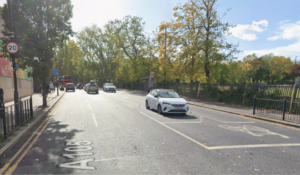
A classic of the ignored and neglected cycle route genre, courtesy of the shared-use pedestrian and bike path that run alongside the A12 Colchester Road just outside London – which, by the looks of things, appears to be on the verge of being consumed by the adjacent vegetation:

Highway engineer and blogger The Ranty Highwayman reported the overgrown hedge and almost invisible path to Transport for London on 30 June, though he notes he’s been raising concerns about the route’s dangers for the past 15 years.
“Yes, this is a shared-use path next to a 50mph dual carriageway. We wouldn’t let this happen to the carriageway,” he tweeted at the time.
“Most of Outer London doesn’t get a look in on the wonderful stuff [London’s walking and cycling commissioner] Will Norman celebrates, but the basic stuff we do have doesn’t get basic proactive maintenance. Please Will, could TfL be pushed to up its Outer London trunk road game?”
Unfortunately, Ranty’s complaints have yet to be answered, as the hedge continues to grow over a month after his initial report, as seen in another photo taken this week:

“We’ll soon have to walk in the 50mph carriageway to get past,” he noted. “We need the basics sorted on TfL’s forgotten Outer London roads. This is a shared-use cycle track, but we don’t get the space and smooth surfaces of the roads here.
“TfL has given up on active travel on its outer London road network.”
Well, I suppose it’s easy to forget it if you can’t see it due to overgrown hedges…
Soudal-Quick Step unveil line-up for Jurassic Park… Sorry, I mean the Vuelta a España
Just when you thought pro cycling’s AI-generated squad announcements weren’t being irrelevant and just plan daft enough, up steps Soudal-Quick Step with the most head scratching post I’ve seen in a while (and it’s a crowded field)…
On the plus side, James Knox is set for another crack at the Vuelta. On the negative side, he might be eaten by a horrible AI T-Rex first.
“Jump on a bike… It doesn’t have to be at a top level. It could just be riding to work or cycling to school”: Gold medal-winning team sprinters Katy Marchant and Sophie Capewell hope Olympic triumph will inspire local community to cycle
Katy Marchant and Sophie Capewell hope their gold medal-winning exploits will inspire people to cycle to school and work, and find the “joy for riding a bike” that led to their own Olympic success.
Marchant and Capewell – whose world record-breaking team sprint alongside Emma Finucane was one of the highlights of the Paris Games for Team GB – were speaking at non-profit organisation Manchester Bike Kitchen in Hyde, which aims to promote cycling to improve mental and physical health, as part of the ChangeMakers programme that matches athletes with local community initiatives.
It was the pair’s first public appearance since returning from Paris on Monday, and Capewell says their team sprint win still feels “a bit like a dream”.
“It was just so special, because it’s been a project for this team for a really long time and we’re Olympic champions now. It’s really cool to say that,” she told the BBC at the event, which was attended by other Team GB stars, including team pursuit bronze medallist Josie Knight and BMX star Beth Shriever.
Capewell added that she hopes their win will inspire others to find the “joy for riding a bike” – “and it doesn’t have to be at a top level. It could just be riding to work or cycling to school or anything like that.”
She continued: “The communities support us, so it’s really important for us to give back and support them.”
“Cycling is a really, really accessible sport, and we want to be able to inspire people to get on bikes,” Marchant added.
Meanwhile, Manchester Bike Kitchen’s Andy Hinton said he hopes Britain’s cycling stars can have a profound impact on young people.
“If someone watches Beth Shriever in the Olympics or Kieran Reilly who won the silver medal, they can walk in here and pick up a second-hand BMX and actually start,” he said.
“And who knows, in four years, eight years, they could be representing Team GB, riding that bike wherever that may be.”
Kool under pressure on hills as hopes of Tour triple fade
Charlotte Kool’s hopes of a Tour de France sprint hattrick this week are fading fast, as the Dutch sprinter continues to struggle on the lumpy terrain that characterises the middle of today’s stage to Amnéville – which, on paper at least, represented the green jersey’s last chance of adding to her two stage wins before the race reaches the Alps this weekend.

But with Kool yo-yoing off the back – and with a few pesky hills still to come on the run-in – maybe her DSM–Firmenich PostNL teammate Pfeiffer Georgi, an expert on a lumpy finish, will be given the green light to aim for a maiden Tour stage?
Tour of Britain race director and former Team Sky chief Rod Ellingworth set for shock return to Bahrain-Victorious
With the Tour of Britain Men just a few weeks away, today the shock news emerged that the race’s recently appointed director, Rod Ellingworth, is set for a return to Bahrain-Victorious, the WorldTour team with which he spent an ill-fated year as principal in 2020.
After a decade at Team Sky/Ineos, Ellingworth – the man credited with fostering a generation of talent through the British Cycling Academy – took the head role at what was then Bahrain-McLaren for a frustrating, Covid-impacted season, before rejoining Ineos as deputy team principal (and the British squad’s de facto chief in Dave Brailsford’s absence).
However, he suddenly resigned from that role in November amid reports on internal tension and a management overhaul, before being appointed by British Cycling as the race director for the revamped men’s and women’s Tour of Britain in March, tasked with delivering the races after a turbulent period that saw previous organisers SweetSpot enter liquidation.
But now Ellingworth seems set for yet another job move, and a comeback to the WorldTour, as Bahrain-Victorious announced today that will return to the team in an unspecified role as part of their “senior management”.
“He will take on a pivotal role in the performance team and work closely on performance projects over the next three seasons,” the team’s press release said, “With a particular focus on Grand Tours and driving the team’s ambitions for a podium finish at the Tour de France.”
Milan Erzen, Bahrain Victorious’ managing director, added: “We are happy to bring Rod back to us and support our performance team. He will be a key part in guiding our young GC talents, like Buitrago, Martinez and Tiberi, with a focus on the Grand Tours. I’ve always maintained a great relationship with Rod – he’s a great guy who is incredibly knowledgeable about cycling. He has great experience achieving the best results in the biggest races. It’s great that he is back in our team.”
“It’s great to be back with the team, and I’m looking forward to working on key projects over the next three years,” Ellingworth himself said. “The team has some fantastic young riders with great GC credentials. I look forward to working with them to achieve the team’s ambitions.”
It’s understood that the appointment won’t affect Ellingworth’s role for the upcoming Tour of Britain, which starts on 3 September.
Four arrested after cyclist fights off masked bikejacking gang by spraying red paint at them

> Cyclist fights off gang who threatened him with hammer during attempted bikejacking
“Hopefully we can still have a big fight”
💛 Rivales pour le #MaillotJauneLCL dans le respect et le fair play 🤗
🇳🇱@demivollering 🤝 🇵🇱@KNiewiadoma#TDFF2024 #WatchTheFemmes | @GoZwift pic.twitter.com/glNFQCrFCA
— Maillot Jaune LCL (@MaillotjauneLCL) August 15, 2024
Interesting post-race warmdown chat here between the two big rivals for this year’s Tour de France, as new race leader Kasia Niewiadoma can be heard telling Demi Vollering, “I really didn’t want to take the yellow that way. Hopefully we can still have a big fight.”
“Yeah, I hope so,” a despondent Vollering responded.
Let’s just hope Demi doesn’t have bump into Chloe Dygert later and ask her what happened in the front group…
Pfeiffer Georgi abandons Tour de France Femmes after nasty mass crash
Unfortunately @pfeiffergeorgi was involved in the crash in the finale and as a result has abandoned the @LeTourFemmes. We will provide an update on her later!
Leave your well wishes for Pfeiffer below ⤵️#TDFF2024 pic.twitter.com/dfagWW0nnR
— Team dsm-firmenich PostNL (@dsmfirmpostnl) August 15, 2024
In news that was entirely expected, but still disappointing nonetheless, Team DSM-Firmenich PostNL have confirmed that British champion Pfeiffer Georgi has abandoned the Tour de France Femmes due to injuries sustained in that terrible mass crash with 6km to go today.
We’ll keep you posted on how Georgi, who looked in considerable pain at the time of the crash, is doing when we get some updates.
Ah, now we know what Soudal Quick-Step’s Vuelta dinosaur poster was all about…

Hmmm… Okay.
Before you jump to the conclusion that Patrick Lefevere’s lost his mind (stop it) and decided that what his team really needs to succeed at the Vuelta is a collection of dinosaur jerseys (maybe to represent his own world view?), the toddler-inspired stylings are actually designed to promote sponsor Soudal’s range of T-Rex branded sealants and adhesives.
Which makes more sense than EF’s skateboarding duck jersey, if we’re honest.

But it’s not just a sartorially challenging jersey with a cartoon dinosaur that Soudal Quick-Step have planned for the next three weeks – no, the Belgian team will also be, and I quote, sharing “a number of dinosaur related initiatives taking place” throughout the Spanish grand tour.
And they’ve kicked off the dino-themed party, like any good seven-year-old obsessed with the Mesozoic Era, by clumsily changing all their mates’ names to those of dinosaurs.
So at the Vuelta we’ve got Mikel Landismosaurus Rex, T-Knox, Asgreeniraptor, T-Knox, Mattiasaurus, Pedesaurus, Louisaurus… You get the picture.
Which makes it a pity they never got round to signing Laurenz Rex in time…
Anyway, there’s even a Belgian frite-chomping, beer-guzzling dinosaur that will be following the team around Spain:
Hold on, when did they sign Alejandro Valverde?
Hotchillee cancels all events and to enter liquidation due to “ongoing financial challenges following Covid and Brexit referendum”

> Hotchillee cancels all events and to enter liquidation due to “ongoing financial challenges following Covid and Brexit referendum”
“Ask her ‘teammates’ who didn’t hesitate to attack”
The early results four our ‘unwritten rules’ poll are in, and it appears that three-quarters of you reckon that when the racing’s on – as it certainly was with 6km of the stage remaining – there’s no looking back, even if the yellow jersey is down.

Meanwhile, over in the dark corners of social media, one viewer asked: “What happened to the rule you don’t attack the yellow jersey after a crash?”
“Ask her ‘teammates’ who didn’t hesitate to attack. For the rest: it’s 5km from the finish line. Nobody ever waited in such a situation in a flattish final 5km,” replied Jens.
He has a point, you know.
Oh, to be a fly on the wall in the SD Worx hotel this evening as Blanka Vas pops the champagne to celebrate her stage win…
“Kasia asked me to go full gas, so I did. We’re here to win”: Was new Tour de France leader Niewiadoma right to take advantage of Demi Vollering’s crash?
The shocking crash that completely changed the complexion of the Tour de France’s fifth stage this afternoon – and quite possibly the entire race – not only brought Demi Vollering down and dented her hopes for a second consecutive Tour win, but also raised one of cycling’s age-old questions: Is it right to take advantage of the yellow jersey holder’s misfortune?
According to cycling’s unwritten rules, which of course have been reinterpreted and recalibrated throughout the sport’s history, if a race leader crashes like Vollering did today, their biggest rivals should call a truce, affording the yellow jersey the opportunity to regain contact (the reasoning behind this unwritten rule being that no rider should win a race off the back of another’s misfortune).
Or at the very least you shouldn’t raise the pace in a bid to take advantage of a leader’s bad luck, anyway.
🏆 The final kilometre of this very eventful 5th stage saw 🇭🇺 Blanka Vas take victory after a sprint in a small group.
🏆 Le dernier KM de cette 5ème étape au final très agité et la victoire de 🇭🇺 Blanka Vas après un sprint en petit comité. #TDFF2024 | #WatchTheFemmes |… pic.twitter.com/OEO4gjRhUE
— Le Tour de France Femmes avec Zwift (@LeTourFemmes) August 15, 2024
But the sight of GC contender Kasia Niewiadoma’s Canyon-Sram teammate Chloe Dygert drilling it on the front, as Vollering was left isolated almost two minutes back, and Niewiadoma herself attacking hard in the final kilometre, eventually culminating in the Polish rider taking yellow, certainly raised some eyebrows, and perhaps could leave a sour taste in the mouth of some cycling traditionalists.
Not that Niewiadoma – who’s been knocking on the door of a career-defining win for a long time now – seemed to care too much about cycling’s code of conduct, with Dygert telling Eurosport after the stage that her team leader instigated the former world time trial champion’s forceful pull at the front in the final kilometres.
“Luckily I was on the front end of the crash. But we’re here to win,” the American said.
“And I’m here to do what Kasia needs, and she asked for me to go full gas, so that’s what I did. And we’ve got yellow now, it’s a big day for us, and I’m very proud for Kasia, she’s been working for this all year.
When given a proverbial ‘out’ by Eurosport’s Matt Stephens, who asked her if she was on the front riding hard because she missed the crash, Dygert instead said: “No, I almost went down, it was such a tight turn and we were going into it so fast, and I’m very lucky to have stayed up.
“Kasia said go, and I just followed what she said!”
No room for misunderstanding there, then.
Kasia in Yellow 💛😍#TDFF2024 l #WatchTheFemmes l @GoZwift pic.twitter.com/bEK8utQMTJ
— Le Tour de France Femmes avec Zwift (@LeTourFemmes) August 15, 2024
So what do you think? Was Niewiadoma right to keep on racing, and force home her advantage over Vollering, an advantage she may well need every second of heading into the Alps?
Or is it just simply poor form to attack the yellow jersey when she’s down? Let us know…
Tour de France upended by horrible mass crash – Yellow jersey Demi Vollering loses almost two minutes after losing skin, Pfeiffer Georgi injured, and Blanka Vas wins stage from small group
A horrible crash in the final six kilometres of today’s stage to Amnéville could perhaps provide the defining moment of this year’s Tour de France Femmes, as yellow jersey Demi Vollering came down hard and lost almost two minutes to closest rival Kasia Niewiadoma, after being forced to mount a futile and largely isolated chase in the closing stages.
The mass spill, which took place near the front of the bunch and at a pinch point on a tight left-hand bend in the run-in, left Vollering with missing skin, in considerable pain, and with no SD Worx teammates to help her for several minutes, European champion Mischa Bredewold saying after the stage that there was a delay in the team communicating Vollering’s fall, with Bredewold eventually dropping back to provide a brief turn at the front for her leader.

Despite Bredewold’s help, the defending Tour de France champion ultimately lost 1.46 to new GC leader Niewiadoma, who survived the crash and made the lead group that eventually emerged from the shattered remains of the bunch – and who, rather controversially, ordered Canyon-Sram teammate Chloe Dygert to drive hard on the front in the aftermath of the crash.
The in-form Kim Le Court was also brought down in the crash, as was British champion Pfeiffer Georgi, who looked in serious pain on the ground in the aftermath of the spill.
While SD Worx will be left to rue the crash – which has upended the GC, bumping Vollering down to ninth, 1.19 off the lead – it was a bittersweet day for the team, as Blanka Vas, who made the lead group as Vollering floundered behind, outsprinted Niewiadoma, Liane Lippert, and Olympic champion Kristen Faulkner for the biggest win of her career.
The late crash completely changed the end of the stage and the GC battle too!
Kasia Niewiadoma almost took it but Blanka Vas came through on the line to take the win for SD Worx whilst their GC leader loses 1’46”#TDFF2024 pic.twitter.com/bSJQjlyiDX
— Mathew Mitchell (@MatMitchell30) August 15, 2024
However, that career-defining stage win for the Hungarian champion may unfortunately prove just a footnote in this year’s Tour de France, as the race for yellow changed utterly in one moment with six kilometres to go on stage five.
Comment of the Day: Old School Group Ride Sabotage

As someone on the receiving end of such pitiless attacks on several occasions, I’d almost prefer my gears to be jammed by a radio poking out from a roadside bag…
A “different kind of doping”? Pro cyclists’ electronic gears can be hacked and jammed by attackers with £175 device, leaving “no trace” and allowing rivals to cheat, researchers say
Picture the scene: You’re out on your Sunday club ride, and the group’s most annoying member is beside you at the front, constantly half-wheeling you on his shiny new bike, as you trudge your way up the latest long, dead drag.
Now imagine you had the technology to jam his electronic shifting system, shunting him down to the back of the group and leaving you to the tranquillity of a non-half-wheeling weekend spin.
Well, according to some US-based researchers, you can do exactly that.

During a paper delivered at this week’s Usenix Workshop on Offensive Technologies conference in Philadelphia, three academics from UC San Diego and Northeastern University revealed a radio attack technique that can target and hack into Shimano’s Di2 wireless electronic shifting system, causing a cyclist’s gears to change, or even be disabled, without their control – a technique, if used in the context of the pro peloton, one of the researchers points out, could lead to a “different kind of doping”.
In their paper, ‘MakeShift: Security Analysis of Shimano Di2 Wireless Gear Shifting in Bicycles’, Maryam Motallebighomi, Earlence Fernandes, and Aanjhan Ranganathan claim that the relatively simple attacks – which can be carried out on hardware costing only £175 – allow potential hackers to take over and control a bike’s shifting behaviour by sending spoof radio signals from as far as 10m away.
This roadside radio technique is demonstrated in the video below:
Bauke Mollema would not be happy…
This experiment, the academics say, expose the vulnerability in Shimano’s Di2 systems, with a blackbox analysis of the manufacturer’s wireless protocols revealing a lack of mechanisms to prevent an attacker taking over someone’s gears, susceptibility to targeted jamming, allowing an attacker to disable shifting on a specific bike, and information leakage resulting from the use of ANT+ communication, that allows an attacker to inspect telemetry from a targeted bike.
By exploiting these vulnerabilities, potential hackers – especially in the “adversarial” environment of pro cycling – could trigger potentially race-changing moments from a roadside spoof radio signals, affecting the “integrity of the sport”, especially with wireless electronic shifting ubiquitous throughout the pro peloton over the last decade.
> Complete guide to electronic gears: your bike’s shifting, indexing and charging explained
After first intercepting their target’s gear-shift signals at some point before they carry out their attack, a hacker can replay those signals, days, weeks, or months later, to cause the bike to shift at their command.

The researchers also noted their simple hardware setup could be miniaturised to such a degree that it could be hidden easily on the roadside at a race, or in a team car or rider’s jersey.
“The capability is full control of the gears. Imagine you’re going uphill on a Tour de France stage: If someone shifts your bike from an easy gear to a hard one, you’re going to lose time,” Fernandes, an assistant professor at UCSD’s Computer Science and Engineering department, told Wired about the new research.
“Or if someone is sprinting in the big chain ring and you move it to the small one, you can totally crash a person’s bike like that.”

(Zac Williams/SWpix.com)
Jamming the shifters would be even easier than taking control of someone else’s gears, the researchers add, by broadcasting a jamming signal at the frequency used by all Shimano shifters – which, at the moment, make up almost 80 per cent of the WorldTour peloton.
The researchers even claim that it would be possible to read the shifting signals from the entire bunch and then jam everyone except one chosen rider.
“You can basically jam everyone except you,” says Northeastern professor Ranganathan.
This is, in our opinion, a different kind of doping,” adds Fernandes.
“It leaves no trace, and it allows you to cheat in the sport.”
However, in case anyone gets any ideas, the academic team have been working closely with Shimano since March to develop a patch, with the Japanese components giant saying it has “identified and created a new firmware update to enhance the security of the Di2 wireless communication systems”, and has already shared that with the pro teams who use their equipment.
“We can share that this update is intended to improve wireless transmission across Shimano Di2 component platforms,” a spokesperson said, adding that the fix will be made more widely available at the end of this month. “We cannot share details on the exact fix at this moment, for obvious security reasons.”

While Shimano hasn’t been completely clear about how the patch will apply to its customers, it said “riders can perform a firmware update on the rear derailleur” using Shimano’s E-TUBE Cyclist smartphone app, but didn’t clarify how this would apply to the front derailleur.
“More information about this process and steps riders can take to update their Di2 systems will be available shortly,” the company said.
While the patch is slow in making its way to the public, the researchers say that pros should implement it as soon as possible, and that other manufacturers of wireless shifting technology, such as Sram and Campagnolo, should investigate their own security systems.
> Will wireless shifting become the norm? SRAM Apex eTap groupset is on the way
But leisure cyclists shouldn’t be too panicked for the moment, Fernandes says, adding: “I find it hard to believe that someone will want to launch such an attack on me during my Saturday group ride.”
Disclaimer: You definitely shouldn’t hack your clubmate’s gears to teach them a lesson. Unless they’re really annoying of course…









48 thoughts on “A “different kind of doping”? Cyclists’ electronic gears can be hacked and jammed by attackers with £175 device, researchers say; Tour de France drama: Was Niewiadoma right to take advantage of yellow jersey Demi Vollering’s crash? + more on the live blog”
road.cc wrote:
The front derailleur is hard-wired to the rear derailleur and has no wireless capability, therefore updates will only be applied to the rear. This is probably why Shimano haven’t clarified it.
I was thinking just that –
I was thinking just that – the receiver and control electronics are all housed in the RD, the front is just a slave motor.
This “hack” could be far more
This “hack” could be far more interesting if it can control shifts in such a way that it gives 11speed DI2 riders a cheap way to upgrade to 12speed.
RE wireless hacking. Luckily
RE wireless hacking. Luckily there is a little-known ancient historic device which could completely defeat this threat to shifting:
https://en.m.wikipedia.org/wiki/Bowden_cable
chrisonabike wrote:
Breaking news, your new historic undefeatable solution can be easily defeated by:- https://www.parktool.com/en-int/product/professional-cable-and-housing-cutter-cn-10
Unfotunately for Rendel this tool can also defeat his non-wireless braking unless he reverts to roller lever brakes!
Damn! These spies and
Damn! These spies and hackers keep coming.
OK – what about an alternative technology – the “brake shoe”?
The related “foot shifter” also works for gears if you remove some of the deraillieur springs.
Let ’em try and sabotage that!
Without wishing to sound wise
Without wishing to sound wise after the event, ever since wireless shifting was introduced I’ve wondered about the capacity for interference, either from malicious actors or other conflicting signals in the environment. Is it really that necessary to save the weight of a very thin 1 m long electric cable? Definitely confirms my thought that if the often-mooted wireless electrical braking systems were ever brought to market it would be a hard no from me…
I don’t think the weight
I don’t think the weight saving is the main benefit of wireless shifting, but rather the ease of set up and adjustment, especially with the trend for fully integrated front ends.
OnYerBike wrote:
Just like Bowden cables electrical cables suffer metal fatigure and will eventually break where steering is involved, not to mention the complexity of a cable that forks at the steerer to connect to two (or more to TT bikes) separate shifters so I can see why there might be a drive towards wireless.
However, security aside, wireless shifting introduces a host of other problems some not easily solvable e.g. proliferation of batteries with different longevity, battery replacement procedures, battery weather sealing, electrical switch weather sealing, pairing issues etc.
I’ve just changed the shifter cables on my road bike but it is at least 5 years since I last did it.
In practice is electric shifting relatively trouble free or is it a load of unnecessary hassle?
Pub bike wrote:
I don’t actually own a bike with an electronic groupset, so no personal experience. Anecdotally, however, people seem happy with them – the general sentiment seems to be that once you’ve tried electric, you won’t want to go back to mechanical.
OnYerBike wrote:
That does seem to be the general sentiment, however having gone from Ultegra Di2 on my last “best” bike to Dura Ace mechanical on the current one I can’t say I miss it, the difference in shifting is tiny when the mechanical is properly set up. The mechanical does need more maintenance but that really only amounts to a few moments of twiddling the barrel adjuster occasionally. It’s also good to know that I can fix pretty much anything on mechanical gears myself, whereas the one time the Di2 did go wrong it cost me £180 in parts and labour plus a fortnight without the bike as the LBS waited for the right part to be delivered. Di2’s nice but not really sure it’s worth the extra cost, at least for me.
Pub bike wrote:
I have many of the same concerns as you, and I remain a bit wary of electronic shifting as a result. But SRAM’s wireless shifting overall is much less hassle than cable. It’s so simple to install. The electronic shifting side (which is independent of whether you use wifi or wire to transmit messages) is just _way_ better than cable in the long run. I’ve never had a cable system stay perfectly indexed for long, while electronic is just perfect, all the time. And (if you change cassette or wheel and cogs line up slightly differently) electronic is /so/ much easier to trim.
Paul J wrote:
I’ve had the opposite experience – indexing has only started to go awry when the shifter cable has started to fray. Invariably when I have to move the barrel adjuster I know I will need to change the shifter cable very soon.
Bar-end shifters on the other hand have a special trick up their sleeve – when the cable frays the ends stick into your fingers. Ouch! Not a problem you’ll get with Di2.
But you can’t stop progress so I’m sure that one day I will have electric shifters on one of my bikes.
I think its a solution
I think its a solution looking for a problem to solve.
OnYerBike wrote:
It is interesting though that (as far as I’m aware?) the choice is between traditional mechanical shifting cables, or digital control over radio, with no option for digital control over a non-mechanical signal wire.
That would still need cable routing to the shifters, but it would essentially eliminate interference risks, and avoid the need for the shifters to have their own power too.
The_Ewan wrote:
It is interesting though that (as far as I’m aware?) the choice is between traditional mechanical shifting cables, or digital control over radio, with no option for digital control over a non-mechanical signal wire.
That would still need cable routing to the shifters, but it would essentially eliminate interference risks, and avoid the need for the shifters to have their own power too.— OnYerBike
Older generations of Di2 were “wired” with a single, central battery and everything connected by physical wires. But yes, AFAIK that’s not an option with any brand’s current line up.
OnYerBike wrote:
Pretty sure you are wrong on this. Latest gen DI2 components all still have SD300 (the wire) ports including the shifters. You *can* set them up wired. Its just more cables to run.
Theoretically if upgrading from 11sp DI2 to 12sp DI2 you could replace every component apart from the SD50 wiring loom and just put SD50-SD300 converters on each end. Massively expensive and pointless but possible afaik.
Secret_squirrel wrote:
I wasn’t aware of this, but yes, with some further research it appears you are (mostly) right. Although not quite all components – e.g. the current 105 Di2 shifters are apparently wireless shifting only.
OnYerBike wrote:
The big downside of that design was the single point of failure, the battery, if the battery was dead nothing worked. With SRAM’s battery in each component a single battery failure won’t leave you stuck in one gear, in fact as long as one of the derrailleur batteries has enough charge you can shift to a get you home gear by using buttons on the derraileurs even if the shifter batteries are dead.
Backladder wrote:
and if you had a power drain fault on one mech, then the battery would drain quickly. (hours not weeks)
Anyone remember the
Anyone remember the Battlestar Galactica remake? Galactica had nothing networked, as a defensive measure. Clearly we need to go back to manual controls, otherwise the Cylons will control our bicycles*… 😉
(Articles have started appearing in the newspapers about the risk of malicious interference in EVs, too)
*Well, not mine – I’m still using V-brakes 😀
God I hate V-brakes. Who on
God I hate V-brakes. Who on earth decided they were better than the robust reliable cantilever brakes that preceded them I do not know.
This hatred has been rekindled in me by looking for a cheap bike for No1 offspring to take to uni in the autumn. My criteria of no V-brakes is quite limiting it turns out.
Too true. V-brakes can work
Too true. V-brakes can work well when new and correctly set up – but things go rapidly downhill from there. I hate them too.
Thought it was just me! Don
Thought it was just me! Don’t know why but always found V brakes more fiddly. Centre-pull cantis? Set ’em up and that is generally it until it’s time for new pads.
… but in the last few years I’ve had some bikes with discs and appreciate the simple maintenance, all-weather behaviour and reduction in effort. Particularly for the “at least it goes downhill fast” recumbent.
SimoninSpalding wrote:
My other bike has centre-pull cantilevers 😀
Dodgy cantilevers plus a
Dodgy cantilevers plus a slightly loose headset are a fun combination, especially on descents. The fun is even bigger if they’re on a nice stiff cyclocross bike fitted with road tyres.
SimoninSpalding wrote:
You’re using them wrong. V brakes trump Canti’s in every possible way. Far far easier to set up and far more forgiving on bad set up.
Secret_squirrel wrote:
Have to agree, a mate was bringing his Tricross back to me week after week saying the cantilevers weren’t doing their job, replaced everything but the calipers themselves and still couldn’t get them right (and though I’m not pro level by any stretch I’m not bad for an amateur), replaced them with Tektro mini-Vs and been, according to him “200% better” ever since.
I would take every
I would take every opportunity to sound wise, before, during or after the event, they don’t come along too often in my experience.
What’s particularly
What’s particularly depressing about the Di2 hack is that it appears to be an example of an incredibly simple, very old, very well know class of attacks, which means that at absolutely no point anywhere in its development have Shimano involved anyone with even a modicum of basic IT security experience or asked really simple questions about whether they were doing something silly.
This isn’t an obscure bug, this is “didn’t consider replay attacks at all”.
I worked in EW in the
I worked in EW in the military for many years. Signal jamming is always possible. You’re essentially just overpowering the original signal with another that cancels it out.
but it would be counter productive in this scenario since you not only jam the target but also your own. In a peloton of riders all closely bunched there is no way you can affect only one particular rider without taking ti all out. The signal is too weak and also they are too narrow to be able to jam alone. So whoever would attempt it would have to jam everybody. Thru would also give off an EM signature which would be easier to detect than this article writer suggests. Mainly cos I know the tech thru don’t.
I understand the complications in trying to counter RF transmitters in a combat zone and the encryption you need for it to work properly. Blanket jamming is counter productive. And too easy to spot.
Interesting. What about a
Interesting. What about a single rider on a break? Say someone had bet against Evenepoel in the Olympics, could they mess with his gears once he was away from the rest? Also there might be people who wouldn’t want to single out one rider but just cause generalized chaos; imagine the farmers who periodically demonstrate at the Tour getting hold of a device that could bring the whole peleton to a stop, a lot more effective and harder to prevent than shoving a couple of burning hay bales in the road…
If it’s one rider then yes it
If it’s one rider then yes it’s possible. But then the jammer needs to be close enough to do it . Bear in mind they are moving at speed, so the jammer must travel at a speed to keep within range. So if there is a team car up at the front near a sole breakaway rider and he is getting his gears jammed you would ask why is that team car so far ahead of their teams riders? What is the purpose of the car being so close to a rival? See ! It’s not so easy to just stand on the side of the road. You’re past in a flash. Even on a climb you still only get a small window and you would need to be close enough to jam them but no one else. Transmitters that jam can work over large distances but your EM signal is also huge. If it began to happen it would be easily defeated as you would give off a large signal that can be pinpointed.
As for hacking. I think Sram – since they are really the only true fully wireless group set manufacturers in the world tour peloton, have a robust encryption on their wireless protocol so it’s not easily hacked. It’s one of the USPs so they will protect its integrity.
All valid points of course
All valid points of course but the video does show someone having their gears jammed by someone with a rucksack standing at the side of the road. Presumably that would only be temporary and they could change back as soon as they were out of range, but on a 15% climb, say, having your gears suddenly shifted into the big ring as the video shows would be sufficient to lose all momentum and allow another rider up to maybe a minute behind catch up to you. I don’t really think there’s that much danger of teams trying to use it to cheat though, I’m thinking more of protesters who want to bring the race to a halt with an attack on the whole peloton; they presumably wouldn’t care about being pinpointed as by the time that was done they would have achieved their aim.
Although there has been a
Although there has been a follow up to this with Shimano dismissing it. You would still need to know the exact frequency that groupset was on. Or you are jamming everyone. And even if they are stood at the side of the road. They are producing an EM signature. If it ever happened it could only really happen once then they would just have to monitor for a spike in that frequency range. That is easy to DF (Direction Find) to see who is producing it. Wireless works in very low and very small frequency channels and in a very specific frequency range. There shouldn’t be anything very powerful in that range. It would no doubt effect lots of other things that are not groupset signals since it’s only a freq used by the group set and it’s encrypted. Same was you can have a WiFi signal that is close to your neighbours but you can interfere but you never really cancel each other out cos you are going over a point to point encrypt signal from your router to your phone/computer etc.
Smoggysteve wrote:
Err, no, there really hasn’t. Shimano have said that they’ve privately issued an update to Pro teams, it’s not available to anyone else, and they very strongly implied that it only became available to the pros after the Tour de France.
They’re all only on one frequency.
It’s not. It’s possible, if the signal hangs around long enough, but it’s neither easy nor, more to the point, is it quick. If you do something persistent like setting up a pirate radio station broadcasting from your house then yes, Ofcom (or their equivalents elsewhere) will find you and turn up, but a burst of a few seconds or minutes that appears and goes away at a bike race, naahhh, that’s not getting found.
Compliant well behaved kit won’t interfere with your neighbour’s WiFi, but if you have something that just blats noise all over the frequencies it’s using then it will absolutely block it. Sometimes that happens by accident if someone’s got a dodgy microwave, and thieves sometimes do it on purpose to jam WiFi security cameras.
Once Shimano have got their update out to normal people then it will (hopefully) be impossible to talk to a specific person’s gears using this replay attack, but there’s really no defense at all against just jamming the frequency if you want to affect everyone.
Well, there are some potential defenses – most obviously being to keep the electronic shifting, but with the components wired together rather than using radio.
So many incorrect things I
So many incorrect things I don’t know where to start. I’ve worked with this tech for many years. I know how it works.
They are not all on the same frequency, they are all on very slightly different frequencies on a very high wavelength. 2.4ghz. Same as WiFi but you still get channels on WiFi on different frequencies around the 2.4ghz.
you say its possible the signal can hang around. It travels at the speed of light!! As soon as you stop transmitting, the frequency jamming stops immediately.
You quite clearly have no idea what you’re talking about. Googling a bit on wireless comms won’t help you here. I have a degree in digital telecommunications from 20+ years in the military working on ECM, ECCM and electronic warfare. I know this subject inside out.
Smoggysteve wrote:
Well maybe it’s just your reading comprehension that’s at fault then.
The Shimano stuff is all on 2.478GHz. Says so right in the paper. It doesn’t use multiple channels, it doesn’t do frequency hopping. Again, all in the paper.
Well, yes, obviously. By ‘hang around’ I clearly mean ‘keeps being transmitted’, as illustrated by the example of someone persistently (persistent = keeps on going) transmitting. That would not be necessary in this case, which is why there’s no chance of direction finding the signal – that requires more time. I’m sure you know that really.
What you’ve got is un entirely unjustified superiority complex where you’re so sure that you understand the general topic that you haven’t bothered to understand this specific issue. If you read the paper, you did not understand it, but I suspect that actually you just didn’t bother to do the reading because you’re so sure you know it all already.
See all that, but, genuine
See all that, but, genuine question because obviously you know 10,000 times more about it than I do (for the avoidance of any doubt that’s a genuine statement not sarcasm!), what about the situation I suggested where protestors wanted to screw with the whole peleton, not just individual riders, and weren’t bothered about whether their equipment was detectable or not as long as they achieved their aim, would that be possible?
Smoggysteve wrote:
What about a phased array antenna for a steerable signal with inertial sensors to know more about where to steer?
Granted, the array antenna would need to be small to avoid aerodynamic problems, so probably to impersonate a front light, to hide in plain sight…
It is interesting that the
It is interesting that the research appears to cover Shimano only. I seem to recall that when SRAM first launched their eTap system they did refer to the security of it to avoid fears of deliberate interference from outside sources. I guess if Shimano don’t see making top end chainsets that stay in one piece as a priority, they certainly wouldn’t have considered this in their designs.
SimoninSpalding wrote:
According to the paper they’re aware of SRAM and Campagnolo systems but decided to look at Shimano first because they’re the market leader by volume, but do say that they “envision that future work will investigate the security of other wireless gear control manufacturers”.
So if anyone here works at SRAM, now’s the time to sort your stuff out 🙂
SRAM eTap has message replay
SRAM eTap has message replay protection. It’s amazing Shimano’s does not – it’s pretty basic security stuff. I also know SRAM got outside consultants in to review and double-check the security of their protocol.
“different kind of doping”?
“different kind of doping”? Pfft! Been doing similar for years and surprised we don’t see it in the pro peloton. I used to creep alongside mates while climbing and give their rear brake a dab. Between the shock and the slowing, it was usually enough to me to the top first!
No replay attack protection
No replay attack protection in the Shimano protocol is quite spectacularly bad. Adding a counter to network protocols to guard against replay is…. basic stuff! How did they not add this?
Cause they’re essentially a
Cause they’re essentially a bunch of engineers that can’t write software to save their lives. The same finger can be pointed at the flakey software systems and electronics of the autmotive industry (ignoring the bits written by Google and and the like. who while generally evil can actually write software), the camera industry…. the list could go on.
Yup – switching between
Yup – switching between engineering sectors is often the mother of failure. Examples abound – particularly in security. See Lock Picking Lawyer’s channel for examples of apparently great electronic / computational security combined with trivial physical bypasses. Although in many cases this may be the work of management / sales figuring the appearance of impressive security is more saleable / valuable than something simpler but without the loopholes…
A dad died on his morning
A dad died on his morning commute after falling off his bike when two cats fighting cut across his path and got stuck in his wheels.