



Road cycling causes more serious injuries than mountain biking, new study finds
> Road cycling causes more serious injuries than mountain biking, new study finds
While we’re on the subject of ‘ringfencing’ and ‘playpens’…
Remember back in August, when we reported that a Dublin councillor accused the local authority of “pure gaslighting” and treating cycling “like a child’s toy” after flood alleviation works shut down a busy section of a key cycle route, forcing riders onto an “anti-cycling death trap”?
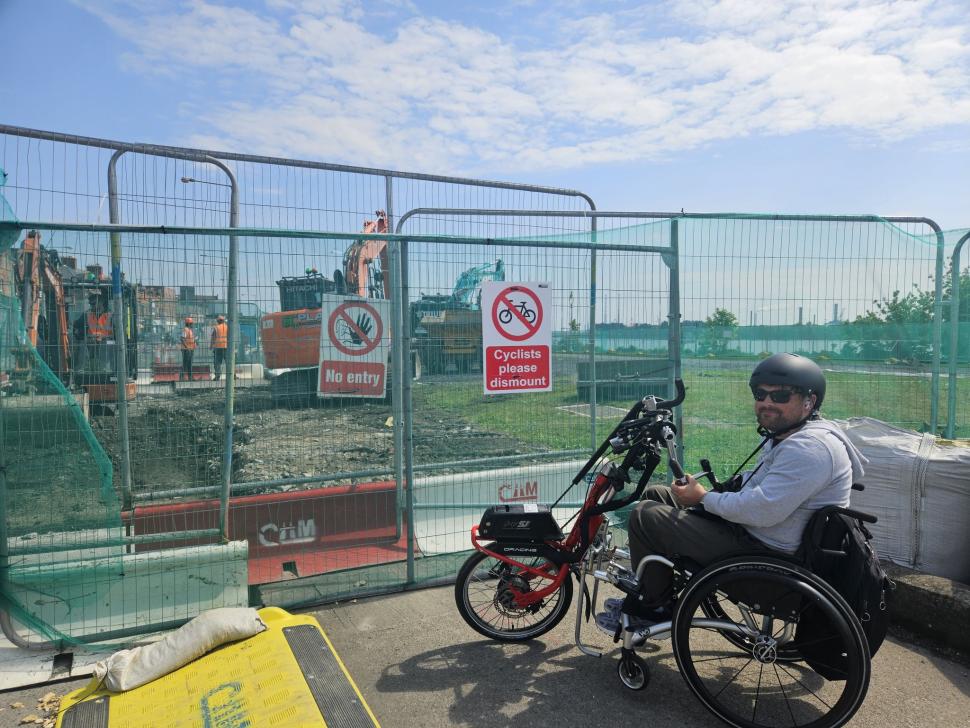
I wonder if those are the kind of ringfences and playpens our mate Ed was referring to in his review?
“Maybe the pony fell out of a plane?”
And today’s ‘Bizarre Victim-Blaming Road Collision Headline of the Day’ goes to…

Looks like the poor ponies are now being lumped in with us cyclists when it comes to terrible reporting in the mainstream press.
Although, as one member of Bournemouth, Christchurch, and Poole’s Facebook active travel group said, maybe the pony fell out of a plane and landed on the driver’s car? Who knows?
“We were once hit by a deer,” added Judy in the comments. “They don’t know the Highway Code!”
Those pesky deer, always running through red lights and holding up traffic…
The road racing season ain’t over yet! Paul Magnier wins crash-marred opening Tour of Guangxi sprint and Georgia Baker awarded victory after Kathrin Schweinberger disqualified at Tour of Chongming Island
If you thought Tadej Pogačar’s solo destruction at the Tour of Lombardy signalled the end of the road racing season, then you were gravely mistaken.
Because this week in China, we’re being forced to endure treated to the now-traditional end-of-season stage races, bringing the curtain down on the 2025 campaign (and not at all acting as punishment for underperforming riders).
On the opening stage of the Tour of Guangxi in Fangchenggang , a shocking crash inside the final 500m split the bunch, with Soudal Quick-Step’s Paul Magnier navigating the chaos to power up the middle for his 15th win of the season ahead of Max Kanter.
Paul Magnier prevails in a chaotic sprint to win the Tour of Guangxi’s opening stage 🙌 pic.twitter.com/I1lD4S3YT3
— Cycling on TNT Sports (@cyclingontnt) October 14, 2025
Meanwhile, the first stage of the Tour of Chongming Island also featured its fair share of chaos and controversy, as Human Powered Health’s Kathrin Schweinberger crossed the line first after a messy sprint, only to be later relegated for veering across and impeding UAE ADQ’s Sofie van Rooijen.
The win was then awarded to Liv AlUla Jayco’s Georgia Baker, marking the Australian’s first road win of the season and her maiden WorldTour victory. Better late than never, I suppose.
Georgia Baker wins the first stage of Tour of Guangxi after Kathrin Schweinberger’s relegation in the sprint 🥇 pic.twitter.com/fB81HqEhmO
— Cycling on TNT Sports (@cyclingontnt) October 14, 2025
“It’s a bit of a strange way to win, but I’m incredibly happy with my first WorldTour victory and the leader’s jersey in the Tour of Chongming Island,” Baker said at the finish.
“The team was very good today, the riders looked after me all day and led me fantastically in the final. We will do everything we can to keep the leader’s jersey in the next two stages.”
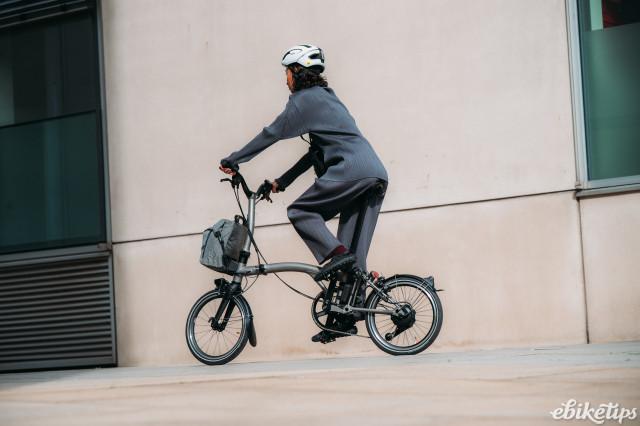
Is this Brompton’s “biggest launch for 50 years”?
> Brompton updates electric range with bespoke drive system and lightest ever e-bike
‘Come on, when are you finally going to do something with all those old bike frames cluttering up the shed?’
This is art:
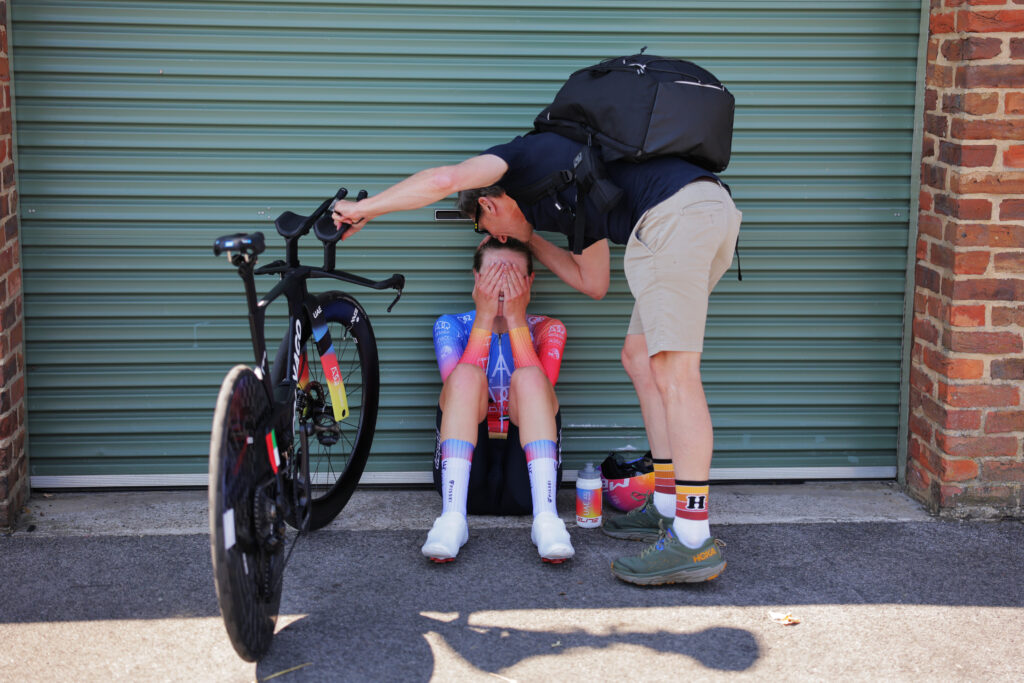
“After a difficult few years, it feels like the right time to move on”: Former British time trial champion Lizzie Holden set to retire this week
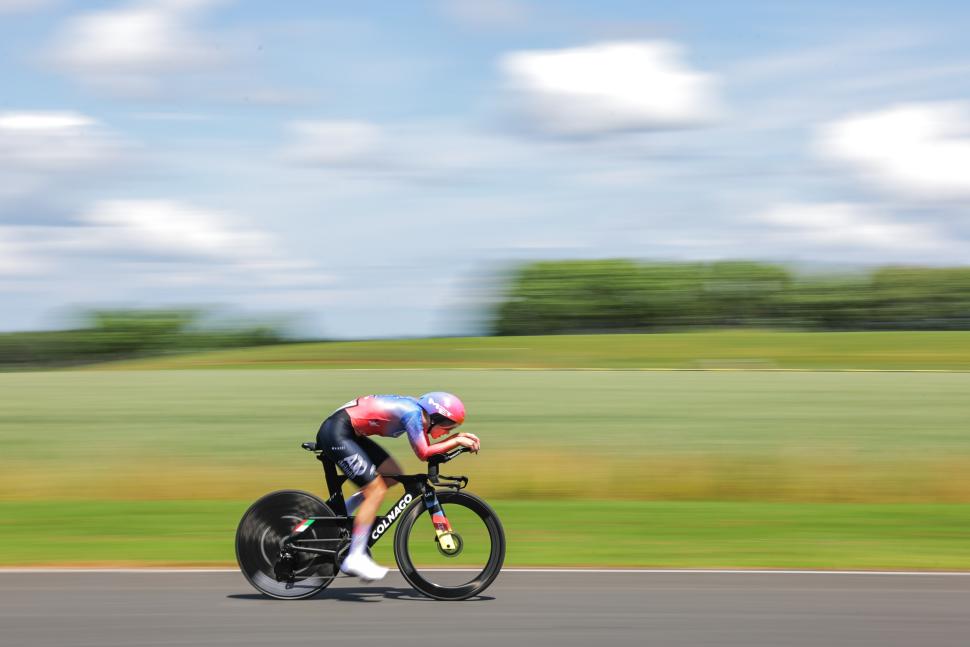
The Tour of Chongming Island may bring the curtain down on the 2025 women’s road racing season, but it will also serve as the final act of Lizzie Holden’s career, after the former British time trial champion announced that she will retire from the peloton following the three-day stage race in China.
The 28-year-old from the Isle of Man, who was crowned British time trial champion in 2023, said the decision to hang up her wheels came after a “difficult few years” punctuated by crashes and a loss of confidence.
The Tour of Chongming Island, in fact, marks Holden’s rather accelerated return to racing in the wake of a serious crash at last month’s Simac Ladies Tour, which left her in intensive care with two broken ribs, a broken collarbone, and a punctured lung.
Alex Whitehead/SWpix.com
“Well, a little earlier than expected to be back racing… but I was extra motivated (stubborn) for this comeback, as it will also mark the end of my cycling career,” Holden posted on Instagram last night, announcing her retirement.
“So much to be thankful for during my career and too many people to thank in a single post. I’ll be forever grateful for having been able to call cycling my ‘job’ for so many years, and I’m sure I will look back in years to come feeling proud of everything I’ve achieved along the way.
“I’ve met so many incredible people along the way, and my bike has taken me to amazing places in the world.”
In her post, the UAE Team ADQ rider paid tribute to her parents, husband, and to former mentor Dot Tilbury, who also served as Mark Cavendish’s post and who Holden thanked for “everything she has done for Isle of Man cycling and getting myself and so many others involved and enjoying cycling”.
Holden turned pro in 2017, at the age of 19, with the Trek-Drops squad, and joined Le Col-Wahoo in 2022, forming part of the squad that raced the first edition of the revamped Tour de France Femmes and taking good placings in a number of stage races throughout the year.
The following year, she stepped up to the WorldTour with UAE Team ADQ, taking her first and only professional win at the British time trial championships.

Zac Williams/SWpix.com
And, after three seasons spent as a reliable part of the engine room for UAE, riding big races like the Tour de France, Giro d’Italia, Tour of Flanders, and Paris-Roubaix, Holden had decided to step away from pro cycling at the age of 28.
“After a difficult few years, losing a lot of confidence on the bike, and finally a crash resulting in a broken collarbone, numerous broken ribs, and a punctured lung (to really put a nail in the coffin) it feels like the right time to move on to a new chapter,” she said.
“I don’t know exactly what will be next yet, but feeling a mix of scared and excited to see what else is out there.”
“He fought hard to the finish line as he always did”: Victoria Pendleton pays tribute to father Max, who passed away after long struggle with Parkinson’s disease
Three-time Olympic champion Victoria Pendleton has paid tribute to her father Max, a stalwart of the east of England’s cycling scene, after he passed away at the weekend, aged 80, following a long battle with Parkinson’s disease and dementia.
A racing cyclist in his own right, Max was a specialist at hill climbs and grass track events, winning the national 8km grass track championships in 1987. He began organising events in the discipline at Mildenhall Cycling Club in 1990, running the events until 2022.
Following his death on Saturday, Mildenhall chairman Mark Burchett said: “He is going to be a big loss from the Club, having been such an active member since 1980.
“Max wasn’t just a very competitive rider, but off the bike was a gentleman, and we shall also miss the very enjoyable club-rides around his Bedfordshire home.”
In an Instagram post, his daughter Victoria, who he helped guide to those three Olympic sprint golds and nine world championships in the velodrome, posted a photo of Max alongside her brother Alex, who died in 2023 after suffering a brain tumour.
“The picture of Alex and Max is how I want to remember them both, not taking the moment seriously,” Pendleton wrote.
“On the 11th of October my father Max Pendleton passed away after a long struggle with Parkinson’s disease and more recently Parkinson’s dementia. He fought hard to the finish line as he always did.
“I am so grateful for his dedication to cycling and his unwavering belief in me, even if I didn’t always recognise it. I certainly wouldn’t have achieved anything without him and I am thankful for all I have experienced as a result.
“He always pushed himself, I admired that in him and tried my best to emulate. More significantly he has encouraged and enabled countless individuals into the sport of cycling. Organising equipment and kit and grass roots, grass track events. Where it all began for me.”
“Growth profiles like ours... are particularly uncommon. It attracts a lot of attention, especially from bankers”

> Strava CEO Michael Martin says social fitness giant plans to go public to make “more and bigger acquisitions”
You know it’s nearly cyclocross season when… you start seeing weird videos of racing pigs with Mathieu van der Poel and Wout van Aert’s faces on them
What on earth have I just watched?
Anyway, my money’s on Mathieu van der Pork for the world title. I’ll get my coat…
The last man standing of the EPO era, Francisco Mancebo, finally retires at 49
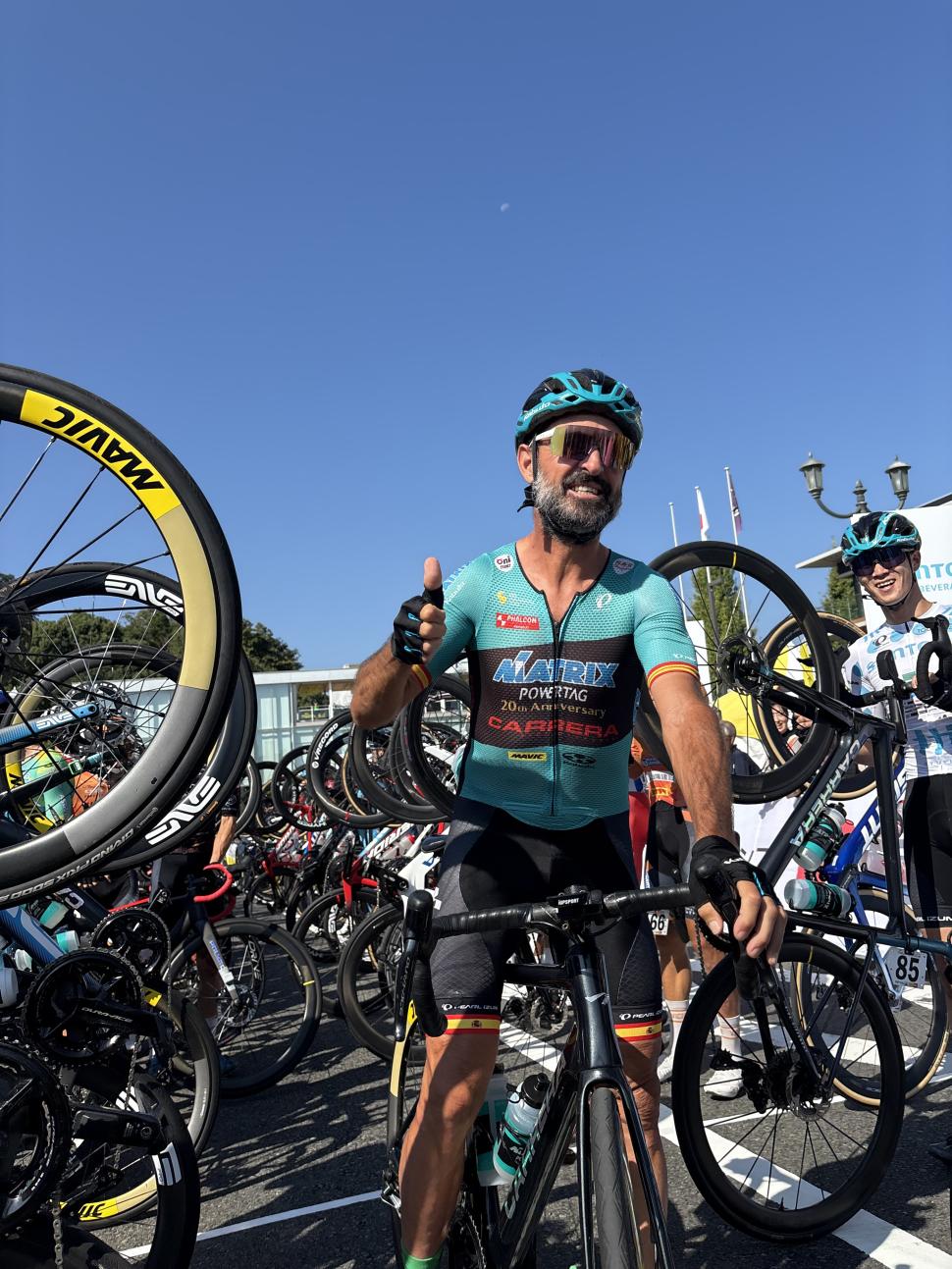
Here’s something to make you feel old. Francisco Mancebo, the grandfather (almost literally) of the peloton, has finally decided to hang up his wheels, at the age of 49 and after 27 years of life as a professional cyclist.
And, true to form, Paco and his grey beard were competitive right to the very end, finishing 30th at the Tour de Kyushu, a Japanese stage race which finished yesterday.
Born in March 1976, the Spaniard turned pro in 1998 – that ill-fated year for cycling – for Banesto, taking his first of what would ultimately be 38 pro victories at that year’s GP Miguel Indurain, beating Stefano Garzelli and Davide Rebellin (who would also morph into a grizzled veteran, retiring in 2022 at 51, just six weeks before he was killed by a lorry driver).
Mancebo then established himself as a consistent GC contender, taking ninth and winning the young riders’ classification at his debut Tour de France in 2000, finishing third at the 2004 Vuelta a España (and winning a stage the following year), and placing fourth at the 2005 Tour, the scene of Lance Armstrong’s final, now redacted triumph.
However, his career hit a wall in 2006 when, after leaving Banesto to lead AG2R at the Tour, Mancebo was caught up in Operación Puerto, joining fellow suspects Ivan Basso and Jan Ullrich on the sidelines as the Tour was once again engulfed in scandal.
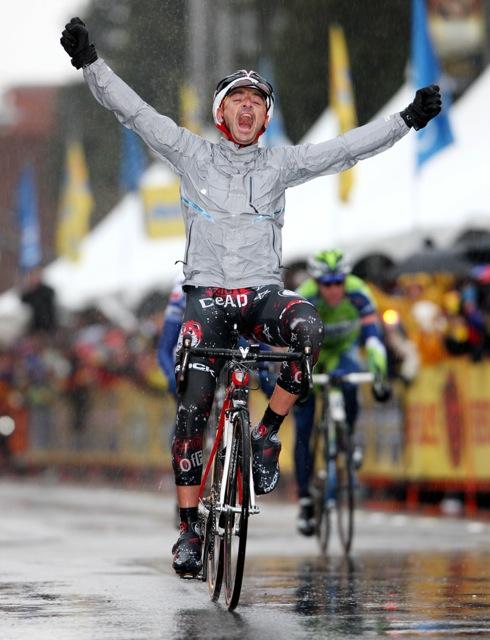
Despite never being sanctioned, Puerto spelled the end of the Spaniard’s stint in cycling’s top leagues. A few years bouncing around different teams led him in 2009 to Rock Racing, that rogues’ gallery of unrepentant dopers, winning a Tour of California stage in the team’s, ahem, interesting kit.
For the past seven years he raced with the Japanese Matrix Powertag squad, winning a stage of the Tour du Sahel in January this year, which at 48 made him the oldest ever winner of a UCI road race.
Enjoy the rest, Paco.
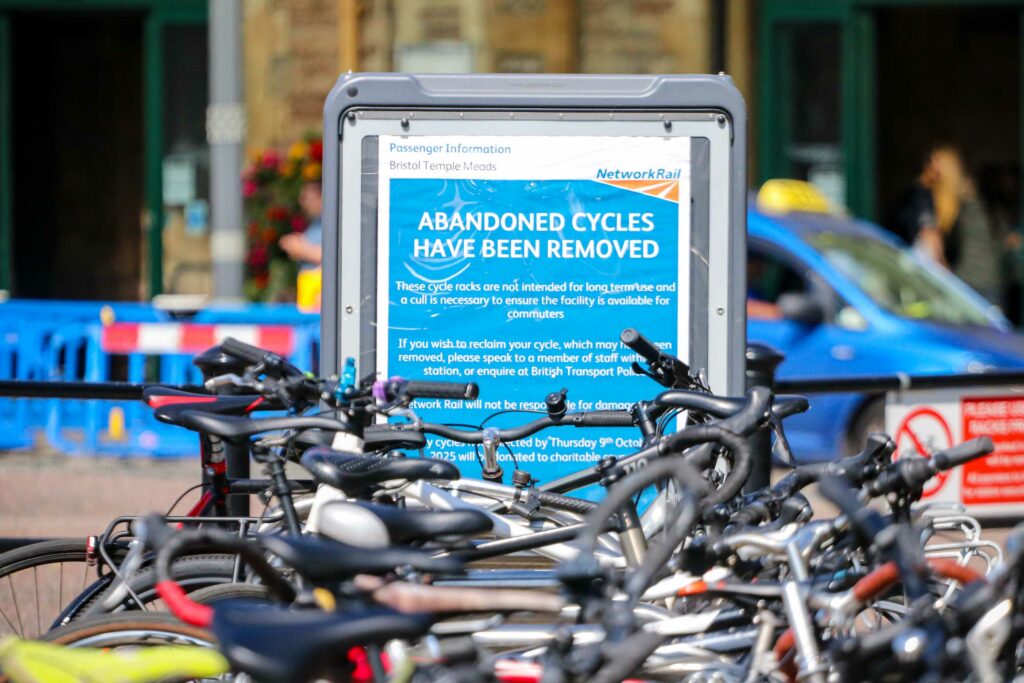
“How can we expect more people to cycle if stolen bikes don’t count as a priority?” Cycling UK pens open letter to British Transport Police’s chief constable arguing new theft policy “will increase crime and put people off cycling”
Cycling UK has written an open letter to the chief constable of the British Transport Police, arguing that the force’s new policy on bike thefts at stations will send the “wrong message” that stealing bikes is a “low-risk, high-reward crime”.
Earlier this month, we reported that the British Transport Police announced that it will not investigate bikes stolen from train stations if they were left for longer than two hours, a move that prompted British Cycling and other groups to claim that bike theft at stations was now effectively decriminalised.
And this week, Cycling UK has urged the BTP’s chief constable to Lucy D’Orsi to review the new policy, which the charity says “risks deterring people from cycling and undermining the government’s own goals to link cycling with rail travel”.

“How can we expect more people to cycle if stolen bikes don’t count as a priority?” Cycling UK asked this afternoon.
“For many, a bike isn’t a luxury; it’s the only affordable, practical way to reach the train. They deserve protection, not indifference.”
In the letter to D’Orsi, which forms part of a campaign against the policy, Cycling UK said: “Almost everyone who parks their cycle at a train station will leave it there for more than two hours, so at a stroke this policy will result in most cycle thefts at stations not being investigated. That sends a message to criminals that cycle theft at stations is a low risk but high reward crime.
“It is also likely to deter people from cycling to train stations, because we know that the lack of secure cycle parking is a substantial barrier to cycling.
“Accordingly, this policy is likely to increase crime, decrease the number of people commuting by bike to stations, and potentially reduce rail passenger numbers.
“We therefore urge you to review this policy. We would also be delighted to meet with you or other senior colleagues to discuss BTP’s approach to policing bike theft if that would assist.”
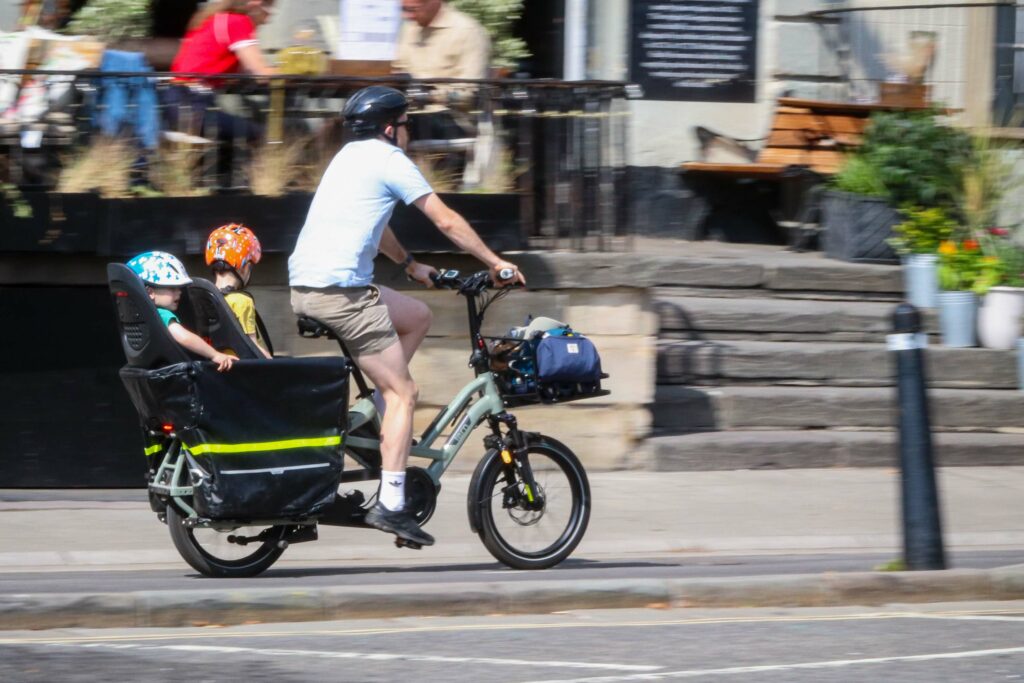
Who’s to blame for the property crisis? “Mouthy” wealthy cargo bike owners trying to “ringfence cities as active travel playpens for the better off”, says TV critic – but cyclists ask: “Would you let your child cycle across the city?”
Television reviews in national newspapers aren’t normally the type of place you’d expect to find hostile, almost conspiracy theory-style opinions about cycling, but I suppose that’s where we find ourselves these days.
Because, in an Irish Times review of RTÉ series Build Your Own Home (a kind of cross between Grand Designs and Homes Under the Hammer), TV critic Ed Power used the show to reflect on the property crisis that has engulfed Irish society, leading a whole swathe of young people, forced to continue living with their parents, being dubbed Generation Priced Out.
But who’s to blame for Ireland’s property woes and soaring prices? Greedy developers? Landowners sitting on derelict land? The government?
No. According to Power, it’s all down to cargo bike users.
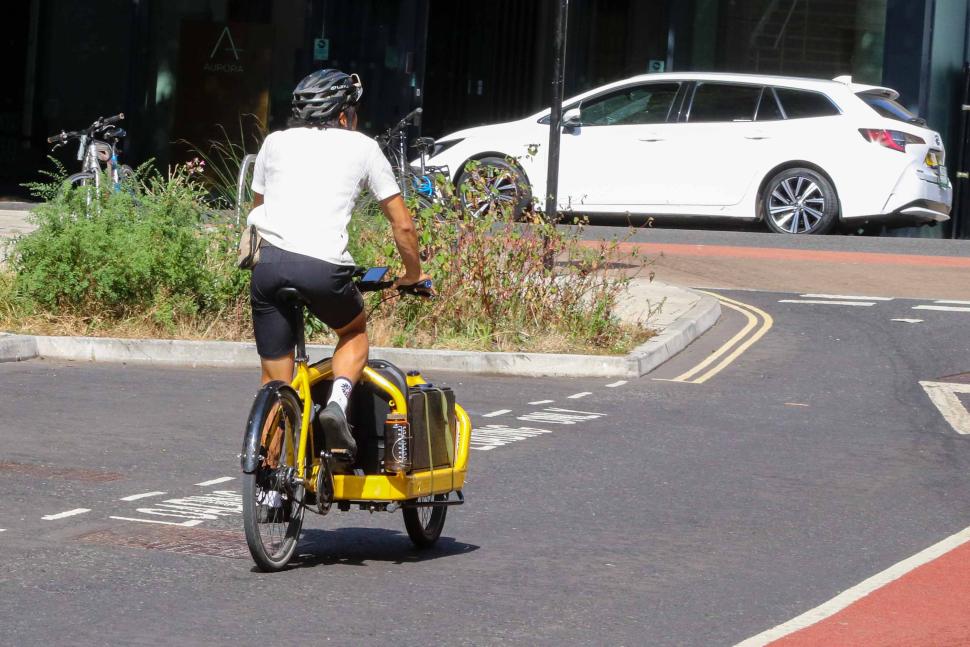
> Adrian Chiles claims expensive cargo bikes are a “new kind of class politics”
“Much of Irish society has been negatively impacted by the property crisis. Many young(ish) people still live with their parents,” Power wrote in the opening paragraph of his Build Your Own Home review.
“Those who have bought a house typically face punishing commutes, while a mouthy minority, wealthy and privileged enough to live within a cargo-bike freewheel of central Dublin, Cork, or Galway, try to ringfence the cities as ‘active travel’ playpens for the better off.
“Prices soar – and the old joke about only Longford or Roscommon being affordable begins to ring hollow (the latter recorded among the fastest growing locations for property prices last year).”
Ah yes, that old chestnut, that bike and cycling infrastructure are just for the privileged middle-class few, while driving – with its exorbitant fuel prices and five figure starting point – is the domain of the workers.
Power’s “active travel playpens” comment also falls perilously close to the 15-minute city conspiracy theories that proliferated at alarming speed a few years ago – though Power seems to come from the angle that they’ll be used to keep the riff raff out, rather than penning them in with just schools, shops, hospitals, and entertainment for comfort.
> Why is the 15-minute city attracting so many conspiracy theories?
As IrishCycle.com noted, Power does have previous when it comes to cycling. Back in 2022, in his review of ‘Big City Plan’, a look into how Ireland’s cities are changing, he again characterised cycling as part of a “grab-bag of chattering-class talking points that really make sense only if you live within a quick trot of the city centre”.
“It’s hard not to conclude that if the change advocated in the film were ever to come to pass, it would make life much better for that minority, and far worse for those waiting in the rain for buses that never arrive,” he said.
Power then claimed that, after his bus failed to arrive, he once spent 20 minutes idling in his car while “gazing at an empty cycle lane”, before arguing that our car-based society “cannot be wished away with a splash of cycle lanes and enthusiastic talk about a ‘15-minute city’.”
Criticising Power’s latest critique of Ireland’s so-called “active travel playpens”, the brilliant Cian Ginty for IrishCycle.com noted: “While Power might like to fling his toys out of his playpen in protest, nobody has ringfenced Dublin, Cork or Galway for active travel. Very little has been done to impact car drivers in Cork and Galway, and most of the car restrictions to date in central Dublin relate to public transport priority measures.
“But even with pedestrian, cycling, bus, and tram priority measures in place, the city centre is still accessible by car. The central car parks have not gone away, you know.”
> “Adrian, you’re wrong!” Pedal Me’s co-founder on cargo bikes
He continued: “Nobody is setting out to punish people who were forced out of the city in order to afford a house. But a whole city should not be punished because of people moving out of the city and depending on cars to get them back in for work or to attend a gig or visit family, etc.
“The victim mentality, however, is harder to take when you take aim at cargo bikes and people who want safer streets so that their families and friends can cycle to school or work without being run over by drivers.
“Anyone looking at Dublin, Cork, Limerick, or Galway as a whole and thinking that the streets are even approaching being ‘ringfenced’ for active travel or being ‘playpens’ really has lost their sense of perspective.
“Would many people let their children cycle across our city centres?”
Exactly.
“We are not a medical facility”: Hotel owner and former pro Alexander Kolobnev claims he “knew nothing” about Ineos Grenadiers’ carbon monoxide rebreathing tests on his premises during training camp
The controversy surrounding the Ineos Grenadiers’ use of carbon monoxide rebreathers has become somewhat murkier, after Alexander Kolobnev – a former classics star and owner of the hotel where the British team stayed during their training camp earlier this year – claimed he was unaware that the tests were being carried out on his premises.
At the weekend, the Times’ Matt Lawton reported that Ineos admitted to the use of the CO rebreathers, which now banned for non-diagnostic purposes by WADA, purportedly as a means of testing and optimising riders’ altitude training.
The controversial method first came to light at the 2024 Tour de France, when it was revealed that UAE Team Emirates, Visma-Lease a Bike, and Israel-Premier Tech have access to a CO rebreather to test blood values.
Providing an accurate means of measuring key blood values such as haemoglobin (a protein that facilities the movement of oxygen in red blood cells), several pro squads confirmed that they use CO rebreathers to track their riders’ progress during red blood cell boosting altitude training camps.
However, those very same carbon monoxide rebreathers also allow for precise dosing of the gas into the lungs, which could potentially assist riders’ bodies in producing more red blood cells and improve their aerobic capacity, enhancing their performance artificially, an alternative use of the equipment which the likes of Visma and UAE all denied using.
When questioned during last year’s Tour, Ineos denied that they had used the rebreathing technique. However, the team admitted this week that they then proceeded to avail of the CO rebreathers to test their riders at a training camp on 1 February this year, a statement affirming that they were only used as a “diagnostic tool” and for performance enhancing purposes.

According to the Times’ investigation, the British squad employed a method that, on the very same day, the UCI announced would soon be prohibited from 10 February. The tests carried out by Ineos saw riders take two inhalations of the gas, lasting five or six minutes, 15 to 20 minutes apart.
However, the new rules state that only a single inhalation of gas is permitted within the space of two weeks, while teams must only be in possession of CO within a medical facility.
The UCI had also warned teams to avoid “repeated” inhalations of the gas in November, over two months before the tests took place.
Speaking to the Times, former CSC and Katusha pro Kolobnev, who owns the SyncroSfera sports hotel in Denia where the tests were conducted, insisted that his hotel is not a medical facility equipped for these kinds of tests.
The SyncroSfera, on the eastern coast of Spain, a training hotspot for pros, is kitted out for cycling teams with altitude simulation rooms and a physiotherapy centre.
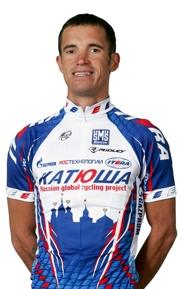
However, Kolobnev, a Strade Bianche winner and perennial world championships contender in the late 2000s, told Lawton that he was unaware that riders had been tested in room 101 and said his hotel did not hold the appropriate certification for such tests.
“The statement that ‘carbon rebreather testing has been conducted at our hotel’ is incorrect,” he said via email. “SyncroSfera is a sports, wellness and performance centre with advanced facilities for training, recovery and physiotherapy, e.g. altitude simulation, hyperbaric therapy, rehab. We have never offered or performed any activity related to carbon rebreathers as a hotel service.
“Regarding UCI rules, we are aware that any procedures involving carbon monoxide rebreathers are to be conducted in certified medical environments under medical supervision. We do not operate as a hospital or medical testing laboratory for such procedures.”
Speaking on the phone, it was then pointed out to Kolobnev that, according to the official Ineos itinerary, seven riders were listed for “Hb mass testing” in “room 101” of his hotel on 31 January and 1 February, the retired pro confirming that room 101 is an “absolutely normal bedroom” at the very end of a corridor.
“I know nothing about this. We are not a medical facility,” he said.
Ineos, it must be stressed, did not break any rules at the time of the tests, which would have been banned by the UCI a week and a half later.
However, in November 2024, at its annual WorldTour seminar in Nice, the UCI requested that teams and riders avoid using “repeated CO inhalation”, clarifying that “only the medical use of a single inhalation of CO in a controlled medical environment could be acceptable”.
The governing body also officially called on WADA to “take a position on the use of this method by athletes”.
“This is a measurement method developed during the 1980s and used widely ever since. As publicly known, teams in the peloton and across other sports have been measuring HbMass through this method for several years,” Ineos told us in a statement yesterday.
“The Ineos Grenadiers did not use this method in the 2024 racing season or seasons before that – for the avoidance of doubt, that includes the 2024 Tour de France.
“The team has since used this as a diagnostic tool. This has only ever been used as a measurement method to check how individual riders respond to altitude (this can be simulated or natural altitude) as well as heat stress and training.
“We have never used it to enhance performance and have always adhered to UCI rules and regulations on this issue.”











7 thoughts on “Ineos Grenadiers carried out carbon monoxide tests two months after UCI told teams to avoid repeated CO inhalation, as hotel owner says he “knew nothing”; Who’s to blame for soaring house prices? Cargo bike owners, apparently + more on the live blog”
“he once spent 20 minutes
“he once spent 20 minutes idling in his car while “gazing at an empty cycle lane””
All that time he could have been merrily cycling to his destination. Why is the cycling lane empty? Maybe it’s because there are no traffic jams in cycle lanes!
Outside my Wicklow estate upgrade works are ongoing on new cycling infrastructure. It’s a pain at the moment but I know when it is done my kids will have safe, segregated cycling routes to get to their schools, activities and friends independently. Absolutely worth it in my opinion. Yes, it’s a middle class area but I know there are also tonnes of good cycle routes in working class area on the fringes of Dublin. When the Dodder Valley greenaway is complete cyclists will be able to cycle nearly completely separate to traffic from Bohernabreena on the western edge of County Dublin to the city. Or do it the other way and from there into the mountains. Amazing progress
He could have at least turned
He could have at least turned his engine off. Idling is an offence in some parts of the world e.g. London.
Great to see progress being
Great to see progress being made in Dublin and Cork.
The housing crisis in Ireland is entirely a political choice. Year after year of budget surpluses, planning regs unchanged in years, same two parties in government for the last 100 years but yeah….cargo bike gentrification.
Just back from city visit to London for first time in donkeys. It feels like a modern European city with cycling everywhere, all ages, races, abilities, great surfaces and very few lycra lads. Am a bit jealous now returning to Edinburgh
Gbjbanjs wrote:
Who would have guessed that when I put “dublin housing crisis cause” into Google it doesn’t mention cargo bikes!
Pub bike wrote:
That just shows that the priveledged anti-democratic cycling elites have taken over the internet as well as controlling the councils, the property developers etc…
On the Daily Echo headlining,
On the Daily Echo headlining, you’re surely being a bit harsh on them as this is pretty commonplace, so “Driver hits New Forest pony, drives off, pony dies lingering death at the roadside / despatched by agister, car with obvious characteristic crash damage not traced” is hardly attention-grabbing news around these parts.
PS Great to see this story in today’s live blog – it’s been in Drivers and the Problems and Car Crashes into building for a few days now.
“This is a measurement method
“This is a measurement method developed during the 1980s”
I think it’s much much older than that. I think it was invented in the 1920s (or earlier?). It’s a test that’s been in use for a century (at least).