


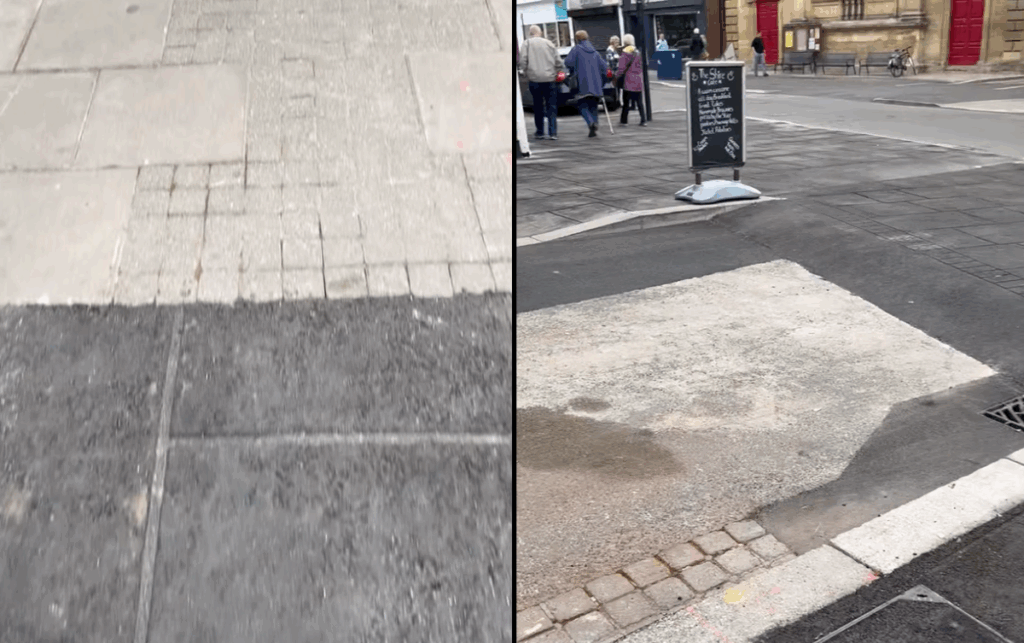

The row over a cycling infrastructure project in Gloucester — which has attracted criticism for the way parts of the city centre’s historic paving stones have been resurfaced — is rumbling on.
Last year, Lib Dem councillor Rebecca Trimnell took on her own party, which runs Gloucestershire County Council, and called out the “disgraceful” plans for a newly paved cycle lane (part of a wider county-crossing ‘cycle spine’ project) and active travel improvements which she said would see “historic” paving stones resurfaced with tarmac “mess” to facilitate the cycling and walking routes.
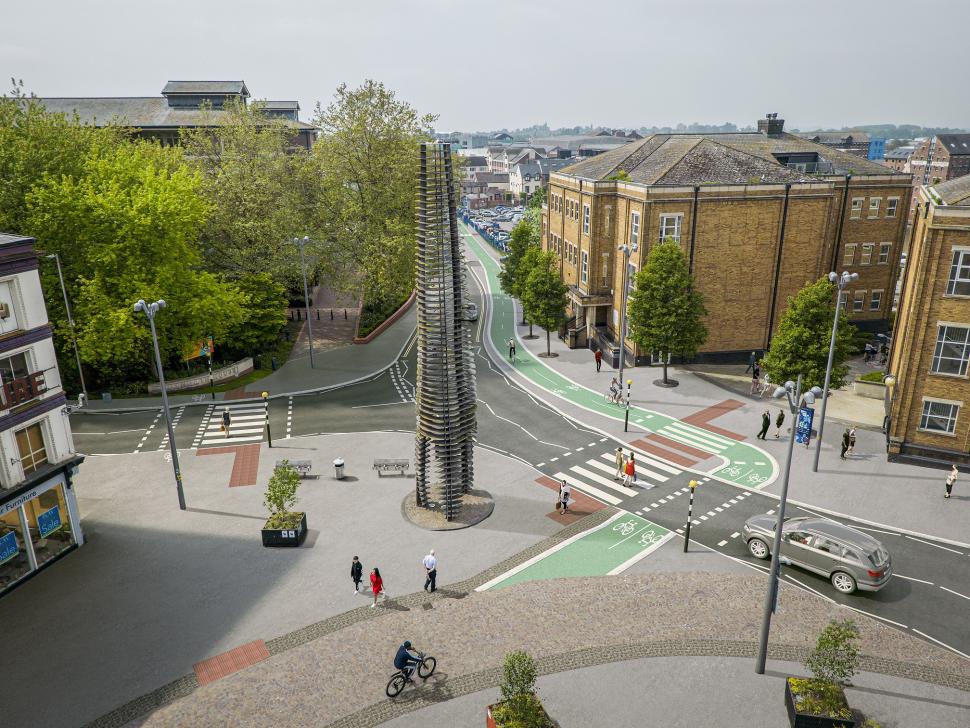
Now, with the construction underway, Cllr Trimnell is back in the local press raising concerns with the impact the active travel infrastructure will have on the city’s aesthetics.
“No consideration has been given to the historic nature of the city,” she told the Gloucester News Centre. “It has changed the whole ambience of this area of the city and certainly not in a good way.
“I have been getting a lot of complaints from residents and rightly so, anyone who remembers what this area was like prior to these works would say that it has simply been wrecked. I went for a walkabout with officers from the county who tried to reassure me that it would look okay, after the last time I objected to the York stone being taken up outside the church on Northgate Street. Personally, I wasn’t convinced then and I am even less convinced now.”
Comments on social media suggested some in the community agree with the councillor, others suggesting it has made the road layout more confusing too. However, there was also a local resident arguing parts of the city centre’s cobbled paving need “sorting” due to trip hazards, and another saying the new cycle route is “the least of the city centre’s concerns”.
In response to the criticism and concerns, Gloucestershire County Council has insisted the construction phase remains ongoing and a contractor will apply an imprinted asphalt finish to some sections on footways.
“This process involves heating the asphalt and pressing a patterned template into the surface to replicate the appearance of hand-laid paving stones,” a spokesperson told the Local Democracy Reporting Service.
“The surface is then coated in a colour specifically chosen to complement the surrounding environment. This method not only maintains the visual integrity of the area but also offers practical benefits, being more flexible and quicker to install, resulting in much less disruptions to businesses in the area.”


-300x199.jpg "“He wants bikes in traffic lanes. Give him what he wants”: Cyclists urged to “slow every street down to bicycle speed” and ride in middle of lane amid premier’s war on cycle paths + more on the live blog")

















15 thoughts on ““It has changed the whole ambience of this area of the city”: Backlash over “tacky” cycle lane resurfacing which furious politician claims has “wrecked” historic stone paving”
I would have said that
I would have said that changing the ambience of Northgate Street is no bad thing at all.
Odd how hundreds of cars
Odd how hundreds of cars littering the place never seems to qualify as having any impact on “the historical nature” or “ambience” of anywhere isn’t it?
This has absolutely nothing
This has absolutely nothing to do with cycle lanes and everything to do with cheap councils. Everywhere you go, this is how they fix stuff. I was in France earlier in the year and they were replacing/fixing large tracts of cobbled pavement/road and they were replacing like with like. It didn’t even look “historic”.
In the UK you see this everywhere. Nice brickwork that needs patching? Tarmac it. Cobbles need fixing? Tarmac. Road needs fixing? Tarmac it really badly so that its not flat and sits up 5mm proud of the surrounding road. Meh, its fine, cars won’t notice and who else is there to worry about?
“Gloucester resident claims
“Gloucester resident claims place has been ‘wrecked’ by lack of sufficiently plush stone used in roadworks” (is this right)?
While noting that you can certainly have smart pedestrian and cycling infra, and that nothing in eg. NL where they have it everywhere stops fussy residents / historic places from varying eg. colours used… having sufficiently *legible* designs is vital. (Because even a bright red cycle path will not stop clue some people in to “change in environment here” apparently, leading to them falling over / driving over it without checking for cyclists).
But it does sound like either Mrs. Bucket snobbishness or a total “but cycling / but change” whinge.
The LibDems should disown
The LibDems should disown this spiritual Tory/ Reform woman!
“….anyone who remembers
“….anyone who remembers what this area was like prior to these works would say that it has simply been wrecked.”
The stupidity of this statement can hardly be exaggerated, and the person making it can immediately be dismissed as either delusional or deliberately, grossly, maliciously turning a major improvement into a failure. Not surprising that the rest of the LDs don’t agree with her.
“It has changed the whole ambience of this area of the city”
Yes, from being a completely car-dominated disaster to being not quite so totally car-dominated.
Wrecked? No, this is wrecked:
They should restore it to its
They should restore it to its historic glory.
ITYM
ITYM
Isn’t that everywhere already
Isn’t that everywhere already post-Brexit? (Also simultaneously extremely “productive” compared to the continent – perhaps those are hedge-fund-banks?)
That’s better – much more
That’s better – much more productive now.
They’re the magic money trees
They’re the magic money trees!
We have a green party
We have a green party councillor around here in Southampton who opposes active travel infrastructure. I don’t know what’s wrong with her.
You’d expect the Lib Dems to change with whatever way the wind is blowing however.
I used to work in Gloucester
I used to work in Gloucester to repair and maintain on street parking pay and display machines, i never got the impression that it was a wonder place worthy of celebration, more that it was a bit backward thinking and run down. I was glad to hear they have started to improve things as I generally avoid going into Gloucester for any reason if I can help it.
The war against cyclists goes
The war against cyclists goes on – I expect they complain about cloud formations because some look like cyclists.
Interesting nugget- the CGI
Interesting nugget- the CGI crossing in article currently has a zebra with no beacons (see my pic). The only ‘non sideroad’ example I know on a busy road. Not sure how it came about