


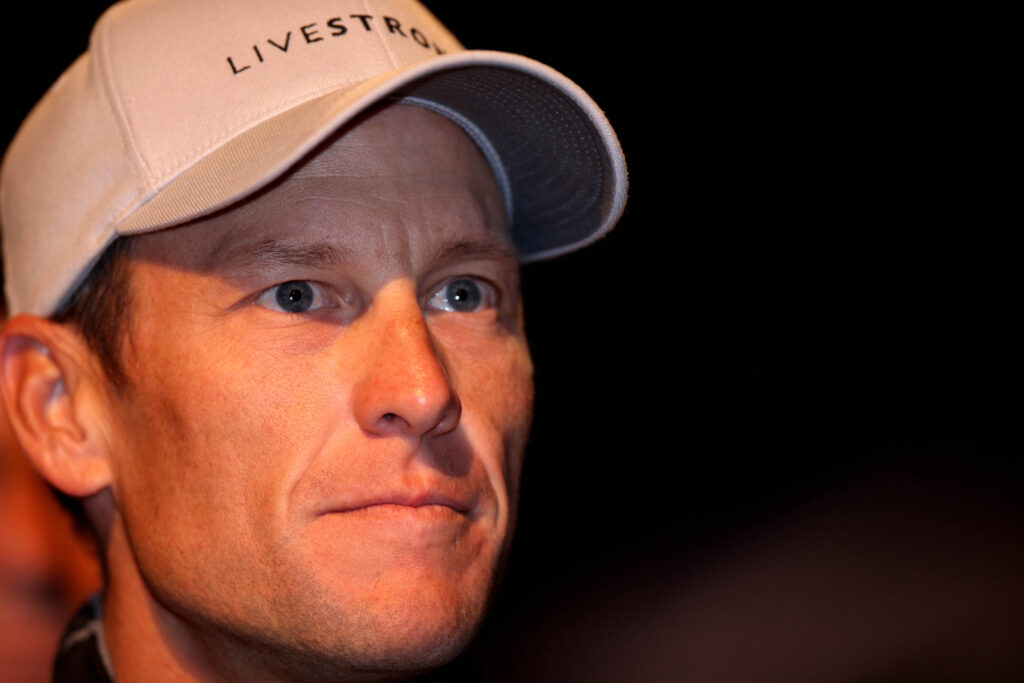

Lance Armstrong's legal problems abated slightly yesterday when a federal judge threw out a class-action lawsuit brought by readers of his bestselling books.
According to USA Today, US district Judge Morrison England ruled that the content of Armstrong's books was fully covered by the First Amendment, which protects freedom of speech in the US.
"The Court concludes, despite plaintiffs' allegations that the Armstrong books contained false and misleading statements, that the content of the books is afforded full First Amendment protection," Judge England wrote in his ruling.
Lawyers representing Armstrong’s readers had brought a class-action suit against the disgraced former Tour de France winner, demanding $5 million in refunds and other damages. They said that his books, including his autobiographies, had been based on the lie that he did not take performance enhancing drugs.
Acknowledging that the content of the books was covered by the First Amendment, the plaintiffs alleged that promotional materials for the books amounted to commercial speech, which has less protection under the First Amendment, and that Armstrong and his publishers had deceived them. They claimed that they would not have bought the books had they known Armstrong was a dope cheat.
Judge England rejected that argument.
"The promotional materials relating to the Books are inextricably intertwined with the books' contents, which is non-commercial speech," England wrote. "Thus, these promotional materials are also entitled to full First Amendment protection as noncommercial speech."
Armstrong is still fighting several other fraud cases. The most serious is that brought by the federal government which has joined the whistle-blower case brought by Floyd Landis. If he loses that case, Armstrong faces a bill of up to $120 million for defrauding the US Postal Service when it sponsored his team between 1999 and 2004.
In addition SCA Promotions is suing for the $12 million in win bonuses it paid Armstrong for his 2002-2004 Tour de France victories, and Acceptance Insurance wants back $3 million in bonuses it paid for his 1999-2001 titles.












6 thoughts on “US judge rejects book fraud case against Lance Armstrong”
This was always a completely
This was always a completely ridiculous action, even by US standards of bonkers lawsuits.
Glad it’s been chucked out. Not defending LA by any means, but the non-fiction shelves in bookshops the world over are groaning under the weight of the falsehoods they contain.
An autobiography is a
An autobiography is a fictional account of your own life.
An Autobiography is not a
An Autobiography is not a fictional account of your own life, it is a story of the events of your life as you choose to tell them, there is no requirement for this to be completely truthful, I’ve read many a book that has described the same event buy with 2 completely different views on the truth and I’m not talking about cycling books either.
Thank you random US judge for
Thank you random US judge for dismissing what can only be considered a frivolous lawsuit. Yes, Armstrong lied but hey you believed it even when there were critics. Lance deserves his punishment but don’t be stupid about it
I have to say that I think it
I have to say that I think it has some merit to it. After all you buy an autobiography based upon the idea that it is a factual account of someone’s life.
However, it appears the judge decided that (and probably rightly) history is written by the victors, and that essentially most history is an embellishment of reality. And so Armstrong was not breaking any tradition/notion of what an autobiography is.
David Walsh gets sued by
David Walsh gets sued by Lance for writing the truth, Lance writes a book of tosh masquerading as the truth and nothing happens….Oh the irony…