


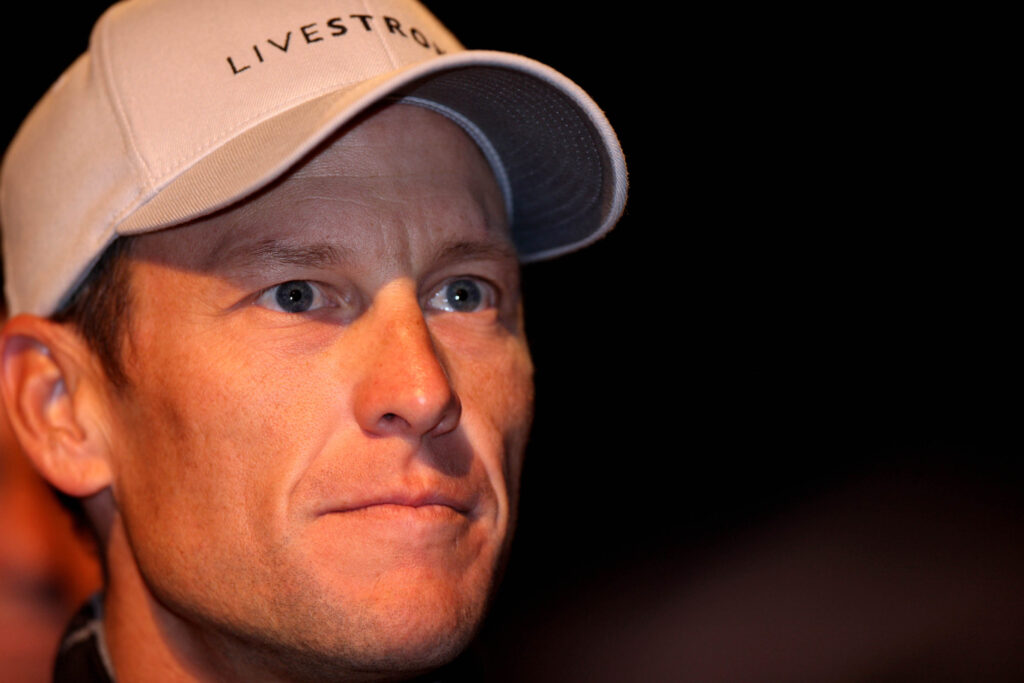

An edition of the CBS TV programme 60 Minutes Sports to be broadcast tomorrow claims that Lance Armstrong offered the United States Anti-Doping Agency a ‘donation’ of around $250,000 in 2004, which the agency flatly declined.
A report on the CBS News website contains details of an interview conducted for the programme with USADA chief executive Travis Tygart, who led the investigation against Armstrong and others associated with his former US Postal Service team.
Tygart, referring to the proposed donation of what he confirmed was "around [the] ballpark" of $250,000, said: “I was stunned. It was clear – it was a clear conflict of interest for USADA."
He added: "We had no hesitation in rejecting that offer."
Armstrong's attorney, Tim Herman, denied to USA Today that any such offer had been made, saying: "No truth to that story. First Lance heard of it was today. He never made any such contribution or suggestion."
The reported episode, if true, has clear parallels with the controversial donations that he made more than a decade ago totalling $125,000 to the UCI.
UCI president Pat McQuaid said in 2010, “You have to consider that at the time, in 2002, no accusations against Lance Armstrong had been made. They've all came up since then.”
They’d certainly come up by 2005, the year of Armstrong’s seventh and final Tour de France victory – he’s now been stripped of those titles, of course – when the UCI’s accounts department reminded him that he still had to pay $100,000 of the promised sum, which he duly did.
On the 60 Minutes show Tygart describes USADA’s decision to pursue Armstrong once the Department of Justice had dropped its own investigation into him – a move he found “baffling” – as “a fight for the soul of sport.”
It’s not the first time 60 Minutes has turned its attention to the Armstrong affair. In May 2011, while the Federal investigation into US Postal that was subsequently dropped was still ongoing, Tyler Hamilton appeared in an episode in which he admitted his own doping and made detailed allegations against Armstrong and others connected to the team.
His testimony would later form a crucial part of USADA’s case against Armstrong.















6 thoughts on “Travis Tygart says Lance Armstrong offered USADA $250,000 ‘donation’”
Smells like Tygart is
Smells like Tygart is regrouping for another tilt at the UCI and their unethical history with Armstrong. Could this be the deal for Lance’s confession? Give us Fat Pat and you can get off early?
step-hent wrote:Smells like
I’d like that to happen. I would like the UCI pulled through the mangle for the decades of complacency, collusion, deceit and nepotism the public and peloton have been subjected to at the hands of Verbruggen, McQuaid and co.
I’d love for Armstrong to
I’d love for Armstrong to come clean and tell us all where the bodies are buried. The trouble is, neither WADA nor USADA can grant Armstrong immunity from the criminal charges and civil cases that would follow.
So, who do we believe here –
So, who do we believe here – LA or Tygart? Mmmm, let’s see whose got form for lying, deceit serial sporting fraud etc….. 😕
Interesting that Fat McQuaid
Interesting that Fat McQuaid thinks that no accusations had come up before 2002. There was already an avalanche of accusations from his very first Tour win in 1999, when he tested positive for cortisone and then provided a back-dated medical certificate. If the sh*t show that is Verbruggen and McQuaid had applied the rules there and then, he would never even have won a single Tour. The rules are quite clear – any therapeutic use of cortisone must have a pre-declared medical authorization. As he had not presented anything before the test, nor declared his use at the time of the test, he should have been booted out there and then. 99% of the French press (+ others, notably David Walsh in his Sunday Times pieces during that year’s race) pointed this out, including Pierer Ballester who worked at L’Equipe, who lest we forget, are part of ASO, the Tour organisers. I WOULD LOVE TYGART TO GET MCQUAID AND VERBRUGGEN.
theclaw wrote:Interesting
My girlfriend is reading about Pantani’s demise. But she’s been staggered by the collusion between the international and national cycling organisations that passed over his very suspect blood values.
It makes me think that if you did actually do the right tests and took action you would catch the cheats. It just takes someone to do something, but with Verbruggen/McQuaid that patently hasn’t happened. Do these guys have no scruples?