Live blog: Sustrans launch major overhaul of National Cycle Network; “It’s just not true to say the cause of congestion is cyclists,” says Mayor of London + more
Please note that our live blog can sometimes be slow to load. If it seems to be taking way too long, please refresh you browser.
Help us to bring you the best cycling content
If you’ve enjoyed this article, then please consider subscribing to road.cc from as little as £2.49. Our mission is to bring you all the news that’s relevant to you as a cyclist, independent reviews, impartial buying advice and more. Your subscription will help us to do more.
Simon joined road.cc as news editor in 2009 and is now the site’s community editor, acting as a link between the team producing the content and our readers. A law and languages graduate, published translator and former retail analyst, he has reported on issues as diverse as cycling-related court cases, anti-doping investigations, the latest developments in the bike industry and the sport’s biggest races. Now back in London full-time after 15 years living in Oxford and Cambridge, he loves cycling along the Thames but misses having his former riding buddy, Elodie the miniature schnauzer, in the basket in front of him.
14 Comments
14 thoughts on “Live blog: Sustrans launch major overhaul of National Cycle Network; “It’s just not true to say the cause of congestion is cyclists,” says Mayor of London + more”
“..the Association of British
“..the Association of British Insurers (ABI) says that a widely reported claim last week by the government that drivers who undertake cycle awareness training will benefit from lower motor insurance premiums is nonsense.”
I find that hard to believe. Surely the government wouldn’t lie to us? And I’m sure the 2014 review of road laws will be with us any day.
The news about the Unblock the Embankment Campaign is yet another demonstration of special interest groups hijacking our so-called democracy, a bit like fracking and Brexit. The majority of people support more spending on cycling and walking, but all the money goes on massive road schemes and ego-schemes like HS2.
in 2017 less than 0.1 per cent of motor claims involved cyclists, so it is hard to see how this could have any meaningful impact on premiums
Maybe not, but it might have a meaningful effect on general road safety… But I guess “general road safety” isn’t a monetised quantity that the ABI is interested in.
in 2017 less than 0.1 per cent of motor claims involved cyclists, so it is hard to see how this could have any meaningful impact on premiums
— brooksby
Maybe not, but it might have a meaningful effect on general road safety… But I guess “general road safety” isn’t a monetised quantity that the ABI is interested in.
If it was the have an effect on general road safety ( I’m not arguing that it woudn’t) the Government should be paying for it as they are the ones who would be benefiting from it, not expect the insurance industry to pay for it, for ( as it turns out) no benefit to the industry.
in 2017 less than 0.1 per cent of motor claims involved cyclists, so it is hard to see how this could have any meaningful impact on premiums
— marcswales
Maybe not, but it might have a meaningful effect on general road safety… But I guess “general road safety” isn’t a monetised quantity that the ABI is interested in.
— brooksby
If it was the have an effect on general road safety ( I’m not arguing that it woudn’t) the Government should be paying for it as they are the ones who would be benefiting from it, not expect the insurance industry to pay for it, for ( as it turns out) no benefit to the industry.
The Government’s money is our money, from taxes.
So, if we want general road safety then we should pay for it as we would be the ones benefiting from it. Rather than expecting the insurance industry to pay for it because they’re the ones who would benefit (since they wouldn’t have to pay out so many claims…?).
in 2017 less than 0.1 per cent of motor claims involved cyclists, so it is hard to see how this could have any meaningful impact on premiums
— brooksby
Maybe not, but it might have a meaningful effect on general road safety… But I guess “general road safety” isn’t a monetised quantity that the ABI is interested in.
It may not have much of an impact on insurance rates in general, but on a personal level, if you’ve taken the course you would presumably be a better driver, therefore avoid premium rate increases by avoiding accidents?
I work in the insurance industry and the first we heard of discounts for those who complete the bikeability course was when we read it in the press; the industry weren’t consulted prior to the paper being published. Surely, asking the industry what could be done should have been the starting point?
I work in the insurance industry and the first we heard of discounts for those who complete the bikeability course was when we read it in the press; the industry weren’t consulted prior to the paper being published. Surely, asking the industry what could be done should have been the starting point?
— scouser_andy
Of course, ask insurers and they are bound to say ‘We aren’t paying for this,’ aren’t they? Don’t be fooled — this is just their first shot in a negotiation.
But there will probably be a proper consultation, when the industry can have their say and you’ll see how much public support there is for the idea. If enough people think it’s worth taking the training to get the discount, it’s more likely to happen, and the industry would be hard-pressed to argue against so many of their own customers. So they try to shoot it down before the idea gets established. Standard tactics.
If, to be fair, they do have a point, the government should waive insurance tax for people who have been trained. That is entirely in the government’s hands.
The Telegraph report is quoting a press release from the ABI last week – as the industry wasn’t consulted then the other option is that the Government rebate part of the tax on insurance policies to those that qualify (and those that can manage a way to fraud the system)
Lots of nice words in that cycling safety review document – but virually nothing on funding. Not talking to the insurers in advance of the proposal kinda shows up how much of a priority this cycling review is for the DfT……
Sadiq – what tosh, can’t you see all those queues are queues of bikes ? All the cars have got home already as they are such space efficient vehicles, while the inneficient cycles are clogging up the roads. . . . . . Oh wait, I may have got those two means of transport transposed there.
Increased numbers of vans, and particularly PHVs (whom oddly get their licence to operate in the city from Sadiq’s TfL) don’t help.
Multiple “local collection points” across the central areas so people can collect parcels on their way to the tube home, and stopping the vast number of short stop/start runs by mainly diesel vans would be a big help. Offering incentives to the delivery firms to swap over to electric vans where they have to deliver in a stop/start cycle. And cutting the numbers of PHVs in the centre would reduce queues and make cycling a lot less dangerous.
Sadiq – what tosh, can’t you see all those queues are queues of bikes ? All the cars have got home already as they are such space efficient vehicles, while the inneficient cycles are clogging up the roads. . . . . . Oh wait, I may have got those two means of transport transposed there.
Increased numbers of vans, and particularly PHVs (whom oddly get their licence to operate in the city from Sadiq’s TfL) don’t help.
Multiple “local collection points” across the central areas so people can collect parcels on their way to the tube home, and stopping the vast number of short stop/start runs by mainly diesel vans would be a big help. Offering incentives to the delivery firms to swap over to electric vans where they have to deliver in a stop/start cycle. And cutting the numbers of PHVs in the centre would reduce queues and make cycling a lot less dangerous.
— StuInNorway
Except that’s not strictly true about the PHV licenses, there was a report earlier this year saying that there’s a loophole in the law being exploited by PHV operators which allows them to get a license elsewhere (say, Luton), but then only ever operate in London.
Except that’s not strictly true about the PHV licenses, there was a report earlier this year saying that there’s a loophole in the law being exploited by PHV operators which allows them to get a license elsewhere (say, Luton), but then only ever operate in London.
— alexb
Time to introduce proper controls on that then…. along the lines of foreign truckers coming into Norway, they are allowed 3 internal jobs within a week before they leave the country again, to stop companies flagging out their fleet to eastern Europe and paying them a pittance, and on the jobs within Norway they have to pay the Norwegian minimum wage (about 6x what the eastern europeans are on)
The Sustrans story sums up sublimely the problem with our transport system today; the government spends hundreds of billions of pounds of our money on road and rail schemes with very little benefit to society or public support, while walking and cycling schemes with absolutely huge benefits and massive public support are left to a charity.
Sheer lunacy and there is something profoundly wrong with our system of government.
I was a few bikes away from the fatal collision during Ride London a few years ago, I barely avoided the victim's dog which was running loose. Definitely one of those slo-mo adrenaline fuelled moments and I was only doing about 40kph. At lead out speeds it really doesn't bear thinking about.
@Xenophon2 "That’s a lot of batteries to keep track of, to the point that I have a dedicated charger with 3 m USB-C cable in my office, another one at home. Can’t imagine having to deal with another battery such as on the Flight Attendant."
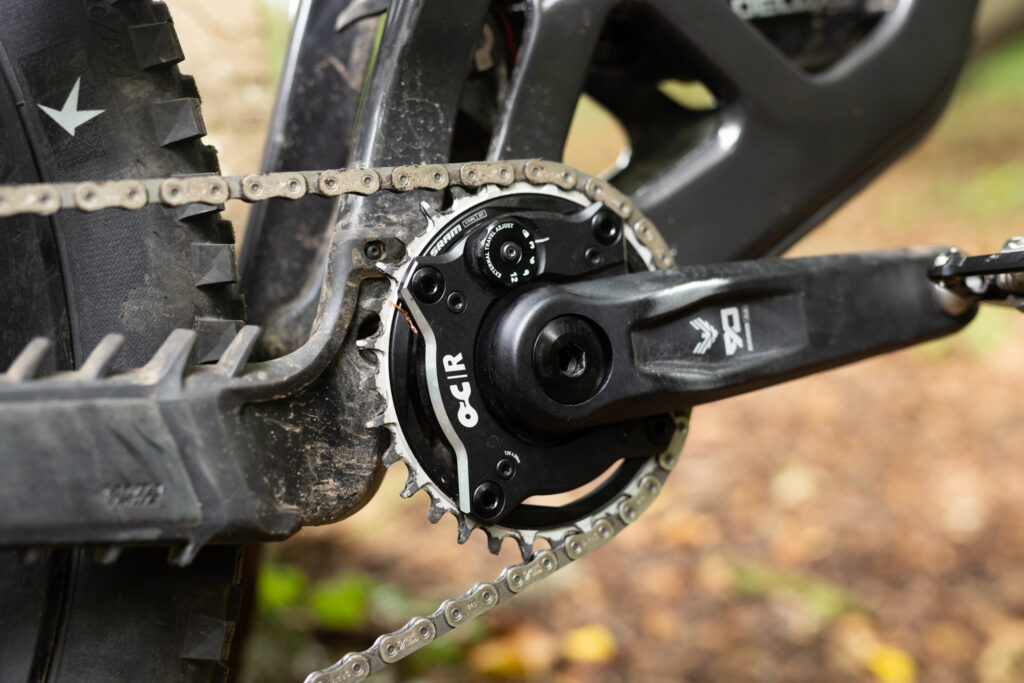
Top tip: In reality most of the SRAM stuff lasts a month or two even with pretty heavy usage. I just charge all the batteries on the last Sunday of every month and have yet to be caught out. The SRAM batteries are so cheap / small / light it's also worth keeping a spare in a saddle bag or similar.
@chrisonabike
There does seem to be evidence that 20 mph limits work on roads that already lend themselves to such low speeds, and I do think the lack of a 25 mph limit option is an issue for some roads.
Speed limits should especially not be set very low in the hope that many or most drivers will only exceed them by a set amount because, not only is it not true that many people drive like that, the opposite can happen. Instead of targeting the drivers most likely to cause harm, you're putting the prohibition onto the behaviour of more sensible drivers and forcing the police to target them. The DfT guidance used to have a paragraph calling out this presumption.
The extent to which road design and conditions at the time dictate traffic speeds is too stark to ignore. I've seen urban roads with signed 40 mph limits have lower average speeds than some roads with posted 20 mph limits. And yes, that road in Gloucester has signs openly inviting drivers to go faster, and almost none of them do: the non-compliance was about 2%. Compare that to over 99% non-compliance on some roads in Wales.
What I'm mainly talking about is the increasing imposition of 20 mph limits on much higher-standard main roads. That's where you see extreme levels of non-compliance. In some cases, the average speed has even been known to go up after the limit has gone down. Showing such contempt just brings speed limits into disrepute and my contention is that drivers should take speed limits seriously.
@chrisonabike
There does seem to be evidence that 20 mph limits work on roads that already lend themselves to such low speeds, and I do think the lack of a 25 mph limit option is an issue for some roads.
Speed limits should especially not be set very low in the hope that many or most drivers will only exceed them by a set amount because, not only is it not true that many people drive like that, the opposite can happen. Instead of targeting the drivers most likely to cause harm, you're putting the prohibition onto the behaviour of more sensible drivers and forcing the police to target them. The DfT guidance used to have a paragraph calling out this presumption.
The extent to which road design and conditions at the time dictate traffic speeds is too stark to ignore. I've seen urban roads with signed 40 mph limits have lower average speeds than some roads with posted 20 mph limits. And yes, that road in Gloucester has signs openly inviting drivers to go faster, and almost none of them do: the non-compliance was about 2%. Compare that to over 99% non-compliance on some roads in Wales. So no, when speed limits match the road, compliance is much higher, but speeds are not.
What I'm mainly talking about is the increasing imposition of 20 mph limits on much higher-standard main roads. That's where you see extreme levels of non-compliance. In some cases, the average speed has even been known to go up after the limit has gone down. Showing such contempt just brings speed limits into disrepute and my contention is that drivers should take speed limits seriously.
@jaymack Yes...to an extent, and I'm happy at the moment with my twelve-year-old Dura Ace mechanical, but I must admit when I had Ultegra Di2 I did notice not so much the ease of shifting but the perfect trimming of the gears after every shift so that the chainline was always absolutely perfect and that did enhance the simple pleasure of being outside, for me anyway. At least until that day I forgot to charge the battery which died at the turnaround on an eighty-mile ride and had to ride a very lumpy forty miles home stuck in 50x14...
@Daclu Trelub Well no, given that I object to the use of derogatory slurs against people with mental health issues I think I'll "bother" the person who's using derogatory slurs against people with mental health issues.
Have a little think, if capable: if your mother or someone else close to you had dementia or mental health issues, would you be happy for people to be pointing at them mockingly saying, "Looks like she's a few chips short of a fish supper"? Stop it.
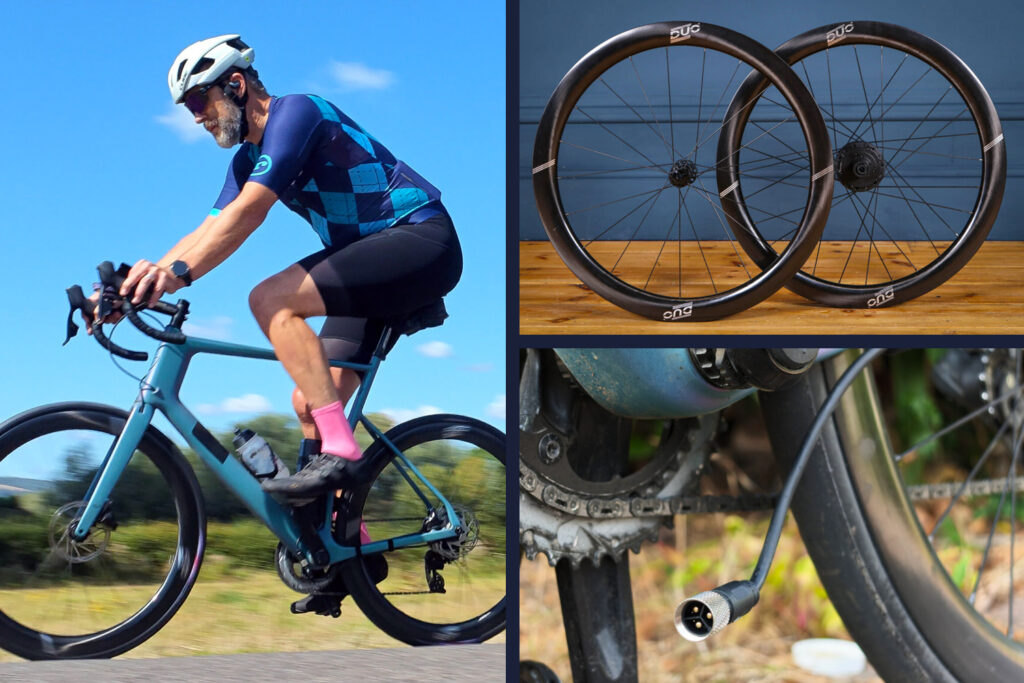
I'm sure electronic gears, pedals, seat posts etc. are each a modern marvel but they all seem to solve a problem I've never encountered. However I have encountered others faffing while searching for batteries, cables and even a firmware update. All of which just gets in the way of cycling's simple pleasure - being outside
@Daclu Trelub Yeah...that sort of expression is OK when being jocular about someone who's a bit dense or slow on the uptake, is it really appropriate for someone who quite obviously has mental health/dementia issues?
I'm a bit on the fence. Currently riding a gravel bike with a Force AXS XPLR groupset, Favero assioma pro powermeter pedals, Garmin varia rear light, lupine front light, Edge 1040. That's a lot of batteries to keep track of, to the point that I have a dedicated charger with 3 m USB-C cable in my office, another one at home. Can't imagine having to deal with another battery such as on the Flight Attendant.
BUT....everything's dead easy to set up, no cables to route through the frame, no cable stretch, no derailleur adjustment.....









14 thoughts on “Live blog: Sustrans launch major overhaul of National Cycle Network; “It’s just not true to say the cause of congestion is cyclists,” says Mayor of London + more”
“..the Association of British
“..the Association of British Insurers (ABI) says that a widely reported claim last week by the government that drivers who undertake cycle awareness training will benefit from lower motor insurance premiums is nonsense.”
I find that hard to believe. Surely the government wouldn’t lie to us? And I’m sure the 2014 review of road laws will be with us any day.
The news about the Unblock the Embankment Campaign is yet another demonstration of special interest groups hijacking our so-called democracy, a bit like fracking and Brexit. The majority of people support more spending on cycling and walking, but all the money goes on massive road schemes and ego-schemes like HS2.
Quote:
Maybe not, but it might have a meaningful effect on general road safety… But I guess “general road safety” isn’t a monetised quantity that the ABI is interested in.
brooksby wrote:
Maybe not, but it might have a meaningful effect on general road safety… But I guess “general road safety” isn’t a monetised quantity that the ABI is interested in.
If it was the have an effect on general road safety ( I’m not arguing that it woudn’t) the Government should be paying for it as they are the ones who would be benefiting from it, not expect the insurance industry to pay for it, for ( as it turns out) no benefit to the industry.
marcswales wrote:
The Government’s money is our money, from taxes.
So, if we want general road safety then we should pay for it as we would be the ones benefiting from it. Rather than expecting the insurance industry to pay for it because they’re the ones who would benefit (since they wouldn’t have to pay out so many claims…?).
brooksby wrote:
Maybe not, but it might have a meaningful effect on general road safety… But I guess “general road safety” isn’t a monetised quantity that the ABI is interested in.
It may not have much of an impact on insurance rates in general, but on a personal level, if you’ve taken the course you would presumably be a better driver, therefore avoid premium rate increases by avoiding accidents?
I work in the insurance
I work in the insurance industry and the first we heard of discounts for those who complete the bikeability course was when we read it in the press; the industry weren’t consulted prior to the paper being published. Surely, asking the industry what could be done should have been the starting point?
scouser_andy wrote:
Of course, ask insurers and they are bound to say ‘We aren’t paying for this,’ aren’t they? Don’t be fooled — this is just their first shot in a negotiation.
But there will probably be a proper consultation, when the industry can have their say and you’ll see how much public support there is for the idea. If enough people think it’s worth taking the training to get the discount, it’s more likely to happen, and the industry would be hard-pressed to argue against so many of their own customers. So they try to shoot it down before the idea gets established. Standard tactics.
If, to be fair, they do have a point, the government should waive insurance tax for people who have been trained. That is entirely in the government’s hands.
The Telegraph report is
The Telegraph report is quoting a press release from the ABI last week – as the industry wasn’t consulted then the other option is that the Government rebate part of the tax on insurance policies to those that qualify (and those that can manage a way to fraud the system)
Lots of nice words in that
Lots of nice words in that cycling safety review document – but virually nothing on funding. Not talking to the insurers in advance of the proposal kinda shows up how much of a priority this cycling review is for the DfT……
Sadiq – what tosh, can’t you
Sadiq – what tosh, can’t you see all those queues are queues of bikes ? All the cars have got home already as they are such space efficient vehicles, while the inneficient cycles are clogging up the roads. . . . . . Oh wait, I may have got those two means of transport transposed there.
Increased numbers of vans, and particularly PHVs (whom oddly get their licence to operate in the city from Sadiq’s TfL) don’t help.
Multiple “local collection points” across the central areas so people can collect parcels on their way to the tube home, and stopping the vast number of short stop/start runs by mainly diesel vans would be a big help. Offering incentives to the delivery firms to swap over to electric vans where they have to deliver in a stop/start cycle. And cutting the numbers of PHVs in the centre would reduce queues and make cycling a lot less dangerous.
StuInNorway wrote:
Except that’s not strictly true about the PHV licenses, there was a report earlier this year saying that there’s a loophole in the law being exploited by PHV operators which allows them to get a license elsewhere (say, Luton), but then only ever operate in London.
alexb wrote:
Time to introduce proper controls on that then…. along the lines of foreign truckers coming into Norway, they are allowed 3 internal jobs within a week before they leave the country again, to stop companies flagging out their fleet to eastern Europe and paying them a pittance, and on the jobs within Norway they have to pay the Norwegian minimum wage (about 6x what the eastern europeans are on)
I thought that looked more
I thought that looked more like a weasel.
If only there was a decent way to tell the difference…
The Sustrans story sums up
The Sustrans story sums up sublimely the problem with our transport system today; the government spends hundreds of billions of pounds of our money on road and rail schemes with very little benefit to society or public support, while walking and cycling schemes with absolutely huge benefits and massive public support are left to a charity.
Sheer lunacy and there is something profoundly wrong with our system of government.