



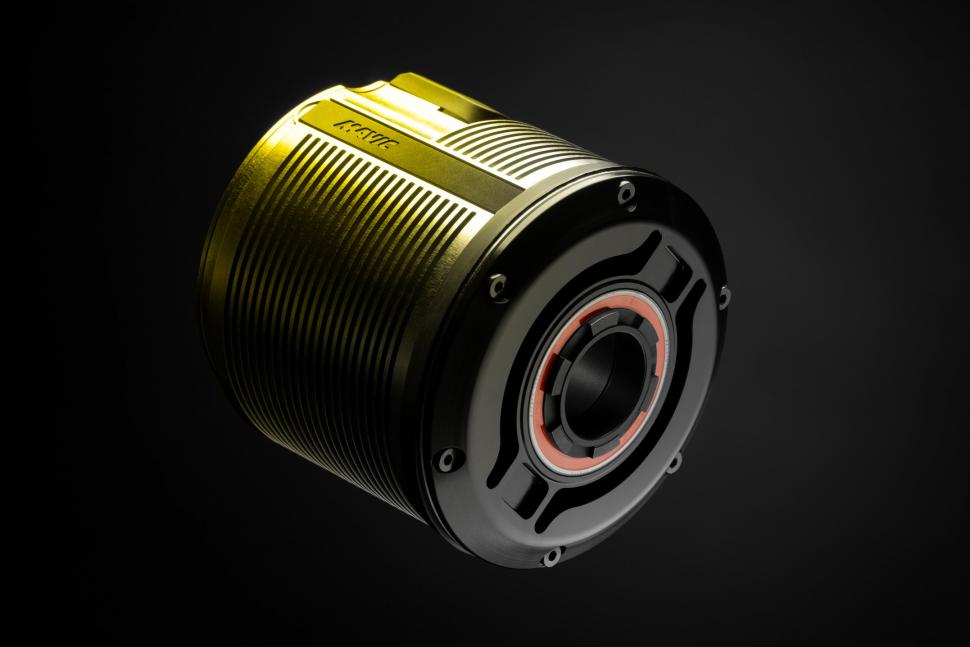
Mavic has unveiled an e-bike motor called the X-Tend. No, we weren’t expecting it either. But it’s something it has been working on behind the scenes for a long time, and the time has come to show it to the world. But not because you’re going to be able to buy a bike with one fitted any time soon. More on that in a bit.
So why an e-bike motor, and why now? Well, Mavic’s recent troubles and subsequent turnaround are well-documented. But if you don’t know your recent Mavic history, after parting company with the Amer Sports Group in 2018 the company went into receivership in 2020, only to be saved by investment from a family-led holding firm, the Bourrelier Group. At the time the new owners said, “Mavic must rediscover the dimension of a family SME… and with a refocus on what has made the success of the brand”, and the rebirth of the company has been impressive.

Now operating out of a brand new €10m headquarters and production facility on the outskirts of Annecy, France, the company has scaled down to about a third of its turnover and returned to its innovative roots: earlier this year it presented the new carbon-spoked Cosmic Ultimate wheelset, which we saw being made by hand in the new Annecy facility.
> Mavic launches new Cosmic Ultimate wheelset
The X-Tend project predates the change of ownership – the motor has been in development for five years – and has been enthusiastically backed by the new owners. Mavic of course isn’t a stranger to electronic innovation: back in 1993 it introduced Mavic Zap, the first commercially available electronic derailleur, 16 years before Shimano’s first-generation Di2 hit the shelves. Chris Boardman famously used the Zap components to ride into the yellow jersey in both the 1994 and 1997 Tour de France prologues. Mavic followed Zap with the equally futuristic but less successful Mektronic wireless groupset in 1999.
Mavic X-Tend ebike motor – the details
Anyway, back to the new X-Tend motor. Let’s get some headline stats out of the way. This is a compact and lightweight mid motor system, with a full system weight of 3.2kg. That’s the same as other systems you’ll find out in the wild already, such as the Mahle ebikemotion X20, but there are significant differences here.
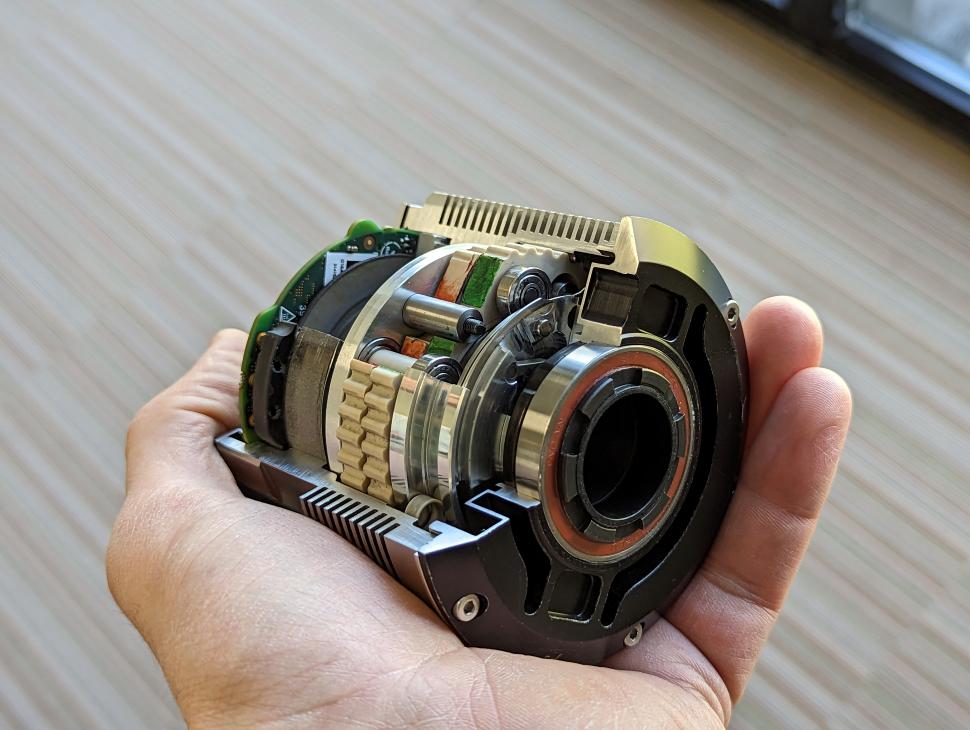
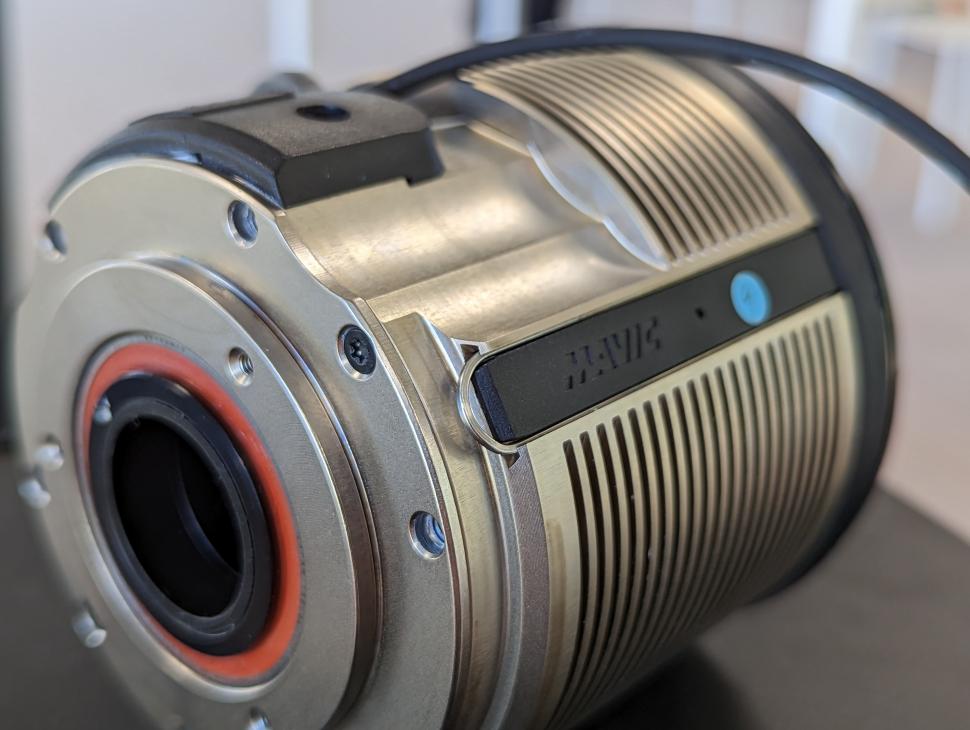
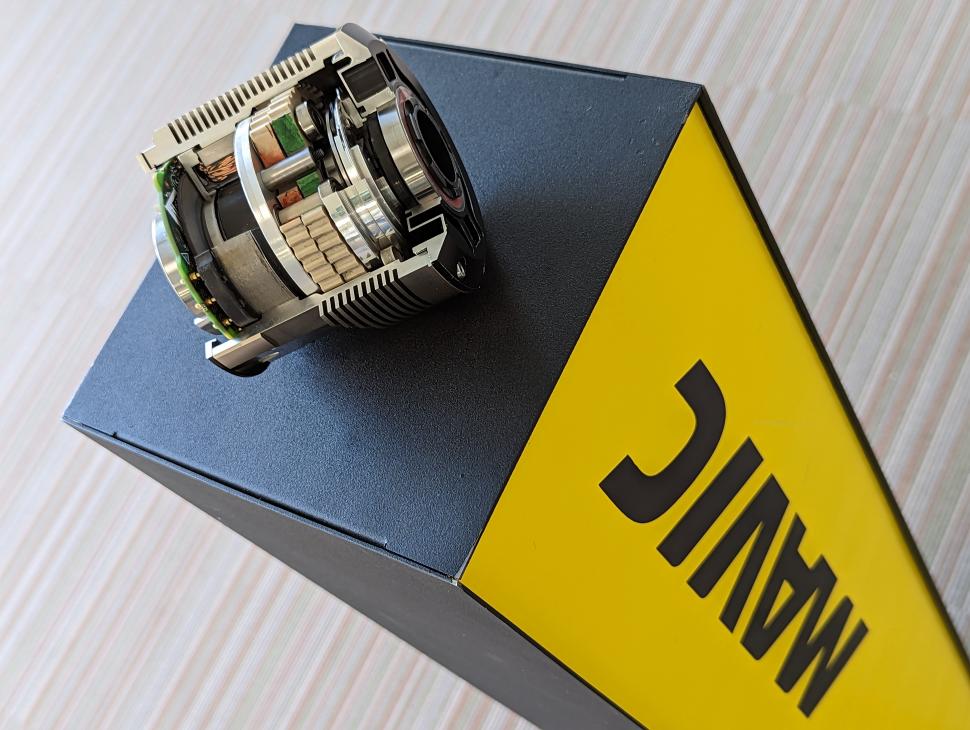
Firstly, and most importantly, it’s a mid motor. The X-Tend motor is a fully cylindrical unit that’s just 87mm in diameter and weighs less than 1.2kg. To put that into context, other lightweight mid drives – the Specialized SL1.1, the TQ HPR50, the Bafang M800, the Fazua Ride 60 – all weigh at least half a kilo more than that, and in some cases over a kilo more. It really is very light indeed. The X-Tend has a nominal power of 250W, so it falls within EU pedelec rules. That’s the continuously rated power: Mavic says the system can supply up to 390W in bursts. Similarly, the torque is rated at 39Nm, with up to 50Nm available in ‘boost’ mode.
The Mavic engineers told us that they did think about making the system with a hub motor “for a few moments” but they were pretty sold on a mid motor from the start: it’s better for weight distribution and handling, it makes wheel changes simple (important if you’re in the business of selling aftermarket wheels), and the fact that the motor speed is linked to your cadence and not to your wheel speed means that it can be made more efficient and more powerful at lower speeds, which is good news for climbing.
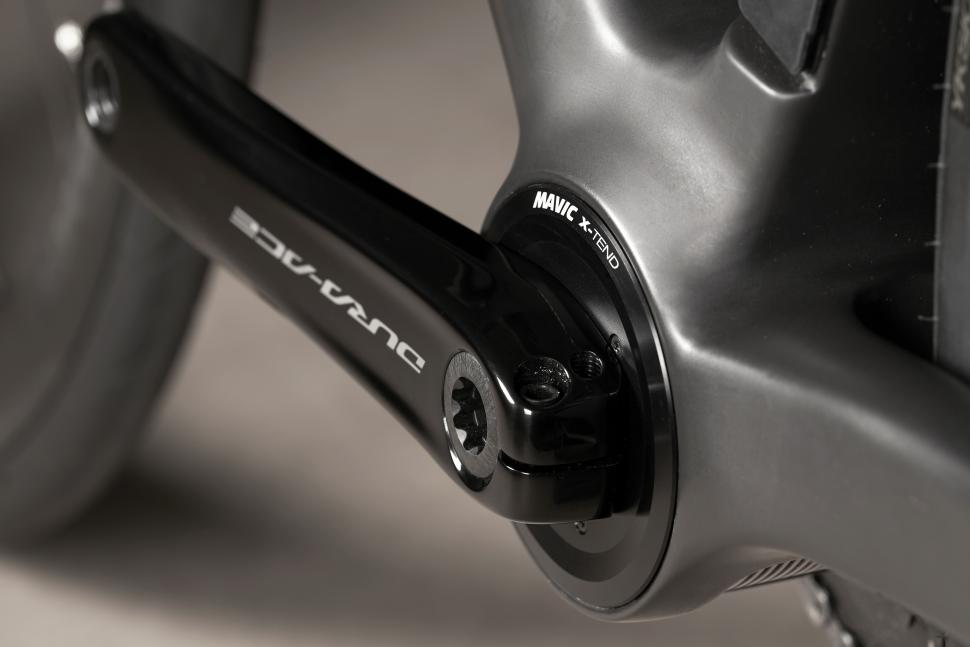
A major difference between this mid motor and every other mid motor (with the exception of Rocky Mountain’s Powerplay system, but that’s a very different beast) is that it uses a standard crankset. You can fit any Shimano Hollowtech II cranks – double road cranksets, single-ring gravel or MTB units – and it’ll work just fine.
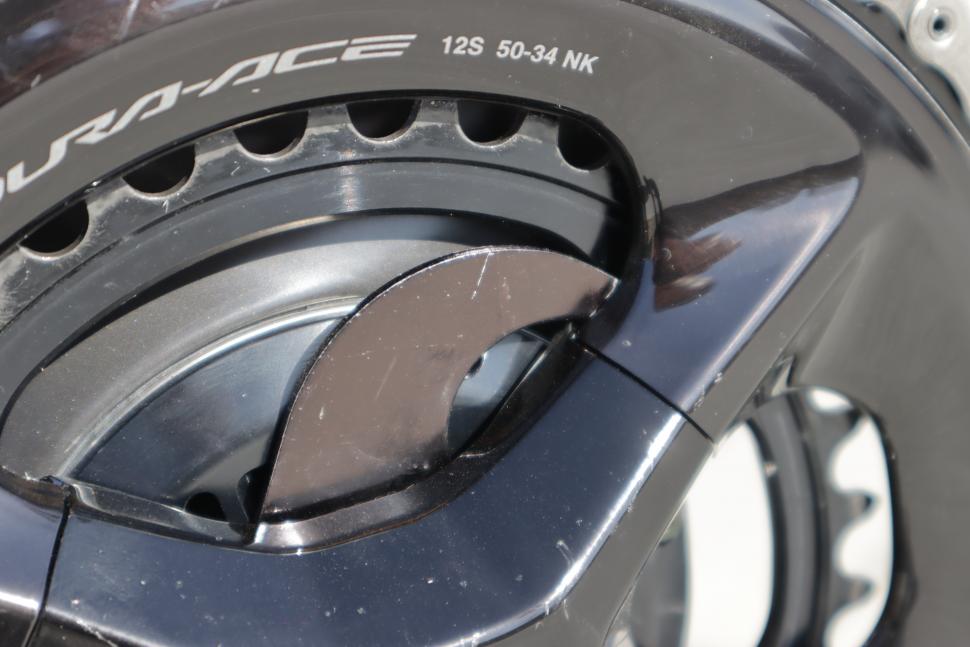
The motor uses an arm that pushes against the crank to apply power. At the moment that’s a metal-on-metal interface but Mavic is developing plastic mounts to prevent any damage to your cranks. The fact that you’re using a standard crank means that the Q-factor – the distance between the external faces of the cranks – is standard too. So the pedal action will be the same as an acoustic bike, and the frame design doesn’t need to be widened to accommodate the motor. At just 87mm in diameter, the X-Tend really isn’t that noticeable in the frame.
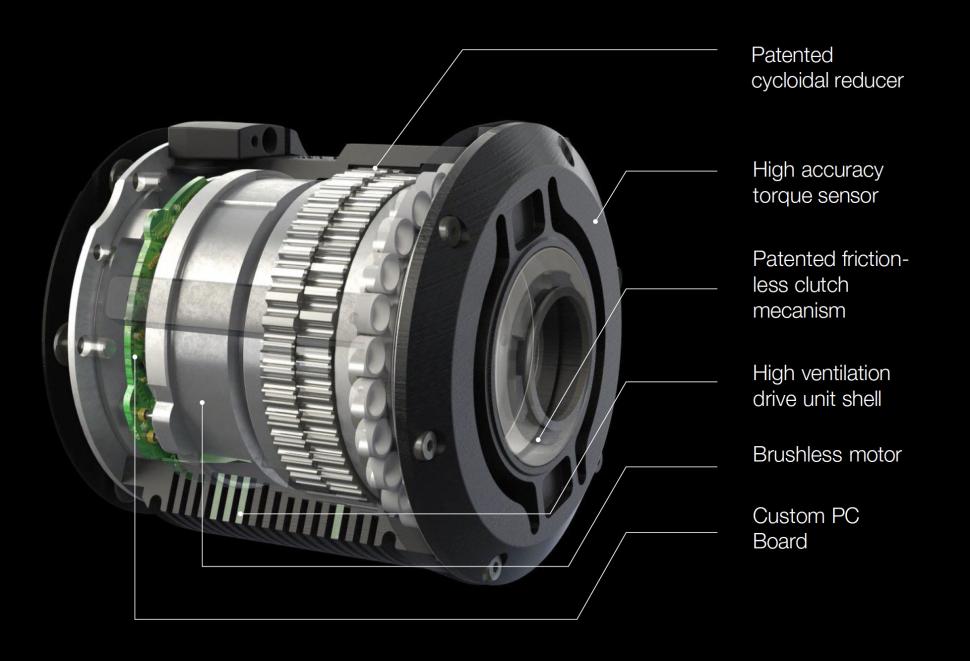
Because of the form factor of the motor, Mavic says that it should be much easier for manufacturers to build and adapt frames to fit the system. In essence, you’re just making a bigger bottom bracket shell; in theory, you could use a dummy motor shell for acoustic bikes, as it has standard bearings for a Hollowtech II chainset, and then you just need to make one frame. The cylindrical shape means that the frame can wrap all the way around the motor, unlike other mid motors where the frame needs to be left fully open at the bottom. That means making the BB area stiff is easier for better power transfer and ride quality.
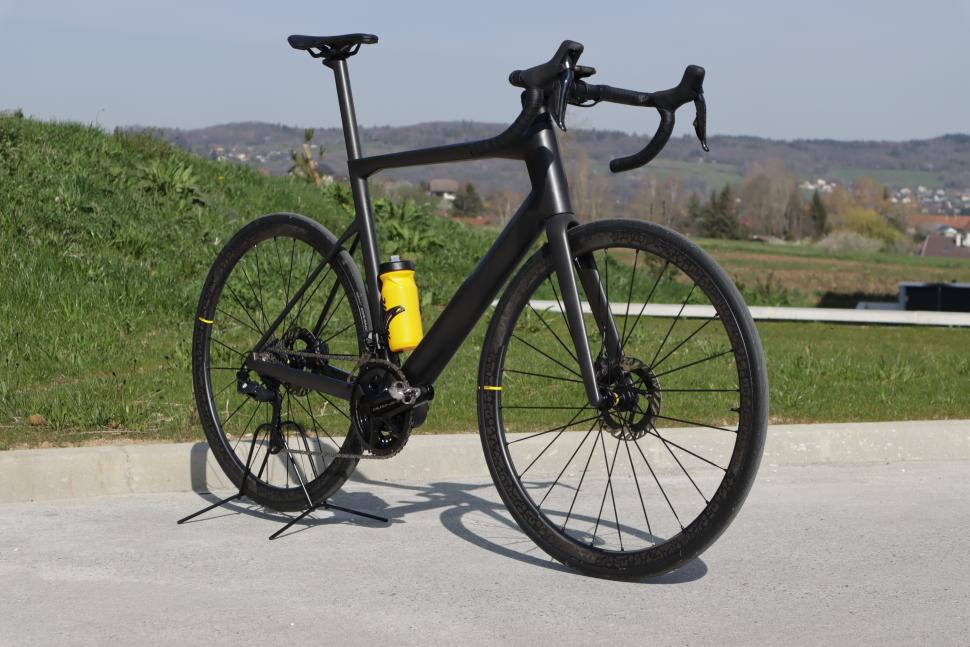
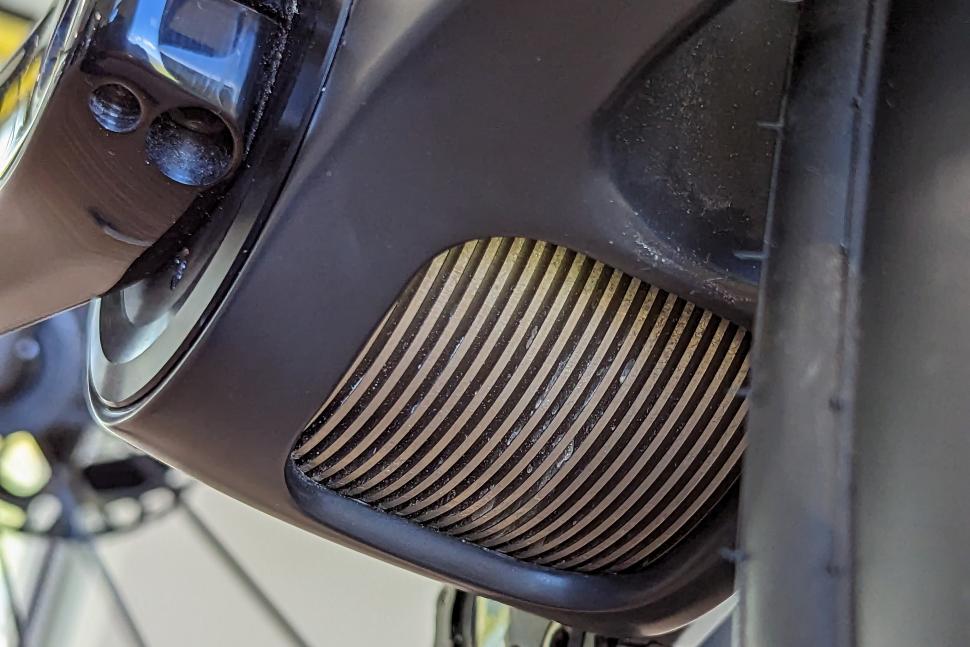
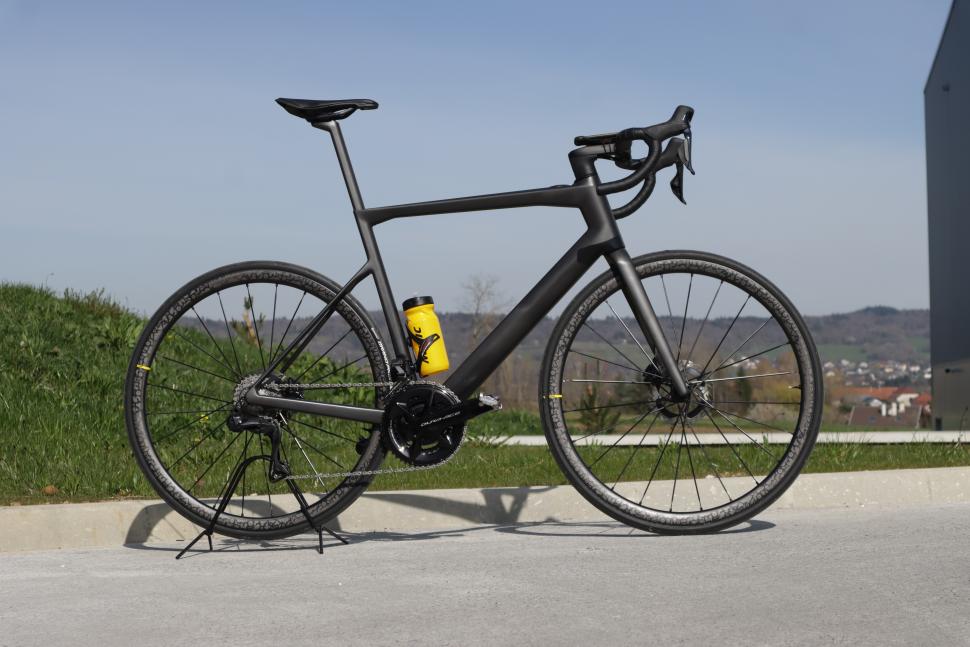
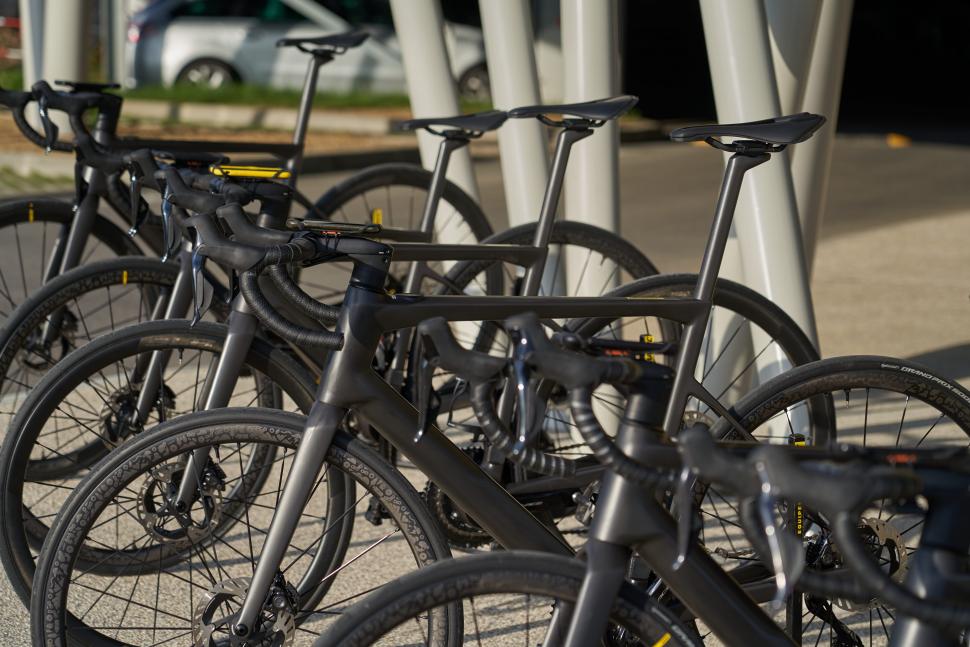
Mavic has been working with BMC, just over the border in Switzerland, to develop the prototype frames we saw; they’re adapted from the BMC Roadmachine with the larger bottom bracket and a modified down tube and top tube to accommodate the battery and the control unit. The only other change is the incorporation of a speed sensor in the chainstay, triggered by a magnet in the disc rotor. The bottom bracket doesn’t fully enclose the motor; you can see that there are cutaways underneath that expose fins on the motor body to help with heat dissipation.
Our Dura-Ace-equipped bikes tipped the scales at just under 10kg, and Mavic also had a flat-bar build of the same frame with Shimano’s Metrea transmission that came in under 12kg.
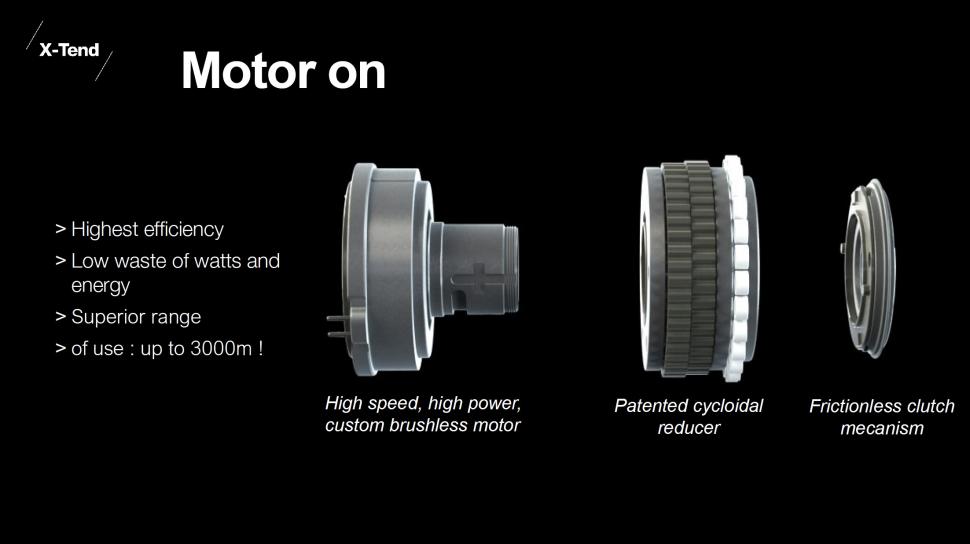
The brushless motor sits centrally in the drive unit and spins at up to 4500rpm. To translate this quick spin into something resembling your cadence, Mavic uses a cycloidal reducer. Two 45-tooth sprockets roll around a track milled into the inside of the slightly bigger drive unit shell, which has one extra tooth hole, with the result being that for each rotation of the motor the drive arm moves forward 1 tooth, giving a 45:1 reduction in rotation speed. The two sprockets are diametrically opposed inside the hub so that there are two opposite points of contact: this helps with power transfer and also prevents any possible movement of the axle when the motor’s in use.
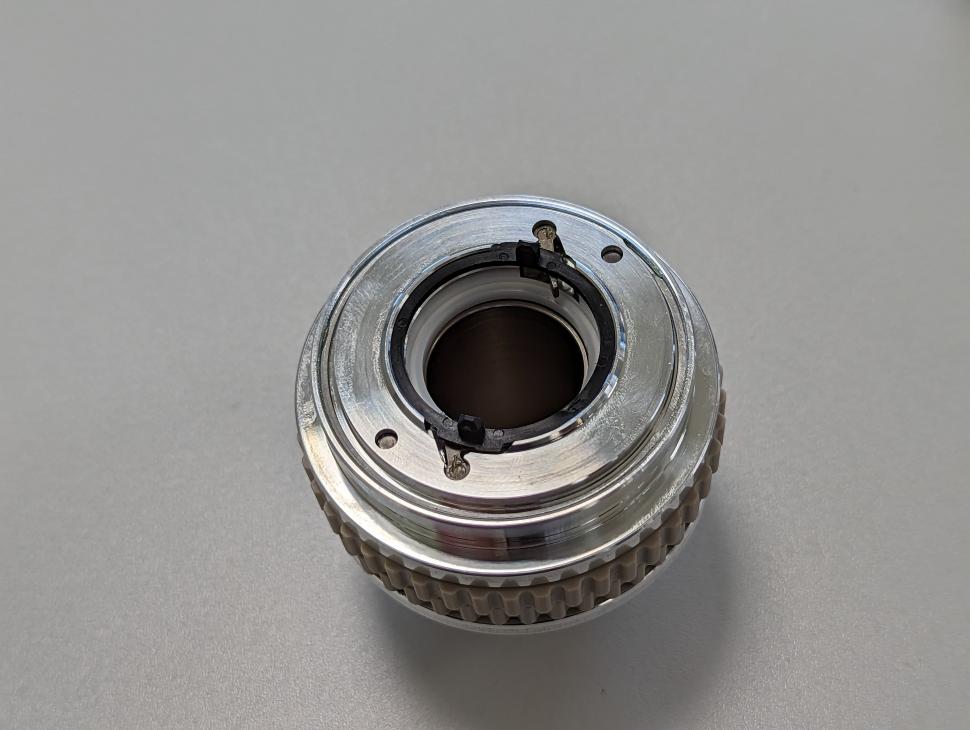
There’s more going on inside the motor, too. At one end there’s a mechanical clutch system that can completely disengage the motor from the cranks. It works in a similar way to a freehub in that there are two pawls engaging with a ratchet, but instead of a spring keeping them in contact there’s a ring that can engage or disengage them.
That means that if you have the motor turned off, or you get your speed up to beyond the assistance limit, the motor is no longer physically attached to the cranks, and the only friction in the system is from a pair of standard bottom bracket bearings, the same as in a non-powered bike. That’s a big benefit over a motor system that stays coupled, which can introduce fairly significant drag if you’re not using it. In order to get a smoother transition from powered to non-powered, the motor ramps down the power over the assistance limit and only disengages the clutch when the power drops to zero.
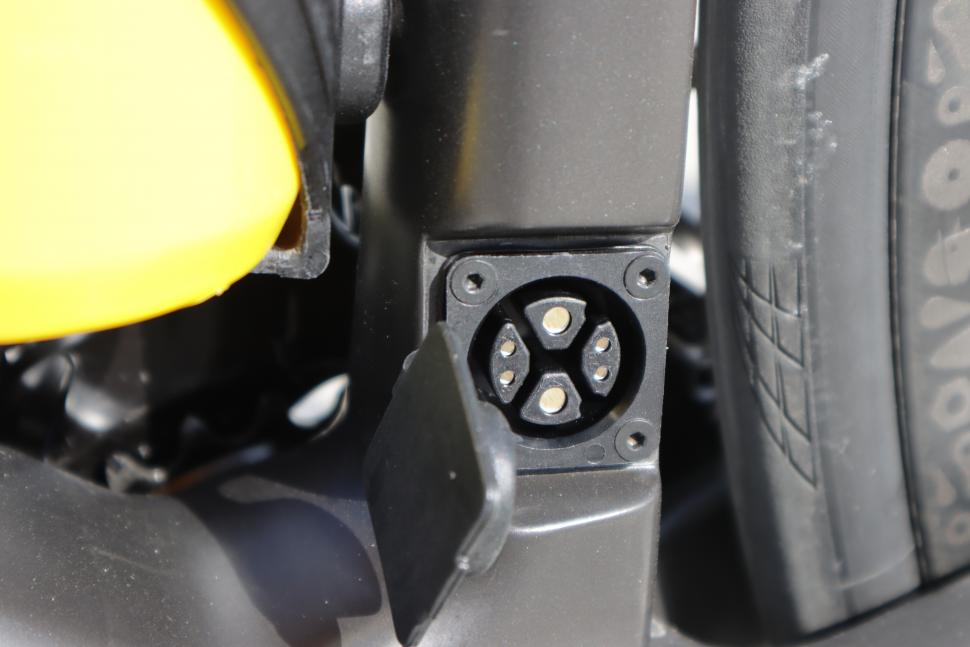
The battery wasn’t a part of the system that Mavic dwelled on too much, save to say that its extensive experience of aluminium extrusion means it has created a super-light enclosure for the cells. But what is significant is the size of the battery: in the X-Tend system you’re getting a 360Wh battery as standard, which is significantly larger than similarly light systems. The ebikemotion X20, for example, weighs the same but the motor is 70% the capacity, at 250Wh.
> Our guide to the best electric road bikes
That means longer range, and Mavic’s claim is that this motor system is good for 3,000m of vertical ascent on one charge of the battery. There are a lot of factors that will affect that – I’m not going to get that 3,000m weighing in at the better part of 100kg, for example – but assuming the motor is as efficient as comparably light systems you’ll go further just because the battery holds more juice. On top of the main battery, a 180Wh range extender will also be available, giving up to 540Wh of total capacity for even longer rides.
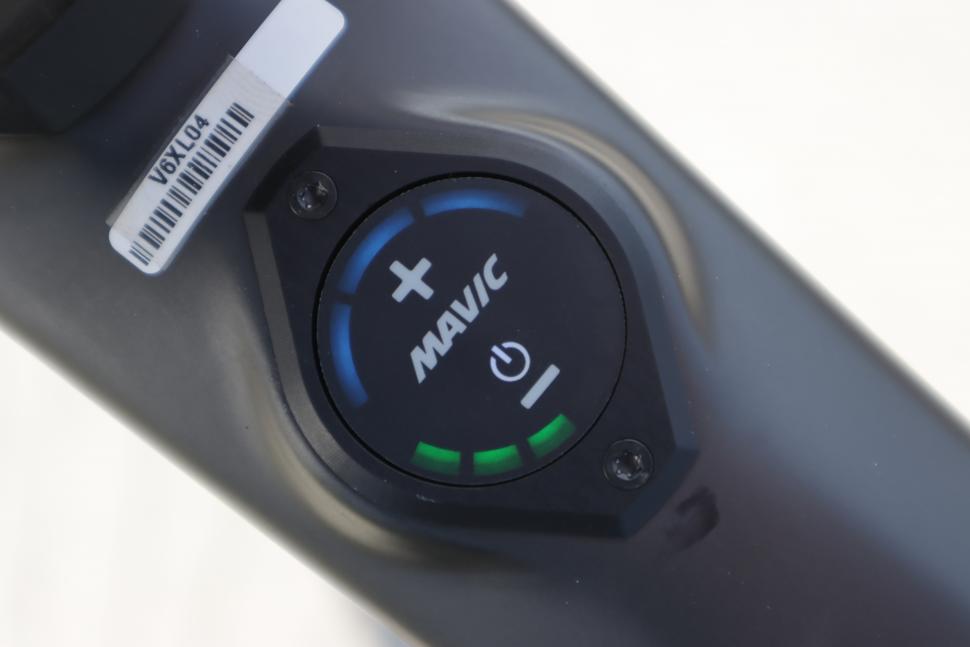
Control of the system on the bike is mainly through a top-tube control that you’ll find familiar if you’ve used something like an ebikemotion system or Specialized’s SL1.1 motor. There are two buttons to go up and down the assistance modes, a set of LEDs for battery status and another set to tell you what mode you’re in. A handlebar remote button for MTBs and flat-barred bikes is also in development.
As well as the on-bike control, Mavic is developing a smartphone (and Connect IQ) app that will enhance the functionality of the system. For one thing you’ll be able to custom set your modes: how much assistance you’ll get, what the cutoff speed for assistance is, and even how aggressively the motor responds and how the motor ramps down assistance before cutting out.
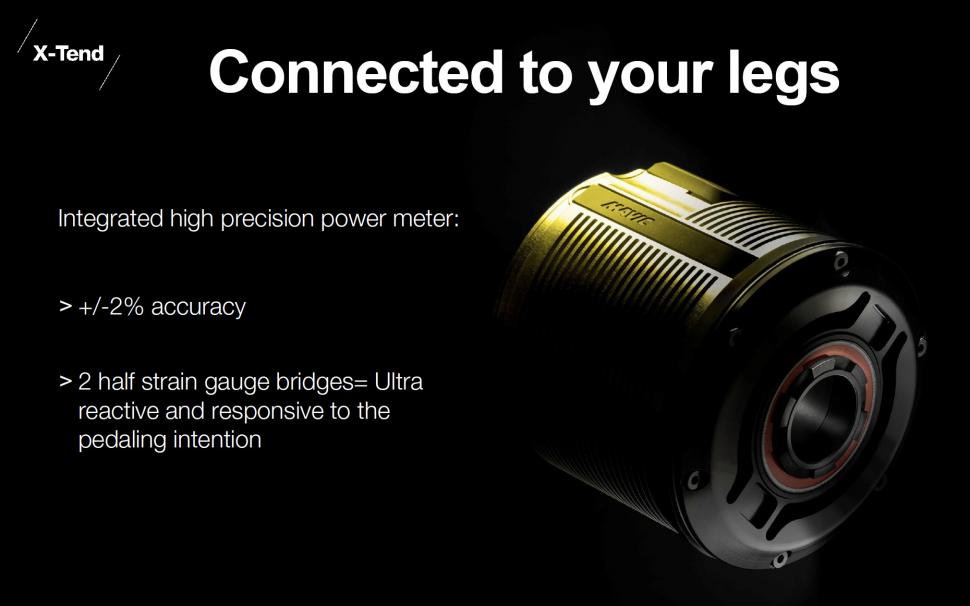
The three modes are factory-set at 30%, 60% and 120% of rider input, with 150% the maximum. In order to measure that rider input, Mavic has incorporated not just a torque sensor but a fully calibrated power meter, accurate to +/- 2%. The app can show you your total power, and how much of that is coming from the rider and the motor, in real time. The X-Tend also collects this data every second, and stores it on the PCB in the motor. When you sync your smartphone or GPS, the data is uploaded to the cloud. You’ll be able to access some of it, and diagnostic info can be shared with dealers or Mavic in order to diagnose and fix problems.
Riding the Mavic X-Tend ebike motor
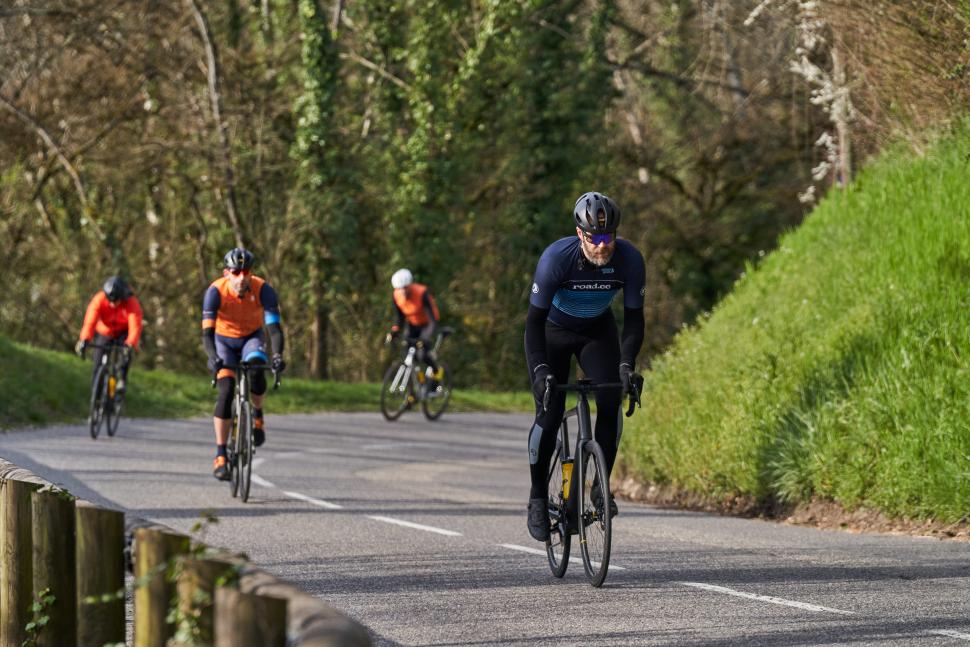
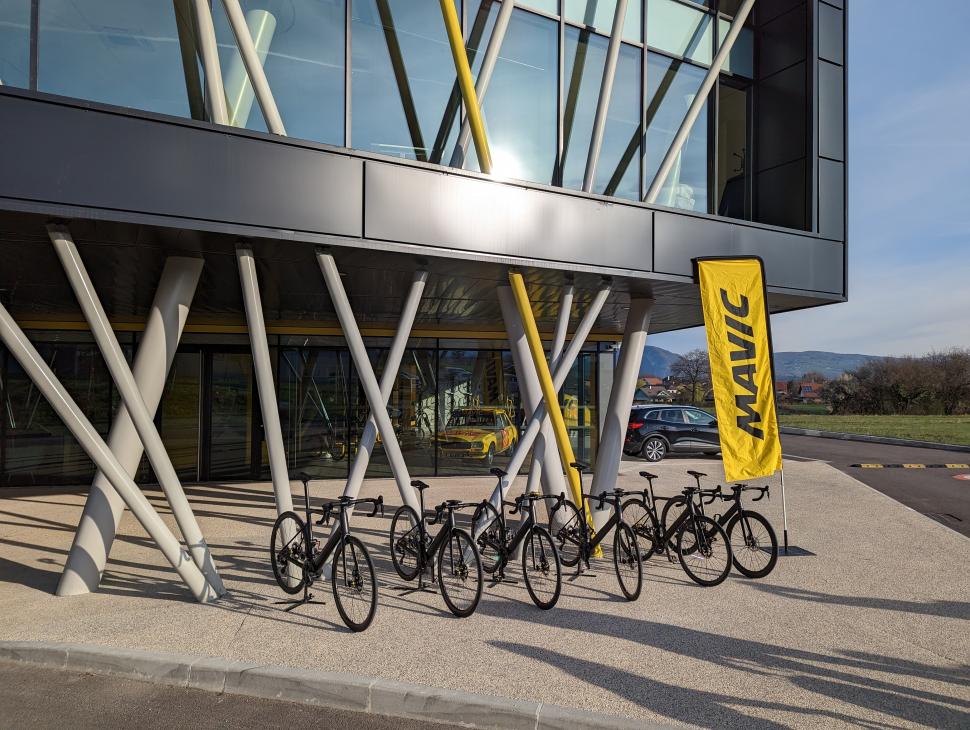
We were lucky enough to be invited out to Annecy to be some of the first people outside of Mavic to experience the new motor. It wasn’t a long ride, just a 25km loop to get a feel for the system, with a couple of decent climbs to put the motor through its paces.

First things first: it’s a likeable system. In a bike that weighs just 10kg, it’s not really a noticeable extra weight except when you’re physically picking the bike up, and the clutch system works really well: when the motor’s off the cranks aren’t driving anything other than the rear wheel. That’s a noticeable advantage over, say, the Fazua system where you can drop the battery out to save weight, but the gearbox stays in place, and you can definitely feel it when you’re pedalling. When it wasn’t assisting me my X-Tend-powered BMC felt exactly like an acoustic bike, albeit a heavier one than the top-end spec would suggest. That being said, it’s only just over a kilo heavier than my 105-equipped carbon race bike.
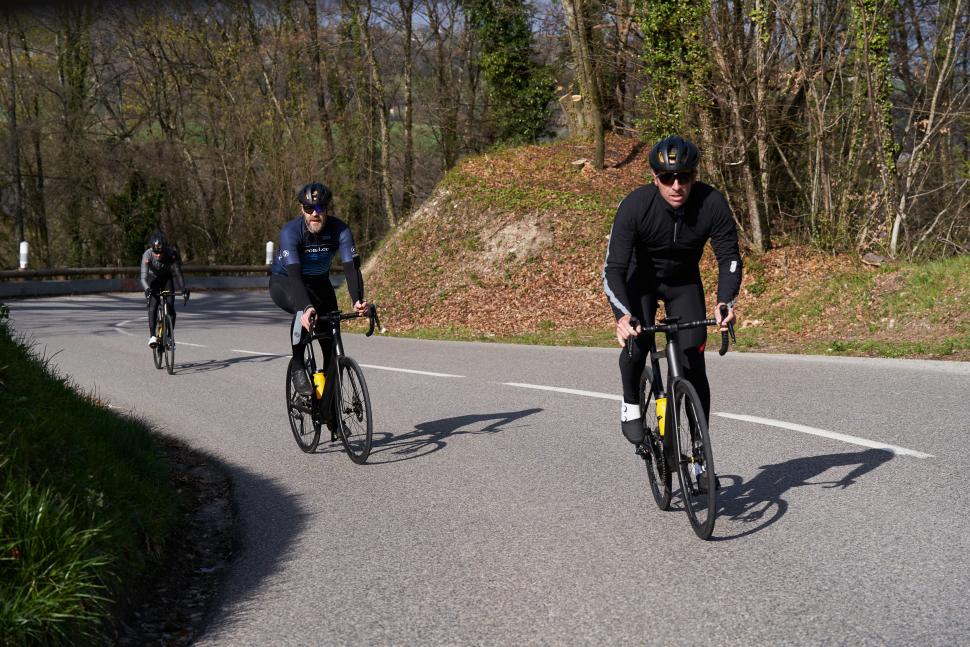
Power application, for the most part, is good. There’s plenty of power there: It feels a bit more powerful than an ebikemotion hub, even though nominally the torque is about the same, and similar to the SL1.1 motor that Specialized uses in its e-road bikes. The fact that you can keep your cadence high and spin up climbs with the motor still working in its most efficient range is certainly partly the reason for that. That being said, the X-Tend still isn’t great when you’re working at a low cadence – for example, if you’ve been caught at the bottom of a climb in too high a gear. The Mavic engineers are working on the low-speed response.
The way the motor cuts out above the assistance limit is a highlight. There’s no noticeable jump from riding under power to riding acoustically, just a gradual easing off of power. The only real tell above 25kmh is the motor noise stopping: if the motor was silent I doubt you’d feel the point where the assistance stops. While we’re on the subject of the motor noise, that’s a minus point for the system right now. It’s not that it’s especially noisy, it’s more the nature of sound it makes that’s the issue. You get the whirr of the motor but there are also sounds that are probably associated with the reduction gearing that are currently a bit grating. Again, it’s something that’s been flagged up as an issue during development.
There are other smaller issues still to be ironed out too. The built-in power meter is currently better at reporting power in the small ring than the big ring, so there are some tweaks to the algorithm needed to get that right; Mavic has of course made life much harder for itself there by allowing a wide range of cranks to be fitted, so that’s another variable to throw into the mix.
There’s an issue with the motor not cutting out quickly enough too, if you stop pedalling quickly, resulting in a bit of a kick from the pedals. This needs addressing, as the times when you stop pedalling suddenly are generally times you don’t want the motor to continue pushing you forward. So it’s not quite the finished article just yet, but Mavic has run up over 120,000km of testing through any number of prototypes to get to this point, and it shows: this is a motor that behaves a lot like a production unit should. Mavic’s stated aim was to make the X-Tend the most natural-feeling motor there is, and it’s definitely getting there.
Why are Mavic showing us the X-Tend motor now?
So we went out to Annecy and had a fun time trying out the e-bikes, and it’s great to be able to tell you all about it here. But if you’re thinking that the X-Tend sounds like the very thing for you, and you’re looking for a link to click to get on the waiting list, the bad news is that there’s no release date for it. Not even a vague one really, just a suggestion that 2025 or 2026 is possible should the stars align. It sounds like Mavic is going to need other people to come in and partner with them to make the X-Tend happen: bike brands to commit to using the motor, and a bit of financial input to make full production a reality.
“We had a lot of discussion internally,” Mavic told us. “We finally decided to launch it because we need a partner to go to the commercialisation phase. We have a working product that you can ride. It could be sold if the production cost was reasonable.”
Right now, with the motors being made one by one by hand in France, that’s certainly not the case. But with the right investment for mass production, the motor could be competitive with the likes of Fazua and TQ at the higher end of the lightweight bike market, and Mavic are still intent on producing the X-Tend in Europe, the same as with everything that they currently make. The launch is about getting the word out there. “We need some noise,” Mavic said.
So consider this noise, if you’re looking to throw a whole bunch of money at bringing a new motor system to market. The X-Tend certainly has some unique selling points: the overall system weight and the ability to fit any Hollowtech II crank are the big draws here, and it’s a motor that has the potential to be a key part of some really light bikes across a wide range of disciplines. We’re certainly hoping to see it come to fruition.










71 thoughts on “Mavic superlight X-Tend e-bike motor system first ride: an e-road revolution?”
“acoustic bike” and “riding
“acoustic bike” and “riding acoustically” – seriously? 🙂
You mean “normal bike” and “riding without power”. Also, “eBike” == “moped”. 😉
I think you’re taking that
I think you’re taking that far too seriously (even with the winky emoji): I’ve always presumed that the ‘acoustic bike’ thing was a reference to the outrage when Bob Dylan started using an electric guitar.
(I worry for the day, mind, when you do have to specifically mention that your bike is a human powered bike and when e-bikes have become the norm…).
I thought that if you had an
I thought that if you had an accoustic bike that it meant that you were a protest cyclist.
But what if it’s a punctured
But what if it’s a punctured bicycle?
lerrup wrote:
If it was mine, almost certainly. I’m having a terrible run for punctures.
Paul J wrote:
i mean you can choose that as your hill to die on if you like. i’ll watch you in my wing mirrors as the world moves on
dave atkinson wrote:
Your what mirrors?
Yeah right, talking of the
Yeah right, talking of the world moving on
hawkinspeter wrote:
Why is saying something is
Why is saying something is stupid automatically ‘a hill to die on’?
‘Accoustic’ is a stupid term. I won’t lose any sleep over it, but I’ll voice that opinion when I feel like it.
Sredlums wrote:
You can choose people saying ‘hill to die on’ as your hill to die on, if you like. pretty meta.
mostly i wanted to do the
mostly i wanted to do the wing mirrors gag
Nice review Dave, thank you.
Nice review Dave, thank you.
Just to point out that the Mahle X20 system also has a 350Wh battery as an option, e.g. Orbea Gain Carbon.
Loving all this development of ebikes – though I think a 4500rpm lightweight motor vibrating in a carbon frame will never be the quietest design…
dave atkinson wrote:
logged in just to like this
Yeah, but much “analouge bike
Yeah, but much like “analogue bike”, it’s a pretty obvious gas light to try obscufate that it’s a review of a moped 🙂
Nowt wrong with motorisied two wheel transport though.
dave atkinson wrote:
Ok, if you used those terms as an ironic troll, referencing other old analogues, to gaslight (1944…) people like me, then… Chapeau. 😉
I welcome developments like
I welcome developments like this.
Whether its my wishful thinking but I kinda want my next bike to be “acoustic” but with the option to gracefully fit a motor when my legs start giving out.
I’ve always thought that made a pinion-esque frame necessary but a giant BB shell looks a damn sight better….
Thinking to the future and
Thinking to the future and the slow inevitable decline… it’s a bit like sorting out a pension, I suppose. But what if you want electric assistance and a Pinion gearbox?
Bmblbzzz wrote:
Getting older? Maybe take the strain off your hands / seat bones / neck too? How many wheels?
2 – https://www.hpvelotechnik.com/en/press-pinion-getriebe-fur-die-jubilaums-streetmachine/
3 – https://azub.eu/the-ti-fly-x-roadie/
A mate has an Azub trike
A mate has an Azub trike (acoustic) and it is one of the most funnest things I’ve ever ridden.
Only been on one once but it
Only been on one once but it was the go-cart of my youthful dreams. Despite the username I’m still on two wheels (upright or laid back).
Reason for mentioning recumbents was they lend themselves to stuff like the Pinion. First you’re already in the realm of the unusual / custom. Second the “bottom bracket” mounting tends to be on a boom which you can swap for any kind of gear / motor set up. If someone makes the attachments of course!
When a manufacturer comes out
When a manufacturer comes out with a system with…
…then, and only then, will I consider buying an ebike. Because without those things, they are just several-thousand-pound disposable items. Use of an open, royality-free frame mounting standard would help too.
Also, use of the word “acoustic” for non-powered bikes is like nails scraping on a blackboard to anyone with a physical sciences or engineering background. Please, please stop it.
Another wishlist item, in
Another wishlist item, in case anyone from Mavic is reading this, is to give us a choice of battery sizes. Better yet, a modular design allowing you to tailor the capacity to the length of ride (although there might be good engineering reasons why that would be a step too far.) Many cyclists will agonize over how much to fill up their water bottles. Yet they expect everyone to be happy carrying around the same fixed-weight battery, typically around 2kg, regardless of who they are, and what kind of rides they do.
ubercurmudgeon wrote:
Good points.
The Mavic e-bike gubbins blurb seems to indicate that they’re most concerned about reducing the weight. Not a bad thing, that; but far less critical to such an assistance system than other features, even (perhaps especially) in the more sport-oriented bicycles they seem to be aiming to assist.
A couple of extra kilograms on the bike makes very little difference to it’s performance for a given power input, compared to the effect of tyre rolling resistance and aerodynamics, for example. An e-bike motor et al can be better improved by making design aspects other than system-weight better than they currently are.
One primary aspect should be that the ebike can be turned into a non-ebike easily and quickly by taking out as much of the system (motor and battery especially) with a one minute procedure. The only current design that achieves this is the Fazua Ride-50 system, which even provides an empty motor/battery housing to replace the full motor/battery module. (Being able to charge the battery away from the bike – and replace it with another in a few seconds – are also very advantageous features).
We have 3 Fazua Ride-50 bkes in our household. They all get ridden with and without the motor/battery, depending on the route and who’s riding it. The lightest bike (a Lapierre eXelius) is 13.5 kg with the motor/battery in and 10kg with an empty module (bit more with cake and bananas in it).
Should the motor or battery go phut, both can be replaced with new modules bought from Fazua. At least, they could if Fazua (along with many other manufacturers) didn’t have battery supply problems. Even if Fazua disappears, the bikes will remain rideable as just bikes if the motor or battery goes phut. It is tempting to buy a replacement BB gearbox (the only built-in part) now, though, just in case (and despite the claim that it’ll last 150,000 km).
I’d be interested in the
I’d be interested in the extra wear rates on drive trains from BB motors vs rear wheel motors.
I’m sure cassette costs on single speed SRAM installations on MTBs are scary.
When I was in the trade, the early Bosch motors had supposedly non-replaceable crank bearings. 2 year warranty and our group were sending loads back, so essentially a 4 year life based on warranty. However, they could be replaced.
I love the look of this and
I love the look of this and the attention to detail, you can tell it’s come from engineers who understand racing. It’s going to work really well with the massive BBs on modern race frames, doesn’t ruin the lines of the bike, and is hopefully serviceable. Interested to know how it’s secured in the frame.
The Orbea rear wheel motor is
The Orbea rear wheel motor is practically invisible between cassette and disc. The Fazua is pretty inconspicuous already. On road bikes, aesthetics have already been conquered. The programming of them is now very sophisticated. It sound like Mavic are trading motor weight for battery weight to some extent.
I think the next big leap will be whatever battery tech can halve the weight of the battery. A couple of kilos makes a big difference to performance, and one of my mates who has a Fazua powered Trek Domane(?) and an Orbea prefers the supposedly less sophisticated Orbea because it is a couple of kilos lighter (not all battery), he can do more without assistance. Both hide the battery in the downtube.
It’s nice to get a little
It’s nice to get a little glimpse into the future..smaller form factor, lighter all good and interesting stuff, everyone I know seems to want an ebike of some description.
Well then you don’t know me
Well then you don’t know me 😉
E-bikes becoming the standard for me ruins just about everything I like about bicycles and cycling.
Sredlums wrote:
Why, are you being forced to ride one? We have ebikes, road bikes and gravel bikes; the ebikes are used for toting shopping to the parents and in laws a fair and hilly distance away and for a fairly substantial commute, for both of which purposes they have replaced a car. Who would you rather share the road with, someone on an ebike or someone in a car?
Rendel Harris wrote:
Why, are you being forced to ride one? We have ebikes, road bikes and gravel bikes; the ebikes are used for toting shopping to the parents and in laws a fair and hilly distance away and for a fairly substantial commute, for both of which purposes they have replaced a car. Who would you rather share the road with, someone on an ebike or someone in a car?— Sredlums
E-bikes, gravel bikes, disc brakes, tubeless tyres, electronic shifting, sloping top tubes, indexed shifting, wider tyres for road use, carbon fibre frames; as these technologies become available, most of us decide to either adopt them or not, depending on their appeal to us (and finances etc). But for some, the very existence of these things is taken as an insult to the purity of cycling as it was at some point in the past, prior to which there was old stuff and after which there is newfangled damnation.
Bmblbzzz wrote:
Absolutely, we must all go back to the days before the safety bicycle, bring back the ordinary!
I can’t agree. ebikes are
I can’t agree. ebikes are great if you want to commute without sweat, are getting older, have been injured, are worried about your fitness/weight or just want to go further.
Better ebikes means more people riding which can only be good for all of us 🙂
I’ve got over being overtaken in the Alps by tourists – and it gives me something to chase!
eBikes are mopeds, and mopeds
eBikes are mopeds, and mopeds and scooters are a key answer to mobility in dense urban areas. Cars are an immense waste of resources for personal transport – the energy for making them, the huge batteries needed, the energy to move them.
They’re a different thing from bicycles really, and good for their own reasons.
For actual cyclists, they are at least good for guilt-free draughting and giving you some respite on your commute on windy days, that would otherwise be an immense slog. For that reason, ‘d like to see a /lot/ more eBikers on my average-headwind commute home. 😉
Semantics and I know that
Semantics and I know that “electric bikes” are sort of a continuum – however you’re using terms generally but which have a more specific meaning in the UK:
Moped (category AM on a UK driving licence) is a low-powered motor driven cycle (no requirement for turning the pedals – doesn’t have to be electric indeed is usually not) with a maximum design speed of no more than 45 km/h (28 mph) – you need a suitably endorsed driving licence and can’t use cycle paths. (UK licence details here)
e-bike – again a general term with a specific meaning in the UK (limited to 15.5mph, no licence / insurance required, can use cycle paths, normally requires you turn the pedals)
The review mentions: “The X-Tend has a nominal power of 250W, so it falls within EU pedelec rules.” and “the only real tell above 25kmh … ” and mentions torque sensing and not a throttle – so this was (in UK terms) an e-bike and not a moped. I’m sure you could use one to build a moped of course – but there are better options e.g. either legal or illegal you’d just go bigger.
There are a bunch of categories about in this area e.g. pedelec / s-pedelec – generally used to mean “higher speed / power e-bike” – in Europe this has its own specific legal meaning (normally separate from “moped” or whatever) but in the UK has comparable legal requirements to a moped etc.
Paul J wrote:
So could you just clarify, on the 80% of my 54kms a day commuting on my e-road bike when I’m riding above the 25kmh power cutoff, so all under my own power, am I an “actual cyclist” and then I suddenly stop being one the minute I drop below that and the power comes in again? When I’m climbing a hill and my power meter is showing 550 watts, 250 from the motor and 300 from me, am I 54% “actual cyclist” and 46% something else? Is the person behind me doing 200W an “actual cyclist” even though I’m putting out more power than them? When I take my other two unpowered bikes out am I allowed to be an “actual cyclist” then or does the stigma remain on me? What about when I’m freewheeling downhill? What utterly ridiculous snobbery.
Rendel Harris wrote:
So could you just clarify, on the 80% of my 54kms a day commuting on my e-road bike when I’m riding above the 25kmh power cutoff, so all under my own power, am I an “actual cyclist” and then I suddenly stop being one the minute I drop below that and the power comes in again? When I’m climbing a hill and my power meter is showing 550 watts, 250 from the motor and 300 from me, am I 54% “actual cyclist” and 46% something else? Is the person behind me doing 200W an “actual cyclist” even though I’m putting out more power than them? When I take my other two unpowered bikes out am I allowed to be an “actual cyclist” then or does the stigma remain on me? What about when I’m freewheeling downhill? What utterly ridiculous snobbery.— Paul J
I am happy to clarify. You’re not a cyclist. You’re a moped rider, who sometimes moves their legs a bit.
Riding a non-motorised bike with freewheels and gears is also a bit dodgy, TBH. But, freewheeling is usually a tiny component of any bike ride, when there’s no motor involved.
Real bicycle riders eschew all that nonsense – just makes you soft.
Paul J wrote:
Bingo! You are
ChuckSneedHenri Desgrange and ICMFP!I’ll probably get an e-bike
I’ll probably get an e-bike one day – I’ve not got a fragile ego and I don’t regard cycling as macho, just my preferred way of getting around.
One day, maybe. Probably…
One day, maybe. Probably…
And this one looks good, and it’s Mavic.
ktache wrote:
Within 5 years it will need unique parts that they don’t make any more, allowing you the joy of searching, being ripped off by fake websites and finally spending a ridiculous amount having the part sent from the US, only for the wretched thing to be written off by another bit failing.
Perhaps it’s just me that doesn’t love Mavic.
Paul J wrote:
1912 called and want their opinions back…
Although IAF the line wasn’t very clear – it might have been Williamsburg in 2002
Paul J wrote:
Wow. If Andrew Tate rode a bike…
Paul J]
Well you are clearly the kind of cyclist that gives actual cyclists a bad a name. Can you ride in a straight line with such a massive chip on your shoulder?
Could equally argue that someone using an e-bike to commute and go about their daily business is more of a cyclist, than someone out on a fancy carbon road bike with no means of carrying anything of use who only uses it in fair weather for fun.
Funnily enouigh as someone who takes the time to acknowledge everyone out cycling when I am, it’s always the people out and about, sometimes on e-bikes, who actually respond rather than the knobs who think they are in a peloton.
Adam Sutton wrote:
Calm down, calm down…. Could everyone in this thread please step back a bit, and consider that maybe, just maybe, I’m taking the piss a bit. 😉
I do commute on a fixed-gear though. And it does make you HTFU. 😉
Paul J]
“saddle? wicked child, when we cycle Nathaniel sits on a spike, and I sit on Nathaniel, two spikes would be an extravagence”
If you ignore replies and
If you ignore replies and post the same drivel, don’t express surprise or reposition your posts as satire. We can’t read your mind.
I can only assume you have
I can only assume you have changed your username from something like Garage Nigel.
Well to me one of the best
Well to me one of the best things with cycling and it is thanks to ebikes is seeing people out on bikes who wouldn’t able to other wise.
One of the worst things is the kind of elitist snobbery on display here.
After being hit by a badly
After being hit by a badly driven car in 2018, and left with mobility changing injuries, my ebike isn’t just a ‘bike’.
It’s my mobility scooter.
It’s my doorway to the world outside.
It’s a boost to my mental health as well as physical wellbeing.
Ebikes seem to be like penis envy: people should concentrate on what’s between *their* legs and not what’s between someone else’s.
Oldfatgit wrote:
That’s why I need an e-bike, all the extra weight I’m lugging around.
HoarseMann wrote:
What a load of …
chrisonatrike wrote:
That’s why I need an e-bike, all the extra weight I’m lugging around.
— chrisonatrike What a load of …— HoarseMann
Sounds like he’s talking cobblers.
HoarseMann wrote:
That’s why I need an e-bike, all the extra weight I’m lugging around.— Oldfatgit
HorseMan?
Absolutely, this is why I
Absolutely, this is why I hate people getting snooty about ebikes not being bikes etc.
I have a regular gravel bike I use for commuting and getting out for general exercise and indeed mental health.
I have a route I use a lot that goes out along the Thames in Kent, its great for getting away from everything and clearing your head. Last summer one time I came across a couple well into their 60’s, maybe more. There becuase ebikes got them there.
In a way, and even though
In a way, and even though some people don’t like it as voiced on here, the acoustic/electric definition is most appropriate: in the 60s, people got silly about whether you should play an electric or acoustic guitar, with people fiercely divided and calling those from the other camp “Judas” (Manchester Free Trade Hall, 1965). Eventually everyone calmed down and realised both types of guitar are great and putting one type down at the expense of another is just silly when all everyone wants to do is just enjoy playing guitar. Some people (like me) even go so far in their heresy as to have several examples of both types!
Sub in bikes for guitar and play/playing for ride/riding and you’ve got the current situation in cycling. Hopefully sooner rather than later people will calm down and realise we’re all just about enjoying riding bikes, with many of us enjoying both types.
I think road e-bikes are
I think road e-bikes are great because they are everything that club cycling is about. I regularly ride with 2 e-bike riders, one whose heart was damaged by an infection and the other who is nearly 80 and his legs just don’t go round as well as they did. Our 90 year old doesn’t get out so much now and has been restricted by the poor weather.
So at the tea stops we get the joy of many an anecdote about the heyday of British car building insanity that we wouldn’t otherwise get, and as both of them live over 10 miles from the start, they are often doing 80 or 90 miles so are extremely parsimonious with the battery, just using it to keep up on the hills. We generally forget about it aside from when we get a following wind and are chugging along at over 20mph and our more elderly cyclist starts sulking.
It’s also great for odd couples, typically the bloke who goes out and is super fit and ‘er indoors who gets let out for an occasional ride. It allows them to be social. My ex was a keen cyclist but the frustration of her ability being just 1mph or so less on average and a little less stamina meant that it could be a bit tiresome riding together. Perhaps an e-bike might have avoided an ex?
E-bikes are great, too
E-bikes are great, too powerful of e-bikes in the hands of inconsiderate riders are not. The more assist people get the more of an inconsiderate menace people seem to become. E-bikes that are allowed on bikeways need to be more limited:
This will keep e-bike riders more equal with human powered riders while still providing them with the assistance they need or desire.
Cargo bikes can be somewhat
Cargo bikes can be somewhat different?
QDubs wrote:
In Edinburgh – particularly using the paths* – I’ve had zero issues that I can recall with those on (AFAIK) UK legal eBikes.
I have had some concerns about “moped bandits” e.g. the usual suspects – dark clothing, hiding their faces, not pedalling, passing me with a whine at (guesstimate) well north of 20mph. I haven’t actually had any issues with these guys yet though and they’re likely the same types who *have* caused injury on scrambler bikes / stolen mopeds.
People aren’t saints, on bikes, in cars or any other transport mode. Where are you and what particular issues (“menace”) do you see?
Is the real issue that (hopefully) we’re at the start of being a 3rd rate cycling nation and so a) we’re mixing a growing number of cyclists with pedestrians at b) a time when the latter don’t expect cyclists? The solution obviously is “stop mixing modes! Take space from the cars for the cyclists (and pedestrians)!”
* Like the vast majority of UK “infra” they’re not specifically bike paths but shared use. They’re former railway lines so completely separated from motor traffic and good in that they’re “wide” by UK standards and often have few pedestrians.
QDubs wrote:
Then you are limiting the elderly, the ill and the disabled to an extent that may prevent them riding at all, if you have a person who through age or illness can only put out say 80W then you are limiting them to 112 watts total, rider and machine combined, that’s not going to get even a fairly light person up any sort of incline at a safe speed.
Maybe my perceptions are skewed by commuting in London but the vast majority of people I see ride at around 15 mph and above; limiting ebikes to 12 mph would risk making them an obstructional nuisance on bike tracks and make the riders less safe in traffic due to increasing the speed differential between them and motor vehicles.
It really isn’t a lot of power at all, that’s just about enough to do 25 km/h on the flat (assuming an 80 kg rider on a 20 kg bike), on a 5% incline that would slow them to around 6 km/h, a speed at which they would be a danger to themselves and traffic.
I really think that the current restrictions are absolutely fine, a rare example of legislators getting it just about right. What does need to be cracked down on, and what forms a massive part of people’s objections to ebikes, are the illegal machines which are quite blatant in the speeds they go, the fact that the riders generally aren’t pedalling at all and indeed even in their appearance, with their dinnerplate-sized motor hubs. Get them off the streets and I don’t think you’ll find that people riding bikes that are within the law as it stands at present are any problem at all.
Please don’t refer to human
Please don’t refer to human-powered bikes as acoustic bikes. I understand the difficulty in finding a handy way of referring to them when they’re mentioned alongside e-bikes. They’re leg-powered, leg-propelled, rider-powered bikes. Myriad options exist. Set an editorial standard for this that others can follow!
Ebikes if the type this motor
Ebikes if the type this motor is for, are still leg powered.
If you don’t turn the pedals, you don’t go anywhere.
Oldfatgit wrote:
More than that – you have to turn both pedals
brooksby wrote:
More than that – you have to turn both pedals — Oldfatgit
Well that won’t work for HP – I’ve heard he sometimes likes to keep one of his stationary (possibly still clipped to his foot) while turning the other.
chrisonatrike wrote:
Ultegra?
Steve K wrote:
Possibly, I couldn’t say, it hardly gets a mention here.
chrisonatrike wrote:
No point using both feet if you’ve only got a single sided power meter
hawkinspeter wrote:
as long as the power meter is installed on the crank least likely to fall off.
a “ME bike”
a “ME bike”
I was going fast up a climb
I was going fast up a climb and someone yelled “Is that an E-bike?”; and I yelled back “NO! Its a ME bike!”. No thanks for a sporty bike with a motor, but I would LOVE something like a Kona MinUTE with a Motor and racks for shopping and commuting to work in our 90F+ 90%+ humidity Summers and not showing up drenched with sweat.