


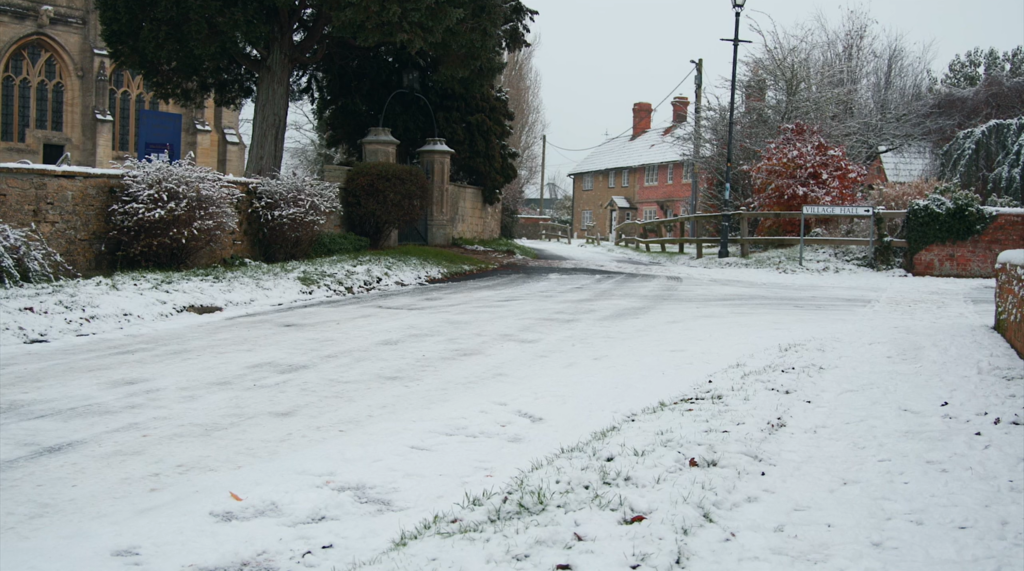

Cambridgeshire Council’s lead for highways Alex Beckett is under fire for saying that the way conventional routes are gritted “can be sexist”, burying how this could improve cycling and walking under a blanket of snow and ice.
Councillor Beckett’s argument for his choice of words was because he believes the network is “primarily focused on getting men to work in cars”, and that it could “leave active travel users counting the costs with broken limbs”.
As reported by the Cambridge Independent, Beckett said in the Liberal Democrat chair of the county council’s highways and transports committee: “We do need to review the network. It’s currently years out of date and primarily focused on getting men to work in cars. It’s a network focused on businessmen and councillors, not representative of normal people and their lives.”
The comments were described as “bizarre” by the leader of the Conservative opposition Steve Count. Similar charges were held against Beckett on the ever-balanced social media, with even the controversial Canadian psychologist Jordan Peterson getting involved.
Because reasonable people have abdicated their civic responsibilities. https://t.co/BoKZLZSdxC
— Dr Jordan B Peterson (@jordanbpeterson) February 18, 2023
However, as the US consulting firm FSG reports, a Swedish gender equality firm found that the routine of clearing snow typically benefited men over women. During winter, main roads — mostly used by men — were prioritised over foot and cycle-paths, quite often used by women travelling with children in pushchairs.
They’ve even got the data to back it up — 79 per cent of pedestrian injuries occurred in winter, with 69 per cent of these injuries suffered by women. Clearing the paths first astonishingly led to halving of these injury-inducing incidents.
It might be surprising to you but prioritising routes used by business over those used for social caring responsibilities can disproportionately affect women. (And yes I really do think we need to get more of us men into social caring responsibilities)https://t.co/mSbjWn16TR
— Alex Beckett ? (@alexbeckett) February 7, 2023
Gritting bike lanes has been an issue of contention between cyclists and councils for a while now, with major cycle routes like the Taff trail being ignored in the cold and leaving many cyclists to slip and hurt themselves.
Although there have been improvements, notably in Waltham Forest, London where snow was cleared off from the cycle lanes this winter, gritting cycle routes still remains an afterthought in other places in the country.
This row in Cambridgeshire has ensued after the joint administration of Lib-Dem, Labour and Independent councillors agreed to take out £300,000 from the highways budget by undertaking “a risk-based review of the network covered by winter gritting to ensure it is optimised and giving value for money”, but also adding a “£600,000” reserve fund to “mitigate against risks of difficult winter, particularly in the highways and gritting departments”
Currently, Cambridgeshire’s 37 vehicles grit 34 per cent of the road network in the county, according to the council’s budget papers. The papers also note: “This is high when compared to most other authorities who treat around 25 per cent. A review of the network could achieve financial savings without a significant increase in risk to road users or the authority.”
“The DfT [Department for Transport] also gives us funding based on having a fully developed, regularly updated resilience network. I’m sure that none of us would want to risk that funding,” said councillor Beckett.
He said that this meant £300,000 more would be available, if required to improve the paths for active travel users — and for those engaged in social care, rather than being focused on business users.
Conservative councillor Steve Tierney, however criticised Beckett for thinking “only men drive to work and then amusingly accuses others of sexism”. “I can assure him there’s no shortage of female drivers going to work, certainly not where I live, and it’s an odd view for the chairman of highways,” he added.
Self-proclaimed philosopher Peterson quoted a tweet accusing “two anti-car zealots being in charge of traffic policy” with a profound acclaim that “reasonable people have abdicated their civic responsibilities”.
To which, Beckett replied, “I appear to have irked Jordan Peterson and Tories across the land by suggesting winter maintenance should consider everyone rather than just car drivers”.














77 thoughts on “Councillor feels wrath of “Jordan Peterson and Tories across the land” by saying gritting routes “can be sexist” and “must change” to help cyclists and pedestrians”
Dear road.cc
Dear road.cc
How about giving it a rest on the constant “news” orientated around confrontation and controversy around cycling. Just scanning Twitter and reproducing annoying tweets from the likes of Sharron Davies, Jordan Peterson and the like and turning it into “news” is not really what I like to read on road.cc.
Instead how about reporting some positive aspects of cycling.
If you missed it one of the UK’s cycling legends, Eileen Sheridan, died this week. Not something I think you thought was worth a mention in your news. Too busy scrolling through Sharon Davies twitter feed I expect.
Here it is for you on the BBC. Sorry, there is no one in the article slagging off cyclists so you probably won’t enjoy it.
https://www.bbc.co.uk/news/uk-england-coventry-warwickshire-64663783
I am a subscriber to road.cc but won’t be renewing.
They did cover her death, but
They did cover her death, but why let the facts get in the way of a good rant!
https://road.cc/content/news/cycling-live-blog-13-february-2023-299265
This is a relevant news story for me, but if it’s not for you then maybe scroll on? A friend from my cycling group (female, baby of 10 months at the time) broke an ankle on an ungritted cycle path in Cambridgeshire last year and Papworth hospital lost a member of staff for a few months as a result, so the fact our highways leader is on it is of interest. It may not be news for you but that is a datapoint of one.
Eileen’s passing is worthy of
Eileen’s passing is worthy of more than a brief piece of reportage in the daily blog though. A full well researched article in the next few days wouldn’t go amis.
Fair enough. I missed road
Fair enough. I missed road.cc mentioning Sheridan in the live blog. Personally I would think it worth more than a passing reference there.
I agree topics such as highway maintenance are of interest.
My “rant” is really to raise a viewpoint around the general click-bait style reporting that road.cc now does. Which mainly involves scanning twitter for controversial cycling topics (helmets, high viz, near misses, road rage, etc) and promoting often fringe views from non experts. Today we have Jordan Peterson. These topics have been done to death. Occasionally covering them is fine. But look at the road.cc news and more than half of news stories are of this ilk.
As always I can (and have) voted with my wallet. I have cancelled my subscription.
And now that the road.cc website bombards me with adverts (despite having 6 months left on my subscription) I won’t be visiting the site again. A shame as road.cc used to do really good cycling journalism and articles. Now sadly mainly just click bait stuff a la Daily Mail.
This right in the middle of
This right in the middle of the rights culture wars against anything that goes against the status quo. Thank you to road.cc for reporting on this.
The Leamington Spa bike
The Leamington Spa bike tracks is a good example of how they perceive a story. The building of the tracks themselves I would see as a good, positive story for cycling but, please do correct us if I’m wrong, I can’t find any previous articles relating to the planning and construction of the tracks on Road CC, no links to previous articles in the article itself, like you get in other stories on here. No, just the actually article about opposition from a few locals to get a reaction.
Where I am, all the paths* to
Where I am, all the paths* to 2 buildings are always ploughed and gritted: the Shopping Centre** and the Council Office.
The rest of us are left to get on with it.
* as a New Town, and under by-Law, all footpaths are shared use. Its possible to go from one end of town to the other and from side to side without having to cross major roads, thanks to bridges and underpasses.
** we don’t have a ‘traditional high street – we have a Shopping Centre. All pathways go through this Mall, however bikes – including being pushed – are banned, so alternative, longer routes have to be found.
So how we create a way to
So how we create a way to address this and make it visible?
Traffic flow? Some cycle tracks in London now carry more than their share of traffic per area of road – do they get gritted?
What is traffic flow on the Bath-Bristol cycle path compared to the local roads. Does that get gritted?
I’m in Cambridgeshire and
I’m in Cambridgeshire and gritting boils my p155 ….. they grit when they don’t need to go out but do “because the tempeature” etc….. but the roads are dry….they miss the so called “cycleways” out of the city….. I’ve suggested an “On call” type system when a decision is made during a night shift to go out or not…I’ve said to some councillors that setting an arbitary temperature based on a possible forecast is madness, dumping tons of grit on the roads and a monitor and treat approach is better in the long run…..then you will save on grit supply, road damage and be able also to focus on the so far untreated cycle ways. Clearly we must also consider that the county has had a Conservative rule for 45 years and bias towards cars…and apart from the odd “get us in the news and we are good tories” so we have this bike infrastructure vanity project that is all they focussed on. The Tories voted for a new Shire Hall….out of the city to save cash….and it’s on a former airfield with poor cycle & public transport links. However it does have a bike parking of sorts but you wouldn’t want to leave your bike there. Now the current administration of No Overall Control is trying to sort out this blind Car focused attitude. At least in my Market Town we are getting some roads resurfaced, albeit 10 years plus in the waiting.
During the cold snap last
During the cold snap last December, the small local roads that I use were ice rinks for a couple of weeks. I left the bike at home and walked mostly. My commute is only a mile and a half across town and walking is still quicker than de-icing the car and sitting in traffic.
What I really noticed was that even when the larger, in town, roads were gritted the pavements were left in an absolutely treacherous state. Despite appropriate footware (though crampons seemed a bit extreme) I slipped several times, once coming extremely close to smashing my un-helmeted head into a stone windowsill.
I wouldn’t couch the prioritisation of gritting routes as sexist, but surely there could be some provision for keeping walking routes safe, even if it were some temporarily positioned grit bins that residents could make use of.
I picked up some ice runners
I picked up some ice runners from Aldi, mainly rubber with a few metal spikes, they work, got some for the better half too.
And some more walking ones for my parents, more boot specific, rubber lengths with coiled wire around it. Don’t know if they were ever used, don’t get much ice in Bexhill on sea.
Just that little more grip.
None as good as my metal spiked tyres though, or as fun.
Why would you commute that
Why would you commute that short distance by car anyway? This sort of unecesary short journey by car is why our roads get so congested and polluted.
It’s amazing what can be
It’s amazing what can be blamed on the patriarchy if you look at it through the correct biases. I’m just surprised gritting the roads wasn’t described as racist and homophobic. Obviously these councillors aren’t trying hard enough.
Yes like it or not, racism,
Yes like it or not, racism, sexism, inequalities… ARE systemic. Full stop.
no they are not.. full stop.
no they are not.. full stop.
Seems the Lib Dems are
Seems the Lib Dems are determined to repeat the same absurd failed arguments Sweden tried for snow gritting. They too called the way snow was gritted sexist and instead flipped it to prioritise schools and routes women would take.
Obviously this backfired and caused traffic chaos, so was quickly reversed…Only for the Lib Dems here to now try and revive it.
Traffic chaos you say…?
Traffic chaos you say…? Many places get that every day anyway through the selfless actions of everyone driving. Perhaps we should try encouraging a bit more?
The councillor is absolutely
The councillor is absolutely right. Too many decisions are driven by data that was collated by men and designed to respond to the needs of men. There is a very interesting book about it: Invisible Women: Data Bias in a World Designed for Men.
Interesting read.
I don’t think gritting roads
I don’t think gritting roads falls into that category though.
Roads are chosen to be gritted based on the economic needs of the area.
If that happens to disproportionately benefit men that doesn’t necessarily make it a bad policy.
Gritting cycle paths will (in the UK at least) disproportionately benefit men too. That doesn’t mean that’s a bad policy either.
quite so.
quite so.
and isnt it just sexist to assume women dont drive on the main roads and all travel with children in pushchairs anyway ?
There is that as well.
There is that as well.
Rather ironic that it requires a sexist generalisation in order to accuse road gritters of sexism.
Rich_cb wrote:
That’s a fair comment but there is a section in the book that covers a remarkably similar thing, around road design and the priorities of transportation systems in general. It would be impossible for the gender bias inherent in that decision making to not impact road gritting. If you haven’t read that book I really would recommend it.
I haven’t read the book but
I haven’t read the book but that sort of thing does interest me so I’ll track down a copy.
Out of curiosity, what was the inherent gender bias in transportation priority?
Was it deliberately designed as such or was it an unintended byproduct?
A few years ago I read a fascinating piece about racial bias in access to healthcare, many of the decisions that led to said disparities where actually designed to try and improve access to healthcare but systemic factors led to an unintended racially biased outcome.
It’s been a few years since I
It’s been a few years since I read it, but as far as I remember, my takeaway was that that gender bias is caused in lots of different ways, some intentional/conscious and some unintentional/unconscious. The book covered road design, car design (with a really interesting section on seatbelts especially) and some information on managing winter weather – I think it covered clearing rather than gritting, but I’m sure some is the subject matter is relevant.
Actually managed to find a
Actually managed to find a preview of the ebook which included most of the snow chapter.
It seems in that case the gender bias was unintentional as the priority was given to workers/commuters and their needs. Men were overrepresented in those groups.
I expect the councillor in question has read that book!
In those scenarios I don’t think it’s necessarily the best idea to aim for gender equality. If you don’t prioritise workers with gritting then the economic impact of snow is worse.
That means less tax revenue, which means less money for public services (including gritting, ironically), public services are used disproportionately by women.Gender equality in gritting could worsen gender equality elsewhere!
Why do you think that
Why do you think that ‘prioritising workers’ or the economic impact is inherently more important? Do you think that going to work is inherently more important than family/social functions? That itself is driven by a historic gender bias.
I’ve already addressed that
I’ve already addressed that point.
If we don’t prioritise the economic aspect then the economic impact is greater. This leads to lower tax revenue which leads to public service cuts which impact families disproportionately.
Rich_cb wrote:
Yes but you haven’t explained why addressing the economic impact is important in the first place. You’re assuming that getting to work (traditionally more masculine activities) is more important than getting to social/familial support networks etc (traditionally more feminine activities). And for some reason you think that getting to work is an important enabler, which didn’t really make sense – why not just put equal priority on the needs of women in the first place? It sounds like trickle down economics to me (which does on fact not trickle down).
The fact that you take that stance is telling and is covered in the book also.
I have explained.
I have explained.
Reducing economic impact leads to an increased tax take.
This benefits those that rely on public services.
Imagine the converse situation. No roads are gritted or cleared, all pavements are. During heavy snow or ice many businesses have to shut. They make less profit, they pay less tax. If all else remains equal then the government has less money to spend and must cut public services.
Which groups lose out in that situation?
Trickle down economics is the idea that reducing the tax take will lead to increased spending and therefore wider economic benefit. It’s not really applicable here.
Which groups lose out? All of
Which groups lose out? All of them. Sounds fairer to me.
Your suggestion that increasing the tax take is more important than getting kids to school is an example of intent gender bias, not an argument against it.
All groups do not rely on
All groups do not rely on public services equally.
Your own counterargument demonstrates that neatly.
Families with children rely on schooling which is paid for by… economic activity in the private sector.
Women use far more public services than men on average. So a policy that led to more public sector cuts would, by your own logic, be gender biased.
Without economic activity in the private sector there would be no public services. Protecting economic activity is therefore protecting public services and those who rely on them.
Rich_cb wrote:
Closing some businesses for the few days per year where it snows is going to result in the schools shutting is it? Pull the other one.
I could make the same disingenuous argument about the schools. Shut the schools, kids won’t get an education, they won’t be productive members of society, life as we know it ends. See how farcical that is?
Look up the economic effect
Look up the economic effect of extra bank holidays.
It’s significant and most bank holidays have significantly increased leisure spending to partially compensate for the decreased activity elsewhere.
Closing businesses for a few extra days a year wont lead to schools shutting but it will lead to fewer resources being available for each child, decreased funding for the NHS etc.
Decreased public spending will disproportionately affect women so not gritting the roads is actually gender bias.
Looks like you can’t actually win. Every option is sexist.
Love that defeatist attitude.
Love that defeatist attitude. If data exists to base a fair decision on – to prevent that gender bias – that would solve the problem.
You assume that the benefit to the female gender from increased public spending outweighs the loss to the female gender from biased action. If you have data to back that up, you could solve this problem right now and do your bit for a fairer society. Care to share?
What’s your solution then?
What’s your solution then?
How do you solve this conundrum?
Personally I’d stick to the status quo, try and maintain the maximum economic benefit from the gritters.
AFAIK no data exists on this topic so neither of us have anything quantitative to back up our position.
Data does exist on this
Data does exist on this subject. It shows that public spending for snow/ice management disproportionately benefits men over women. Were you not paying attention?
My solution to this problem would be for decision-making for public spending to not involve assumptions with inherent gender biases, like the ones you’ve mentioned numerous times now around ‘maximum economic benefit’.
The current decision-making process involves gender bias. There is literally a book on it.
And data exists showing that
And data exists showing that women suffer more from public spending cuts.
You risk stumbling headlong into an unintended consequence whereby your desire to bring gender equality to the snow gritter leads to greater inequality overall.
What neither you nor I have access to is a direct comparison of the relative harm caused to women by our proposed approaches.
The reason for targeting maximum economic benefit is that it helps to grow the economy, and subsequently the tax take, enabling greater public spending (including on more gritting!).
Public spending benefits women more than men (lots of data on this). If we were taking a gender neutral approach to public spending we’d have to fire an awful lot of women and cut spending on an awful lot of public services. This would free up a lot of money for gritting the pavements so the newly unemployed women could go for a nice walk when it snowed but I’m not sure they’d be too happy about that even once you’d explained how it was good for equality.
Rich_cb wrote:
I’ll say it again because you must have missed it the first time…
You assume that the benefit to the female gender from increased public spending outweighs the loss to the female gender from biased action. If you have data to back that up, you could solve this problem right now and do your bit for a fairer society. Care to share?
You seem to think that the data you do not have is more valid than the data that we do have and upon which a book has been written.
You assume that the benefit
You assume that the benefit to women from equalising gender biased road gritting outweighs the loss from decreased public spending.
Do you have any data to back that up?
Rich_cb wrote:
You made the claim, you back it up. The claims that I have talked about (note that I have not made them, I merely refer to an authoritative source – a published book) are backed up with supporting data.
You have no evidence that
You have no evidence that your approach will not cause more harm than good.
You have no evidence that the current approach causes more harm than good.
All you can say is that the current gritting routine benefits men more than women.
Ironically that makes it one of the few areas of public spending to actually do so. If we’re aiming for gender equality in public spending we need more male orientated gritting…
Rich_cb wrote:
I’m not saying that one way is ‘better’ than another, or that one way causes “more harm than good”. To do so, one would have to define what metric(s) we, as a collective, consider important. Please bear in mind that you or I are not able to define what we, as a collective, consider important. The councillor, as an elected representative would however be more able to represent a group than I. Therefore the councillor’s views are more valid than mine or Jordan Peterson’s (or yours, assuming you’re not an elected representative).
What I am able to say, which you seem to agree with, after initially disagreeing with that book that you haven’t even read, is that the current approach is gender biased.
Whether the current approach is ‘good’ or even ‘better than a certain alternative’ is another matter entirely.
I’ve never disagreed with the
I’ve never disagreed with the fact that the gritting main roads benefits more men than women.
I’ve disagreed with the idea that correcting that inequality by reducing the number of main roads being gritted is ‘a good thing’.
More women use GP services than Men. If we decided to reduce the number of GP practices and open more Urology clinics that would help to reduce equality but most people would agree that it wasn’t beneficial to society as a whole.
If we want equality in our gritting we should put in place systems to encourage more women to work and more men to take childcare responsibilities.
If we want equality at the GP practice we should encourage men to access healthcare more.
Do you surely think that the
Do you seriously think that the sensible way to manage the gender bias of gritting roads and marginalising people who feel like they can’t get from A to B safely in snow and ice (predominantly women) is to “put in place systems to encourage more women to work and more men to take childcare responsibilities”? And not to just treat the pavement?
You must be bonkers.
It’s called addressing the
It’s called addressing the root cause of the problem.
If you want to grit the pavements what cuts are you going to make to afford the extra gritting?
Rich_cb wrote:
Do tell how encouraging women to work more addresses gender bias in data collection and exploitation. Unless those jobs are in the transport department at the council (rewriting policies that prioritise the needs of men over women) I don’t see the connection.
If men and women made up
If men and women made up equal proportions of those commuting to work and equal proportions of those using the pavements then the current gritting strategy would have no gender bias.
Please explain what service you are going to cut in order to expand the gritting service to pavements?
Rich_cb wrote:
The point is (for me at least) is that a course of action is taken and a result of that action is that a disproportionate amount of women are harmed.
No one intended to harm women (at least, not in this specific circumstance). But that’s what is happening.
As such, in order to justify the disproportionate harming of women, it would be good if there was data justifying the economics of the course of act being taken. Which hasn’t been done. We can spaff on about big boys in cars driving to very important jobs that can only be done on site but the economic benefits of clearing the road for cars, and not acting for pedestrians has not been done.
And that is the point. When women are being harmed, assumptions are generally fine.
Personally, I’d like the roads and the pavements cleared.
And much better data.
And for Jordan Peterson to suck his own dick so he’ll shut the fuck up.
If the data demonstrated that
If the data demonstrated that clearing the pavement was more economically beneficial then I’d happily support a change in priorities.
We don’t have specific data for snow but we have data from bank holidays when roads are used far less for work purposes and pavements are, usually, nice and clear. The negative effect on GDP is significant.
You might not like Jordan Peterson, I find him a bit preachy myself, but the reason he’s popular is that there are millions of young men who lack direction and feel alienated by society. Better they turn to Peterson than Andrew Tate or similar.
Rich_cb wrote:
I’ll say it again: the fact you are so focussed on economics and GDP is proof of the gender bias. Your view of what is important is irrelevant.
The fact that you consider
The fact that you consider economics/GDP to be male areas is proof of your own gender bias.
Rich_cb wrote:
If you read the book, you’d know that’s not my gender bias.
If you agree with it, then it
If you agree with it, then it’s your bias too.
You forgot Islam!
Last para: You forgot Islam! *
There are a bunch of ways people can find themselves and not simply find instant-community by being angry or hateful on behalf of some partly-understood leader or principle.
We should acknowledge this is a very common pattern throughout history however.
* other ideologies and religions available.
People tend to gravitate
People tend to gravitate towards charismatic leaders. Twas ever thus.
Peterson seems to emphasise self worth and personal growth which I think are ‘good things’ in general but I don’t read enough of his stuff to know a lot about him. He definitely seems a safer bet than Tate though.
The certain are always sought
The certain are always sought by the unsure – or those who’ve found their original gods / idols / parent-figures have feet of clay.
Dunno much about him, really. I note in passing he’s had several natters with Stephen Fry now and the BBC did a thing on someone who was very keen on him and tried to follow his business model if that’s of interest (could just be a bit “BBC” though)?
The New Gurus – Gazing into the Abyss.
If you want a firm moral compass, value the family, the rule of law etc. there are no shortage of sources espousing “traditional” values who won’t leave you with a feeling of doubt. There are plenty in the US and then abroad there are probably foreign-language offerings from Saudi Arabia, Iran, some African churches, China (not so big on religion there though)…
Rich_cb wrote:
Oh boo hoo. Women have been oppressed for countless generations, and still are in many parts of the world. A bit of grit and the suggestion that their contributions to society are in the same ballpark as men’s is NOT too much to ask. Your continued insistence in economic contribution is insulting to everyone who has other stuff to give.
“When you’re accustomed to privilege, equality feels like oppression.” – Franklin Leonard
Intersectionality would be a
Intersectionality would be a good thing for you to look up.
Whilst many men enjoy privilege, many more find themselves amongst the most disadvantaged groups in our society.
White working class boys being a very good example of the latter.
Dismissing the concerns of a huge number of people who are far more disadvantaged than you’ve ever been with a curt ‘boo hoo!’ reveals your own inherent biases.
Rich_cb wrote:
No, the decision-making process would still be informed by the same biased data and priorities. In your scenario only the outcome would be more fair. Not the process to get there.
Women: “can you spend some of our taxes on some salt for the pavement please, instead of using it all on the road?”
You: “best I can do is a STEM outreach programme so that maybe your daughter (or granddaughter, or even great-granddaughter) might be more inclined to work”.
I do love the idea that even
I do love the idea that even if the outcome of the process produced perfect gender equality it would still be flawed because reasons…
The process is designed to produce maximum economic benefit. Whilst mem outnumber women in the workforce that will produce a gender bias in the result but it doesn’t mean the process is sexist it means that there is systemic sexism affecting the ability of women to access work.
As I mentioned earlier women make far more use of the GP service than men. That doesn’t mean the provision of a GP service is sexist. It means there is systemic sexism affecting men’s ability to access healthcare.
It’s the systemic problems that need addressing.
Rich_cb wrote:
It’s an interesting example. Men are absolutely at a health detriment with regards to GP outcomes, largely because they attend less. I agree with you that in and of itself is not systemic sexism.
The difference in outcomes has resulted in numerous studies to quantify the issue and target interventions accordingly with an aim to reducing the gender based health inequality. As it should be.
Sexism comes in when women are dying and the response is, yeah, too expensive to do any thing sbout it, without actually having any meaningful data on what the real expense of either approach us. The absence of data is the sexism. A bank holiday is not data for this, I’m assuming that you’re not seriously suggesting it is, that just party of the argyy on thos thread.
A bank holiday is a good
A bank holiday is a good proxy for the economic effect of a day when fewer people can get to work.
If anything a significant snow day will have a far larger economic effect than a bank holiday.
Men make less use of GP services but nobody calls for the existing GP services to be cut in order to fund health services that are predominantly used by men.
Women make less use of gritted roads and people call for the number of gritted roads to be reduced in order to fund gritting in areas predominantly used by women.
Encouraging people to make use of the services provided and exploring the barriers to that is a valid and fair approach to both issues.
Rich_cb wrote:
As far as I am aware, no one is suggesting that funding is cut for women to equalise outcomes. Though… I wouldn’t bet against it if the current think they can save money have people die quicker.
In all seriousness, in your example, money is found with no objection to study and mitigate the inequality. Women dying on pavements based on “economics” without any data on the economics… how hard can it be to actually study how and why people are dying and determine if it would, in fact, be worth saving lives. Because the bitches don’t pay no tax argument in itself is a stupid fallacy. Women dying on pavements do, in fact, support the economy prior to death, both directly and indirectly. And their deaths and injuries come at a cost to the economy. But it isn’t studied because bias intrinsically values their lives and contributions less so who needs data.
I can’t even be arsed with the snow = bank holiday. They are just not in anyway comparable.
Snow day leads to fewer
Snow day leads to fewer businesses opening, less economic activity takes place. There is a measurable drop in GDP.
Bank holiday leads to fewer businesses being open, less economic activity takes place, there is a measurable drop in GDP.
People are suggesting we cut funding for gritting that benefits men disproportionately in order to fund gritting that women benefit from.
Nobody is suggesting cuts to things (like GP services) that women benefit from disproportionately in order to fund services for men.
Strange that.
Rich_cb wrote:
Jesus wept. Yes, that is the problem and your continued insistence that the approach taken is the best is exactly the point. The ability for women to access work is not the issue being discussed. The ability for them to have their taxes spent in a way that is fair to them is.
You think that the ability for people to get to work is more important than the ability for people to take their kids to school, raise their kids and look after their loved ones.
That’s the gender bias.
And your suggestion that moving grit from the road to the pavement is in any way related to the suicide rates of young males is laughable.
You might want to read over
You might want to read over what you’ve written.
You’ve presented ‘work’ and ‘child care/looking after loved ones’ as gendered roles.
Prioritising one over other can only be an example of gender bias if we accept those roles as inherently gendered.
We shouldn’t do that. That is inherently sexist.
I disagree on principle that
I disagree on principle that public spending should only be spent where it leads to an economic return. I think in any kind of civilised society, it is reasonable to spend public money on making life better and fairer for everyone.
The other argument is that by focusing on “traditional” commuting as the primary economic activity, you could in fact be creating barriers to further economic activity. There is plenty of information out there, but this EU article sums it up nicely:
“women may turn down employment opportunities further away from home if the transport system does not enable them to travel to and from work in time to also meet their domestic family care obligations, or provide ample space and flexibility for women to travel with dependents and household goods.“
So by focusing on traditional commutes, you may in fact be excluding some people, primarily women, from contributing to economic activity.
I didn’t say it should “only”
I didn’t say it should “only” be spent where it leads to economic return but when you have to prioritise resources you can create a vicious circle if your prioritisation away from economic activity leads to fewer resources being available which requires more prioritisation etc.
Your quote seems to be an argument for the prioritisation of major roads. Economic activity “further from home” is likely to rely on motorised transport of some kind which in turn will rely on the major roads.
Replace “further” with
Replace “further” with “harder to get to” then.
Do you mean these female
Do you mean these female friendly workplaces are not connected to the road network?
That’s not what they are
That’s not what they are assuming; it’s what the data shows – a proportional difference, not an absolute binary. Women make more walking trips (i.e. on pavements) than men https://www.gov.uk/government/statistics/walking-and-cycling-statistics-england-2020/walking-and-cycling-statistics-england-2020, and 50% of all schoolchildren are walking or cycling to school. Data from Australia suggests that men are more likely to cycle on the road than women so all in, the unconscious bias in prioritising roads to grit not cycle paths and pavements is disproportionally affecting women and children (and the decision in itself will push more people into cars). In Cambridge with its 25% modal transport share being bikes, the economic argument doesn’t hold as much water either (e.g. around 90% of high school children here are cycling to school so those cycle routes should be a key priority which is unfortunately usually ignored. It would be interesting to trial gritting the pavements and paths first and see if that got people either out of cars onto the streets or driving them with more care at lower speeds, which would in turn drive the economic need to grit first for the most vulnerable users.
and many stats prove that
and many stats prove that eating ice cream causes you to drown, whilst bees cant fly, correlation is not causation, unless youre looking for some pet cause to prove, people can come up with statistics to prove anything. 14% of people know that.
there is nothing about gritting roads that has anything to do with gender bias unconcious or otherwise, its a completely spurious unnecessary distraction to make that link and imply its somehow due to some age old sexism with the way things are done, whilst using examples that are themselves inherently promoting the same sexist tropes they are complaining about by implying only women carry out child care duties, and must somehow be scared from driving on the roads if its left to all the men folk of the village..
we grit roads (priority routes only) because heres another stat for you 8.1% of all car accidents occur due to icy conditions on the roads, 1 in 10 drivers say theyve crashed on black ice and theres a 25% increase in crashes over winter months, all these crashes lead to KSIs, of both men and women because ice has no gender bias.
just flipping grit the roads and pavements because its the right thing to do, not because of some misconstrued attempt at applying 6th form level gender studies to it. we dont tend to do pavements because its impossible to cover all the pavements completely for all of the winter, and consider it sensible to just remind people to take more care.
and fwiw you dont grit pavements anyway, because thats actually a complete waste of time, the grit doesnt break down the ice down in the same way it does on roads by moving traffic driving over it on pavements, you have to spray it with a saline style solution instead.
Last paragraph – hear hear.
Last paragraph – hear hear. Probably be needing this less in the future (but we don’t know) however we have a lot to learn on how best to do this.
How they do this in a similarly snowy climate: https://bicycledutch.wordpress.com/2013/01/31/clearing-the-streets-of-snow-and-ice/
How they do this where there is a lot of snow: https://m.youtube.com/watch?v=Uhx-26GfCBU
I think it is unfortunate to
I think it is unfortunate to label it as sexist, as there is a hint of deliberateness in the term these days, but the article quite clearly demonstrates a factual basis in which one group of travellers are prioritiesd over another, and it so happens that there is a gender bias across those groups. The general non-argument seems to be that it is entirely predictable that pedestrians come to serious harm, but them’s the breaks.
The sexism comes in because people may dismiss mums with or without pushchairs as economically unimportant making unimportant journeys; yet the article specifically points out an economic benefit of treating footpaths by reducing the injury costs, if that is to be the criteria.
To comment on a couple of hints of ideas floating around in the comments, I would add that it is lazy to boil down decisions affecting quality of life down to whether there is an economic contribution. If the purpose of life was to give your life to the economy and then die, it might work, but most people aside from Jacob Rees-Mogg and a few of his fellow travellers would probably take issue. If you’ve lived with the long term effects of an injury, however trivially caused, you would value things like not slipping on a pavement quite highly.
Hear, hear!
Hear, hear!
Rich_cb wrote:
Are you saying, “It’s OK that gritting policies predominantly benefit men, because what they do is more important”? because that’s what it sounds like.
Maybe to you.
Maybe to you.
That tells us a lot about you but little else.