


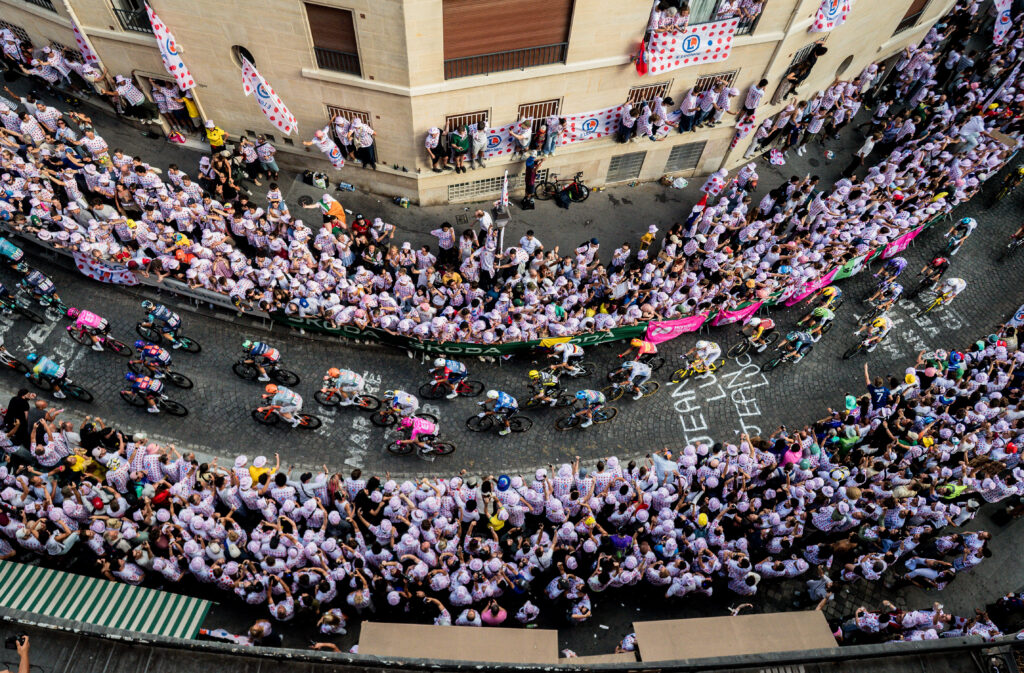

The Tour de France’s Montmartre experiment is the best thing to happen to cycling for years – but please, ASO, make it count for the GC next time
I’m currently writing this blog post from my hotel room in Paris, a bit worse for wear if I’m honest, after a late night spent toasting the end of another three weeks of blokes racing bikes around France.
The room in question overlooks a vast cobbled roundabout surrounded by pretty, overpriced restaurants, a stone’s throw from the French capital’s much larger and more famous roundabout that surrounds the Arc de Triomphe and tempts motorists into life-endangering madness every day.
This time yesterday, my more modest roundabout was sealed off by red and white barriers and stern-looking police officers, because it pointed the way to the greatest innovation cycling has seen in years (no, I’m not talking about lactate gels).
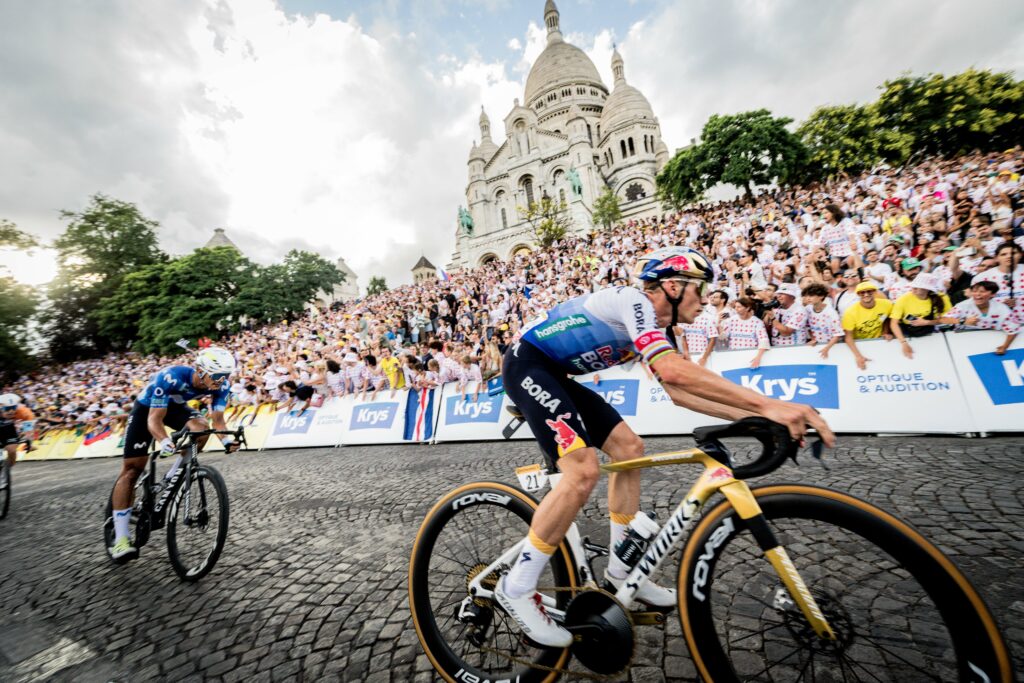
ASO’s decision, inspired by the thrilling 2024 Olympic road race route, to spice up the Tour’s traditional procession and sprint through Paris by diverting the last stage through the bustling streets of Montmartre and its devilishly steep cobbled hill has paid off massively.
Last year’s epic duel between Wout van Aert and Tadej Pogačar may have come with the caveat of a rain-soaked neutralisation, but yesterday’s Parisian thriller was proof that Montmartre’s mini-classic is pure Tour gold.
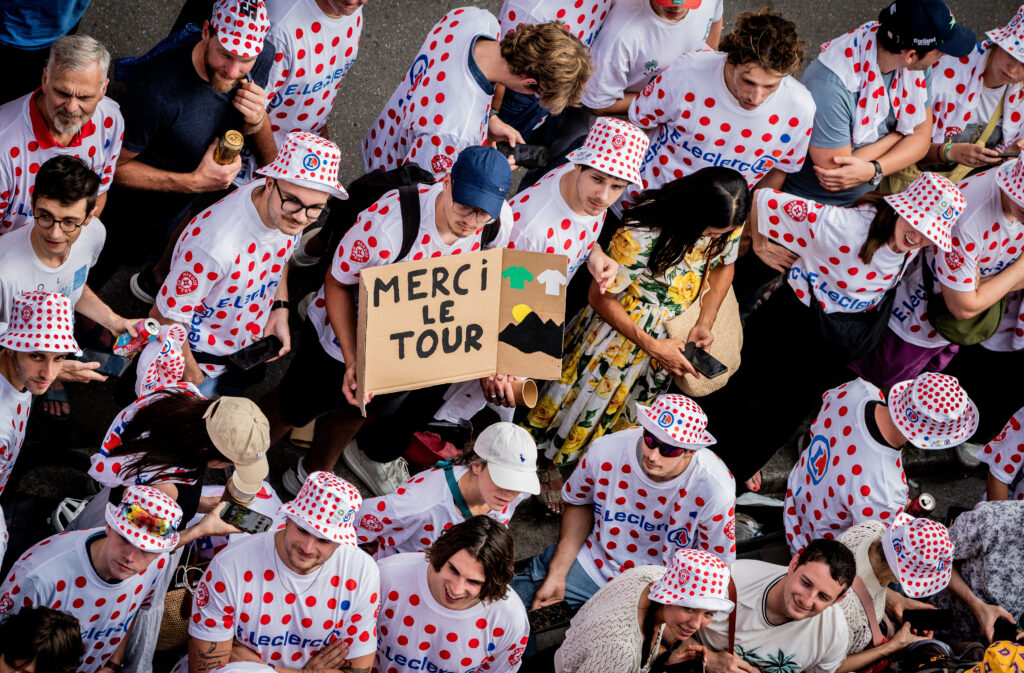
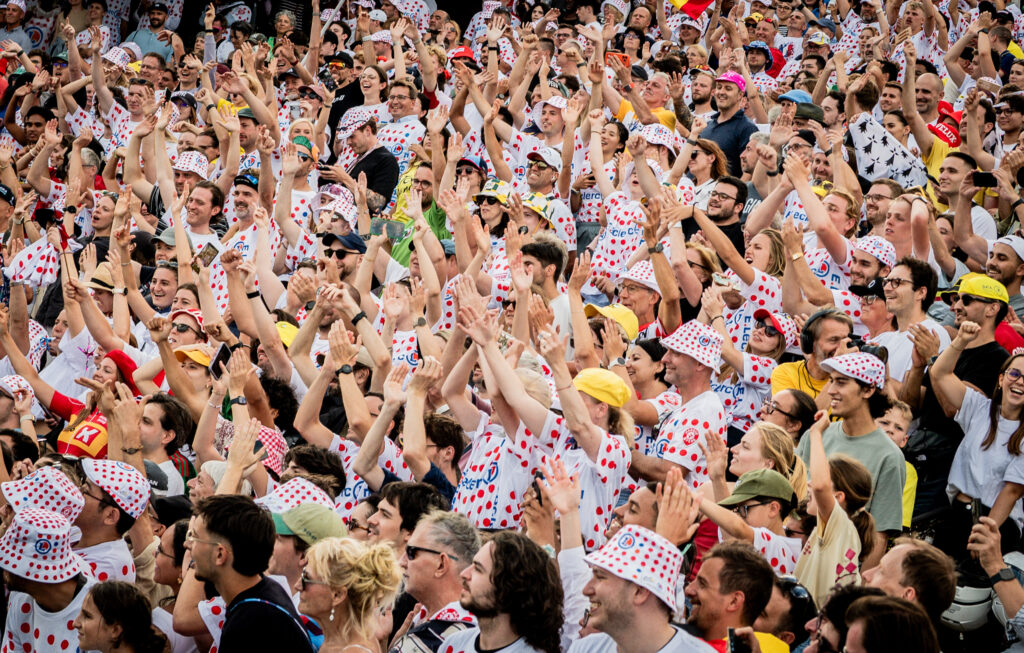
I watched the drama unfold from my plum spot on the Champs-Élysées, right by the finish (I know, what a life), but colleagues who ventured up to Montmartre kept texting me raving about the atmosphere, which has helped breathe new, boisterous life into the Tour’s final day.
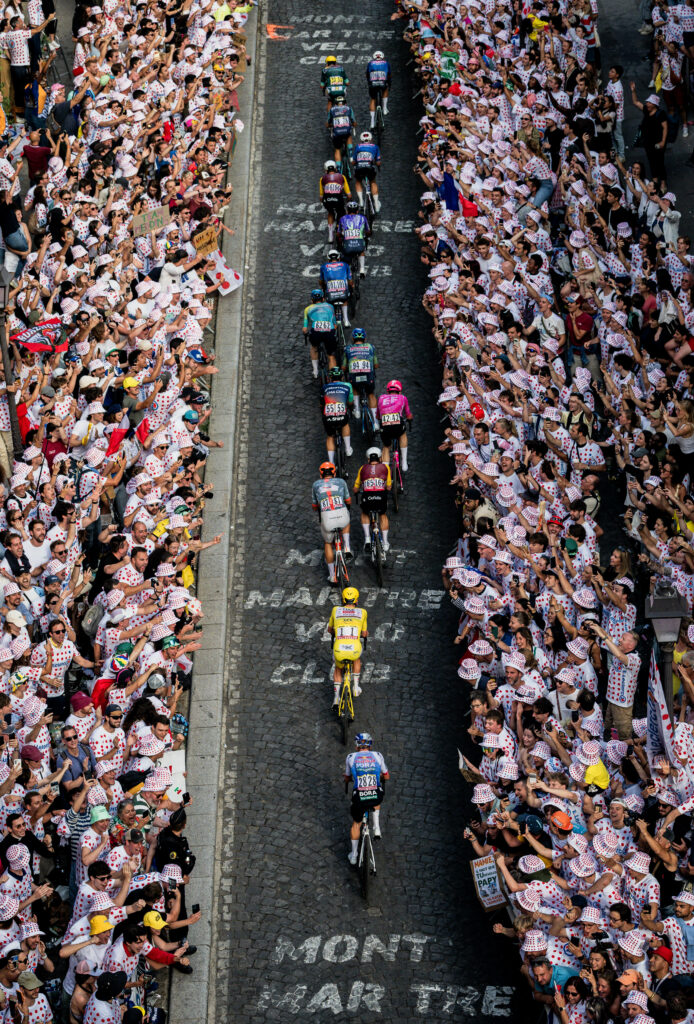
The three bigger laps on the hill have also reinvigorated a stage which, for all its annual sprint pyrotechnics, had gone slightly stale as a sporting spectacle. Instead, the new route is perfectly pitched, creating a mini-classic on the final day that, based on Sunday’s thriller, is delicately balanced between the punchier GC contenders, one-day specialists, and tougher sprinters.
The sight of arguably the four best, most talented riders left in the Tour peloton – Pogačar, Mathieu van der Poel, Remco Evenepoel, and Mads Pedersen – storming clear and then careening down the Champs together was a sight to behold (chuck in the missing Van Aert and Jonas Vingegaard next year and you’d have an image for the ages).
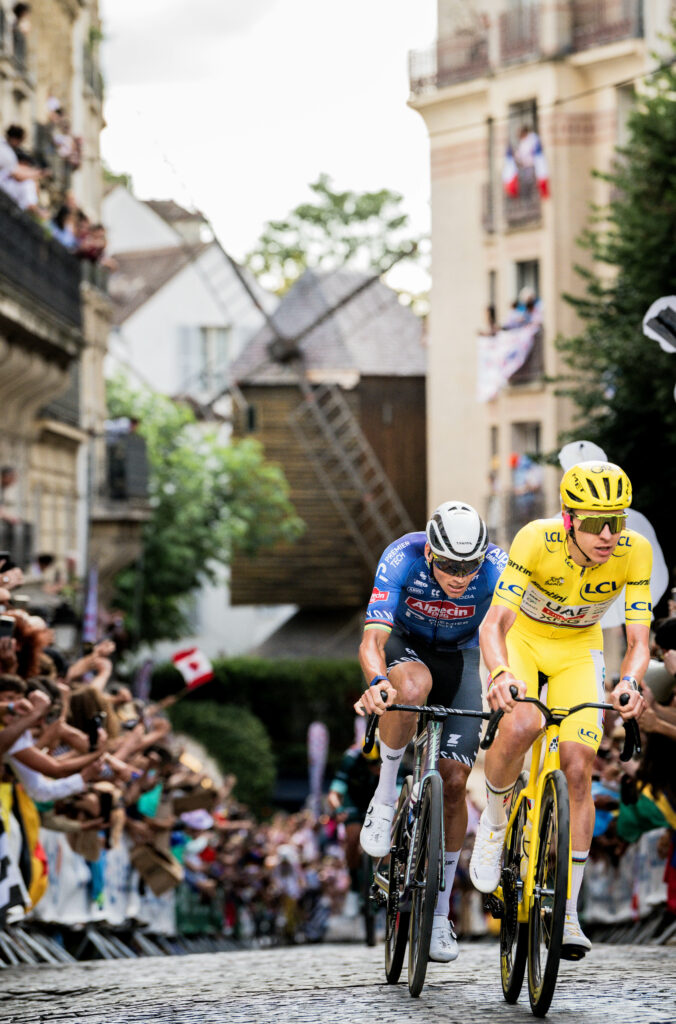
The fact that it was the two greatest riders of the 2020s, Tadej and Mathieu, who broke clear on the final lap only serves to underline how good the route is. The long descent back to the Champs is also inspired, allowing a Milan-Sanremo-style battle between the attackers and the bunch, one won in scintillating, last-gap fashion by Van der Poel (with a little help from his yellow-jerseyed friend).
The sight of Van der Poel straining with every muscle in his body towards the line, followed a split second later by his Alpecin mate Jasper Philipsen and the rest of the sprinters will stay with me for a long time. It was a fitting end to what was possibly the best hour of bike racing this year.
And, importantly, the new, flat-out racing route in Paris doesn’t detract from the final stage’s party-like atmosphere. As the peloton, split into tiny pieces crossed the lines, often in ones and twos, they were greeted by a hero’s welcome, with most of the riders lapping it all up and playing to the crowd.
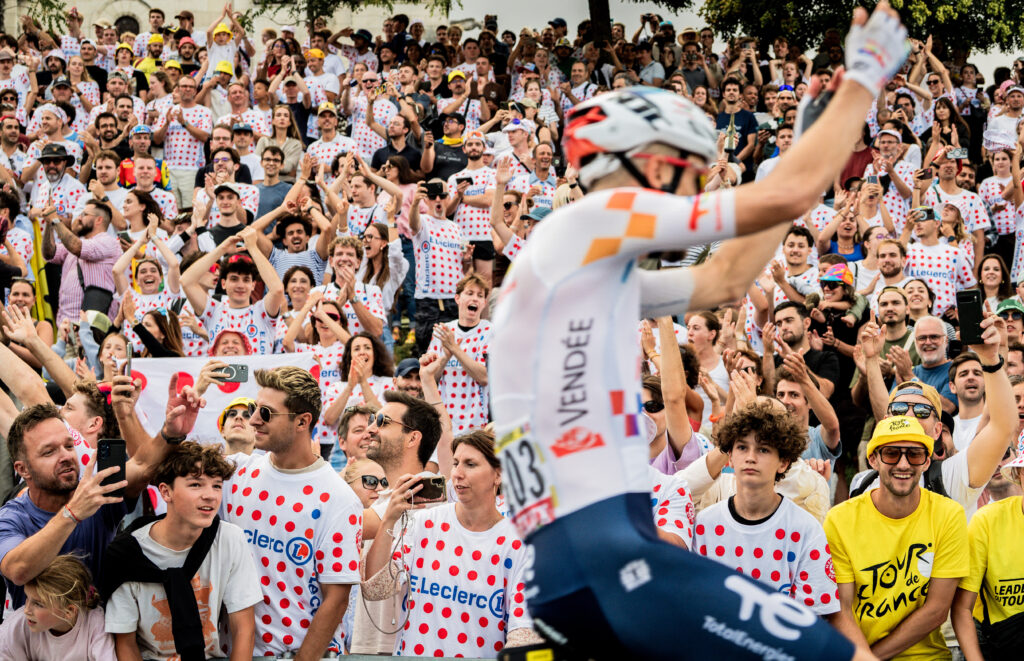
The team buses, as usual, were bouncing with free pizza, booming music, and family reunions.
And, as I walked back up the Champs, I spotted British champion Fred Wright, exhausted but jubilant, taking it all in as fan after fan approached him for a selfie and to congratulate him on his daring Montmartre attack.
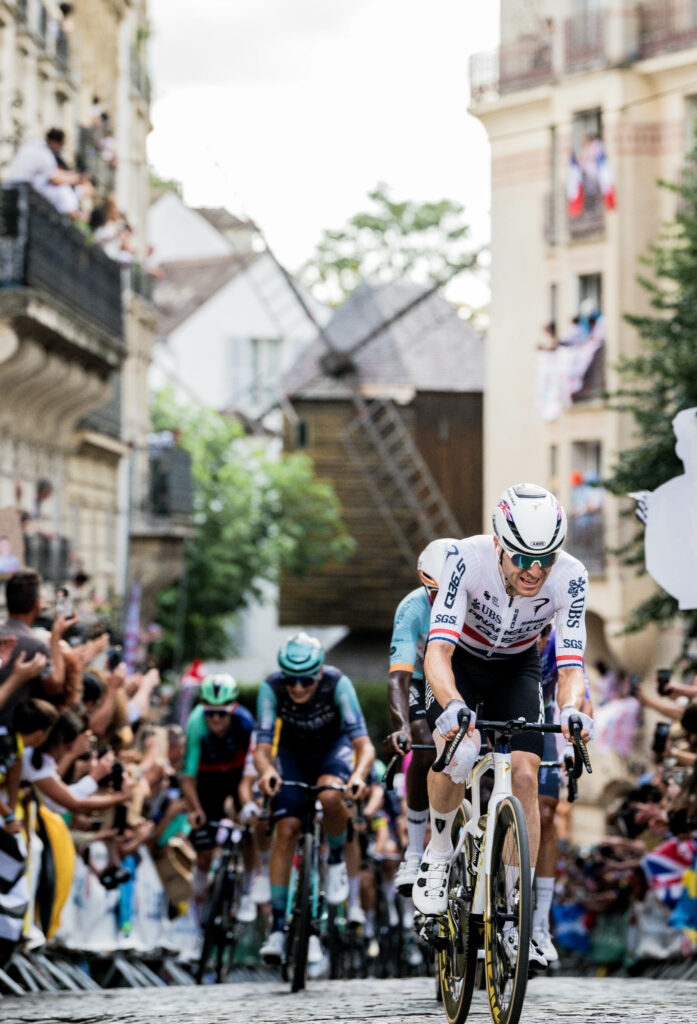
But… There’s a but. Having witnessed the potential for epic racing in Paris first-hand, I’m slightly concerned ASO have painted themselves into a corner with their decision to neutralise the GC times after one lap of the Montmartre circuit, on a completely dry day.
I’m not sure Isaac del Toro will agree with me, but imagine the scenario if the times had been taken at the finish line, with the potential for Decathlon to nail it at the front in the hope of catapulting Paul Seixas on the podium. By stopping the clock with 41km to go, and cutting Del Toro’s frantic chase to just a few kilometres, we were robbed of another layer of intrigue.
Of course, some fans (and especially riders) may not be happy about the potential for a Tour de France podium place to go up in smoke on the final day. But that’s grand tour racing. Just because the Paris stage has been, mostly, a GC-friendly zone for 50 years doesn’t mean that bad luck, bad form, or bad tactical decisions shouldn’t play a role right up the finish.
After all, other grand tours frequently end with time trials, and you don’t hear anyone complaining about them ruining the party vibes of the final day.
Most importantly, if ASO stick with Montmartre (which, based on the evidence of the last two years, I don’t see why not) and with their early GC neutralisation trend, what happens if we one day reach Paris with the top two separated by 20 or 30 seconds?
Will they race each other until 40km to go, the yellow jersey potentially changing hands in the process, before sitting up and letting the rest of the stage unfold? That would be absurd, and leave everyone watching, especially casual fans switching on for nice shots of Paris, baffled.
If the Tour wants the drama of Montmartre to continue, they have to let the riders – all of them – race until the very end.
“It’s too hard to answer, for tomorrow maybe!” Tadej Pogačar and Remco Evenepoel baffled by Tour de France climate change question amid wildfires
There are bigger things than the Tour de France, believe it or now.
In my hotel room this morning, French television was dominated by the wildfires that are decimating large swathes of the south-west of the country, forcing hundreds of thousands of people to be evacuated from their homes.
The wildfires, the end product of the scorching temperatures throughout July, had an impact on yesterday’s Tour finale, confining it solely to Paris due to a lack of police resources, and taking the number of stages at this year’s race impacted by fires and the heat to three.
So, you’d imagine the leading riders at this year’s Tour would have something to say about climate change and its potential to change the nature of bike racing, while impacting rider safety?
Not quite.
When that question was posed to second-place Remco Evenepoel during his post-Tour press conference, the Belgian puffed out his cheeks, baffled by the prospect of thinking of anything beyond riding his bike very fast.
“After one month of racing, that’s a very difficult question,” Evenepoel laughed.
At that moment, a shout was heard from across the press room, emanating from a guy in a yellow jersey, who had just turned up for his own late evening chat with the assembled journalists. From what I could make out, Tadej Pogačar wasn’t convinced Evenepoel should be answering questions about climate change.
“Actually, Tadej should answer, he’s the ambassador of the Tour, so he should answer how to make it more safe,” Evenepoel joked in return.
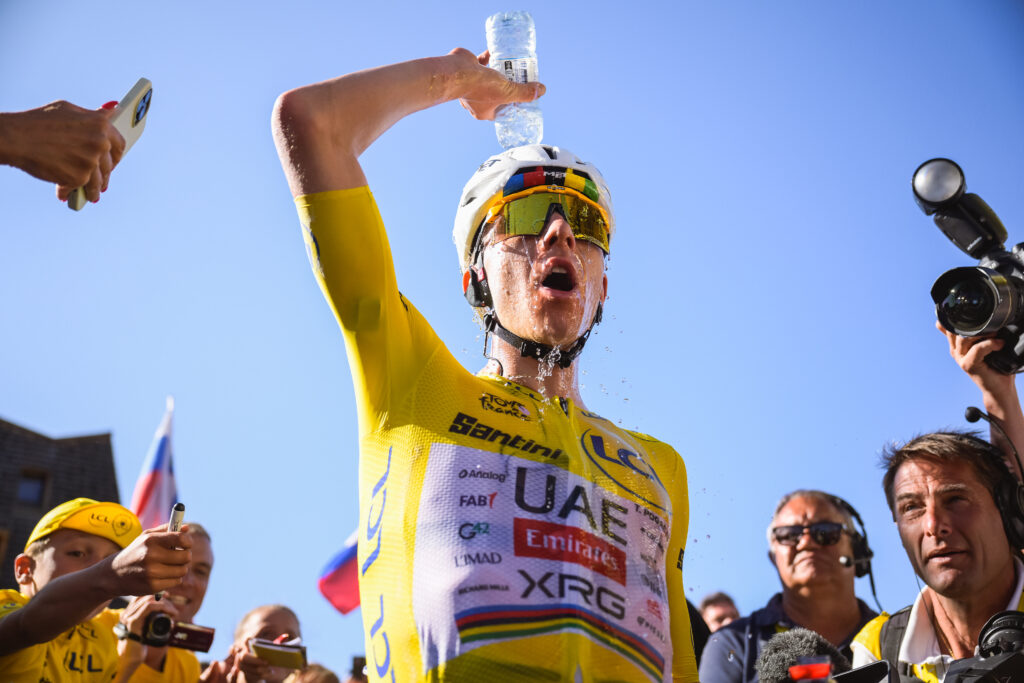
“It’s too hard to answer, for tomorrow maybe!” Pogačar shouted, shaking his head in mock exasperation.
“Exactly,” Remco interjected. “Err, what should I say? We don’t have control of that, I think. I’ll have a think about it and next week you should come to San Sebastian and I can answer you there.”
We look forward to hearing your thoughts, Remco.
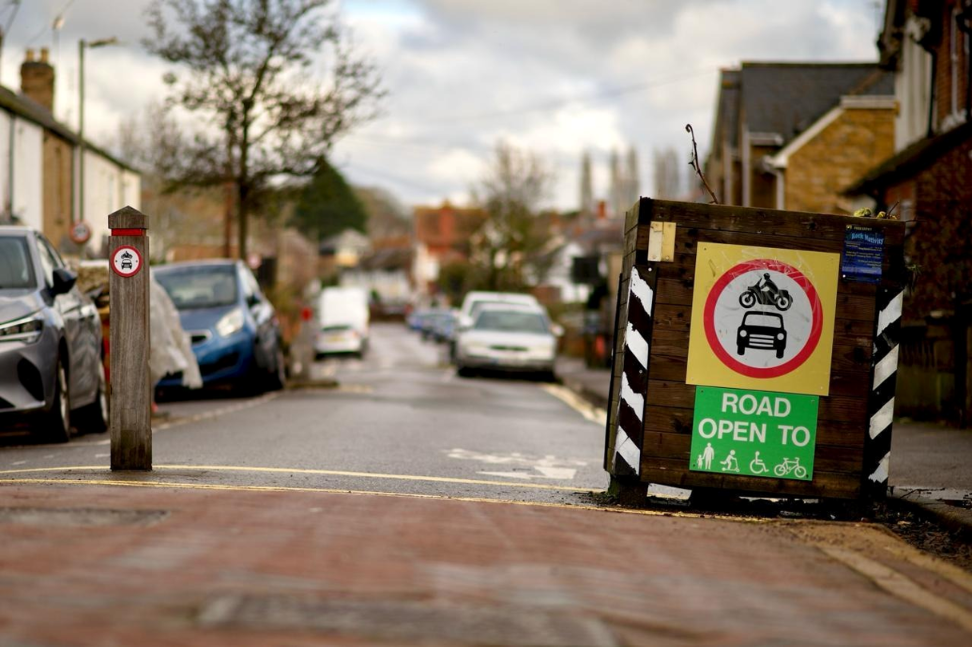
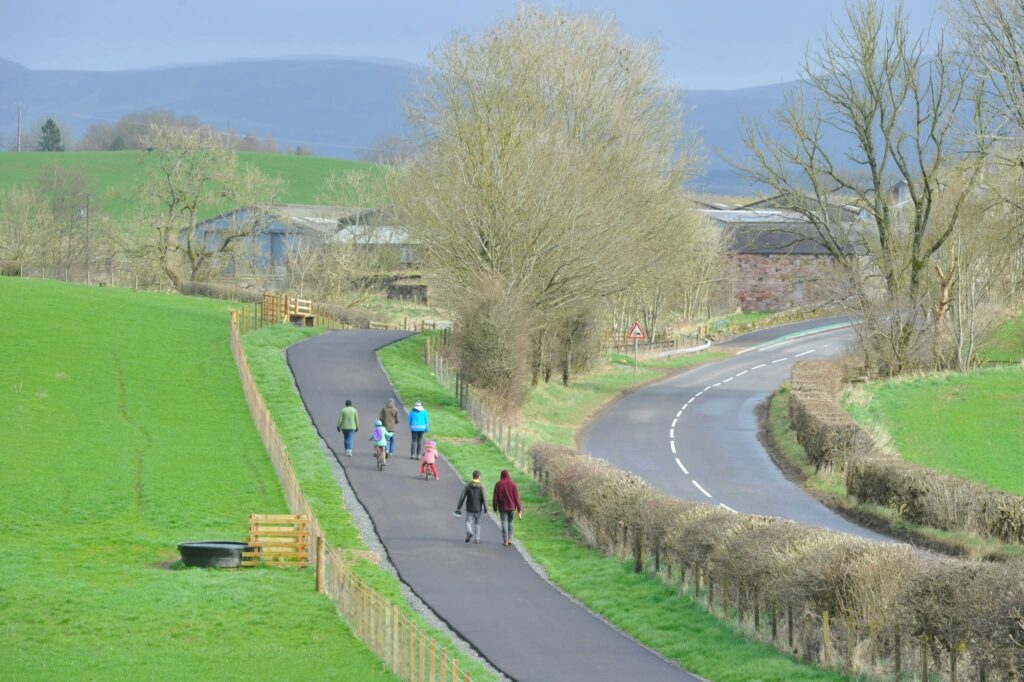
Proposed bike lane rejected in favour of temporary van dwelling site due to safety concerns
Sneaky, sneaky
I’m sure by now you’ve seen that video from West Yorkshire Police, featuring a cyclist who was fined £1,200 for filtering past a car at close range, an incident spotted in footage the rider submitted himself purportedly showing a close pass from another motorist.
As you can imagine, we’ve got lots of questions for the police. Well, we’re getting closer to a statement from West Yorkshire Police, but they are just running some top secret background checks first…

Classic.
“If the Vuelta started tomorrow, I would say no”
Right, let’s move this press conference onto more important matters, like whether Tadej Pogačar will follow up his fifth Tour win with a crack at a maiden Vuelta title next month.
“Right now, if the Vuelta started tomorrow, I would say no,” the Slovenian said during his post-Tour presser, when asked if the Spanish grand tour was in the cards.
“But in two weeks, I can still decide.”
So… you’re saying there’s a chance?
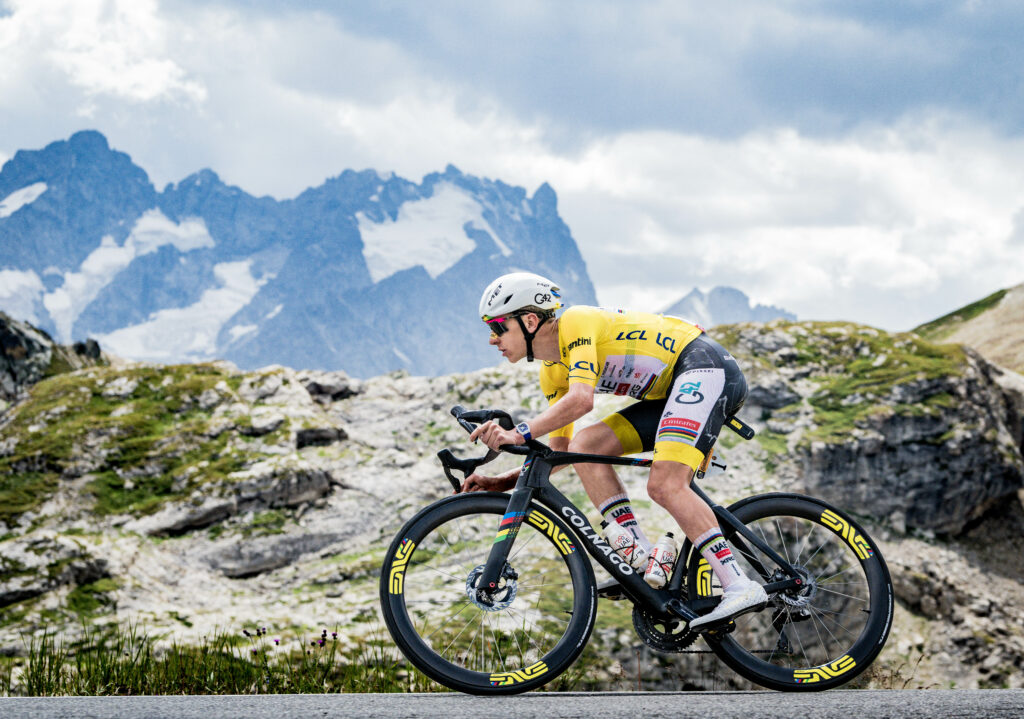
Elsewhere, the yellow jersey chatted about burnout, after he appeared to enjoy a much more serene, happy Tour win this year after last year’s morose final week.
“I don’t say that last year I was burning out, but I was well aware that it can happen,” Pogačar said.
“I’m aware this can happen if you push too far, so that’s also why, just now after the Tour de France, I don’t want to say, yeah, I go to the Vuelta or I go to all the races. I need to also think about this and keep the feet on the ground.”
“It’s part of my life, like going to the supermarket”
It’s time for more highlights from last night’s Paris press conferences, where Tadej Pogačar was asked about one of the biggest talking points from this year’s Tour: the late-night visits from the anti-doping officials.
“In my opinion, 2am for Jonas was a crazy control. 5am is also a little bit weird, but definitely not the weirdest,” the yellow jersey said.
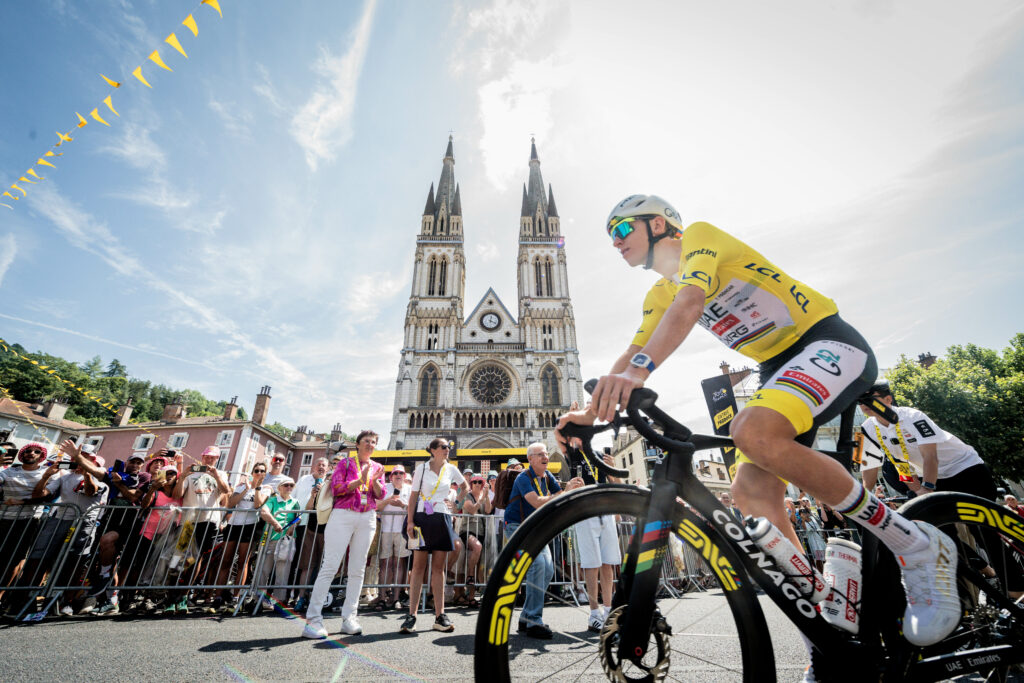
“Since I started riding the Tour in 2020 we’ve had crazy controls, like before queen stages a lot, at almost every Tour, or four or five times out of seven I’ve done, there were controls in the bus 30 minutes before the stage.
“This is even weirder, but they’re doing their job. It’s part of my life. When I hear a knock on my door, the first thing going in my head is, ‘is control here?’ It’s like going to the supermarket, it’s nothing unusual anymore. I’ve had so many in the last few years, it’s part of my life now.”
Is this the best photograph from the entire Tour de France?
Well, at the very least it’s the best photo taken by a road.cc writer at this year’s Tour…
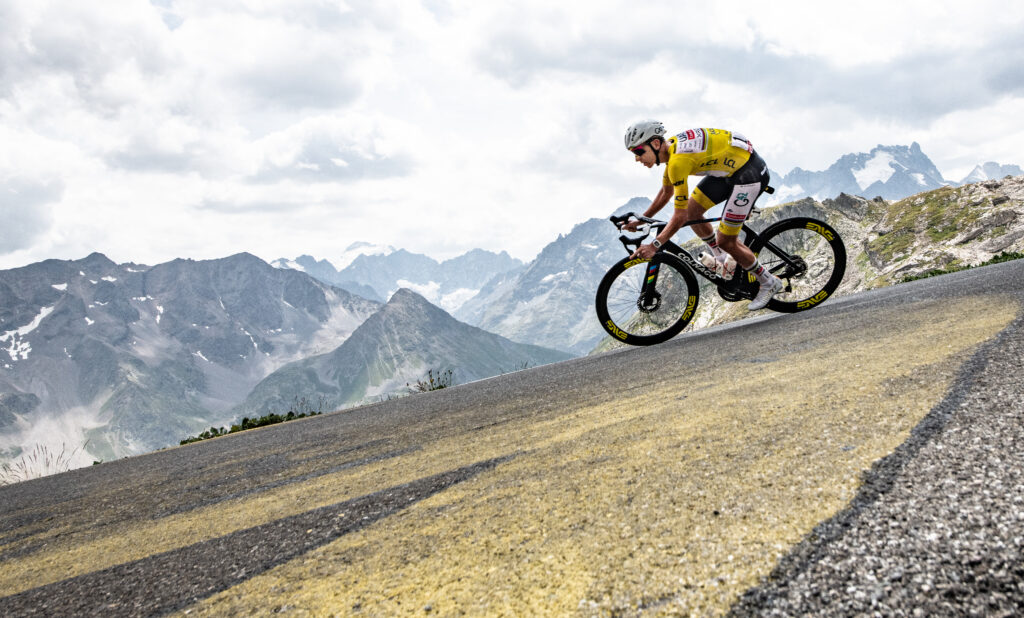
In the interests of full disclosure, actual photographer Pete Goding set everything up, I just had to press a button a few times. But still, there’s my name on the credit, and it’s not a crappy, grainy photo from my terrible old phone this time.
Thought of the day: Is the Local Democracy Reporting Service “structurally NIMBY”?
A thing I’ve long suspected but never got round to rigorously checking is that the Local Democracy Reporting Service is, effectively, structurally nimby – because a disproportionate amount of the available material if you’re covering “local democracy” is planning objections
— Tom Phillips (@tom-phillips.com) August 18, 2025 at 12:24 PM
Well, that would explain all the anti-cycle lane stories…
Meanwhile, in Wales…
RIP Bill Oddie
The Goodies comedy trio, featuring Tim Brooke-Taylor, Graeme Garden, and Bill Oddie in his traditional seat at the rear of their “trandem” bicycle.
#RIPBillOddie
— Cool Bike Art (@coolbikeart1.bsky.social) July 27, 2026 at 5:10 PM
“See you up Alpe d’Huez next year, Tadej”
Looks like Greg James has caught the cycling bug this summer. Well, riding 1,000km across the country on a tandem with a host of random celebrities will do that to you, I suppose…
View this post on Instagram
Is the Tour de France becoming too fast?
Apologies for the severe delays affecting our live blog service this morning, we’ve got some gremlins in the system at the moment (I swear it’s not just because I’m hungover).
Anyway, I spent a lot of last week on Tour delving into the record-breaking speeds of the past three weeks and what those on the ground make of them and what they mean for the sport. It’s a long one, so I’d stick the kettle on if I were you:
Zwift sales sees Kickr Core 2 reduced to £399 and Zwift Ride with Kickr Core 2 bundle cut to just £899
This post is sponsored by Zwift

As we gear up for yet another heatwave here in the UK, it might actually make sense to take some training indoors if you have a decent cooling system – or if you’d rather just prep for the winter nice and early, Zwift have some stonking offers on the Kickr Core 2 smart trainer and Zwift Ride with Kickr Core 2 bundles right now to celebrate the Tour de France Femmes avec Zwift (Zwift sponsor the Femmes hence the name, don’t worry the race isn’t moving indoors or anything).
The saving on the Kickr Core 2 is over 100 quid, and if you want to invest in a full smart training set-up, the Zwift Ride bundle is down to just £899, saving you over £200.
Here are all the links to grab the discounts for UK, EU and US wannabe Zwifters…
UK readers
Get the Wahoo Kickr Core 2 for just £399
Get the Zwift Ride with Kickr Core 2 for just £899
EU readers
Get the Wahoo Kickr Core 2 for just €399
Get the Zwift Ride with Kickr Core 2 for just €899
US readers






22 thoughts on “The Tour de France’s Montmartre experiment is the best thing to happen to cycling for years – but please, ASO, make it count for the GC next time; “It’s too hard to answer!” Pogačar and Evenepoel baffled by climate change question + more on the live blog”
Well, no, because if the times are taken before they get to the climb there isn’t going to be the terrain on which to make a 20-30 second difference, so it would be pointless, just as it was when it was a flat stage.
That last stage was EPIC. But, by neutralising the GC, it almost becomes a classic at the end of a grand tour. I want a bit of jeopardy all the way to the final finish line.
I’m fine with GC being taken far from the line. Those who want to race can, and by God they did, and those who want to kick back and enjoy the last hour of the Tour waving to fans can do that, and by God they earned it.
Completely agree. Neutralising GC half way through a stage is just utterly absurd. What are they thinking?
Imagine if Del Toro had not made it back on in time, what would have happened then? He’d have lost the white jersey *because* of ASOs dumb decision to try protect the starting GC standings.
Either the GC standings are frozen at the gun (still requiring them to finish) or they should be taken at the end of the stage.
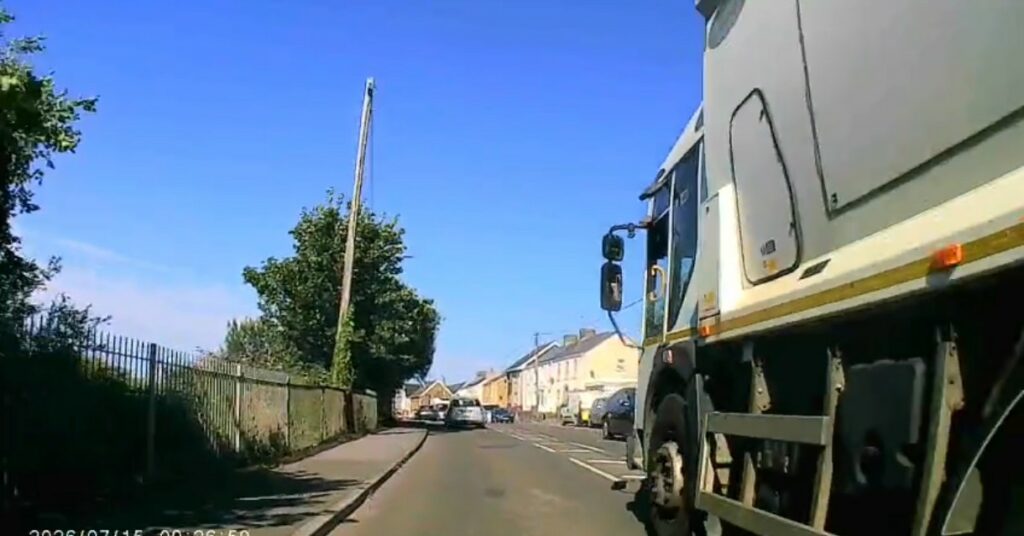
has anyone else seen this story from the BBC – basically, a cyclist in West Yorkshire reported a close pass, and the police went through their footage and the cyclist ended up paying a £1,200 fine for dangerous cycling for squeezing in the gap between a parked car and an oncoming car.
https://www.bbc.co.uk/news/videos/cd9w2l2wqvdo
I’m a believer in fairness, proportionality and so on, so there are several key things here:
-that is a terrible piece of cycling, posing a danger to themselves, and some small danger to the driver because the cyclist could have ended up smashing through the windscreen
-there is absolutely NO WAY that any driver in West Yorkshire has been fined £1,200 for a close pass on a cyclist, even if they took it all the way to court and had to pay costs etc.
-there is a strong “man bites dog” element to this story. Drivers endangering cyclists is mundane and everyday, not worthy of being reported in the BBC. Cyclists endangering drivers is the unusual exception, which then gets reported.
P.S. as a measure of the standard of driving which endangers cyclists but DOESN’T get prosecuted by West Yorkshire police, they decided that this close pass/undertake wasn’t a crime:
@the little onion I saw that today too, and came here looking for reaction – it got a little bit of attention on the live blog a couple of days ago.
I also don’t have a problem with the police looking at a submitted clip in its totality, and if you’ve done something you shouldn’t have, don’t expect to get away with it. (Am I right in thinking they also looked at other, totally separate clips you had submitted too over the offensive language thing?)
But I’m in two minds about the actual cycling that got the fine. Yes, it’s uncomfortably tight, and if I’d done that I’d have a had a word with myself afterwards about self-preservation, but I’m not convinced they posed any danger to the driver of that tank, at the speeds involved and going uphill. However, sounds like the charge was careless cycling, so danger not required.
@quiff How did you manage to determine that it was uncomfortably tight, the police are constantly telling us they can’t measure distance from a video, can we now use this as a precedent that if it looks close the motorist can be prosecuted?
@the little onion
Yeah, I posted in on Saturday morning onto Friday’s blog.
I’m surprised Road CC hasn’t said anything about it (unless they are drafting it now).
Another point I forgot to say is, given the car is parked, there is almost no danger apart from a scratch/dent.
Given many cyclists pass parked cars closely thousands of times a day, is this a going to be a big issue now?
Cycling Mikey’s comparison video of passing a stationary train v being passed by one is usefull for this too:
@mitsky Would have been better if the camera was facing the other way for the train passing so that it came as a surprise like overtakes sometimes do in a noisy situation.
@mitsky Thanks – and remember kids, West Yorkshire Police are totally institutionally anti-cyclist. I think road.cc should ask them how many of the team reviewing cyclists’ submissions to their video portal actually are regular cyclists, as in, how many cycle on the public highway, in plain clothes, at least twice a week.
It’s not entirely clear, but I don’t think they’re referring to how close they were to the parked car; it’s more how close they were to the oncoming vehicle, which appeared (albeit very slightly) to slow and move towards the side of the road in order to pass safely.
Yep. I suspect being in the oncoming lane* as the Volvo approached round a blind bend / hill brow contributed – would be interesting to know if they’d have taken action if the cyclist had remained in their lane throughout.
* don’t know where the camera is mounted, so not sure, but the before and after position below suggests so.
@mdavidford I suspect they are saying that the oncoming driver was inconvenienced by being forced into the gutter.
I also suspect that a cyclist forced into the gutter wouldn’t be inconvenienced because that is where we belong!
@Bungle_52 PS I posted a link with more details on fridays blog but it didn’t appear for ages. I’m not putting the link in again so you will have to find it in Fridays blog. Well worth a look in my opinion.
@mdavidford
It is a shame that the clips doesn’t show it but I would guess that the cyclist’s wheels were on the left of the central lines on the road and the right side of the handlebar and the cyclist’s right elbow would be on the line or barely over it.
At the end of the day, we as cyclists can pass more closely (filter) than drivers should.
@the little onion
It’s not great cycling, but I have the same from drivers practically every day on my commute. I don’t imagine for a moment that, if I reported it, anything would be done.
The key point here, which the police and court appear to have ignored, is the false equivalence of the two scenarios. If a driver leaves too little room, they endanger the cyclist. If a cyclist leaves very little room, they endanger themselves.
@AidanR It’s not great cycling, but I have the same from drivers practically every day on my commute. I don’t imagine for a moment that, if I reported it, anything would be done
How right you are!
I genuinely don’t see how the police can consider this an offence. The rider goes no closer to the parked car than one would when filtering, so is that now an offence? The 1.5m rule is confusing for idiots on Facebook but you would hope the police would understand what it’s there for.
he more I see this, the less I like it.
I wouldn’t describe it as riding by a “careful & competent” rider.
BUT; the rider was passing a parked, locked (mirrors were folded) car, slowly, on a good road suface, on their side of the road. The oncoming car was travelling slowly and could use their entire lane.
A bit of a squeeze, but the police have been quoted (elsewhere) as saying, “a close pass doesn’t occur if the vehicles remain in their own lane” and the 1.5m guidance applies to motor vehicles.
So no close pass occured (they are going in the wrong directoion, anyway), filtering is allowed, the only danger was to the cyclist themselves and they had obviously assessed & accepted that risk.
The leader’s team would get on the front and block the roads through Montmartre and completely kill the spectacle. Let’s face it, the last stage has always been meaningless apart from the sprint, now it’s meaningless apart from a superb and thrilling triple lap of Montmartre followed by a sprint. Neutralising GC helped that spectacle – imagine if Tadej had needed to go back and help bring Del Toro up. The roads are too narrow to allow for really fair racing, if we want the wonder of the Montmartre loop then GC neutralisation is the price we have to pay, and one well worth paying in my view.
Instead of asking Remco and Pogi their opinions on climate change, journalists should ask ASO management why stages started at 13.00 during the first week when the heat wave hit its peak. Interestingly, pundits talk about climate change only when the temperature rises. No doubt they have already forgotten this year’s cancelled stages during GC races in Southern Europe due to strong winds, heavy rains and snow falls.
The 2026 TDF was brilliant. No question.
…but to the most pertinent question…oh,
“It’s too hard to answer, for tomorrow maybe!”
This is THE answer given by the vast majority ignoring the climate emergency.
‘Not my problem. Tomorrow…maybe’.
Tadej, Remco, et al, as ambassadors for cycling, feigning ignorance just doesn’t wash.
The ASO needs to urgently answer this question too – what are they doing to mitigate the climate emergency? Let alone getting their heads out of the sand re start times in the hottest time of the day!
As do all the fossil fuel sponsors who think they’re greenwashing their brands via pro cycling. In reality they’re just trading on Tadej, Remco and everyone else’s wilful ignorance.
“It’s too hard to answer, for tomorrow maybe!” Really?
Great, it’s now tomorrow…Tadej? Over to you.