

For close to two decades now, EF Education-EasyPost has prided itself on bunching above its weight at the highest level.
Since its Tour de France debut in 2008 as Garmin-Chipotle, the American squad – despite never troubling the top of cycling’s financial table – has won 14 stages at cycling’s biggest race, finishing on the podium twice (while also triumphing at the Giro and four monuments along the way).
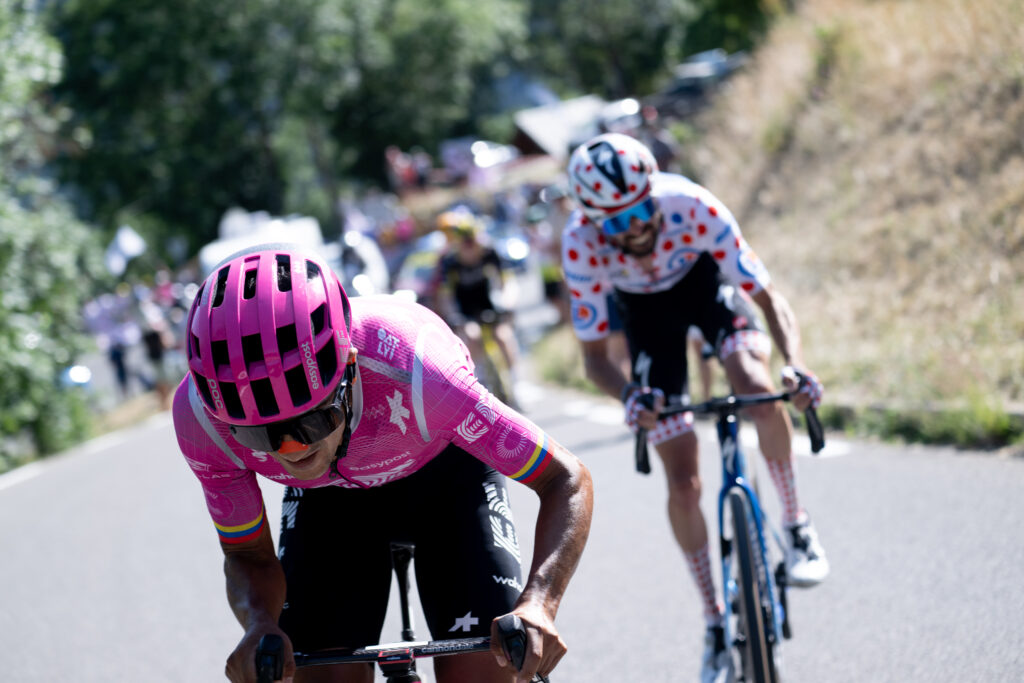
That trend continued at this year’s Tour thanks to a spectacular, ferociously attacking display by Richard Carapaz during the race’s final week in the Alps.
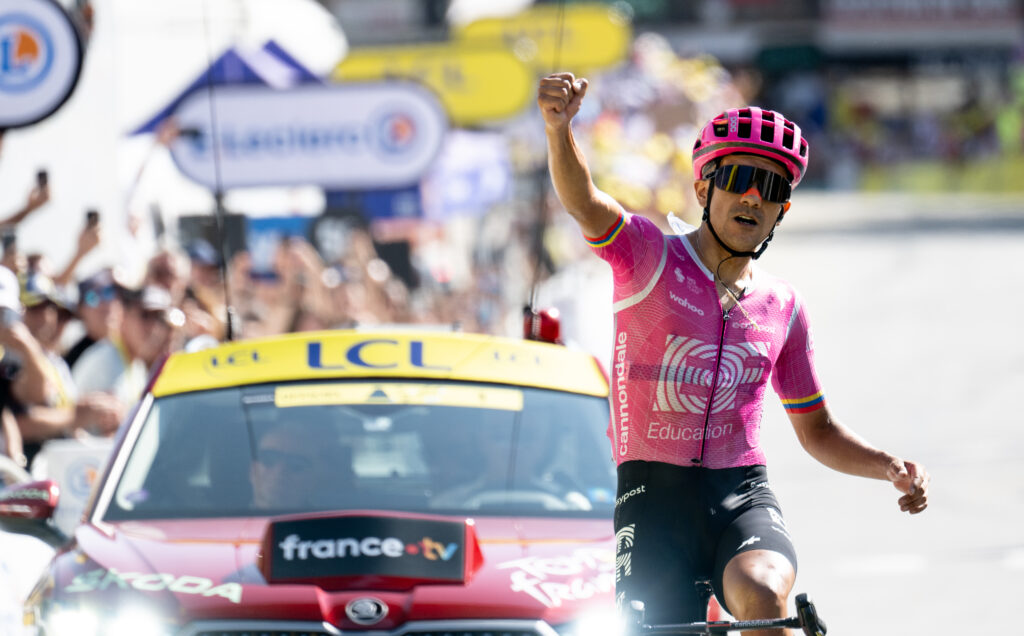
On stage 18, on the slopes of Orcières-Merlette, EF’s dogged Ecuadorian star soared to a brilliantly aggressive solo victory from the breakaway, following that up two days later by overhauling the unfortunate Sepp Kuss on the run-in to Alpe d’Huez to take the Tour’s queen stage.
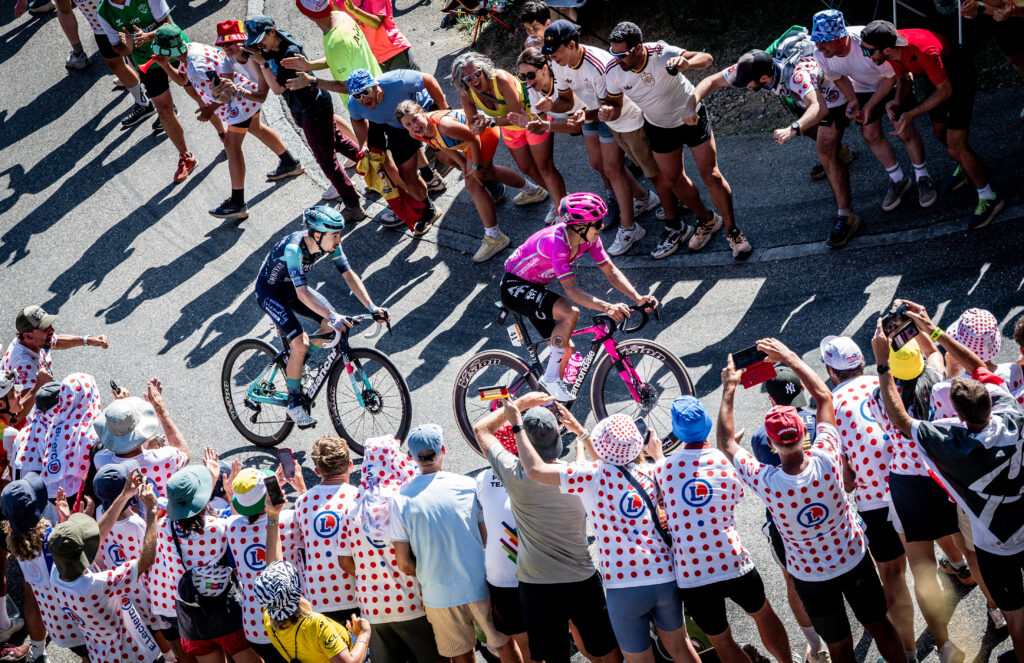
Those firework-filled rides also saw Carapaz bag the King of the Mountains competition in the process, the second time the 33-year-old has worn the Tour’s famous polka-dot jersey in Paris since joining EF.
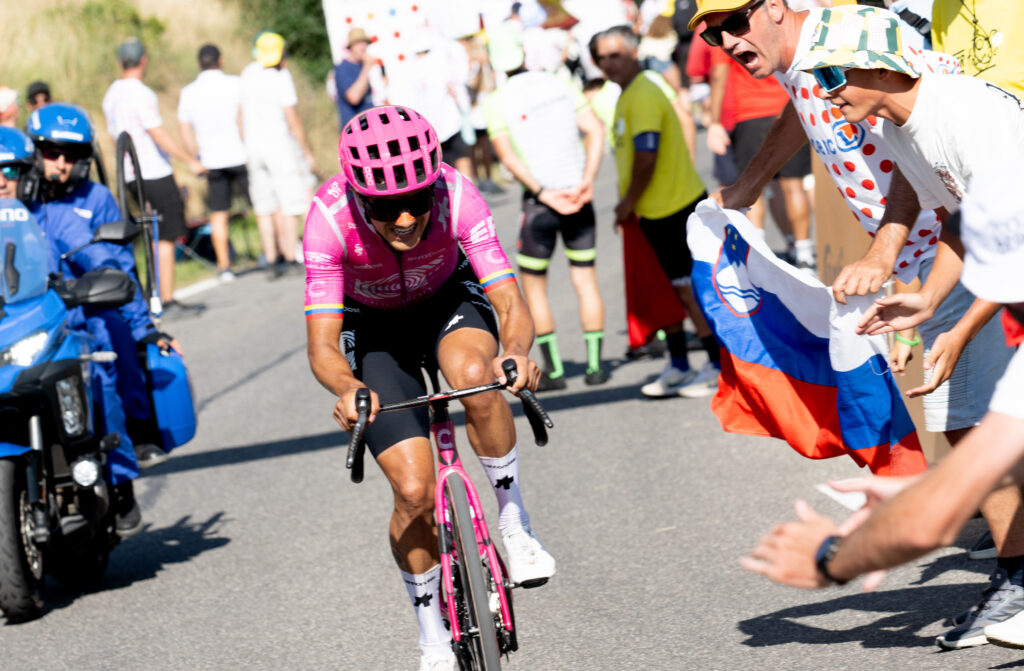
Carapaz’s stage win may have been a long time coming at this year’s Tour – EF were active throughout the race, with French climber Alex Baudin enjoying an early spell in the polka-dot jersey – but it was also the result of months of painstaking effort.
That effort comes from the riders, of course, but also the team’s support staff and an auxiliary network of suppliers and partners, who work together to give the squad a fighting chance against the sport’s heavyweights, such as Tadej Pogačar’s UAE Team Emirates, and their unmatched financial muscle.
But that search for every little (or marginal) gain has been something the team has been doing for 20 years, founder and CEO Jonathan Vaughters told us when we went behind the scenes at EF’s team hotel before the Tour started in Barcelona.
“A lot has changed since I started the team. It’s been a slow evolution, but an evolution,” Vaughters said.
“At our first Tour de France in 2008, we were doing things like using ice vests or putting ice on the riders to cool them down, or custom drink mixes, or a lot of the aerodynamic stuff.
“Back then, that was unheard of. Everyone almost thought we were using witchcraft! It was very much like, ‘that’s never going to work’. Which gave us an immense advantage over the peloton for quite a few years there.
“But nowadays, every team is investigating every single last millimetre of advantage possible. It’s like human Formula One racing now.”
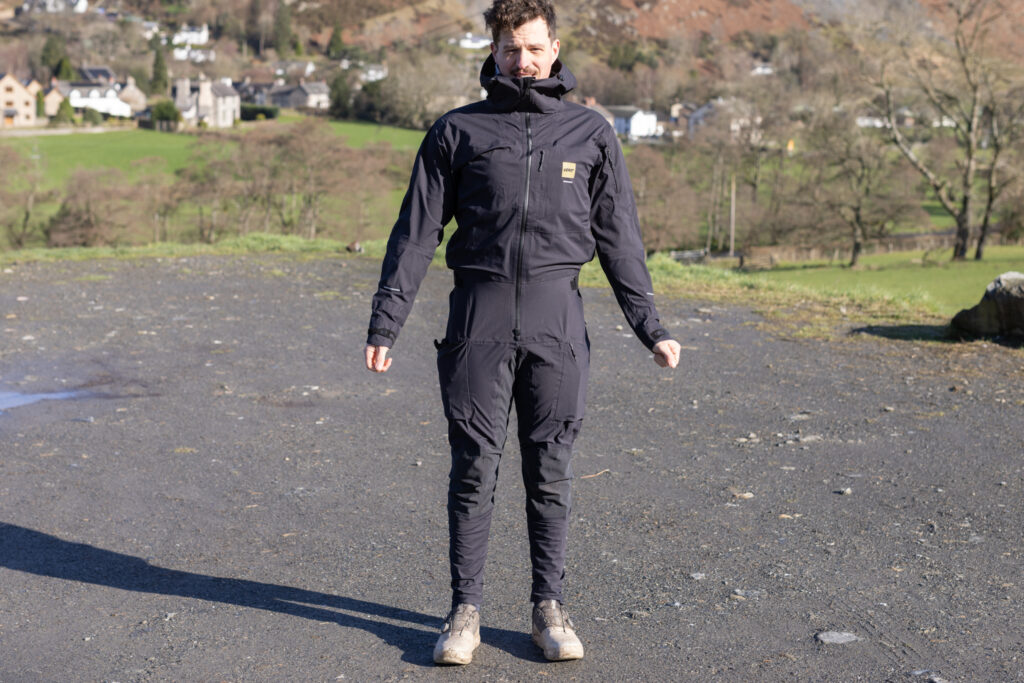
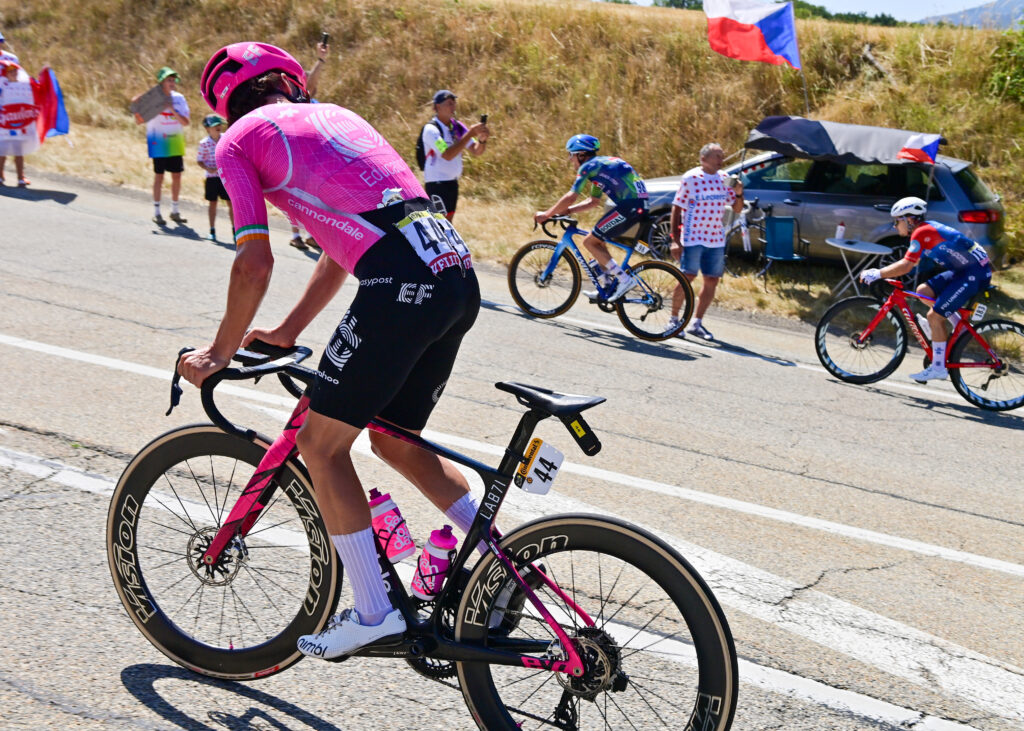
One of those key areas of investigation has centred in recent years on kit, from both an aerodynamic and cooling perspective, especially as temperatures continue to rise, a phenomenon underlined by the extremely hot conditions that marked the start of this year’s race.
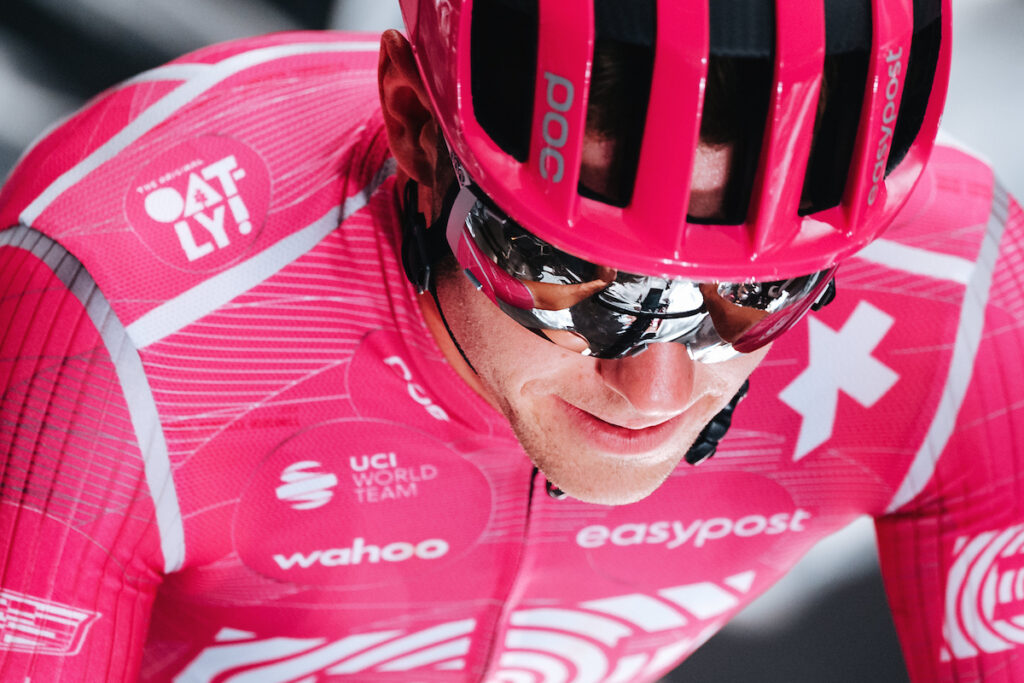
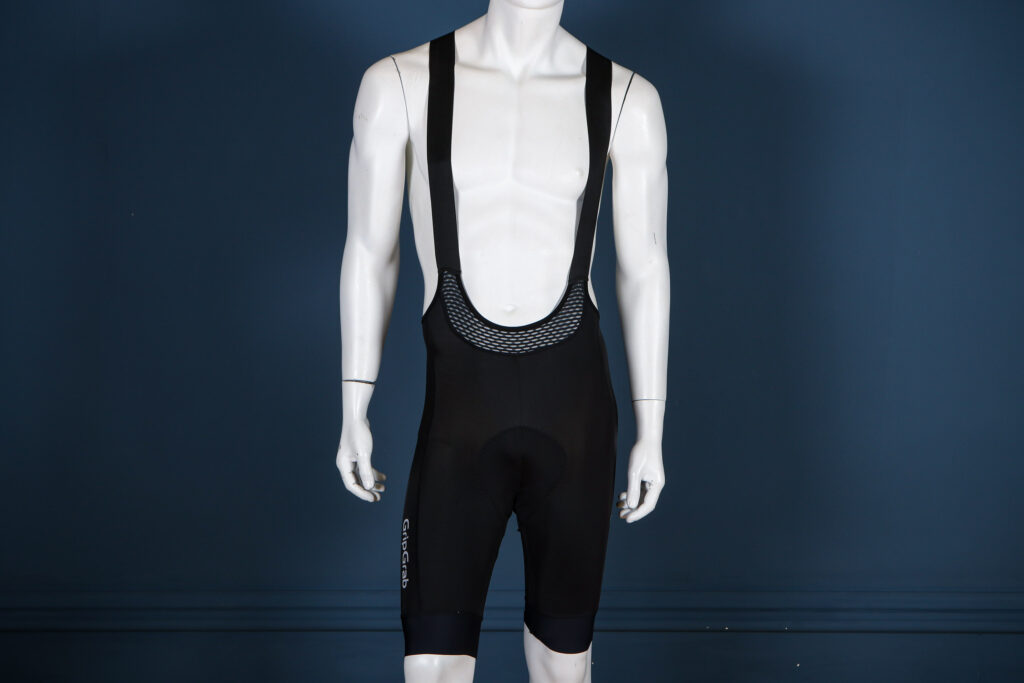
EF started working this year with Swiss kit supplier Assos, a partnership Vaughters believes will give his squad the edge in all types of weather and on all kinds of terrain.
“In terms of going forward in the sport, with the temperatures rising, you want to get a kit that helps the heat, but it’s still aerodynamic, it’s still comfortable” he says.
“There’s always a little bit of balance there. Most of the time, the most aerodynamic fabrics are not always the best for heat, you know. It’s about finding which day is most suited for what. And that’s what we’ve been working with Assos on, who’ve been incredible for giving us optionality.
“Each rider has 14 different suits, form those that suit very high-speed aerodynamics like a sprint finish to medium-speed aerodynamics, for more of a breakaway scenario, to as cool as we can possibly get for a very, very hot day.
“This is where your body is interfacing with the world, so I think fabrics and the ability of those fabrics to dissipate heat and improve aerodynamics, I think we’re only just seeing the beginning of where that technology is going to go.”
Speaking at the start of the Tour with us, Vaughters was confident that his team’s underdog mentality, and with it a dogged determination to search for every advantage, both before and during the race, would pay dividends at the Tour.
“Our first and foremost goal is to win a stage,” he said.
“I like a really hard race, where teams who know how to support their riders from a nutrition and recovery standpoint starts to show through. We don’t always have the most powerful riders, but I think the way we treat and take care of our riders is really great.
“And with how hard this Tour will be by the last week, that is going to show through.”
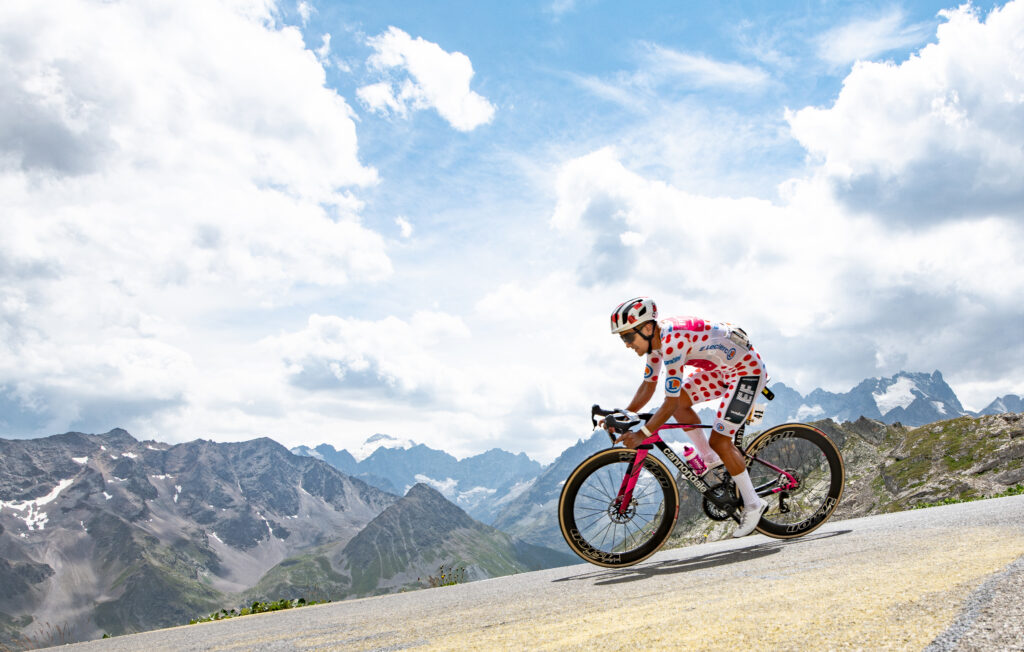
And he was proved exactly right during the final week of the 2026 Tour, when Carapaz – the embodiment of the team’s never-say-die spirit – struck gold in the Alps.
For a delighted Vaughters, all the hard work had paid off.
“I think they’ve merited a stage win all the way since the beginning of the race, starting with Alex early on, and then Sean [Quinn] and then Richie, and Richie again,” he told road.cc after his team’ 14th Tour de France stage win.
“Things that are worthwhile are not easy to achieve.”
Nobody in cycling knows that more than EF and their band of plucky, winning underdogs.

-300x199.jpg "“He wants bikes in traffic lanes. Give him what he wants”: Cyclists urged to “slow every street down to bicycle speed” and ride in middle of lane amid premier’s war on cycle paths + more on the live blog")