


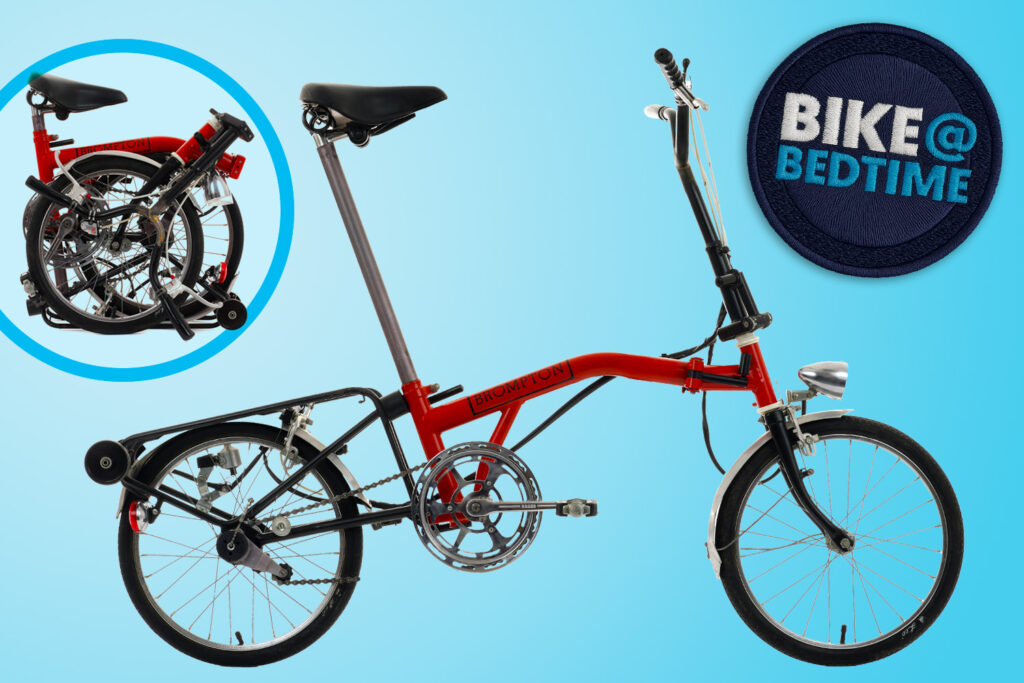

If you were to ask someone to name a folding bike brand, nine times out of 10 the first one they’d mention – maybe the only one – would be Brompton. Even people who don’t know about bikes know about Brompton. It’s a British cycling institution. That’s quite an achievement for a brand that’s just celebrating its 50th anniversary, and we thought it would be interesting to look back at the original 1975 design.
That’s when Brompton founder Andrew Ritchie created the first Brompton folding bike from his flat in London, overlooking Kensington’s Brompton Oratory – hence the name. Since then, over a million Brompton bikes have been made in its London HQ, reaching 47 different countries. Brompton reckons there are over 80,000 of its bikes in London alone. But back to that first design…
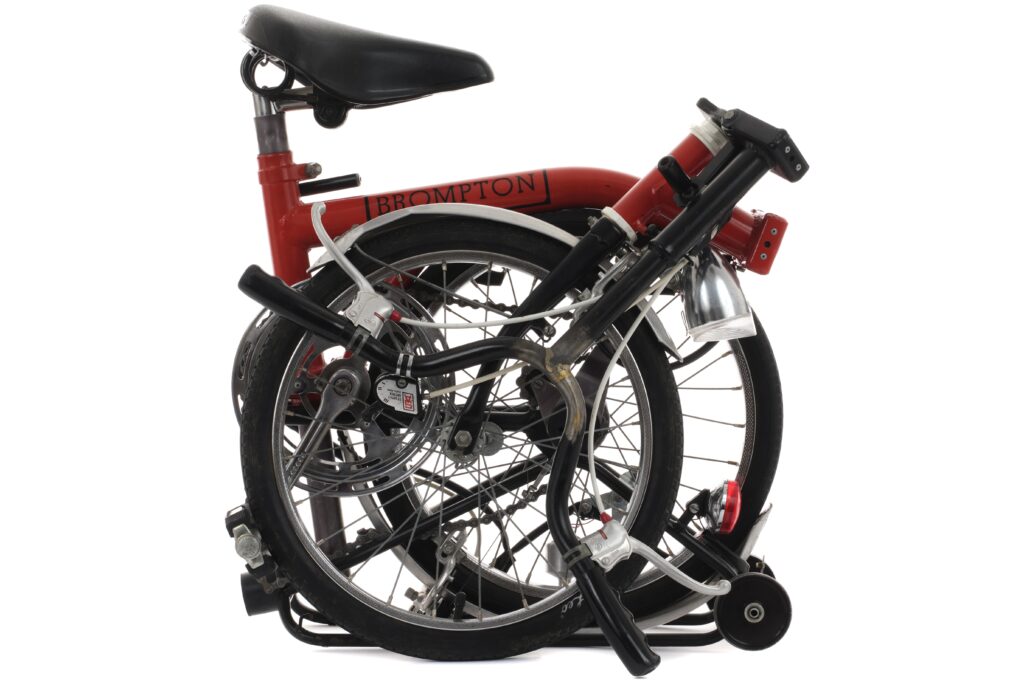
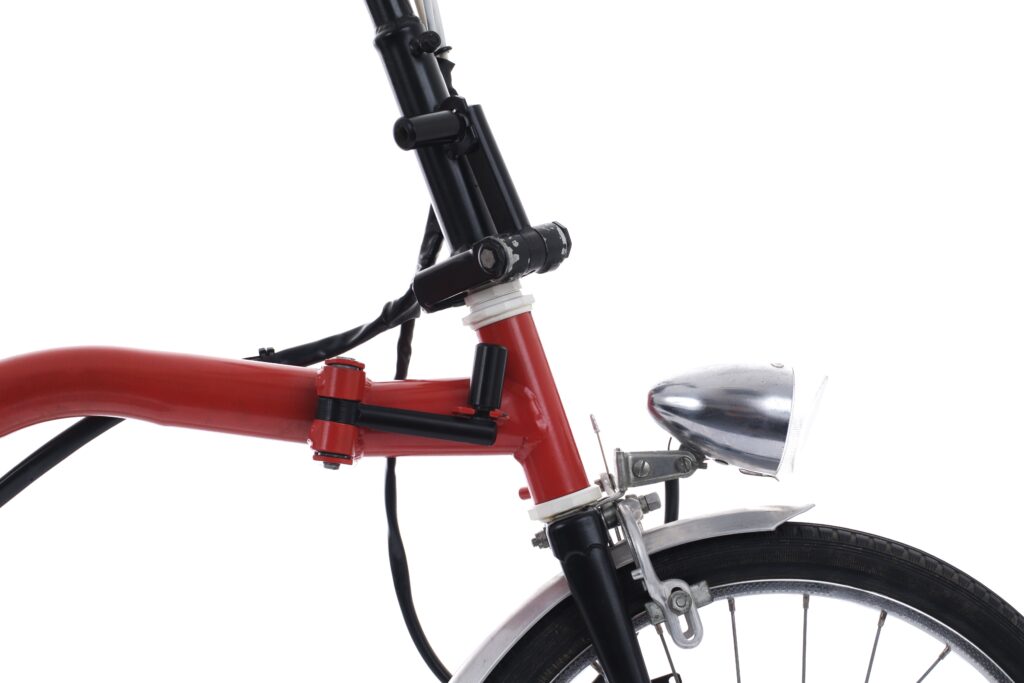
Brompton is rightly famous for its fold, and that was an element of the initial design. You pivot the rear part of the frame downwards and forwards, the front section turns backwards towards the centre thanks to a hinge on the mainframe, and another hinge allows you to fold the stem and handlebar down. You can drop the seatpost to make it more compact too.
A Brompton folds down to about a third of its unfolded size in under 20 seconds once you’ve got the hang ot it. Really compact, really clever.
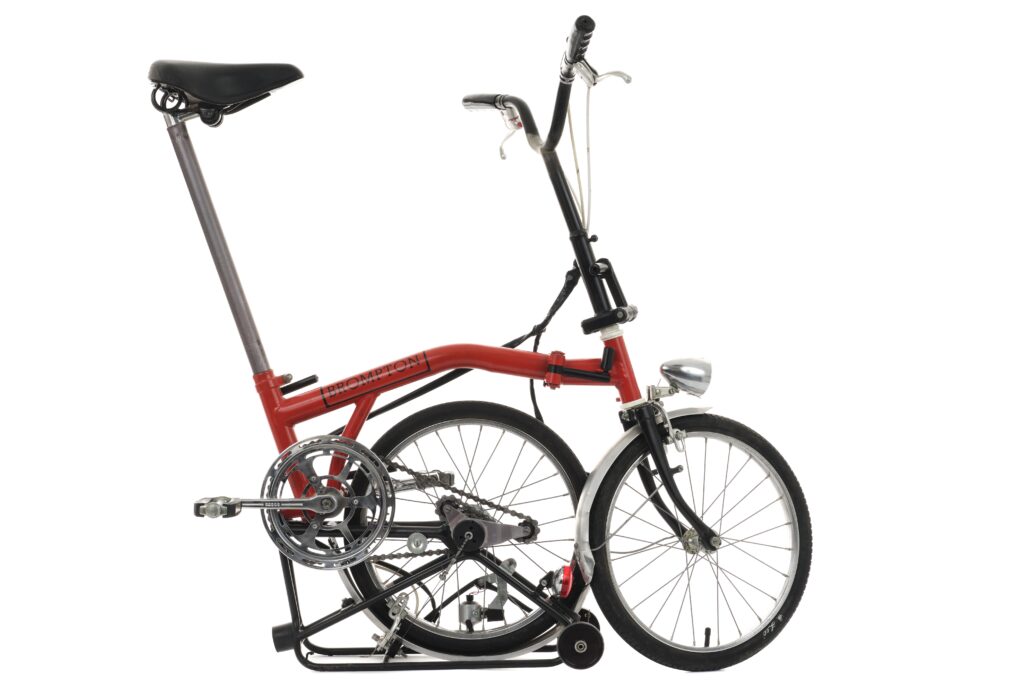
Although details have been refined over the years, the main features of today’s Brompton design were there in Andrew Ritchie’s 1979 patent.
It’s fair to say that Brompton’s early years were slow, Andrew Ritchie handmaking every customer’s bike to order from a rented workshop while looking for investment. Production ceased in 1982 and then began again in 1986 with backing from friends and former customers.
We won’t go into a full history here, but Brompton has become a massive success since then, awarded the Queen’s Award for Export in 1995 and two Queen’s Awards for Enterprise in 2010 – one for Innovation and another for International Trade. It won another Queen’s Award for International Trade in 2015.
Brompton produces over 100,000 bikes a year, and 80% of bikes made at its London factory are exported outside of the UK, with China now the brand’s biggest market. Exporting from the UK to China? There’s not a lot of that going on in the bike industry.
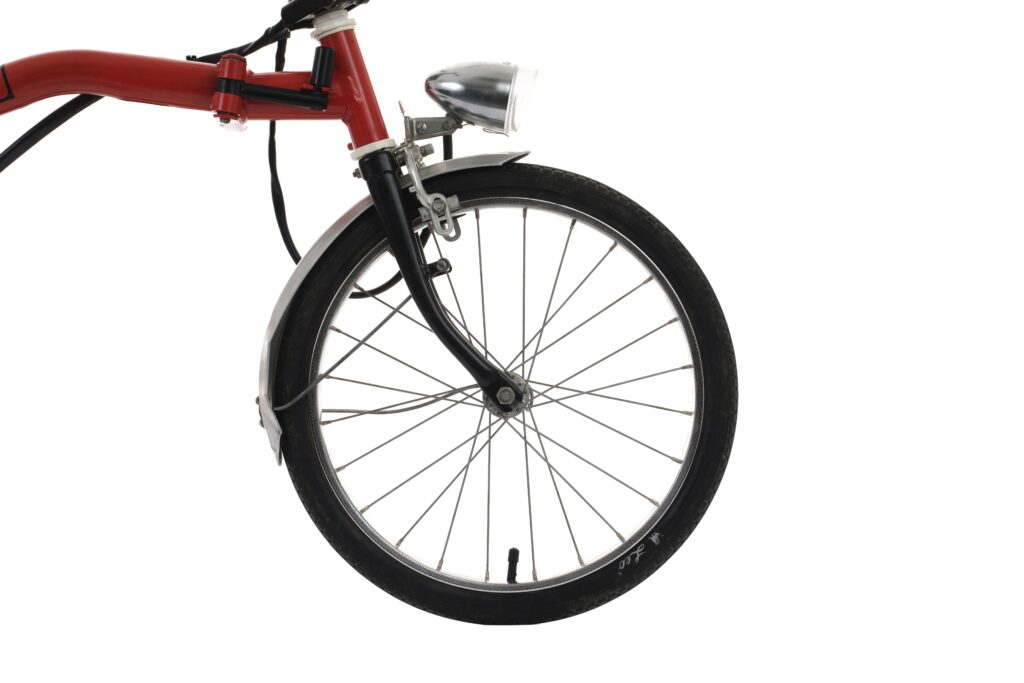
And when Brompton says that it makes bikes in the UK, it really does. It’s not a case of having the frames made in the Far East and the bikes assembled over here. Brompton hand-brazes its steel frames in London, while its titanium framesets are TIG-welded in Sheffield.
Brompton’s profits fell from £10.6m in 2023 to just £4,602 last year, as total bike sales dropped by almost 7,000 and operating costs increased, but making any sort of profit in the bike industry at the moment is a good result.
Proposals for an ambitious new eco-friendly factory and headquarters in Kent were approved back in January.
> Read our review of the Brompton P Line
These days, Brompton offers various bike lines at prices from £950. With titanium and electric options in there, it’s a diverse range, but the common denominator is that fold. It’s a touch of genius.











7 thoughts on “Check out the very first Brompton folding bike”
A Brompton – one
A Brompton – one instinctively knows when something is right.
I use a Brompton as my main
I use a Brompton as my main bike and cycle virtually every day. As a GP I do home visits on them. My patients are amazed as they watch as I fold it in their front room or hall before seeing them . An amazing piece of engineering.
Jessiethedog wrote:
Wouldn’t it be better to fold it on the doorstep and carry it in like that?
Are they perhaps amazed as
Are they perhaps amazed as the good doctor cycles past them down the hall and then performs folding magic in the front room?
A G.P. doing home visits is
A G.P. doing home visits is much more amazing than any kind of bicycle. Getting to see a G.P. is even harder than getting an Ambulance.
Photoshop gremlins at work?
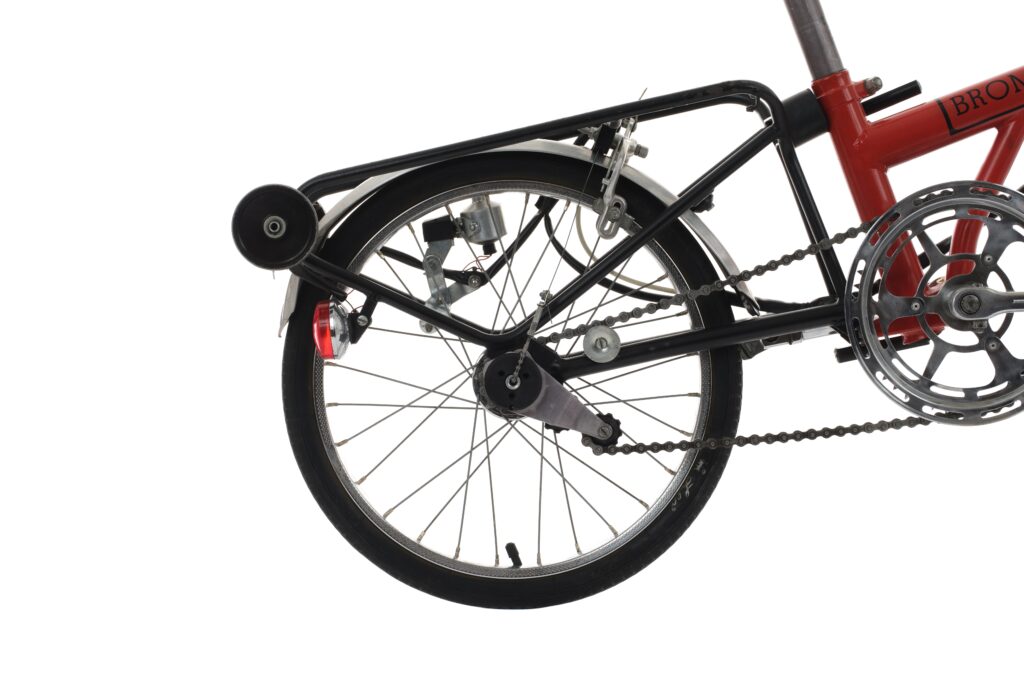
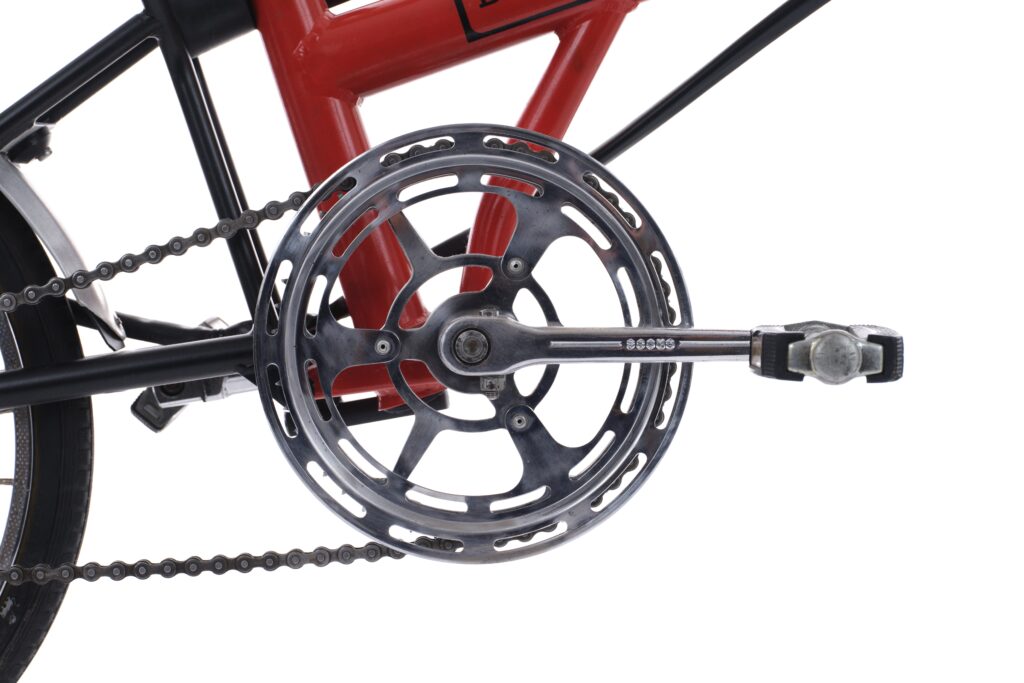
Photoshop gremlins at work? The chain below the chainstay has disappeared! Great bikes. Cheers!
One of the greatest stories
One of the greatest stories of cycling products, imho. We have a rich history here in the UK with Bromptonm and Moulton bikes.