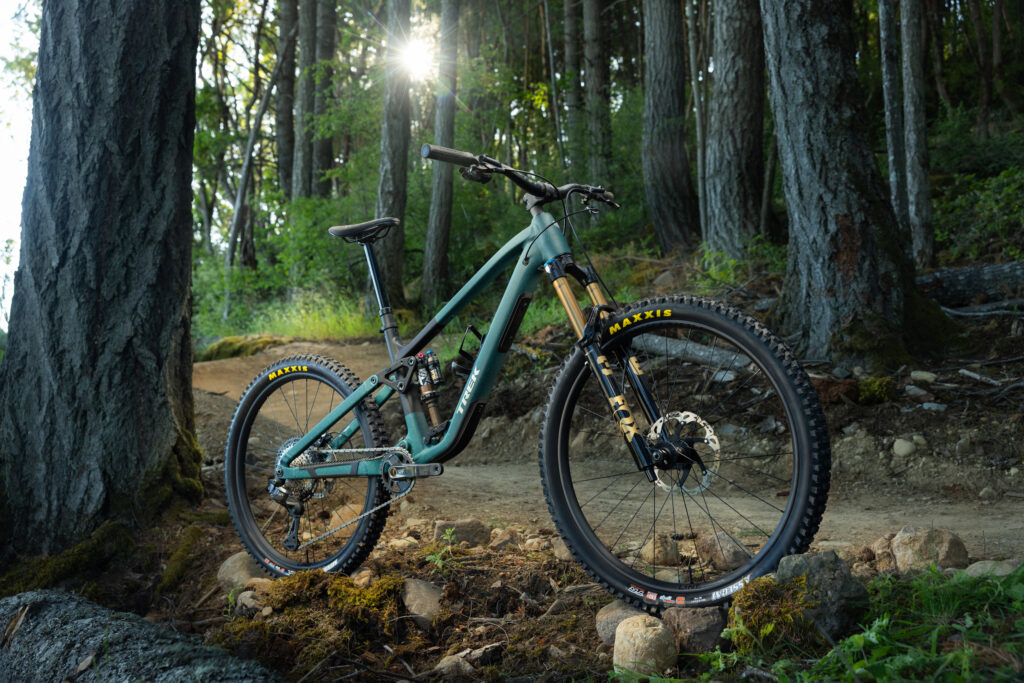

The Trek Fuel is a staple of the trail bike sector, and has been for a fair few years. But the technology, terminology, and ultimately the definition of what constitutes a trail bike is constantly evolving. And thus, the new Trek Fuel reflects this and has evolved, too… Into three bikes.
- 2023 Trek Fuel EX offers more travel, reach and adjustability
- Best e-MTBs 2025 – top-performing e-mountain bikes for every situation
- Best mountain bikes 2025 – top options from cross-country to Enduro
Three new options make up the Fuel range: the Fuel EX, the Fuel MX, and the Fuel LX. This is also applied to the electric version, now called the Fuel+ (no longer the Fuel EXe). But what does it actually mean to have a bike that’s capable of being three bikes?
Confusing? Yes. Versatile? Also, yes.

OK, so what’s the craic with this new Fuel? Trek’s calling it the “mountain biker’s mixtape” because of its ability to switch between a 145mm 29er (the Fuel EX), to a 150mm mullet (the Fuel MX), or a 160mm 29er (the Fuel LX). How exactly the bikes are capable of achieving this metamorphosis isn’t by the flick of a switch like Optimus Prime. Instead, the bike has been designed to use interchangeable suspension components to shapeshift into its three different forms.
But isn’t that just like a normal bike? I hear you ask. Well, Trek says that while plenty of bikes are set up so you can alter the wheel size or run a different fork or shock, the frame isn’t necessarily designed to work with these changes.
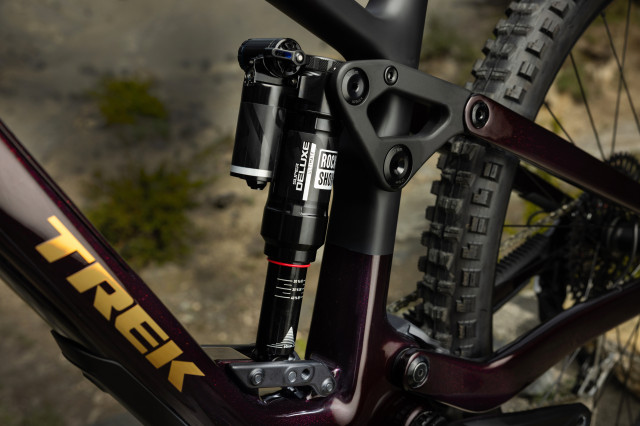
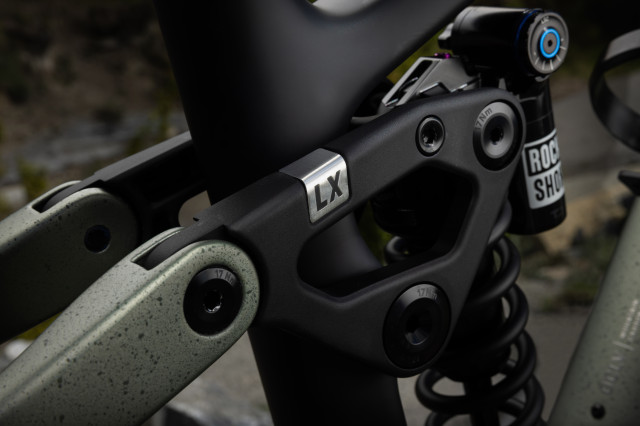
So, how did Trek manage to overcome this with one frame? Interchangeable rocker links and lower shock mounts. Which sounds expensive, but only if you do want to make these changes.
You might wonder if you can just change your rear wheel size without altering these parts, and the answer from Trek is essentially, please don’t. If the lower shock mount and rocker link aren’t changed, then you may end up with too much change in the bottom bracket mount, which can impact handling or cause you to catch your pedals more.
What’s new with the Fuel frame?
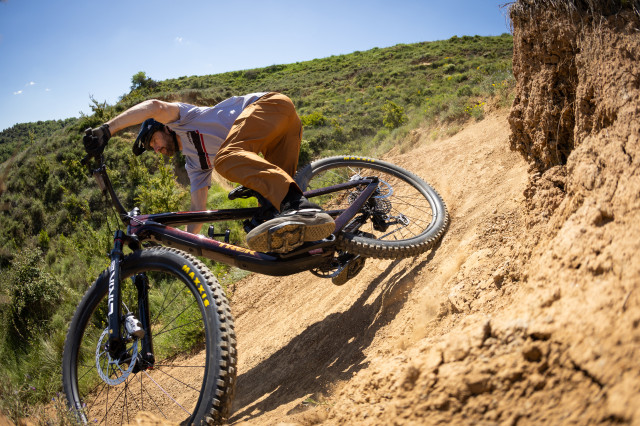
So now we’ve covered quite possibly the most confusing bike launch ever, what’s changed with the Fuel frame?
For this generation, you get a lighter frame and straighter seat tube for more dropper insertion – medium frames and above now accept 200mm droppers for starters. There is also updated internal frame storage (on the non-e-bike) and integrated guards on the down tube.
Internal cable routing is now guided, and the anti-squat has been slightly flattened for more efficiency. The flip chip remains in its lower shock mount location, so that riders can increase the leverage rate, particularly handy for those who run coil shocks.
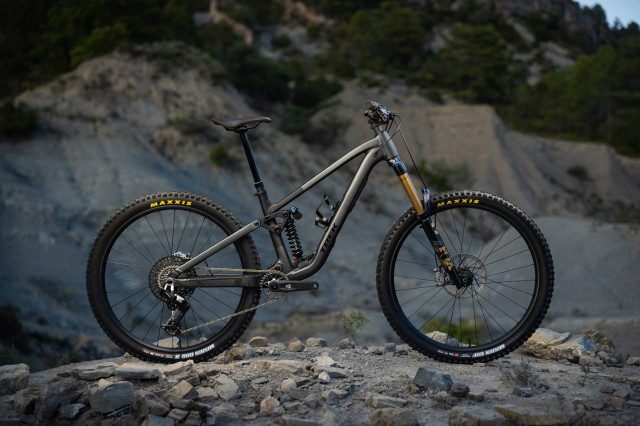
In addition, the new Fuel signifies the return of Trek’s Project One configurator for mountain bikes. You can choose the bike’s colour, the spec, and contact points – although potentially at an added cost depending on what you pick.
There are five sizes for this generation, with the XS and ML sizes removed from the lineup, which is a shame for smaller riders (think 5’1″ and below), although Trek says the new sizes are redistributed better to fit “more riders.”
This does however, mean that each size gets an individual chainstay length. For example, the size Small gets a 437mm length and the L gets a 442mm.
What about electric?
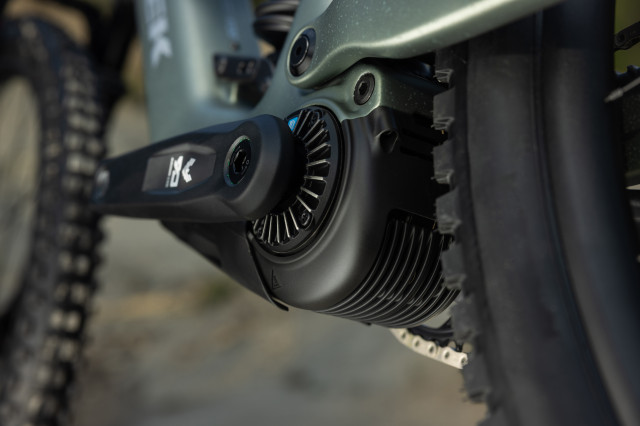
Trek’s Fuel EXe is now the Trek Fuel+, and also comes in three configurations: the EX, MX, and LX, offering the same travel options as the analogue versions. Where it differs is the addition of the motor – Trek has stuck with TQ for that lightweight and natural ride feel, but has gone for the more powerful HPR60 over the HPR50 of the EXe.
The 580Wh or 360Wh battery is removable from the downtube, and Trek says riders could get between four and 10 hours of riding time. There is also the option to run a range extender, which takes up the space of a bottle cage.
In terms of weight, the Fuel+ still hits that lightweight mark, with the lightest build weighing in at a claimed 18.84kg – that’s the Fuel+ MX 9.9 X0 AXS. And yes, it’s also the most expensive at £10,300.
But if budget is a concern, the Fuel EX+ 5 EU model comes in at £4,400, which is one of the best prices we’ve seen for a TQ-equipped mountain bike.
Models and prices
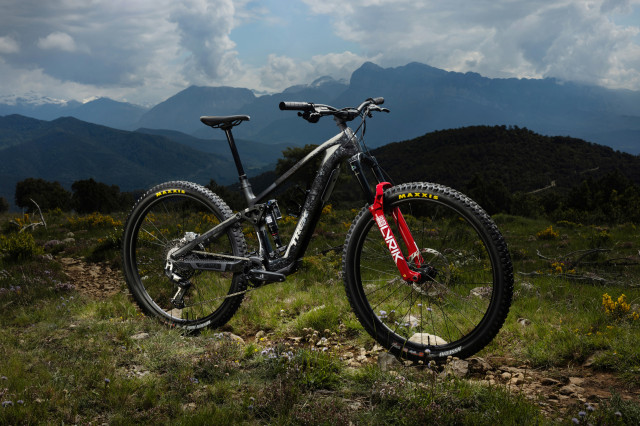
The Fuel EX remains the go-to model for Trek, with 145mm rear and 150mm front suspension. It’s a well-rounded trail bike.
The MX gets 150mm rear travel and a smaller rear wheel by changing to the MX rocker plate and shock mount. This also helps to create a more progressive leverage rate for more aggressive riding.
Finally, there’s the LX. It’s 160mm rear and 170mm up front, and uses the LX rocker mount but the same shock mount as the EX.
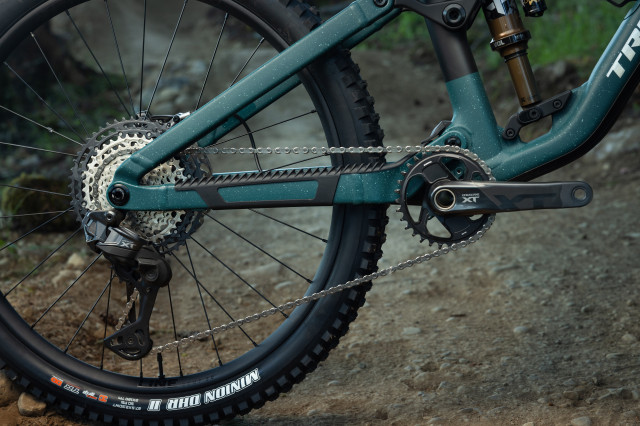
All options come in alloy or carbon frames, and prices start from £2,200 for the Fuel EX 5 model, and go up to £7,625 for the Fuel EX 0.0 X0 AXS. We’ve not seen the pricing for the MX or LX models, but will update the story as and when we hear back from Trek.
So, is the new Fuel going to revolutionise the way we see bikes? Are we really going to just lean into this ‘do-it-all’ with one bike idea? Perhaps if you have the mechanical know-how, the disposable cash for new parts, and don’t have space for several bikes.
But for the average rider, is it overkill? Or are people even going to bother changing the components necessary to alter the Fuel once they’ve bought one configuration? It’ll be interesting to see what the consumer trends end up being and whether or not other brands follow suit.
For now, Liam’s already spent some time on the e-MTB, so head over to the Trek Fuel+ EX 8 review for some early impressions.
You might also like:
- Canyon brings disco vibes with its Valtteri Bottas signature Grail CFR VB 77
- Hunt brings its new H_Core tech to gravel with the 25 Carbon Gravel X-Wide wheelset, offering greater strength and space for mtb tyres
- Is this the next big rival to the Insta360 X5? DJI enters action camera market with new Osmo 360