Trek’s Fuel EXe has received a pretty serious glow-up. Three years after its initial release, the bike, now dubbed the Fuel+, runs the latest in TQ technology, and it’s one seriously adaptable bit of kit that can accommodate three suspension setups, making it one e-MTB for many people. But one thing’s for sure, it’s the most affordable bike to run TQ’s HPR60 drive system yet. I’ve spent some time with it ahead of launch, and here are my first thoughts.
- Best e-MTBs 2025 – top-performing e-mountain bikes for every situation
- “There will always be haters in life, though I think there is a shift for acceptance”: What happened to eMTB racing and can it be fixed? Tracy Moseley weighs in
- E-MTB geometry explained: how weight and geometry affect your ride
The Fuel EXe represented two firsts – it was Trek’s first mid-power, lightweight e-mountain bike, and it was the first to introduce TQ’s HPR50 motor to the market. Now, for 2025, the bike dons a new name and gets its intentions skewed a bit as it’s aimed to be three bikes in one, and it’s a near carbon copy of the new Fuel, its non-pedal assist counterpart.
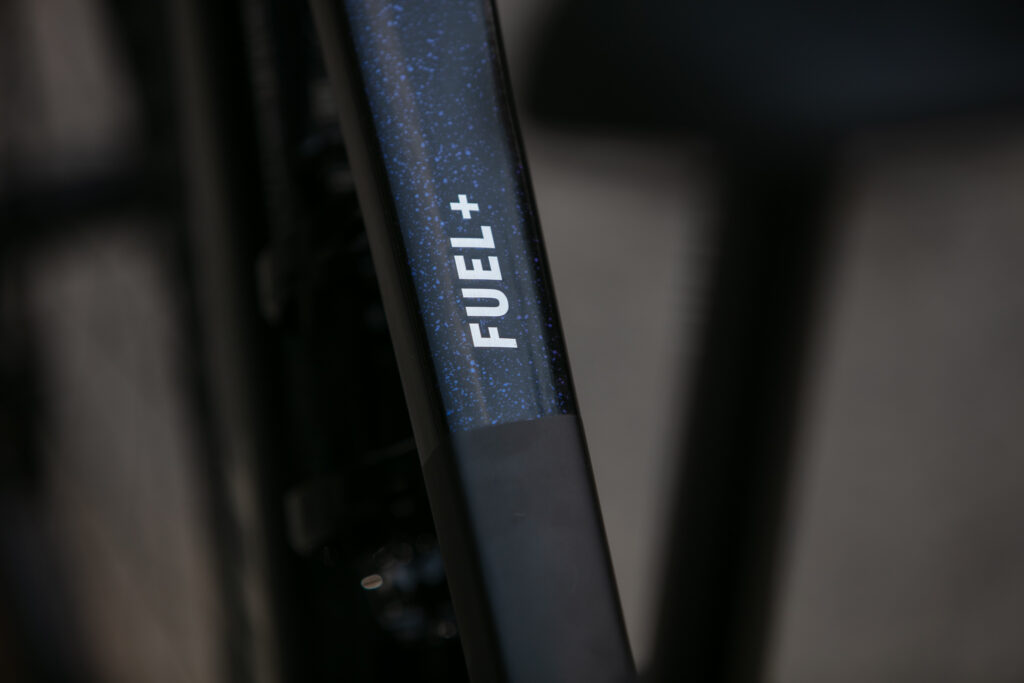
But to dispel any confusion early, as a lot is going on here, the Fuel+ is the e-MTB, the Fuel is the regular bike.
Enabling the bike to offer three different configurations is Trek’s Adaptable Trail System, which utilises two lower shock mounts, as well as three rocker links. Depending on the combination of rocker links and lower mounts you choose, the Fuel+ can either be a 145mm sprung 29er, a mixed wheel bike with 150mm of rear travel, or an enduro bruiser with 160mm of rear travel (which is designed to be paired with a 170mm fork). Trek calls each of these configurations the Fuel+ EX, the Fuel+ MX, and the Fuel+ LX, respectively, and every one can be bought from stock already in your chosen setup.
If you’re looking to tinker with the layout of your Fuel EX, it’s not quite as simple as just swapping some links, however. You’ll also need a fresh rear wheel and a new airspring for the fork to provide 160mm of travel if you’re shifting to the Fuel+ MX. You’ll need a new fork altogether, as well as a new longer stroke shock if you want to go big and go for the LX, so tweaking the setup of a Fuel+ isn’t the cheapest of endeavours. So it’s safe to say that consumers will likely stick with what they’ve bought.
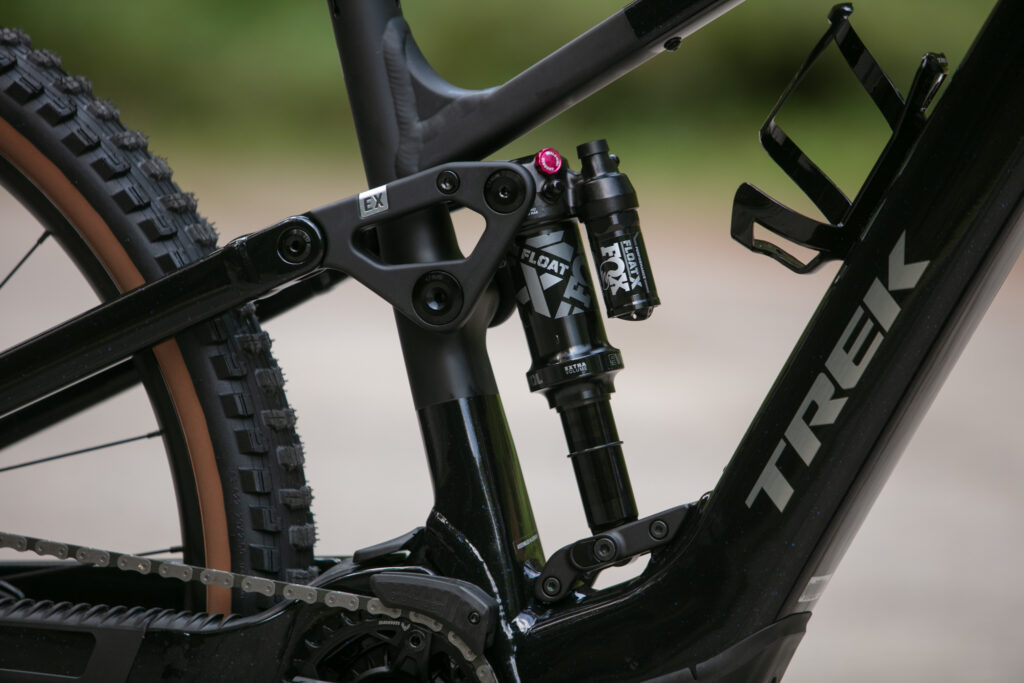
But with all of this, owners can go between the three setups and really tune their geometries and shock progression. Want to run a 170mm fork with 145mm of suspension at the rear? Yep, that’s possible. And while this all sounds rather convoluted, the real benefit behind all of this is that it achieves geometry correction and suspension kinematics that suit the intention of a given build.
Speaking of suspension, this bike comes with a similar kinematic adjusting flip chip that we saw on the Top Fuel. This provides two settings, allowing users to pick from a more linear or ma ore progressive suspension kinematic.
Going back to the bike on test, Trek hooked me up with the 145mm rear, 150mm front suspensioned, alloy-framed 29er, the Fuel+ EX 8.
The Trek Fuel+ marks an evolution from the previous design as it employs TQ’s new HPR60 drive system. As its name suggests, it knocks out 60Nm of torque and 350W at peak. That is then powered by TQ’s 580Wh battery, and in a move I really appreciate, it’s removable. That larger battery comes on the small-framed bikes too, and if you’re looking to shed some weight, the 360Wh option is compatible.
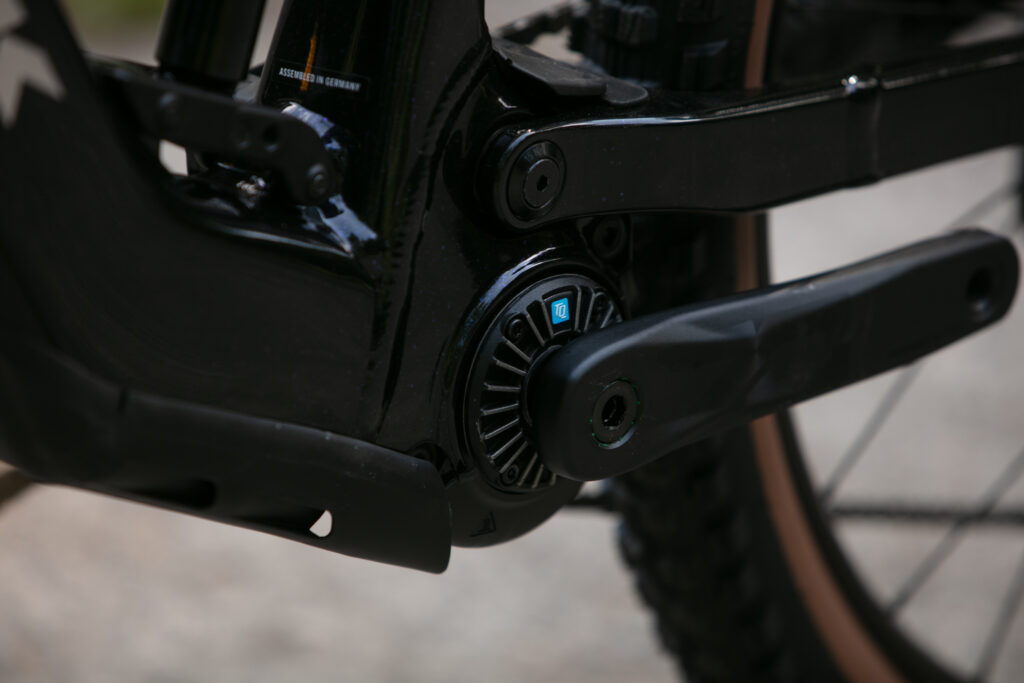
As for the geometry, this large frame gets a 485mm reach, a 64.5 degree head angle, a 77.4 degree seat tube angle (72.6 actual), and a 442mm chainstay. New for this model is a taller stack that measures in at 637mm. Sizes small to XXL are on offer, with the small size only available in the MX configuration.
Using a zero-stack 56/49 internal headset, the bike can also accommodate angle-adjust headsets, if all of that adjustment isn’t quite enough for you.
Of course, there’s more going on with this bike, so if you’re one for all of the details, check out Rebecca’s news – Trek’s new Fuel is three trail bikes in one…if you have the money and mechanical know-how to change it up
Trek Fuel+ EX 8 – Componentry
Coming in at a rather agreeable £5,000, which makes this one of the most affordable TQ HPR60-equipped e-MTBs currently on the market, apart from the £4,400 EX 5, this EX 8 build gets a mighty fine collection of componentry for the cash.
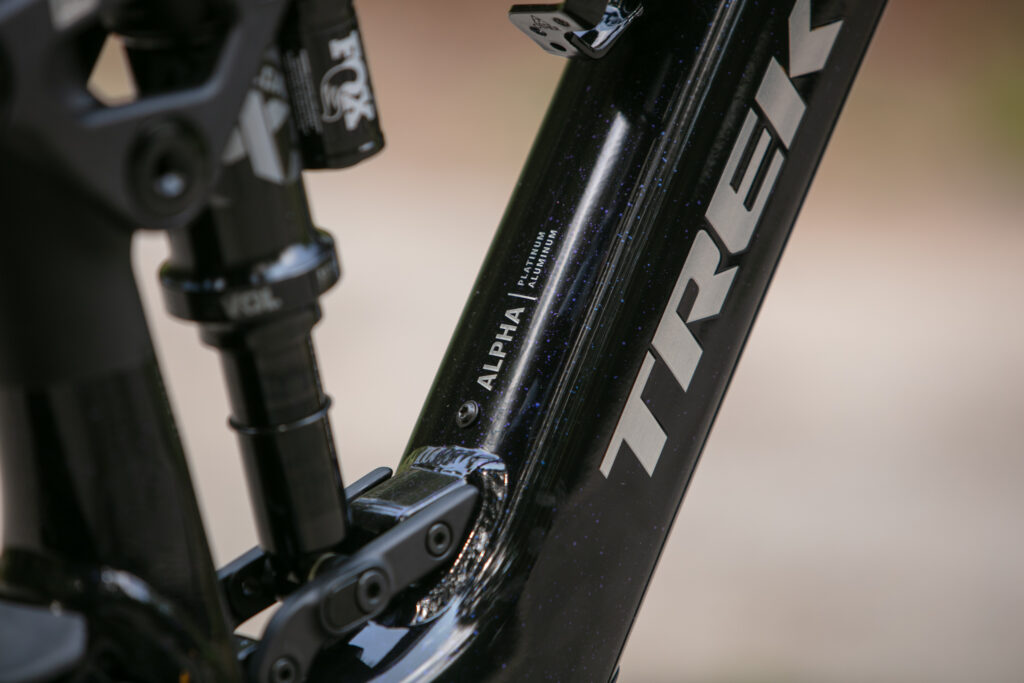
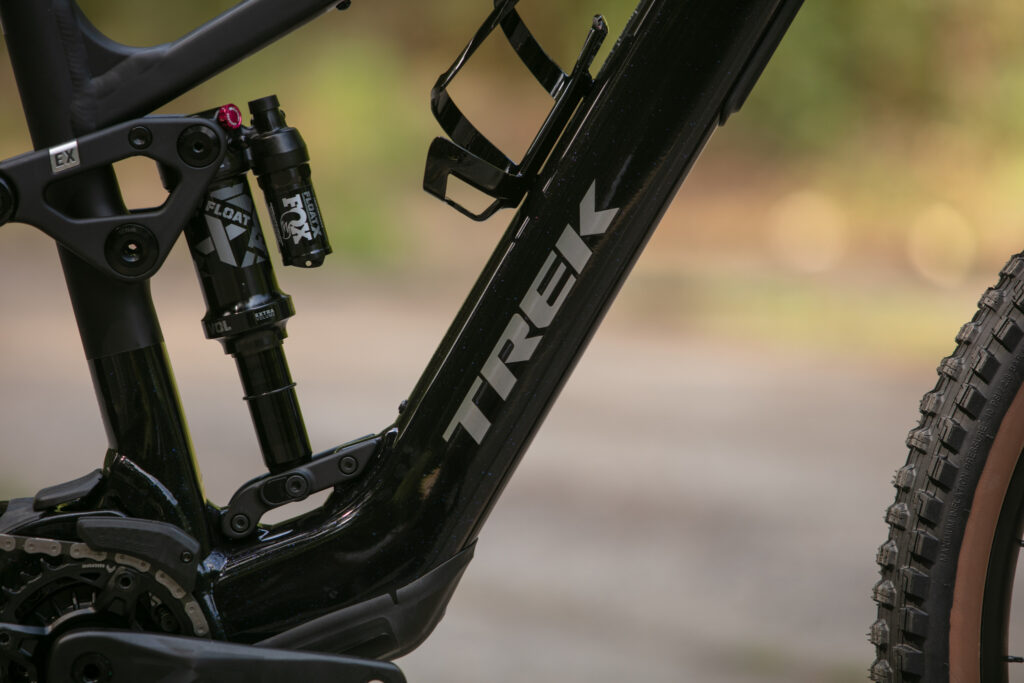
Bolted to Trek’s Alpha NEXT Platinum aluminium frame is a Fox Rhythm 36 with a GRIP damper delivering 150mm of front bounce. That’s combined with a Fox Performance Float X shock.
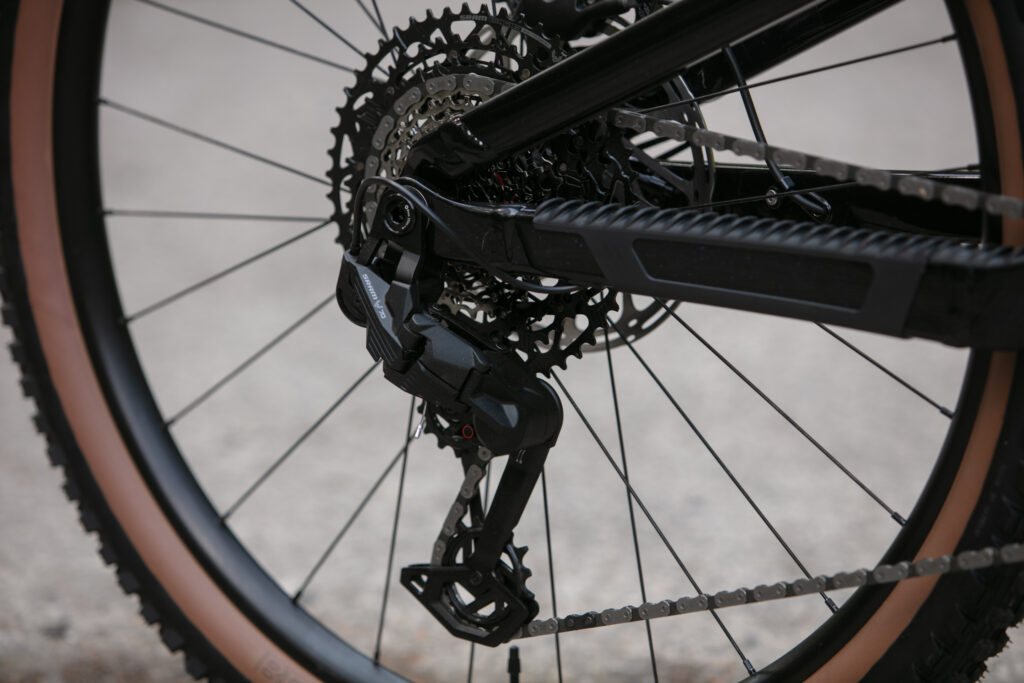
Shifting is provided by SRAM and its Eagle 70 Transmission drivetrain, and braking is covered thanks to SRAM’s new-design, four-piston, DB8 brakes.
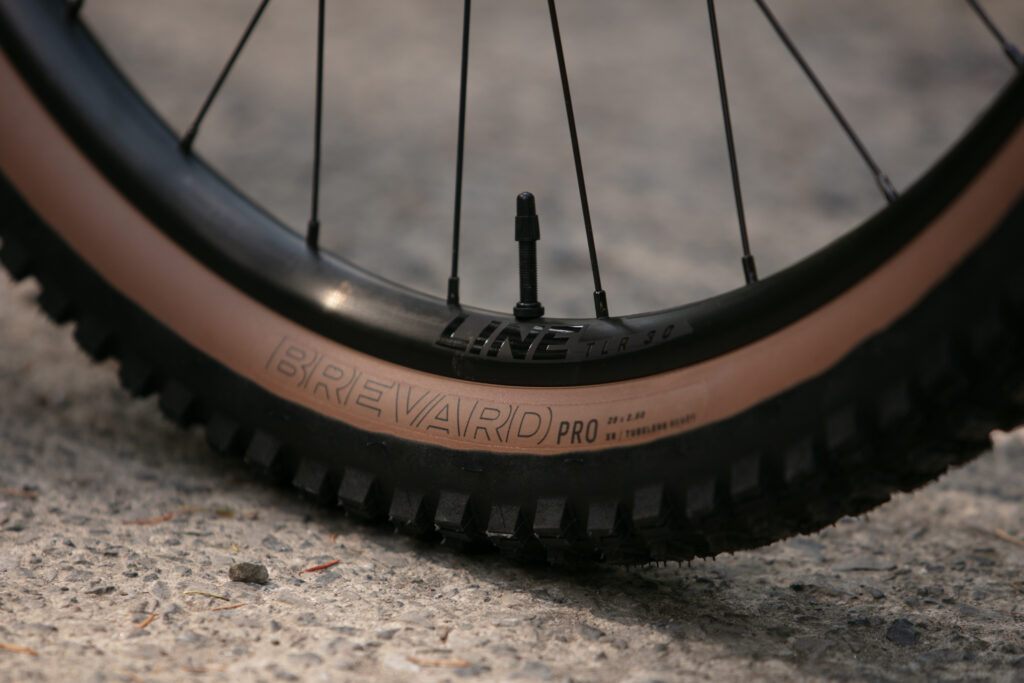
This model rolls on Bontrager’s Line TLR 30 wheels, which are wrapped with Brevard Pro XR tyres, also from Bontrager.
Something to note is that the TQ display on this bike is the brand’s simpler LED display, rather than the full-fancy full colour option found on the pricier carbon bikes. It’s certainly a less sophisticated display, but it still provides a good amount of metrics and stats.
To wrap up the specs with the weight, this build comes in at 21.6kg, so it’s not the lightest TQ-equipped bike around, but it’s not too bad, considering that this is an alloy-framed machine.
Trek Fuel+ EX 8 – Ride impressions
Thankfully, riding the bike is nowhere near as complicated as its array of adjustments, but for my brief few hours with the Fuel+, I rode it in the linear suspension mode and left everything else as it came, apart from setting up the suspension. And to start with the motor, I’m a big fan of what TQ has done here. It’s incredibly quiet, and it’s the most natural-feeling motor around at the moment. It runs so far under the radar to the point that I had to double-check the bike was on during my first few pedal strokes.
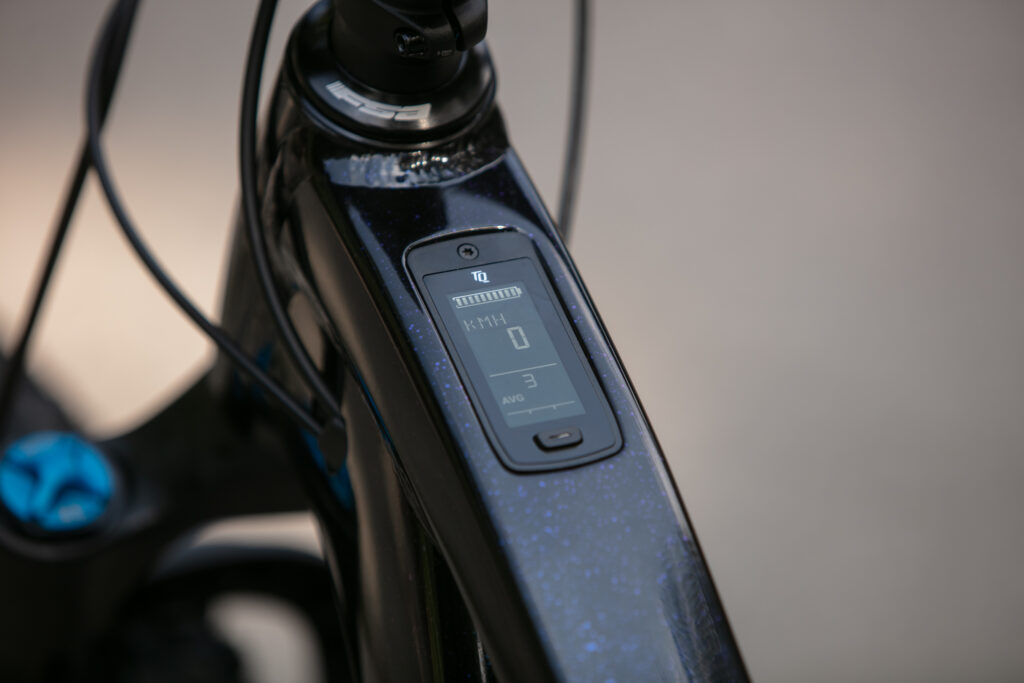
But it’s a power delivery that complements what the rider is putting into it, rather than full-throttling it up a hill. Despite requiring a slightly slower cadence (20rpm lower, apparently), I found that it still thrives when turning the pedals that bit quicker. But generally, it runs invisibly as there’s little drag, and once I’ve exceeded the 25kph limit of the motor, the bike doesn’t bog down as noticeably as it can with other motors and bikes.
As for range, I put in 21km with 704m of climbing in just over an hour and a half, which left me with 63% battery remaining. So far, this doesn’t look shabby at all, but I’ll ride for a full battery drain ahead of the full review.
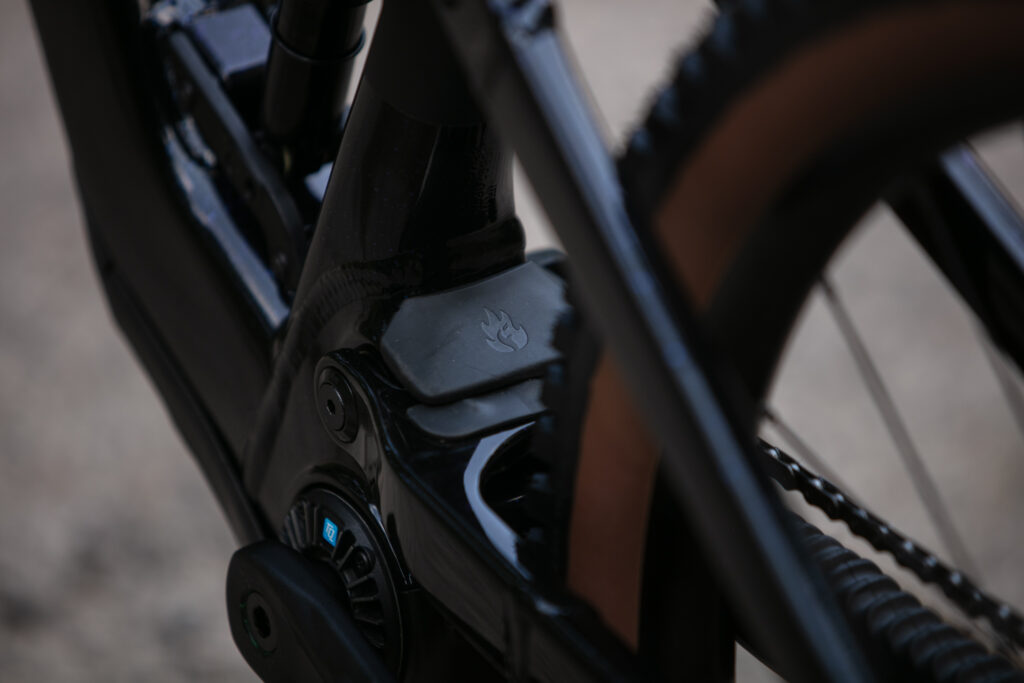
Motor aside, and during my short time with the bike so far, I’ve found it to be super comfortable across all gradients. I took it for a quick bike park blast while sampling some more natural trails afterwards, and while neither of those were too demanding, the bike is yet to miss a beat.
Its seat tube angle is fairly steep, and to be honest, I wouldn’t want it any steeper. It plants the rider almost directly over the BB, which results in a very upright position when saddled. This keeps both wheels glued to the ground when tackling technical climbs, almost to a fault, as I found it a little unwilling to raise the front wheel before pushing it over larger obstacles.
However, over such terrain, grip is plentiful. I rode the Fuel+ with its suspension adjusting flip chip in its linear mode, which I found myself enjoying much more than expected. On the climbs, it’s fairly active, as it chews up bumps, but while isolating pedalling forces rather well.
Usually, I prefer a more progressive suspension kinematic, which is why my enjoyment of the linear setting came as quite a surprise. On the descents, it’s very supple as it capably eliminates harsh feedback. That’s owing to its willingness to activate and move throughout the start and mid-stroke, which does a great job of ironing out small to mid bumps. Despite donning 145mm of suspension, this kinematic has had me easing off the brakes a touch before rolling into rough sections as it’s encouraged me to take advantage of that suppleness.
However, there is still a good deal of progression in the linear setting, so pushing past that mid-section of the stroke doesn’t lead to a wallowy and vague feel. Rather, it’s still super communicative with a great level of feedback present, just not the harsh and bad kind. With that, it’s a bike that’s still keen to give back when pumping the trail hard, and cornering with a little more gusto. It delivers shedloads of grip too, owing to its liberal use of its millimetres, and the rather decent tyres equipped.
Speaking of cornering, I’ve been impressed with the speed at which the Fuel+ can change direction. The 64.5-degree head angle is pretty common nowadays, but half a degree steeper than what’s becoming standard on more aggressive trail bikes. Although it poses little compromise to the bike’s ride in the stability department. Instead, it adds a healthy helping of responsiveness to the front end, which helps corner the bike on the climbs and descents. Despite rocking 29in wheels at both ends, and weighing more than 20 kilos, it’s an agile little number.
Trek Fuel+ EX 8 – Early verdict
Before now, TQ’s HPR60 motor was found on more premium bikes, like the Yeti MTe and Propain’s Shresh SL (from £5,994), so it’s rather exciting to see the drive system on a bike that’s more accessibly priced. The Fuel+ EX8 even trumps HPR50-equipped bikes, like Canyon’s Spectral:ONfly (starting at £5,200), granted you’ll get a carbon frame and a fancier build kit for a little more money. Whether that value holds up, I’ll let you know.
Again, I’ve not spent an awful lot of time with the Trek Fuel+ EX 8 just yet, nor have I ridden it through anything particularly spicy, but I’ve been impressed with what it has to offer. So far, it seems to bring a well-rounded TQ-fuelled trail bike formula to a rather reasonable price. And of course, it’s mega versatile too, even before we get into the seriously complicated EX, MX and TX setups. But stay tuned for a full review coming in a couple of months.