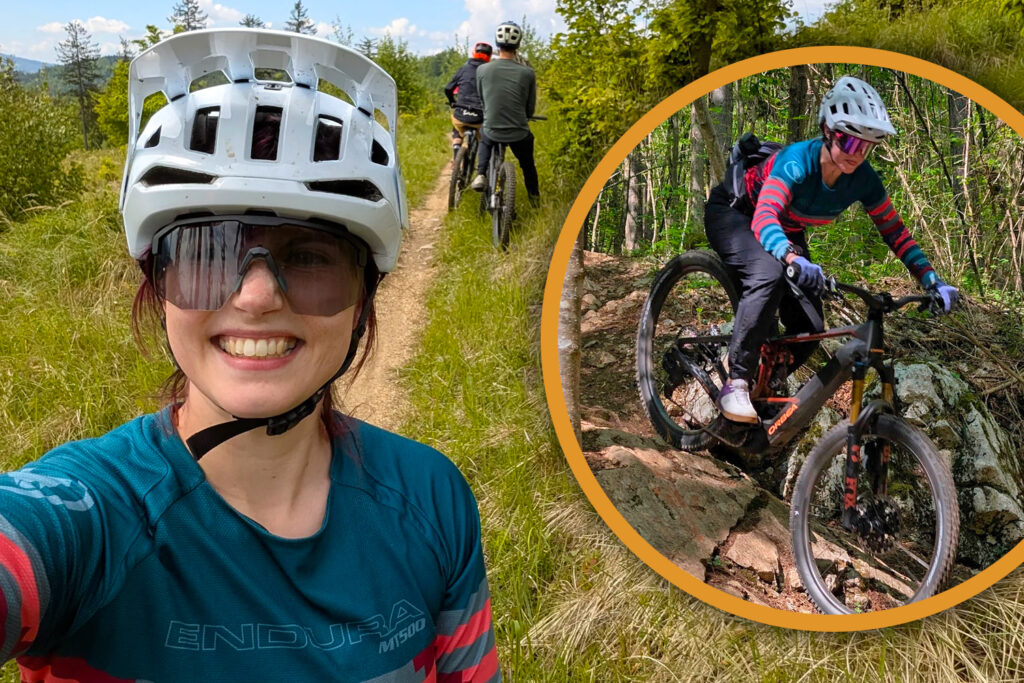

If you’ve had the unfortunate luck of being near me on a bike, it will come as absolutely no surprise to you that I’ve never had any formal skills coaching when it comes to MTB. Beyond my long-suffering dad trying to get me to bend my elbows, showing me how to change gear, and the old ‘get your weight over the back wheel’ advice, I’ve just sort of got on with riding and decided I knew what I was vaguely doing. Until earlier this year.
- Regardless of your skill, I reckon everyone should have a go at racing, here’s why
- The best bike upgrade isn’t the bike, it’s the rider — why mountain bikers like you should prioritise strength training, fuelling and skills over shiny new tech
- Industry Insider: MTB career insights with Katy Curd
I think the worst crashes are quite often the ones that at first appear inconspicuous. Not necessarily the worst in terms of physical damage, but the ones that leave a lasting dent in confidence, and the ones that you replay over in your mind at night. How can something that seemed like such a small event at the time continue to cause pain or such long-lasting scars?
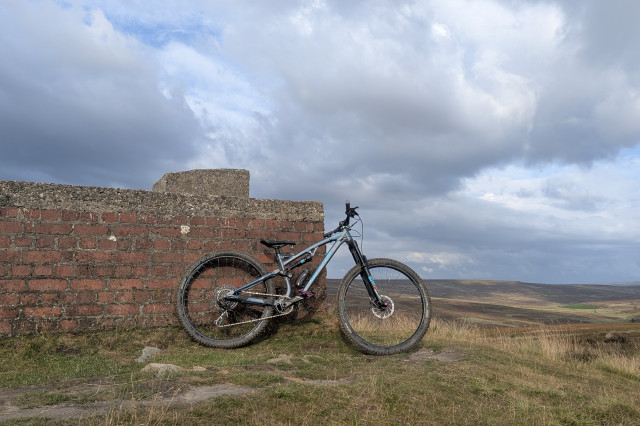
Earlier this year, I had a seemingly unimportant crash. I landed entirely on my left arm from a fair height after tiredness seeped in, and I grabbed the wrong brake (thank you, European setup), heading into a sketchy hairpin. I ended up going over the bars, and the bike landed on me. A somewhat boring crash, right? It wasn’t high speed, and it wasn’t that bad, really.
I even continued riding as ‘normal’ for a few weeks, but realised the pain wasn’t going away and there was some new tingling, pins and needles, and weakness in my hand. Riding for a good length of time became really tiring. I struggled to grip the bars, and the swelling in my arm hadn’t gone down.
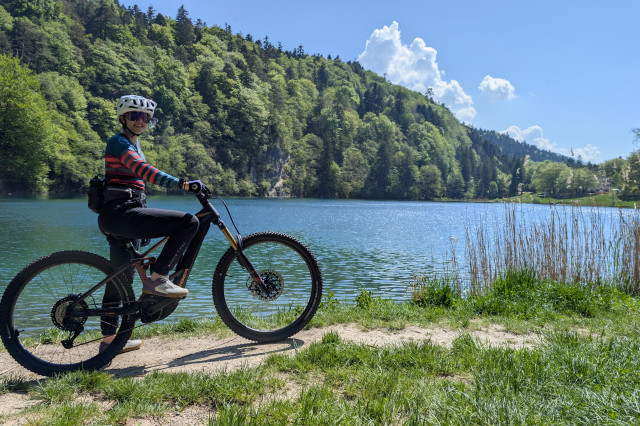
But I kept riding. And then I crashed again. Another inconspicuous lie down on a pretty fast and flowy blue. A stupid mistake led to another fall, and again, on my left side. It was after this, as I was riding home with one arm on the grip and one lying limply in my lap, that I realised the mistake that caused this second stupid crash was because I’d lost some of my confidence, and ultimately panicked.
And so I decided, as it’s occasionally my job to ride bikes, I need to get my confidence back. So I booked a coaching session with Kizerchief MTB Coaching over at Dalby Forest. Pete Rees came highly recommended by some local riders, so I booked a beginner’s session and asked if we could focus on the fundamentals of riding.
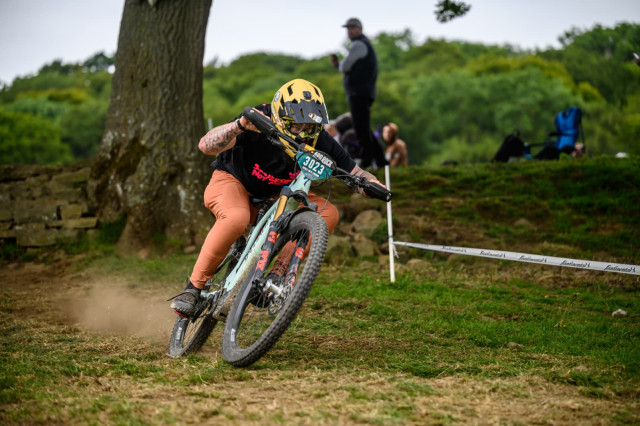
The fundamentals we worked on included body positioning, in particular in the attack positions, and cornering. Sounds simple, right? Except, he basically undid 20+ years of me pretending to know how to ride bikes, and for the first time in a long time, I actually found some flow.
We started off with some positioning work. No longer was it enough to bend my elbows, I had to do it in a particular way at a particular angle. And no, I don’t need to get my backside as far as I can over the rear wheel.
Then the cones came out. It felt a little ridiculous as an adult messing about riding around cones in a field, with little kids racing around on their tiny bikes, watching with glee. But it would be more ridiculous as a journalist if I didn’t up my game and build back the confidence I needed to do my job properly.
.jpg)
So far, I’ve only done one session with Pete, but I’m putting everything I’ve learned into practice, and it’s feeling so much more natural than it was before. I don’t need to give myself as many mental reminders about what to do, where my elbows should be, and how far to lean the bike, and which knee goes where when approaching a corner.
It’s only been a few weeks, but I already feel like I’m actually enjoying myself on my bike again. I still can’t ride for hours and hours, and I’m awaiting the results of a hospital visit to see the extent of the nerve damage I have in my arm.
But, for the first time in my riding career, I actually feel like I am a rider. Which seems ridiculous to say, but it’s true. No offence to my dad, who taught me to ride a bike in the first place, but there’s a reason he was a footballer, cricketer, and runner, and not a mountain biker.
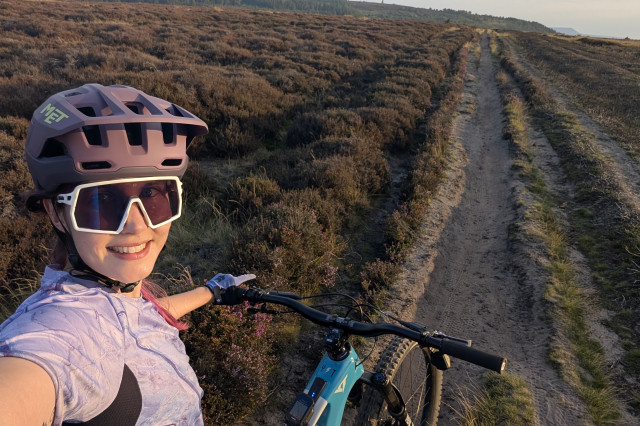
Why does finally getting the fundamentals right boost my confidence? Because I know I’m doing it right. I know everyone is just faking their way through life, but there are certain areas with processes to follow and things that we should know because they actually make life easier. And the same goes for riding.
It’s not about making you feel daft, basically squatting over your bike, but about helping you understand how your positioning can impact how the bike fundamentally rides. I feel way more confident now, knowing what I’m doing is actually the best way to ride.
I’ve even managed to hit the run I crashed twice on and make it down not just in one piece, but feeling like I was actually riding it, not just a passenger. I’ve still got a long way to go, and once I’ve put my newfound skills (and confidence) into practice over the next month or so, I’ll be back at Dalby with the cones ready for my next coaching session.
.jpg)
No, it’s not been an easy journey, and no, I’m still not ready to hit Pleney steeps, but I am being a bit nicer to myself about my riding skill (or lack of). So when kids come hooning down the trail about three times faster than me, I don’t compare myself to them – that is the thief of joy, after all.
And I’ll be taking this newfound joy and finding the flow once again. And if I crash again, I’ll dust myself off and be able to analyse why it happened, rather than shake fists at the sky, Abe Simpson-style and ask, ‘Why can’t I catch a break?!’
Coaching might not be for everyone, sure. But for me, stripping back everything I thought I knew about riding and just trying to rebuild from a place of knowledge rather than guesswork has really worked out for me, and I’m really looking forward to progressing further.