
[images by Steve Thomas]
Had the Forestry Commission in Wales not employed Dafydd Davis back in 1994, our trails and trail centre network would look very different now, and a whole lot more sparse too.
- The reality of being a cycling YouTuber
- Meet Justinas Leveika, the Ultra Racing “King of Chaos.”
- Scott from Southern Enduro on the state of the UK MTB scene
Dafydd was an avid mountain biker and top fell runner at the time, and was also working in outdoor pursuits education, though when a job as one of only two leisure-focused rangers with the Forestry Commission came up, he took a fateful change of direction.
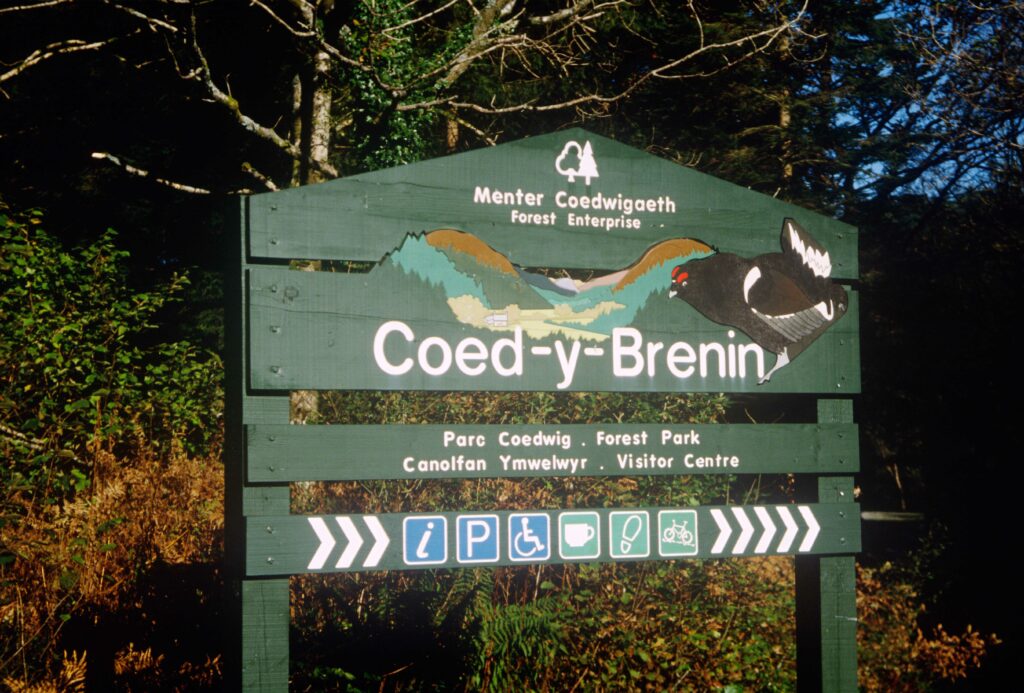
At that time, the FC (Forestry Commission) had no interest in this new sport of mountain biking – its business was in felling timber, yet Dafydd saw a long-shot side-opportunity in his role. His patch just happened to include Coed y Brenin, which until then wasn’t a mountain bike destination in any way, though Dafydd had been riding covert there for a decade already, and saw that it could be of far more value to the local community if promoted for leisure use. He came up with the wild plan of persuading the FC and powers that be that creating mountain bike trails and facilities would be just the ticket.
With a spattering of audacious chance and double shot of passion he made it his mission to go out and put in some deep research into the numbers of mountain bikes sold, potential returns, and the long and short term benefits to all concerned, and then compiled them into a master plan, which he polished a whole lot and laid out with great enthusiasm to his employers, as he tells us.
Dafydd Davis, “At that time, the old Coed y Brenin visitor centre had around 12-15,000 visitors a year, a tiny number, and it wasn’t even remotely breaking even, and there were moves to close it. I thought what we needed was to give people a special reason to come here, and I thought mountain biking was the way to do it.
We already had some good riding, but the trails I was riding were illegal and weren’t technically open to bikers. The FC were also extremely risk-averse, and were trying to make mountain biking by permit only, to control it rather than encourage it.”
Armed with local knowledge and a shovel, he started digging for the cause himself, 31 years ago.
“I started off with CYB (Coed Y Brennin) in 1994 and developed three routes: the fun, sport and expert. I used some existing trails and physically built some on my own. What set them apart was that there were singletrack trails on the routes, and so I started to monitor and evaluate through the visitor centre. Within four years, we went from 12-15,000 visitors a year to over 80,000.
“I got Dafydd and Sian Roberts in to run the café there, and through their connections with the professional MTB world, we got some sponsorship from Red Bull. It was tiny – around £1,200, which paid for some trail building material, leaflets and way markers, and so we set up the Red Bull Trail. After that, we got a bit of sponsorship from Karrimor (about £3,500) and we were able to use the funds and partnerships with training organisations, youth unemployment agencies, RAF apprentices and Ford apprentices, and they would come do trail building on a team building project basis – which is how we managed to get the trials built.”
Despite his success, he was still facing jaded opposition and bureaucracy in furthering his revolutionary cause.
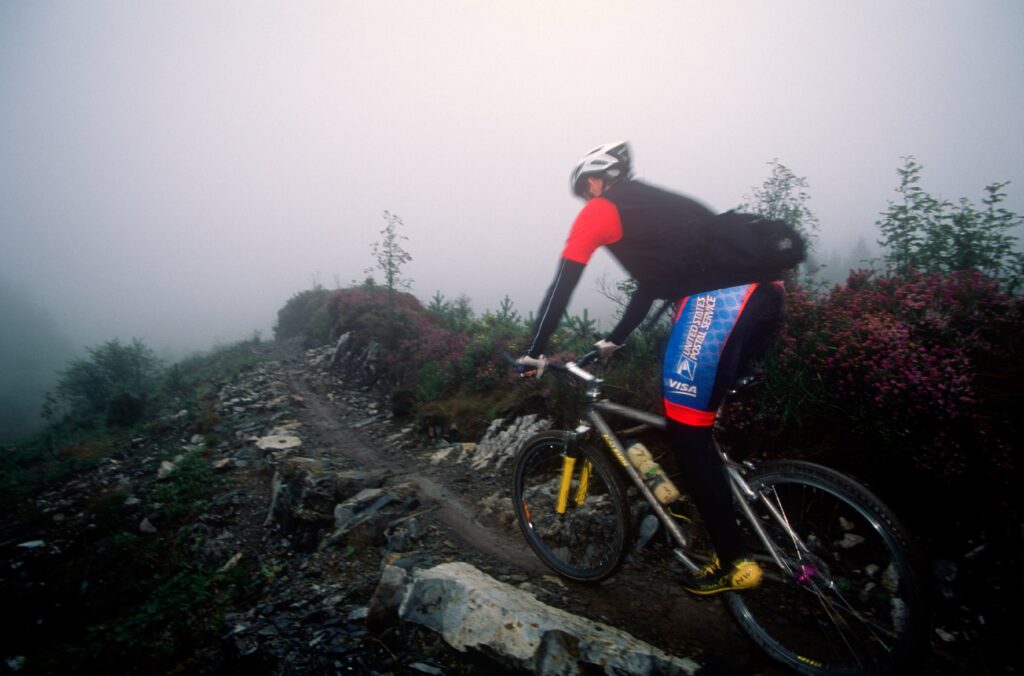
“During all of this time, I was really struggling against the FC. It didn’t want me to do what I was doing, and so I was very aware that the trails I put in couldn’t impact negatively on timber harvesting, on conservation and deer management. I had to show that I could have trails in the forest that were of minimal impact, were low maintenance, and had low visible impact on the ground. By around 1998, we had visitor numbers up to around 150,000, and I thought the model we had should be able to translate to other sites.
“I’d managed to deal with issues like liability and sustainability and to manage the FC’s concerns about them, and so the next thing was to roll this out at other venues across Wales.”
He had to come up with a master plan to convince the powers that supply and fund in order to take his strategy to the next level.
“I set up a thing called the Cycling Wales Action Group, which included people like the Wales Tourist Board, local authorities, and Sustrans, and I wrote a strategy for mountain biking across Wales, which was the first national MTB development strategy in the world.
“In that strategy, we looked at developing four more sites across Wales. We also got some capital directly from the Welsh Assembly to build those trails, but it was all done in partnership with local authorities. We did it all for £500,000, which these days is nothing.”
Trail building is a very labour-intensive thing – and that costs money by the shovel load. Wrangling around various government-assisted payment options and schemes, and against all odds, he managed to make the funding work and stretch into reality in the woods of Wales, whilst also showing a solid benefit of return.
“One of the most important things I did, before putting the strategy together, was to do a lot of monitoring in conjunction with the local technical college, which has a sport and recreation course. We were able to count the number of people very accurately, and we also asked where they were coming from and how much they were spending.
“We found that CYB was generating well over £10 million a year for the local economy, and now that one centre is worth over £30 million a year to the local economy. I was able to go to the FC, which was taking around half a million a year out of there in timber each year and show it that mountain bikers were putting 10 million into the local economy, and show that this makes it far more value to the local community as a leisure resource rather than a timber resource, and that was the crux of it. People like the Welsh Assembly said that this means we can make the forests of Wales more valuable to the people if we do more of this sort of thing.”
Dafydd’s plan and template were studied and adapted throughout the land – and far beyond. He left his FC role 20 years ago and has worked and consulted on numerous trail projects around the world. His wisdom still finds its way and influence into the trail centres and bike parks we now take for granted, sometimes, he feels, at the expense of the very nature he strived to work with and protect.
“After I’d left the FC in 2004/5 there was a strategic review, and I was asked to contribute to that. I said that I didn’t see any problems with things like trail centres (for a governmental organisation like the FC), which is essentially about cross-country riding, is sustainable and has a low impact on other forest users – which is really important, because we have to remember that our forests are really quite small and not only used by bikers.
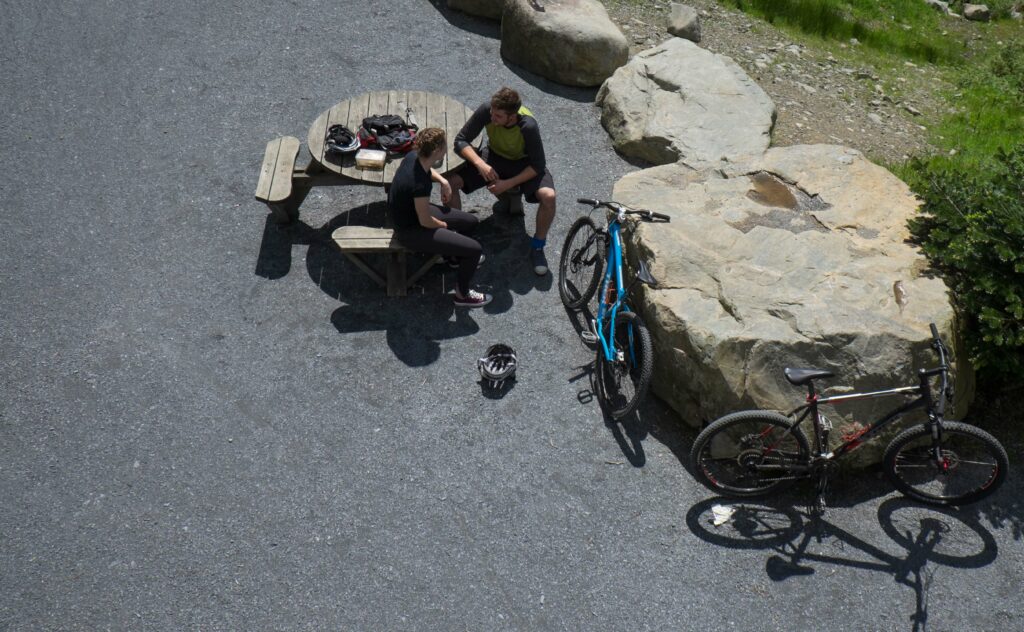
“I said that I thought the more gravity-focused side should be done by the private sector, as with Bike Park Wales and Dyfi Bike Park, which are mostly on leased FC land, but the FC carry no responsibility. Bike parks are really commercial ventures, and I don’t think they would have happened without trail centres. I think trail centres made people in organisations like the FC realise the value to communities – but even in places like CYB, you don’t pay to ride, but you pay to park, to wash your bike, for a cup of tea – they do make money, and people could see that it could be commercialised if they want to.
“There has to be cooperation between bike park lease holders and the FC, as they are still timber-producing forests. What does concern me is that I worked very hard to make sure the trails we built were very low impact, and the way that some bike park trails are being built is very heavy-handed, because people are thinking first about the feel of riding there at the expense of the environment, which I think is a shame.”
All these years on, we owe a great debt of gratitude to Dafydd for what he achieved, and in 2020, he was inducted into the US Mountain Bike Hall of Fame. In the past few years, he’s suffered a series of serious health issues, the kind of stuff that floors most of us. However, this is Dafydd Davies, the humble and passionate mountain biker from North Wales who did so much more besides, and he is now back and riding his e-MTB several times a week on the very trails he first envisaged 30 years ago, literally riding his own dream – and still riding against the odds.
If you happen to come across Dafydd out there on the trails, be sure to give a tip of the helmet for what he gave us.
“We probably have the most accessible trail riding network anywhere in the world. You can rock up at a trail centre, you don’t have to be able to read a map and can just follow whichever route you want. If you go to places like Rotorua in New Zealand, which everybody says has the best mountainbiking in the world, then you get this map, and it’s just a load of spaghetti on the map. You have to figure out the best route for you, and that tends to be the situation with most mountain bike centres around the world.
It’s different if you’re talking about bike parks, but in most places around the world that I’ve been to, it’s like that, unlike the trail centres we have, which are all about accessibility.”