
- News

Police force announces crackdown operation on illegal bikes…but wrongly calls them e-bikes; Bikepacking gear company bought by Castelli owners; World Championships head to India + more on the live blog

Same as it ever was...
In the last few weeks, we’ve covered quite a lot of instances of news outlets misreporting illegal bikes as ‘e-bikes’, despite the machines they’re referring to not meeting the legal definition. In the limited defence of these organisations, it doesn’t help when police forces themselves continue to confuse everyone.
Today’s instance comes from Merseyside Police, who have provided an update on Operation Gears, their plan “to relentlessly pursue those illegally riding e-bikes, e-scooters and electric motorcycles, and using them to facilitate crime.” It seems from a distance to be a form of broken windows policing, taking tough action against more comparatively minor crimes as a means of tackling and deterring more serious offences.
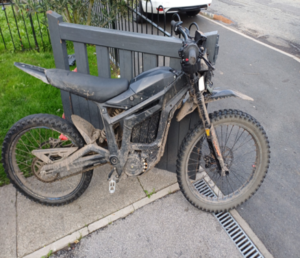
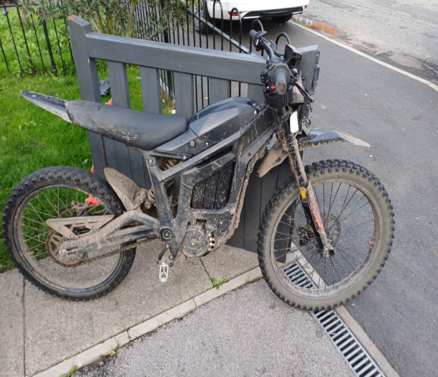
Merseyside Police aren’t probably too interested in the scrambler bike and “illegally adapted e-bike” that two people were seen riding, though the scrambler bike was seized by police. But the possession of cannabis, a knife and machete on the persons arrested will make the operation worthwhile. We’re a cycling website though, so we’re more interested in the two-wheeled bit of the operation.
What’s fascinating from Merseyside Police’s statement announcing the operation is the repeated reference to those “illegally riding e-bikes”, “who choose to ride e-bikes illegally”, or “any illegal use of e-bikes”. There’s no suggestion from any of those phrases that the bikes themselves are illegal, only that they can be used illegally. But what does that mean to the layperson? Does that mean wheelies? Does that mean riding without a helmet? Does that mean riding without a level two Bikeability badge?
The only explicit reference we get to the bikes themselves is to the person riding the “illegally adapted e-bike” who was arrested, although there’s no suggestion that his bike was seized.
Perhaps this is part of the problem with the law, that because these bikes can be used on private property with the landowner’s permission, they cannot be automatically described as illegal, even though people’s exposure to them is in public spaces.
But it creates a situation where anyone reading the press release is none the wiser as to the legal status of these machines. For a police force that’s supposed to be clamping down on them, that’s not an ideal position to be in. They also have a Facebook Post making no mention of the distinction…
It’s all very tiring, and makes efforts by the e-bike industry to distinguish their legal credentials all the more futile. Either way, this story isn’t going away…
Today's happy Reddit post
A social media post of a local business wanting to support cyclists and install accessible useful infrastructure? Something we love to see!
“This is basically guaranteed to make you a cyclist’s hotspot if the flat whites are good and croissants reasonably priced”
“It’s great when small businesses care & cater for us and we’d love to return the favour by picking up a coffee or two!
Rapha woes

Help us to bring you the best cycling content
If you’ve enjoyed this article, then please consider subscribing to road.cc from as little as £2.49. Our mission is to bring you all the news that’s relevant to you as a cyclist, independent reviews, impartial buying advice and more. Your subscription will help us to do more.
1 Comments
Read more...
Read more...
Read more...
Latest Comments
I think the police's wording in these cases is accurate: it is the use of those e-bike on public roads that is illegal. The existence of the e-bike is not illegal, nor is owning one/buying one/selling one/modifying one/riding one on private land with the landowner's permission. It would therefore be technically inaccurate for the police to simply call them "illegal bikes" as you suggest. I can see your point that that does open the door to a degree of misinterpretation by the public who might wonder in what way they were being used illegally when the answer is in fact any use on public roads (assuming not registered/licensed/insured etc.). But I think there's enough information out there that it you can find the answer in a couple of seconds on google, so really ignorance is not an excuse.
It sounds like a straightforward decision for the council. Include the cycle lanes in the scheme, or risk losing the £19.9m of funding, which was awarded on the basis of inclusion of an active travel element. The attitude reminds me of my local council's bid to be City of Culture. The emphasis was mainly on how much footfall and business the title would generate, rather than what would be done to promote arts and culture. Quality of life and physical and mental health are not a priority.
@quiff Pedicabs should be banned in London, blocking cycle lanes, severely ripping off tourists, blocking pavements when not in use, often a front for low-level criminality (drug dealing/transportation) and riders frequently highly aggressive. I had a nose to nose confrontation with one a couple of weeks ago as I was walking to the Proms because I politely asked him to move his incredibly vulgar contraption (it looked like Barbara Cartland's bedroom on wheels) off the pavement in Buckingham Palace Road where it was forcing all pedestrians to leave the pavement and walk on the roadway. Instant aggression, shouting and swearing and threatening violence – fortunately a passing police motorcyclist clocked what was going on and told him to pack it in and get his machine off the pavement. They are an absolute blot on our fair city.
There's another big question, which perhaps applies to a lot of cycle schemes: Where is the cycle parking that allows people cycling in that street to stop and use the local businesses?
Two further points deserve a mention: 1 - We DESPERATELY need real research into cycling and disabled people. Narratives around cycling vs disabled people are common, and cannot be dismissed because we do not have objective research into how many disabled people cycle, and on what forms of cycles. From my own knowledge, huge numbers use standard cycles - but I have no demographic data of actual or potential use, only surveys of experience from disabled people who DO cycle. 2 - In respect of point 1, 40% of disabled adults (and 1/3 of retired people) do not have a driving licence - non disabled adults is 22% do not have a full driving license. That is published ONS data. To invert that - 60% of disabled adults have a full driving license, compared to 78% for non-disabled. https://www.gov.uk/government/statistics/disability-accessibility-and-blue-badge-scheme-statistics-2023-to-2024/disability-accessibility-and-blue-badge-statistics-england-2023-to-2024 This is a question about basic equality.
@KiwiMike In the first paragraph it says "It requires the matching £25 Thule InLock Universal Panel to fit to your bike" which weighs 730g. I mentioned Ortleib panniers because they are quite heavy. You can get much lighter panniers. Saying a pannier is lightweight compared to Ortleib panniers isn't saying very much. For example the Altura Ultralite Vortex Waterproof also doesn't use a plastic rack mount, weighs 260g and currently costs £40 on their website. It does not need a Thule InLock to mount to the bike. I see their Altura Thunderstorm Adventure 15L Pannier weighs 690 grams, which also doesn't need the InLock. There is a trade-off here between weight off the bike vs weight on the bike but both items are still relatively heavy compared to other "lightweight" products. A Tubus Fly rack for example weighs less than 400g. This rack and two of the Altura Vortex panniers don't weigh much more than the Thule bag on its own without the InLock and rack.
@licenced I would be all in favour of grants for ebikes for people like yourself, at a minimum making up the shortfall between the cost of an equivalent unpowered bike and the powered one. As I said above in response to Trolly, the financial benefits of helping people with disabilities to get out and ride, in terms of alleviating the burden on the NHS of treatment for mental and physical illness caused by lack of exercise and independence, would mean the investment would quickly pay for itself.
I don't know enough about Ayr local politics to get a proper handle on this, but those Independents look like the type of Foggy from the "Last of the Summer Whine" party we currently have throughout England, who are Reform or Restore without the logo. Given the Conservative Party culture-war politics since about 2023 they now 'have permission' to be cavemen in public, and to make populist claims divorced from any evidence - which is the facilitator of policy failure. I'm not sure what game the Labour MP is playing, but the constituency has had MPs from SNP, Con and Lab within the last 10 years elections so is contested (but not usually marginal) and perhaps tends away from extremes (Corbyn really poleaxed Lab in 2019).
@OldRidgeback Leith Walk news: https://cycling.scot/news/scotland-s-bike-lane-networks-break-new-records Vehicle counter statistics: https://storage.googleapis.com/dft-statistics/road-traffic/downloads/traffic/local_authority_id/dft_traffic_local_authority_id_29.csv (from https://roadtraffic.dft.gov.uk/local-authorities/S12000036)
@OldRidgeback Unfortunately I don't think it's true that cycle journeys outnumber car journeys in Edinburgh. The latest news I heard (will post link separately) was that there was a recent survey (conducted in May 2026) in which the number of bikes exceeded the number of cars on Leith Walk in the morning rush hour. Whilst that is positive news, the unspoken implication is that outside of the morning rush hour, in locations other than Leith Walk, and potentially at time of year other than May (which typically has fairly clement weather), the number of cars still outnumbers the number of bikes. I haven't found good statistics for "number of trips" by mode, but Government statistics (link to follow) show far more cars than bicycles at pretty much every counter location in 2025.
1 thought on “Police force announces crackdown operation on illegal bikes…but wrongly calls them e-bikes; Bikepacking gear company bought by Castelli owners; World Championships head to India + more on the live blog”
I think the police’s wording in these cases is accurate: it is the use of those e-bike on public roads that is illegal. The existence of the e-bike is not illegal, nor is owning one/buying one/selling one/modifying one/riding one on private land with the landowner’s permission. It would therefore be technically inaccurate for the police to simply call them “illegal bikes” as you suggest.
I can see your point that that does open the door to a degree of misinterpretation by the public who might wonder in what way they were being used illegally when the answer is in fact any use on public roads (assuming not registered/licensed/insured etc.). But I think there’s enough information out there that it you can find the answer in a couple of seconds on google, so really ignorance is not an excuse.