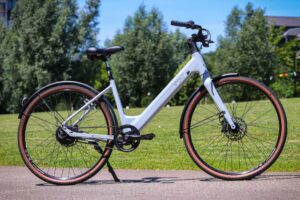
The Volt Urban LS is a well-specced and neatly executed city bike that’s one of a growing number that have turned to Bafang’s automatic shifting motors. The three-speed hub has its idiosyncrasies but is a great option for flatter terrain, and the bike is a likeable companion for urban errands. The recent price reduction makes it a more inviting package for the money too.
Volt Urban LS – Build, spec and motor system
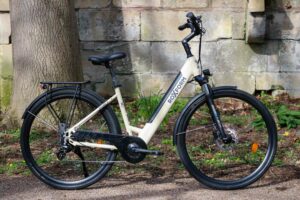
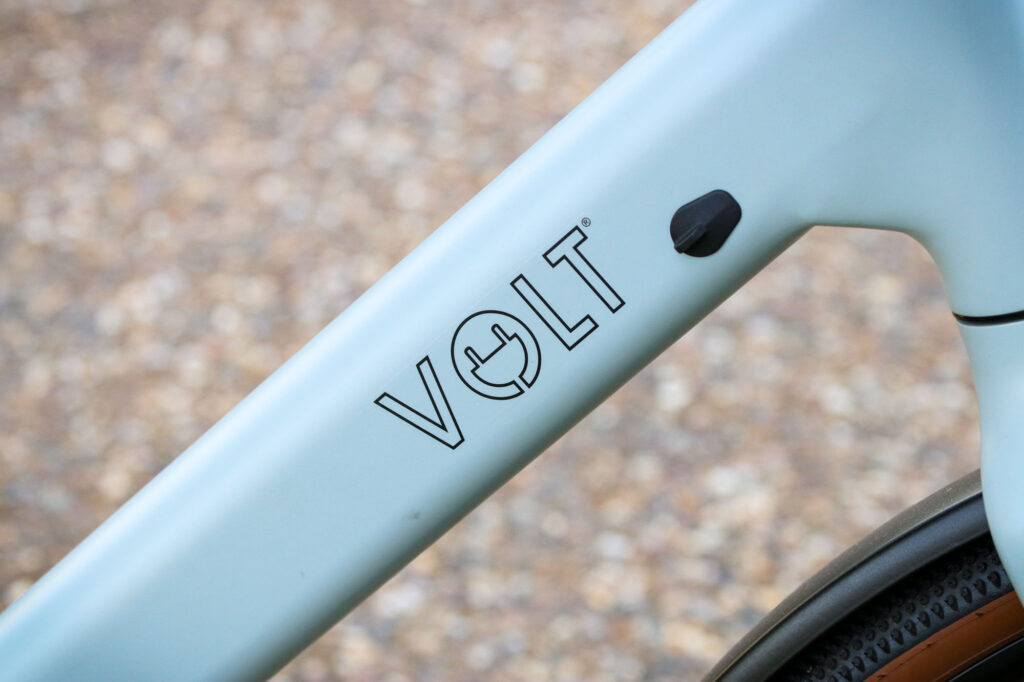
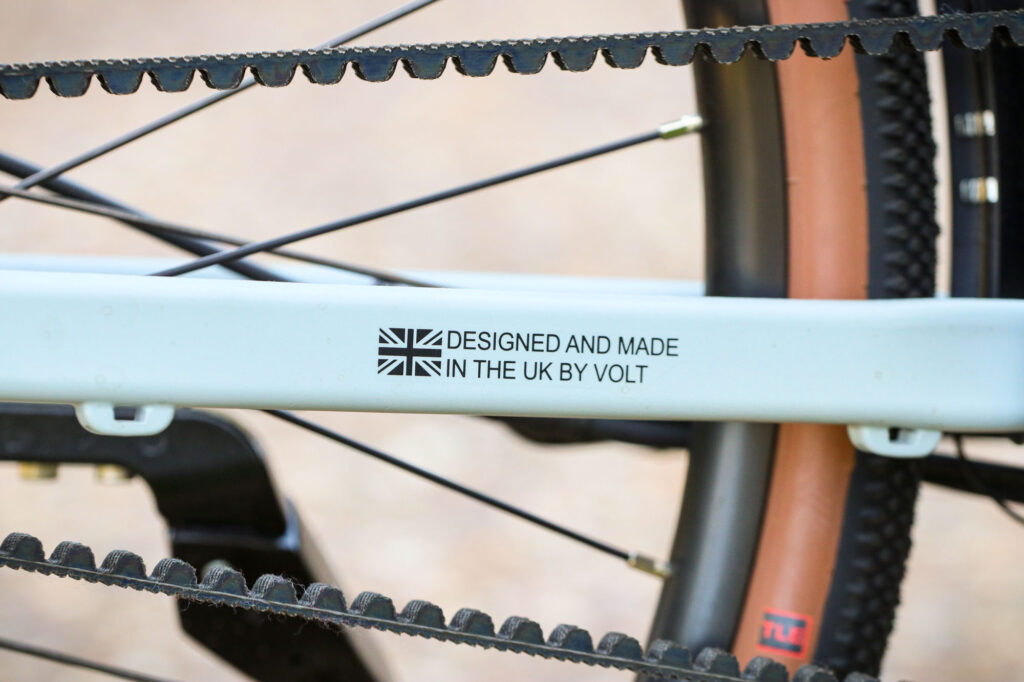
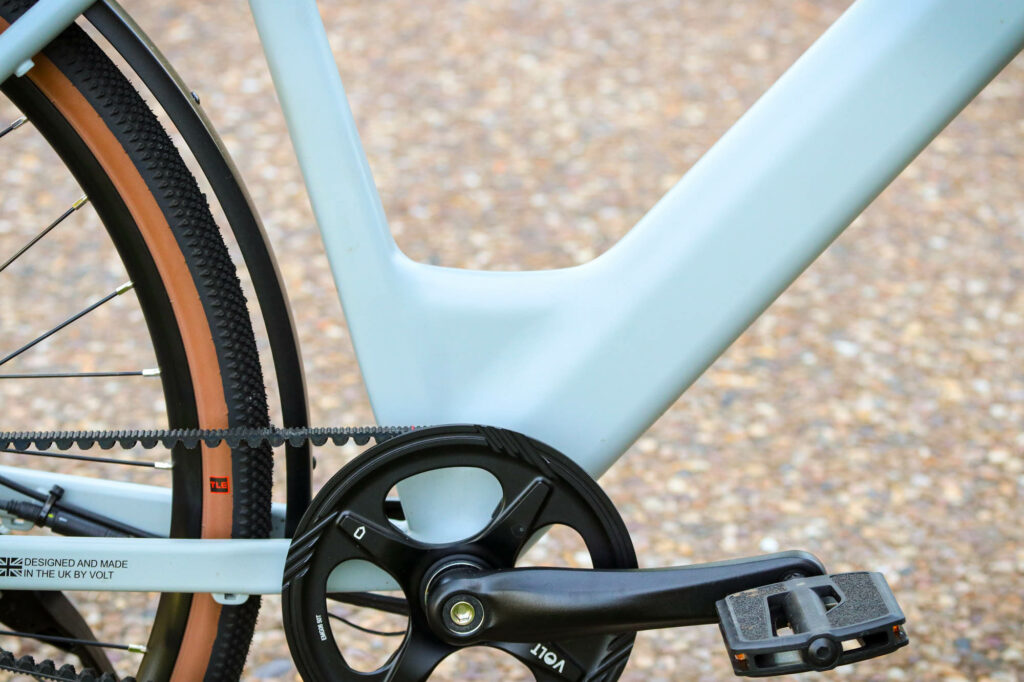
The Urban has a well-finished aluminium alloy frame in three fairly muted colours (sand, grey and light blue). The LS on our review bike stands for ‘low step’. The frame is also available in a traditional diamond, but for the type of riding you’ll do on a bike like this I’d pick an easy-access frame every time.
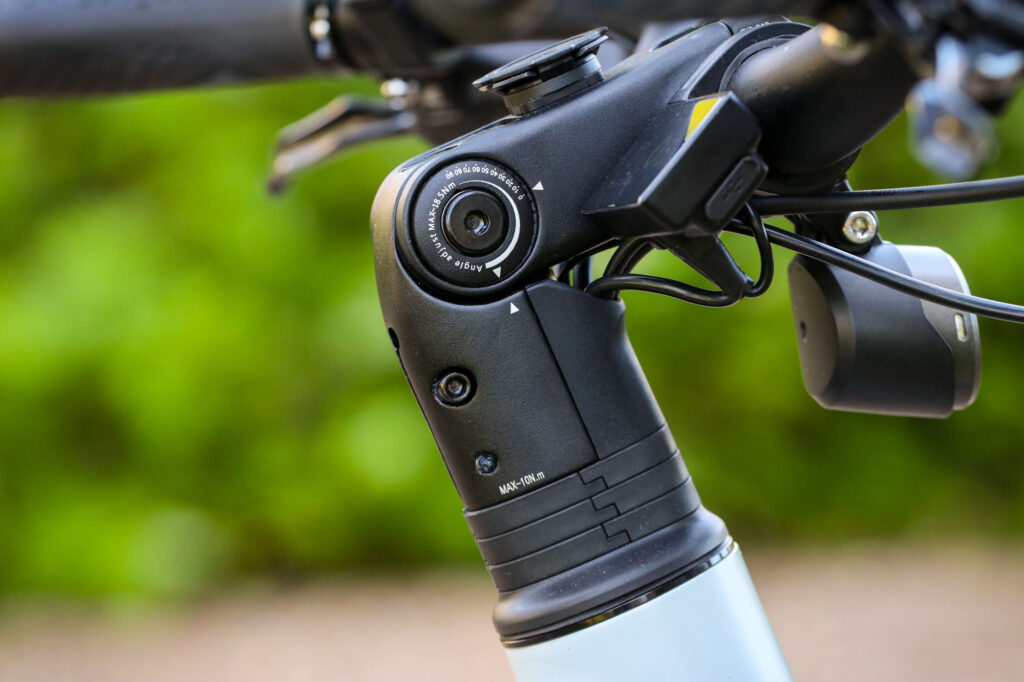
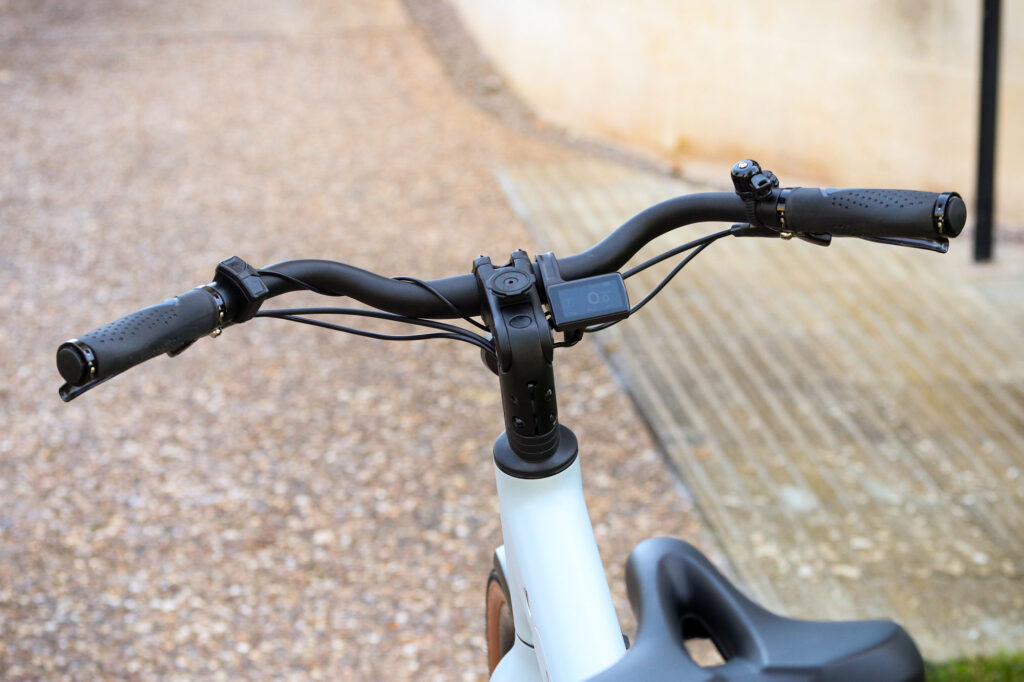
Cables and hoses are all internal, with everything entering the spacer stack below the stem, so it all looks nice and neat. The spacers are split so that you can play with the front end height of the bike to a certain extent without having to disconnect anything. There’s also an adjustable stem which is probably the easier way of fiddling with the fit.
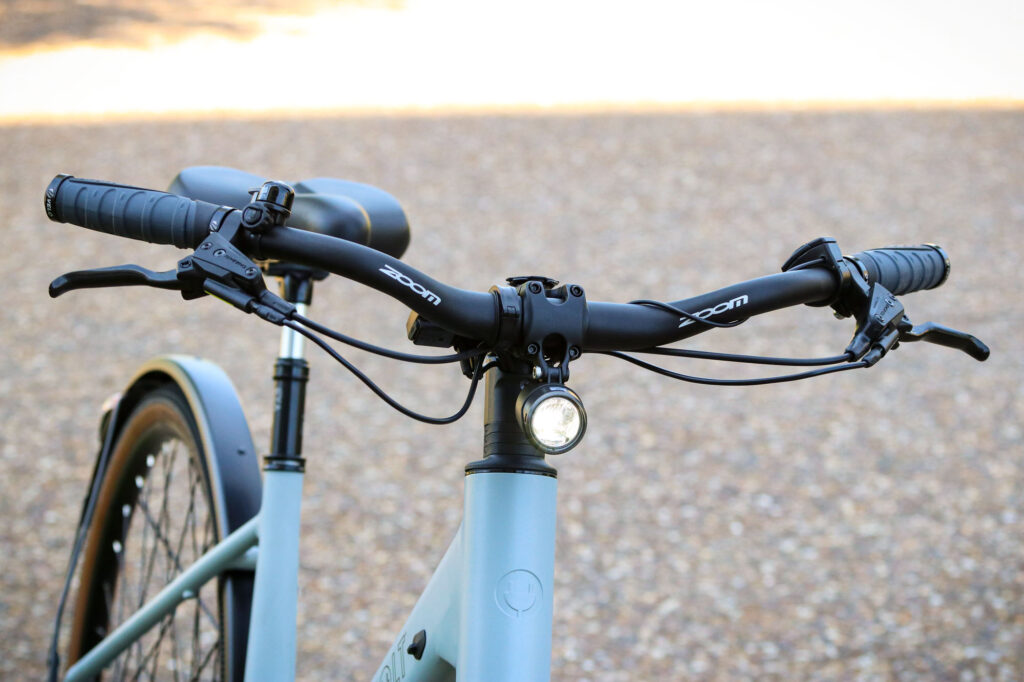
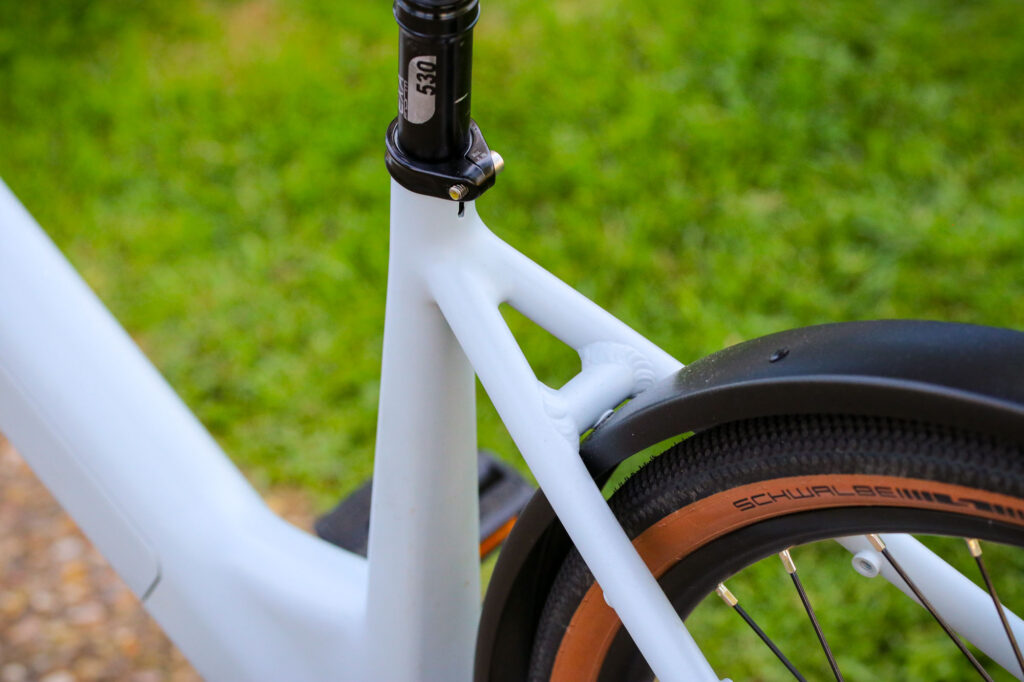
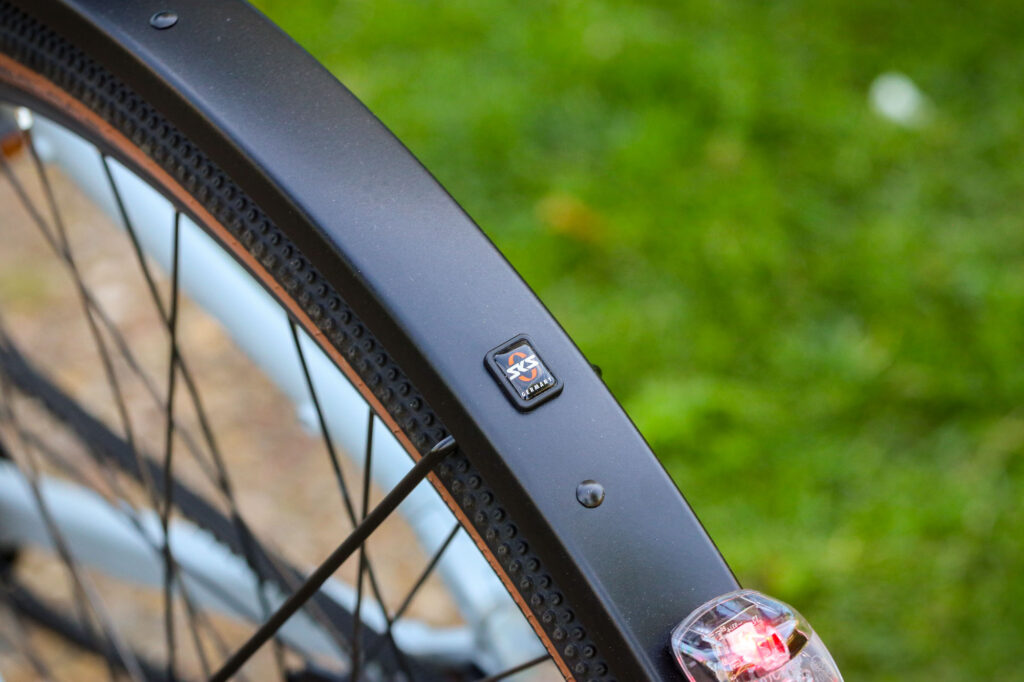
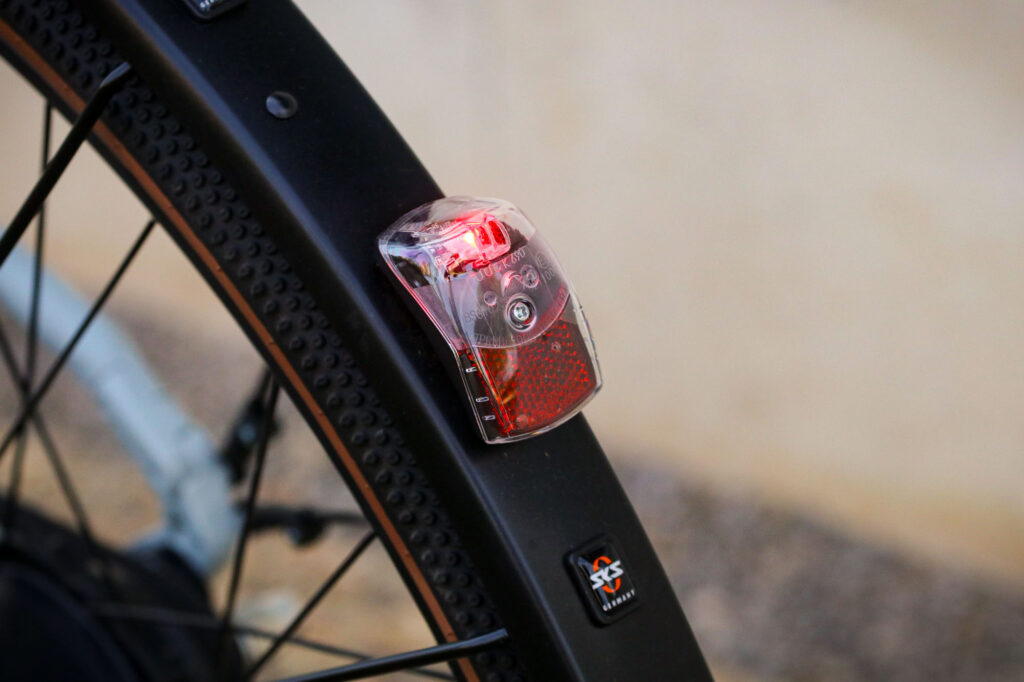
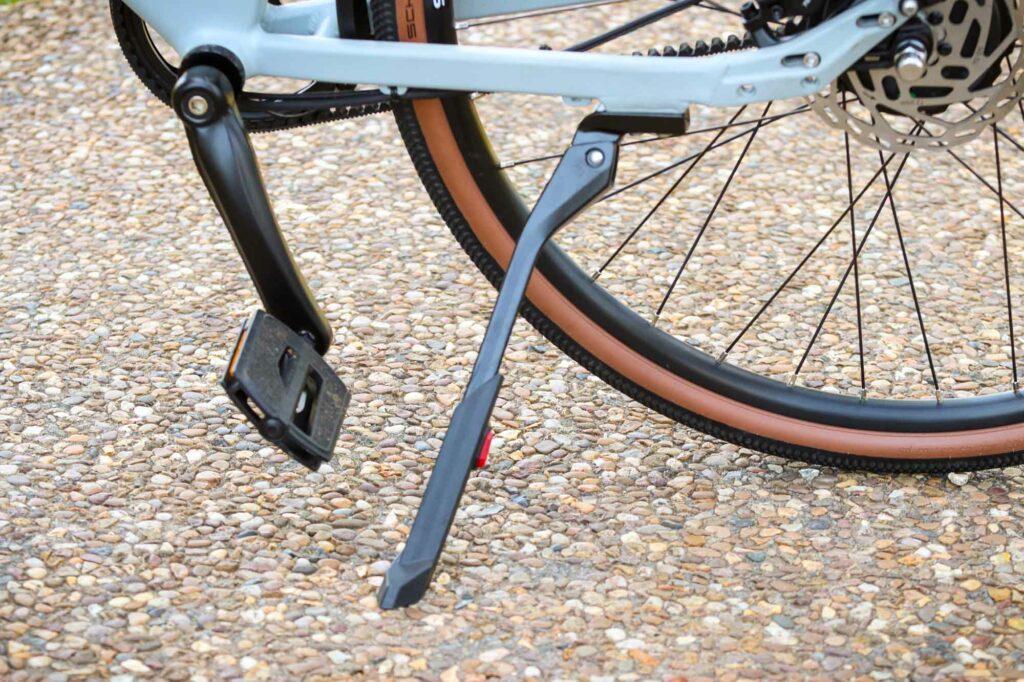
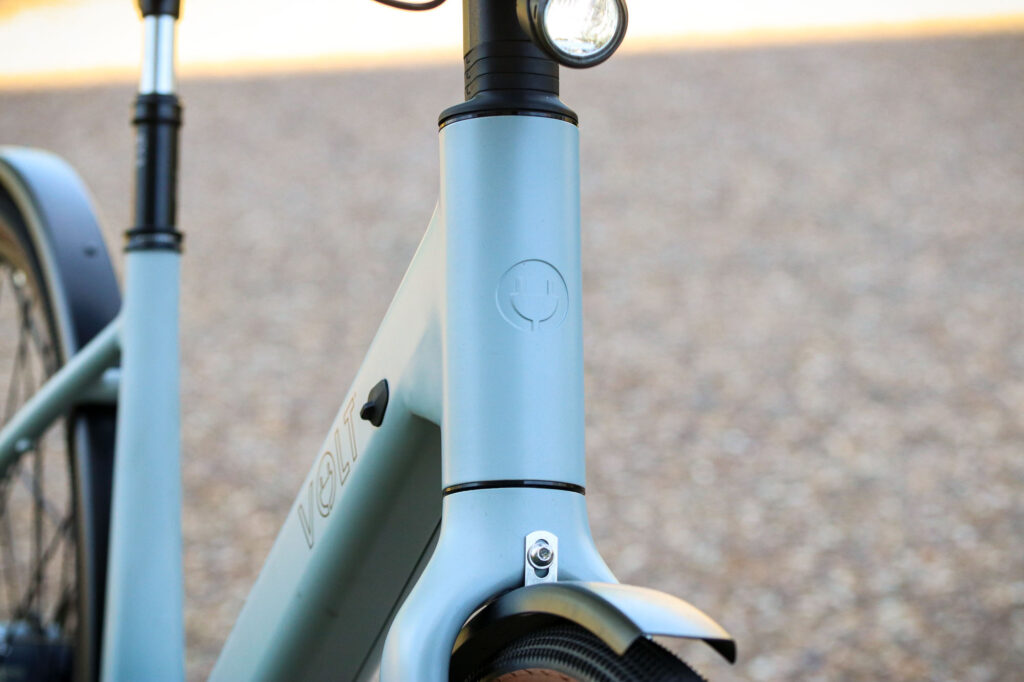
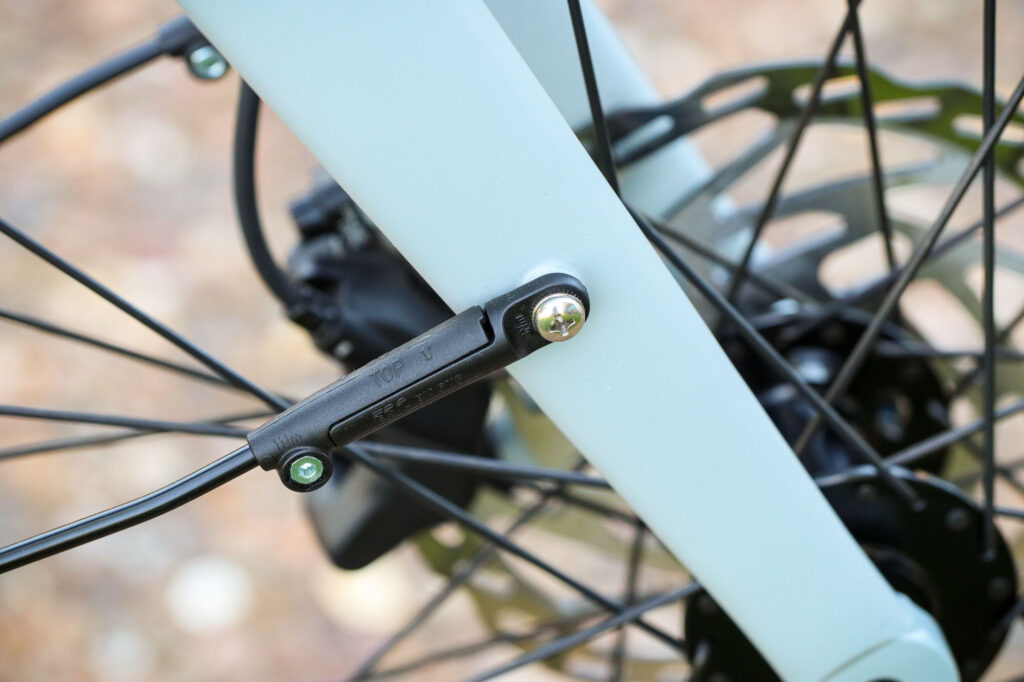
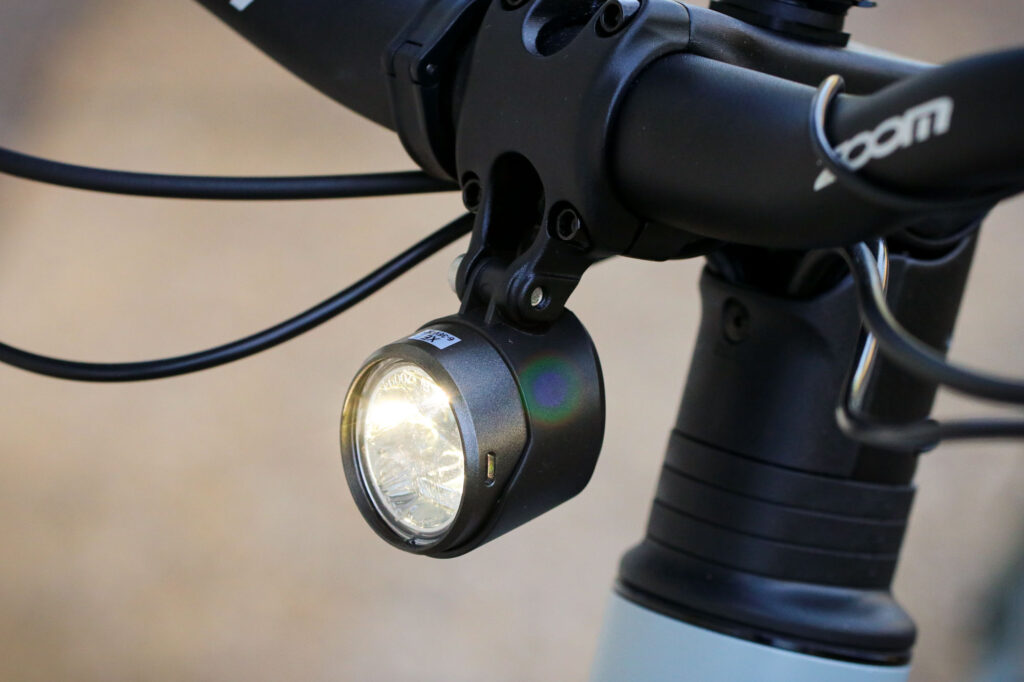
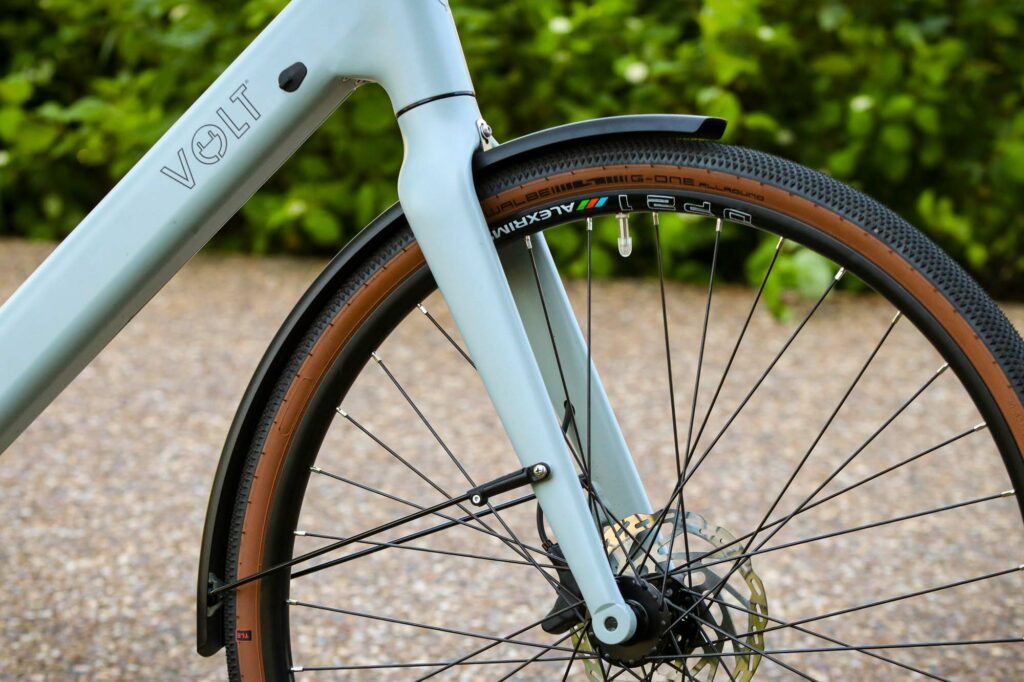
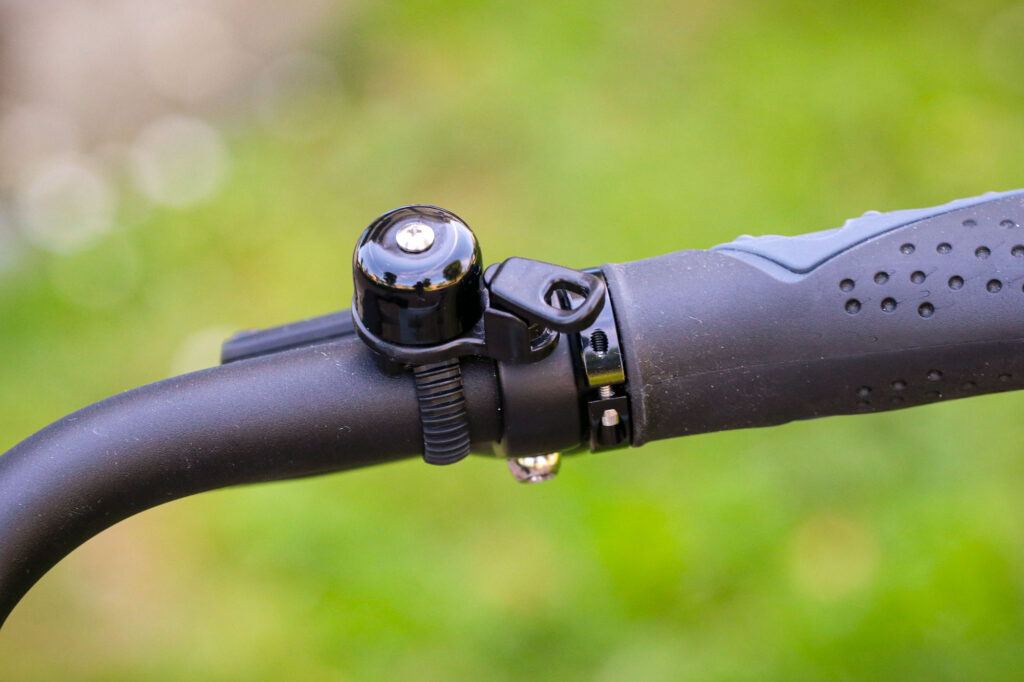
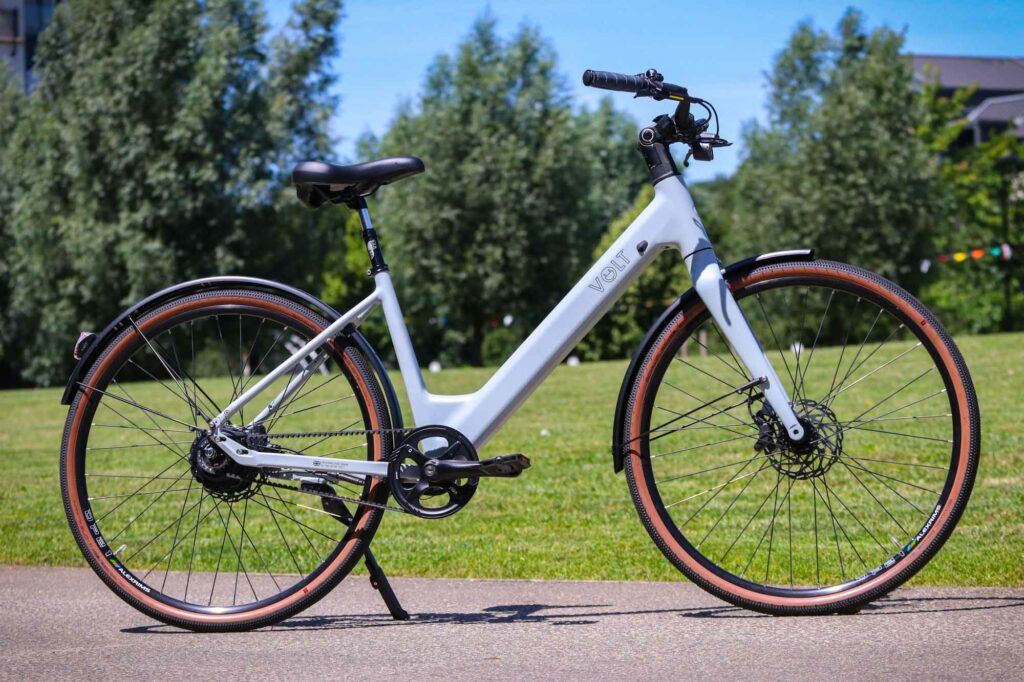
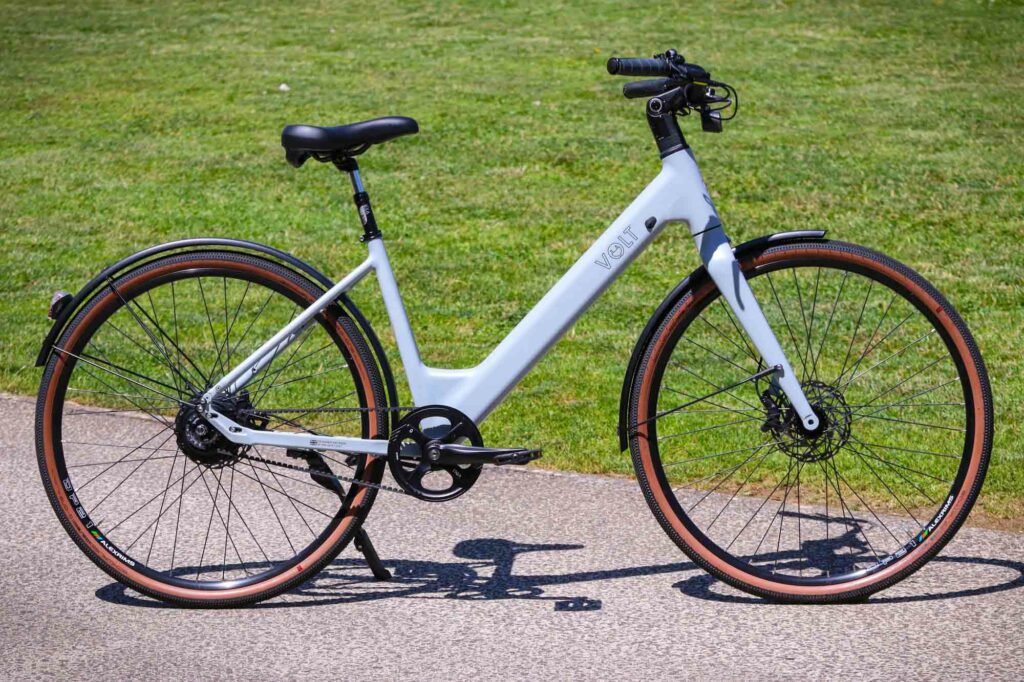
You get good quality SKS mudguards, and an integrated lighting system. The front light is fine for booting about town and it’s okay in unlit lanes if you’re careful, but you’ll probably want to bolster it with something more powerful if you regularly ride beyond the city limits in the dark.
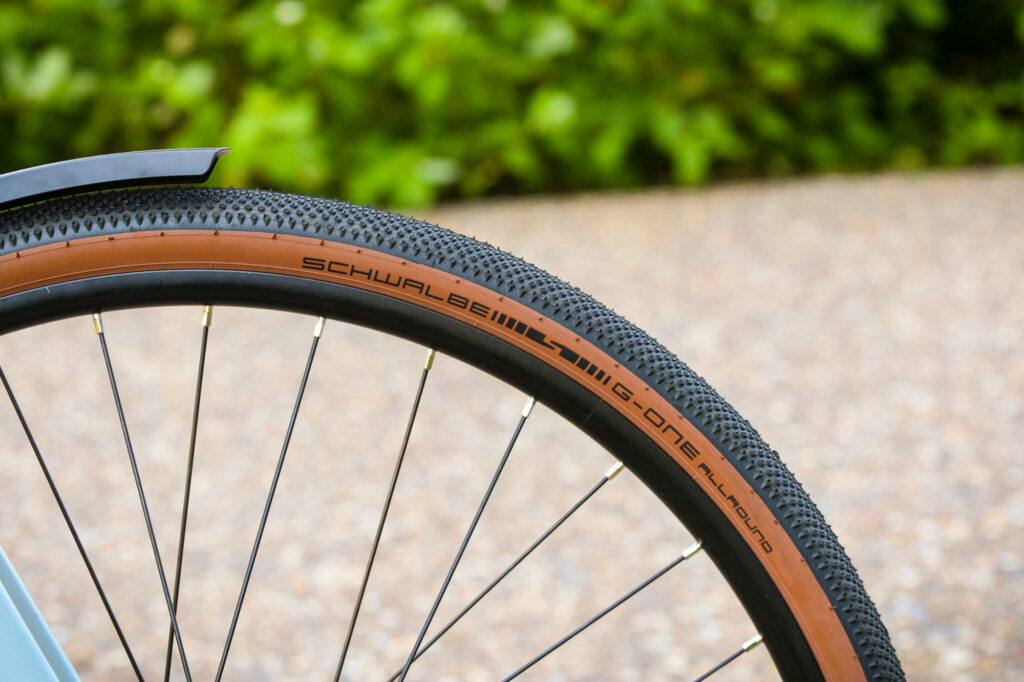
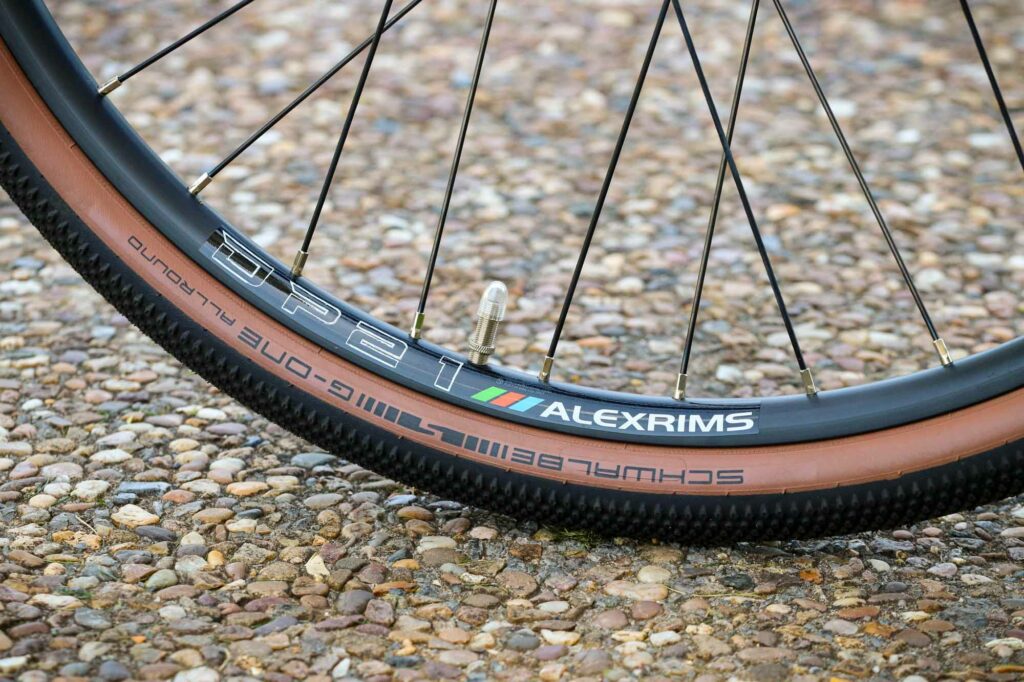
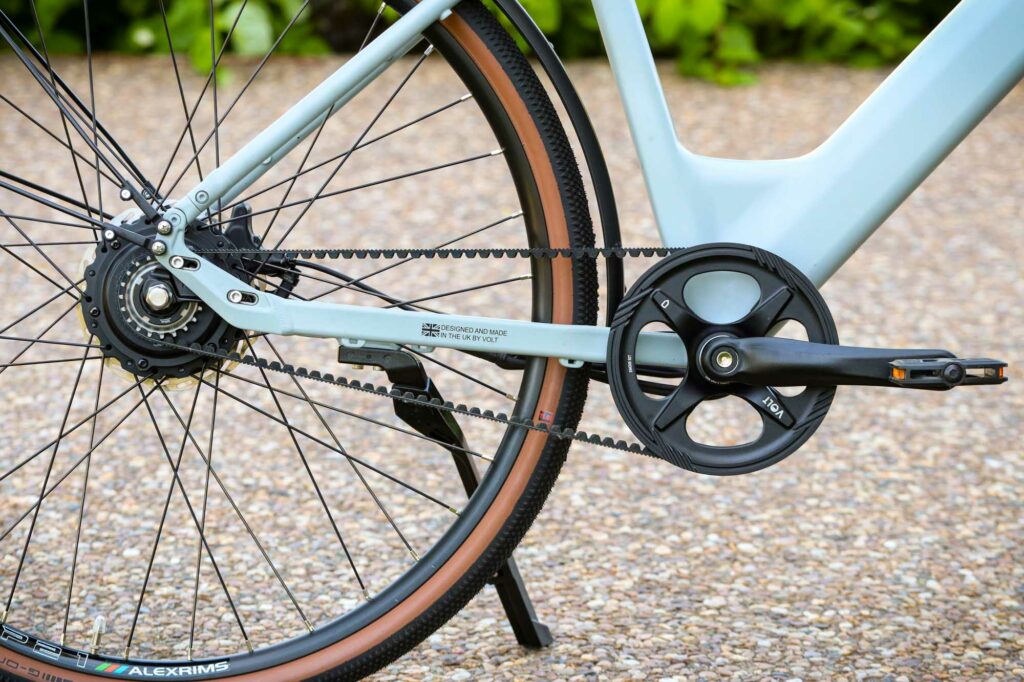
The wheels are unexceptional but sturdy, built with good-quality Alex DP21 rims, and you get Schwalbe’s excellent G-One Allround TLE tyres as your contact with the ground.
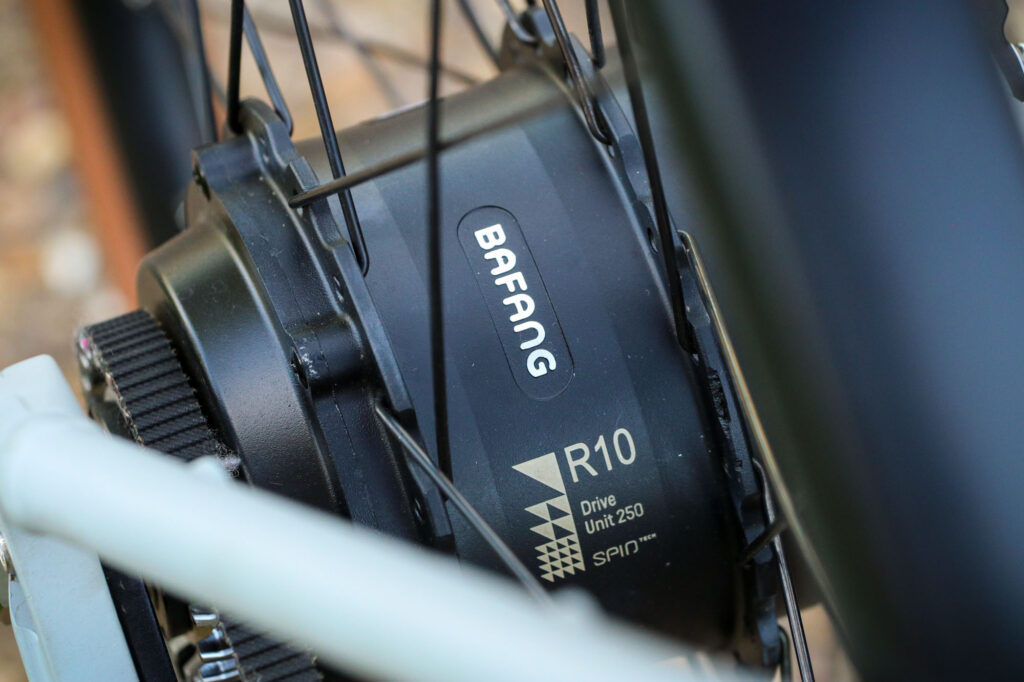
Volt uses Bafang’s H730 motor for this bike, which is an automatic three-speed 250W unit with a maximum torque of 50Nm and a weight of 3.6kg. There’s no external shifting mechanism. The hub just works through the gears and shifts up or down at predetermined speeds – about 13km/h and 20km/h in this case.
It’s not a huge range of gears: the lowest is a reduction of 0.76 and the highest an overdrive of 1.31 (with direct drive in the middle), so the total gear range is 172% – similar to a more traditional Shimano Nexus Inter-3 hub and less than most other options.
Why use this type of system? Well, the main reason is simplicity. There’s no shift lever to think about. You just pedal and the gears take care of themselves. When you stop, the bike automatically shifts back down to the lowest gear to help you get going again. Everything is enclosed in the hub, so there’s no maintenance to be done.
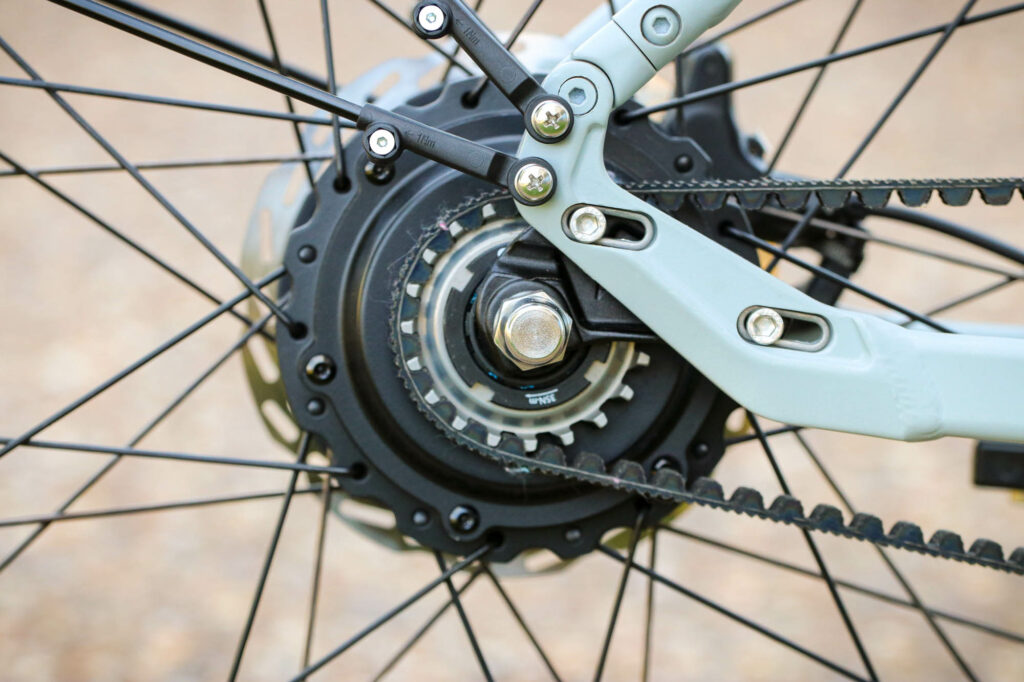
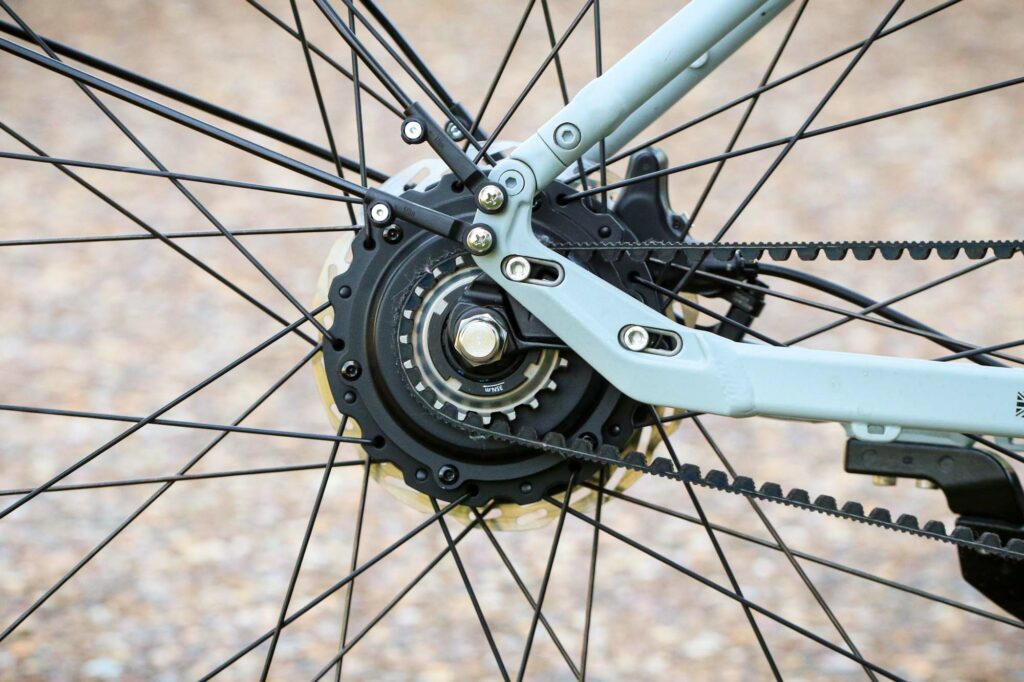
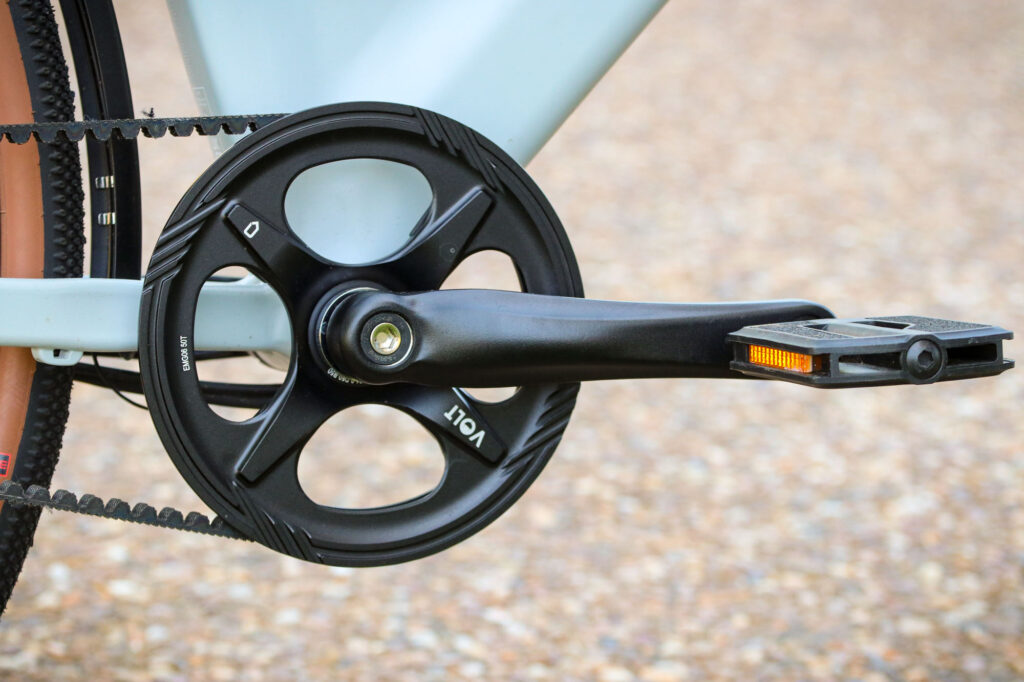
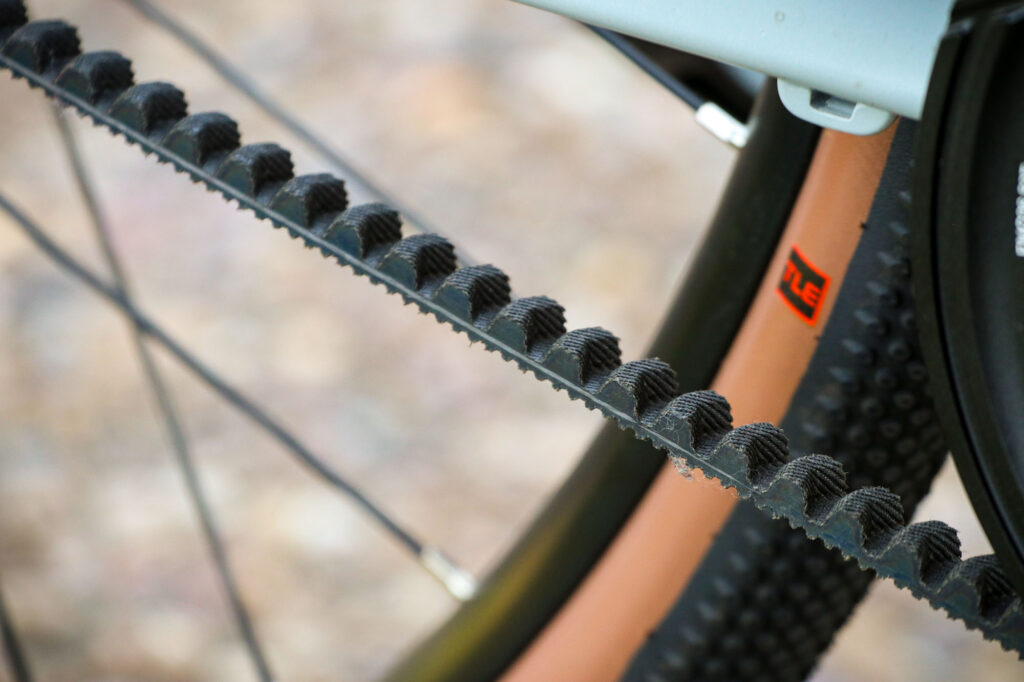
One of the other benefits of the Bafang hub is that it’s a single-ratio transmission, and that means you can use a clean-running and essentially maintenance-free belt drive. The Urban LS uses a Michelin HT Carbon belt, which I’ve not personally encountered on a bike before.
The main point of difference is that it has chevron-shaped teeth, which means that it’s impossible for the belt to migrate as it’s guided back into position. Other belts use a central cutout or guide rails on the drive ring and sprocket to similar effect. It didn’t fall off, anyway – although belts seldom do in my experience.
There are positives and negatives to any system, and the main negative here is that the bike won’t shift down under power. The nature of the shift mechanism means that the act of pedalling will hold it in place, so to shift down you need to back off. That’s a learning curve, and so is checking your speed so that you don’t shift back up again when you want to stay in a low gear.
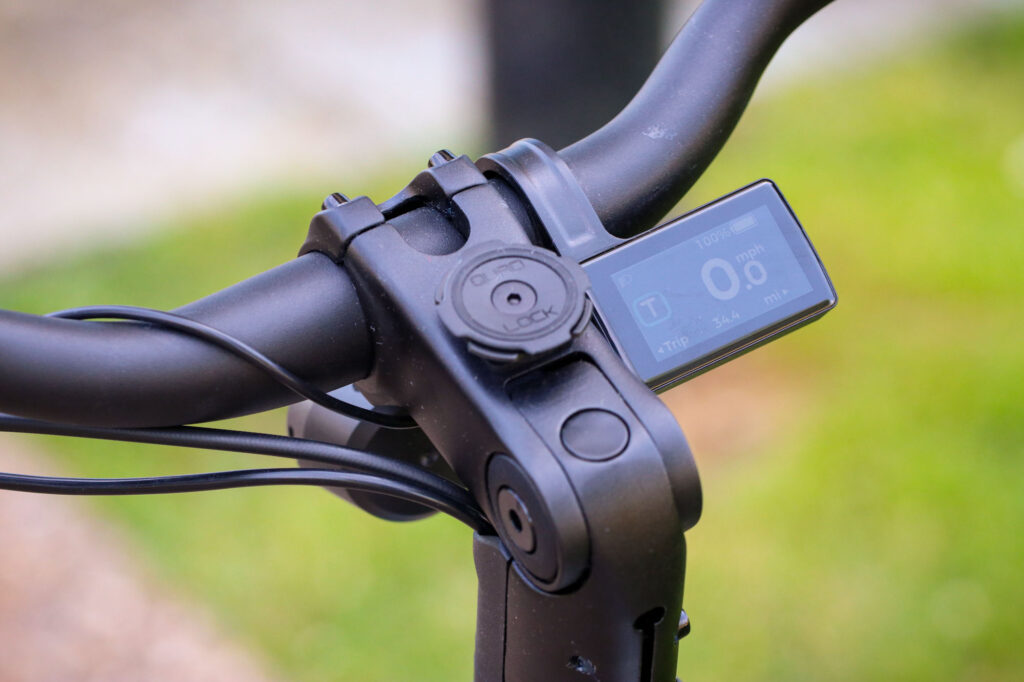
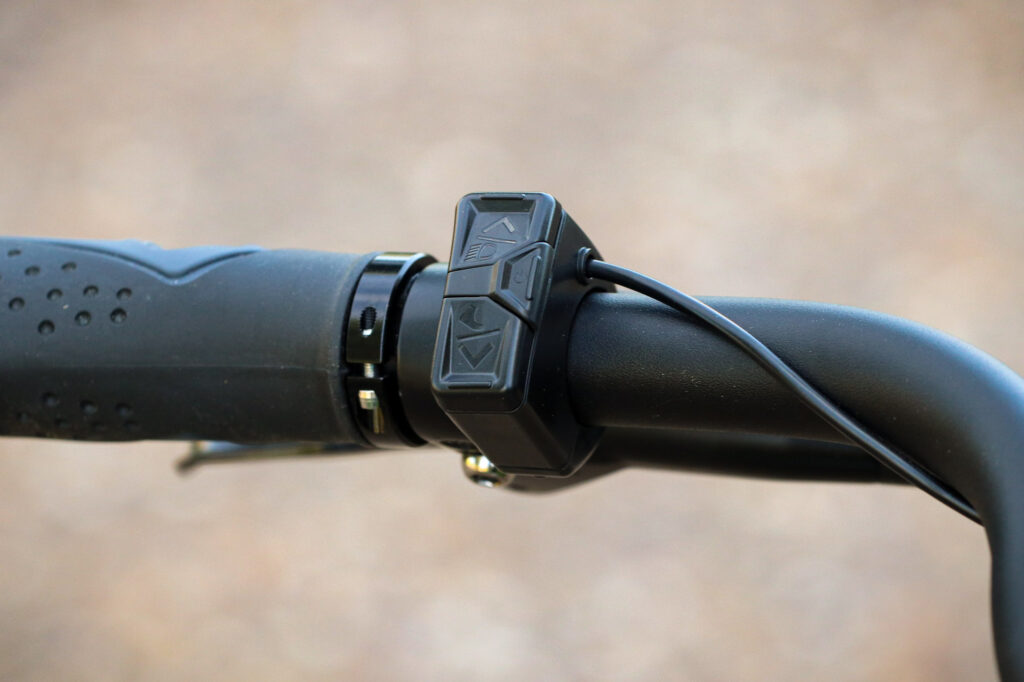
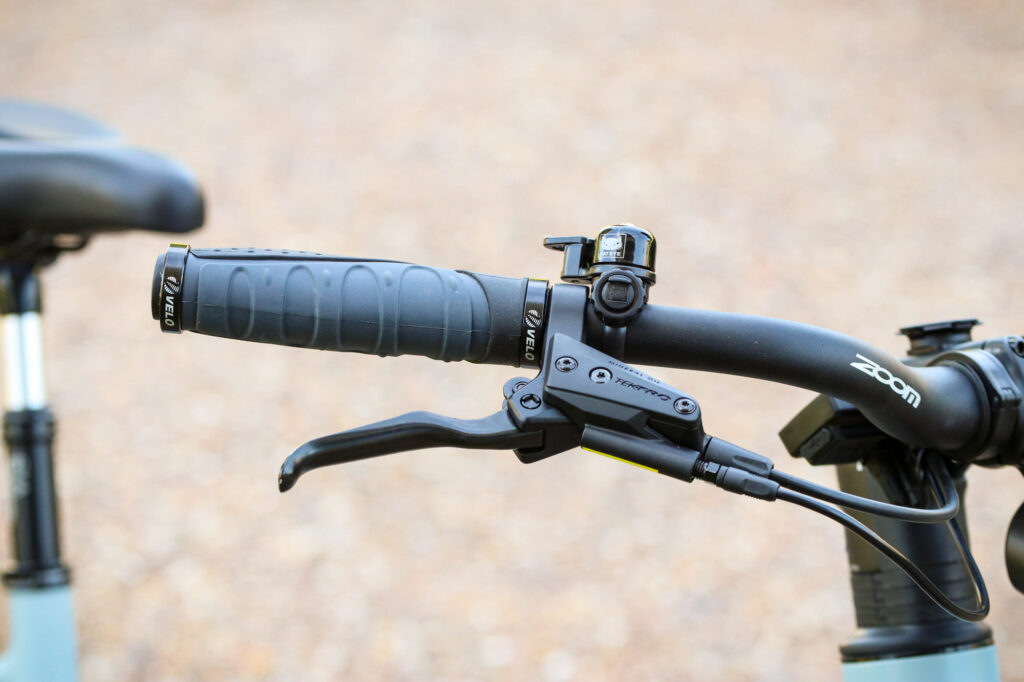
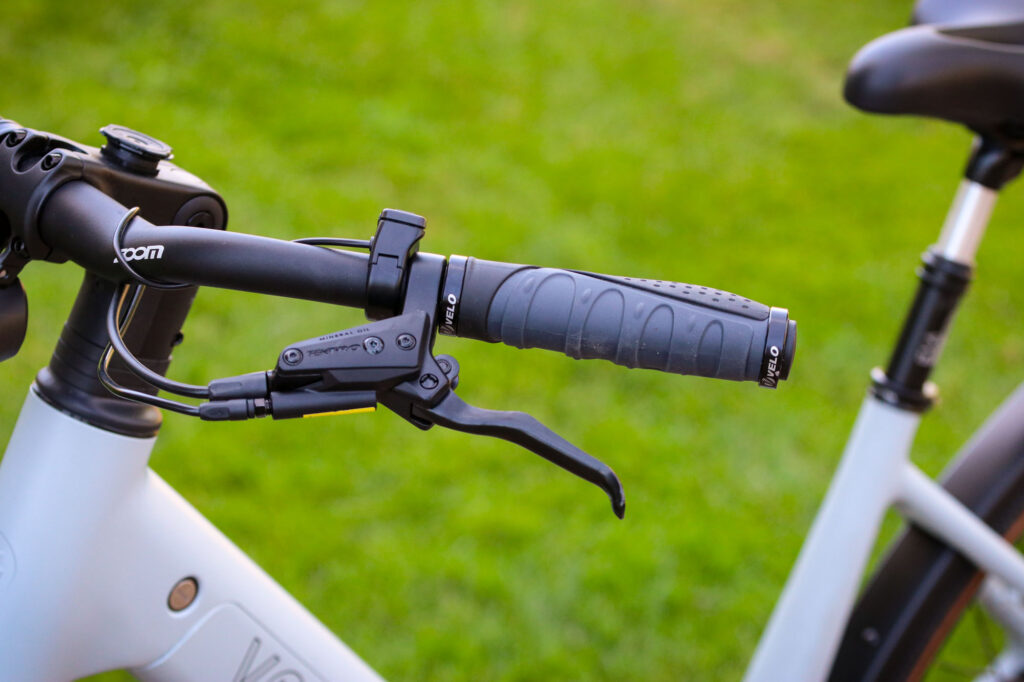
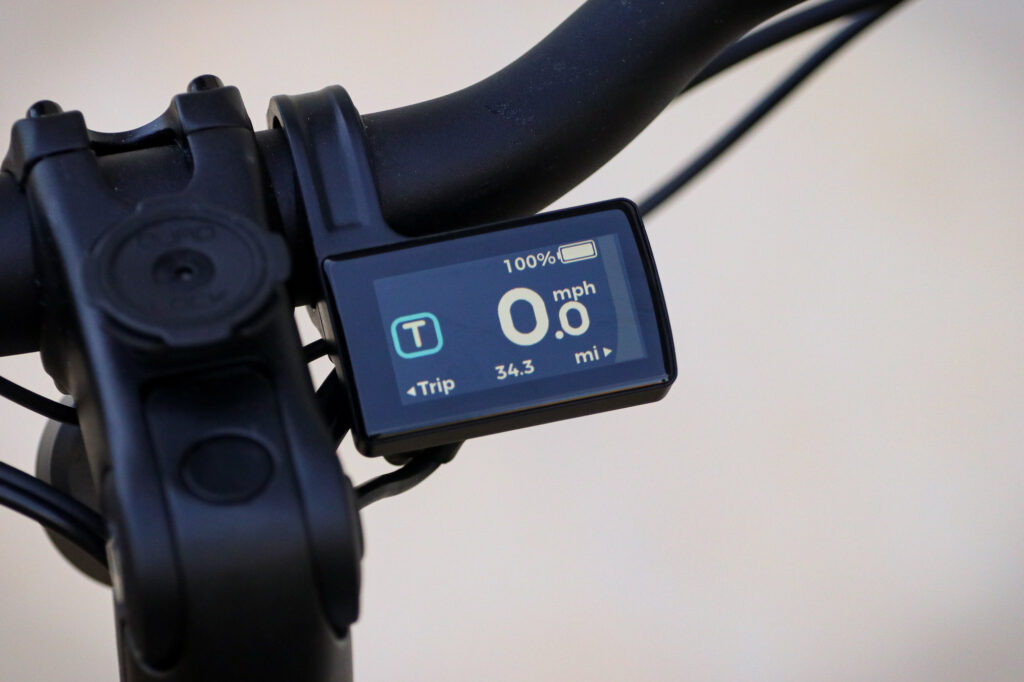
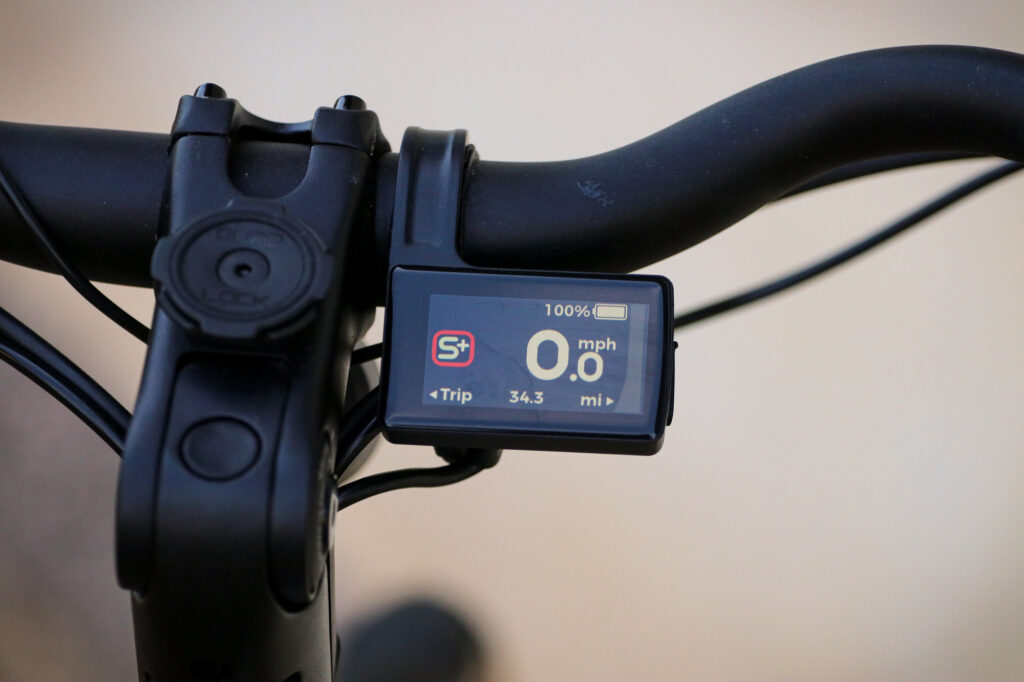
The Urban LS has a bar-mounted display and a simple remote, which makes accessing the five assistance modes very easy. They’re well-spaced, and all assist you up to the 25km/h limit.
The remote also turns the lights on and off and activates walk mode. There’s a Quad Lock mount on the stem too, which is a nice touch if you want to use your phone for navigation. However, using it obscures the display a bit.
Volt Urban LS – The ride
I enjoyed my time on the Volt, which included both the city riding it’s designed for and also a bit of more rural exploring, including some light trail use.
The 18in frame is a one-size-fits-all affair, so the riding position will differ a bit for riders of varying height. I’m at the top end of the size scale at 1.90m and I didn’t find the bike cramped at all, so smaller riders will probably be fairly stretched out. The swept-back bar falls nicely to hand and gives a more natural wrist position than a straight bar, so I found it comfortable on longer rides.
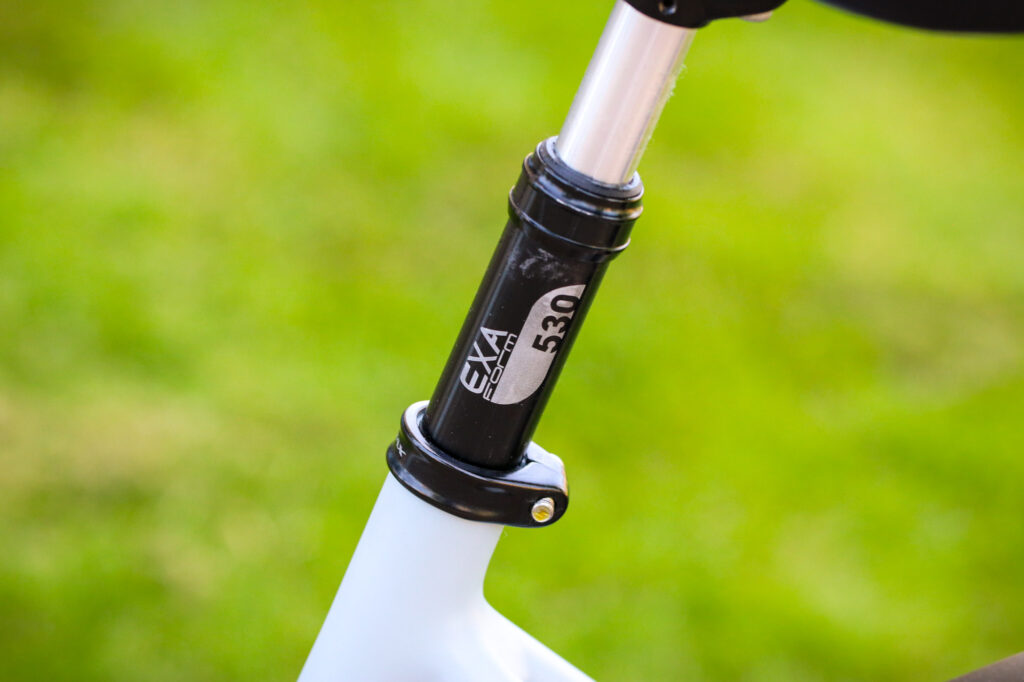
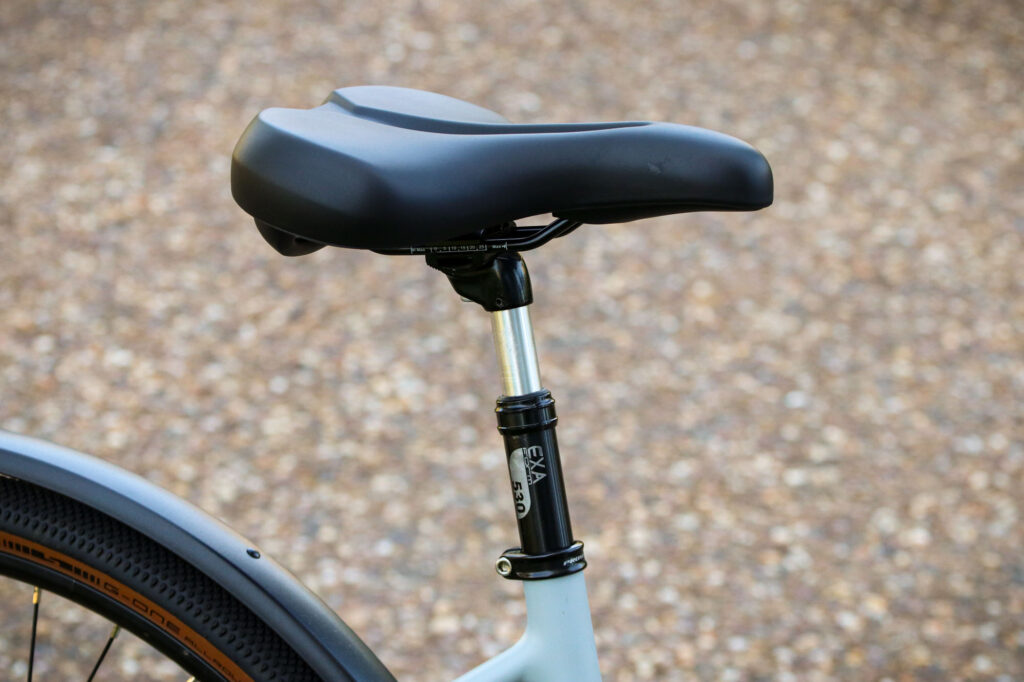
The combination of bar and front end isn’t the most forgiving though. I’d have a decent rigid fork on a bike like this over a cheap suspension fork every time, as I think both the handling and aesthetics are improved, and cheap forks are normally pretty ordinary. That being said, I did knock a few pounds of pressure out of the front tyre. At the back you have a suspension seatpost smoothing out the bumps. It’s okay rather than great, but overall it’s probably a worthwhile addition.
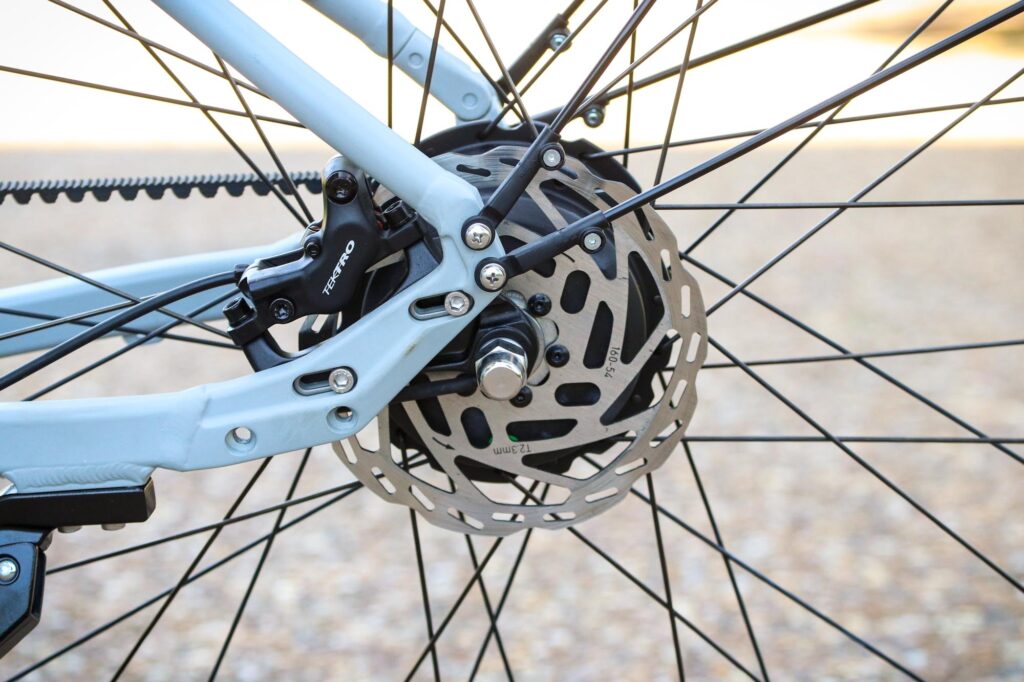
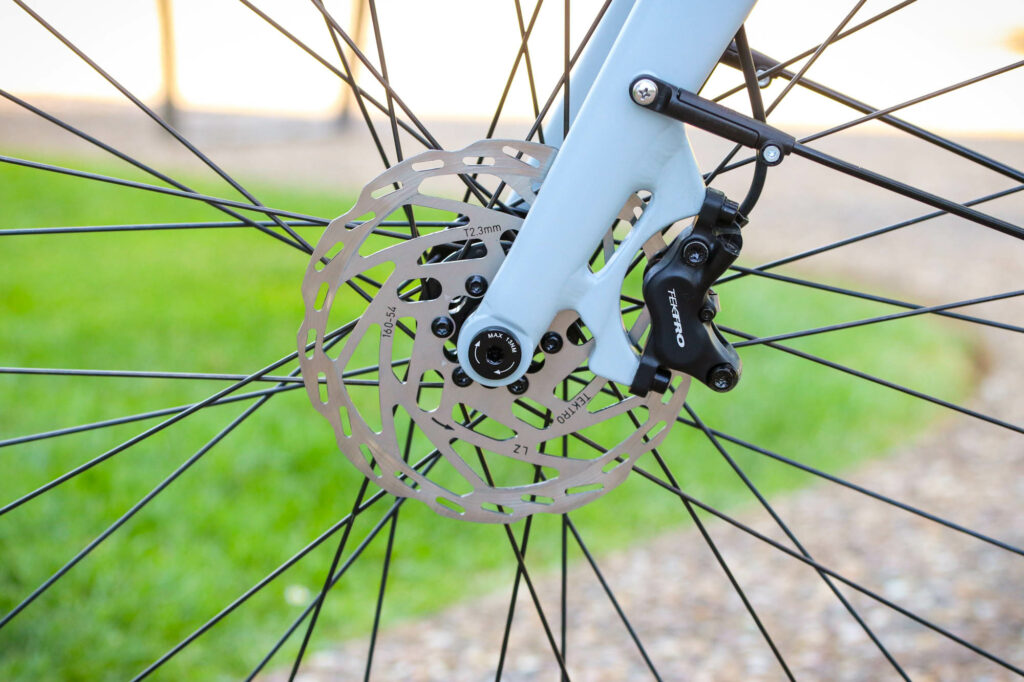
The Tektro Hydraulic brakes do a grand job of stopping you and I couldn’t induce them to fade on descents even when I was trying to. They’re wired into the motor system to cut the motor when you brake, which is something you used to see a lot more but has fallen out of favour. I think it adds complexity for not a great deal of benefit, personally. If you’re hauling on the brakes, you’ve stopped pedalling anyway.
Around town the bike was well behaved, with neutral handling and a fairly upright position that makes keeping track of the other road users simple enough. It’s not a sit-up-and-beg bike though, so if you head out for a longer ride it feels purposeful enough for an hour or so. That was about the limit of how long I wanted to stay in the saddle, which is mostly a comment about the saddle: not my favourite, but easily changed.
Given that the Urban LS is supplied with Schwalbe gravel tyres I took it on some graded off-road stuff, and unsurprisingly it was fine. You wouldn’t pick a bike like this to head into the wilderness, but for nipping down unsurfaced short cuts or trundling along canal paths, it’s plenty capable.
Volt Urban LS – Power and range
Volt’s claimed range is “up to 55 miles*” and as usual the asterisk is doing a fair bit of heavy lifting. That’s an 11st rider, on a warm, calm day, on flat, well-surfaced roads, with the bike in low assistance mode and the rider putting in a bit of a shift too. Real life range for anything less than those optimal conditions is going to tail off dramatically.
I completed a 16km loop on the bike with 275m of climbing (normal for round here) and had the power on Boost for the climbs, and that was enough to chew through 60% of the 360Wh battery. The Volt was a little hungrier than I expected, but not much, and it was a pretty windy day. It was warm though.
The best case scenario for a bike like this is if you live somewhere reasonably flat, where riding mostly means speeding up to the highest gear, and only dropping back down when you stop.
It doesn’t need to be completely flat: up to about 5% gradient you’ll probably be fine in top gear. Beyond that, I found that the bike was pretty happy up to about 10%, but beyond that the effort you need to put in ramps up pretty quickly.
The actual power a motor can supply is a direct product of torque and speed, so as speed slows, power drops. With a mid-motor you can mitigate that using gears to keep the motor spinning more quickly. Here the lowest gear is a reduction gear, so the motor is spinning faster than it would be in an equivalent single-speed hub and this means you get more power for climbing.
> Hub motor v mid motor? What’s the difference? (+ video)
I found it pretty capable on 10-12% slopes, but if you’re regularly hitting anything steeper than that you’re going to be working pretty hard. Like every bike I’ve tried with Bafang’s hub so far, I think this one is overgeared. At the point you shift up, you’re churning at about 45rpm, and you never get much above 60.
My commute is out and back about 9km with the back leg up a significant hill (1.5km at 5%, with a 12% steep bit). Normally, I’d have an e-bike on maximum assistance and expect to use 100-200Wh of juice depending on how efficient everything is, and also what conditions are like.
With its 360Wh battery, the Volt could easily complete two laps of the commute, so I don’t think it’s an outlier, but it’s not the most efficient bike I’ve tried either. As ever, the question is: does the Volt have the range to do the things you’d normally want to do on it? Which for nearly all of the use cases I can think of is, yes, but maybe with less of a buffer.
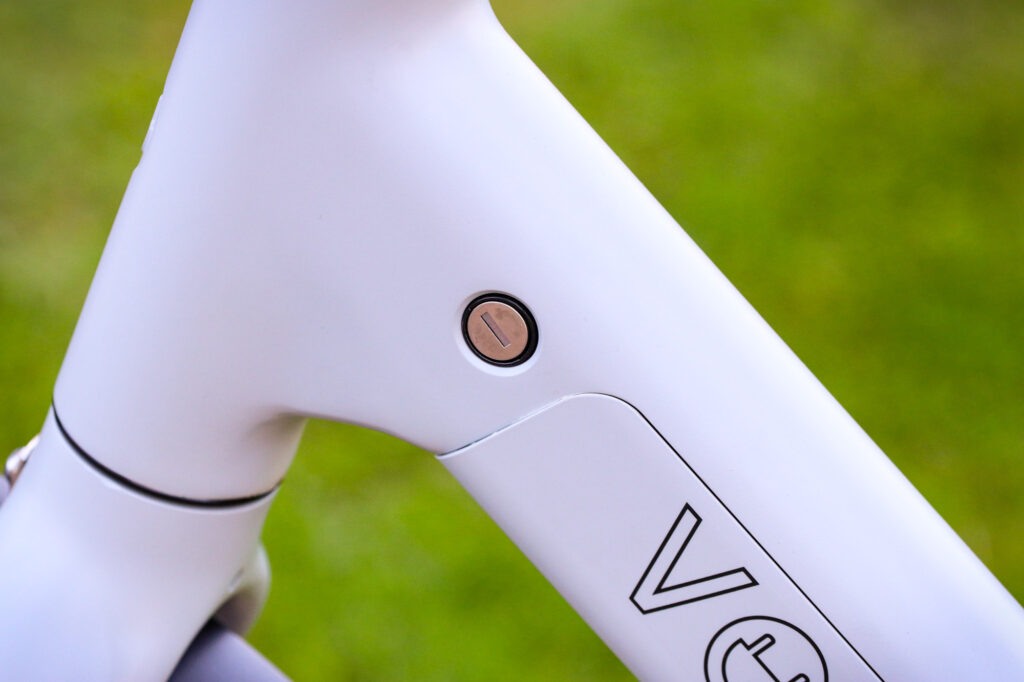
Charging the battery back up is simple enough. You can do it in situ via a port in the down tube, or you can remove the battery and charge it indoors. It took about three hours to replenish. The removable battery is a bonus if you store your bike somewhere you can’t charge it, or just to make it less palatable to thieves if you’re locking it up in town.
Volt Urban LS – Value and verdict
When we first heard about this bike the RRP was £2,399, but Volt has managed to shave £500 off that in the intervening period, which makes it a much more attractive proposition. At that higher price you’re into the cheapest Bosch-powered bikes from the likes of Cube, which represents some stiff competition.
Realistically, the most direct comparison is a bike we’ve reviewed very recently, the estarli e28.X which costs about the same, and uses the same motor. In a straight fight between those two, it’s quite hard to pick a winner, although I’d edge towards the estarli as I marginally preferred the ride, and I found its range was a touch bigger too.
The 20in-wheeled Tenways CGO Compact also comes in around the same price and is a good option – although that one’s a singlespeed so better for flatter terrain.
The Ado Air 20 Ultra combines the three-speed motor with a folding frame if you’re short on space.
I enjoyed riding the Volt Urban LS and I’ve no doubt that it’ll be a good long-term option for city transport, with an easy-going ride feel and a very low-maintenance build.
> Step-through frame e-bikes: what benefits do they offer and which one should you go for?
Test Report
What does the manufacturer say about this product?:
Meet the VOLT URBAN LS – effortless city riding, redefined.
We’re excited to introduce the VOLT URBAN LS, the low-step version of our innovative URBAN e-bike, designed to make everyday riding more accessible, comfortable, and enjoyable than ever. The URBAN LS combines contemporary styling with cutting-edge technology, featuring a maintenance-free carbon belt drive and automatic 3-speed motor for a smooth, intuitive riding experience.
With its easy-access, light weight low-step frame, the URBAN LS offers enhanced convenience and confidence for riders of all abilities, making mounting and dismounting effortless whether you’re commuting, running errands, or exploring the city.
Built for reliability, designed with style, and ready for every season.
Tell us some more about the technical aspects of this product:
Drive
Michelin Carbon Belt Drive
Gears
3 Speed automatic geared Rear Hub motor (50 Nm)
Brakes
Tektro Hydrailic cut off brakes
Display
LCD Display with USB-C charging
Wheels
28 inch wheels
Frame
18 inch frame
Sensors
Torque Sensor
Phone Support
Quad Lock Mount
Tyres
Schwalbe 28 inch G-One tyres
How does the price compare to that of similar products in the market, including ones recently tested?:
Very similar to the estarli e28.X which is the same motor system
Tell us what the bike is for and who it’s aimed at. What do the manufacturers say about it?:
Volt says it’s, “designed to make everyday riding more accessible, comfortable, and enjoyable than ever.”
Where does this model sit in the range? Tell us briefly about the cheaper options and the more expensive options:
Quite a lot of Volt’s range is around the £2k mark. They don’t do multiple builds of this bike.
Tell us about the build quality and finish of the frame and fork:
Nicely finished
Tell us about the materials used in the frame and fork:
Aluminium alloy
How was the bike in terms of height and reach? How did it compare to other bikes of the same stated size?:
It’s a single size, but I didn’t feel cramped even though I’m a tall rider
Was the bike comfortable to ride? Tell us how you felt about the ride quality:
Ride quality was generally good
Did the bike feel stiff in the right places? Did any part of the bike feel too stiff or too flexible?:
Front end felt a little stiff
Was there any toe overlap with the front wheel? If so, was it a problem?:
No issues
How would you describe the steering? Was it lively, neutral or unresponsive?:
Neutral
Tell us some more about the ride experience. How did the bike feel overall? Did it do particular things well or badly?:
It was very well-behaved – best when cruising around, which is mostly what you’d be doing
Which components had the most effect (good or bad) on the bike’s performance? Would you recommend any changes?:
Smaller chainring for a higher cadence
What kind of motor is it? :
Bafang H730 3-speed automatic
What are the stated motor system specs? (Torque/power/maximum assistance speed):
250W / 50Nm / 3.6kg
Tell us some more about the motor. How did it feel overall? Did it do particular things well or badly?:
It’s better than a singlespeed for climbing, shifting up is good. Shifting back down is more problematic
How did the motor perform at low speed? (e.g. on steeper climbs or setting off with heavy loads):
Past about 12% gradient it started to get pretty hard work
How did the motor perform at higher speed? Was it noisy? Did assistance cut out smoothly/abruptly at the 25km/h assistance limit?:
Easily pulls you up to 25km/h on the flat and it’s easy to stay there
What type of battery is it? Is the manufacturer named?:
Panasonic Lithium Ion 360Wh
Where is the battery on the bike? Is it removable?:
Down tube (removable)
What are the stated battery specs? (Capacity/voltage):
36V / 360Wh
Tell us about charging the battery. What’s the charger like? How long does it take?:
Standard 2A charger, takes 2-3 hours
Tell us about the assistance levels. How many are there? Are they all useful?:
5 levels, well spaced
What do the manufacturers say about the range of the bike?:
“Up to 55 miles”
What was your experience of the operational range of the bike?:
In hilly Bath, I could rely on less than half that
Any comments on drivetrain performance?:
Super straightforward belt drive
Any issues with drivetrain durability?:
No
Tell us some more about the wheels. Did they work well in the conditions you encountered?:
Good quality if unexceptional wheels, Alex rims, unbranded hubs
Tell us some more about the tyres. Did they work well in the conditions you encountered? Would you change the tyres? If so what for?:
Shwalbe G One Allround is a great all-purpose tyre
Any comments on brake performance?:
Hard to fault
Any issues with brake durability?:
No
Tell us some more about the brakes. Did they work well in the conditions you encountered? Would you change anything? If so, why?:
Tektro hydraulic with motor cut-off. I’d do without the motor cut-off personally
Any comments on controls comfort?:
Bars and grips were good, saddle less so
Does the bike have a maximum luggage weight, or a maximum gross weight?:
Not stated. Not supplied with rack
Did you enjoy using the product? Yes
Would you consider buying the product? Yes
Would you recommend the product to a friend? Yes
Use this box to explain your overall score
I enjoyed riding the Urban LS, and I think overall it’s good. There’s a bit of room for improvement but nothing that’s a deal breaker
About the tester
Age: 54Height: 189cmWeight: 104kg
I usually ride: whatever I’m testing…My best bike is: Dward Design Custom Audax, Lauf Úthald, Cannondale Topstone
I’ve been riding for: Over 20 yearsI ride: Every dayI would class myself as: Expert
I regularly do the following types of riding: Road racing, Gravel riding, Indoor riding, Indoor racing, Bikepacking, Commuting, Touring, Club riding, Audax, Fitness riding, Leisure riding