


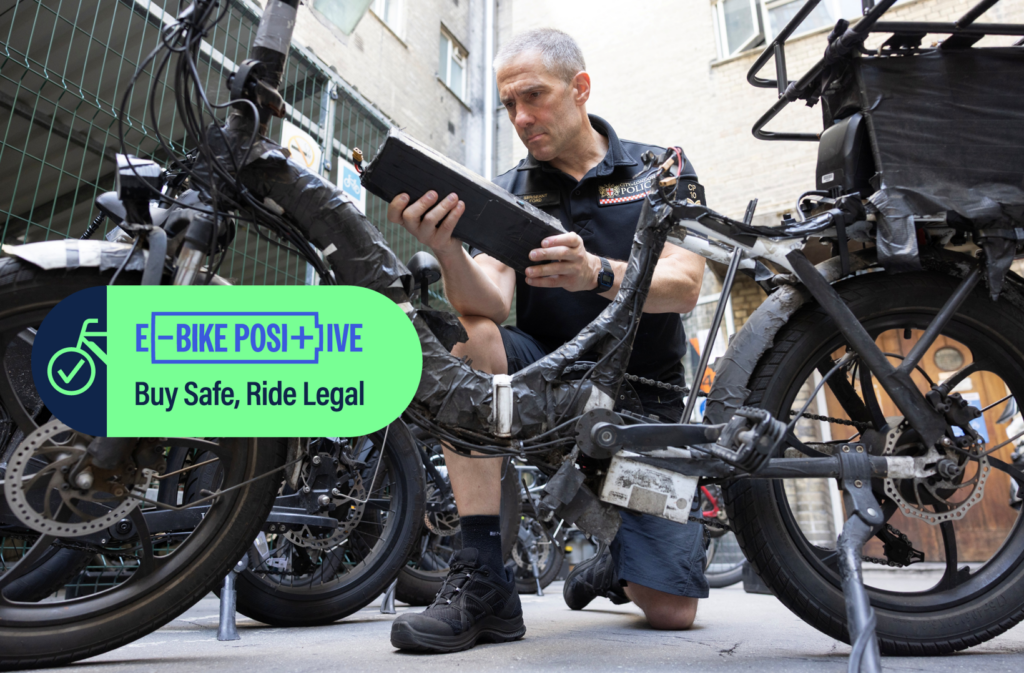

The UK’s largest bike trade associations have relaunched their “E-bike Positive” campaign with posters and product tags, in a bid to educate the public about safe, road legal e-bikes and to distinguish from illegal electric motorbikes.
The E-bike Positive campaign was launched by German manufacturer Bosch in 2024, in partnership with both the Bicycle Association and the Association of Cycle Traders (ACT), who took over the campaign in January of this year. Initially the campaign involved a pledge signed by retailers to only sell and repair legal e-bikes, and, “to promote e-bikes as a safe, economical and healthy mode of transport whilst also educating people about the risks of aftermarket lithium-ion batteries, chargers, and conversion kits.”
Now, the campaign has launched a safety mark that can be displayed by retailers and on approved brand products, either as a tag on a product, a sticker in a shop window or on a poster in-store. The aim is to improve public understanding of e-bike safety and what is a legally reputable supplier of e-bikes, as well as directing purchasers to responsible suppliers of safe and road-legal e-bikes.
Two separate safety marks have been introduced.
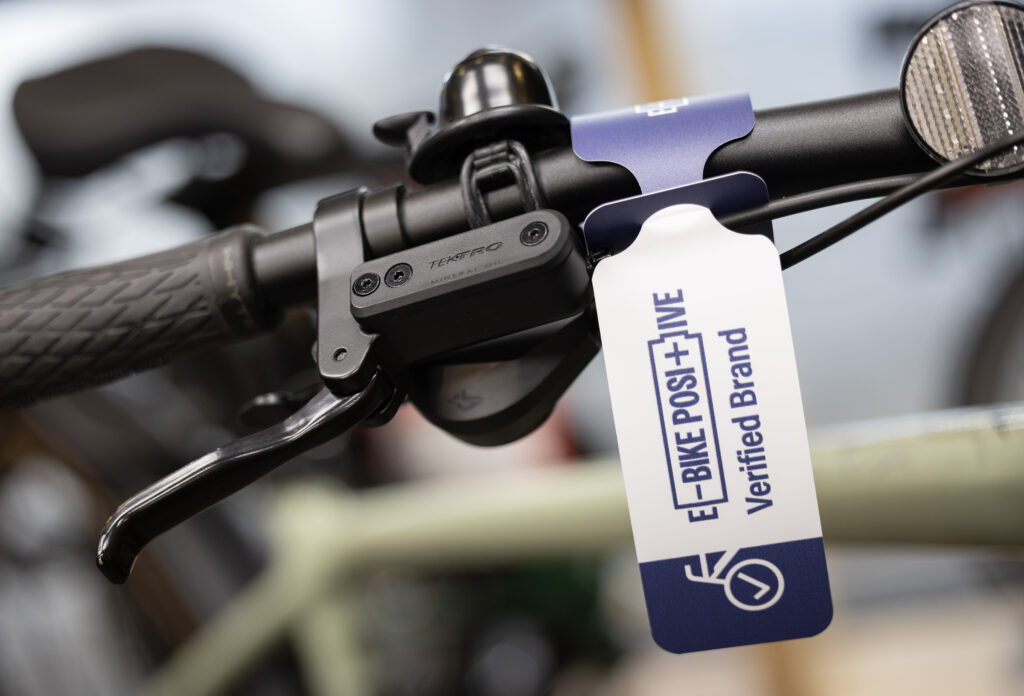
The Verified Brand tag can be displayed on any product that passes, “a rigorous independent audit that assesses product safety policies and procedures, quality management systems and other technical and regulatory aspects of proper operation as a responsible e-bike supplier. This process includes verification that the brand’s e-bikes are all road-legal, properly safety-tested, and are tamper-resistant.”
Meanwhile the Approved Retailer sticker can be displayed by any bike shop, “that commits to selling only road-legal e-bikes and to servicing and repairing e-bikes only in line with manufacturer instructions, and to supplying only compatible, safety-tested batteries and chargers with full safety information. E-Bike Positive retailers will refuse to work on non-road-legal and unsafe e-bikes.
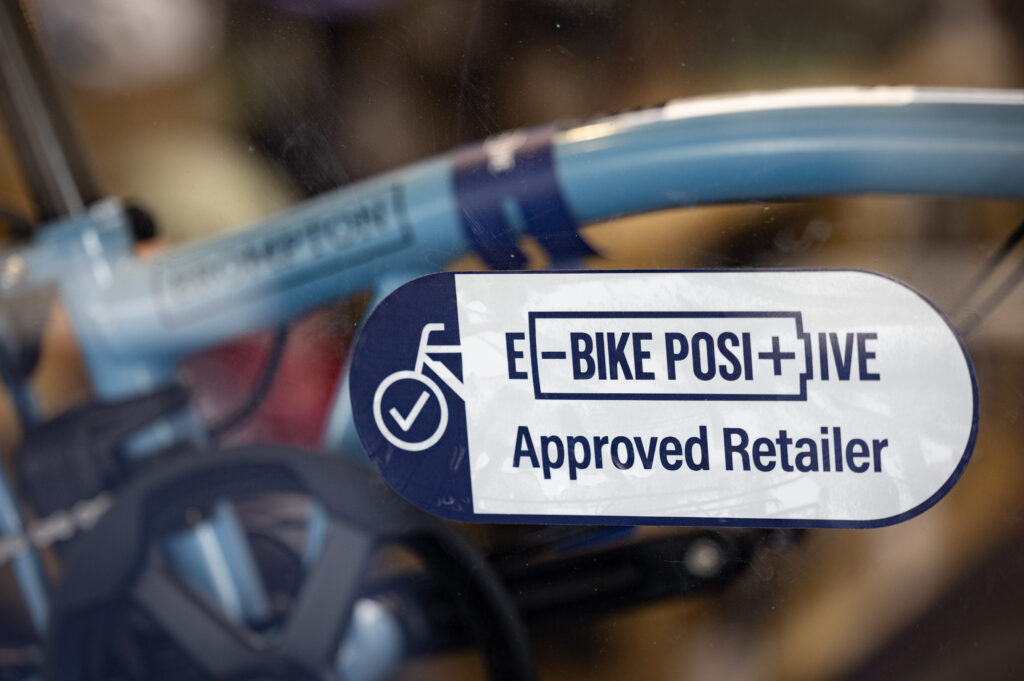
“Approved retailers must also be an authorised stockist of at least one E-Bike Positive verified brand and agree to verification, including mystery shopper visits and documentation reviews.”
The E-Bike Positive campaign will not prevent people from choosing to buy an electric motorbike if they wish, but the trade associations are calling for the Government to do more in relation to the supply of ‘modification kits’ through purchasing of dangerous, often Lithium-ion batteries.
They are also wanting to “close the ‘loophole’ that allows non-road-legal vehicles (and the conversion kits often used to create them) to be legally sold on the basis that they will be used only on private land.” They are also concerned by their use in the “gig economy delivery sector.”
The campaign’s launch is supported by dozens of manufacturers and retailers and are listed online. Halfords, Decathlon and Evans Cycles are all listed as approved retailers, whilst Brompton, Trek and Specialized are among the verified brands.
The campaign is also galvanised by a recent YouGov poll suggesting 84 percent of people cannot identify the difference between a legal e-bike – formally an electrically assisted pedal cycle (EAPC) – and an illegal motorbike. Per government standards, if the electric motor is not capped at 250 watts of continuous power and limited to an assisted speed of 15.5mph, it is treated as a motor vehicle that must be registered, insured and taxed as such.
Steve Garidis, Executive Director of the Bicycle Association, said, “reputable brands” were being, “undermined by illegal and unsafe products often sold through online marketplaces to unsuspecting consumers. That’s why, as the industry trade bodies representing reputable e-bike brands and retailers, we have developed a safety trust mark as part of the E-Bike Positive scheme, so consumers can easily identify safe and legal e-bikes and where they may be purchased.”
ACT Director Jonathan Harrison added, “When retailers and brands carry the trust mark, customers can buy with confidence, knowing the products come from independently verified brands and that the retailer is committed to recognised standards and responsible retailing.”
The safety mark has also attracted the support of City of London Police, a force which has become notorious for its clampdowns on both dangerous cycling and the ‘bikes’ they ride, but has also seen a surge in cycling’s popularity.
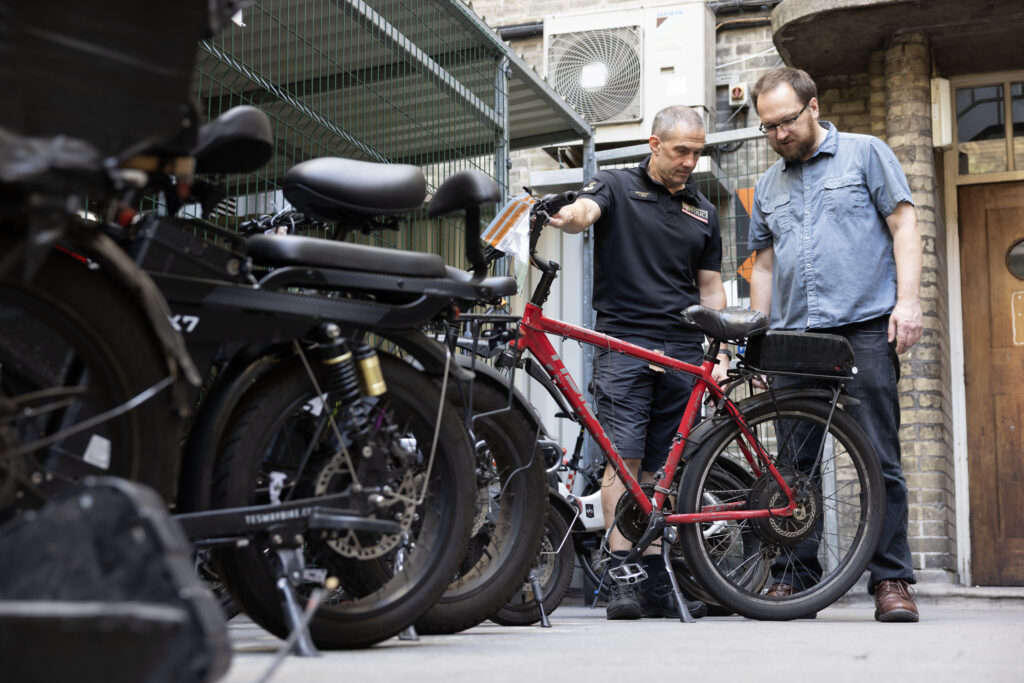
Sergeant Stuart Ford from the City of London Police’s Cycle Team said, “Anything that makes it easier for people to choose a safe, legal e-bike, and to avoid the dangerous alternatives, supports the work we are doing on the streets
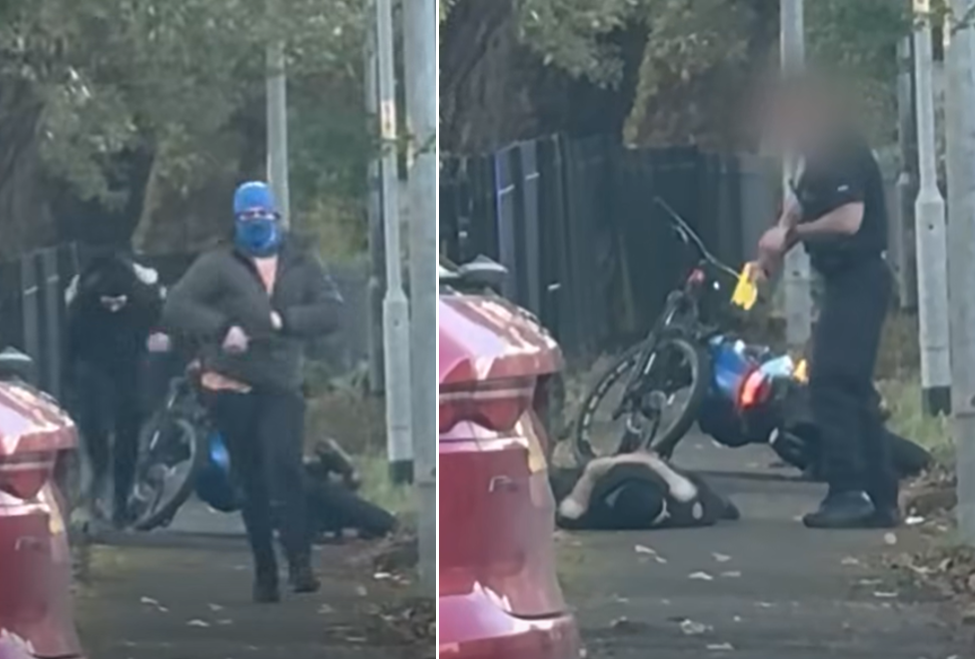
“The machines we are seizing are not bicycles. Many have been illegally modified to reach speeds that put riders, pedestrians and other road users in serious danger, and the batteries and chargers involved carry a real fire risk.”
If that is the case, it might be worth renaming their Cycle Team.



6 thoughts on “E-bikes to get ‘verified’ trust tags to identify they’re safe and legal so “customers can buy with confidence””
“If that is the case, it might be worth renaming their Cycle Team.”
They’re called the Cycle Team or Bike Squad because they’re on bikes. Unless they’re proposing to change how they get around then there wouldn’t seem to be any point in renaming them.
However, I think it would good if there was a team of fully trained police officers on Sur-rons (fully registered for road use of course) so that they don’t have any difficulty chasing after scrotes on similar machines. Trying to chase them in a van is utterly pointless.
While applauding the concept, I hope they didn’t shell out too much to the branding agency that came up with that logo – it’s not exactly rivalling the likes of the kitemark, lion mark, Fair Trade logo, etc. for recognisability.
Within a week the stickers will have been copied and shared between people / repairing electric motorbikes.
@Pub bike Thoroughly agree with that, until the scrotes know that the police have the capacity to keep up with them they will just keep on taking the piss with impunity.
They are urinating in the wind. So long as the BBC, The Telegraph, and even the Police continue deliberately to muddy the waters by calling motorbikes ebikes, the public will forever associate ebikes and their riders with stories of idiots on Sur-Rons and tar all with the same brush.
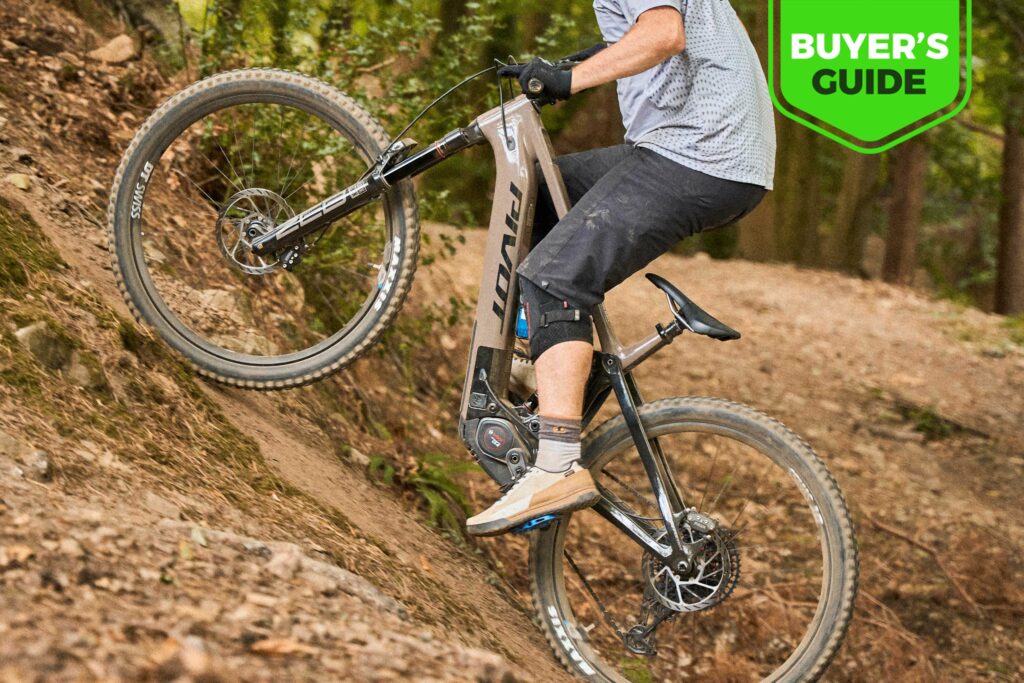
Something else that would help in terms of public understanding of the differences is for the brands making legal bikes to not start having a war between who has the most powerful motor. The 250 W “continuous” power rule seems to be circumvented in various ways so that far more powerful machines are now officially legal. This limitation needs to be better defined and controlled, because it seems to be meaningless based on the legal eMTBs that have been launched recently.