


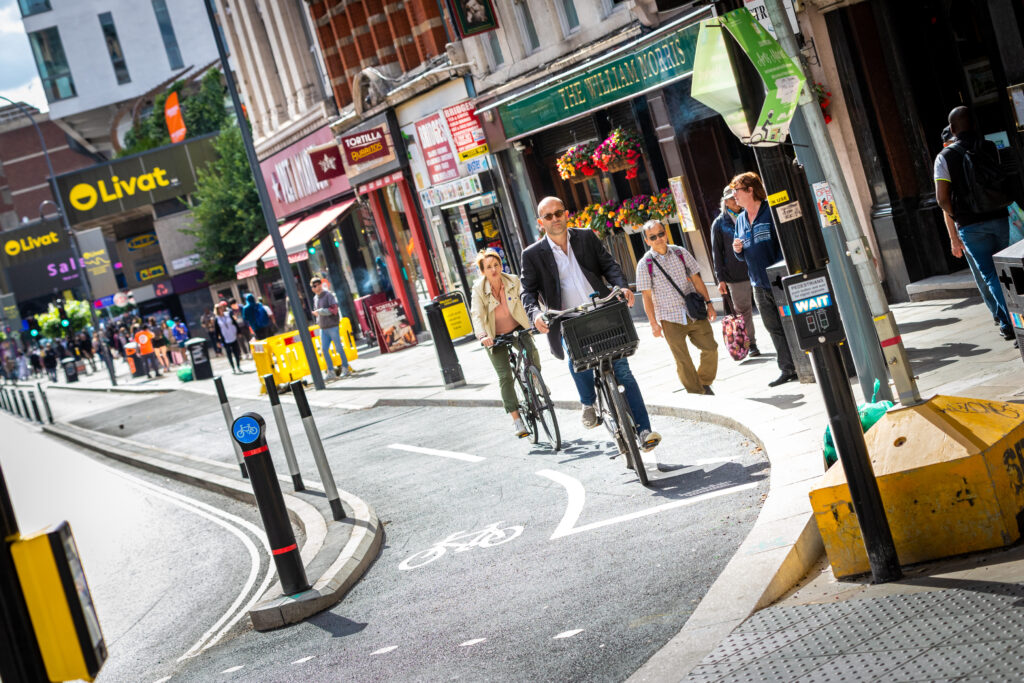

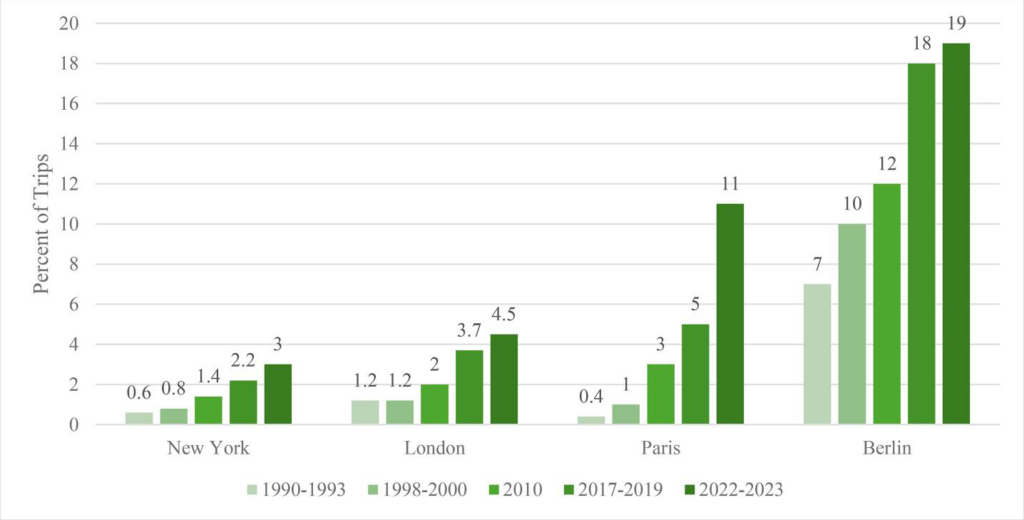
Cycling levels are rising again in four major cities, after an initial surge during the Covid-19 pandemic, a new study has shown.
Researchers from four different universities and the French Ministry of Transport examined trends in cycling’s popularity, its demographics and injury risk across London, Paris, New York and Berlin using data going back to 1990. The paper, published in the International Journal of Sustainable Transportation, found that whilst other smaller European cities experienced slight declines in daily journeys immediately after the surge of the pandemic, all four selected cities experienced sustained increases in their popularity.
That observation was also observed in the UK, where overall cycling levels decreased in 2023 compared to pandemic levels, albeit still at a higher level than in the 2010s.
> Cycling increasing in the UK but still behind pandemic levels, says government
The researchers attributed the steady rise in cycling’s popularity to the political leadership of each city, identifying that “improved cycling infrastructure and complementary car-restraint policies” were implemented by mayors of different political parties. The London Cycling Campaign are also name-checked for their advocacy and lobbying efforts. They added though that Berlin’s growth in sustainable transport had been grassroots-led and often in spite of the car-centric policies of the city government.
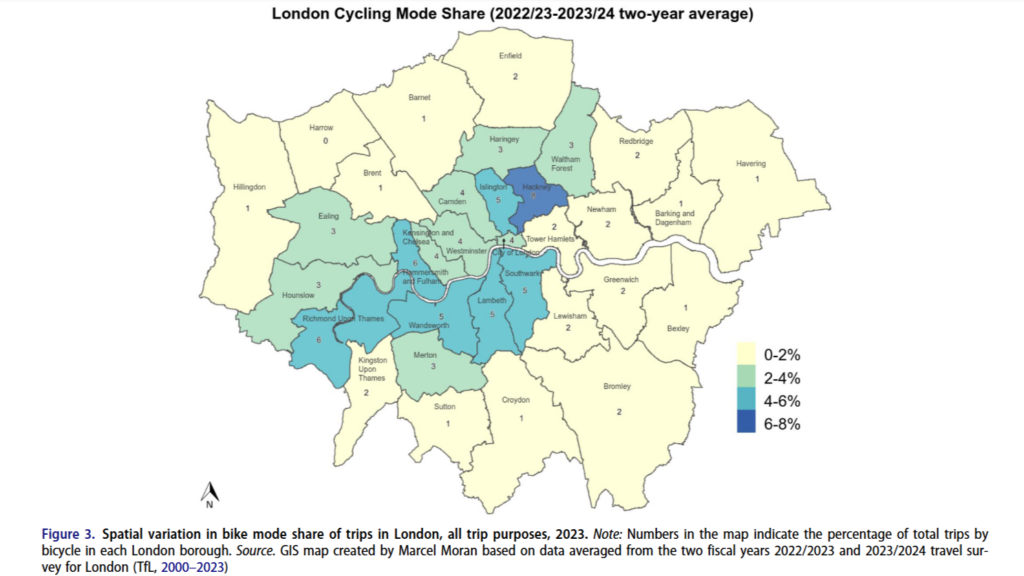
However, despite the steady increases in cycling participation, both London and New York recorded slight increases in rates of serious injury since the pandemic, whilst there also remains several spatial, income and racial inequalities in the construction of cycling infrastructure. In New York, cycle infrastructure is concentrated in more affluent, gentrified neighbourhoods, whereas other parts of the city with higher proportions of ethnic minorities were described as “mostly neglected” by transport planners. In London, cycling’s popularity was concentrated within the inner boroughs and south west of the city.
The researchers also collated Transport for London data which found that the cycling mode share for White Londoners was more than three times higher than for Black or Asian commuters. A 2023 study found affordability and access to cycle infrastructure were major obstacles for Black men cycling in London but that there were also concerns around racism and a lack of representation.
Despite the rising numbers of cyclists, the authors also warn that the progress in the major cities is vulnerable to unfavourable national transport policies, pointing to the rise in car-friendly policies in Berlin and the federal government funding cuts by the United States Department of Transportation.
But the report ends positively, identifying that “cycling has the potential to contribute significantly to environmental, social and economic sustainability.”
The continuing rise in cycling’s urban popularity also reflects growing optimism that the global cycling industry might have overcome the market over-inflation caused by the pandemic. After the Bicycle Association found that overall bike sales in Britain reached their lowest level in 50 years in 2024, capping four years of market stagnation and decline, 2025’s report found the British bicycle market returning to growth.



















2 thoughts on “Major city cycling levels continue to rise post-pandemic, new study shows”
Between 2015 and 2020, local authorities allocated 150 million euros dedicated to developping and improving cycling infrastructure in Paris intra-muros. They added an extra 150 million, reaching 250* million euros for the period running between 2021 and 2026. In spite of road closures, road and construction works and difficult navigation, the acquisition of new market shares takes time and requires money. Paris Métro remains the most efficient means of transportation in the French capital city.
*Paris annual budget for 2025 amounted 11.5 billion euros.
You really are determined to talk bollocks about Paris, aren’t you? On what criteria are you judging “the most efficient means of transportation”? If I want to go from Auteuil to La Villette then yes, the Metro will probably get me there fastest, if I want to go from outside Gare du Nord to Bastille then I can make the journey by bike in less time than it would take me to descend to the Metro platform at GdN. Unless you have some meaningful and justifiable criteria for your statement we’ll just have to chalk it up to your monomaniacal desire to state that the Paris cycling system is rubbish without any evidence, motivated one suspects (from the political tone of your posts on other subjects) more by the fact that it is a socialist project rather than any knowledge or facts.