


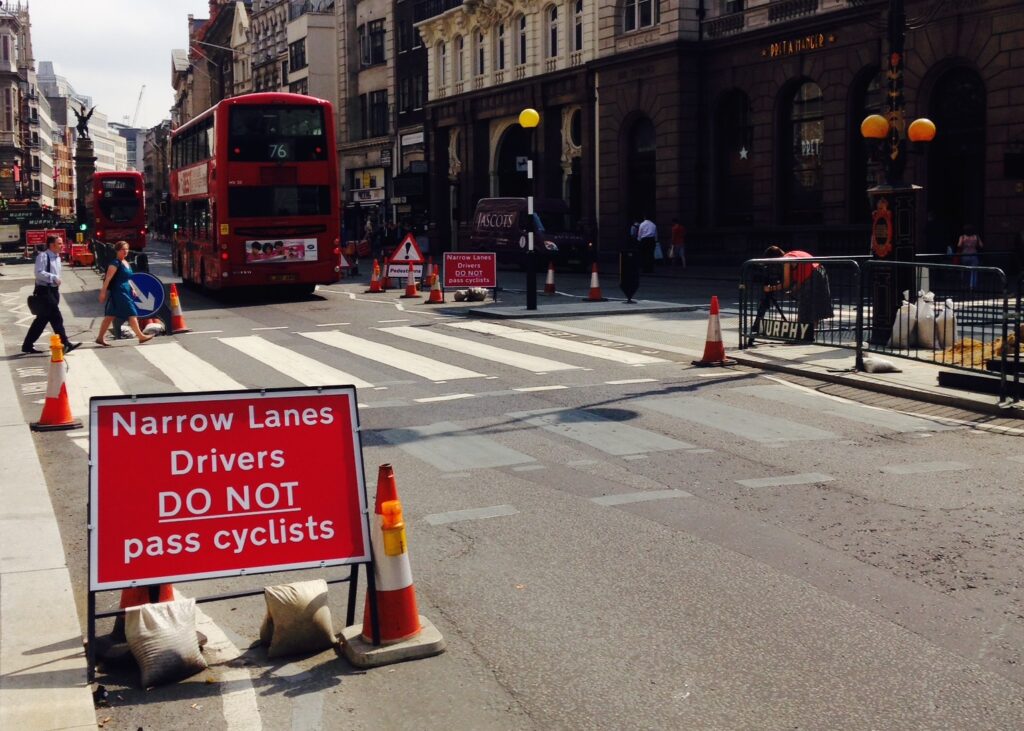

A study has found that Western Australia’s minimum passing distance law, alongside its publicity campaign, has had only a marginal impact on how drivers overtake cyclists.
The researchers from PassBox have found that legal changes deliver far smaller safety benefits than protected cycling infrastructure, saying that “reliance on legislation without robust enforcement and road design changes will likely produce only marginal gains.”
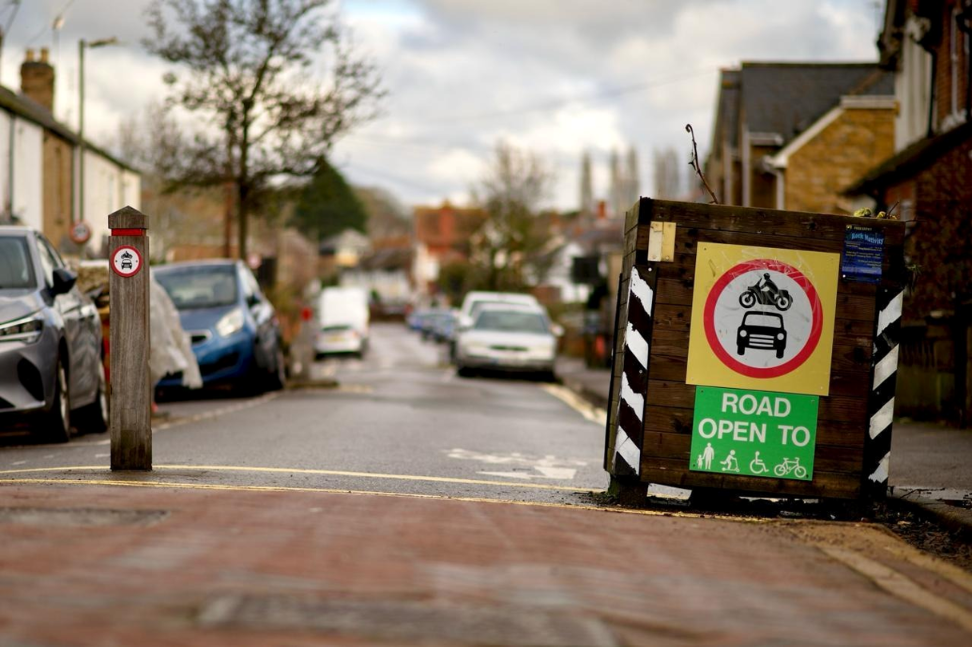
Instead, they state that infrastructure improvements, such as protected bicycle lanes, traffic calming, and road space allocation, are more crucial for lasting improvements in cyclist safety.
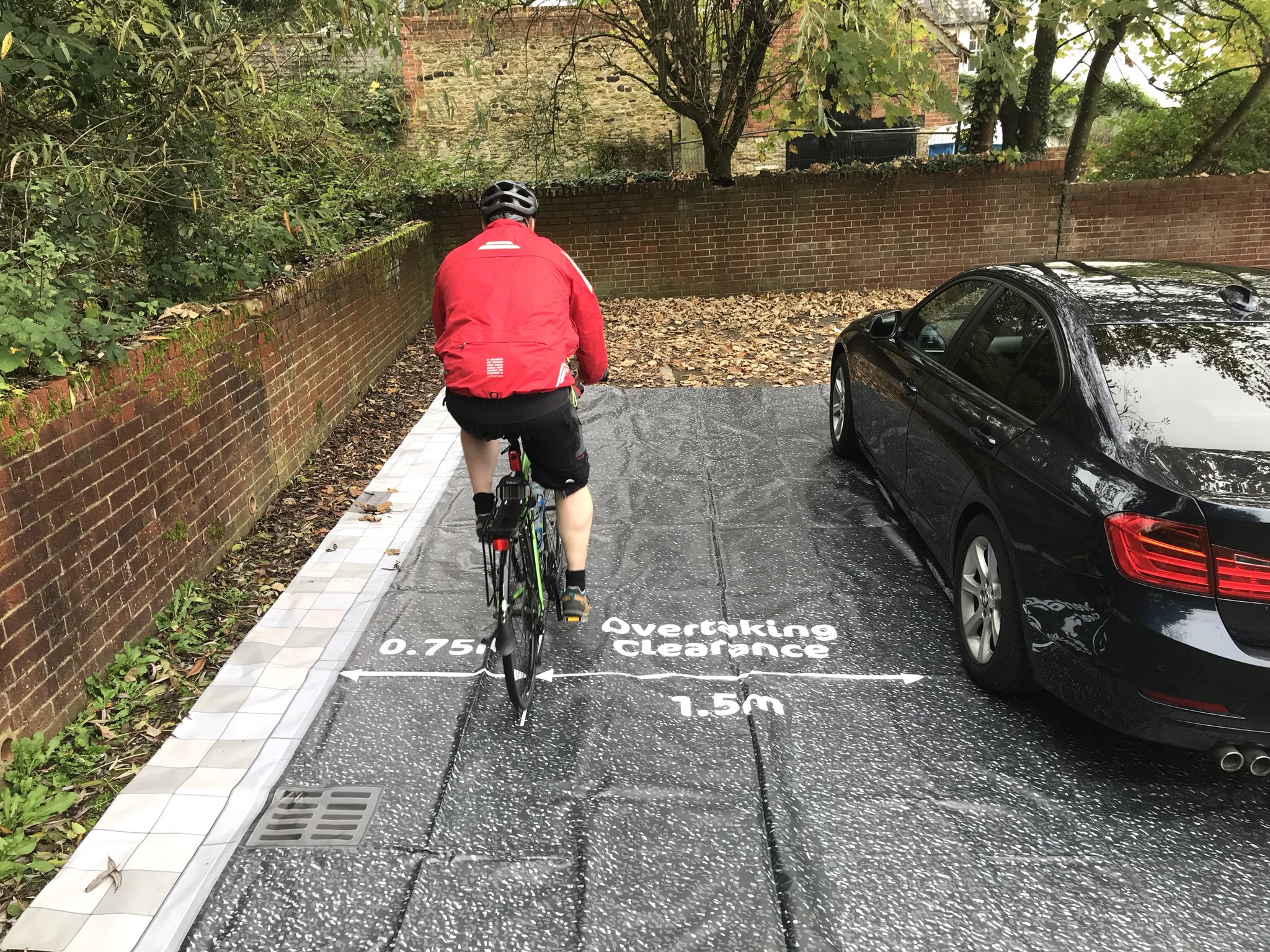
The law, which came into effect in October 2017, requires car drivers to leave at least one metre when overtaking cyclists on roads with speed limits of 60km/h or less, and 1.5 metres on roads with speed limits of 70km/h or more.
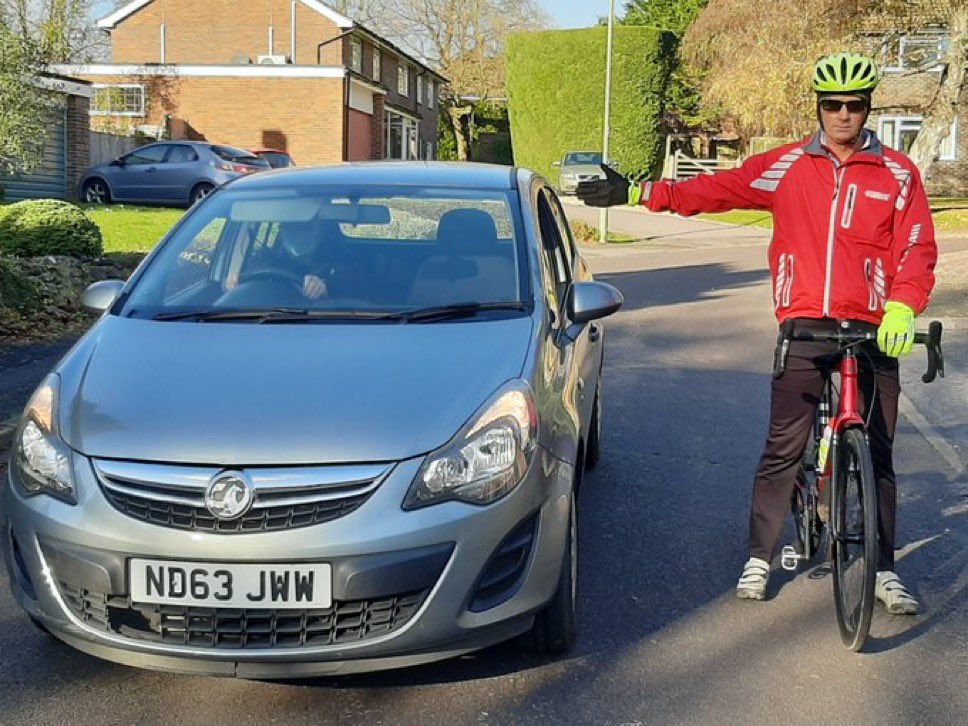
To assess the law’s success, researchers recorded over 15,000 overtaking events. Seventy volunteer cyclists used sensor-equipped bicycles to measure how close vehicles passed, both before and after the law came into force.
The results showed a small improvement on lower-speed roads. Very close passes became slightly less common, with the closest five per cent of overtakes occurring around 10 centimetres further away after the law came into force.
However, on higher-speed roads, where overtaking manoeuvres are often more dangerous, the study found no meaningful improvement in passing distance.
The study found that the safety benefit delivered by the law was tiny when compared with physical road design changes.
Protected bike lanes were associated with an increase in passing distance of around 73cm, which is about seven times greater than the passing distance law achieved.
“Durable safety for cyclists will come from designing road environments that inherently promote safety, rather than relying solely on drivers to follow a rule.
The study also found that the law was rarely enforced. Just 10 fines were issued in the 18 months after it came into force, suggesting that any change in driver behaviour was more likely driven by awareness-raising than fear of penalties.
That awareness effort pre-dated the legislation. In 2015, the Western Australian government launched a high-profile advertising campaign urging drivers to give cyclists more space.
Television adverts, filmed from inside moving cars, showed friends, family members and public figures riding bicycles ahead, with a narrator reminding viewers that the cyclist “might be a mate” and encouraging drivers to leave at least one metre when passing.








24 thoughts on “Minimum passing distance laws don’t (really) work, new study claims”
This is like saying that shoplifting laws don’t work. Because the police refuse to arrest anybody and even if they do the courts let them go.
Or maybe pointing out that where everyone is armed with projectile weapons the death rate from same tends to be rather higher?
The point about effective infra and “safe systems” is not that it stops those with ill intent, or the criminally careless, nor even fixes all issues that come from humans sometimes being hapless and then giving them a powered exoskeleton.
What it does do * is take the humans we have and make it easier for them not to make some mistakes, and make many mistakes much less likely to cause serious injury.
After that, yes, we still need the police to remove the “just won’t use the road safely” as well as “keeping the honest, honest”.
* if it’s good, the UK has shown we can always make ineffective stuff.
Sometimes I feel like we live in idiocracy.
“Man who goes around slapping people didn’t stop when politely asked”.
“It would found to be more effective to fine him every time he slapped someone vs just asking politely”.
“It was even more effective to lock him in a room alone than to fine him”.
—–
Of course its not effective when people don’t see any consequences for their bad behaviour. Of course its more effective to remove the interaction between drivers and cyclists or keep them to a minimum.
What would really kill those statistics for cyclist related injuries or deaths on our roads would just be to completely ban bikes!
We really just need to ban Tango.
As the famous saying goes
“If the penalty for a crime is a fine, then that law only exists for the lower class.”
or to put it simply:
“Penalty is just a fine” means “Legal for the rich”.
True of statutory fines but not road traffic incidents where judges are constrained by the Sentencing Council to sanction careless or dangerous drivers with fines and points.
Those points don’t make prizes rather add up to driving bans so further restrain those who care about their licence to drive. Obviously insurance providers notice points and price for risk according. So a double fine..
Ten thousand licence holders with 12 points or more says that it doesn’t work that way, not to mention the ones that continue to drive while banned.
https://www.bbc.co.uk/news/articles/ce8yq063m96o
In addition to the other comments, it may be worth noting that drivers often suck at judging rate of closure to cyclists and when to start moving out to pass. Not infrequently I have drivers pass me, and they continue to move out after they have passed me before moving back into our lane. The odd time, the actual pass is close, as they then move out to a distance that /would have/ been a safe pass, IF they’d done it a lot earlier.
I do think many drivers just suck. Their vision and fine-motor skills are not that great. Some are distracted, whether by passengers, by devices, and even by their thoughts (happens to me odd time). Some are tired.
Really, ultimately, the only solution is separation of cyclists and motorists – other than on the slowest roads. With high-quality (inc. retaining priority) and *WELL-MAINTAINED* (inc. regularly cleaned) infrastructure for cyclists.
As a data-point, motorists in the Netherlands suck _at least_ as badly as motorists everywhere else – indeed, dutch motorists IME are /worse/ than places like Ireland. Not even in NL does “educate the drivers” work. It’s only cause of the infrastructure that NL is so nice to cycle in.
Dutch motorists (on holiday) are the worst in Switzerland.
Absolutely diabolical close passes – especially when towing caravans.
I see this so often! I’m not sure if they just misjudged the overtake, or recognised as they drew alongside that they were too close, so started to move further over, effectively after the pass has occurred. They appear to mean well, just without the ability to put that intention into practice.
The DVSA license test doesn’t include any specific test of space and time so it’s inevitable that licence holders are as poor as humans generally.
The sooner humans are replaced by automation the safer we will all become.
Until then, I’ve had great success with hazard avoidance by providing the spatially challenged with a bicycle width cue. 1.5m of white 15mm plastic pipe mounted perpendicular to the top tube on the offside. Because it’s unusual and noticeable being in line of sight, it’s effective in persuading drivers to pass well clear, often in the other lane, as they should do to make a safe overtake.
There’s a strong metropolitan bias to cycle infrastructure so avoidance is likely to remain the available safety choice.
I unintentionally ran an experiment on safe passing yesterday. While riding home, I found a 6 foot long metal bar that must have fallen off a trade’s ute. Looked pretty useful, so I picked it up and kept riding with it leaning across my handlebars. I soon realised that drivers were slowing down behind me and crossing to the next lane to overtake (as required by law but never actually happens). They could obviously see the bar and presumably thought I was carrying it as a weapon to hit or scratch their cars. It now seems obvious that leaving space to me is completely possible and drivers were choosing to close passing all these years. A plastic rod painted silver might be safer to carry and do the same trick.
https://dumbrunner.com/news-blog/2024/10/11/dumb-runner-illustrated-115-hammer
There is a frequent poster on here (can’t remember the name cos I am old) who has done this for a while. He has a plastic pipe on his rack fitted so that it sticks out 1.5m.
I would say if he sees this thread, he’d post his previous photo but there is no option to upload a picture anymore …
there is no option to upload a picture anymore …
Yes, that’s what will render the site unusable for me
Every cloud…
I would suggest it is painted in yellow/black/reflective stripes to increase visibilty.
White plastic 15mm pipe works for me, over several years, perpendicular to the top tube on the offside. Obviously that’s little weight or aerodynamic resistance and about £2 in parts.
Drivers don’t know what the pipe is so must assume worst case that it can harm their vehicle. I couldn’t possibly comment.
From a Victoria perspective, same law, but there was near zero education, bugger all compliance by drivers, and no enforcement by police. I have been _hit_ by a car passing too closely and my local police refused to take a report because ‘we can’t take a report if you’re not injured or $500+ damage’ … and ‘The 1m passing only applies if we witness it, we can’t take your word for it’ — EVEN WHEN I WAS HIT BY THE PASSING CAR
Alas this is not far off how the UK has “implemented” things like the Highway Code tweaks.
Of course, those didn’t bring in new law. Plus the Highway Code is just a presentation of good advice, rules and *some* laws.
Without re-targetting of them and/or more police expecting to improve road behaviour this way is very doubtful.
It’s even more so because the commitment to mass motoring. I believe that puts a pretty low ceiling on how much better we expect people to drive. Because lots of problems arise from humans “bending” rules, taking shortcuts, not caring enough about others and sometimes doing bizarre things…
You’re into the evidence gathering [expensive camera, uncertain police response, uncertain CPS action, uncertain Court response, uncertain offender response, uncertain medical outcome] or avoidance decision.
Having done both, I’d advise that avoidance is best as it’s probably cheaper and doesn’t involve the medical risks. Please see my other posts in this thread for details.
If cost is not a concern, radar rear lights are good, and the latest indicate braking automatically. Dangerous approachers get bright prompts that another road user is present. You get information in time to react instead of a bad surprise.
Arise Australia Fair 🇦🇺
the Highway Code is just a presentation of good advice, rules and *some* laws
And the ‘laws’ are routinely ignored by the idle and remarkably anti-cyclist police who regard anybody reporting offences, with that annoying indisputable video evidence that they really hate, as troublemakers who waste police time that could be better spent bewailing ‘lack of officers and resources’
Presently the Police Commissioner is responsible for setting objectives and holding the Police Chief to account for achievement of said objectives.
I know you don’t believe that works in your Police service region, which requires escalation to your MP and responsible ministers. Elsewhere I’ve seen the PC and service members taking their road traffic policing responsibility seriously and prosecutions achieved.
The current administration is so committed to democracy that they are proposing to reduce Police service organisations and make them report directly to the Home Office, instead.
Sadly, their appetite for change doesn’t include funding road traffic policing specialists [Traffic Division] more, so Chief Constables are still free to focus on other harms..
Presently the Police Commissioner is responsible for setting objectives and holding the Police Chief to account for achievement of said objectives
Where’s this? Never Never Land? Doesn’t seem to be the UK- ‘Police Chief’? Here the Police and Crime Commissioners have rightly been binned and are now on a 2 year paid holiday. This makes them even more useless than they always have been, if that’s possible, and they could all have been cheaply and accurately impersonated by an answering machine which repeats incessantly ‘the police have decided this so it must be correct’.
You get information in time to react instead of a bad surprise
How would your techno-radar have helped here?