


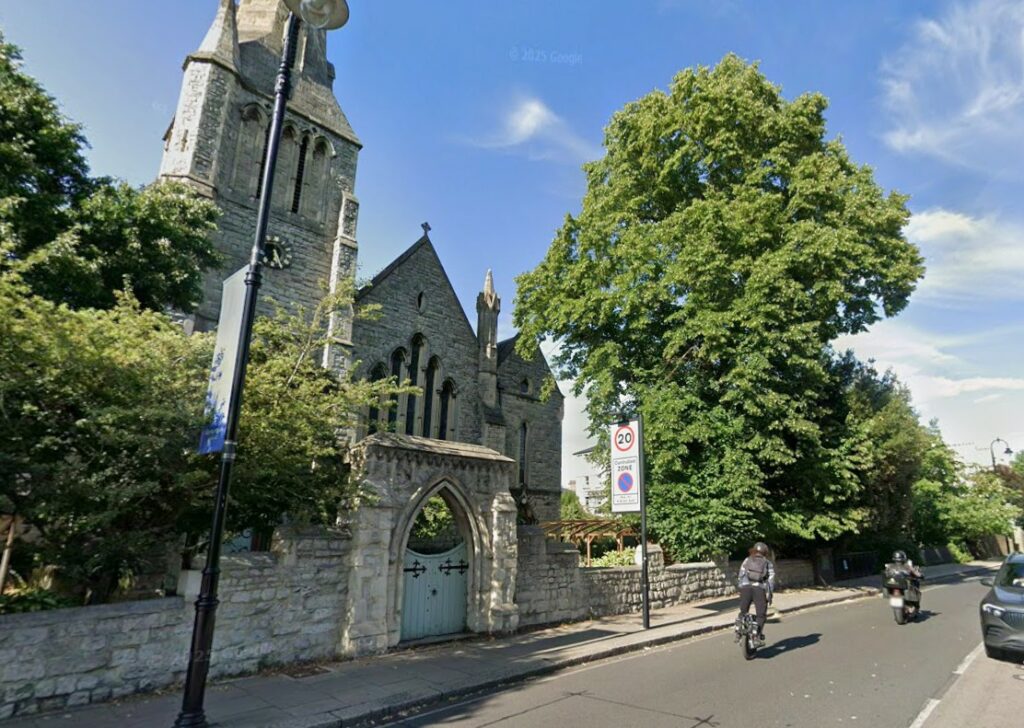

On the seventh day, did God create cycling infrastructure? That may well be the subject of upcoming sermons across north London, where plans to build a new “safe, easy, and continuous” bike lane have been criticised by one disgruntled local vicar, who says the proposed scheme will block access for parishioners and even prevent hearses from pulling up outside the church.
According to the Rev. William Gulliford, the vicar at St Mark’s, an Anglican church located in Primrose Hill, just outside Regent’s Park, Camden Council’s bid to install a new two-way cycle lane at the front of the church has also been carried out in a “slightly underhanded way”, despite the local authority’s plans to hold a full consultation on the project this year.
The proposed cycle lane outside St Mark’s forms part of the local authority’s existing Cross-Camden-Cycleway scheme, which aims to create a “safe, easy and continuous way to cycle in either direction between Islington in the east at York Way and Westminster in the west at Prince Albert Road at Primrose Hill”.
“There are already lots of high-quality and safe cycle routes for people wanting to cycle roughly in a north/south direction in this area of the borough, but we know that getting across Camden east/west in either direction isn’t as easy,” Camden Council said in a statement announcing the plans last year.
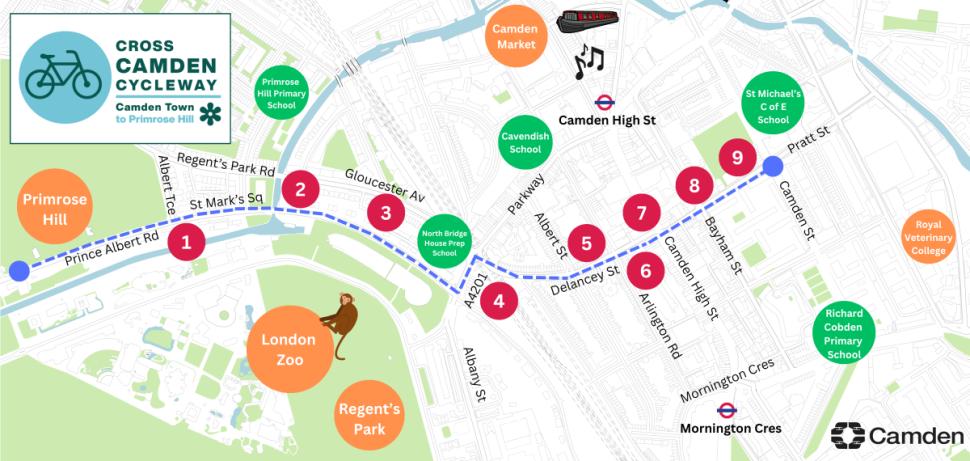
The final section of the Cross-Camden-Cycleway will link Camden Town and Primrose Hill, and will also potentially lead to the installation of better crossing points and wider pavements, as well as additional trees and plants to, the council says, “create healthier, safer, more attractive and inclusive streets for everyone”.
At St Mark’s Square, where the church of the same name was established in 1851 at the top of Regent’s Park, the council aims to create a “safer crossing and healthier environment for people walking, wheeling, and cycling”.
The local authority also says it will explore ways to “reduce traffic using the area as a cut through, plus improving the look and feel of the area with changes such as widening pavements, adding green spaces, and adding places to sit and rest”.
> Regent’s Park to get new pedestrian crossings as part of crackdown on ‘dangerous’ cyclists
However, those proposed changes have come under fire from Rev. Gulliford, who claims the prospect of people on bikes being protected from traffic outside his church could have a detrimental effect on funerals.
“It was just a complete surprise,” vicar told the Times. “How are people going to get to church? How is everyone going to get out? And how will a hearse pull up outside the church and then be able to take the coffin out?”
While insisting that he was not “objecting to changes”, Gulliford also criticised what he claimed were the council’s “very unclear” proposals, and their potential impact on accessibility.
“It’s very difficult to see what they’re actually proposing on the website. The fact that nobody consulted us about it was just a bit tiring. About 900 people have also objected,” he said. “It was questionable how people are going to continue to access the church, and my issue was why push this through at a time when nobody can really object? It felt surreptitious.”
Last year, Camden Council held an online survey designed to gauge local opinion on the plans, which attracted over 600 comments. This feedback will be used to “design a set of ideas for making it easier, safer, and more enjoyable and accessible for people to travel on this area”, the details of which, once finalised, will be unveiled later this year ahead of a full public consultation.
Nevertheless, while once again clarifying that he wants to see “fewer cars in London and more cyclists”, the Anglican clergyman doubled down on his assertion that the cycle lanes plans have been introduced in a clandestine manner (a suspicious stance that could, perhaps, be a hangover from the Church of England’s battle against the ‘secretive’ Tractarian, Catholic-leaning Oxford Movement in the 1850s, when St Mark’s was first founded. Or maybe not).
“I just don’t like when things are done in what feels like a slightly underhand way,” Gulliford continued. “I’m sure it was thoughtless. I don’t want to cast aspersions on anybody. All I’m trying to do is just make sure people can get to church.”
Following this criticism, councillor Adam Harrison, cabinet member for planning and a sustainable Camden, told the Times: “I have shared with local residents who have written to me that we will not close St Mark’s Square.”
Meanwhile, a spokesperson for Camden Council said: “We will continue to listen to residents, businesses, community groups and faith organisations as we consider next steps, with no decisions being taken until all engagement feedback has been fully assessed.”
Of course, this isn’t the first time that a cycling-friendly secular local authority has come into conflict with its ecclesiastical counterpart.
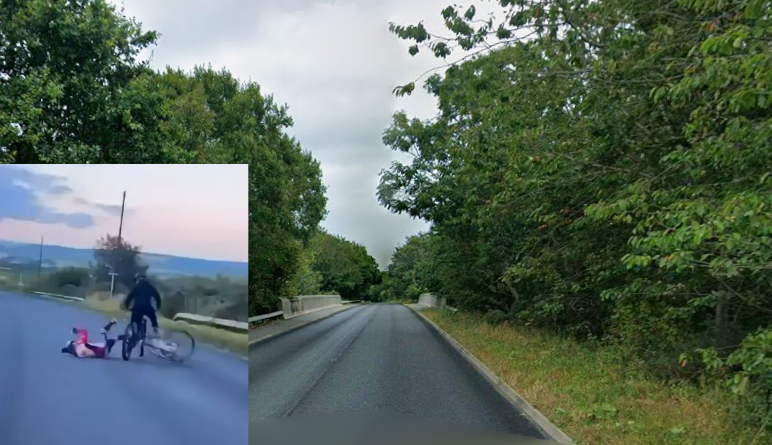
Last year, road.cc reported that a vicar of a church in Greater Manchester claimed that a cycle lane is causing his congregation numbers to plummet because worshippers “have been getting lost” due to the infrastructure.

Reverend David Murray, the vicar of St Margaret’s Church in Altrincham, had previously complained that the 170-year-old institution was “under threat” from a cycle lane and that its “bells have been ringing out since the mid-1800s… [but] now we face extinction simply because of a crazy traffic system”.
A year later, after the “awkward” bike lane was introduced on Gorsey Lane, the vicar claimed it had left the “completely isolated” and its worshippers “lost” (surprisingly for a clergyman, he wasn’t speaking metaphorically).
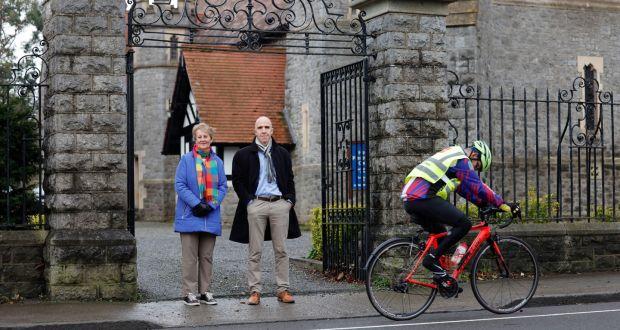
And back in 2022, a Presbyterian church in Dublin also criticised plans to segregate an existing cycle lane from traffic, claiming it would prevent worshippers from continuing to park – illegally – outside the church.












32 thoughts on ““How will we be able to take the coffin out?” Vicar slams “underhanded” cycle lane plans that could ‘block access’ to church for hearses”
“It was just a complete
“It was just a complete surprise,” vicar told the Times”
Ah, it must have been divine intervention!
One of those very specific
One of those very specific revelations *, where god sends a vision about objecting to eg.a particular TRO in North London, or a specific planning application…
Just because god is eternal and omnipotent doesn’t mean god can’t take a keen interest in local neighbourhood planning! In fact it may presuppose it!
* Which TBF god is historically very well known for…
I imagine God is very much
I imagine God is very much against the current planning system generally. After all, would you get a world built in seven days with all the red tape these days?
Doesn’t follow – according to
Doesn’t follow – according to some accounts god had their fun before creating those who could object to new development, but since they then created both planners and rules apparently they enjoy watching others struggle too…
Alternatively if “god created order or of chaos” perhaps that speaks to the existence of a planning process before creation?
mdavidford wrote:
I don’t remember God doing any consultation, he just built it before anyone could object!
Edited to add:-
Since a lot of it doesn’t meet planning regulations he should be made to take it down and build it again properly.
“It was just a complete
“It was just a complete surprise,” vicar told the Times. “How are people going to get to church? How is everyone going to get out? And how will a hearse pull up outside the church and then be able to take the coffin out?”
While insisting that he was not “objecting to changes”
The fact that nobody consulted us about it was just a bit tiring.
“It was questionable how people are going to continue to access the church, and my issue was why push this through at a time when nobody can really object? It felt surreptitious.”
“…..he wants to see “fewer cars in London and more cyclists”, the Anglican clergyman doubled down on his assertion that the cycle lanes plans have been introduced in a clandestine manner…”
“I just don’t like when things are done in what feels like a slightly underhand way,”
It’s little things like this hypocrisy and cant that make me thank god that I’m not religious. That and watching ‘The Magdalene Sisters’.
They’re right next to the
They’re right next to the canal!
Or just use the new bike lane
Or just use the new bike lane.
Or as they say in Paris,
Or as they say in Paris, https://fr.euronews.com/green/2022/11/01/la-corbicyclette-le-mariage-du-corbillard-et-du-velo
To be clear, detailed plans
To be clear, detailed plans have not yet been released as they are still being drawn up following the first round of consultation, and when they are released (supposedly later this year), there will be another consultation?
So not exactly the secrecy and lack of consultation the good vicar is claiming…
…the prospect of people on
…the prospect of people on bikes being protected from traffic outside his church could have a detrimental effect on funerals
Yes. There might be fewer of them.
Sigh. We weren’t consulted on this until you consulted us on this.
If you want to be consulted on things, then get involved:
– don’t just say you weren’t told when you’re not looking in the places these things are published.
Also, this is a consultation. Don’t just object*: say why you think it’s not right. Say how you think it could be done better. Be constructive. You might not get exactly what you want, but you might find a better compromise.
* if 9 people or 900 people object, it shouldn’t make a difference. It’s a consultation, not a referendum. The consultation needs to find out what the issues are, not simply attract antis. The decision will [or should] be made on the weight of the argument, not the weight of the mailbag.
We weren’t consulted – here’s
We weren’t consulted – here’s the sign right outside the church!
Has he not noticed the
Has he not noticed the footpath blocking the entrance?
I cycled to church yesterday. The cycle paths are excellent in Eddington, Cambridge. This vicar could come to visit.
He should treat this
He should treat this positively instead of grumbling. This route will enable cyclists to travel directly to his church, so why not install a few bike stands outside the church entrance? This could attract younger people, especially students as well as those struggling with the cost of living, who would find this especially useful. Our church now has cycle parking and so do others. The rather unusual one pictured below is in the grounds of Holy Trinity Church, Stratford upon Avon, where Shakespere is buried.
60somethingcyclist wrote:
A nice “three racks in one facility” – but the design is missing a (cross?)-bard on each leg…
‘Tis not so deep as a Tern
‘Tis not so deep as a Tern nor so wide as a Babboe but ’tis enough, ’twill serve.
chrisonabike wrote:
As well as the missing tapping-bar(d), I’m not convinced that the racks are securely fixed in the ground. They might be relying on people not coveting their neighbour’s e-bikes.
St Margaret’s, Altrincham
St Margaret’s, Altrincham remains open, in case anyone is concerned about its fate.
(No subject)
Good to hear.
Her might also care to
He might also care to remember that many of his fellow local clerics are probably cyclists. The Ministry isn’t a job which pays well, so many of them cycle around their areas in order to save money.
Drive across the foot and
Drive across the foot and cyclepaths with the coffin – dead easy.
“How are people going to get
“How are people going to get to church?” A friggin’ vicar of all people should know the simple answer to that question: “God will find a way!”
I get my Christmas tree at St
I get my Christmas tree at St Mark’s, using a bicycle wagon. They also have a little outdoor cafe that’s nice to stop at when you’re cycling. Shame to hear about their negative attitude here.
I’m pretty sure us cyclists
I’m pretty sure us cyclists wouldn’t mind the hearse parking outside the church for a funeral. We’re a respectful bunch on the whole and I don’t know about anyone else but I stop and pay my respects to the departed every time I ride past a funeral cortage.
The nearby Haverstock Hill
The nearby Haverstock Hill cycle lane has a church on it, and as you say, none of us have a problem when a hearse is stopped outside.
“How will we be able to take
“How will we be able to take the coffin out?” Vicar slams “underhanded” cycle lane plans that could ‘block access’ to church for hearses
Bizarre that double yellow lines don’t seem to already stopped coffins.
Only if dashes on the kerb
Only if dashes on the kerb stone or other sign, otherwise brief loading and unloading is permissible.
In any case, this isn’t a
In any case, this isn’t a double yellow anyway. It’s a single white ‘parking restrictions apply’ line – specifically, it’s no waiting Mon-Fri 08:30-18:00 (which does permit loading during the restricted times).
They should have used the
They should have used the black bands for “no wake-ing” (and perhaps a “dead slow” speed sign).
Presumably there’s more “dropping off” going on than “picking up”?
Is the vicar’s concern a
Is the vicar’s concern a symptom of concern that funeral service revenues will plummet?
Cycle lane = less cyclist deaths in the parish.
I believe that the manager of the local Iceland store is concerned about a potential fall in sales of frozen vol-au-vents and mini samosas etc owing to reduced numbers of dead cyclist wakes.
Also this is one of the key
Also this is one of the key routes for tourists to get to one of London’s main destinations – the Zoo. At the moment, the provision is terrible, with crowds coralled behind barriers. The proposals should make this area much nicer for tourists, local pedestrians and cyclists accessing Regent’s Park (whilst walking over the foot bridge).
It may also make driving easier as they will get two way down Albert Terrace.
And the reverend doesn’t have
And the reverend doesn’t have any problems with 5 lanes of cars in the “square”, or having a monster bullbar truck parked outside the church for the last 10 years (the photo is of the latest iteration).