


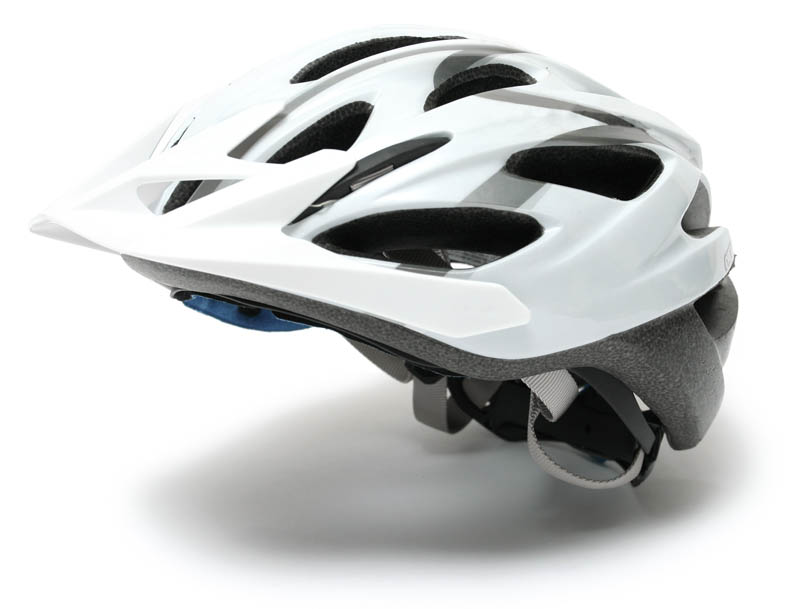

The chairmain of a leading brain injury charity has called for all cyclists to wear helmets, and says that the Welsh Assembly should debate a change in the law.
Andrew Harding,chairman of Headway, wrote a piece on Wales Online, weighing into the helmet debate. He suggested that costs to the NHS could be lowered if all cyclists don a lid.
He wrote: "As a lawyer specialising in head and brain injuries, I represent many clients who have suffered serious brain or spinal injuries, some of whom have been injured whilst cycling, and see the devastating effects it can have on their lives.
"Arguments are also fought over whether wearing a cycle helmet should be a matter of personal choice – an opinion voiced regularly by Mayor of London and avid cyclist, Boris Johnson. Yet what is usually disregarded in this argument is the impact that a brain injury could have on the victim’s family and friends as well as the cost to us all in NHS treatment."
Mr Harding also notes that increasingly cyclists who do not wear helmets might receive lower compensation payments and different outcomes in court cases than those who do have one on at the time of an accident.
He wrote: "In legal terms, all cyclists should note that if they are involved in an accident, contributory negligence (meaning that an accident victim could be partly at fault for their injury) is increasingly being taken into consideration by insurance firms and judges if a cyclist was riding without a helmet when the accident occurred."
Mr Harding has asked that the Welsh Assembly consider legislation in favour of cycle helmets.
He cites Northern Ireland and Jersey, two places where cycle helmet legislation has been considered.
As we reported at the time, in Jersey, laws to make helmets compulsory either for all cyclists in public places or just for under-18s were proposed to the island’s parliament, the States, by Deputy Andrew Green, a long-time campaigner for compulsion after his son suffered a brain injury after coming off his bike in 1988 when he was aged nine.
The motion to make it compulsory for all cyclists was defeated by 25 votes to 24, while that in favour of applying it to under-18s was carried by 32 votes to 16.
But in Northern Ireland, a bill to make helmets compulsory ran out of time, amid widespread lack of interest for the move.
Roger Geffen, CTC Campaigns Director told Road.cc: “Neither the DUP nor Sinn Féin – the two biggest parties in the Assembly – were interested in the Bill. The DUP felt that this would be legislation intruding into areas of life where it doesn’t need to go especially as they accepted that cycling is not a particularly dangerous activity. They also took on board our evidence that compulsory helmet use would seriously undermine cycle sales and the cycle tourist industry.
But Mr Harding thinks there might be more success in Wales for the proposal. He wrote: "I have recently spoken to one Assembly Member who thought that this was already law in any event, such was the obvious sense and necessity of the proposal."



86 thoughts on “Helmet debate: Chairman of brain injury charity wants Welsh Assembly to debate compulsory wearing”
“As a lawyer specialising in
“As a lawyer specialising in head and brain injuries, I represent many clients who have suffered serious brain or spinal injuries, some of whom have been injured whilst cycling.”
If only *some* of his clients suffered their injuries while cycling, I think Mr Harding should concentrate his efforts on making helmet wearing compulsory, for everyone, all the time.
Predictably trotting out the
Predictably trotting out the same old brainless claptrap in the face of science and common sense.
So, another highly qualified, knowledgeable, experienced individual pops his helmeted head up to be shot at by those self-centred fools who value vanity over safety. Have fun.
ermine wrote:Predictably
Wow. “Shot at… Self-centred fools… Vanity over safety”
😕
ermine wrote:in the face of
Other than an unrepresentative impact test, good luck in finding any.
Yeah, we all know how reliable that is…
stabiliser wrote:”As a lawyer
I would also be interestd to know what types of spinal injury Mr Harding imagines would be mitigated by a helmet.
I undertsnad that the family of last week’s London victim don’t want their son to be exploited by vested interest groups. hame they can’t honour the family’s wishes.
Mr Harding refers to “the
Mr Harding refers to “the obvious sense and necessity of the proposal.”
Yes, and it’s also obvious the the earth is flat. Obvious is not always correct.
There are lots of complex issues here. I always wear a helmet and encourage others to do so but it’s not at all clear that compulsion would actually be a good thing.
Perhaps we could have a
Perhaps we could have a point-counterpoint thing with someone from an obesity charity 😕 🙂
dave_atkinson wrote:Perhaps
LoL…some might say i’m a charity case and the missus always has a go about my weight (btw cycling keeps you fit !!)So as a member of the above I say: wear a helmet 🙂
I’m with Dave. The killers of
I’m with Dave. The killers of tens of thousands in this country are lifestyle choices. Lack of exercise, smoking, over eating, over drinking, stress, cancers.
Cycling en masse helps hack down those type of deaths. We should be encouraging, not discouraging that.
Oh, and I wear a helmet by the way!
*dives behind sofa*
Guys and gals, come on lets
Guys and gals, come on lets be serious here.
its not a matter for joking about and clearly some people are very passionate about this problem that we as cyclists face.
having spent some considerable time weighing up allthe cases and the evidence, and many hours poring over volumes of statistics and points of view I have come up with my own, and may i add the best, solution to the problem.
I conclude that as all accidents/incidents involving cyclists involve a bicycle, yet only some may or may not involve a helmet, it is CLEAR that its the bikes fault.
therefore I urge you to give up on this sport and go back to sitting at home in the comfort and safety of your armchairs – as NO-ONE has ever had an accident/incident with a car or lorry whilst sitting comfortably at home – and research has shown that not wearing a helmet whilst on the comfy chair is JUST AS SAFE as wearing one.
I for one will be recycling all my lycra this afternoon and cutting my bike into pieces so no-one will ever be at risk again from it!
Martin Porter has written a
Martin Porter has written a very good article on this from a legal point of view…
http://www.cyclistsdefencefund.org.uk/cycle-helmets-a-duty-to-wear
Have to say that I wouldn’t
Have to say that I wouldn’t be astonished if courts started to take a lack of a helmet into account as mitigating factors should damages be sought for head injuries in collisions. It makes sense, if you could have reasonably done something to prevent some or all of your injuries and haven’t then you’re partly to blame for them.
I’m not saying helmet’s should be compulsory, just that if you don’t wear one and suffer a head injury which a helmet would have prevented (or where a helmet may have lessened the damage) surely you have to take some responsibility for it?
drheaton wrote:Have to say
This is (pardon the pun) a no-brainer. Claimants in civil damages claims are always required to demonstrate that they have taken reasonable measures to mitigate the damage sustained and claimed. A court that fails to take such matters into account would be negligent and its decision would surely be subject to appeal.
ermine wrote:drheaton
This is (pardon the pun) a no-brainer. Claimants in civil damages claims are always required to demonstrate that they have taken reasonable measures to mitigate the damage sustained and claimed. A court that fails to take such matters into account would be negligent and its decision would surely be subject to appeal.— drheaton
In that case, is there not a financial benefit to wearing a helment then, even if you don’t believe it will help you?
If you suffer serious injury whilst not wearing a helmet your family may have to foot the bill for your care because you didn’t take all reasonable measures to protect yourself. If you wear a helmet (even if it doesn’t help) your loved ones may receive enough compensation to look after you or be provided for if you are no longer capable.
Seems to be yet another sensible reason to wear a helmet. Why anyone wouldn’t whilst cycling on the road is beyond me but I guess that’s personal choice.
ermine wrote:drheaton
This is (pardon the pun) a no-brainer. Claimants in civil damages claims are always required to demonstrate that they have taken reasonable measures to mitigate the damage sustained and claimed. A court that fails to take such matters into account would be negligent and its decision would surely be subject to appeal.— drheaton
If I’m walking past a building site and somebody drops a scaffold pole on my head, causing me a brain injury, am i then required to explain why i wasn’t wearing head protection in order to receive full damages?
the only differences between that scenario and one where a motorist hits a cyclist and is entirely at fault, so far as i can see, are:
1) people (judges) think cycling is inherently dangerous
2) cycling helmets are commonly available and walking helmets aren’t.
The truth is that cycling isn’t really any more dangerous than being a pedestrian, or a bunch of other things where wearing a helmet wouldn’t even be considered. Also, where does that argument stop? You can already buy body armour for downhilling – if i suffer a back injury in an accident that wasn’t my fauly, am i negligent for not having bought armour that might have lessened the injuries? or knee and shin pads? if i am wearing a helmet and still suffer a brain injury, am i negligent because i wasn’t wearing a full face helmet? or an MX helmet? where does my burden of responsibility end?
dave_atkinson wrote:ermine
This is (pardon the pun) a no-brainer. Claimants in civil damages claims are always required to demonstrate that they have taken reasonable measures to mitigate the damage sustained and claimed. A court that fails to take such matters into account would be negligent and its decision would surely be subject to appeal.— ermine
If I’m walking past a building site and somebody drops a scaffold pole on my head, causing me a brain injury, am i then required to explain why i wasn’t wearing head protection in order to receive full damages?
the only differences between that scenario and one where a motorist hits a cyclist and is entirely at fault, so far as i can see, are:
1) people (judges) think cycling is inherently dangerous
2) cycling helmets are commonly available and walking helmets aren’t.
The truth is that cycling isn’t really any more dangerous than being a pedestrian, or a bunch of other things where wearing a helmet wouldn’t even be considered. Also, where does that argument stop? You can already buy body armour for downhilling – if i suffer a back injury in an accident that wasn’t my fauly, am i negligent for not having bought armour that might have lessened the injuries? or knee and shin pads? if i am wearing a helmet and still suffer a brain injury, am i negligent because i wasn’t wearing a full face helmet? or an MX helmet? where does my burden of responsibility end?— drheaton
I don’t have any statistics (and let’s face it, stats will tell you anything you like) but I’d bet that accidents per journey made by bike are considerably higher than accidents per journey made on foot.
Likewise the rate of head injuries per cycling accident is probably considerably higher than head injuries per pedestrian accident (assuming you include trips and falls, and other self caused accidents as you would include coming off the bike unaided or crashing into a wall etc…)
Finally, I would expect the seriousness of head injuries sustained in cycling accidents to be more serious, on average, than head injuries received in pedestrian accidents.
Would you say all of those are sensible guesses? Obviously without looking into the actual statistics I couldn’t be certain but common sense would say all of the above would probably be true.
In that case cycling is more dangerous than walking (just saying that there are X accidents for cyclists and a similar number for pedestrians doesn’t take into account the vastly higher volume of pedestrian journeys, likewise injury per distance isn’t a fair representation as walking journeys tend to be shorter but slower, injuries per hour of walking/cycling could be a better stat to use).
By that extremely fuzzy logic based on wildly unverified foundations I’d say that wearing a walking helmet would not be deemed to be a reasonable precaution to take whereas a helmet when cycling may be.
drheaton wrote:
I don’t have
most of the analysis i’ve read comes to the conclusions that:
1) the risk is broadly the same in terms of KSI per billion km for walking and cycling. so risk per hour would be higher for walking, risk per journey higher for cycling.
2) the head injury percentage among admissions is broadly the same too, i’ve never seen data on the severity or otherwise of those injuries but pedestrian accident data doesn’t include things like tripping over a paving stone and bumping your head.
3) the way accidents are reported (especially for pedestrians) means that the figures aren’t particularly accurate
the basic gist of all of it, however, is that neither walking nor cycling is particularly dangerous.
i’m not particularly pro or anti helmet use, it’s interesting to me that it’s always such a hot topic though which is why i read around it a little. and it really is a little. sadly much of the stuff available to read is on websites with a really, *really* obvious axe to grind, one way or the other, so i don’t really consider it trustworthy.
I wear a helmet when i’m riding to work or going for a longer ride, or heading off road. I don’t wear one when i’m riding to the shops or pootling along the cycle path with my kids. my main bugbear with helmet compulsion is that it’ll put people off riding to the shops on their bike, or pootling along the cycle path with their kids.
@dave_atkinson:
It’s a hot
@dave_atkinson:
It’s a hot topic cause well-meaning people come along with “head injuries bad, helmets must help” (often with a good dose of “think of the children!“). They typically have no evidence for this, because, hey, “helmets must help” is just common-sense – and why should that ever be questioned? That then is enough for them to brand those who don’t share their common sense (e.g. because they prefer a more empirical, evidence based approach – having learned how wrong common-sense sometimes can be) as reckless and irresponsible, even idiots. They may even wish for their deaths (a recent road.cc comment, how nice).
It’d be great if that argument could be just ignored – life would be much quieter. Unfortunately, that runs the risk their unfounded “common-sense” will prevail, and that one of the bills that MPs, MLPs and AMs keep introducing every few years (most recent one: just the other day) will be enacted. So, sadly, we have to keep engaging with these people, again and again and again, and keep pointing out the actual facts to them. The more sensible of them will rethink, and at least stop supporting compulsion. Some, sadly, will never accept facts over their preconceived common-sense.
Interestingly, many of these people rarely cycle, if ever. Indeed, a good portion actively dislike, if not despise, cyclists. Some though are also cyclists. Some of these people hold positions of authority that allow them to impose their “common-sense” and force people to wear helmets in certain situations.
It’s really annoying when it’s cyclists doing that, which is very sadly often the case in the UK. E.g. many sportive organisers, who often hide behind the lame excuse that their insurance forces them to when challenged – they never seem willing to show you the policy terms though. These are cyclists who actively will try to prevent other cyclists from cycling, on public roads – which is just deeply sad.
dave_atkinson wrote:most of
I would have thought that a broadly equal KSI per billion km would mean a higher risk for cycling per hour as in an hour you’re covering greater distance?
I’m not pre-compulsion or anti-compulsion, I just dislike the general arguments used, the poor logic applied and dodgy stats used to back up both sides really.
The only real argument I can see for no laws is that it could reduce cycling numbers but there’s also no evidence for that which you can reliably apply to the UK and say that definitely fewer people will cycle. I agree that common sense says that will happen but common sense says that helmets save lives so you can’t have it both ways 😀
As far as I’m concerned any other argument is guff. The thought that forcing helmet use is going to make cycling more dangerous or that it’ll stop the government from spending money on infrastructure (because they’re doing soooo much at the minute…) don’t hold water for me and whilst enacting a law enforcing helmet use does seem a waste of time without further evidence I’d say that the stance taken by the ‘anti’ camp that everything is the fault of the driver is doing their cause more damage than good.
Most drivers are good drivers, most give cyclist room and drive, if not within the Highway code, then pretty safely most of the time. Tarring them all with the same brush and blaming their lack of awareness for every single problem on the roads is really misguided. The cyclists who do this though are also the ones who kick up a fuss when Daily Mail drivers tar all cyclists with the ‘red-light-jumping hooligans’ brush. That’s just hypocrisy.
There needs to be movement on both sides, from drivers and cyclists, to improve the conditions for everyone. It’s not all about infrastructure and not all about driver awareness or cycling safety gear. Each one of these things contributes in some way and dumping all the blame on one group of road-users isn’t going to help.
Lack of proof that helmets save lives is not the same as evidence that they don’t. As far as I know there is zero reliable evidence to prove either side, so your evidence based approach is actually based on no evidence.
Lack of proof that helmets
Not so:
http://www.sciencedirect.com/science/article/pii/S000145751100008X
That’s a good quality, systematic meta-study. You probably can’t access the full text (and right at this moment, neither can I – so I’ll go by memory), but across a range of primary studies it finds helmets reduce head injuries, but much less than stated in other studies (~23% IIRC), while also being associated with *increased* rates of other injuries (neck, facial). The conclusion being that, overall, helmets have a negligible
effect on injuries overall.
Further, there is clear and incontrovertible proof that helmets are not a pre-requisite for safe cycling: Just look across the water at the Netherlands. Lots of cyclists, almost no helmets, *much* better road safety statistics than in the UK – for both cyclists *and* pedestrians. So it’s pretty clear what is and what is not required for safe cycling.
Indeed (and now we’re into my subjective opinion, and not hard fact) helmets likely are a massive red-herring to road safety. Indeed, helmet may even be actively dangerous, at leat to the extent that people here in the UK – cyclists included – seem to invest their faith in helmets and accepting that conditions must so dangerous as to require safety equipment, rather than working for safe road conditions (e.g. sane speed limits in dense urban areas, well engineered & maintained segregation between fast motor vehicles & cyclists/peds every where else, aka the dutch model).
Paul J wrote:rather
Those two words are the grenade at the heart of every argument against helmet use. Helmets and improved road conditions are not mutually exclusive. The key to mitigation is to do ALL that is reasonable, not to do one thing to the exclusion of all others.
ermine wrote:Paul J
not really. once you’ve mitigated by creating safe conditions, people don’t feel they need to wear helmets or any other type of safety gear to go cycling. because it isn’t ‘dangerous’ any more. that’s the lesson from the low countries. no helmets, great safety stats. and the perception of safety is what counts if you want more normal people cycling every day. that won’t come from making them stick a hat on and telling them to take their chances with the lorries.
dave_atkinson wrote:ermine
not really. once you’ve mitigated by creating safe conditions, people don’t feel they need to wear helmets or any other type of safety gear to go cycling. because it isn’t ‘dangerous’ any more. that’s the lesson from the low countries. no helmets, great safety stats. and the perception of safety is what counts if you want more normal people cycling every day. that won’t come from making them stick a hat on and telling them to take their chances with the lorries.— Paul J
That’s a lovely utopic view. However, I recall that the groundwork (literally) for the creation of safe cycling conditions in the major cities of the lowlands was done by their neighbouring country in the late 1930s and early 1940s. It has proven difficult to convince landowners in UK cities to set about a similar demolition and rebuilding effort. Attempts have been made at making London safer, but many commentators and users of measures such as cycle lanes are concerned that they have, in fact, made matters worse by fooling cyclists into believing that they are immune to danger because they are cycling on blue tarmac.
ermine wrote:That’s a lovely
most of the groundwork was actually done in the 1970s, long after the cities had been rebuilt with no great regard for cyclists. the catalyst wasn’t the war but the inexorable rise of the motor car in living spaces, a rise which certain countries chose to counter with better infrastructure and more provision for other modes of transport. this was pretty unpopular at the time, 40 years on it looks far sighted.
so yes, it doesn’t happen overnight. and yes, it can be unpopular and cost a lot of money. but it doesn’t require scores of landowners to sign their property away, it just takes will and significant investment. Look at crossrail: if the political will is there, the money can be found.
Attempts have been made at making London safer? Not really. not real efforts, in line with best practice guidelines from the countries where it’s been done well. not efforts that actually re-allocate space, as opposed to marking out ‘shared space’ that motorists ignore, including the majority of the cycle superhighway system. go to any of the London cyclist blogs to see any number of new road developments proceed with absolutely no thought for cycling at all. here’s just one example:
where’s the space issue? there is none. the issue is with perception and provision, the political will to make cycling a proper alternative. and it’s the same all over london, and throughout cities all over the UK. Bath has some of the widest streets in the country. do you think there’s any cycle lanes on them?
you can’t make cycling popular and safe by forcing people to wear helmets. there’s two things that will help: change the driving culture and habits of the UK’s 30 million motorists, or build some proper bike lanes. both will take decades. I say building bike lanes is easier. your mileage may vary.
dave_atkinson wrote:there’s
Both will take decades? That’s your positive outlook? So until those decades have passed, we should just do nothing? Roadcc is asking today whether there should be a presumption of liability against motorists. So put the two together and we have a situation where cyclists accept that the streets are not cycling friendly and will not be for decades, cyclists are not required to take responsibility for their own wellbeing and motorists are assumed to be liable for the results of any collisions? Which part of that scenario is fair and equitable?
The idea that building bike lanes will be some sort of panacea also troubles me. Bike lanes tend to be a bit like railway lines; one inevitably has to leave the safety of the lane at some stage in order to complete one’s journey. As a result of the segregation, the areas of non-segregation tend to become even more dangerous, simply because motorists are less familiar with the presence and behaviour of cyclists.
Ermine wrote:
That’s a lovely
Ermine wrote:
I just noticed this. This isn’t true. The country saw very little fighting or bombing, besides Rotterdam (parts of which were nearly completely levelled by German air raids prior to the dutch capitulation), and Arnhem (which didn’t suffer significant damage). The overwhelming majority of the Netherlands was untouched, property wise at least, by WWII.
Around where I grew up, much of the housing stock was actually from the 1930s and 1950s (before the dutch started to work on engineering safety into roads). Indeed, a lot of town and city centres date back hundreds of years, and have narrow streets.
Lack of space / need for land to make roads bigger is definitely not a credible reason for why the UK has crappy cycling conditions.
Paul J wrote:Lack of space /
In some areas, maybe, but please explain where the space is here:
https://maps.google.co.uk/maps?hl=en&safe=off&q=central+london&ie=UTF-8
How difficult/costly was Crossrail? That development is absolutely minute compared to a city/country wide cycle segregation scheme.
ermine wrote:Paul J
some london streets are narrow. many are very wide indeed. certainly you cant put decent infrastructure everywhere. but that’s hardly an argument for not putting it anywhere.
crossrail is costing what, £8bn? I wonder how much sustainable transport in the UK’s cities could be improved for that kind of money? Bristol had ‘cycling city’ status for what kind of investment? £23m? 0.2% of the cost of crossrail.
Ermine: Probably best if I
Ermine: Probably best if I direct you to David Hembrow’s excellent blog, which goes into this into great great detail.
Basically, on narrow urban streets, bicycles and cars share the road, and the road is engineered to discourage cars hitting high peak speeds (cars average speed through dense urban areas is little faster than bicycles anyway), as well as there being 30 km/h or lower speed limits.
drheaton wrote:dave_atkinson
This is (pardon the pun) a no-brainer. Claimants in civil damages claims are always required to demonstrate that they have taken reasonable measures to mitigate the damage sustained and claimed. A court that fails to take such matters into account would be negligent and its decision would surely be subject to appeal.— dave_atkinson
If I’m walking past a building site and somebody drops a scaffold pole on my head, causing me a brain injury, am i then required to explain why i wasn’t wearing head protection in order to receive full damages?
the only differences between that scenario and one where a motorist hits a cyclist and is entirely at fault, so far as i can see, are:
1) people (judges) think cycling is inherently dangerous
2) cycling helmets are commonly available and walking helmets aren’t.
The truth is that cycling isn’t really any more dangerous than being a pedestrian, or a bunch of other things where wearing a helmet wouldn’t even be considered. Also, where does that argument stop? You can already buy body armour for downhilling – if i suffer a back injury in an accident that wasn’t my fauly, am i negligent for not having bought armour that might have lessened the injuries? or knee and shin pads? if i am wearing a helmet and still suffer a brain injury, am i negligent because i wasn’t wearing a full face helmet? or an MX helmet? where does my burden of responsibility end?— ermine
I don’t have any statistics (and let’s face it, stats will tell you anything you like) but I’d bet that accidents per journey made by bike are considerably higher than accidents per journey made on foot.
Likewise the rate of head injuries per cycling accident is probably considerably higher than head injuries per pedestrian accident (assuming you include trips and falls, and other self caused accidents as you would include coming off the bike unaided or crashing into a wall etc…)
Finally, I would expect the seriousness of head injuries sustained in cycling accidents to be more serious, on average, than head injuries received in pedestrian accidents.
Would you say all of those are sensible guesses? Obviously without looking into the actual statistics I couldn’t be certain but common sense would say all of the above would probably be true.
In that case cycling is more dangerous than walking (just saying that there are X accidents for cyclists and a similar number for pedestrians doesn’t take into account the vastly higher volume of pedestrian journeys, likewise injury per distance isn’t a fair representation as walking journeys tend to be shorter but slower, injuries per hour of walking/cycling could be a better stat to use).
By that extremely fuzzy logic based on wildly unverified foundations I’d say that wearing a walking helmet would not be deemed to be a reasonable precaution to take whereas a helmet when cycling may be.— drheaton
I don’t have any statistics
I’d bet
probably considerably higher
assuming you include trips
into a wall etc
I would expect
on average
sensible guesses
I couldn’t be certain
common sense would say
probably be true
just saying that
tend to be
extremely fuzzy
wildly unverified
I have never seen a post with so many if’s, but’s and maybe’s. Not a convincing post at all.
dave_atkinson wrote:If I’m
We’re dealing with a common (or judge-made) law system here in the UK, therefore much of the decision-making process is based on a combination of precedent and contemporaneous observation and opinion. That element of perception might, in this instance be guided by consideration of factors such as; the availability of cycling helmets (cf the limited availability of walking helmets), the wearing of helmets by professional road cyclists (cf the limited wearing of helmets by professional walkers), the growing body of opinion from medical professional in support of the contention that helmet-wearing might reduce the number/severity of head injuries sustained in cycling accidents (cf … you get the point). The same goes for knee and elbow pads, full-face helmets, etc – they simply are not accepted into the consciousness as default safety attire, in the same way that helmets are. The measure is, as stated above, whether the party seeking damages, has done that which would be considered reasonable in all the circumstances to mitigate the damage. Most cyclists wear helmets (certainly in the public perception) and every cycling shop sells helmets.
dave_atkinson wrote:
If I’m
This is such an idiotic comment… not unlike most defending riding helmetless.
First off… a person cannot be reasonably expected to know that there was a chance of the scaffold falling on you so that example is garbage.
As for your further idiocy… Cycling is inherently dangerous. You’re traveling at high speeds on a minimal amount of rubber on a vehicle which, if subject to any of a variety of mechanical failures, rider inputs or external forces, can very quickly become unstable and cause a crash… and that’s setting aside any other vehicular involvement. People crash their bikes because they got a flat tire, because of an unexpected gust of wind, etc… So, YES, it’s an activity which presents much more risk than walking or those other activities where a helmet wouldn’t be considered. That’s also before you consider the statistics of it all… that people on average spend over 21,000 hours walking in their lives. Trying to bring downhill into the debate is just flat out retarded…
All that being said… I highly encourage you to ride fast and often without a helmet. The world could use more Darwinian justice.
badbadleroybrown wrote:So,
I’m sorry: it presents more risk before you consider the statistics?
The statistics quantify the risk. that’s what the the risk is. you’re talking about the perceived risk, which is different. cycling is perceived as risky because of all those factors you describe. however, in purely statitical terms it isn’t any more risky than walking.
if i’m riding fast i wear a helmet, that makes sense to me. if i’m riding to the shop down the road i don’t wear one. horses for courses, i say.
dave_atkinson wrote:
I’m
Yes… it’s obviously more risky based upon the nature of the activity undertaken. Once you get to the statistics of it, it IS more dangerous statistically… add to that the frequency with which people walk day to day compared to how often people cycle and trying to compare it to walking is miles beyond foolish.
I do agree that there are times a helmet isn’t called for, I don’t wear one if I’m just talking the dog for a quick spin around the block for example… but, if I’m going for an “actual ride” a helmet is a must.
Presumably you think this
Presumably you think this will apply to pedestrians, car drivers (there’s evidence that even with airbags helmets would reduce car occupant head injuries), people who fall over in their home, etc. Its never going to happen for this reason : It just doesn’t stand up to any rational scrutiny to single out cyclists as requiring helmets.
imaca wrote:Presumably you
Interesting presumption! Obviously a troll post.
I’m not aware of anyone, anywhere, ever suggesting that people in their homes or drivers, other than race drivers, should wear helmets. Rarely do people in their homes find themselves moving at speeds of around 20mph at a distance of less than a metre from moving cars, trucks, etc. I understand that the mantra of the anti-compulsion lobby is that cycling is not dangerous and this, presumably, is the point of this post. However, as pointed out by someone above, the complete inability of such lobbyists to recognise any weakness in their argument is harmful to that argument. The tone of this post is clearly that being inside one’s home is as dangerous as cycling through London! I’ll be sure to wave at you as you are tucked up to sleep on the hard shoulder of the M1.
Without compensation culture,
Without compensation culture, there wouldn’t be a problem. The only people that benefit from compensation culture are lawyers, so make lawyers illegal 🙂
Claimants in civil damages
You also have to show that the helmet would have prevented the injuries sustained in order to have any compensation reduced. Since helmets were never designed for accidents involving cars, and all tests so far are from riding at 12mph, that’s going to be quite difficult without carrying out some additional research.
Also, if the likelihood of a head injury is similar to say, walking, is it negligent to ride without one? What if you wore a helmet, but had no driving license, bikeability or other such training? In fact, i wonder if a lack of formal cycle training or test could be classed as negligent too? or fluorescent jacket?
I still don’t understand why
I still don’t understand why people are so passionate about not wearing a helmet. Came off yesterday over the top on the mountain bike(I should stick to road!) and helmet took a fair old wallop…I was fine, but would i have been without a helmet?? Obviously anecdotal evidence is no good, and I’m sure that “evidence” can be found to support any view…but to me I can’t see any reason not to wear a helmet other than your hair gets a bit messy and you get a sweaty line. A small price to pay surely??
mrpuncture wrote:I still
Well riding on a challenging MTB track does somewhat increase your risk of going over the bars. You don’t have to wear a helmet in that sort of riding, but it makes sense. The same goes for skate park riding on a BMX or competition BMX riding. I wear a helmet for all of those. But I rarely do for road riding, because the risks of going over the bars are lower. And in road riding, the greatest risk to cyclists come from high speed impacts or crush injuries. Neither of which scenario would mean helmet use would make a blind bit of difference. The CTC’s analysis of cycle accidents say that in about 3% of them would helmet wearing make a difference as I remember. We might as well require all cyclists to wear body armour, leg and elbow and upper arm protection, as I wear for BMX competition. Arms and legs are the parts of the body most likely to be injured in a cycle accident on the road after all.
I’d be curious to see the statistics the chairman of this brain injury group has to back up his claims.
As many people have commented on this site recently, those campaigning for compulsory use of cycle helmets are looking in the wrong direction with regard to safety. The real issue here is bad driving.
OldRidgeback wrote:The real
Mis-use of the phrase ‘the real issue’ here. This should read, ‘another relevant issue’.
Anti-helmet lobbyists traditionally deflect the attention away from helmet use to driver actions. These two are not mutually exclusive. It is, contrary to all the arguments, possible for a bad driver to be responsible for a collision and for a cyclist to fail to mitigate the damage resulting from that collision by failing to wear a helmet. In such circumstances, it is clear that liability may rest with the driver but compensation should be reduced because of the cyclist’s failure to mitigate.
ermine wrote:OldRidgeback
I’ve never met a Anti-helmet lobbyist, Anti-compulsion maybe, but never someone who wants to actively prevent people wearing helmets.
If I was riding without a helmet and suffered a broken leg as a result of a collision with a car would my compensation be reduced? Why?
alun wrote:ermine
I’ve never met a Anti-helmet lobbyist, Anti-compulsion maybe, but never someone who wants to actively prevent people wearing helmets.
If I was riding without a helmet and suffered a broken leg as a result of a collision with a car would my compensation be reduced? Why?— OldRidgeback
Read up on mitigation in civil damages claims. Perhaps have a read of Smith v Finch. For starters, see my post at 14:22.
ermine wrote:alun
I’ve never met a Anti-helmet lobbyist, Anti-compulsion maybe, but never someone who wants to actively prevent people wearing helmets.
If I was riding without a helmet and suffered a broken leg as a result of a collision with a car would my compensation be reduced? Why?— ermine
Read up on mitigation in civil damages claims. Perhaps have a read of Smith v Finch. For starters, see my post at 14:22.— OldRidgeback Does it explain how compensation for a broken leg would be reduced due to not wearing a helmet?
alun wrote:ermine wrote:alun
I’ve never met a Anti-helmet lobbyist, Anti-compulsion maybe, but never someone who wants to actively prevent people wearing helmets.
If I was riding without a helmet and suffered a broken leg as a result of a collision with a car would my compensation be reduced? Why?— alun
Read up on mitigation in civil damages claims. Perhaps have a read of Smith v Finch. For starters, see my post at 14:22.— ermine Does it explain how compensation for a broken leg would be reduced due to not wearing a helmet?— OldRidgeback
Yes and no. A basic grasp of anatomy is also required.
mrpuncture wrote:I still
As I understand it, most people aren’t passionate about not wearing a helmet; they’re passionate about THEIR RIGHT not to wear a helmet.
In practice, that means that should they hop on their bike to go to buy a pint of milk, without a helmet on, they won’t be arrested, or fined.
Would you nip places on your bike as often as you did if you had to armour up every time? Would you carry one with you everywhere in case you ever use a Boris bike?
I can’t believe he hasn’t
I can’t believe he hasn’t mentioned the simplest and most effective way to reduce cycling casualties – ban cycling.
Why not? Understand that, and you’ll probably understand why he’s wrong.
The only people/organisations
The only people/organisations who want compulsory helmets want to reduce cycling numbers
Pro choice – yes. Compulsion will cause more problems for the NHS, these well meaning “bodies” never think before they speak.
northstar wrote:The only
Don’t try to speak for me, or for people who share my view. I do not want to reduce cycling numbers. I am active in encouraging non-cyclists to cycle.
Compulsion WILL CAUSE more PROBLEMS for the NHS? What utter baloney! Define ‘problems’. Demonstrate ‘will’. Link ’cause’ to supposed effect. Drivel.
http://onlinelibrary.wiley.co
http://onlinelibrary.wiley.com/doi/10.1111/j.1539-6924.2011.01785.x/abstract may help.
nuclear coffee
yup, we ran a piece on that bit of research back in 2009:
http://road.cc/content/news/3865-helmet-laws-fail-maths-test
ermine wrote:Don’t try to
I’m not trying to speak for you – why would you want compulsion when helmets are next to useless over 12mph and would discourage cycling overnight – people want to cycle without a helmet as they should be able too.
Yup, if you knew what happened to cycling in australia and new zealand when they introduced a helmet law, cycling went down, obesity went up. Not drivel at all.
Pro-choice is my stance but helmets should not be actively encouraged – people are old enough to make their minds up – they don’t need to be treated like fools.
northstar wrote:ermine
The speed comment is a red herring. Just because a cyclist is hit by a motorist, even at 40mph, does not mean that the helmet will suffer an impact at the same speed – speed will invariably be lost during breaking, falling, bodily absorption, etc. In any event, traffic speeds in cities such as London rarely exceed 12mph. People cycling on busy city roads without helmets are putting an unfair burden on motorists and, as stated by the judge in Smith v Finch “there can be no doubt that the failure to wear a helmet may expose the cyclist to the risk of greater injury; such a failure would not be “a sensible thing to do” and so, subject to issues of causation, any injury sustained may be the cyclist’s own fault and “he has only himself to thank for the consequences””.
Would you stop cycling? I wouldn’t. People throw around the Aus/NZ stats willy nilly, but those stats have no controls and take no account of surrounding circumstances.
In which case, they must accept the mitigation defence supported by Smith v Finch, the consequence of which must be that they will require insurance cover in the event of a catastrophic accident. Sadly, I fear that any such policy would be predicated upon the insured taking adequate precautions, eg wearing a helmet.
Yes, I have read extensively on the topic. At the same time, the price of fish rose sharply, but I am not convinced that that was a direct result of helmet compulsion either.
Well, at least you’ve had a go at supporting your statements.
Hate to be so obvious but some people aren’t old enough and would benefit from a good example being set. But it’s a much bigger issue than that; the whole balance of duty and responsibility must be changed for the benefit of the cyclist. No-one is suggesting anyone else should be treated like fools.
I’m pro-choice, I don’t think
I’m pro-choice, I don’t think it makes sense to force people to wear helmets, it will just mean less people riding their bike which is not what we want to achieve.
I don’t think it helps the pro-choice argument when a significant number of commenters claim there is no safety benefit in wearing a helmet. There clearly is. As there is with knee/elbow pads, but that doesn’t mean they should be compulsory.
I’ve timed it; on average it
I’ve timed it; on average it takes me 4 seconds to put my helmet on and take it back off again. Can’t see that being too off-putting.
If parents wear helmets, their children will see it as first-nature to wear them and will not be troubled by the vanity concerns that afflict some unfortunate folk.
Boris bikes are the anomaly.
ermine wrote:I’ve timed it;
Have you timed how long it takes to put on body armour, leg and arm protection? I’m just curious. It seems to me that if you’re keen on wearing a cycle helmet when riding on the roads because you see a perceived risk that can be partially averted, then you have to agree that additional protection to those bits of the body shown by extensive reasearch to be subject to a much higher risk of injury in the event of a cycle accident should also be protected.
ANyone who is keen to wear a bicycle helmet for road riding should surely be keen for arm and leg protection, perhaps even more so as the risks of injury are signficantly higher.
OldRidgeback wrote:ermine
Have you timed how long it takes to put on body armour, leg and arm protection? I’m just curious. It seems to me that if you’re keen on wearing a cycle helmet when riding on the roads because you see a perceived risk that can be partially averted, then you have to agree that additional protection to those bits of the body shown by extensive reasearch to be subject to a much higher risk of injury in the event of a cycle accident should also be protected.
ANyone who is keen to wear a bicycle helmet for road riding should surely be keen for arm and leg protection, perhaps even more so as the risks of injury are signficantly higher.— ermine
Please see my post at 14:42.
ermine wrote:OldRidgeback
Have you timed how long it takes to put on body armour, leg and arm protection? I’m just curious. It seems to me that if you’re keen on wearing a cycle helmet when riding on the roads because you see a perceived risk that can be partially averted, then you have to agree that additional protection to those bits of the body shown by extensive reasearch to be subject to a much higher risk of injury in the event of a cycle accident should also be protected.
ANyone who is keen to wear a bicycle helmet for road riding should surely be keen for arm and leg protection, perhaps even more so as the risks of injury are signficantly higher.— OldRidgeback
Please see my post at 14:42.— ermine
I did look at your earlier post. You say people don’t perceive a need for arm and leg protection for cycling, while they understand the arguments regarding helmets.
But DfT data says that cyclists suffer most from arm and leg injuries. So if you believe helmets make good sense, surely you have to agree arm and leg protection is even more important? If you say otherwise, you’re contradicting your own logic.
but compensation should be
From the link above…
“Griffith Williams J in Smith v Finch found that the impact speed exceeded 12.3 mph and so he could not be satisfied that a helmet would have made any difference. This is a common theme in that no Court has yet found that a helmet would have made a difference in any particular case.”
ribena wrote:
but
From the same judgment;
“there can be no doubt that the failure to wear a helmet may expose the cyclist to the risk of greater injury; such a failure would not be “a sensible thing to do” and so, subject to issues of causation, any injury sustained may be the cyclist’s own fault and “he has only himself to thank for the consequences””.
I don’t have the facts of the case to hand but, presumably, the relative speed of the unprotected head at the point of impact produced forces greater than those for which the standard helmet is rated. The fact that the defendant in this case was unable to prove that a helmet would have offered protection does not outweigh the judge’s clear opinion that such a mitigation plea is available. The judge’s words “there can be no doubt …” are surprisingly strong!
“Research has shown that
“Research has shown that cycle helmets can save lives, and can reduce the risk of head and brain injury by up to 88%.” Says Mr Harding in the original article but no where does he give a reference to what research. In my experience anybody that does this is not worthy of notice as the research could be a total fiction dreamed up to support their auguments. Oh and I wear a helmet for protection if I come off when I hit a loose dog etc. But I object to the myth it will protect me from a car.
PaulVWatts wrote:”Research
Sounds like Thompson, Rivara and Thompson – not the world’s greatest scientific study, by all accounts.
There’s a stronger argument for compulsion among children, who account for a disproportionate number of the casualties and are more likely to be involved in accidents that helmets are designed to protect against, eg simply falling off. Plus, they’re kids and we should be able to tell them what to do 😀
It’s not a cop out – event insurance for bike rides includes a helmet clause as a matter of course. If it helps, I have seen policy documents. Also worth considering that in a sportive you’re more likely to be involved in the kinds of accidents that helmets are designed to withstand.
Dave: What is the wording in
Dave: What is the wording in the policy then?
There’s a stronger argument
I havn’t looked into the casualty stats on children, so I don’t know to what extent they’re over-represented. However, from the Australian data, we know helmet laws have a significant impact on children cycling. Pre-teen & teen girls being one demographic that really gives up on cycling, IIRC.
Still, compulsion laws should be based on firm evidence – not fuzzy feelings. Particularly if you want to tell /other/ people’s kids what to do.
The case for helmets compulsion for children being beneficial to public health is as unfounded as that for adults. Indeed, given that we’re starting to realise that childhood obesity has life-long consequences, the case /against/ childhood compulsion possibly may be even more compelling than for adults.
I’m with paul, btw. helmets
I’m with paul, btw. helmets are just a red herring. if you want to know how to reduce cycling casualties you don’t need a science degree or a mastery of statistics, it’s pretty simple: go to the places where cycling casualties are lowest and look at what they do. what do they do? separate cyclists and give them high quality infrastructure, make cycling a traffic priority in cities and foster a culture of cycling as transport, not as sport.
people still ride on the roads over in the low countries, and we all know how fanatical they are about their racing over there. but most people who ride just ride bikes because it’s safe and easy to do so. the self-selecting sample of people who’ll comment on a website such as this one are massively unrepresentative of the people we want to reach here. let’s not forget that. this isn’t about people who’d describe themselves as ‘cyclists’ – it’s just about bikes as a viable transport option, for everyone.
oh, and strict liability.
oh, and strict liability.
i take it all those who do
i take it all those who do not wear a helmet also don’t wear gloves either. as it has never been proven that wearing gloves protects your hands if you come off-its just accepted. i wear a helmet and personally do think they are worth while. to use examples of what other nations who have a cycling culture do is pointless; as there just isn’t the same culture here. we currently live in a culture where cyclists are misunderstood and veiwed by a collective as inferior. although education is merited it will take a protracted period of time. i have read with interest the comments from the anti helmet brigade- quoting freedom of choice etc. i still cannot find a comprehensive argument fielded by them. but if this did become law do people seriously mean to say that they will stop cycling. i don’t think so. if so can i get a pinerello dogma off one of them at a good price.
one final question- if there is no benefit to them why do they wear helmets in pro teams? am i to believe that the peleton is more dangerous than a city centre in rush hour? if that is the case why don’t they wear full body armour?
@cavmem1:
a) No one is trying
@cavmem1:
a) No one is trying to force anyone to wear gloves.
b) Yes, the pro peloton is in fact *much* more dangerous than a city centre. They *cruise* along at a speed that most common-garden cyclists would struggle to maintain for more than a short sprint. Just look how frequently pro cyclists get serious injuries, and compare to it UK statistics or your own experience.
cavmem1 wrote:i take it all
I wear gloves – I take it you mean padded mitts – to prevent vibration from the road sending my hands to sleep. It works for the first 100k or so.
Mitts are comfortable and provide a continual benefit. Helmets are not and do not.
Seems that the mere action of
Seems that the mere action of being on a bike these days is enough to invoke a cry of “contributory negligence” should you have the misfortune to be hit by another road vehicle
alronald wrote:Seems that the
A defendant is entitled to make whatever pleas he wishes. However, if such pleas are entirely unmeritorious, the defendant is likely to upset the court and be penalised on costs.
For such a plea to be upheld requires a meritorious argument.
Facts and statistics on the
Facts and statistics on the helmet debate are summarised here:
http://beta.ctc.org.uk/files/cycle-helmets-evidencebrf_1.pdf
There is a full online reference for helmet evidence here:
http://www.cyclehelmets.org
Roger Geffen
Campaigns & Policy Director, CTC
cavmem – I’m not sure who the
cavmem – I’m not sure who the anti-helmet brigade are. No one seems to be anti-helmet here. The issue is one of whether helmet wearing should be compulsory. That’s a different thing altogether.
Pro team riders go very fast and ride close together. Accidents do happen under those competition conditions. That is why wearing a helmet is a good idea in competition.
As for glove wearing, I can testify that having had a few slides down the road at various times I know why wearing gloves is a good idea when cycling.
Regarding body armour and leg and arm protection, statistics do show that the greatest number of injuries to cyclists are of limbs. On that basis it seems to me that there is a greater case for compulsory use of hand, arm and leg protection than for helmets. And therefore anyone who says helmets are important for day to day cycling should place hand, arm and leg protection as an even higher priority. To do otherwise is to contradict the claims made for the use of helmets in day to day riding. I don’t understand how anyone saying benefits are so important cannot say leg and arm protection is even more so.
Just wear the bloody things
Just wear the bloody things and stop being a bunch of childish selfish fools.Brain injury is shitty i have it and its no joke.Hay you can take a horse to water but you can’t make it drink!Just carry on about Holland etc perfect world and all that.When you wake up in intensive care as i did you will wish you had not been such a prat.Trust me all the shite will go out of the window and the fits memory loss will be with you always.I wish all you could walk in my shoes for a day.I know it would make you all wear a lid but carry on Bitching fools.Of course it will not happen to you so disregard all the above no problem.I still ride but waking up in an Ambulance after being found at the side of the road after a seizure is trying believe me.Carry on big boys i wish you the best and many years of cycling.
Hands up ….who’s from Wales
Hands up ….who’s from Wales then…?
It’s your assembly that’s being pushed to debate this issue not the English or Scottish Govs.
What’s the collision stats for Wales then involving cyclists…?
Firstly ….no such thing as an ‘accident”, it’s an incident or collision that takes place.
In my line of work as a Forensic Collision Investigator… when a cyclist is involved its the norm for the trunk or leg to sustain the majority of trauma. So from the incidents that I’ve attended a helmet saves the person from secondary strikes or post impact injuries. Unfortunately the laws of physics are always going against the smaller mass in a collision, and that usually means the cyclist….unless he hits a pedestrian or another cyclist.
However, the cyclist will always be vulnerable as he has no metal shell to cocoon himself in ( or herself, sorry)….
But some don’t help themselves as we all know…loads of quotes about red light jumpers etc but I see more of cyclists struck from behind or from the sides….now this stems predominately from the driver not being able to judge his vehicle width or just plain careless driving…
Not so long ago( February) I went to a collision on the A46 outside of Coventry at 5am…merc van hit a cyclist…cyclist, wearing a dark team Lycra outfit, dark carbon bike, no reflectors or lights wore a helmet….cyclist very poorly after being hit at 60mph…helmet perfect, not a scratch.
Wouldnt have made any difference…….
Make helmet wearing compulsory and tell me who is going to enforce it…? Don’t look at the police…we don’t even routinely patrol anymore and most forces have or will soon be losing their traffic cops…..
Touch paper lit…. 🙂
ermine wrote:Both will take
you’re kind of missing my point here, which is that a helmet compulsion law won’t make cycling safe and accessible. making cycling safe and accessible requires significant time and investment, and preferably a change in driving culture. we shouldn’t ‘do nothing’, we should do the things that will make a positive difference, working towards the goal of making cycling safe and accessible. campaigning for helmet laws, as far as i’m concerned, isn’t one of them. campaigning for strict liability is, as it would be an influence on driver behavour.
that’s not borne out in any accident statistics i’ve ever seen from countries with good segregated infrastructure. why not? i’m not sure. probably because most of the motorists are cyclists too.
I give up.
It’s almost as if
I give up.
It’s almost as if most posters leave the ability to reason as soon as they click onto a story about helmets.
Dave is pretty much the only person backing up argument with actual statistics and in the end I agree that being legally required to wear helmet’s probably won’t help. However helmets laws for children should be encouraged.
Dave, if the two main things that can help cycling safety in this country are:
1) strict liability laws that change driver habits and
2) better infrastructure
what is road.cc doing about it? I know that’s probably an unfair question but if those are the two things that can really really help why not start a national campaign jointly with someone like CTC to try and get strict liability laws on the political agenda? Drafting up a letter than readers can print and sign and send to their local MP that outlines the benefits to everyone (not just cyclists) and asks them to consider the matter may help to move this from something a few charities talk about to something MPs talk about.
Likewise, why not campaign to the DfT for greater provision for alternative means of transport. At the minute having a dedicated portion of their budget for cycling provision is ‘ok’ at best, it means that all that money is filtered into a couple of token projects that don’t benefit most of the people riding bikes. Why not campaign for a strict %age of the budget for a single project to be used for alternative transport provision? If every new road project had to use even 2% of it’s budget for things like the provision of segregated cycle lanes wouldn’t this mean a broadly similar spend on these things but a greater consideration for cyclists when planning new infrastructure?
I know it’s not really down to single websites to fix all of our woes, but why not do something to help?
drheaton wrote:I give
A law changing the burden of proof in road collision cases such that there would be strict liability on the motorist is pie in the sky thinking.
I can’t be bothered digging out my texts, but a quick wiki search proves a decent enough summary of strict liability. In short, “strict liability is the imposition of liability on a party without a finding of fault … The law imputes strict liability to situations it considers to be inherently dangerous”. The anti-compulsion lobby would be somewhat torn in having to argue that cycling was, in fact, inherently dangerous after all! Good luck with that!
Moreover, were motorists to be made subject to a strict liability law, the defences and mitigation arguments available to them would rapidly be further explored in courts and would, as a result expand. Mitigation factors such as failure to wear helmets, as already accepted in Smith v Finch, would be expanded upon. Those arguing that body armour is the next logical step on from helmets may see this becoming an actuality, as lawyers defending motorist work harder to overcome the burden of strict liability. That doesn’t sound like a forward step at all to me.
ermine wrote:A law changing
My understanding was that strict liability was about fault for causing the accident (driver has assumed fault unless proven otherwise) and not necessarily a guarantee that the driver was at fault for all of the injuries. That way if the cyclist was not explicitly at fault then the driver is deemed responsible for the accident but then mitigating factors such as helmet use may come into play on claims of injury etc.
Am I wrong?
That way the driver has to prove they were not at fault protecting the cyclist and perhaps encouraging safer driving but to get full compensation for their injuries a cyclist would still have to take reasonable action to protect themselves (high-vis clothing, helmet, lights).
Seems like common sense but as most of the above proves, no-one cares about common sense when they can argue the toss over something.
drheaton wrote:I give
a couple of things:
1) these are my views. they’re not road.cc’s views. road.cc is comprised of a number of people of whom i’m one; we differ in our opinions about stuff. we’re broadly in agreement that helmet compulsion is a bad thing and strict liability would be a good thing. as an aside, on strict liability:
cars are inherently dangerous when in proximity to cycles, and cycles are inherently dangerous when in proximity to pedestrians. that’s what the ‘inherently dangerous’ means there: it means that even when done properly, driving carries an inherent risk towards others due to the nature of the activity, and the same is true of cycling in a lesser sense. it doesn’t mean ‘cycling is dangerous’, it means ‘cars are dangerous’ or, in the case of bikes and peds, ‘bikes are dangerous’
anyway, onwards. we have different views on segregation and infrastructure here, and different habits when it comes to helmets. i wear one nearly all the time; tony hardly ever does. we don’t really have a tightly formulated road.cc stance on all this. which is fine, because…
2) road.cc is a consumer website. it’s not a lobbying body. there are plenty of lobbying bodies for cycling already; some (me included) would argue too many. we’re here to highlight what’s going on and give people a forum to discuss the issues. we do, and have, get behind causes and campaigns that we believe benefit cyclists in the UK and we do, and have, highlight legal decisions/commments/campiagns that we feel are detrimental, such as the comments of the chap that started this thread off. that’s not to say we won’t ever run our own campaign, or one in association with someone else, in the future, and your suggestions are worth thinking about. but as you can see above, we don’t all agree on this stuff and it’s good to have somewhere to discuss it. as soon as road.cc is firmly pro-this or anti-that, people might feel that their views aren’t valued, which they are.
dave_atkinson wrote:
anyway,
Your impartiality and objectivity on this is duly noted and appreciated. It makes a nice change from some of the vitriol.
drheaton wrote:However
This despite the fact that it appears that helmets would need to be considerably redesigned in order to offer significant benefits to children?
Is there any evidence that helmets prevent largely prevent traumatic brain injury in children, and how much does this preventive effect stack up against the injuries caused to children by helmets?
Fair enough Dave, another
Fair enough Dave, another well reasoned and well made point… if only everyone else was so sensible 😉
I respect that sentiment
I respect that sentiment Dave.
As both motorist and cyclist numbers increase, particularly in congested cities, it is clear that safety measures must continue to adapt to suit. What frustrates me is that many of the people who represent or support the various cycle-safety lobby groups have an exceptionally blinkered view and, as a result, offer nonsensical arguments which inevitably attract ridicule rather than serious consideration. Whether one believes that the solution lies in helmet compulsion, segregation, strict liability, or a combination of all such measures, matters not one jot if the arguments are as fundamentally flawed as some of the comments above.
Cycling is safe, people are
Cycling is safe, people are capable of deciding when to wear a helmet, a gentle 8mph pootle is very different from a day in the alps.
Fatalities in the main occur when involving vehicles, the advocates of compulsory wearing, are in imo focusing on the wrong target simply because it is easy. Car manufacturers could do so much more to make the exterior of cars safe, and the government could inject real revenue into cycle schemes and road safety.
By making things compulsory we strip away peoples freedom of choice, and their obligations of showing civility and respect for others, an ability to make judgement on risk and ownership.
As a species we are very good at preventing injury to the head, in fact I have done a lot in my life which could be considered dangerous, all of which without a government body telling me how to do it in respect to safety, each time you look at the situation and you make a decision, that’s what keeps you alive, the worst head trauma I have suffered was walking through a door.
Think very carefully about making anything compulsory, it is a death by a thousand cuts, eroding your freedom, helmets today then where, one need only look at the stunted childhoods of today compared to the past, all in the name of perceived safety. Nations love control and would prefer all citizens to be as dependent as children, as does their bed partner of big business. What could be more dangerous than people of independent thought, who are self sufficient, where is the control or revenue stream in that. A far better route is real education, not scare mongering, and let people make a choice. There is as always an elitist approach to policy that only those at the top are somehow imbued with any level of intelligence to make decisions, that we are somehow deficient and need to cared for as we know no better.
Head injuries are the leading
Head injuries are the leading cause of death for car occupants. Why aren’t we debating a helmet law for them?