


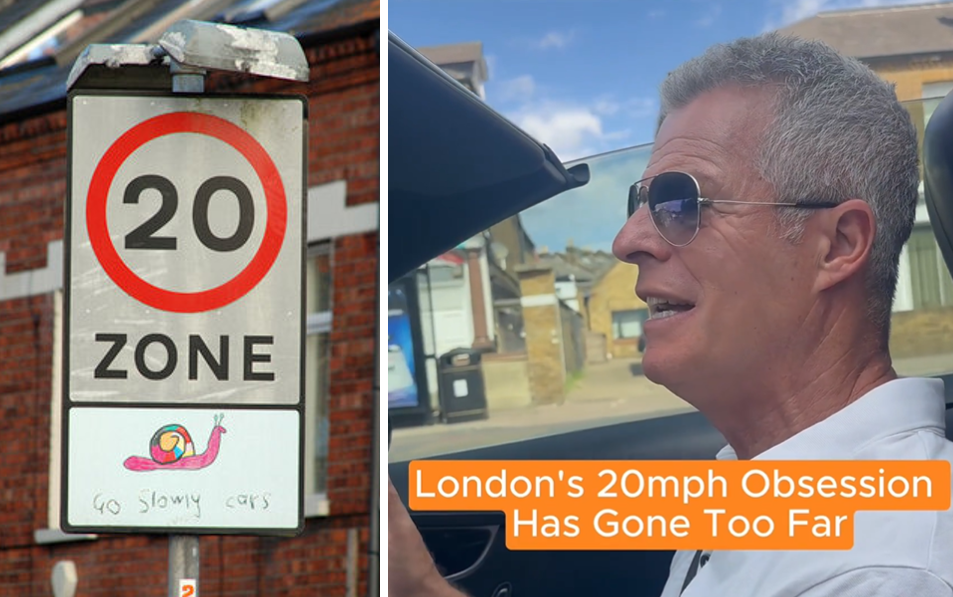

“I can’t keep this car going at 20mph without keeping my foot on the brakes. What a stupid, ridiculous, braindead situation”: 20mph speed limits “bad for drivers’ mental health,” claims Mr Loophole
I know, I know, this isn’t the kind of thing you really want to flash up on your phone or computer screen on a Friday afternoon. But as your resident live blogger, I feel it’s my duty to inform you when Mr Loophole has decided to make a fool of himself (again).
This time, the lawyer (real name Nick Freeman, best known for getting celebrity motorists off driving offences, including phone use) has decided to take on 20mph speed limits.
“I think London’s obsession with 20mph roads has gone too far,” Mr Freeman posted this morning.
“Around schools and genuine danger spots? Absolutely. But blanket 20mph limits make driving frustrating, exhausting and, I’d argue, bad for drivers’ mental health. Safety matters. So does common sense.”
Hmm…
I think London’s obsession with 20mph roads has gone too far.
Around schools and genuine danger spots? Absolutely.
But blanket 20mph limits make driving frustrating, exhausting and, I’d argue, bad for drivers’ mental health.
Safety matters. So does common sense.
What do… pic.twitter.com/K0qjseviDU
— The Mr Loophole | Nick Freeman (@TheMrLoophole) September 4, 2026
In a video accompanying the post, Freeman pontificates some more on the perils of 20mph driving… while, you know, driving his car, naturally.
“Oh we’re working to make London’s roads safer – I might as well get out and walk. I can’t keep this car going at 20mph without keeping my foot on the brakes. What a stupid, ridiculous, braindead situation,” he ranted.
“It will be the death of the driver. The mental health issues, the frustration will be enormous. Remember, the idea of a car is to get us from A to B quickly and safely.”
Don’t make me tap the sign, Nick…
> Reducing speed limits to 20mph protects cyclists and doesn’t delay traffic, new research finds
> Cyclist casualties down 28% and 900 fewer road injuries since 20mph limit introduced in Wales
“What does Jonas think when he gets his doors blown off by Tadej?” Doping video cyclist faces backlash from fellow pros after slamming “wild west” drug use, as convicted dopers asks: ‘Do you have any proof?’
Over on off-road.cc yesterday, our very own Matt Page – and an anonymous elite racer – speculated that the heady, fast-developing, modern world of ultra-endurance racing could well represent a new frontier for that most traditional of cycling pursuits: doping.
Is a lack of testing, combined with ever-increasing financial reward and professionalisation, opening the door for ultra-racers seeking out a few not-so marginal gains? We’ll just have to wait and see.
But while Matt was busy focusing on cycling’s brave new world and its relationship with doping, rumours about illicit performance enhancement are never far away in the old country, either. And when I say old country, I mean Portugal, of course.
In the aftermath of the EPO era (which ended in 2008, according to the UCI’s official history books), the Portuguese domestic scene has long been regarded as the ‘wild west’ of professional cycling, where rules are made simply to be broken.
The Volta a Portugal, once one of cycling’s most prestigious stage races, has seen some crazy climbing performances over the years, while Portuguese riders and teams have accounted for a disproportionate number of doping scandals in the last decade or so.
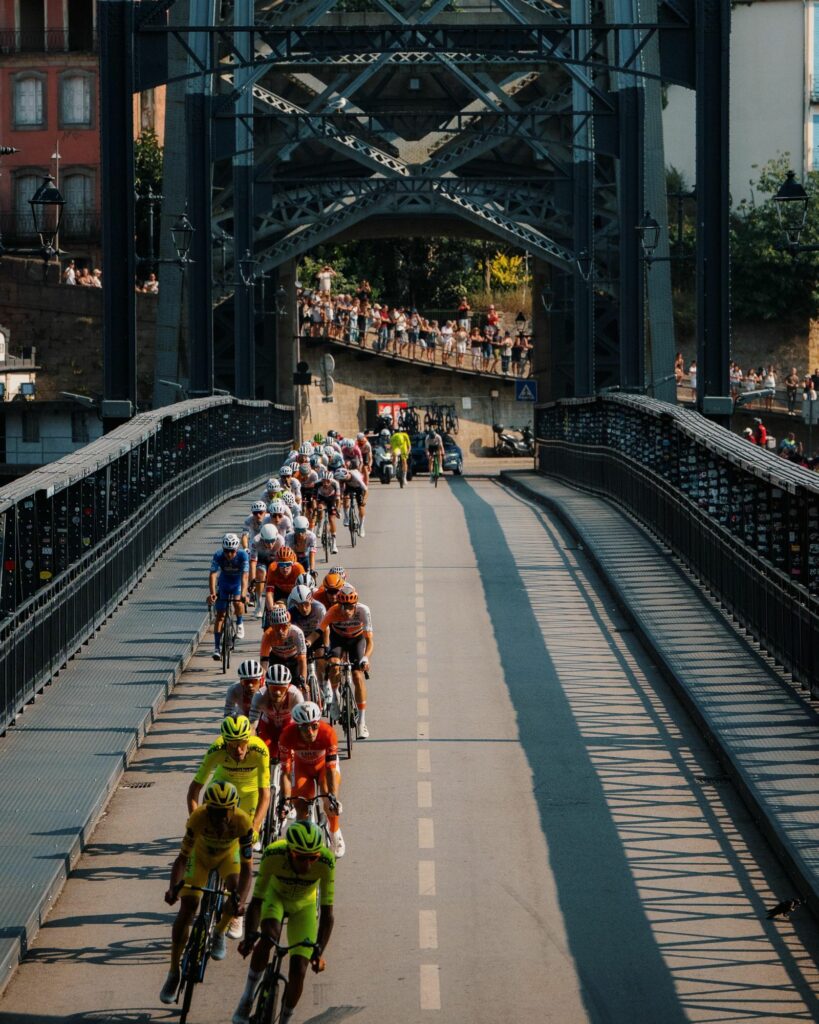
In March, for example, Conti squad Feirense-Beeceler was suspended from racing for 22 days after three of the team’s riders were found to have committed Biological Passport violations during the 2022 and 2023 seasons. That ban came just six months after fellow Portuguese team APHotels & Resorts-Tavira-SC Farense were also suspended for several bio passport violations.
And Portugal’s wild west doping scene is back in the spotlight this week, after a video was posted by American pro cyclist Keegan Swirbul was posted on YouTube with the rather intriguing title ‘There is doping in pro cycling’ (except Keegan opted for all caps).
31-year-old Swirbul is retiring at the end of this season after over a decade as a pro, during which time he’s raced for the likes of Human Powered Health, Jelly Belly, and Rally Cycling.
He’s spent the last four years riding for Portuguese Conti team Efapel Cycling, where’s had a front row seat to some, as he calls them, “mad sketchy” shenanigans.
Just after pressing ‘publish’ on his 24-minute-long lecture on doping, Swirbul left his team bus and raced the second stage of the GP Douro, winning it and sealing the overall victory in Porto the following day.
But it’s his YouTubing which has stolen the headlines – and attracted some depressingly inevitable flak from his fellow pros.
“It’s the question I get asked most often: Is doping still being used?” he asks. “I’ve been racing for four years in the haven of doping, which unfortunately is Portugal. I know stuff, guys. There are cases I’ve literally seen with my own eyes, doping in the races I’ve been doing.
“In every single team I’ve been in for my entire career, it’s always the principal topic at the post-race dinner conversation. ‘Oh, this rider, he flew up that hill! Did you see so-and-so attack so hard? He’s got to be doing something.’ If you get beat in a race, the other guy who beat your ass is clearly doping.
“Then I switch from one team to another, and the riders say, ‘Yeah, those guys are mad sketchy’. And then I think, ‘But I rode for that team myself last year!’”
And, according to Swirbull, these doubts don’t exist just in the Portuguese scene.
“I’ve always wondered what these guys at Ineos or Visma are thinking,” he continues. “What does Jonas [Vingegaard] think when he says, ‘yeah, I’m definitely better than I’ve ever been, my numbers are looking better than ever, I’m in the shape of my life’ – and then he gets his doors blown off by Tadej?
“What are they saying around the dinner table? I bet they’re saying the same stuff around the dinner table.
“I know these WorldTour guys have doubts about other riders as well. Last year at the Tour of Luxembourg, I was riding in the breakaway with a guy from Quick-Step, I don’t know this guy from Adam. But we’d finished the stage and were riding back to the bus and were chatting. UAE had just smashed that stage, six riders in the top 25, drilling the pace all day.
“And this guy was just shaking his head in disbelief, telling me, ‘These UAE riders, what are they doing?’ So even these WorldTour guys, they have doubts. Because from the outside you think there’s Omertà, that they’re all psychopaths doping and they do such a great job of hiding it. But that’s not the case, even the WorldTour guys have doubts.”
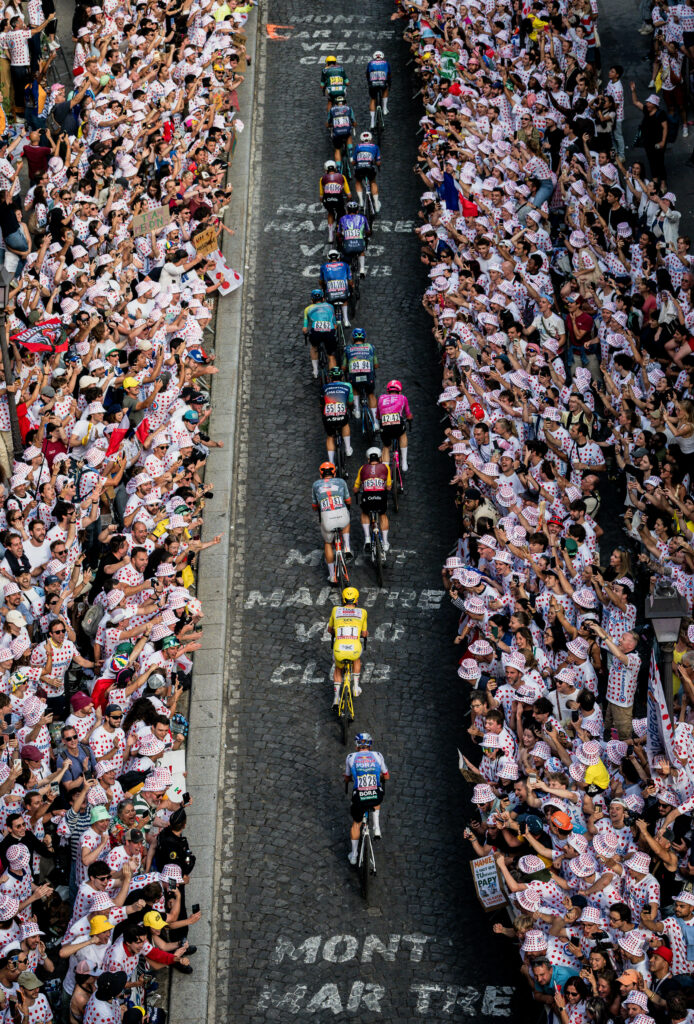
However, Swirbul is noticeably cautious when the greatest rider of all time (and his Eminem-haired lookalike) is brought up.
“Is Pogačar doping?” he asks. “I don’t think Pogačar is doping in the way we all think, that classic Lance Armstrong doping with blood bags. He’s just too consistent for that, he’s so highly tested, and his level is the same throughout the year.
“Is it possible that Pogačar and other guys are doing something that simply isn’t even on our radar yet? Very possible. People are talking about gene doping… mitochondrial doping. There are some stuff I’m sure we’ll find out about in the years to come, and maybe these top guys who do 7W/kg are doing that. And if they do that: kudos to them, because they’re ahead of the anti-doping authorities. Is that even doping? No, not really.
“Doping is still a thing. But my gut tells me that in the WorldTour, it’s actually less prominent than we all believe. And I know it’s hard to believe, because it is wild to see some of these numbers. But it would suck if Pogačar went down. Is he too big to fall?”
The American is less cautious when it comes to his own experiences in Portugal, even calling out a number of convicted dopers who have put in eyebrow-raising performances.
“I’ve been racing in Portugal for the past four years, and for those who don’t know: it’s literally known as the ‘Wild West’ when it comes to doping. You can do whatever the hell you want in Portugal,” he said.
According to Swirbul, there are two clear markers that someone is doping. First, the 31-year-old pointed to extremely rapid weight loss, facilitated by the use of corticosteroids and their accompanying TUEs (a method he claimed was employed to perfection by “legendary doper” António Carvalho, who is currently banned until 2029).
Second, Swirbul said that a lack of consistency in performance is also a red flag, while the prevalence of micro-dosing has prompted the night-time tests which caused such a furore at the Tour de France this year.
“One thing that really made me furious: a guy who was suspended for four years because of EPO and blood bags in his fridge just finished fourth in this year’s Volta a Portugal,” he continued, referring to José Neves, the former national champion caught in a drugs bust at his former W52/FC Porto team.
“It really bothers me and other riders that a guy like that comes back and that a Portuguese team just takes him back,” he said.
“Why? You’re shooting yourself in the foot when it comes to your own young talent, who are already so damaged by these issues. Young Portuguese riders aren’t being hired by other teams simply because they’re Portuguese.”
Swirbul’s rather public criticism of his soon-to-be ex-colleagues in the Portuguese peloton (his video has racked up almost 50,000 views) has prompted some backlash from the convicted dopers he brought up.
Speaking to CyclingUpToDate, the American reflected on the reaction within the peloton after he published the video during the GP Douro.
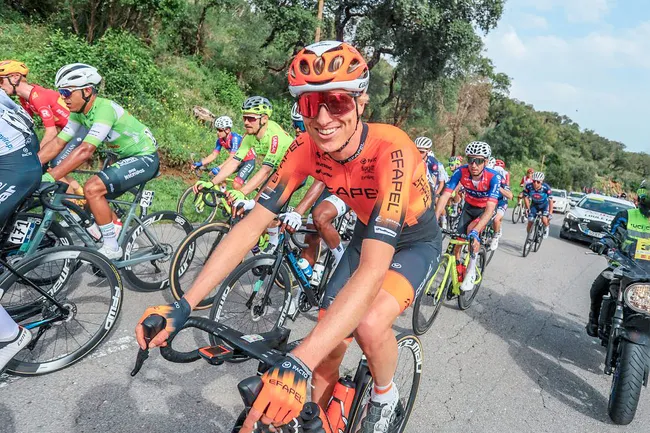
“On the first stage, no one was aware,” he said. “It’s funny, I always get quite a few riders to come up to me and be like: ‘Hey dude, I watch your videos’ and stuff like that. And I told a few guys when we were in the neutral zone like: ‘I just uploaded a new one, you’re going to like it’.
“The second stage, when I was in the yellow jersey, a lot of riders had seen the video and I’m pretty sure even one of the riders that I mentioned… I mean, his name is José Neves, for sure seen it because he was like just attacking me verbally.
“He did actually send me a message after the race. I understand that he’s mad and he was kind of saying like: ‘do you have any proof?’ And I was like: ‘what do you mean proof?’ Like, you were banned, that’s all I said in the video.
“We don’t know if he was doing drugs or not, but like he was banned for [three] years and that’s a fact. So that’s what I said in the video, he can’t get mad with that honestly.
“I mean, even Pogačar, if he sits out for four years he’s not going to come back and start smashing people right away. And I’m not saying that Neves was either, it’s just the doubt that we have.
“And then kind of what I was saying in the video a bit, like, it’s just not a good image for the sport in Portugal. Like it’s already been so damaged by these doping scandals and it’s just a little comedy, honestly.”
It’s like Kimmage, Roche, and A Rough Ride all over again. This time with blonde YouTubers and angry Portuguese climbers…
“Politicians will do anything to get votes!” Conservative London mayoral candidate James Cleverly baffles cyclists with “bizarre” Lime bike campaign video – days after vowing to end “vindictive assault on drivers”
You know, it completely passed me by that James Cleverly was bidding to become the next mayor of London.
But apparently, according to all the big, serious newspapers, the former Conservative leadership hopeful announced on Saturday his decision to take on Sadiq Khan in 2028, stepping down from his role on the Tory front bench in the process.
And since then, Sir James has been a busy boy. When it comes to perplexing us lot on bikes, anyway. In an interview with the Telegraph after unveiling his City Hall candidature, Cleverly pulled a classic move by vowing to end Sadiq Khan’s so-called ‘war on the motorist’, describing measures like ULEZ as a “vindictive assault on drivers”.
“I think there’s been a real war on the motorist,” he told the Tele. Here we go again.
“In outer London, this really quite vindictive assault on drivers – both people that drive for family reasons and for people that drive for business – is causing real harm.
“So I want to look at a whole range of options to ease the costs and pressure of people getting around the city and doing business in the city.”
However, hold on a minute. Despite that boisterous pro-car approach, Cleverly followed up his Telegraph spiel in perhaps the most unexpected way possible: by jumping on a Lime bike for a cheesy campaign video.
Yes, that’s right. The mayoral hopeful spent the afternoon being filmed cycling around his favourite London spots (while wearing a suit and not a helmet, angering the Telegraph and the Mail in the process), before stopping to shake hands with bemused tourists. And, to be honest, he looked quite confident on the hired bike, too.
Nevertheless, that abrupt pivot from pro-motoring rhetoric and cycle-friendly optics has baffled quite a few cyclists online.
“A bizarre video from London mayoral candidate James Cleverly who is promoting himself while riding a bicycle but then his main remit (on other posts) is to ‘stop the war on motorists’ and scrap/review the ULEZ?! Just goes to show that politicians will do anything to get votes!” Lucie wrote on the BH Active Travel page.
“That looks like someone who actually rides quite a lot. He looks pretty relaxed on multi-lane roads and is riding in a confident primary position,” added Ross. “But yeah, what is he doing with the WaR oN cArS nonsense?”
Maybe he’s just playing both sides, so he always comes out on top?
“Proper racing”: Wout van Aert dispatches Valentin Paret-Peintre in sprint mismatch in Loja after Visma-Lease a Bike breakaway masterclass at the Vuelta
Wout van Aert has been desperate for a stage win at this year’s Vuelta. And he finally got it on the streets of Loja this afternoon, the big Belgian finishing off a Visma-Lease a Bike breakaway masterclass by easily dispatching Valentin Paret-Peintre at the end of a thrilling, open day of racing.
Believe me, tape the highlights tonight if you missed it.
With Van Aert on the hunt for his first Vuelta stage since his ill-fated 2024 race, it was the turn of his young teammate Matthew Brennan, already three sprint victories, to turn provider, the deadly duo making the winning move, Van Aert bridging across after Brennan infiltrated the initial attack.
The pair then dominated proceedings on the run-in, amid a non-stop flurry of attacks worthy of a spring classic rather than the second week of a grand tour in southern Spain.
WOUT GETS HIS WIN! 🔥
Wout van Aert takes the win on Stage 13 of La Vuelta! 👏 pic.twitter.com/MrYY1xTmWF
— Cycling on TNT Sports (@cyclingontnt) September 4, 2026
The decisive moment came with around 4km to go, as Van Aert launched hard – with only Paret-Peintre, rather surprisingly, able to follow. With Brennan lurking, the gap was only ever heading one way.
The final sprint, between the cobbled classics specialist and the spindly climber, was always going to be a mismatch, though Paret-Peintre gave it a proper crack – before Van Aert breezed past for a redemptive victory.
“Proper racing that, wasn’t it?” a delighted Brennan told TNT at the finish. Spot on, young Matthew.
GC-wise, for most of the stage it looked like the top ten, and even the podium, was set for a major reshuffle, after Mattias Skjelmose, sitting seventh overall, slipped into the break, building a five-minute gap at one point.
However, a concerted chase by Decathlon limited the damage, with Skjelmose sticking where he was, albeit two minutes closer to the podium.
Olav Kooij beats Tim Merlier (and a brutal Yorkshire headwind) to win eighth career Tour of Britain stage in blustery Beverley
Olav Kooij really loves the Tour of Britain, doesn’t he?
After missing out in Skegness yesterday (a rare oversight for the Dutch sprinter), Kooij got his revenge this afternoon in a blustery Beverley, beating stage two winner Tim Merlier in a hard-fought headwind sprint to secure the eighth Tour of Britain stage of his career.
Yes, eight stage wins. And, just to underline his sprinting superiority at Britain’s national tour, it’s also his second stage win Beverley, after his triumph on stage three of the 2023 race in the town. Are we sure Kooij isn’t originally from Yorkshire?
View this post on Instagram
In the kind of bunch gallop Carlton Kirby would describe as a ‘slow motion bicycle race’, Kooij timed his sprint to perfection, biding his time and taking advantage of Modern Adventure before launching right at the moment most of his rivals – bunched together due to the ferocious block headwind – stalled.
As Kooij punched his way to the line, chaos reigned behind, with a scrambling Merlier cutting across Ethan Vernon, halting the NSN rider’s momentum (I’m sure the race jury will be looking at that), as he battled to finish second behind his Dutch rival.
As far as the 2026 race goes, the sprint score is now 1-1 between Merlier and Kooij. The weekend is shaping up to be a feisty one indeed.
While Kooij will take the plaudits on the podium (a sight he’s well used to in British towns by now), the undisputed ride of the day accolade must go to Tarteletto-Isorex’s Yorben Lauryssen, whose solo counterattack put the peloton under serious pressure and was only snuffed out with 6km to go. Get that man a beer tonight.
Just when you thought it was a bit blowy in Yorkshire…
The Tour of Britain: ‘It’s windy today’.
The ZLM Tour: ‘Hold my beer… before it blows away’.
View this post on Instagram
Blimey. It looks like today’s ZLM Tour stage to Bergen op Zoom, won by Max Walscheid, decided to pay homage to the notoriously blowy 2015 Gent-Wevelgem. Crazy stuff.
There are a few skinny climbers who wake up in a cold sweat just thinking about crosswinds like that. Fair play to Unibet Rose Rockets’ Martijn Rasenberg (ninth on the day) for sticking to the road there. Summer’s definitely over, isn’t it?
“It’s always been a dangerous sport, you’re going down mountains on a bike. It’s not normal… As long as everyone does the best that they can to improve all the controllables then that’s what we’ve got to keep pushing for”
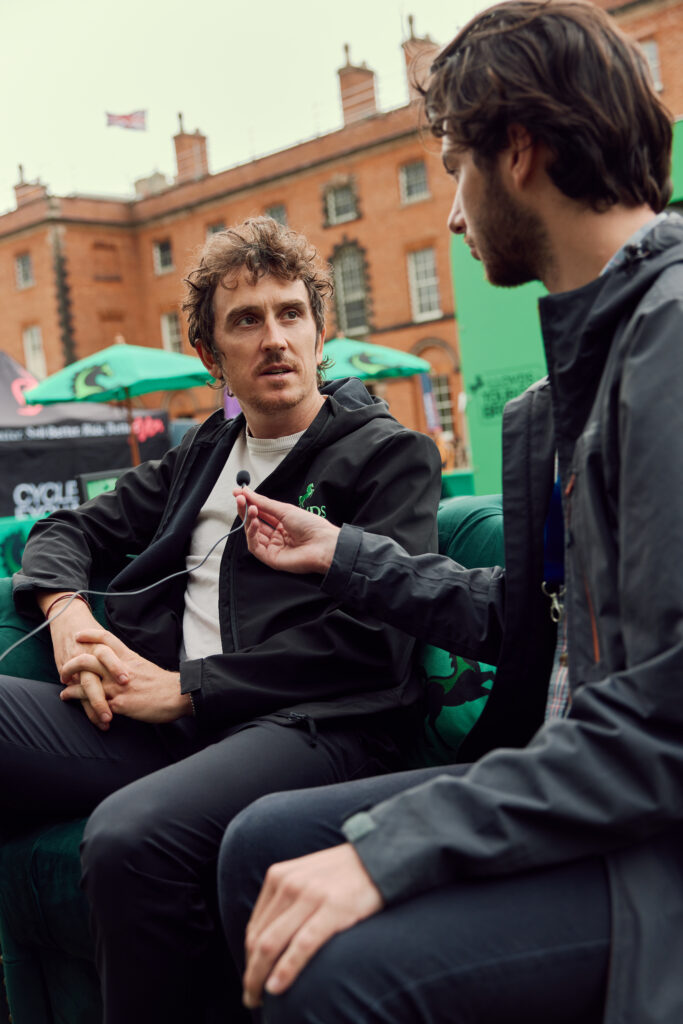
Earlier this week at the Tour of Britain, Callum caught up with Geraint Thomas to discuss the most pertinent debate in cycling right now:
Oops… ‘Here’s a lovely photo of our man in the break today. Err, just ignore his hands. Please, don’t look at his hands! Stop looking!’
Did Netcompany Ineos just drop their own rider, Axel Laurance, in it for adopting the now-banned ‘puppy paws’ position while riding in the break yesterday at the Vuelta?
Surely somebody in the squad’s social media team should have picked up on that before pressing ‘post’? I can almost hear the ominous click of the UCI shared office laptop from here…
Axel Laurance pulls a Dan Lloyd
It’s been a mixed few days at the Vuelta for Netcompany Ineos’ Frenchman. He got in the break yesterday, only for his team to post a photo of him breaking a UCI rule. He got in the break again today, but ended up crashing while leading the group around a corner.
Oh no! 😮 Axel Laurance takes a tumble at the front of the breakaway – he’s visited the medical car and is able to continue! pic.twitter.com/Ai2n1HnHk5
— Cycling on TNT Sports (@cyclingontnt) September 4, 2026
Ouch. He’s back up and on his bike fortunately, but that was his spell out front over, pretty unceremoniously too. Perhaps the lesson here is to not get in the break Axel?
Final round of Welsh racing league to be dedicated to memory of Finlay Tarling, raising money for the ‘For Fin’ fund
The final round of the Llandow Revival Series, set to take place next weekend, will be dedicated to the memory of Finlay Tarling, following his tragic death at the Volta a Portugal last month, it was confirmed this week.
Organised by Maindy Flyers Cycling Club, the sixth and final round of the circuit racing series will take place on Sunday 13 September on the Llandow motor racing circuit in south Wales, 15 miles west of Cardiff.
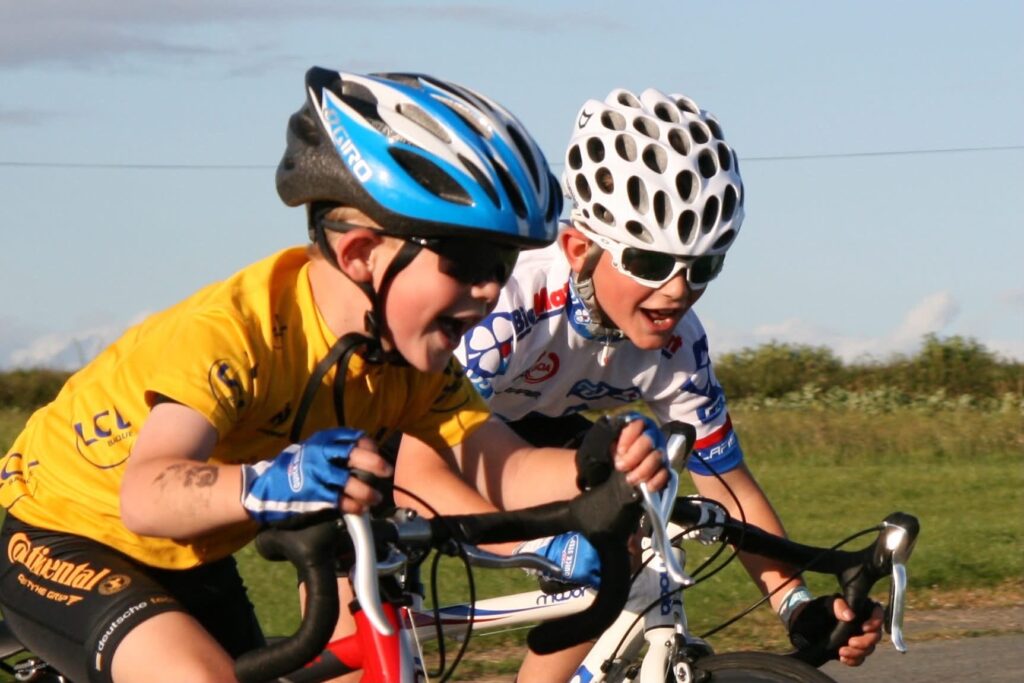
There will be nine races in total on the 1.4km track as part of the series, ranging from under eights right up to elites. Michael Tarling, the 19-year-old’s father, is currently listed among the entrants for the Cat 3/4 open race.
Anyone looking to race can sign up through ‘The Fin Tarling Llandow 2026 Round 6’ event page on British Cycling’s website, with spectators also urged to come along and “bring the gazebos, picnic tables and the family and make a day of it”.
The round will also raise money for the ‘For Fin’ fund, which has currently garnered over £96,000 in donations. The circuit owners have also waived the usual £500 fee for use of the track, Maindy Flyers chair Mike Richards told Cycling Weekly, ahead of what he says will be a “very special, if emotional, occasion.”
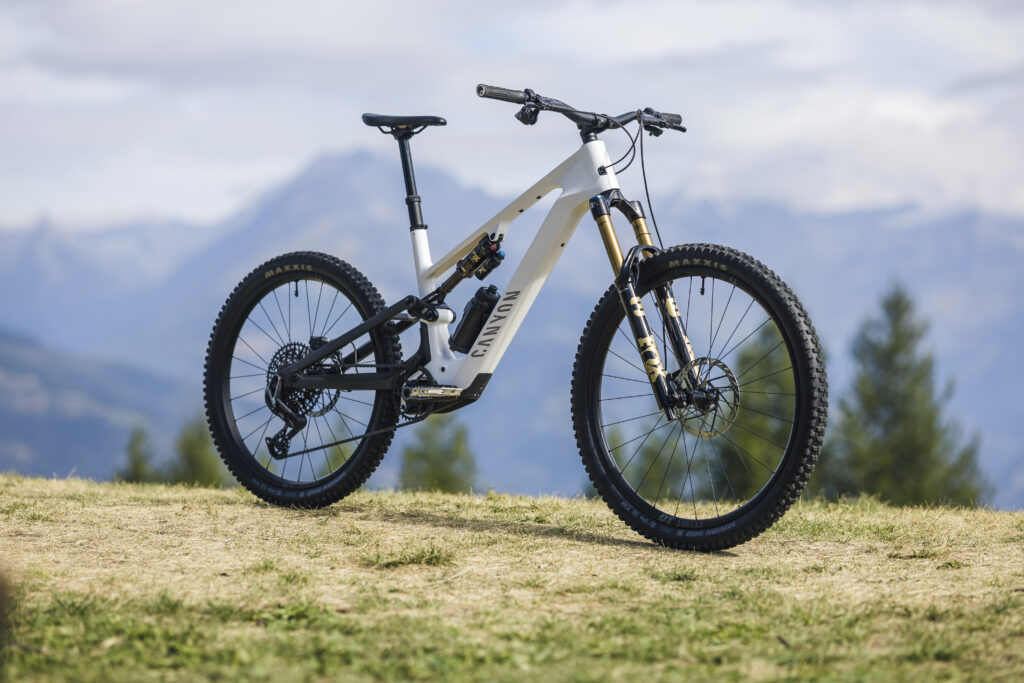
Factor turns the gravel dial all the way up to 11 with new off-road focused Elara
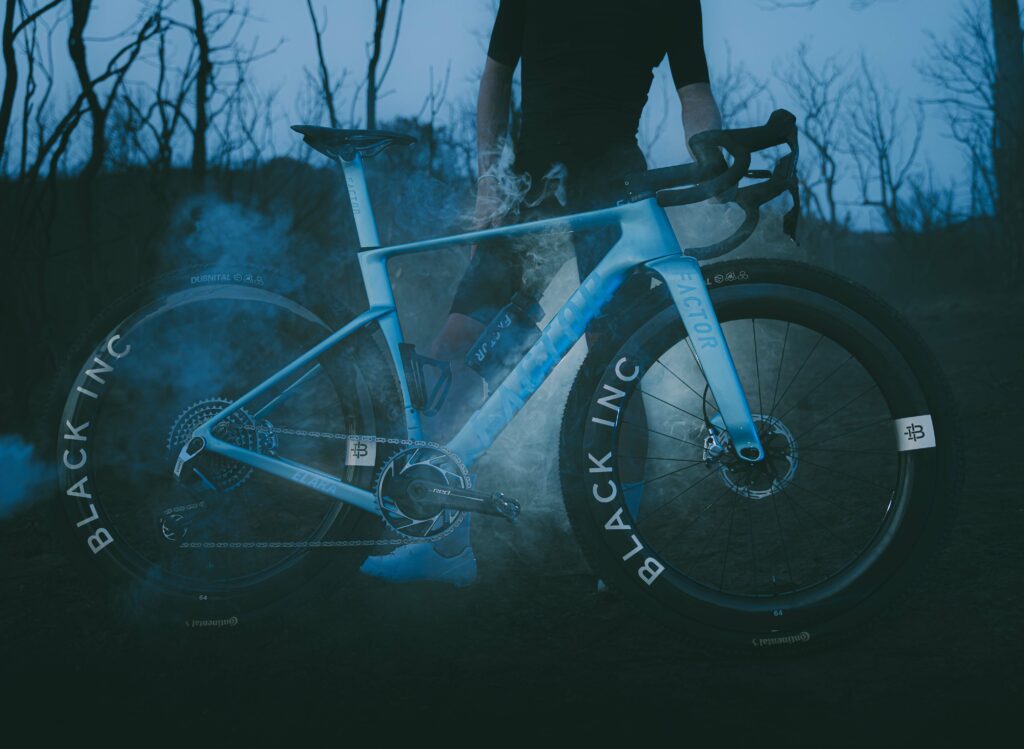
Factor’s all new Elara may have just set the new benchmark for modern gravel race bikes
How much more Black Inc could those wheels be? And the answer is none. None more Black Inc.
Alright, that’s enough Spinal Tap references for one blog post…
When the Onion strays depressingly close to reality, #139
View this post on Instagram
“Whether you’ve been sideswiped by a tractor-trailer on a two-lane road or dragged through an intersection by a furniture delivery truck, you can now easily plot a course that fully accommodates your mangled body,” said lead product developer Jasmine Harper, in the Onion’s latest take on the United States’ terrible cycling safety record.
“When you select this feature, your map automatically highlights nearby hospitals you might plausibly reach before passing out… Plus, you can avoid crawling on streets with heavy traffic to reduce your chances of being too low to be seen by motorists and getting run over a second time.”
Satire really is dead, huh?
Pun of the day
To paraphrase Roy Keane, all credit to our newsletter chief Oli for this cracker from today’s email:

Well played, Oli.
When you’ve got the Tour of Britain in the morning and grocery shopping in the afternoon
Some classic British ‘humour’, courtesy of the moto pilot during today’s stage of the Tour of Britain:
View this post on Instagram
I’m not going to lie, some of those items on the list feel a bit sinister… We’ll just laugh along anyway and hopefully he moves on, okay?
Get your ToB on! Tour of Britain stage three livestream
After yesterday’s nervous windiness (I’ve had that before) and sprint frenzy in Skegness, the Tour of Britain peloton is set for a scenic tour of East Yorkshire today, taking them from Hull all the way to Beverley, nine miles up the road (via a massive 194km loop, of course).
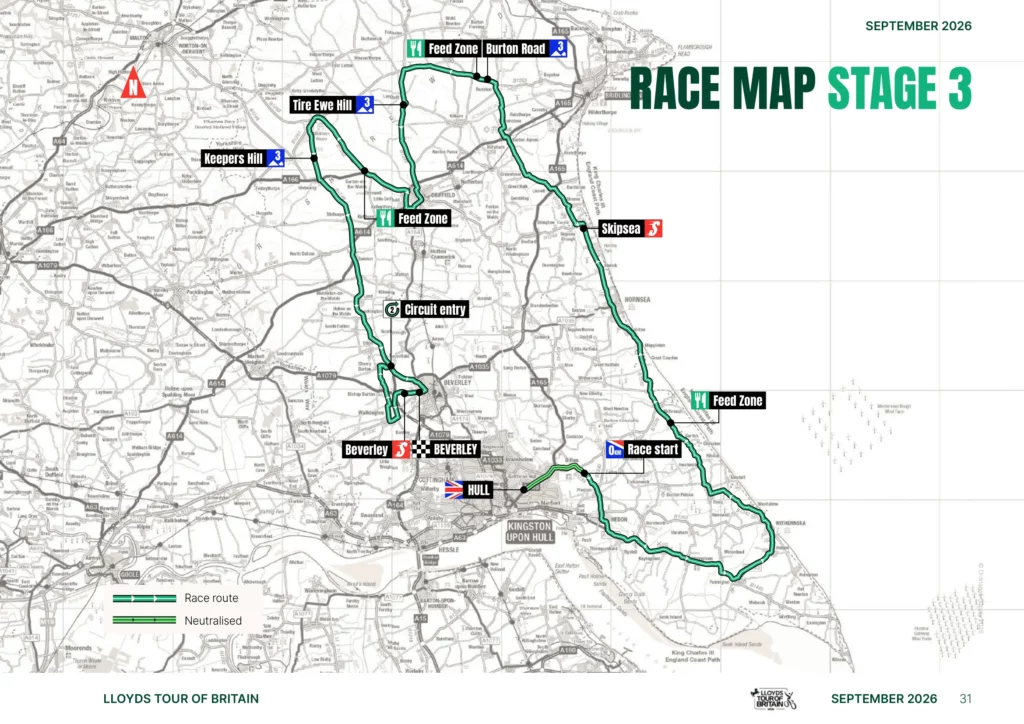
That big loop means we have a long coastal section (perfect for some echelons) and a trio of mid-race hills, before a largely flat run-in to the finish.
Oh, and it’s on YouTube too, so you can keep tabs of all the (for the moment subdued) action here on the live blog:
A day for the breakaway at the Vuelta?
Meanwhile, over in Spain, things are quietening down (slightly) following yesterday’s massive GC day on Calar Alto, which saw Enric Mas assert his authority in the red jersey as the next Slovenian sensation, 20-year-old Jakob Omrzel, announced his arrival on the big stage with a stunning win.
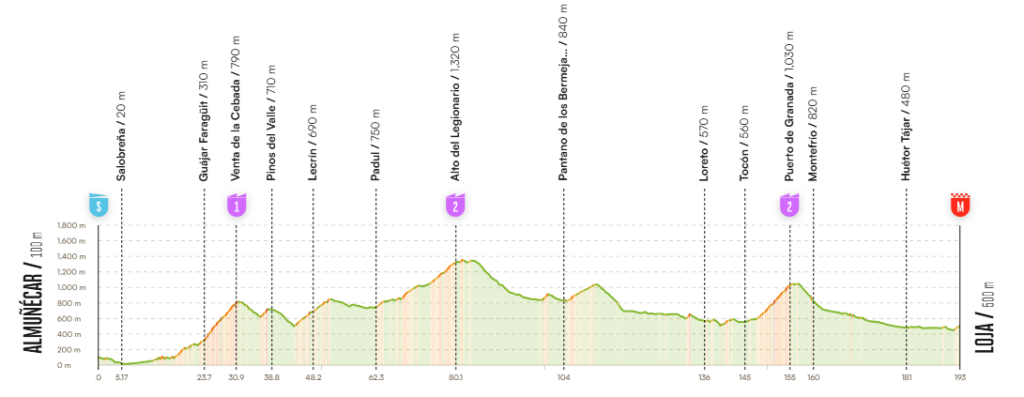
Today’s 13th stage, a lumpy 193km from Almuñécar to Loja, deep in the south of Spain, has the breakaway written all over it. Unless Visma want to control things and tee a reduced sprint up for either Matthew Brennan or Wout van Aert, after jettisoning the bigger fast men on that final Cat 2 ascent.
Expect quite a few attacks, in any case. And just as I write this, Lorenzo Fortunato is trying to attack clear on the only first cat climb of the stage. I imagine he won’t be alone for long…
What on earth have I just watched?
Ah, it’s been a while since we’ve seen some pro cyclist impressions on the timeline. This latest bout of, ahem, questionable TikTok mimicry comes courtesy of French cycling content creators Noé and Gaspard.
Who, it seems, live in a world where Geraint Thomas was more animated on his bike than Julian Alaphilippe and Ben Healy…
@noeetgaspard Les différents style d’attaque des stars du peloton…Partie 3 🚲 #humour #cyclisme #tourdefrance #Vélo #cycling ♬ son original – Noé & Gaspard 🤌
4/10. Must try harder, fellas.
“It is certainly not in our interest for such a situation to arise – the safety of all riders is our top priority”
Another day, another shocking safety issue at a professional bike race. Come on everyone, we need to sort this out. Now.
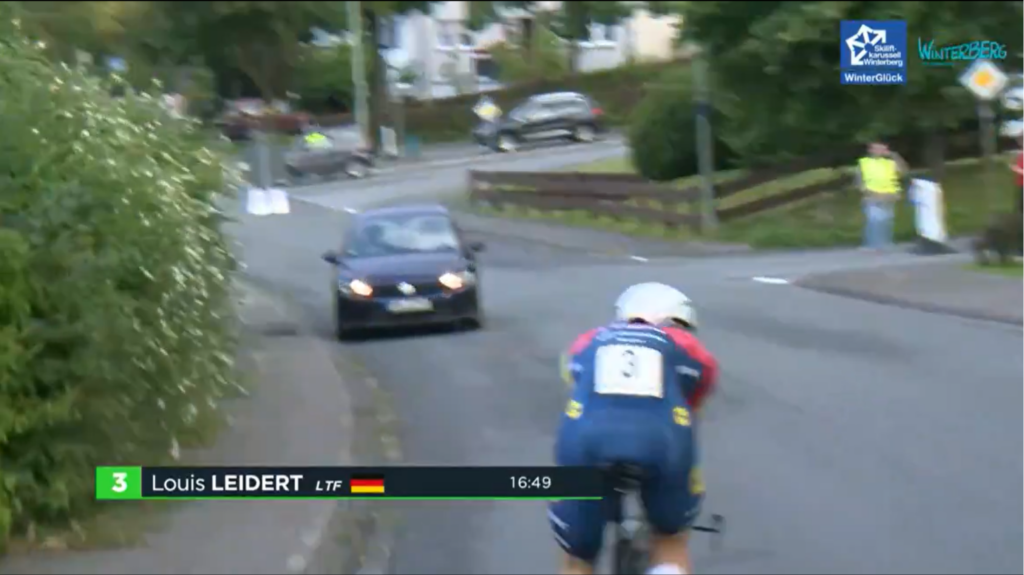
> Rider narrowly avoids two drivers on race course in quick succession in Germany









25 thoughts on “20mph speed limits “bad for drivers’ mental health,” claims Mr Loophole; Cyclist ‘attacked’ by fellow pros over “wild west” doping video; London mayor hopeful vows to end ‘war on motorists’… then rides bike; Tour of Britain; Vuelta + more on the live blog”
Isn’t this broadly just saying even the pros are like Jimmy the weekend warrior who can’t believe anyone can beat them unless they are doing something dodgy. As he said, he went from one team to another and the new team thought his old team were maybe doing something dodgy. He knew they weren’t. This isn’t raising the question of “are they all doping in the pro peleton”, I would argue its doing the opposite. Suggesting that its just natural for everyone to be suspicious of great performances even within the top top levels. Everyone sitting there saying “we’re not doing anything dodgy but maybe team A are” and team A are sitting over there saying “we’re not doing anything dodgy but maybe team B are”.
Similarly, I read some of what certain commenters write on here and think “they must be on something”. And they often end up getting banned, too.
(Although the comparison does break down when it comes to the ‘great performances’.)
James Cleverly: not nominative determinism.
Was the anti-dope poster aimed at him?
That tired old Conservative mantra of “ending the war on the motorist.” A policy that they blundered upon during the Uxbridge byelection.
The Conservative Mayor of Cambridgeshire and Peterborough, Paul Bristow, still regurgitates it within Peterborough from time to time – despite it’s parkway system making it one of the most car friendly cities in the UK.
My understanding of ULEZ is that it led to huge improvements in air quality in central London.
But hey ho, if there are no positive proposals, why not create some alarm and division?
@Mr Blackbird Isn’t their policy “just say what Reform are saying”, only that Reform’s version is ‘not serious’ or will cost?
And Labour are taking cues from them also. Success is what succeeds (in getting attention, now)…
All currently getting a boost from the social media / AI megaphone operators across the pond!
I think Andy Burnham has offered some hope in the last few weeks by threatening renationalisation of some industries, highlighting Brexit’s disastrous effects on trade and public funding and calling out the downside of Thatcherism (if that viewpoint becomes more widely acknowledged most senior Tory politicians will have no clothes). And to Kier Starmer’s credit he did take steps to improve the relationship and trade with the EU.
But let’s not get too excited too soon. The big problem is that lots of things need fixing but many aren’t prepared to pay more towards it or can’t afford to pay more towards it.
Incidentally, I was discussing modern politicians with my wife this morning. They often seem to be self seeking, uninterested in detail, not very capable and mainly focussed on soundbites and their careers. Has it always been like this? Or is it just that we are older?
It always seemed that politicians of the 70’s, 80’s and 90’s had a deeper sense of responsibility and obligations of duty towards the electorate. But maybe they didn’t.
Discuss.
I think modern politicians need a different skillset to succeed than earlier generations. Obviously there’s a lot of overlap, but the (social) media environment is now such that politicians need to always be in campaign-mode to some degree, at the expense of time spent getting to grips with their brief and governing.
Just to be pedantic (shock) Sir James “Not Very” Cleverly is not actually yet a mayoral candidate, he has put himself forward for the Conservative Party nomination so at present he is just a candidate to be a candidate. However, given that the current polling shows that Sir Sadiq would garner 33% of first-round votes compared to Sir James’ rather paltry 18% one is not averse to him being chosen.
Re alleged doping, just like everyone else I can’t say for certain it isn’t happening, I just hope as a fan that it isn’t. However, it seems that many, many people who pontificate about doping simply don’t take into account dietary improvements. Of course every rider now has significant advantages over their predecessors in terms of being able to absorb two or three times more carbohydrate per hour than was previously thought possible, something which of itself is sufficient to explain much of the improvements in times and stamina. However, there are other dietary elements, for example during the Tour de France Robbie McEwen was talking about a new lactate gel that could enable riders to absorb up to 5 g of lactate per hour rather than the previous comfortable limit of around 0.5 g. Apparently production was limited and one team had purchased the entire available supply, no prizes for guessing who. Perfectly legal and sufficient largely to explain significant advantages but of course not as exciting as claiming that you know the top riders are on dope.
@Rendel Harris I’m frankly astounded that its taken this long to break many of the records and its just a testament to how ridiculous doping was.
– training properly from a young age
– diet changes
– no long off season and “racing yourself back to fitness”
– bike tech, aero bikes, better tyres, aero socks, skin suits etc
– fuelling up to 3x the amount on the bike vs what they used to do
– Recovery after rides
– Training understanding/advancements
Its amazing that we have had to change all this before we are beating guys who were doped up to the gills.
Another perhaps more extreme example of this is in athletics. Despite improvements in training and nutrition, shoes and kit, faster tracks, more nations taking part, increased funding and increased financial rewards the following world records still exist :
Women’s 100m & 200m (Florence Griffith-Joiner, 1988),
Women’s 400m (Marita Koch, 1985),
Women’s 800m (Martina Kratochvilova, 1983).
@mctrials23 Yes, all of that and especially (I’m sure you meant this under the training understanding/advancements) huge blocks of altitude training which effectively legally simulates doping with EPO.
I met James Cleverly on a ‘Movers and Shakers’ ride organised by the Redbridge LCC.
The ride ended at the then new Hogs Hill race track, which was replacing the lost East Way track in Hackney Wick.
My main recollection was JC being angry with Lord Victor Adebowale for being allowed to ride the circuit sans helmet. The rest of us had to borrow lids but the good Lord got an exemption for his hair. JC otherwise came across as perfectly pleasant and he has lived an interesting life. Whether that qualifies him to be mayor I don’t know, but he is a genuine utility cyclist.
@Bill H “…..but he is a genuine utility cyclist.”
That’s good to hear, but telling two different groups things that are diametrically opposed doesn’t do much for his credibility or honesty.
I tend to judge people by their actions rather than their words. At least he cycles and is not, to my knowledge, a die-hard vehicular cyclist nutter.
Whatever happens he would struggle to be a worse candidate than Shaun Bailey. That was the chap who was caught campaigning in Brentwood, yes, the one in Essex where no one had the vote.
Oh, and do we know if this will be a FPTP election or has it been rolled back to transferable vote?
This has always happened in politics. It’s just easier to find out about it now.
Pretty impressive stuff from Axel Laurance there – from sliding along prone on the tarmac to back up on his feet all in the one movement. Shame he didn’t manage to land it back on the bike again for the full effect, but good going nonetheless.
It would appear that snooker beats the vuelta on Ch5.
The highlights get moved to Action, so no +1 on Freeview.
I think Mr Freeman urgently needs to get his car to a garage if it can only be driven at 20mph by applying the brakes.
Also, only a small section of Roehampton Lane is dual carriageway; by halfway through his video he’s past it already which makes his inane rant positively disingenuous.
@AidanR He’d already got a full house (“only where it makes sense e.g. outside schools” / “blanket limits” / “unsafe”) BUT not only didn’t he call but he went for another round! And with a fascinating new angle:
Totally on-trend there! Reducing the maximum speed in some places in urban areas is psychological discrimination! Won’t you think of the neurodiverse? Don’t you know you can literally measure the rise in cortisol due to the presence of cyclists? In fact unfairly favouring active travel is literally sucking the dopamine out of everyone’s lives…
Mr Loophole doesn’t understand physics or how to drive properly. Speed, as all cyclists know, is related to the amount of power being input and gear selection. If only drivers could understand this.
Nick, brake to a stop. Now take your foot off the brake. No, don’t put it on the accelerator. Now what speed are you doing? If it’s more than 20, drive to a garage.
NF: -I can’t keep this car going at 20mph without keeping my foot on the brakes. What a stupid, ridiculous, braindead situation,” he ranted.
“It will be the death of the driver. The mental health issues, the frustration will be enormous. Remember, the idea of a car is to get us from A to B quickly and safely.”-
Tell us (and everyone who agrees with you) that you shouldn’t have a driving licence… without telling us…
@mitsky
And herein lies the problem. The primary reason for using a car should be comfort/convenience and safety should be the priority. Quickly should not be a factor. The highway code tells us to leave plenty of time for our journeys for this very reason. I am convinced the “always in a hurry” aspect of using a car is the primary cause of the majority of collisions and near misses. Until getting from A to B as quickly as possible is looked on as smoking and drink driving are now our roads will continue to be unsafe for vulnerable road users.
Reasons for driving:
1) The car is right there outside my house at A.
(This is where most thought probably stops, if it started. However…)
2) … and because it is (and because cars in general) I’ve decided to go to B / my employers expect me to go to B / the nearest x is at B
… I’m considering going to B *despite* the fact that B is not on public transport (unreliable, doesn’t run when i want, smells, obnoxious types use it) and/or despite B being an inconvenient distance to get to in say under 30 min by cycling or walking.
(Getting to B is not convenient without a car because cars – so things are planned a certain distance from each other / centralised / optimised for driving to).
3) Actually it doesn’t matter about the public transport / nearness because I’ve got someone to transport / my dog / my ferrets. And maybe a jacket and my laptop. Or I’ve got to bring back the shopping.
4) And it’s raining / dark / hot / cold / windy / uphill.
5) And after I’ve done that journey I may want to do another. (So the car is still just there. Plus i need to get it back to A at some point…)
6) Perhaps my lifestyle requires unplanned trips of say 3 miles or more (maybe because caring responsibilities). Of course those distances are because (2)…
7) Perhaps I’m female and having a car to get into and get away seems safer.
8) I can’t turn up some place on foot (and certainly not by bike). Other normal people drive. What will they think?