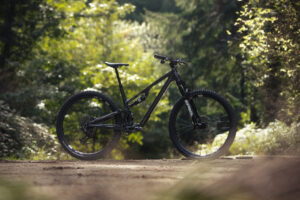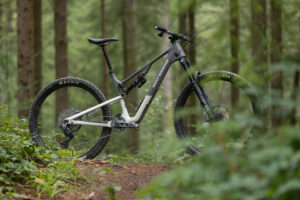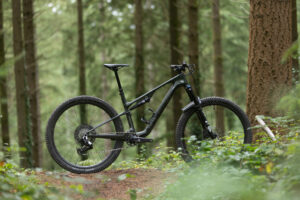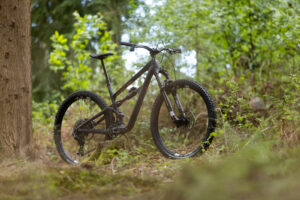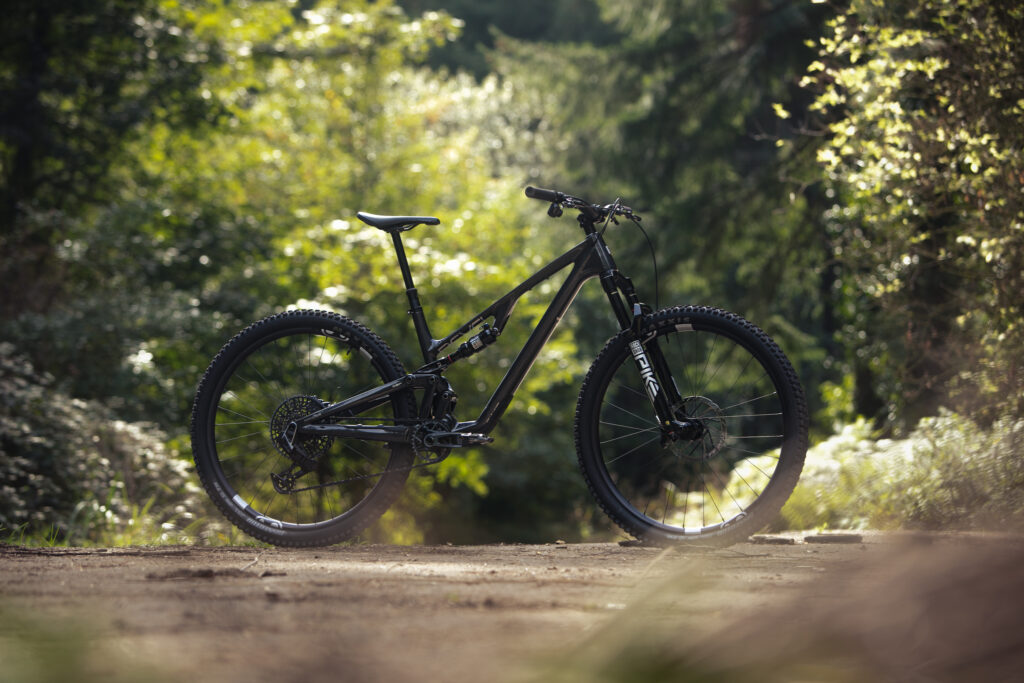

Although Revel touts its latest Ranger as a downcountry bike, it’s proven to be capable well beyond its means. With a dialed shape and a suspension kinematic that can make bikes of much bigger travel blush, it’s a beautiful-looking bike that can take charge through much more than you would expect of a bike with 120mm of travel.
Revel Ranger SRAM X0 Transmission – Technical details
Despite the fact that the latest iteration of the Ranger borrows a similar silhouette to the rest of Revel’s range, it marks quite the deviation for the brand. That’s mostly in the geometry. The Ranger’s reach is markedly generous, and its seat tube is certainly steeper than bikes prior.
To put that into numbers, the large frame I’ve been riding boasts a 485mm reach, a 437mm chainstay, a 65.7-degree head tube angle and a 77-degree effective seat tube angle. For those interested, the actual seat tube comes in at 72.6 degrees.
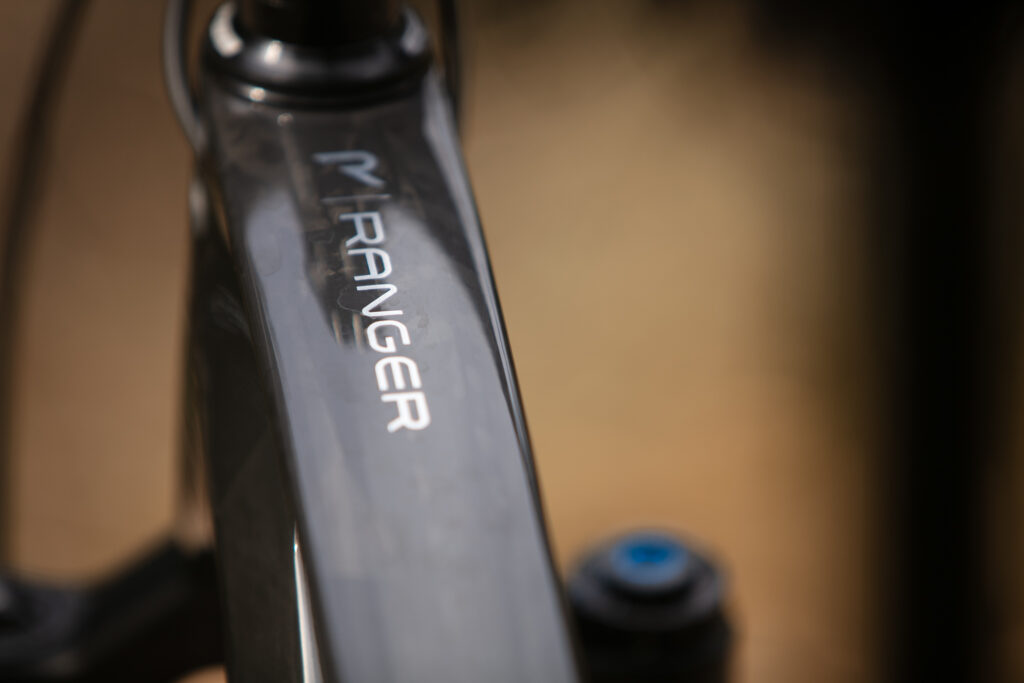
A fresh geo isn’t the only thing that the Ranger introduces; it also benefits from a tweaked version of the CBF suspension platform. To start, it features 21.9% more anti-squat than the outgoing model in a bid to blend small bump sensitivity with pedalling efficiency. There’s then 5.1% more progression to further boost that small bump compliance while bolstering the bike’s bottom-out resistance. Lastly, there’s a 13.8% increase in anti-rise. This has been boosted to retain suspension performance while braking, and stop weight from being pitched over the front of the bike through brake jack.
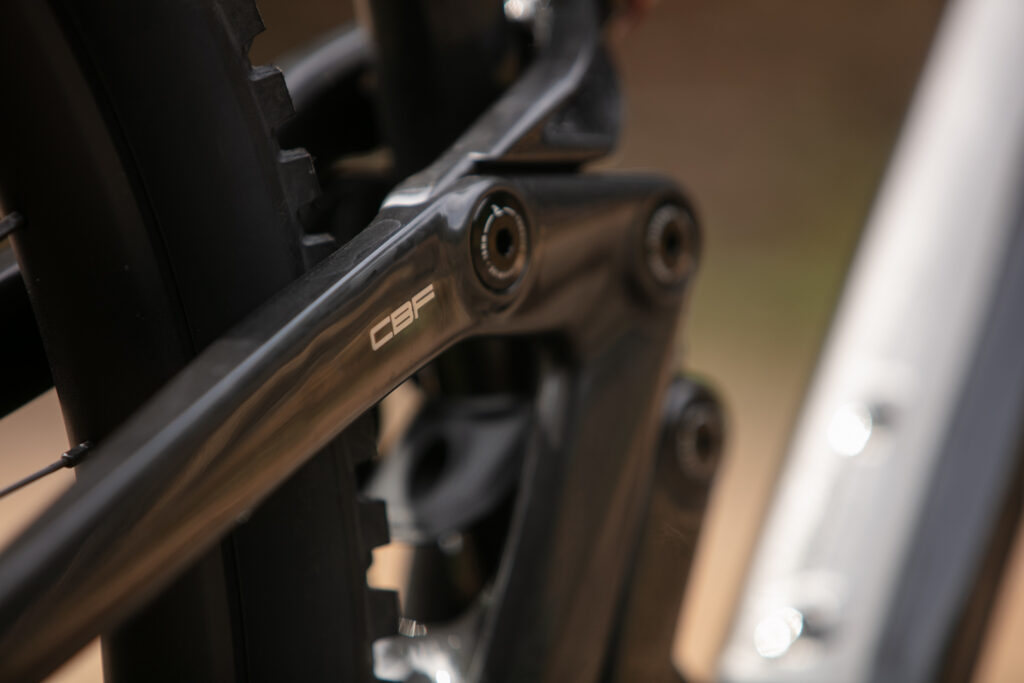
All of that rear suspension is delivered via carbon links. While looking mighty cool, there’s a method behind this madness, as it has allowed the bike’s designers to fine-tune the Ranger’s blend of strength and stiffness while shedding the odd gram.
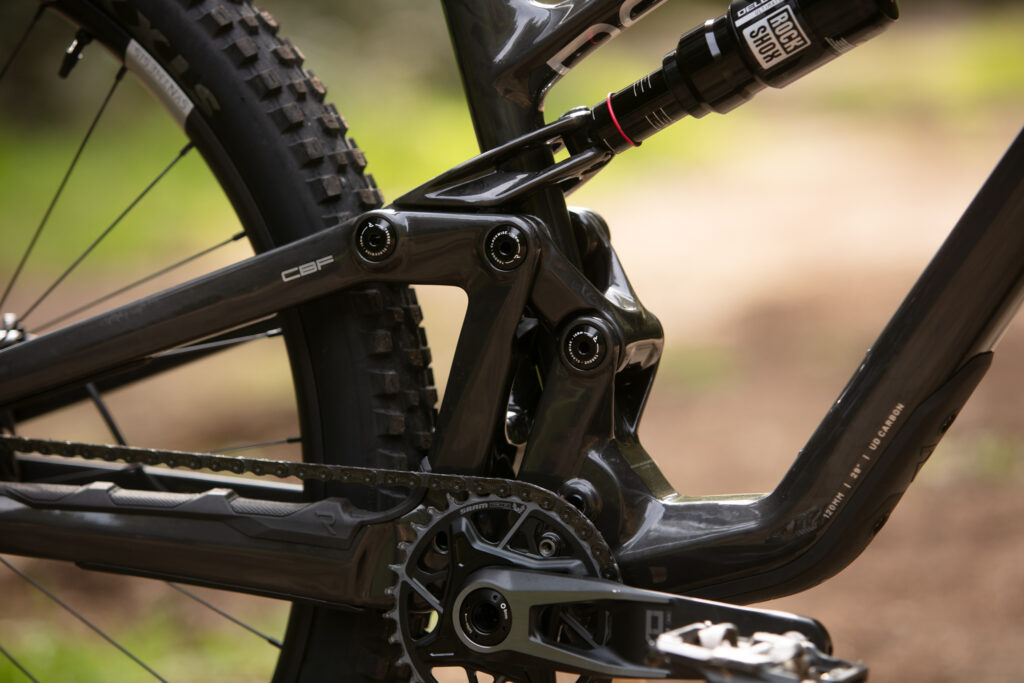
As for suspension travel, there’s 120mm at the rear and 130mm at the front. There’s then a pair of 29-inch wheels with no provision to throw in a 650b, or 27.5-inch wheel at the rear. But that’s no bad thing, as this is a small travel trail bike and any help in rollover is certainly welcome. Oh, and a neat touch is that there is space for a piggyback rear shock, which is handy if you’re looking to push the bike’s boundaries a touch further.
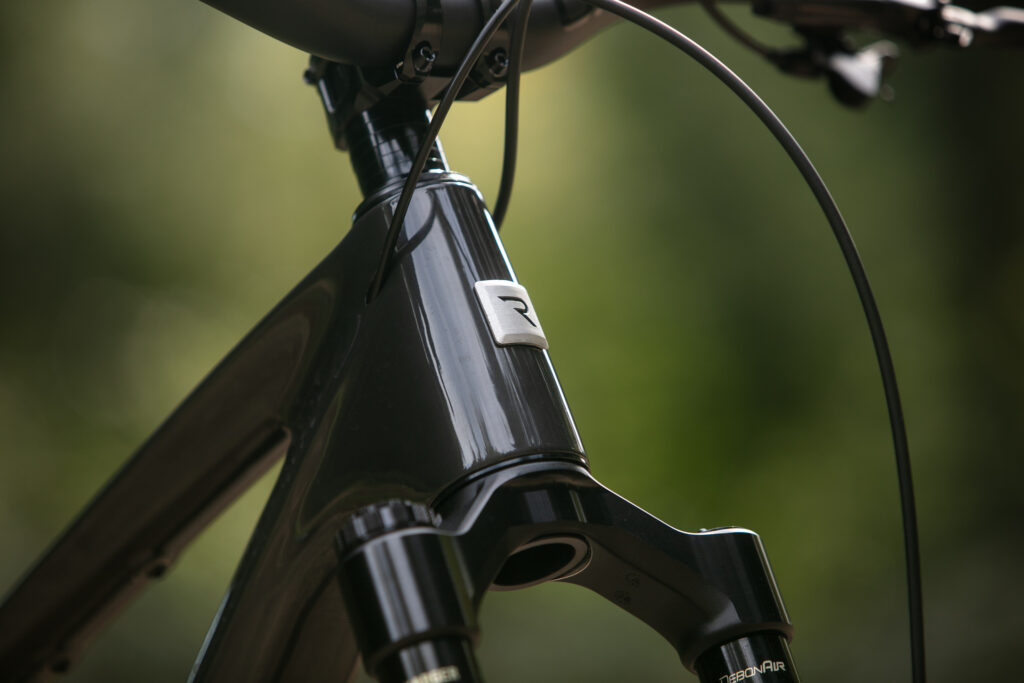
Other frame features include internal cable routing, two bottle mounts in the front triangle, and an accessory mount under the top tube. There’s a zero-stack headset and a threaded bottom bracket, as well as plenty of protection around the chainstay and the lower part of the downtube. Nice.
Revel Ranger SRAM X0 Transmission – Componentry
There’s a lot about the Ranger’s specification that alludes to it being much more than a downcountry bike. For example, it rolls on burly Crankbrothers Synthesis V2 Alloy Enduro wheels which are wrapped Maxxis Dissector Gen 2 tyres, sorted with EXO casings and MaxxTerra rubber Plus, its SRAM Motive Silver brakes slow a 200mm rotor up front, with a 180mm disc at the rear. If that’s not enough, the rear triangle is rated to support a 223mm rotor.
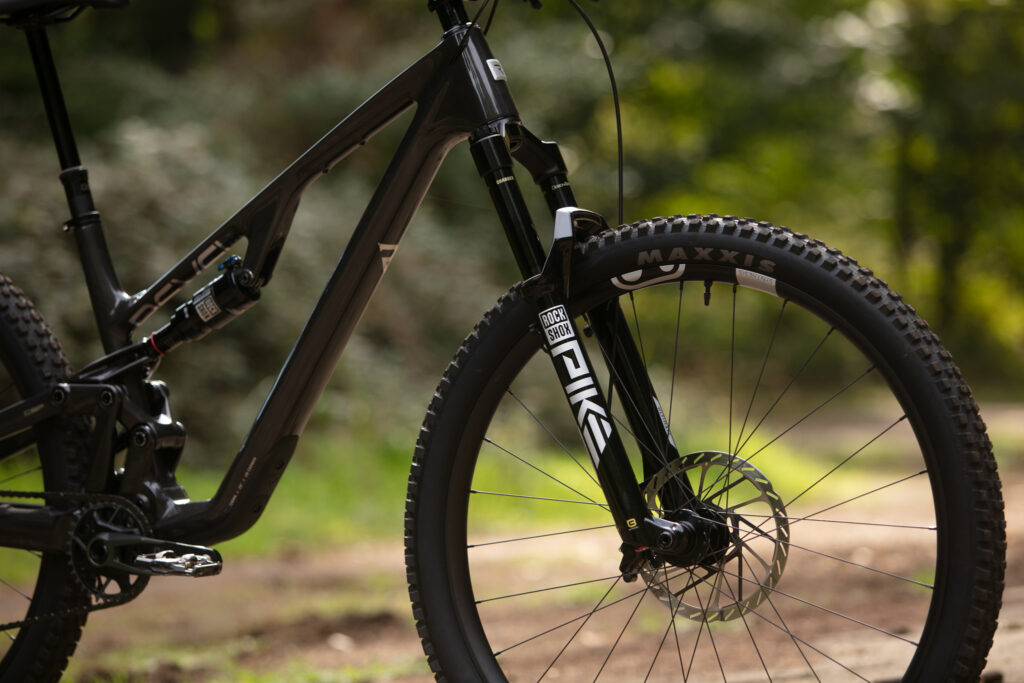
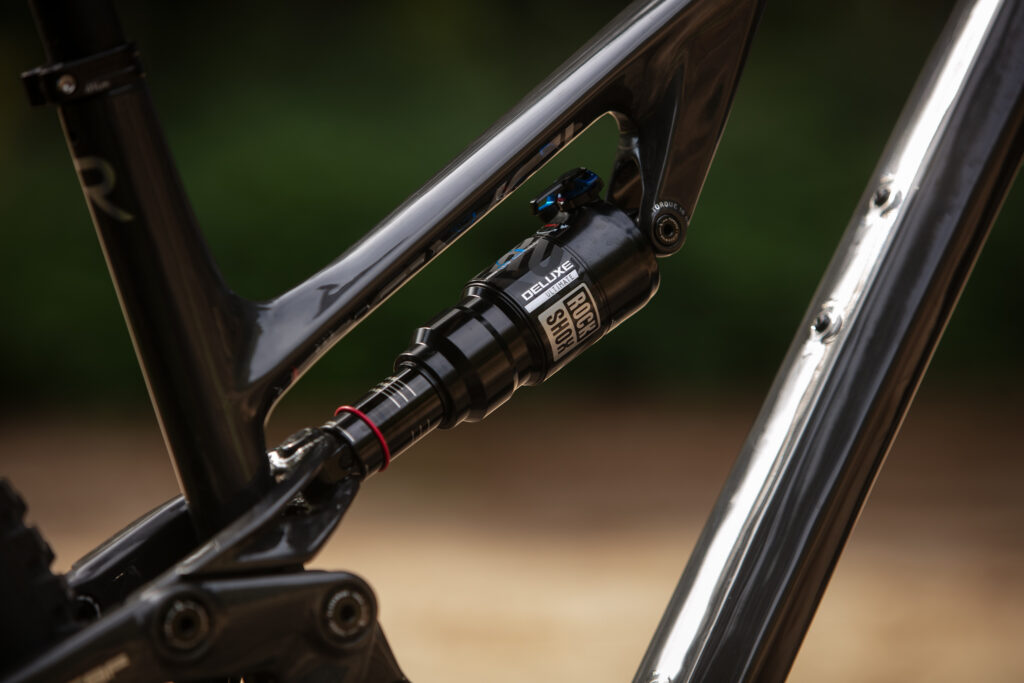
RockShox supplies the suspension with a Pike fork and Deluxe shock in their Ultimate guises, which can be found across the range. There’s SRAM’s XO T-Type shifting, too.
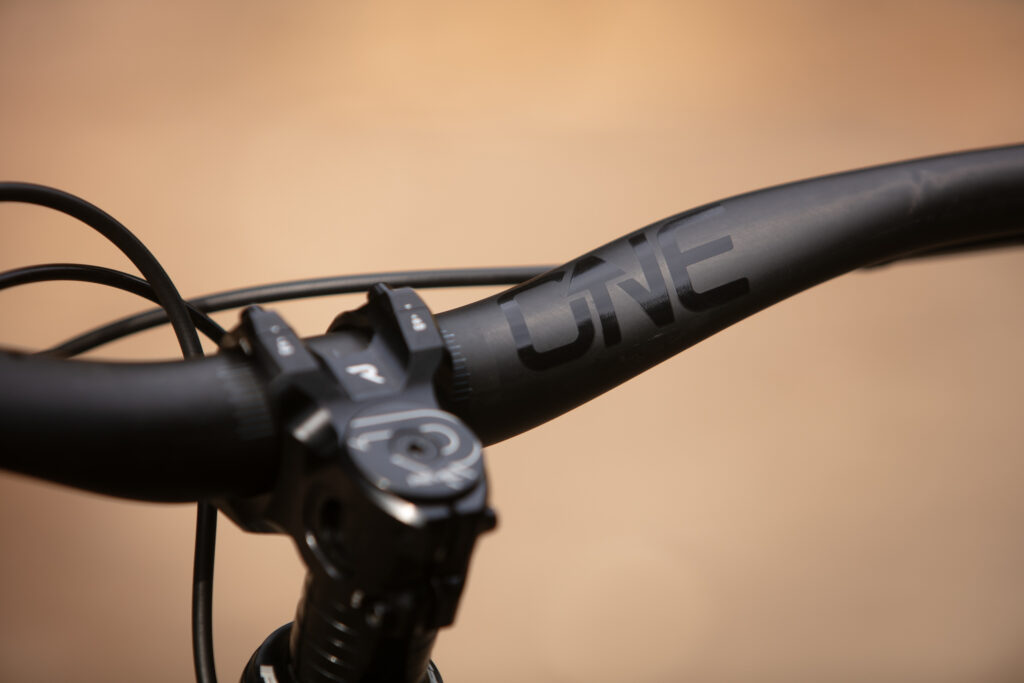
OneUp Components then handles the rest of the build with its carbon handlebar and the V3 dropper post offering 210mm of drop on this large frame. Atop that seat post is SDG’s Bel-Air 3 Lux saddle.
With that specification, it’s clear that weight savings haven’t been at the forefront of the Ranger’s design, but it’s all kit that complements the kind of riding it can get up to. So I’m not mad.
Revel Ranger SRAM X0 Transmission – Performance
Small travel 29ers have been something of a surprise focus for me this year, and having seen that Revel has deviated from what could be seen as quirks with the Ranger, I had very high hopes. And it’s provided some of the most fun I’ve had on a bike in 2026, but it defies its relatively meagre travel as there’s incredibly little that holds it back from harder-going tracks.
Revel states that the Ranger is a downcountry bike, and if this is what downcountry has come to be, I’m a fan. Despite that moniker, however, pedalling is an interesting one. Although it features more anti-squat than prior models, the rear suspension is quite active under smaller pedalling loads, so it’s not the most efficient over flatter terrain. However, when more power is put through the bike, there’s more of a gradient and more chain tension at play; the rear end only then stiffens up to provide a more solid pedalling platform. So it’s efficient when it needs to be.
From there, the Ranger transforms into a predictable, poised and keen climber. It’s a case of the harder you go, the more the bike gives back, and like many cross-country bikes, it’s had me cranking harder than usual, revelling in speed that’s relatively easy to come by. Its pedalling dynamic is more ‘efficient when you need it to be’ rather than outright efficient everywhere.
But where there is that touch of activity in the rear end, there’s tons of traction. Loose rocky climbs become grip-rich and steady, bringing an easy-going character over terrain that’s anything but.
A big change from the Revel norm is that the brand has thrown on a rather steep seat tube and has stretched out the reach measurement for the Ranger, whereas bikes prior were the opposite. This makes the bike feel much more familiar, but it results in a very comfortable seated position, where weight is central between the wheels. As such, it’s pretty much point and shoot when it comes to the climbs, where that seat angle promotes an efficient pedalling position, making the most out of the rider’s leg power. Throw in that cushy suspension, and it’s a supremely comfortable ride.
What really impressed me about the Ranger is that it doesn’t ride how you would expect a 120mm mountain bike to ride. It definitely has many of the traits, like its liveliness and relatively low weight, but Revel has worked wonders with the CBF suspension platform. It’s supple, traction-rich, and thanks to the greater progression thrown in, it helps the rear wheel iron out lumpy terrain with supreme confidence. Then, because it’s a fairly progressive kinematic, it staves off harsh impacts after dodgy drops without batting an eyelid. In fact, it outperforms some bikes with more travel, and it’s one that I would be happy to take to a bikepark.
Also, the boost in anti-rise adds to the whole package. I rode the bike before looking at the geo sheet, and if I approached it the other way around, I would be a little worried about the head angle and how it supports riding steeper terrain. However, the anti-rise baked into the rear suspension works wonders in helping the Ranger retain its geometry when the front is loaded. As a result, tackling steeper terrain is well within its wheelhouse, as when weight’s more front-biased and the braking is heavy, the front end still feels predictable, without a hint of twitch or overresponsiveness coming into the game.
Of course, traction under heavy braking loads is impressive, too, as the rear wheel does an excellent job of staying glued to the ground, without the suspension stiffening up all that much. So it’s comfortable, but still very confident when the time comes to drop the anchor.
But speaking of that head angle, it’s a wise choice, I reckon. It keeps a useful touch of response in the bike’s steering, so it’s easy and quick to point in whatever direction you like, but it still provides enough to lean on without the front end folding underneath you. In fact, the bike really rewards you when pushing hard into berms. Agility is certainly not a problem here.
The Ranger’s standover is incredibly low. Not only does this result in one good-looking bike, but it means that there’s less bike between your knees. When cornering and moving around it, there’s absolutely nothing to get in the way. And that’s a good thing, because as a result of its lower BB drop and shorter chainstay, the Ranger is an absolute doddle to swing around a turn.
And in the turns is where you notice the traction the CBF linkage throws up. Considering that this is a relatively small travel bike, its small bump compliance keeps both wheels glued to the ground.
But as I said, it doesn’t lose its small-bike sensibilities. Although it can smooth out much of the trail, it’s still primed to get rowdy. Speeding over technical sections can make it feel like you’re holding on for dear life, but thanks to the CBF and well-chosen geometry, there’s still enough composure for control.
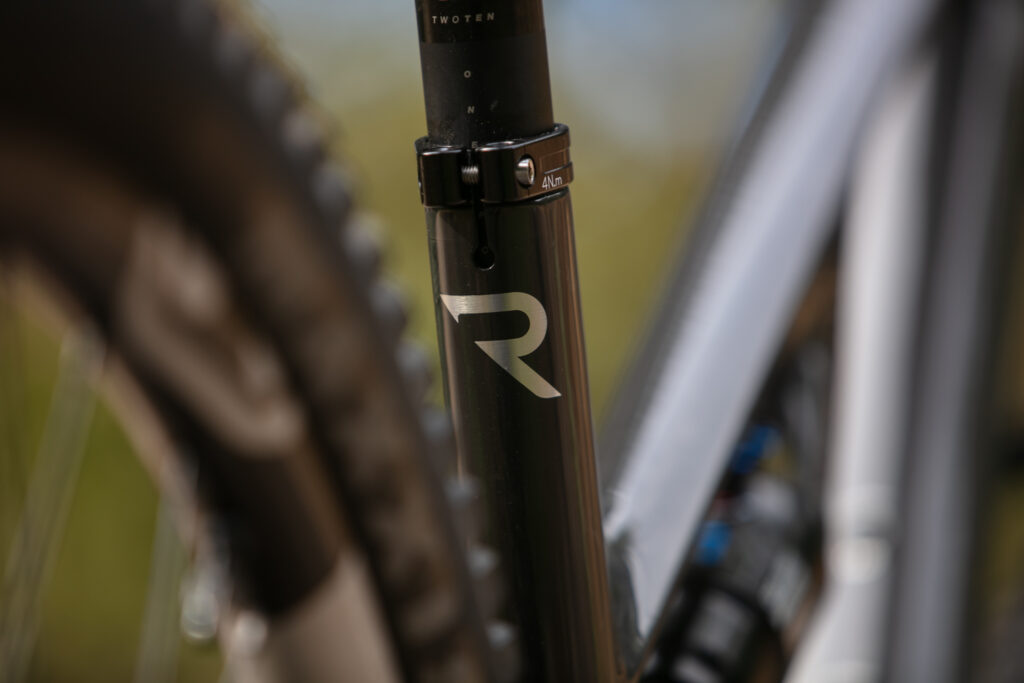
I’m a really big fan of the tyre spec here. Although it would have been easy for Revel to go for something faster-rolling and with a lower profile, the Dissector Gen 2 duo here complements the bike, rather than works against it. It helps promote that fast rolling while developing excellent traction. I would usually prefer a softer rubber compound at the front just to bring a touch more predictability into the mix, but over the firmer and sometimes wet terrain I’ve frequented aboard the Ranger, I’ve not really felt the need. The choice to go for an enduro wheelset may seem like an oddball move, but given the speeds the Ranger encourages, and the types of terrain it’s so comfortable over, it’s one I’ve definitely appreciated for the extra touch of strength.
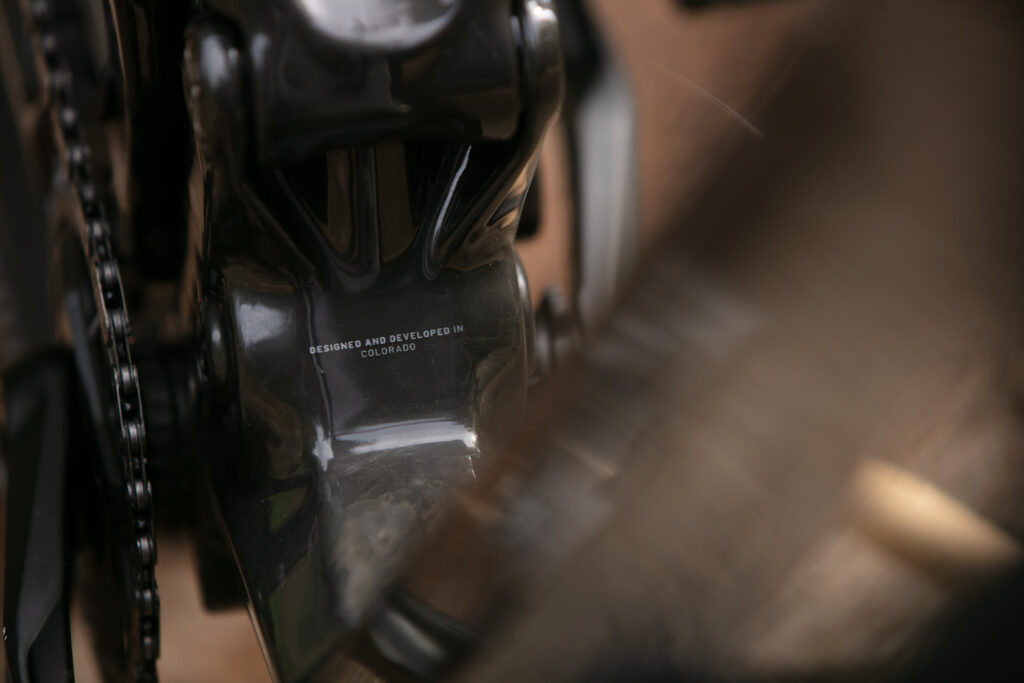
Lastly… look at it. This is one good-looking bike. It oozes quality with its carbon layup showing through its gloss coat. Every bit has clearly been sweated over, from the carbon linkage, even through to the internal cable routing’s ports. It’s super quiet on the trails, too, which is always a sizey plus. Revel is asking for a premium for this bike, and it’s one that certainly looks the part.
Revel Ranger SRAM XO Transmission – Verdict
So the Ranger is a premium mountain bike; there are no two ways about it, and with that comes a premium price of £7,999 for this SRAM XO-equipped build. However, prices for full bikes start at £5,999. That bike is the Eagle 90 build, and the only change is that the drivetrain and some carbon components become aluminium. As a fan of Eagle 90, that’s where I’d spend my money, just because I prefer mechanical shifting.
While no doubt expensive, around this price point, the Ranger shows competitive value. For example, the Santa Cruz Tallboy in its XO AXS RSV guise will set you back £8,299. Its build kit is almost identical; it just trades aluminium wheels for carbon Reserve hoops for an extra few hundred quid. However, it gets a pair of Maxxis Forekaster tyres, and when testing the XT Di2 version, I found a tyre upgrade to do wonders for its performance. Additionally, the Revel offers something a little different with its CBF linkage, and I think the bike as a whole performs a little better.
At £8,499 is Specialized’s Epic 8 Evo Pro. This is more of what I expect downcountry to be, as it borrows the frame of the cross-country rig, but beefs up the travel a touch. Here, you’re getting carbon rims, Fox Factory suspension, and SRAM’s XO T-Type shifting.
If you’re looking at the Ranger, Forbidden’s Reya follows a similar brief. In its Tier 2 build, you’ll get the same suspension, a OneUp Alloy handlebar, the same brakes, but SRAM’s GX T-Type drivetrain with a SRAM S1000 crankset, so there are some clear savings here. Compare the cheaper £6,099 Reya Tier 3 with the £5,999 Ranger Eagle 90, and the Ranger is looking more attractive.
The third-generation Revel Ranger is not a downcountry bike in the sense that it’s derived from a cross-country machine and given a boost in travel, and a slacker angle here or there. Because it is its own thing, Revel has developed a bike that brings the spritely and telepathic handling of a lighter and smaller travel bike, but with the headroom and hard-charging dynamic of a bike that’s equipped with more bounce.
As its suspension firms up under heavier pedalling loads, it eggs the rider on to pedal that bit harder, but it’s exactly the same downhill. Because it’s got the shape where it matters, and a suspension platform that provides shedloads of grip, and an unexpected heft of composure, it begs to be ridden faster and harder than its relatively meagre travel figures suggest. It’s a bike for those who want the thrills and potential rowdiness of a smaller travel bike but don’t want to be held back.
Test Report
What does the manufacturer say about this product?:
Revel says, “The Ranger hits the bullseye for what a downcountry bike should be.”
Tell us some more about the technical aspects of this product:
Carbon fibre frame, RockShox Ultimate Pike and Deluxe suspension, CBF linkage, SRAM Motive Silver brakes, SRAM X0 T-Type drivetrain, Crankbrothers Synthesis Alloy Enduro wheels, Maxxis Dissector Gen 2 tyres with EXO casing and MaxxTerra rubber, OneUp Components Carbon Handlebar, OneUp Components 210mm V3 dropper post.
Any further comments on quality?:
Build quality is absolutely stunning
Any further comments on performance?:
Excellent performance
How does the price compare to that of similar products in the market, including ones recently tested?:
Santa Cruz Tallboy X0 AXS RSV gets a near identical build kit but an extra £300 gets you carbon wheels. Similar for the £8,499 Specialized Epic 8 Evo.
List the components used to build up the bike:
Carbon fibre frame, RockShox Ultimate Pike and Deluxe suspension, CBF linkage, SRAM Motive Silver brakes, SRAM X0 T-Type drivetrain, Crankbrothers Synthesis Alloy Enduro wheels, Maxxis Dissector Gen 2 tyres with EXO casing and MaxxTerra rubber, OneUp Components Carbon Handlebar, OneUp Components 210mm V3 dropper post.
Tell us what the bike is for and who it’s aimed at. What do the manufacturers say about it?:
It’s a downcountry bike that’s built to be efficient and capable.
Where does this model sit in the range? Tell us briefly about the cheaper options and the more expensive options:
Lower-middle of the range. £11,199 buys you a Ranger with RockShox Flight Attendant suspension, £5,999 buys you a bike with the same suspension as the model tested but with alloy components and SRAM Eagle 90 shifting.
Tell us about the build quality and finish of the frame:
Beautiful.
Tell us about the materials used in the frame:
Carbon fibre.
Tell us about the geometry of the frame:
A large has a 485mm reach and a 437mm chainstay. Other measurements include a 65.7-degree head tube angle, a 77-degree effective seat tube angle, and a 41mm BB drop.
How was the bike in terms of sizing and angles? How did it compare to other bikes of the same stated size and intent?:
It’s definitely ‘downcountry’ but Revel has nailed it.
How much suspension travel does the fork have?:
130mm
How much suspension travel does the rear end have?:
120mm
Was the bike comfortable to ride? Tell us how you felt about the ride quality:
Very comfortable to ride.
Did the bike feel stiff in the right places? Did any part of the bike feel too stiff or too flexible?:
It’s a stiffer bike in general, but it’s not unforgiving.
How did the bike transfer power? Did it feel efficient?:
When needed, it’s efficient
How would you describe the steering? Was it lively, neutral or unresponsive?:
Neutral but agile.
Tell us some more about the handling. How did the bike feel overall? Did it do particular things well or badly?:
A blend of stability and agility that few can match.
Which components had the most effect (good or bad) on the bike’s performance? Would you recommend any changes?:
All components are great. Impressed to see enduro spec wheels on a bike like this.
Any comments on sprinting?:
Slightly bobby but still very good
Any comments on climbing efficiency?:
Bit bobby on the flats but stiffens up nicely when needed.
Any comments on brake performance?:
Excellent choice for a bike like this.
Did you enjoy using the product? Yes
Would you consider buying the product?
Yes, if on sale
Would you recommend the product to a friend? Yes
Use this box to explain your overall score
I loved the Revel Ranger, but its price would stop me from buying it
About the tester
Age: 34
I usually ride: Santa Cruz Bronson
I’ve been riding for: 10-20 yearsI ride: A few times a weekI would class myself as: Experienced
I regularly do the following types of riding: Mountain bike Enduro