


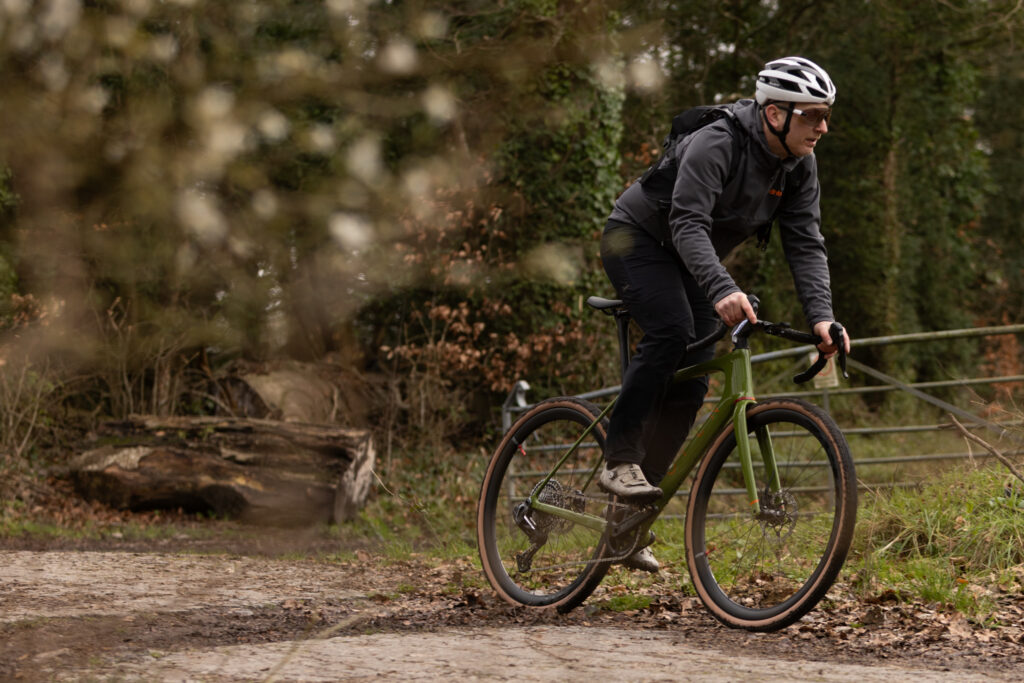

Riding bikes off-road in England and Wales can sometimes be a seriously grey area. In fact, many riders out there will likely be riding illegal trails without ever realising it, but as always, it’s best to be properly clued up on the rights and wrongs before you find yourself on the wrong side of the law. Although the waters are murky, let’s dispel some of the confusion.
Mountain bike trails and gravel routes take riders over a wide range of land, whether it’s open fields or deep forests – but because much of the land in England and Wales is privately owned and/or managed by forestry organisations, laws govern where you can and cannot cycle. Generally, there’s a lot to consider to determine whether or not it’s legal to ride almost anywhere. But let’s get into what each trail or path type means legally.
To clarify: this article covers the rules in England and Wales. In Scotland, cyclists enjoy much greater access thanks to the Land Reform Act of 2003 – but you must ride responsibly and follow the Scottish Outdoor Access Code.
Public footpaths
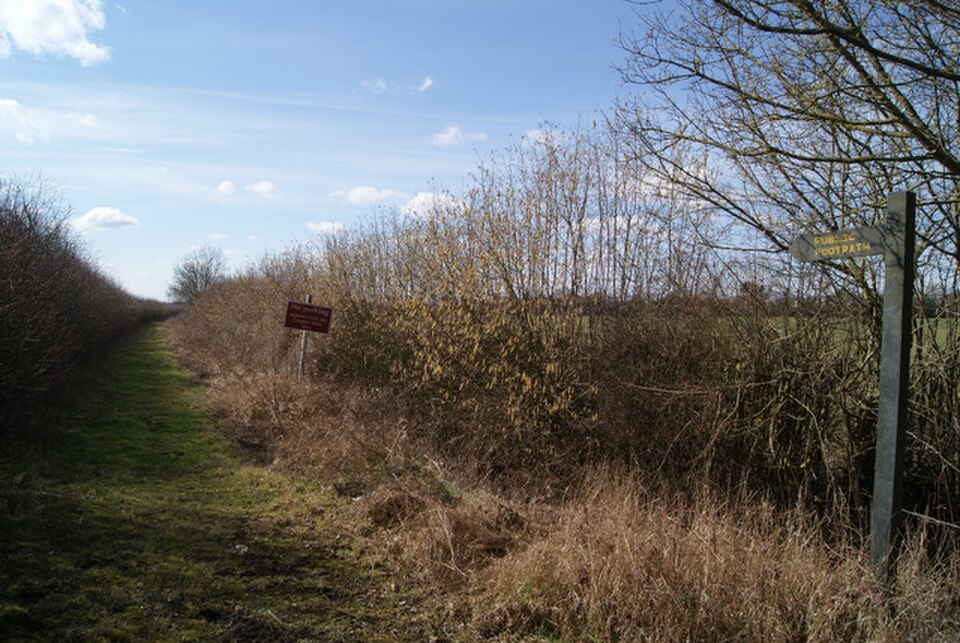
The network of public footpaths in England and Wales covers around 91,000 miles (146,000km), and all of it is perfectly legal to walk and run on, and to use mobility aids if needed.
You’re technically not allowed to cycle on a public footpath and, somewhat confusingly, riding on one could constitute a trespass offence, because public footpaths often cross privately-owned land. While you’re unlikely to bump into the police on a public footpath, the landowner does have the right to boot you off, should they not like what you are doing.
Many cyclists do use public footpaths every day in England and Wales without incident, and often they can be perfectly suitable for riding – in fact, section 31 of the Highways Act 1980 states that where a footpath “…has been actually enjoyed by the public as of right and without interruption for a full period of 20 years”, then it can become a highway (either a bridleway or restricted byway) as a presumed right.
Cycling UK has long campaigned for public footpaths to be opened up to cyclists in England and Wales, saying: “Cycling on footpaths is not a legal right, but many are entirely suitable and form good links with other paths. Opening them up to cyclists would enhance the network of motor-traffic free routes.”
If you would rather stick to the rules and avoid cycling on the footpath, you can simply push your bike along instead of ride it. Technically a landowner could still take umbrage with a cyclist pushing their bike if they claimed it was causing damage to the path, to give one example – but according to Cycling UK there is no precedent for a scenario like this, so it claims pushing your bike on a footpath is not illegal.
Bridleways, byways and restricted byways
As we move towards bridleways, byways and restricted byways, laws around cycling open up significantly. These are the types of tracks that you’ll be more likely to come across when cycling in the countryside. Generally, they’re wider, and many of them will be what we know as fire roads, although the term ‘fire road’ is more of a description of what that track is used for – access for fire services.
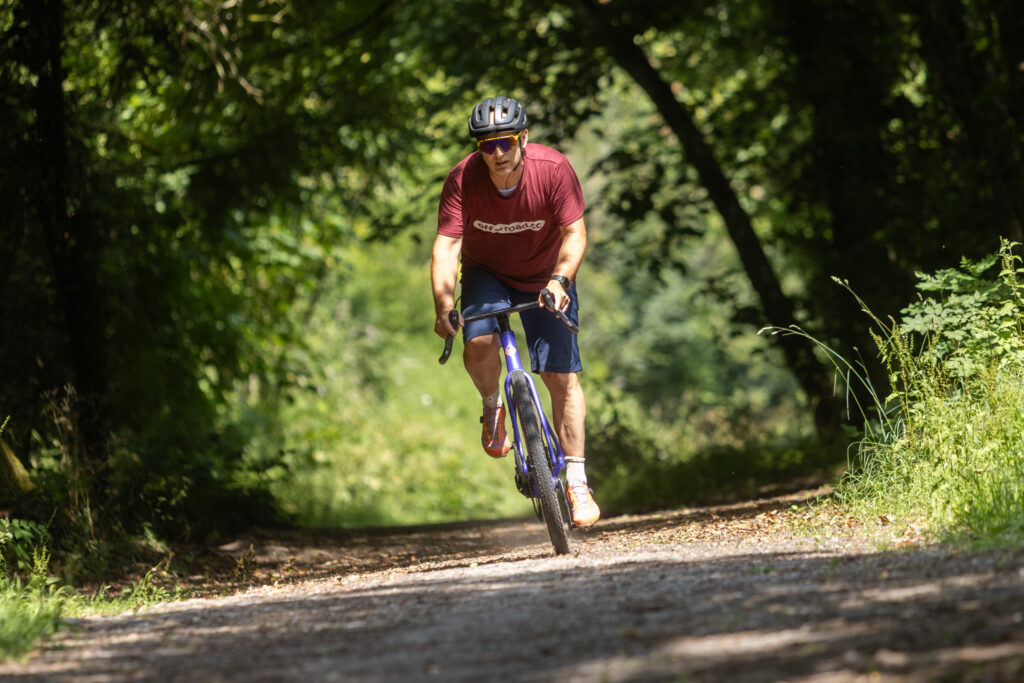
You can legally cycle on a bridleway, restricted byway, or ‘byway open to all traffic’ (BOAT). Bridleways can be used by those on foot, cyclists and horse riders; while restricted byways can also be used by horse-drawn carriages. Only BOATs can be used by drivers of motor vehicles.
What about racing?
Rules change quite a lot when riding against the clock. While you can’t ride legally on a footpath, if there’s a closure order in place, a footpath can be raced on.
You can ride on a bridleway, but racing is not permitted – a state of affairs that Steve Thomas wrote about in a recent blog article, whereby a knowledgeable cyclist managed to save an event from being shut down by the police. The reason? The event was a ‘ride’, not a timed race, so it was allowed. The bamboozled officers went on their way…
As for byways and roads, racing is permitted, but they will have to be closed or managed with open roads having obtained permission from the correct authorities. Unless you’re trying to start your own bike race, these legalities are best left for race organisers to handle.
Mountain bike trail centres and bikeparks
If you’re looking for 100% legal mountain biking, the trail centre or bikepark is the way to go. Your average mountain bike trail centre consists of specially built trails created especially for mountain bikes, so it’s perfectly legal to ride them. They sometimes also consist of bridleways, byways and restricted byways which often act as a connector between trails.

With that in mind, don’t be surprised if you come across other trail users, like horse riders and walkers, as these people also have legal access to these byways and bridleways. And although most trail centres install signage to dissuade hikers and the like from using mountain bike trails, it’s always safer to expect the unexpected. Handily, these signs also act as direction markers for a designated cycling route.
At a mountain bike trail centre, there’s often some kind of fee involved. That may be an entry fee, including a pedal up or uplift cost, or just the price of parking. Some forestry management operations offer annual payments which will grant access to free parking at a variety of locations.
Once you’re outside the bounds of a trail centre, then be sure to follow the bridleway, byway and restricted byway rules to ensure that you’re riding legally.
Illegal trails
Mountain biking especially is often done on technically illegal trails, and this is where a considerably large grey area forms. If you’re not on a bridleway, byway, restricted byway or in a trail centre/bike park, it’s safest to assume that it’s not legal to be riding your bike there.
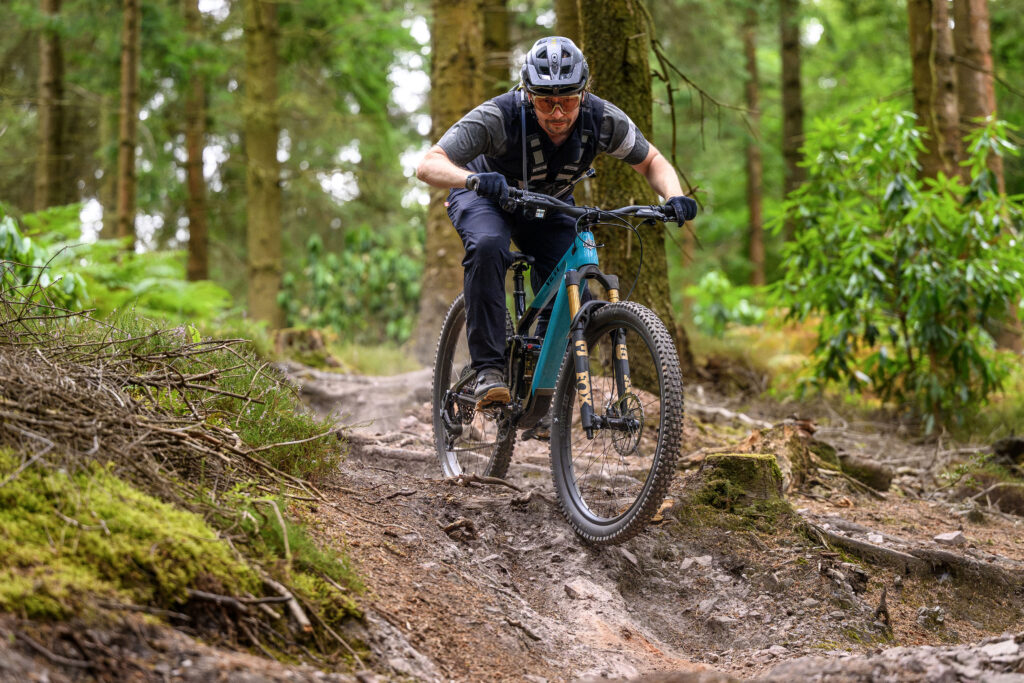
However, often there’s quiet and sometimes unspoken permission to ride in certain areas, with landowners, forestry commissions and other bodies acknowledging that people are riding bikes on their land, but they allow it. As such, these trails become technically legal to ride on, as there is permission. A lot of the time, there’s either a single point of contact between the cycling community and the landowner who holds this spoken agreement; sometimes, it’s a small team of volunteers.
But these venues are the most sensitive. If a landowner who’s allowed cycling to happen on their land finds that the land is not being used in a way that they agree with, that silent agreement can erode instantly. Often, there are rules to be followed here, too, like not using trees and other natural forest materials to build features.
Landowners like the Forestry Commission don’t like this, because trees are their business. Plus, they’re trying to avoid potential court action that may come as a result of a rider’s injury.
As these trails aren’t officially recognised as legal or properly established with signage, and often cross and include byways, bridleways and restricted bridleways, it’s likely that other trail users will also access them. So ride with caution.
If you want to find out the status of a particular path, trail or area, resources like OS Maps are really useful. Bike symbols are displayed where cycling is allowed.
Common courtesy is key
Regardless of the type of trail or track you’re riding, respect other trail users. Say hello and slow down when passing people and horses, close gates as you’ve found them, and take whatever rubbish you create home with you.
To some degree, we’ve seen cyclists of all types being unfairly stereotyped by certain people and publications in the media, which filters down to a minority who might be inclined to tar us all with the same brush, so to speak. There’s only so much we can do to quell unnecessary vitriol aimed at cyclists, but it doesn’t hurt to be friendly, kind and courteous to people who you meet out on the trails and paths to spread some positivity. As long as the positive interactions vastly outnumber the negative ones, that will protect and increase trail access for years to come.
















10 thoughts on “Rights of way for off-road cycling explained: Know where you can and cannot ride with this easy guide”
Is this article about rights of way in the “UK” as the title suggests, or is it actually just about England?
The article doesn’t mention Scotland or the north of Ireland anywhere – and at least one of those has quite different laws than England.
OMG where do I start? I work for the Public Rights of Way team in a county council. There are so many mistakes in this article.
Not UK – England and Wales. Legislation starts from National Parks and Access to the Countryside Act 1949 – See also 1968 and CROW 2000.
For Clarity:
Footways – these are the tarmac walkways beside a Road.
Urban Footpath – these are the tarmac paths with grass either side often found on a housing estate.
Neither should be confused with Public Footpaths – please.
Public Footpath. A Highway recorded on the Definitive Map and Statement and open to users on foot only (may be accompanied by a dog or a pram). Most are on Private Land. Use of a cycle or EAPC will constitute a trespass but is not illegal. Pushing a bicycle is a grey area!
Public Bridleway. as above recorded. Open to users on foot, horse back and cycle. Cycle users are expected to cede priority to other users (1968 Act).
Public Restricted Byway. As above but also horse drawn carriages. No Motorised users.
Use of any of the above PROW by a motorised vehicle excepting where private rights exist is an offence under the RTA.
Public Byway Open To All Traffic. As above but also recreational use for motor vehicles.
Hope that helps.
@Samtheeagle ‘Pushing a bicycle is a grey area!’
I remember (risky..) reading some legal advice on the CTC forum years ago that mentioned established case law (iirc) that wheeled vehicles were ok when pushed – a barrow or a child in a bike seat, etc. As long as no damage or nuisance could be shown by the landowner it was fine and shouldn’t need to be challenged. Essentially a bike on a footpath is not the issue – it’s what’s done with it.
@james-o I’m fairly sure that there is no “grey area” involved here, the same way that there is no grey area about pushing one’s bike on the pavement, once you’re dismounted the bike becomes just another piece of personal property like a pushchair, wheeled suitcase or shopping trolley. If a footpath is permissive rather than fully public then a bloody-minded landowner could post a prohibition on all cycles, pushed or ridden, but I’ve never heard of anyone trying that.
@Rendel Harris https://road.cc/content/news/duke-devonshire-bans-bikes-estate-282993
Bloody-minded indeed!
@Rendel Harris I think it was jitensha_oni who when this was discussed previously, posted a Surrey by law that made pushing a bicycle on a public footpath was an offence.
@Samtheeagle If I may refine this slightly…
Urban footpath is a descriptive term rather than a legal category. In housing estates or similar, such a path may be a public footpath and recorded on the definitive map, a highway (adopted, or unadopted), or even just a permissive path – a lot depends on the planning decision, the decision by the LHA to adopt, or whatever. Urban footpath describes the path without getting into the weeds (sometimes literally) of its legal status.
Public footpath – in practice, the definitive map is both prescriptive and descriptive. If it defines a path, then a right of way exists over it (except as follows). However, the definitive map requires maintenance and updates, and a right of way may exist which has not yet been recorded in it, or may have been extinguished. The existence of a public right of way (to pass and repass at will along a way) depends on the facts of its existence. A subsequent legal order, act or bylaw may override custom and the definitive map.
Tangentially, most LHAs now provide an online digital copy of the definitive map; OS maps differentiate between a series of public rights of way (e.g. public footpath, bridleway, BOATs/byways) and permissive paths. Neither is ‘definitive’. The online version of the definitive map is a copy, but cannot be relied on as evidence. In practice, both are suitable for navigation and route planning purposes.
Pushing a bike on a public footpath is less grey than some would imagine. It has long been accepted that a cycle is a reasonable accompaniment, in the same way that a pushchair, handcart or wheelchair might be – and was stated to be the case in the discussion of the Countryside Bill in 1968 (HC Deb 24 June 1968 vol 767 cc183-4). The greyness comes over the riding of the cycle on a public footpath. It is largely a civil matter (and of negligible significance, in most cases), although aggravating factors can escalate the matter faster than some might imagine.
– England and Wales. N Ireland is more restrictive and Scotland far more enlightened.
If only it was that straightforward in Scotland. The legislation omits ‘working land’ which can include agriculture. It also doesn’t stop land being closed off during the shooting and stalking season. It’s not enforced in anyway to keep land open. It’s lack of enforcement is it’s issue because with the increase in dirty camping, human initiated wildfires and a lack of respect by some e-mtb and gravel cyclists, it is slowly falling apart and already under review. It puts a big emphasis on a thing called respect, which is definitely lacking in a few male cyclists I came across on the early section on the WHW that is shared with the JMW this year. And before the #notallmen begins, believe me it will take just a few to see a ban much like wild camping alongside loch Lomond.
It’s all meaningless. Ride where you want as long as you’re not taking the piss. The bridleway/footpath distinction is often entirely arbitrary.
In my experience there are very few people who actually care about cyclists on footpaths and those people’s opinions are definitely not worth worrying about.
We’ve added several clarifications to this, so all info should now be correct. In the next update we’ll look to go into more depth about the differences in Scotland and Northern Ireland.