


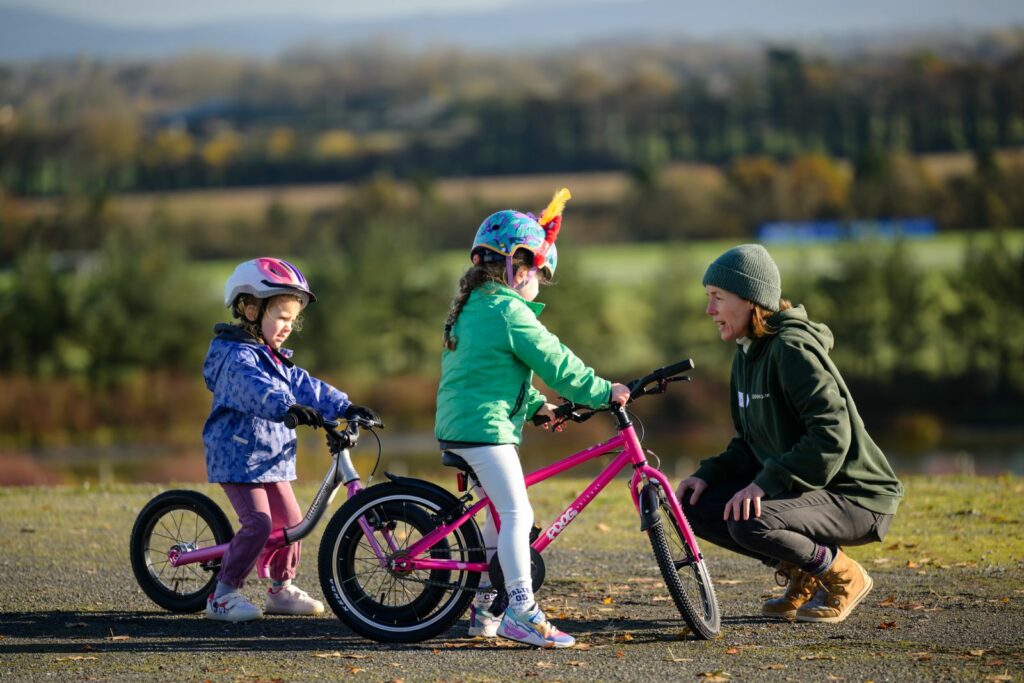

Cycling Ireland has highlighted an astonishing plummet in the number of children cycling to school, dropping from 25 per cent of children 40 years ago to just three per cent today, even though the majority of parents want their offspring to cycle to school.
Speaking on The Claire Byrne Show on Irish radio station Newstalk, Cycling Ireland president Ciarán Cannon highlighted an “absolute generational collapse in children’s independent mobility”.
“A secondary school child should be easily able to cycle the three to five kilometres every morning and every evening,” he said.
“There’s no reason why they shouldn’t, other than the fact that their parents have serious safety concerns around that actual route to school. If you look about 40 years ago, we had one in four of our secondary school children cycling to school – that’s now about one in 30.”
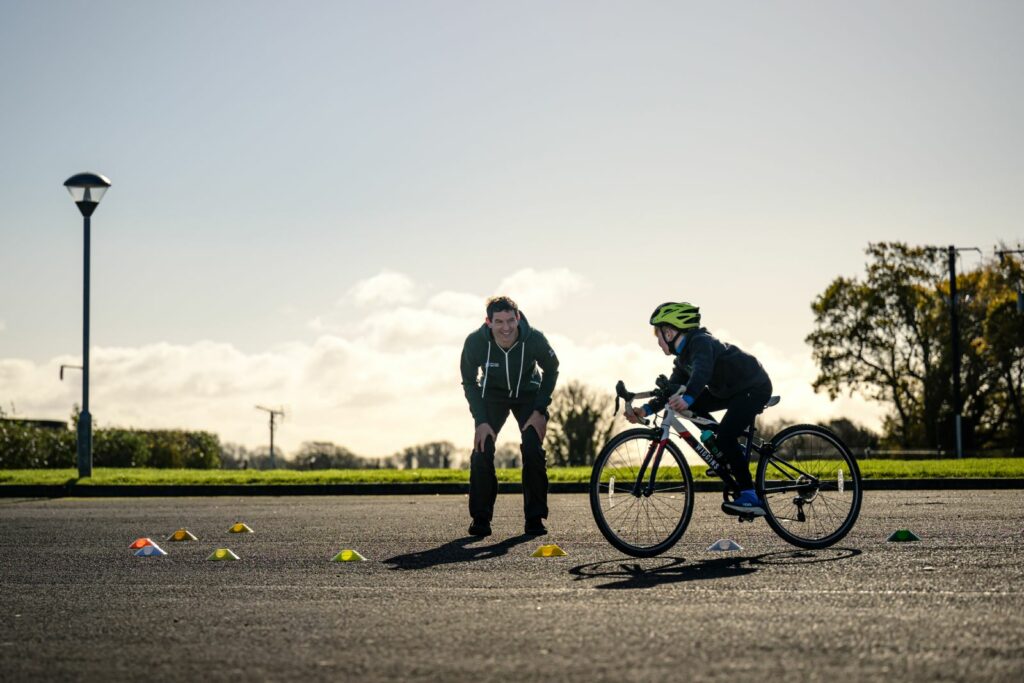
To encourage more kids to get to school via bike, Cycling Ireland has launched its Cycle Right programme, which trained 43,000 children last year, aiming to reach 50,000 annually. The programme covers bike handling, road positioning, and risk evaluation.
However, the programme will only work if parents feel confident enough to let their children ride among traffic. This is being tackled, to an extent, by the country’s Safe Routes to School Programme, which helps identify and improve cycling routes to and from schools. However, there’s still a shortfall.
“There are about 4,000 schools in Ireland right now between primary and post-primary and just over 500 schools are engaged in that programme,” Cannon explains. “So, we urgently need to scale up that; we need to invest in it and it’s a really, really sound investment in our children’s health and well-being.”
Cannon’s comments follow research from RedClick and Ireland Thinks shows that nearly eight out of 10 children never cycle to school, with only five per cent cycling daily, while 70 per cent of parents would like their kids to commute by bike.
When asked why cycling is not feasible, parents cited distance to school as the leading reason (54 per cent), followed by heavy school bags (41 per cent), unpredictable weather (39 per cent), and a parent’s lack of confidence cycling with their children (22 per cent).
For parents of secondary school students, distance remains the primary challenge (54 per cent), followed closely by unsuitable school uniforms (49 per cent), a lack of confidence cycling (46 per cent), and concerns over the impact on personal appearance (42 per cent).
Across the Irish Sea in England, Labour has announced a plan to get at least 60 per cent of school-age children cycling, walking, or wheeling to class by 2035 as part of a £4.5bn active travel strategy.







9 thoughts on “Safety fears behind “absolute generational collapse” in number of children cycling to school, Cycling Ireland president says”
Across the Irish Sea in England, Labour has announced a plan to get at least 60 per cent of school-age children cycling, walking, or wheeling to class by 2035 as part of a £4.5bn active travel strategy
As a, now lukewarm and disillusioned, Labour supporter I would be laughing at this laughable doomed-at-the outset ‘plan’ just like the people supposedly responsible for its implementation must be sniggering: there is a 0% probability that the 60% stated target will be achieved and the true percentage will be a fraction of the target and may even be less than it is now (just like the Climate Change mitigation targets, then!) The January 2026 DfT Road Safety Strategy implementation was declared in Parliament to be in the hands of Lilian Greenwood MP:
Since 2010, the number of people killed or seriously injured (KSI) on the roads has plateaued, despite advances in vehicle technology. The current approach is no longer delivering the required road safety improvements. Vulnerable road users, such as pedestrians, cyclists, motorcyclists, and children, remain disproportionately at risk of serious injuries and fatalities
We all know that the police will not lift a finger to prevent or even discourage close-passing attacks on cyclists, and I have no doubt that the Road Safety Strategy has already been forgotten. Lilian Greenwood is the minister who responded a year ago to my MP’s letter about long term VED evasion around Garstang (such as BF64 TGE, HY66 ZZB, MM10 EOG, HN21 VXB, WU67 BLF etc. etc) with ‘at DVLA we make VED easy to pay and difficult to avoid’! Greenwood has now been shunted off to some other ministerial home for the Incurably Idle, Inept and Forgetful, and the minister now responsible for the Road Safety Strategy is Justin Madders, presumably someone else suitably experienced in Doing Nothing.
Safety fears. The figleaf of respectability for the habitually lazy.
@jackcycles Our roads are not safe for children. Its as simple as that. I have a cargo bike with 2 child seats on it. They have bright green and blue helmets that are visible to cars. People know there are children on the back of my bike. They still close pass me. They still drive at me instead of giving me time to pass parked cars despite me having priority. I wouldn’t let my kids cycle to most schools around here.
Even if we accepted that children would ride on the pavements, a lot of them are blocked by parked cars (imagine that eh) and pavements appear and disappear all the time.
Its sad but true that it is a safety issue when it comes to kids cycling to school for anyone that doesn’t live super close and have an obvious route that doesn’t require multiple interactions with cars.
Ireland, whenever I have been there is far worse. The lack of pavements in rural areas is stark and Ireland seems to have a culture of bad driving especially amongst the youth.
I think it’s somewhat true that a small proportion of kids cannot cycle to school safely. It certainly isn’t true that only 3% of kids (as the article cited) can cycle safely to school.
I cannot speak for Ireland specifically as I don’t live there. I will defer to your knowledge, but I do note that according to statistics only around a third of the population there live rurally.
Much more common in the UK is convenience: it’s simply easier for parents to stop their kids off at school as they are normally going to work anyway, and school is somewhere vaguely in the general direction they need to go. No effort required for either parent or child – it’s simply the line of least resistance .
I live near a new town and there are ample cycling paths (even completely segregated) and safe routes, and the fact is that a majority just choose to drive anyway. Boys are far more likely to cycle than girls.
@jackcycles It would certainly be interesting to know the prevalence of general cycling amongst children then vs now because its probably pretty unlikely that children who don’t cycle much day to day are going to cycle to school.
My local Green party ran a public meeting a few years ago as part of its campaigns for better cycle lanes in the town here in north-east England. They showed a film made by local schoolgirls about why so few of them cycled to school. The main reason, by a long way, was fear of looking foolish and uncool in front of their friends and of boys. How would better infrastructure change that? In the 1970s when I was a child and as readers are well aware, far more children rode without cycle lanes existing.
@This Wreckage haven’t we done this before?
You’re quite correct about the last part – “in the days of steam shovels we all walked 5 miles to the factory and back every day…”
Leaving aside some difficulties with people’s self-reported reasons why they don’t do things they don’t do (sometimes they’ve simply never thought about it and make stuff up)…
… and assuming we’re not simply happily unhappy with the status quo…
… we could ask “what needs to be true” for change and “how do we make that true?”
Kids think what most other kids (or the cool kids) do is cool. What’s that? It’s the stuff the adults they know and respect do. Plus of course what they’re being sold…
So why don’t adults cycle (and indeed why aren’t the adults happy to let their kids cycle on their own)?
For the answer to that (not necessarily the only / best answer, but just the one we can get to from here): is there anywhere in Europe where a large proportion of adults cycle sometimes (and indeed also a very large proportion of children)? What makes that possible?
@jackcycles “safety fears” are what society (or at least much politics) runs on, no? That and the wider “not keeping up with the Joneses” (because “safety” for humans involves concerns about our status and being classed as an “other” – both sometimes bringing real physical risk).
From “this country is broken / lawless” (as crime has been falling for decades) via “invasion” rhetoric (the US administration has a good line in this also) and further back “Turkey, population 76 million, is joining the EU. Vote Leave – Take Back Control.”
Is that what you mean?
There are some things which just seem to be “blockers” for most people. For cycling (and indeed walking), there are multiple push/pull factors (like “does everyone drive already”…)
…but most people don’t consider eg. kids cycling on anything other than local streets safe. (And even then, in the UK we have fixed it so there’s often way to much motor traffic – perhaps using those as a through route – often at speeds of 20mph or even higher).
Same with “isolated paths”. Even if no issues have in fact occurred *there*, that can be a deal-breaker for some.
To some extent even being considered “that weirdo cycling family” would be a blocker. There are places and times where people very much don’t want to draw attention…