



A local survey of cycle lane users has found that only a quarter of cyclists who use them are female.
The Gender Pedal Gap Taskforce in Milton Keynes examined the use and quality of infrastructure across the city’s Redways network of active travel routes. They found that 23 percent of cyclists observed on the network were women, and that many women who were surveyed expressed concern over collisions and stranger danger.
In response, the council’s active travel programme manager, Hayley Roche, told the BBC, “sometimes people might be worried about surveillance in underpasses, so there’s work we can do in terms of maintenance to make them feel a little bit safer.
“If we could get more people out on the Redways, they would feel safer as well – it’s safety in numbers.”
The findings were shared at a summit organised by local campaigners Cycling Citizens MK at the Open University. Co-chair Ann Shrimpton welcomed the meeting as a chance to gain “firm commitments” from local politicians towards improving the network “both in terms of investment but also in terms of how we plan and design to take into account the needs of all users – particularly women.”
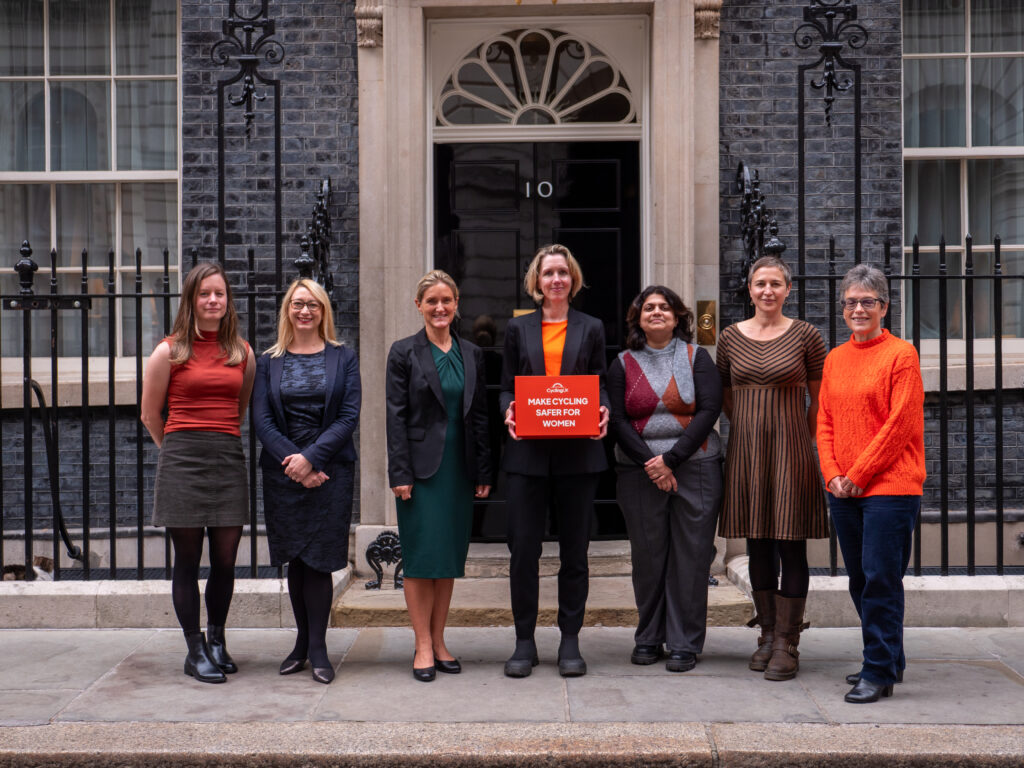
The summit in Milton Keynes occurred on the same day Cycling UK submitted an open letter to the Prime Minister urging the government to deliver support making cycling safer for women.
The campaign, supported by backbench Labour MPs and delivered by hand to Downing Street, coincides with the return of organised ‘glow rides’ in several UK towns and cities.
“Women make around half as many trips by bike as men and are more likely to be put off by busy traffic or harassment”, the letter says. “This can prevent women of all ages from cycling to work, taking children to school, visiting friends or simply getting where they need to go.
“As Mayor of Greater Manchester, you made bold changes to give people more ways to travel and create a fairer transport system. We urge you to bring that same ambition to the whole country, sending the message that we need better cycle routes for women. Enabling more women to cycle would provide an affordable and healthy way to travel, help reduce congestion and make communities better places to live.”
The participation gap between men and women cycling has long been documented. A Cycling UK report published last March found that 90 percent of women feel afraid cycling in towns and cities. It also found that the gender barrier to cycling has widened since 2017, primarily due to a lack of segregated cycle lanes.
A separate report from the WalkWheelCycling Trust (formerly known as Sustrans) found that the gender participation gap also has roots in childhood.
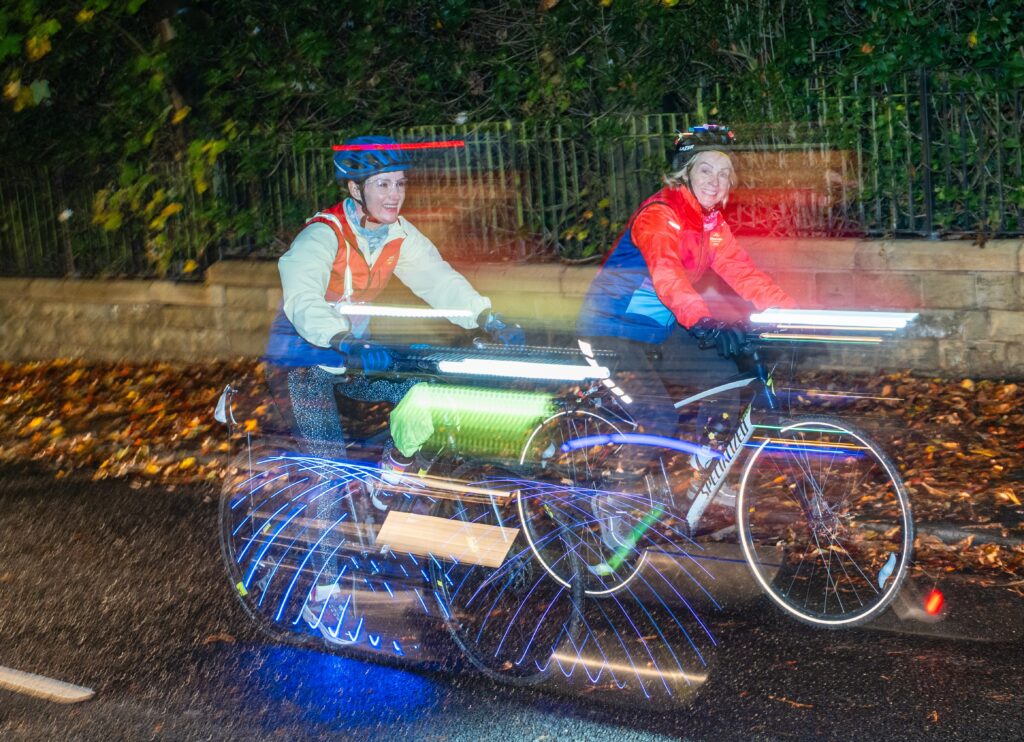
Cycling UK responded to their report last year by launching a campaign titled “My ride. Our right.” The ‘glow rides’ aim to encourage women to take part in a group ride wearing bright lights and “shining a light” on the lack of lit cycle paths that are more likely to discourage women from cycling than men. More than 80 rides will take place on Thursday.







43 thoughts on “Three quarters of cycle lane users are male, local taskforce finds as Cycling UK urges Andy Burnham to support safer cycling for women”
Interesting article. Nevertheless currently a Cycle Lane = Murder Strip. At least it does were I live: no segregation, drains , unswept , parked cars , frogger, lanes suddenly ending… Bradford Met for reference. What’s it like near you?
@VIPcyclist That’s pretty common with cycle lanes everywhere I think, but the nomenclature in the headline is wrong, this study isn’t about cycle lanes but about the Milton Keynes Redways, which are 200 km of shared-use motor-free paths, and its primary focus is on women feeling unsafe on the network due to the threat of crime against the person rather than the threat of motor vehicles.
@VIPcyclist Agree regarding cycle lanes, but the article is referring to cycle _tracks_ in Milton Keynes, which if I remember rightly are segregated but also don’t run next to roads, so they’re often quiet, dimly lit and secluded.
@matthewn5 On which – I’ve not been there (and I’ve heard from a couple of cyclists online who say that they *are* good…) but I suspect the following blog post (from 2012 – As Easy As Riding A Bike) nails it: “They built it, and they didn’t come – the lesson of Milton Keynes”
Verdict: the place was designed (1) for very convenient driving (not surprising – aspirational driving was the thing at the time, they had a blank canvas etc). (2) While the designer genuinely tried to provide for cyclists that comes across as “we need to get the cyclists off the roads because we fixed it for the cars to move fast”.
As is common (across the decades) in the UK it’s nominal safety from motor vehicles but at major cost to convenience. Not to mention lack of social safety.
FWIW there’s also videos online by Alexei Sayle of him cycling around giant car parks there…
Would be interesting to see how cycling’s gender gap changes with quality of infrastructure. Do you get more women as we move from murder strip to proper infrastructure?
@the little onion Anecdotally, I’d say yes: the male to female ratio of commuter cyclists in London has definitely narrowed over the last few decades in a period that has coincided with massive improvements in cycling infrastructure. Still anecdotally but more clearly, I personally know several women who used to say they would never cycle commute in London because of the risk but who now do because the majority of their journey can be made on quietways and segregated cycle tracks.
@Rendel Harris my partner would love to cycle around where we live but won’t go near our roads. Shes an alright rider but honestly, with the way drivers behave around cyclists she is at far more risk than me on the roads and I don’t blame her.
The worst parts of my rides are where there is the murder strip as well so its ridiculous that something that actively makes our experience and safety worse is considered “infrastructure”.
@the little onion My wife is a keen recreational cyclist. Generally more segregated cycle lanes would encourage her to make more solo journeys. However, she tends to avoid isolated cycle paths for obvious reasons – especially after dark.
Cycling on quiet roads is less of a problem for her because there are always other cars / cyclists about.
sounds like affirmative action to me, but ok. herd immunity and all that.
Only a quarter of cyclists using cycle lanes are female.
But dig into the statistics and women make up only a quarter of all cycle journeys full stop, so that means women are equally represented in this study since they only make that many journeys to begin with.
Ideally, they should be looking at ways that get more people cycling regardless of gender and then more women would use cycle paths. But you must also factor in that male riders are more likely to prefer riding on a road even if there is a path available.
I would love there to be more people riding but you’re never going to close the gap between the amount of male vs female riders from around a 1-4 or 1-3 ratio. a 100% increase in all cycle journeys would be a better aim than just one demographic.
@Smoggysteve an alternative interpretation of the stats is that cycle lanes (murder strips) don’t increase propensity to cycle.
We need to design cycling infrastructure for the cyclists we want to have, not the ones we do have.
@the little onion Nowhere does it say how many people cycle at all. the bike lane is kind of irrelevant if you dont even know how may people are riding to begin with
Never? In Amsterdam and Copenhagen around 55% of cycle trips are made by women, proving that with the right infrastructure provision women cannot only equal but actually outdo men in their enthusiasm for cycling.
@Rendel Harris Are we living in Amsterdam? No , this is the UK and our infrastructure is never going to match that of the Netherlands. Stupid comparison. The dutch have placed much more emphasis on cycling for over half more than half a century. you think the UK is ever going to meet that level of cycling? Dont be daft. And even if you raise the number of female cyclists you still are very much going to raise the amount of male cyclists too so the ratio remains very much the same even if you tripled the amount of cyclists.
@Smoggysteve sorry, your last comment makes no sense. There is clear evidence from Amsterdam that the gap can be closed or even reversed. And why shouldn’t we reach levels of infrastructure seen in the Netherlands? I assume you’ve seen the before photos from the 1970s. I dare say there were a lot of naysayers then, too.
@AidanR Im sorry you couldnt understand it, that doesnt mean it didnt make sense.
Let me put it another way for you, If you create better infrastructure that ALL people use and cycle based journeys increase 100% but women still only represent 1/4 of all rides is that not better than say fewer men riding using cycle lanes and instead deciding to use a road and therefore the ratio of women using cycle lanes increases to 1/3 or even 1/2 of all journeys using cycle lanes? Congratulations your statistic of a ratio of more female to male riders has increased but not cycle as a whole.
a 100% increase would still see double the amount of female cycling journeys. That has to be the goal! Even if the ratio dropped thats still a vast improvment
The point is, culturally in the Netherlands and most of NW Europe is cycling has been a consistently encouraged mode of transport. That is not true of the UK. So to try and encourage more people to cycle should be the goal, not just women. Its ridiculous to try and improve one stat without the other.
Where did this strawman come from? Why would interventions aimed specifically at addressing concerns more common with women cause men who are already using the infrastructure to abandon it in favour of the roads?
That doesn’t follow at all. You could quite conceivably make up that extra 100% almost entirely of men, and hardly shift the needle on women cycling at all.
@Smoggysteve That level of aggression and rudeness is hardly justified by my response, now is it? It’s not a “stupid comparison” or being “daft”; as Aidan points out below, in the 1970s the Dutch were just as in thrall to the motor car as the UK but they turned everything around. Copenhagen was very much the same. The UK, or at least London, has made unbelievable strides forward in the provision of cycling infrastructure in the last couple of decades. It’s now at a level I never thought I would see in my lifetime and it’s still improving massively year on year. It might take 50 more years to become like Amsterdam or Copenhagen but 50 years is not “never”. As for the assertion that the ratio will remain exactly the same no matter what improvements are made, that is clearly nonsense as proved by the facts in both of those cities where women now outnumber men in cycling, why don’t they have three times as many male cyclists as female?
@Rendel Harris The point is a ratio means nothing on its own. Without the figures of how many men or women ride its a nonsense, IF you double the amount of people cycling but the ratio dropped from 1 in 4 to 1 in 5 but more women rode that is an improvement. that ratio is making it look something that its not.
@Smoggysteve You’re missing the point that with women being underrepresented in cycling they are a good demographic to target if you want to increase cycling as a whole. If the ratio is 4:1 men:women, if by encouraging women to cycle you bring the ratio up to 1:1 you will not only have quadrupled the number of women cycling but also increased the total number of people cycling by 40%. There are a lot of cycle path issues that don’t bother men that bother women, for obvious reasons, and if we can address them then there’s the potential to vastly increase the overall number of people cycling. Not quite sure why you don’t seem to think that would be a good thing.
@Smoggysteve we will never achieve things as long as people keep saying we will never achieve things.
It’s bad enough that the Netherlands has a 50 year head start on us, without us spending more time navel gazing.
In short, the Netherlands weren’t like that until somebody decided that they were going to do it.
@Smoggysteve
Yes. I wrote to Cycling UK and its “My Ride, My Right” campaign saying it was misguided. The issue is cycling is not safe enough for all users. Men may be more willing to take risks with the sub standard infrastructure and so are a bigger proportionof riders. Bu thte risks being taken are the same for everybody. A focus on women specific proposals misses the point – better infrastructure would reduce death and injury for all and enourage more to cycle.
@danhopgood 100% bang on there.
@Smoggysteve there is a lot of research that shows that if cycling infrastructure is improved, perceived (and actual) safety increases, and this leads to proportionally more women cycling. This has been shown in NYC and London (mini Holland programmes).
@AidanR Im sure it may but the fact is this:
WE still do not know the numbers based on this it could be 400 people it could be 4000, if one in four are female then im sure 1000 female cyclists is better than 100. Increasing the number of all riding is surely a better target to set than just improving a ratio. If the amount of women riding doubled and the amount of men stayed the same it would still be ratio of more men than women. but the positive of more women gets ignored. Also if the amount of male riders dropped significantly and the ratio went to say 1 in 3 or 1 in 2 is that a good thing? the statistic might make it look so but it isnt since fewer journeys as a whole took place. So ignore the ratio. just get people riding more first. One step at a time, more people riding is the positive that needs to be aimed for first and foremost. If that encourages more women to ride then great, if the ratio went to 1 in 5 but ultimately many more women were cycling then that’s still an improvement.
@Smoggysteve I get what you’re driving at, but I think you’re coming at it from the wrong angle. The majority of people who would cycle if only it were safer (be it due to traffic, or in this case because of the underpasses in MK) are women. So if you want to increase the numbers of people cycling, the best strategy is to address their concerns. Of course, there are also men who don’t cycle due to the perceived danger, so as a bonus you’ll get more men cycling too.
@AidanR why worry more about things like underpasses over the quality of cycle lanes as a whole? sure make an underpass better lit etc but if the chances if you being killed on a clear and open bit of infrastructure then thats not fixing the wider problem. The priority should be making cycle lanes better EVERYWHERE. You make it sound like men are not vulnerable at all. underpasses, tunnels, quiet isolated paths, canal paths all have security issues that are there whether you ride a bike or walk it, thats another problem that needs addressing that no matter the mode of transport
@Smoggysteve as Rendell noted, the underpass issue is specific to the Red paths scheme, which is a largely off-road network of cycle lanes. In that, the underpasses are an area of concern, particularly for women, which is putting them off using an otherwise pretty safe network. Seems to me like low hanging fruit to address this. I agree that we should make cycling infrastructure better everywhere, but don’t forget this is a local story. I’m not sure why you’re getting exercised over women asking for improvements to their local cycle network so that they feel safer using it.
@AidanR underpasses or not, the aim should be get more people cycling. And to do that you need to improve the infrastructure as a whole. Are you suggesting all journeys go through underpasses? Is every journey in isolated off road cycle paths in the dark ? No of course its not. Your clinging to a small part of a bigger problem. That problem is most infrastructure is terrible and improving it will encourage more people to ride. both male and female, thats obviously totally lost on you.
@Smoggysteve please don’t assume that your blindingly obvious point is lost on me. But to reach your aim of more people cycling, it helps to listen to women.
@AidanR And by that are you suggesting they are not being and I am not either? There are many things that would increase the number of female cyclists nationwide that would benefit all. A lot of the things that would be aimed at keeping women safer should be aimed at keeping everyone safer.
@Smoggysteve exactly. There are lots of changes that needs to be made to make cycling safer, and we need women’s input on how best to do that. And by ensuring that women’s concerns are addressed, we maximise the increase in cycling numbers precisely because women are currently under represented.
@mdavidford Many of the concerns women have are not unique to women that why. you think its only women who are concerned about the issues brought up? How incredibly naïve of you. Are men somehow immune to violence or harassment? And it quite clearly states many are also put of by traffic, sorry but traffic does not discriminate.
Another strawman. No-one’s saying that these issues are unique to women (and I certainly didn’t). There are, though, issues that are more prevalent concerns among women and/or weigh more heavily in their decision making. Pretending there aren’t is simply not engaging with reality.
@mdavidford Sorry, for a minute I thought you were going to contribute something valid, apparently not , as usual
@Smoggysteve Sorry – for a minute I forgot that you’re incapable of discussing things in good faith, and just resort to unprovoked abuse whenever someone makes a valid point that you have no answer to.
@mdavidford Not with you. no
@Smoggysteve How incredibly naive of you to act as if men and women are equally affected by the safety issues mentioned. Don’t you have areas where you’re happy to cycle after the dark but where you wouldn’t want a female relative or friend to be doing the same on their own? I know I have. The nature of the threats faced by women and the generally increased vulnerability of women to attack makes it absolutely absurd to say oh, they’re just issues everyone has.
@Rendel Harris I never once said that, maybe go away and re-read and tell me where I said that. but please also tell me where and why those issues are exclusive to females
On the subject of female riders though there’s plenty round here (with practically zero cycle infrastructure), ok a few of them have been lifelong riders. I’m used to seeing other female riders when I’m out for my carer duties and do they wish the roads were at least maintained, of course they do I’ve enjoyed a few hilarious passive aggressive comments on the average state of the roads ultimately they take the same chances being on the road but they are more careful in there actions unlike some male riders are which is a cause of concern. As far as straight up encouragement goes there’s a few supportive families and schools but very locally to me it’s boys as there’s an old quarry and they go on it to practice downhill typically.
@Born_peddling Going back to the infrastructure issue…..does a cyclist have priority sign count….. because there’s not the space for a cycle path??
(Hill in the background is deceptively steep)
Wait, what? Cyclists have absolute priority? So if you’re emerging from a junction or turning right into one, other vehicle drivers just have to stop and wait? I like this radical approach.
The logic of this Cycling UK campaign is that men cycle more because when they are run over by a lorry, they are injured or killed less than women cyclists, so men are more motivated to cycle. I’m trans; I get verbal abuse from motorists, particularly in traffic queues. That doesn’t stop me cycling. If cis women want to cycle, what is really stopping them compared to cis men?