


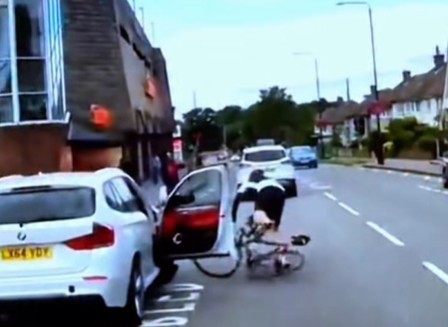

“Wouldn’t happen if he stayed on the pavement”: Driver at fault for ‘dooring’ cyclist, says liability expert – but confused motorists say “it’s time cyclists took responsibility for their own actions”
I’m sure you’ve all heard of Big Jobber by now. If you haven’t, he’s a content creator who works in the motor insurance industry and spends his free time viewing dashcam clips of road collisions and explaining liability on the internet.
He’s also gained a decent following within the cycling community, thanks to his refreshingly balanced take on bike-related incidents – and his ability to correct confused or malicious motorists in the comments.
This week’s clip – featuring a cyclist being ‘doored’ by a driver attempting to exit their parked car – is a perfect Big Jobber case study, complete with baffled drivers in the comments.
“This cyclist should have kept a door’s width – or at least a one metre gap – between them and the parked car,” Big Jobber points out at the start of the clip, highlighting rule 67 of the Highway Code, which advises cyclists to “take care when passing parked vehicles, leaving enough room (a door’s width or 1 metre) to avoid being hit if a car door is opened”.
However, he continues: “Does that mean they are in any way responsible for this incident? Absolutely not. The driver of the vehicle will take 100 per cent of the responsibility.”
Pointing to rule 239 of the Highway Code, Jobber notes that drivers are told that they “MUST ensure you do not hit anyone when you open your door. Check for cyclists or other traffic by looking all around and using your mirrors”.

Noting that liability focuses on what cause the collision, he asks: “Did the cyclist [riding] along closer than a door’s width to the car cause the collision? No, it didn’t. Because if the door wasn’t opened, the collision wouldn’t have happened.
“Therefore, the negligent act in this situation is the car driver opening their door without checking it was safe or clear to do so, and not following the recommended method of using their opposing hand, so you can check your blind spot as you open the door, otherwise known as the Dutch Reach.
“So, in this case, the car driver has opened the car door into the path of the cyclist, and it’s that act where negligence is decided and the driver of the vehicle is found to be completely responsible. This is no different to if somebody opens their door into the path of another vehicle. Many people think there is a minimum width for cars passing another vehicle, and there isn’t.”
So, all clear then? Not for the motoring community of Facebook, however.
“So what if this had been a passenger?” asked a clearly confused Jonathan. “Perhaps it’s time cyclist started to take responsibility for their own actions?”
“So what if it’s a passenger?” replied Jobber, almost certainly scratching his head at the question. “No difference, you know you should check it’s safe to exit a car, if you don’t then you shouldn’t be allowed to roam the streets with free will and the insurer of the car will pick up the bill.”
Meanwhile, Gavin entered the comments with this cracker: “Wouldn’t happen if cyclists stayed on the pavement”, to which Jobber replied: “Cyclists aren’t allowed to use the pavement.”
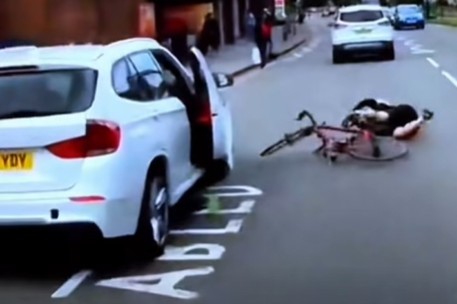
Unsurprisingly, there was also a host of drivers baffled by the Highway Code’s close passing rules – and why they only apply to drivers passing cyclists.
“But, but, but always 1.5 metres for passing,” said Hogan.
And Nick wrote: “The person opening the car door is entirely at fault here. But what I do find interesting is that the cycling world shouted and demanded that cars were to give them more space when overtaking, changing the laws to 1.5m clearance when overtaking a cyclist, but they don’t give that same clearance when overtaking cars.
“Not shifting the blame to the cyclist, just making an observation.”
“You don’t understand physics,” replied Daley.
“I totally get the law and responsibility but my question/point is this: why is the Rule a ‘should’ for the cyclist when there is more than enough lane space for them to be 1m away from the car?” asked Owain. “If the rule was a must for both then that would make everyone think and hopefully reduce accidents like this.”
Harry took this one for the team, writing: “I love keeping a door’s width when riding on the roads and getting shouted at by angry motorists.”
And Karen said: “Cyclists can’t win though, if they cycle far enough out to avoid this happening car drivers accuse them of blocking the road, being entitled, when all most of them want is to not be injured by car drivers.”
Amen.
Politician claims money for healthcare workers “wasted” on “designer” cycle shed… for hospital staff’s bikes – and gets accused of “toxic populism” by cyclists
Remember that whole furore about the €336,000 bike shed in the grounds of the Irish parliament a few years back?
If you don’t, here’s a brief recap. In 2024, a new kind of-covered cycle shelter, featuring 18 whole Sheffield stands, was installed at Leinster House, sparking a national political scandal and even a government review following widespread complaints about its hefty price tag, which then-Taoiseach Simon Harris admitted was “inexcusable and inexplicable”.

Well, the Leinster House bike shelter has raised its “astronomically” priced head again in the past week, after a Sinn Féin finance spokesperson complained that not enough money was being spent on frontline healthcare workers – while complaining about another newly built bike shed… designed for (wait for it) hospital staff.
“Minister, another day, another bike shed scandal,” TD Pearse Doherty told the Dáil last week. “And not the first involving your government. We had the €336,000 Leinster House bike shed scandal. We had the almost €100,000 bike shed at Holles Street.
“And now we have another one – €127,000 for a bike shed at University Hospital Kerry. Another slap in the face to ordinary workers and families who are already at breaking point.”
He continued: “Healthcare workers told there is no money. Vacancies go unfilled. Staff worked to exhaustion. Patients waiting longer. Children waiting months for assessments.
“But somehow €127,000 for a designer bike shed was signed off without blinking an eye. And the most outrageous part? There were vastly cheaper options available. You examined options costing €7,000, €10,000, €21,000. But you chose the option that was 20 times dearer.
“And what was the excuse for this waste? Because it had tougher glass. Because it looked nicer. Because the spacing was better. Because the hospital ‘Green Team’ thought it would be more publicly acceptable. If this was satire, nobody would believe it.
“While essential healthcare posts go unfilled, your government signs off on luxury bike sheds and lectures the public about ‘value for money’.
“This is not just waste. It is a culture of arrogance. A culture where there is always money for vanity projects and indulgence – but never enough for patients or frontline care.”
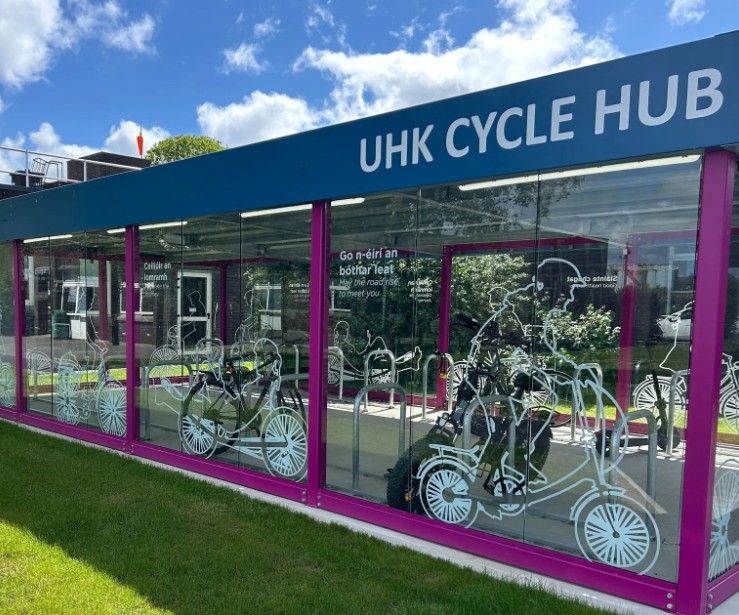
Defending the project, Helen McEntee, the minister for foreign affairs and trade, said the new bike shelter at University Hospital Kerry went through proper procurement protocol and was installed to encourage active travel, a response Doherty described as “tone-deaf”.
However, the Sinn Féin TD’s criticism of the hospital bike shelter has seen him accused by Irish cyclists of engaging in “toxic populism” and classic anti-cycling rhetoric.
Cian Ginty at IrishCycle.com, in a typically thorough put-down of Doherty’s stance, pointed out the apparent dichotomy of describing the shelter as “pure waste” when it was designed to accommodate hospital staff.
He also questioned the TD “calling it a ‘designer’ bike shed because it’s made of steel and glass rather than bike parking unsheltered and unsecured in some far-off corner of a car park” and pointed out that the majority of the costs (€70,000) were, in fact, covered by active travel funding, not the health budget.
“If Doherty thinks the remainder — €57,385 — will have much impact on the health service’s problems, he might keep in mind that money spent on active travel is estimated to return many times over in health benefits,” Ginty noted.
“Faux outrage at the cost of a bike shelter is cheap populism in its most degraded form”
Some more reaction to hospital bike shelter-gate (or a least that’s what I’m calling it) now, and it’s pretty clear that Sinn Féin TD Pearse Doherty’s comments haven’t gone down too well within the Irish cycling community.
In a letter to the Irish Times, Dublin architect Ciaran Ferrie even described the politician’s “faux outrage” as “cheap populism in its most degraded form”, which “follows a narrative… that investment in cycling is a frivolous extravagance”.
Ferries also pointed to the parties currently in the Irish government, Fianna Fáil and Fine Gael, who he says “are quite happy to support demolishing people’s homes for new roads but won’t countenance the use of compulsory purchase orders (CPOs) on peripheral land for greenways”.
He continued: “As an architect of 30 years’ experience, I can say with some authority that the idea that you could build a safe, secure, well-lit bike shelter to accommodate 40 bicycles at a cost of just €7,000 is pure fantasy.
“The money that was spent on the shelter in Kerry is a solid investment in sustainable transport that will help people avoid the increasing cost of fossil fuel dependency for years to come. The same cannot be said for the €1.2 million spent every year by the Office of Public Works on leasing car-parking spaces for civil servants. Where is the outrage at this extraordinary waste of public money?
“As a cancer patient, I cycled to every one of my radiotherapy sessions and I continue to cycle for regular tests and check-ups.
“My doctors have informed me that, as someone who gets regularly daily exercise through cycling, I have a much greater chance of a full recovery. The safe, secure bike parking at both hospitals I have attended is neither an extravagance nor a waste of money. It is essential transport infrastructure, but more than that, it is essential public health infrastructure.”
And finally, Marie Foley wrote in with this: “A simple problem for our exam students in June: If a bicycle shed for 40 bicycles costs €127,000, how much does parking for 40 cars cost, not considering environmental costs?”
Welcome to the land of motonormativity
Odd* that I did not see any signs to urge the drivers of cars and farm vehicles to exercise caution, because they share this road with people cycling on a designated cycle route.
*#Motonormative
— Gary Outram (@kentridergaz.bsky.social) May 10, 2026 at 8:10 AM
Underneath all that hedge, there’s a sign that reads: ‘Cyclists caution: This road is used by cars and farm vehicles’…
Hmm, you’d think that should be the other way around, wouldn’t you? That would make a lot of sense, wouldn’t it? Not in the land of motonormativity!
“Yeah, it’s up to us to pay attention, and they don’t need to. I mean, what’s the worst that could happen?” asked John in the comments.
Exactly, what’s the worst that could happen?
Active Travel England awards over £1 million in grants to cycling, walking, and wheeling schemes through Innovation Fund
Over a £1 million in total has been awarded to 12 cycling, walking, and wheeling projects, as part of Active Travel England’s Innovation Fund, ranging from e-cycling toolkits and cargo bike share schemes to ‘gamified’ walking campaigns and community behaviour change programmes.
Launched last October, Active Travel England says the fund aims to both encouraging active travel and “enable small and medium‑sized enterprises and non‑governmental organisations to develop new ideas or expand successful initiatives that are already making a difference”.
The funded projects, the government body says, will provide more people with healthier and sustainable active travel options, especially those from under-represented groups, while contributing to improving public health, creating safer streets, and cutting carbon emissions.

“These projects are about testing fresh ideas in the real world and finding out what works,” Active Travel Commissioner Chris Boardman said in a statement.
“By backing smaller, innovative organisations across the country, we are tapping into more imaginations, reaching people in the heart of the community and building a strong evidence base that will further improve everyday journeys for people who walk, wheel and cycle now and in the future.
“The lessons we learn will help councils, businesses and communities invest in approaches that are inclusive, practical and deliver tangible benefits. It’s about making it easier for more people to choose active travel for everyday trips, whatever their age, ability or background.”
The full list of funded projects, and the awards granted to them (totalling £1,039,260), is as follows:
Manchester Bikes (£78,000) – Shared cycle scheme between Walkden railway station and RHS Bridgewater, run by local cycle shops to support car‑free, inclusive and sustainable access to major visitor destinations.
Walk Ride Greater Manchester (£98,923) – Network‑level walking and bike bus demonstrator, managed by a dedicated coordinator across Manchester and Trafford.
Go Jauntly (£92,508) – “This City Moves: Liverpool vs Birmingham”, an app‑based behaviour change programme using friendly city‑to‑city competition to increase walking/wheeling among women and families in Birmingham and Liverpool.
Street Tag (£79,400) – Gamified digital programme to increase walking, wheeling and cycling across East London and the East of England, combining data insights and local storytelling.
Cal Commuter (£99,828) – “Active Connections”, a digital platform helping NHS and public sector employees identify improved first/last‑mile active travel links to public transport across five areas.
Slow Ways (£62,657) – Exeter‑based demonstrator creating a verified network of trusted local routes that communities and local authorities across England can replicate.
PedalUK (£99,819) – OurBike e‑cargo bike sharing pilot in Brighton & Hove, delivered with the City Council and the University of Brighton, to be evaluated as a community‑led scheme.
Simply Cycling (£80,800) – “Ride Well, Work Well”, a health and employment‑focused community campaign partnering job clubs, councils and health services to reduce transport, health and employment barriers through cycling.
Capital of Cycling (£100,000) – Bradford‑based e‑cycling hub and toolkit to help organisations set up cycle libraries and loan schemes.
CoMo UK (£86,345) – Pop‑up active travel mobility hubs in four areas of high deprivation to improve access to active travel and employment, focusing on people not in employment, education or training (NEET).
Love to Ride (£60,980) – “The Missing Majority”, expanding an established digital cycling platform to include walking and support more integrated journeys, trialled across four local authority areas.
Mobility Mapper (£100,000) – Bristol‑based app providing real‑time, data‑driven accessibility information to help wheelers travel more safely and confidently, including development of a mapping platform for accessible routes.
Shaun of the Dead vibes at the Etape Caledonia
Well, this is one way to start a sportive, I suppose:
View this post on Instagram
I was genuinely expecting Radio Gaga to kick in…
Naked bike ride in Brighton postponed due to safety fears amid clashing far-right and anti-racism marches
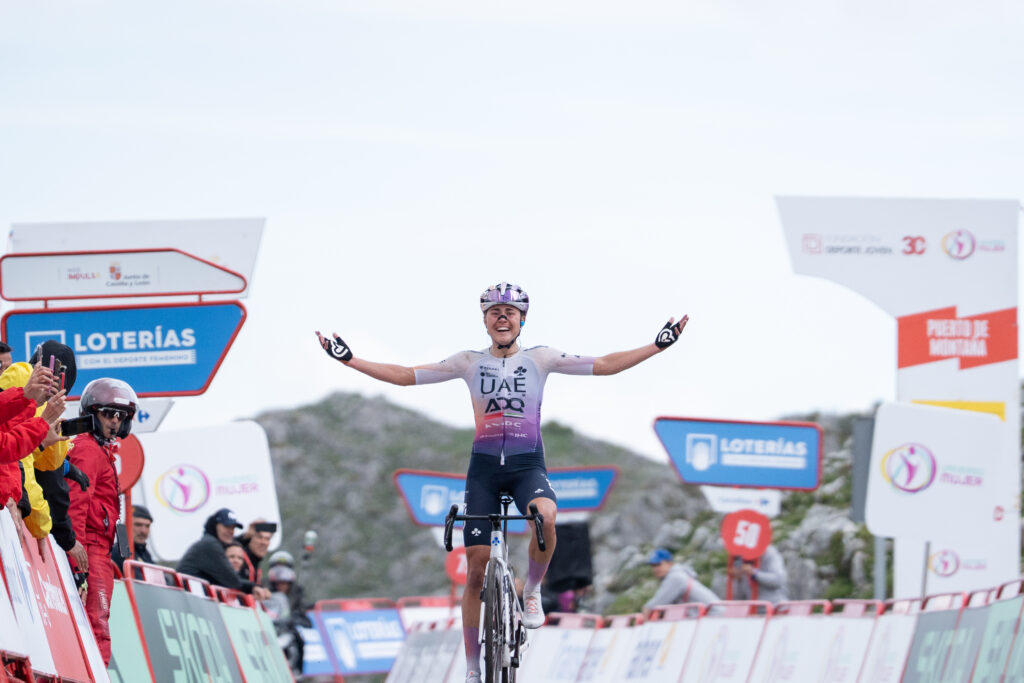
Was Saturday’s dramatic Vuelta finale the greatest Angliru showdown ever? New dawn for women’s cycling after epic battle on sport’s toughest climb
There was a whole lotta bike racing goin’ on over the weekend, so we’ve got quite a bit to catch up on during today’s live blog.
But there is really only one place to start: the Angliru, and that epic, dramatic, groundbreaking Vuelta Femenina finale.
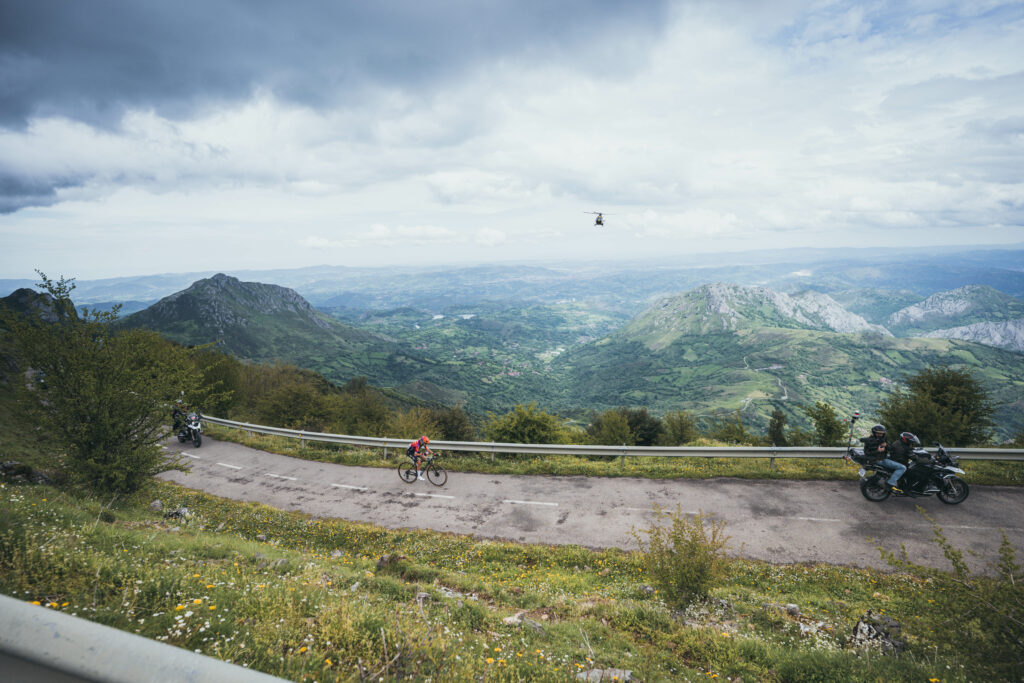
There was a concern heading into this year’s Vuelta that, despite the rapid growth of women’s cycling over the past few years, the Beast of Asturias was still too tough, too relentlessly steep, that it would reduce the race’s final stage to a glorified time trial, full of pain but bereft of excitement.
Well, those concerns were certainly unfounded. Instead, the Vuelta’s historic first trip to the Angliru served up – to me, anyway – the best, most exhilarating, most unpredictable racing the climb’s seen in years.
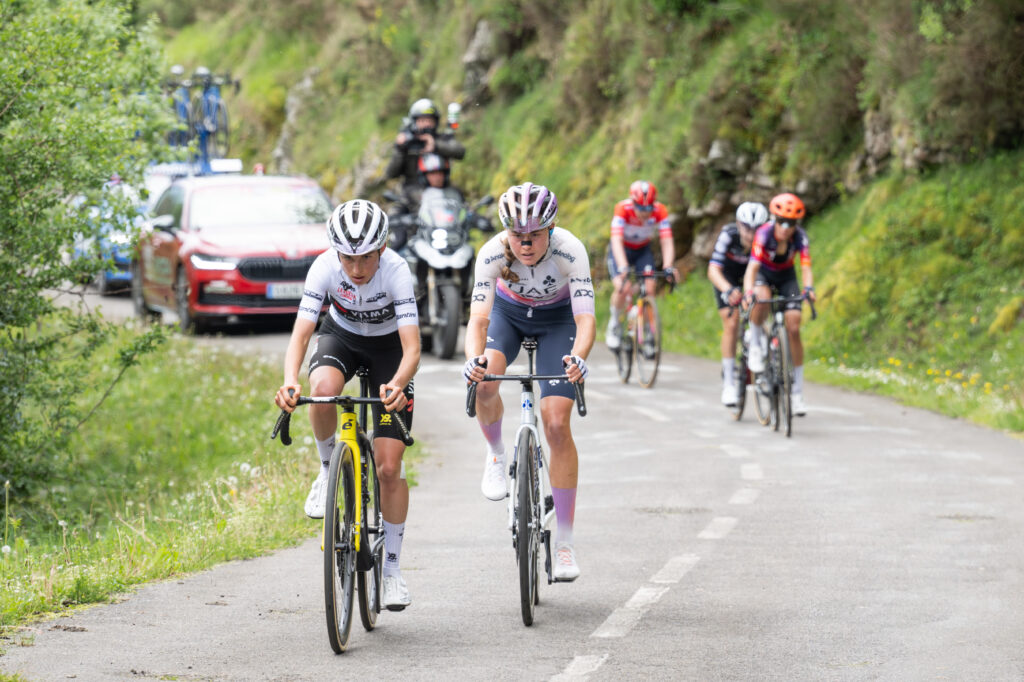
First, we had red jersey Anna van der Breggen’s surprise slow-motion capitulation, the obscene mountain bike gearing she used to great effect on Les Praeres no match for the 20 per cent gradients of the Angliru – and the youngsters that were dancing on the pedals up the road.
Marion Bunel, in the white young rider’s jersey, was the first of those youngsters to unseat the Dutch veteran, before local hero Paula Blasi – history in her sights – took over.
As Blasi focused on the GC, Petra Stiasny, the purest of pure climbers, overhauled her towards the end, securing not only the biggest win of her young career (on the climb she prophetically described as “beautiful” before the stage), but also a win for mountain goat enthusiasts everywhere. Spread the news: the pure climber isn’t dead.
The Vuelta’s most historic day may have belonged to Stiasny, but the week was Blasi’s. What a few weeks it’s been for the 23-year-old, who only properly turned pro with UAE ADQ last May: an Amstel Gold win, a brilliant Ardennes classics week, and then, history at her home grand tour, as she became the Vuelta Femenina’s first ever Spanish winner.
A new generation emerged on the Angliru on Saturday, a stage that could, in a few years’ time, be heralded as the dawning of a new age for women’s cycling. Too tough? There’s no such thing.
Now you can’t do this with a disc brake bike…
View this post on Instagram
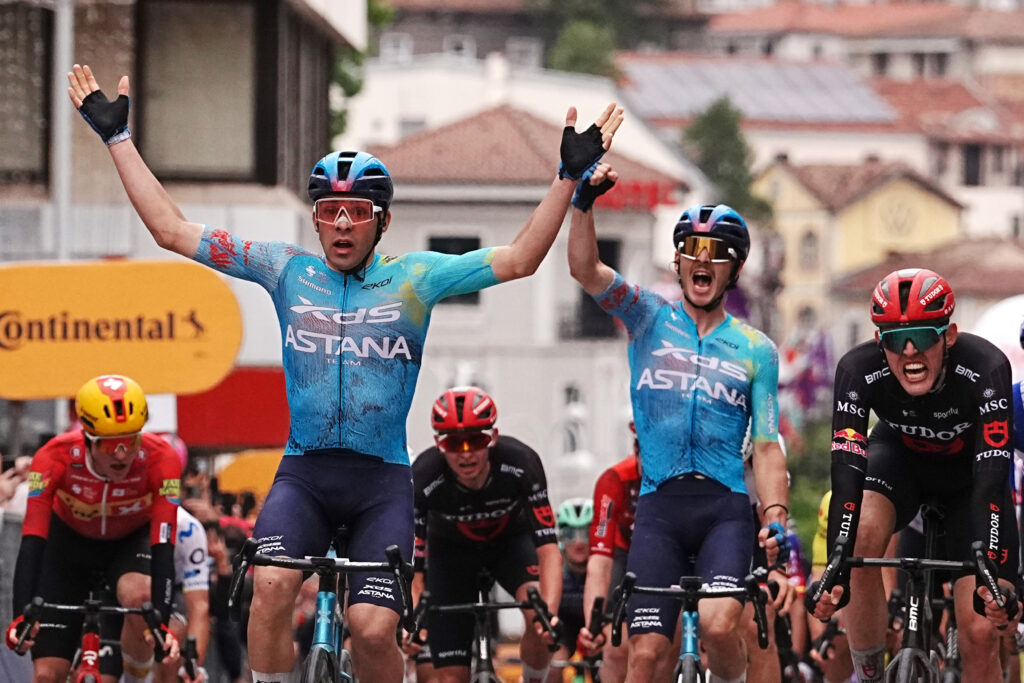
“He stuck his head out of the car like a frightened dog, started waving his flag, and shouted ‘race’”: Chaos, carnage, and criticism as Giro d’Italia’s Bulgarian Grande Partenza ends
You have to feel for the organising team behind the Giro’s trip to Bulgaria.
On the one hand, the Bulgarian Grande Partenza has seen some decent racing: yesterday’s scintillating last-minute breakaway catch and cobbled sprint in Sofia, the rise and rise of Paul Magnier as a top-tier fast man, a surprise stage win and pink jersey stint for Uruguayan Thomas Silva, and a bonus attack on stage two by Jonas Vingegaard (which I reckon was made just to spite me after I predicted the Dane would be overly calculating throughout the Giro).
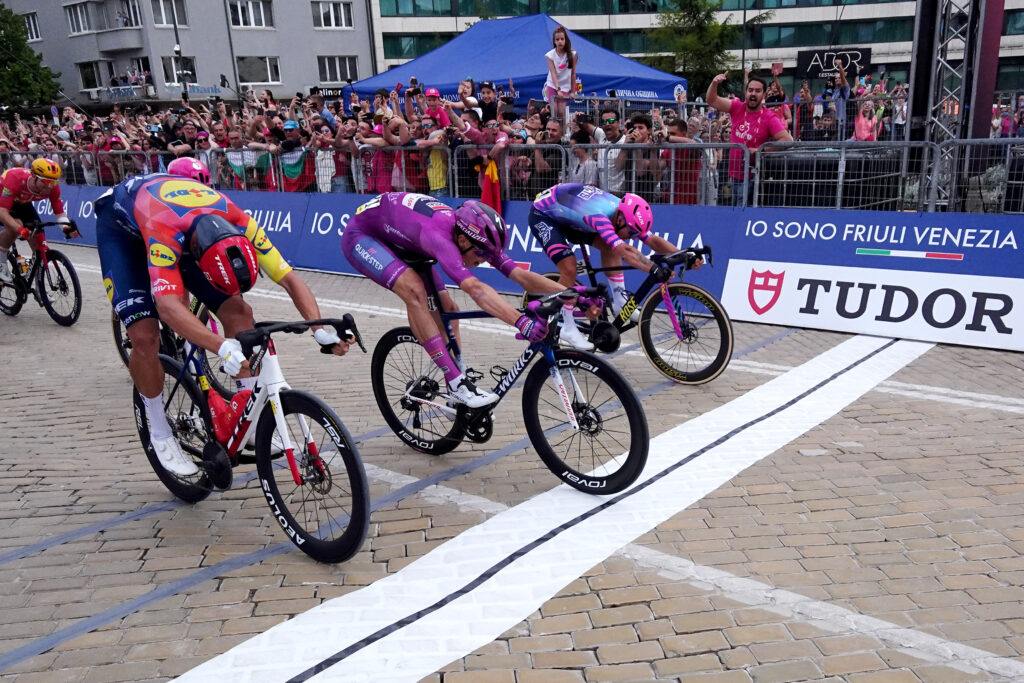
But then, on the other hand, the first three stages in Bulgaria have seen terrible weather, fairly tepid racing (those poor commentators during the first five hours of stage two), and an at times uninspired, carriageway-heavy route.
And then there where the crashes. After stage one’s sprint was defaced by a mass pile-up, the entire outlook for the Giro was changed completely the following day, thanks to that high-speed horror spill on a wet right-hander.
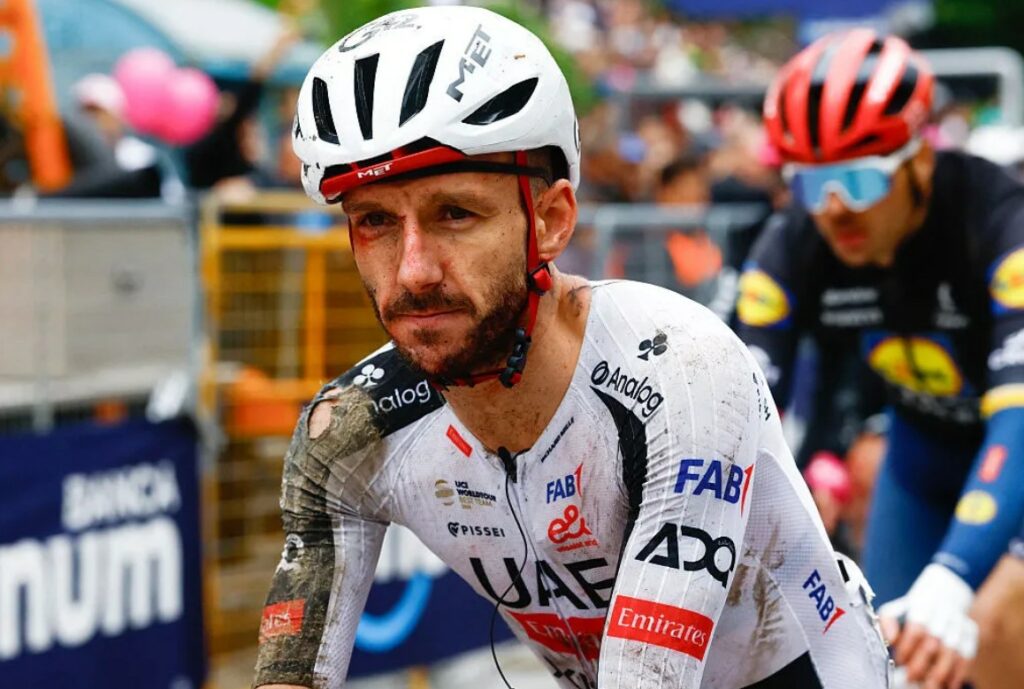
UAE Team Emirates, the first squad to slide out in the rain, were the worst affected, with Marc Soler and Jay Vine being taken to hospital straight away, and Adam Yates – face caked in mud and blood in the immediate aftermath, his ear cut – making it to the finish 14 minutes down, but failing to start yesterday’s stage after displaying signs of concussion. It was later confirmed that Vine fractured his elbow and Soler broke his pelvis.
Bahrain Victorious’ Santiago Buitrago, Pinarello-Q36.5’s Matteo Moschetti, Jayco AlUla’s Andrea Vendrame, and Uno-X’s Ådne Holter joined the UAE trio on the list of riders who haven’t made it to Italy at this year’s Giro.
Questions are also being asked of the apparent rush to continue racing after that 30-rider crash, with Soudal-QuickStep’s Jasper Stuyven accusing race director Marco Velo of acting like a “frightened dog” as he resumed the stage.
“There were no more ambulances. But there was still a descent to come that could have been dangerous,” Stuyven told Het Laatste Nieuws after the stage.
“After that crash, we wanted a neutralisation of the times for the general classification, so that the daredevils could still fight for the stage win, but no unnecessary risks would have to be taken on the next descent.
“The race director said they were looking into it. Then he stuck his head out of the car like a frightened dog, started waving his flag, and shouted ‘race’. Only to quickly stick his head back into the car.”
As the peloton heads back to Italy, it’s fair to say the Giro’s Bulgarian holiday hasn’t left the sweetest of tastes in the riders’ mouths, then.
The celebrity cycling row to end all celebrity cycling rows?
I didn’t have Sherlock Holmes on a bike arguing with another cyclist about red light jumping on my Monday bingo card, did you?

Is Anna van der Breggen’s MTB-style monster cassette the craziest gearing set-up in stage race history?
It may not have won her the Vuelta, but Anna van der Breggen’s unique approach to tackling the Angliru certainly got the cycling world talking.
Faced with the Angliru’s fearsome 20 per cent gradients, the former two-time world champion opted for a 1x set-up with a single 46t chainring at the front (which is pretty standard these days) and… wait for it… a proper dinnerplate 10-52 tooth cassette (which is very much not standard, on the road anyway).
View this post on Instagram
To allow for such monster gearing at the back, Van der Breggen’s Specialized Tarmac SL8 was fitted with an old-school mountain bike SRAM first-generation XX1 Eagle AXS wireless rear derailleur (SRAM’s newer XPLR cassette requires a UDH compatible frame, so wasn’t able to be used).
I think we can call it now, we’re not going to see any zanier tech modifications than that this season…
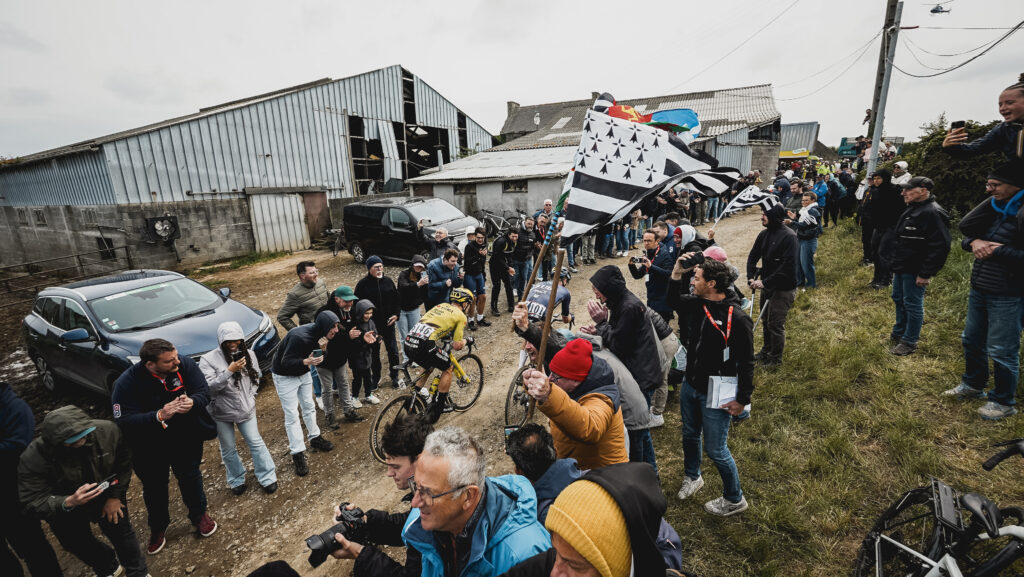
Racing round-up: Gravel and dirt frenzy as Fiorelli wins Tro-Bro Léon and Wout van Aert returns from his post-Roubaix holiday to secure solo victory at actual gravel race
I told you there was a lot of racing on at the weekend.
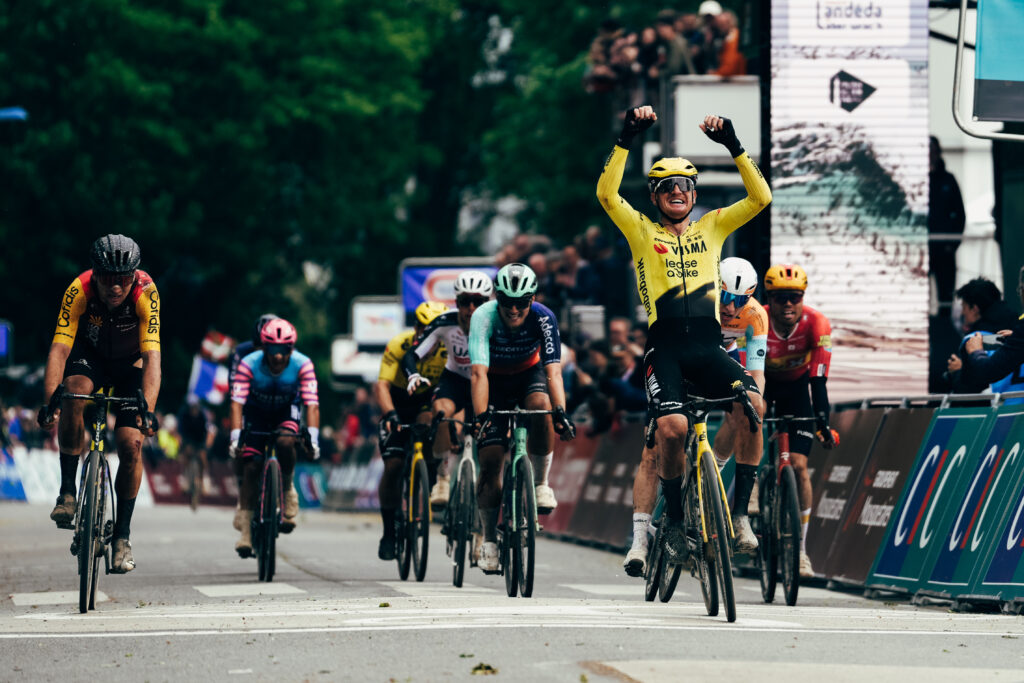
While the rest of us were twiddling our thumbs waiting for something to happen at the Giro, over at Tro-Bro Léon, the gravel-centric hipster’s Paris-Roubaix, Visma Lease a Bike’s Filippo Fiorelli attacked with 3km to go on the last gravel sector, holding off an 11-strong chase group including Alexis Renard and Lewis Askey (second and third respectively) to take just the second win of his career.
The biggest news from this year’s Tro-Bro Léon, however, was the shocking revelation that the first Breton rider (Renard in this case) no longer receives an actual piglet as a prize, the Cofidis instead handed a wooden pig on the podium. Boo, Tro-Bro organisers, boo (although, to be fair, it’s probably best for both the rider and the pig this way. But still, boo).
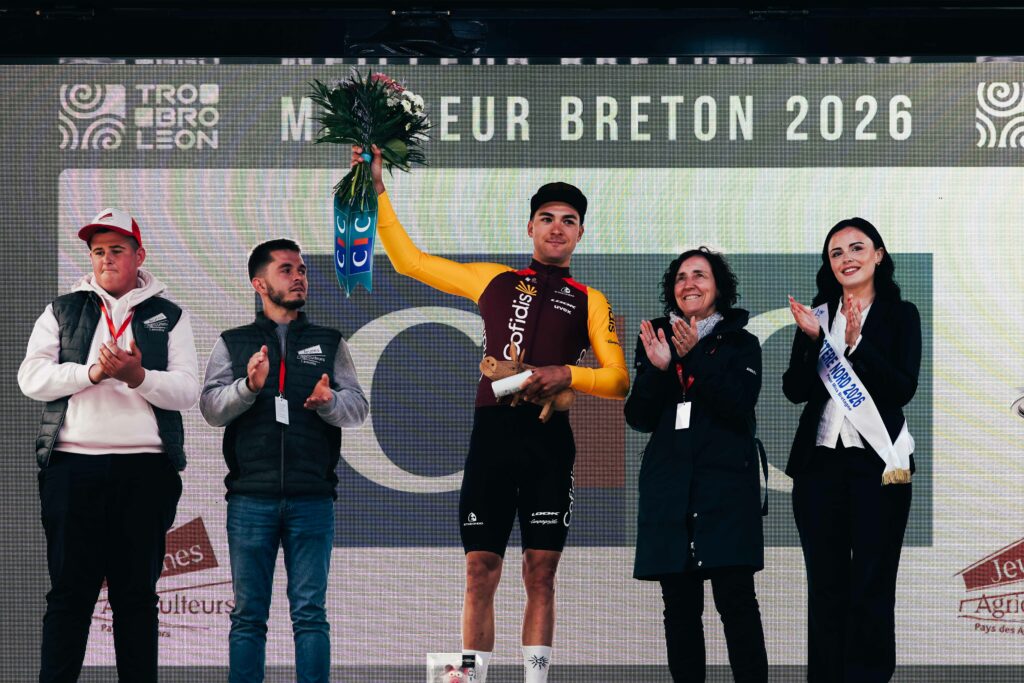
Meanwhile, there was no shortage of gravel at the weekend, thanks to the UCI Gravel World Series event, Marly Grav, taking place in Limburg. The prospect of racing over some loose stones was even enough to entice Wout van Aert to pack away the swim trunks, cut his post-Roubaix holiday short, and pin a number on in Limburg.
And then win, naturally – the Belgian soloing clear with 20km to go, putting his off-road skills “to good use”, he said after the race.
View this post on Instagram
Van Aert wasn’t the only WorldTour star sticking their nose into the gravel world at the weekend either, with the world champion in the discipline, Lorena Wiebes, winning a five-rider sprint at the Marly Grav.
And finally, Benoît Cosnefroy warmed up for Tro-Bro by winning his third straight, and fourth overall, title at the GP du Morbihan and Gladys Verhulst-Wild sprinted to victory at the Trofee Maarten Wynants. Phew… I think that’s everything. Thank goodness there’s barely any racing on today.
Bang, and Magnier’s gone!
The award for ‘random Giro thought of the week’ goes to former cycling journo and current Jayco-AlUla press officer Sadhbh O’Shea and her cleaning-inspired take on Unibet Rose Rockets’ kit design:
Just realised what the Tietema Rockets kit reminds me of. A bottle of Cillit Bang.
— Sadhbh O’Shea (@sadhbhos.bsky.social) May 9, 2026 at 5:12 PM
I hear they’re lining up Barry Scott as a future sports director – just imagine the scenes in the team car if Groenewegen pulls off a stage win over the next few weeks…
Groucho Marx’s very own cycling club
In case you missed it over the weekend, our resident Groucho, road.cc columnist Paul, recalled how, while rebuilding his fitness in the wake of a shocking crash, he discovered the kind of club camaraderie he never knew he needed… or even wanted:













44 thoughts on ““Wouldn’t happen if he stayed on the pavement”: Driver at fault for ‘dooring’ cyclist, says liability expert – but confused motorists argue “it’s time cyclists took responsibility for their own actions”; Hospital bike shelter row + more on the live blog”
Right, after the rise of the radical right Reform UK party in the local elections (including one councillor near me who was elected despite previously calling Muslim’s “scum” who should be “wiped off the face of the earth”. But of course, he doesn’t consider himself racist and hasn’t been suspended as a member of Reform), are we all very, very nervous?
I predict a whole host of anti cycling rhetoric and actions, not just cancelling proposed active travel projects, but probably removing those already in place. Sigh.
Yes, this was predictable but still depressing. The dimwits voted for Brexit and Johnson, but they’re excelling themselves over this appalling pile of refuse. Despite the Mandelson Disaster, this Votalypse was not the fault of Starmer and the clamour for some Labour Saviour or other will simply aid the rise, for the present at least, of the Lying Neo-Johnson.
£17000 per space on average to build a multi-storey car park.
I’m not sure how bikes you can get in that bike storage, but I reckon they’ve saved about half a million quid in car parking there.
Representative democracy would be more effective if dimwits and sheeple were denied the right to vote.
@MaxiMinimalist The sort of dimwits who call anyone who disagrees with their rightist views “sheeple”, for example?
If they get in to government they’ll bring in compulsory high vis and numberplates for bikes.
Prove it? Where’s the evidence for that? Liebour have been pushing for this for ages not Reform.
Well Labour haven’t been wonderful on the active travel front. And there are some “cycling-skeptics” in Labour also. Plus losing a promising transport secretary to a dodgy phone scandal initially may not have helped. (Given “events” probably made little difference).
I think they mostly just decided to eg. run on with eg. Ian Drunken Smith’s cycling law amendments however.
OTOH Reform certainly have pronounced on things that at best will end up reducing any incentives for people to cycle and promoting driving (with ICE vehicles it seems). They’ll probably only be limited by realising that “putting it back how it was” will be spendy…
Remember Cable Street; domestic fascism can be defeated.
It’s also a decent part of CS3
It’s not bad and I always give a salute to the mural as I pass, I wish they had taken more account of the tree roots though (no idea how you do this), there seems to be a recurring pattern of roots breaking through with concomitant rutting in the surface, patching up and then a few months later breaking through again.
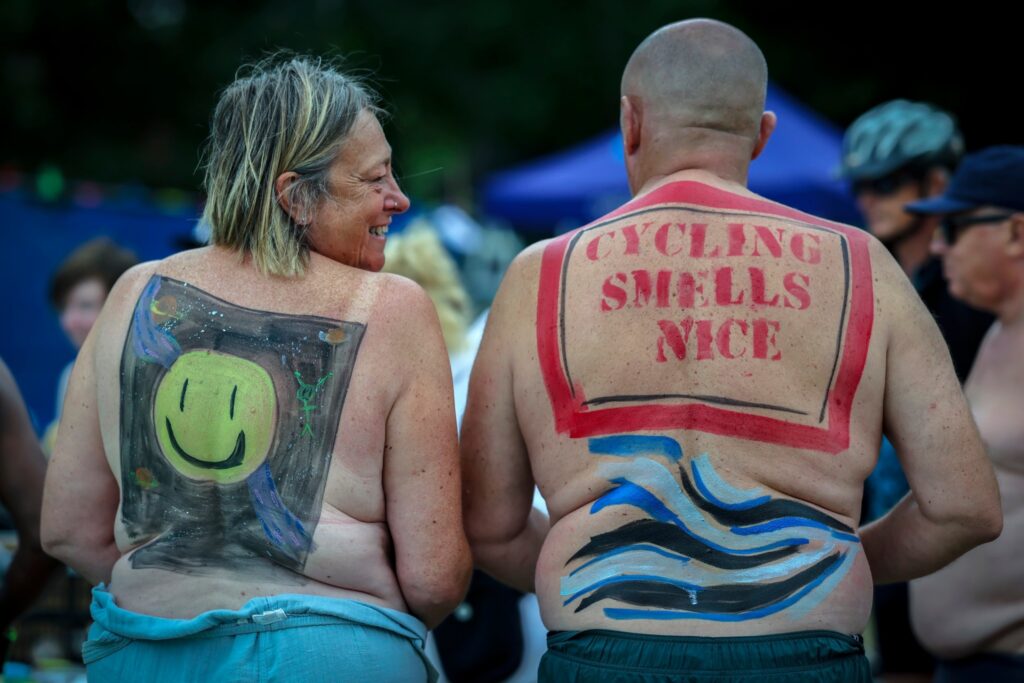
Crikey! Maybe those anti-WNBR people had more of a point about exhibitionist cyclists than I thought!
I could tell you some strange tales of sights seen riding through there late night/early morning in summer!
Apart from the bit with the tree roots (mentioned elsewhere), the bit where the track sharply and inexplicable changes sides and the skating rink near there (I saw three people go over, at least one sustaining injuries in the space of a few seconds during the last cold snap).
“are we all very, very nervous?”
I’m just hoping that there is enough time between now and the next GE for them to show how bad they are.
@Backladder You’d think their actions (or lack of action) in Kent and the no-show ‘representative’ for Clacton would have alerted some, but we can only hope.
p.s. my MP was stabbed and still holds surgeries years later, so the afore-mentioned member’s excuse for not showing up for the paid position to hold surgeries doesn’t hold much water – particularly when they lied about receiving police advice not to hold them.
Not sure about the slogan on that bike shed, “May the road rise to meet you”, which sounds more like an evocation to crash than anything else (fairly common literary device, e.g. “He caught a glimpse of movement out of the corner of his eye and heard something whistling towards his head, then the ground rose up to meet him and he knew no more.”).
Google says: “May the road rise to meet you” is a famous Irish blessing, often used to wish someone a safe and successful journey, a bright future, or to offer encouragement during difficult times. The full blessing is a warm, poetic message wishing for ease, companionship, and divine protection.
Ah, thank you, a bit lost in translation then!
Elsewhere, it – rather marvellously, considering the furore – bears the slogan “Health is better than wealth”.
Well that’s clear nonsense! As the likes of Palantir show health (your data) *is* wealth (theirs).
Seems to start well for cyclists: “… may the wind be always at your back…”. Although it ends with “… until we meet again may God hold you in the palm of his hand” – a fatalistic comment on road safety?
It’s been great to have GT racing back on screen again but I don’t think the Giro served Bulgaria very well in its choice of routes, if you’re going to go abroad for the Grande Partenza you should surely be thinking about giving the crowd some excitement, two and a half of the three days were incredibly dull (Sean Kelly on commentary, bless him, whilst Rob Hatch was trying to find anything to make it sound interesting, “Of course back in my day we had a lot of long, long stages which were very boring and this is one of those”).
On a much more important note, it was absolutely scandalous that Adam Yates was allowed to get back on his bike and finish the second stage, it was perfectly obvious from his facial injuries and his general demeanour that he was concussed, and that of course proved to be the case with his withdrawal from day three. UAE’s statement said “He was initially assessed on site for concussion and cleared to continue, but subsequently he has shown delayed concussive symptoms.” There should be an investigation into how on earth it was determined that he was okay to continue, it was quite clear just watching on television that he was in no fit state and should have been put straight in the ambulance. One of my other favourite sports, rugby, is getting it right with head injuries at the moment with thorough checks of up to 10 minutes when any head injury is received, there is no way Yates would have been cleared to return to play with that type of injury. He finished the stage thirteen minutes down, at least five of those minutes were just spent getting up, looking around for the team car et cetera, a minimum of five more would’ve been lost gingerly and slowly riding to the finish, just how long was actually spent assessing him for concussion?
“… but I don’t think the Giro served Bulgaria very well in its choice of routes …”
Is the route not the responsibility of the local (i.e. Bulgarian in this case) organisers? I seem to remember much comment from Welcome to Yorkshire about how much work went in to all the options and possibilities when deciding on the route for the 2014 TdF Grand Depart.
I’m sure the race organisation works with local stakeholders – they’d have to obviously, to get the requisite permissions et cetera – but I believe the ultimate decision on the route goes to the Giro organisers RCS, same with ASO in the Tour and Vuelta (through its subsidiary Unipublic). It was pretty frustrating yesterday to hear the commentators saying how many ski resorts there were close to Sofia, all of which could presumably have provided some exciting action, after enduring the thrilling spectacle of watching the race take on a 73 km 1% climb…thank goodness for the women on the Angliru ensuring the day’s viewing wasn’t completely excitement-free!
Accelerometers attached to the helmets?
@ktache Good shout, there are already a few helmets like the ABUS Quin that have them and aftermarket devices like the HIT sensor that can measure potentially concussion-causing impacts. If they can make a device small enough to fit in a mouthguard it shouldn’t be too difficult to make something with almost zero weight or aero impact to go in a helmet. The only problem, which does arise occasionally in rugby as well, is how do you tell when it’s a head contact sudden deceleration and when it’s not.
Another solution I’d favour is that the doctor can take as long as they need to do a proper assessment and if the rider is fit to continue they can be given a “sticky bottle” ride back to the peleton (or if it was close to the finish but not in the 3km zone given the same time as the group they were with when they crashed), I suspect at the moment the medics are coming under extreme pressure from riders, team managers and mechanics to let the rider get back on the bike quickly and that might calm everyone down a bit.
“Another solution I’d favour is that the doctor can take as long as they need to do a proper assessment and if the rider is fit to continue they can be given a “sticky bottle” ride back to the peleton (or if it was close to the finish but not in the 3km zone given the same time as the group they were with when they crashed), I suspect at the moment the medics are coming under extreme pressure from riders, team managers and mechanics to let the rider get back on the bike quickly and that might calm everyone down a bit.”
If the UCI were serious about rider safety then something like this would have been done years ago!
Re: bike parking: “There were vastly cheaper options available. You examined options costing €7,000, €10,000, €21,000. But you chose the option that was 20 times dearer. And what was the excuse for this waste? Because it had tougher glass. Because it looked nicer. Because the spacing was better. Because the hospital ‘Green Team’ thought it would be more publicly acceptable.”
Yes TD, they could have spent EUR 7,000 instead, then you’d complain that nobody used it, because it looked like one of these: https://road.cc/content/feature/worst-bike-racks-useless-places-park-your-bicycle-305609
What do we reckon the odds are that the doorer is actually disabled (aside from lacking the ability to park properly within a marked bay)?
“This is not just waste. It is a culture of arrogance. A culture where there is always money for vanity projects and indulgence.” Is that the quote of the decade? This tirade isn’t an anti-cycling diatribe. This statement reminds recipients of public money to spend it efficiently and wisely, where and when it’s needed.
By the way, who is going to audit the one-million-plus grants awarded by ATE?
@MaxiMinimalist Funny, I’ve never heard anyone complaining about the “vanity” of car parking provision and at £10,000 per space.
Looks like a lovely bike shed.
@MaxiMinimalist There always needs to be a feedback loop to manage any spending. And people *are* often much more enthused by a 100 million one-off “flagship” project than say mundane “redo the drainage across a district”. Perhaps they could ditch the mural.
But cycle parking – yeah, we could all get that 50p back to individually spend on sweets or petrol. Or it could go towards 2 car parking spaces instead.
What benefit has increasing active travel to drivers, or children, or the sick and old who can’t even cycle!? Vanity and indulgence compared with an extra centimetre width for the A666!
There’s no such thing as a “liability expert”. He’s just some guy with an opinion. There’s nothing to suggest that his opinion is better qualified than any member of the public who has read the Highway Code.
@EastLondonCyclingNut he’s a former motor vehicle claims handler, I think he qualifies compared to the average member of the public.
I’m an instrumentation expert, but I guess my opinion would hold no weight over someone who’s read a few instrumentation catalogs.
I’ve played the recorder a few times, so I reckon I could weigh in.
@andystow I don’t know what an instrumentation expert is, but from a quick google, it looks to be a paradigm example of an expert. You seem to need engineering qualifications, and years of specialist experience of working with and calibrating instruments. There’s no way an average member of the public could have that.
His role as a vehicle claims handler simply involves expressing his opinion about what a trial judge is likely to find. He has no experience before a trial judge, and there is no specialist skill in determining liability in those cases. The question is just whether a driver fell below the standard of care that a reasonable driver would have exercised. What’s a reasonable driver? That’s an opinion that any member of the public is qualified to determine, with reference to the highway code. It might be a little bit more complicated than that where there is binding caselaw in certain factual scenarios, but this isn’t one of those cases.
@EastLondonCyclingNut “Liability expert” – yeah, I think that claim should be checked. And how does one gauge an “instrumentation expert”?
We probably need to consult an expert expert.
@EastLondonCyclingNut Suggest Googling “liability expert”, they do exist and work for insurance companies; it’s a tricky concept but they’re sort of experts in determining who is liable, you see. Of course someone whose profession is/was determining liability for insurance companies is better qualified than the average Joe to determine liability, given that their job is day in day out to examine and assess cases and apply relevant regulations and case law to them.
I will only cycle to work if there is somewhere safe to leave my bicycle, and that costs. 127,000€ sounds like a lot but half of commuters use electric bicycles and a decent bike is at least 3000€. So just 20 of those 40 spaces will be storing 60,000€ worth of bicycles everyday and the other 20 about 10,000€ . A one off payment of 127,000€ to protect 70,000€ of bicycles everyday.
@neilmck Good point. Another view is to look at the likely lifetime of the facility, and determine the annual cost of the expenditure, giving credit for the value of having the cash now vs in the future. I suspect it comes out at around 100 Euros per bike per year. It’s a bargain.
Another point is the facility will be used 24/24. How much of the money was not spent on the structure itself but on the surroundings? Building paths for access and lighting and security cameras from the street to the bike park itself, etc.
For people that took a test, they seem remarkably confused by the rules of the road and what they’re responsible for. Motorists will never hold themselves to account. In Ireland motorists are cheering on a billion euro ring road, while complaining about a 165k bike shed. The ring road also required compulsory purchase orders of people’s homes, but that’s the price of progress, apparently