


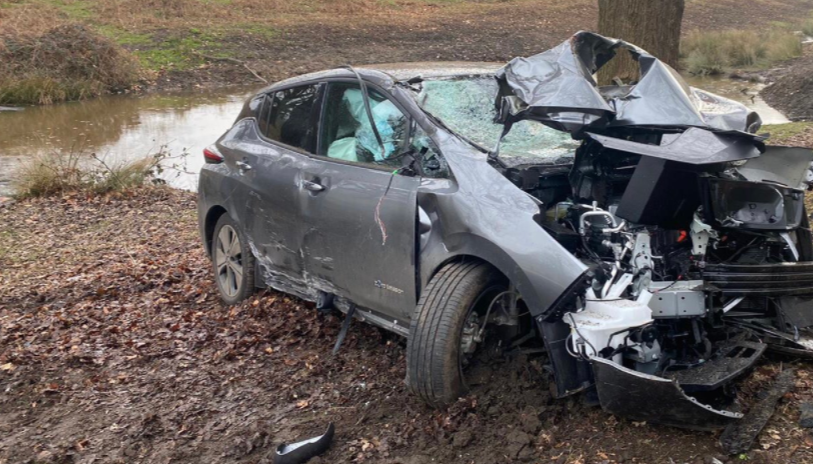

The BBC has defended its use of the term “accident” when describing road traffic collisions, with the broadcaster telling one listener that “we try to use language that ordinary people use, not the language contained in reports and documents”.
Radio 4 listener Toby Edwards complained to the BBC after an 11am news bulletin on 28 September announced that “figures show that 39 people died after road accidents involving the police between 2021 and 2022”.
Edwards asked the BBC’s Complaints Team if the broadcaster was “sure that all of these collisions were indeed accidents”, or whether “the term ‘accident’ was used mistakenly instead of saying ‘crashes’ or ‘collisions’?”
As Edwards noted in his letter to the BBC, the Media Guidelines for Reporting Road Collisions – coordinated by journalist and road.cc contributor Laura Laker alongside the Active Travel Academy at the University of Westminster, and launched in May 2021 – advises reporters to:
Avoid use of the word ‘accident’ until the facts of a collision are known. Most collisions are predictable and before an enquiry or court case the full facts are unlikely to be known. It is particularly important to avoid the word when someone has been charged with driving offences. Using ‘crash’ or ‘collision’ instead leaves the question of who or what is to blame open, pending further details.
At the time of the guidelines’ launch, Professor Rachel Aldred, the director of the Active Travel Academy, noted that “language matters, as it helps shape how we see and treat others”.
> “Language matters” – Road collision reporting guidelines launched
In a reply to Edward’s letter, received by the Radio 4 listener on 4 November, the BBC’s Complaints Team said: “We note your concerns about our use of the world ‘accident’ in the news report. We were referencing data released by the Independent Office for Police Conduct (IPOC) that said: ’39 people died after road incidents involving the police between 2021 and 2022’.”
The response continued: “We’ve discussed your concerns with senior staff in BBC News and, although we take your point that ‘collision’ may have been a preferable word, our job is to write radio scripts that are relatable and understandable, and we try to use language that ordinary people use, not the language contained in reports and documents.
“‘Traffic accident’ is common parlance and we don’t feel here its use materially altered the accuracy of the story. The Road Collision Reporting Guidelines are guidelines, not rules.”
This response from the BBC complaints department justifying their use of the word “accident” instead of “collision” is appalling and irresponsible. @RoadPeace @allpartycycling pic.twitter.com/DSUWsTwrHy
— Töby Édwãrds (@IsSaddleThereIs) November 4, 2022
Sharing the response on Twitter, Edwards described the BBC’s attempt to ‘justify’ the use of the word ‘accident’ as “appalling and irresponsible”.
Criticising the broadcaster’s “very late response”, Edwards told road.cc: “Why aren’t they following the guidelines? If the BBC can’t do it, then it’s hopeless. It’s inaccurate to call all crashes ‘accidents’.”
DCS Andy Cox, head of crime at Lincolnshire Police and national lead for fatal collision investigations, also criticised the BBC’s response on Twitter, writing: “‘Accident’ implies it was unavoidable, just one of those things, bad luck. Instead, many fatal ‘crashes’ occur because a driver made a choice to be dangerous or reckless, and to selfishly break the law.
“Words matter, and can help change an embedded mindset and save lives.”
Another Twitter user pointed out that, the day after Edwards complained about the Radio 4 news bulletin, the Department for Transport agreed, following a consultation, to change the terminology used in its publications and data to refer to collisions, rather than accidents.
“If the DfT can change, why can’t you BBC? You should be taking the lead on following the guidelines, not refusing to report responsibly,” the user tweeted.
> BBC corrects Nick Robinson’s comment that “you cannot use your car” in a low traffic neighbourhood
Radio 4’s decision to ignore the Road Collision Reporting Guidelines isn’t the first time that the station has been criticised for its use of language by cycling campaigners.
In April 2021, the BBC issued a correction after Radio 4 Today programme host Nick Robinson inaccurately claimed that “you cannot use your car” in Low Traffic Neighbourhoods.
Robinson’s comment received a number of complaints, including one from the Labour MP Lilian Greenwood, who is an officer of the All-Party Parliamentary Group on Cycling and Walking.
Greenwood, the MP for Nottingham South, wrote to the BBC’s director of editorial policy and standards David Jordan to flag the presenter’s comment as a “falsehood,” adding, “the least we can expect from a national broadcaster is a basic grasp of the facts.”
> ‘Road Rage: Cars v Bikes’: BBC’s Panorama episode receives mixed reception
This week’s latest backlash comes hot on the heels of the mixed reception within the cycling community afforded to the broadcaster’s recent Panorama programme ‘Road Rage: Cars v Bikes’.
Some cycling campaigners, including the Guardian’s Peter Walker and road.cc’s Simon MacMichael, concluded that the investigation was “good in parts” and effectively highlighted the vulnerability of people on bikes and the dangers posed by motorists.
However, the programme was heavily criticised for its use of questionable statistics – the ‘finding’ that a third of drivers believe that cyclists shouldn’t be on the road (a claim that garnered several tabloid headlines) was based on an open-ended online poll – and the presence of divisive interviewees such as Rod Liddle (a controversial voice that was later repeated in subsequent BBC news bulletins on the subject this week).
With the BBC’s use of language under scrutiny, Walker also questioned the divisive nature of the programme’s title. “There’s this weird compulsion to make everything about cycling into a battle. As others have said, it’s less a battle than a massacre,” the journalist tweeted.


-300x199.jpg "“He wants bikes in traffic lanes. Give him what he wants”: Cyclists urged to “slow every street down to bicycle speed” and ride in middle of lane amid premier’s war on cycle paths + more on the live blog")











55 thoughts on ““We try to use language that ordinary people use”: BBC defends use of “accident” to describe road traffic collisions”
I wonder why the home of
I wonder why the home of petrolhead productions would be against using the correct terminology for incidents involving cars? They’ve long demonstrated their contempt for Active Travel, with almost no coverage, and their helmet propaganda campaign. Their complaints process exists solely to exonerate their employees.
eburtthebike wrote:
The BBC is not just some social media opinion platform. It is the Public Service Broadcaster with supposed journalistic principles and deserving of our trust.
So Best Practice and an intent to educate is a reasonable expectation from license payers. That best practice is to refer accurately to collisions caused by people not to accidents that imply nobody is responsible.
In a genuine safety culture (Aviation) there is only equipment failure or pilot error. There is no avoiding responsibility. There is only accurate reporting after proper investigation by skilled professionals. So the high risk act of flying has been made equivalent to taking the bus. Safer than the bus statistically. That is what a credible safety culture can achieve.
Why is that not our expectation of road transport?
#VisionZero
lonpfrb wrote:
There are a few other modes – such as procedure errors (where the correct procedure was followed but it caused the wrong action, which I suppose is a human error earlier), and non-pilot human errors. But by and large, you’re right, and the real point is this: most of the really dangerous stuff happens because of human errors, and road safety would be transformed if we took the same approach to investigation and subsequent action as the aviation industry.
I can actually understand the
I can actually understand the avoidance of the words crash or collision in this context, because some of the deceased could have died without actually coming into contact with a police vehicle, e.g., crashed whilst trying to escape from one, and crash/collision does seem to imply contact between vehicles or a vehicle and a person. However, the correct word is right there in the report that the response quotes, “incidents”. It would be interesting to ask the BBC whether they genuinely believe that the R4 news audience is of such limited vocabulary/mental acuity that they would be unable to understand what was meant by “incident”, to the extent that it had to be replaced with “language that ordinary people use”.
Rendel Harris wrote:
I don’t think that ‘crash’ or ‘collision’ implies anything in particular. You can drive and crash into a wall or collide with a tree, whereas using language such as ‘accidentally hit a tree’ implies that the driver wasn’t at fault.
hawkinspeter wrote:
My point was that in this specific context “died after a crash/collision involving a police car” implies that the police car came in contact with the person/vehicle involved, which may not always have been the case. “Died after an incident involving a police car” covers all bases without giving the no-fault implications that “accident” does.
Rendel Harris wrote:
I’m puzzled as to what incident involving a police car would lead to someone’s death without involving a collision.
hawkinspeter wrote:
For example, a police car is chasing a motorcycle at high speed, motorcyclist loses control and goes down on a bend, smashes his head and dies. That’s (in the words of the IOPC report to which the BBC were referring) a “road incident(s) involving the police” in which there’s no collision at all, let alone one involving the police vehicle.
Rendel Harris wrote:
Well that sounds like his head collided with the road, but I get what you mean. Maybe a “loss of control incident” would be clearer so that it doesn’t sound like the police were directly involved.
The issue is that the police
The issue is that the police might be deemed directly involved (though not necessarily blamed) if a person seeking to evade the police in a chase exceeds their talent and dies as a result even without any hint of contact or even being close.
IanMSpencer wrote:
Indeed and when the police chase after suspects I’d expect them to consider the chances of the situation escalating due to the pursuit.
BREAKING NEWS
BREAKING NEWS
News organisation adds their own spin to the facts to support owner/bill payer/advertisers/industry lobby/political pressure/personal bias*
*delete as appropriate.
The reason that “accidents”
The reason that “accidents” is in common usage is due to the National Automobile Chamber of Commerce’s successful campaigns in the 1920s that heavily influenced the mainstream media. They provided a journalistic service to write copy for newspapers that deliberately pushed the agenda that RTCs just happen accidentally and is one of those things we have to accept
.https://portside.org/2015-01-21/forgotten-history-how-automakers-invented-crime-jaywalking
https://www.bbc.co.uk/news/magazine-26073797
The BBC is yet again following its motor agenda and using loaded words instead of more accurate, neutral words. Strangely, they don’t use the same language that is in common use to describe our current government and instead choose to use the un-loaded words.
Wow! Thank you. Not
Wow! Thank you. Not something I was aware of.
I think the term ‘accident’
I think the term ‘accident’ is not generally used by the police and the DfT even states on their 2021 annual report:
“Alongside this publication we have implemented a number of changes, including to terminology (referring to collisions rather than accidents) and to the accompanying data tables.”
I don’t recall the MSM using the word ‘accident’ when Charlie Alliston collided with Kim Briggs.
It is all part of the out-grouping of people on bicycles. We have columnists ranting about cyclists on the pavement and even the police victim-blaming pedestrians and cyclists for not being plastered in hi viz garb, even in daylight. Meanwhile in reports seemingly driverless cars collide with various inanimate objects and no-one is held responsible.
And the BBC pertains to not
And the BBC pertains to not show bias but seem to do this on a regular basis, I really think this needs addressing.
As I know blame shifting and minimising when I see it.
Isn’t it sort of the point,
Isn’t it sort of the point, that “ordinary” people regard road traffic collisions as accidents with all the conotation of it being outside of anyone’s control or responsibility. That is exactly the attitude which needs to be confronted at every level, including the fundamental language being used.
Exactly: many people see
Exactly: many people see deaths or collisions as just one of those things, like the weather. Consider how local news often only refers to road traffic collisions by how long the road will be closed for, or how much delay it will cause. Just one of those things, like high winds or a rainstorm.
Everytime that I hear a “road
Everytime that I hear a “road closed for police investigation” on a traffic report I know that’s a death or a very, very serious life changing injury.
So-called “ordinary people”
So-called “ordinary people” used to use a lot of words to describe people, activities, and events that the BBC wouldn’t dreams of allowing to be broadcast today. But then what do you expect from an organisation that has such enormous institutional blind spots that it insists its coverage of the monarchy is ”fair and duly impartial” immediately after a three-week period of non-stop hagiography.
ubercurmudgeon wrote:
— ubercurmudgeonWow! Was that only three weeks? Surely it was a year at least.
You’ve framed what I was
You’ve framed what I was trying to say perfectly. Just following the conventions of speech set by the majority does nought all, especially if these conventions are problematic, confusing or out of touch.
For similar reasons, as a
For similar reasons, as a migrant I complained to the BBC regarding how they describe a person from abroad living in the UK as a “migrant” but a person from the UK living abroad as an “expat”. With completely different connotations.
I got a similar reply
BBC Complaints are incapable
BBC Complaints are incapable of saying ‘there is merit in your complaint, and we realise we could have phrased this better.’
They exist to fob people off with “I’m sorry you feel that…”
They are the “creatives” of
They are the “creatives” of the BBC. I put in about a dozen complaints over the space of a year. Initially there was something Brexity IIRC, but then I realised the system was broken so I put in a few test complaints, including a headline so mangled it made a libelous comment suggesting the subject did the opposite of what they had done. They couldn’t bring themselves to admit that there was a problem with misleading headlines, nor would they admit it was simply poor editing (the headline gets truncated differently on different platforms) and rested instead on the reader being able to correct their mis-impression by reading the article.
I did a follow-up pointing out some research that showed that a substantial proportion of readers don’t read articles any more, and I suggested that they must have their own internal stats to confirm that. Never got a proper response and, as intended, I lost the will to defeat the highly skilled troops defending the Beeb..
What hope is there for an
What hope is there for an organisation that re-hired Martin Bashir.
There are plenty of words
There are plenty of words people speak on a daily basis that the BBC don’t use for one reason or another so this argument is utter bollards
The thing that needs changing
The thing that needs changing is the silly pseudo-intellectuals who invented these collision guidelines. I see on these pages very very odd language like “cyclists in collision with lorry driver” and I think to myself “what had he got out of his truck to get a newspaper”?
At least the BBC language is factually correct, whereas these guidelines are not.
Nigel, please remember you
Nigel, please remember you apologised for your poor English in your first posts. Try and keep in character.
“Even a child knows this” –
“Even a child knows this” – Nigel AKA Rakia
IanMSpencer wrote:
I was going to say, can we have the name of their language school as they seem to have been transported from “excuse please English mine not so good” to “the current paradigm of postulate understanding” in about five days!
My boo sense did start
My boo sense did start tingling with his complaints of not following Europe as they have no growth compared to the UK when he was trying to be from Europe. But then it should have been setoff with him thinking foreigners talk like the Braavos lot in Game of Thrones.
Still just need to ignore him until the racism kicks off again as they site admins will love having the PBU back again for the site clicks.
I know, it’s pathetic.
I know, it’s pathetic.
They tripped themselves up back in July under another username in discussion with alsosomniloquism and myself and reverted to type .
Best to ignore them.
I’m in favour of neutral
I’m in favour of neutral language until facts are known. ‘Accident’ implies no responsibility by any party whereas ‘collision’ is just a statement of fact.
And last Wednesday’s BBC
And last Wednesday’s BBC Radio Wales call in started with this:
“Be honest, do you like cyclists?”
bendertherobot wrote:
Replace the last word with those who follow a particular religion, or “goths” and it would suddenly be a hate crime. Grim.
Recently, I thought about
Recently, I thought about complaining to the Beeb as they have drifted into saying on traffic news “road closed due to a police incident”. At first I thought this meant that it meant there was a raid, or other action, but they really mean that there was something else causing an issue and the police have been obliged to attend to sort it out. Over time, this careless use of words undermines the police because it creates the impression that the police are the ones generating the problems whereas they are the ones attempting to resolve it.
Indeed the local paper headline in a recent “Car crashes into building” event was:
“Live updates as road closed due to ‘police incident’ at bridge”
which turned out to be a SMIDSY between a skip lorry and a bridge wearing its high-viz (but who hit who?) – no police involved in the original incident – the road was closed due to the lorry making the bridge unsafe, not due to any action by the police.
The word ‘collision’ is
The word ‘collision’ is relatable and understandable is it not?
Better than “accident”.
Better than “accident”. Possibly this would be interpreted as x and y have collided. I guess “a cyclist was injured in a collision” is OK but we’re then waiting for a missing “…with a …”. For legal reasons broadcasters might not want to go further – it’s not necessarily the case always. (“M’lud, our defense was to be that the cyclist fell off their bike without any contact having taken place; however this case cannot now be heard fairly as the BBC has already falsely published that my client collided with the cyclist…”)
“Crash” however I think covers it – we can talk about e.g. a cyclist being injured in a crash without creating an expectation that we need to identify another party involved.
I note that the newish Road Safety Investigation Branch has avoided this issue entirely – compare the older sister organisations e.g. “Rail Accident Investigation Branch”.
If all this energy and
If all this energy and passion about how to name things precisely was spent in research and technology, our bicycles would probably be flying now.
Only machines and computers have the right to persistenly ask letter by letter correct texts, we can be a little more flexible.
Au contraire – words have a
Au contraire – words have a way with us. It is precisely because of the nuance – or “side-effects” if you will – of certain words, constructions or phrases that such attention is paid to the subject. (Never mind the polemics or poetry, there’s lots of psychological research on the “priming” effect of words). Or why e.g. “scientific writing” can appear stilted or dull. As is also said when comparing different languages there is often a trade-off between flexibility and specificity / precision. Aside from “salience” and “sticking to the facts”.
Words grouped together in a thesaurus are not simply interchangeable with no effect on the phrase they’re in. There is a very good reason politics (and for that matter the law) is often all about the choice and use of words…
I see it a bit different, 70
I see it a bit different, 70 comments and a few hundreds or maybe thousands reads of this article, and possible numerous others conversations. Seems to me like a lot of time wasted about a word.
cyclisto wrote:
True in one sense – but maybe the fact that lots of people are bothering is a measure of … something? I mean, we have to fill the time between the onset of consciousness and its end – but not all of that is solely spent in hunting and gathering, or (insert whatever activities you think people *should* be prioritising).
Is this why hospitals are
Is this why hospitals are dropping the A from A&E? Or should I be checking myself into the ShouldHaveSeenThatComing & Emergency department?
A lot of DIY injuries are
A lot of DIY injuries are down to user error.
I dunno about you, but
I dunno about you all, but claiming that ‘accident’ is ‘language that ordinary people use,’ and ‘collision’ or ‘crash’ are not is pretty demeaning of the average person’s vocabulary.
The BBC are certainly using
The BBC are certainly using the language ordinary people use when the vehicle impact sends the cyclist and the bike flying into the air… just a near miss innit.
Two types of accident, the
Two types of accident, the majority the result of the stupidity of humans, a minority, the stupidity of God.
Robert Hardy wrote:
Yeah, but they aren’t really accidents if they’re caused by stupidity as they’re predictable and easily avoided (by not acting so stupidly).
Anyhow, found a handy list of (Abrahamic) God’s mistakes:
https://rationalwiki.org/wiki/Fun:List_of_mistakes_made_by_God
Amongst my favourites are:
Giving bats solid bones, which are difficult to fly with, and giving emus hollow bones, which are easier to fly with, now that is opposite of what is required.
Allowing some species of fish (like hamlet fish, Hypoplectrus spp., and clownfish, Amphiprioninae subfamily) to change their sex freely and even let them choose if they can mate as a male or as a female, without giving trans people this same capacity.
Some people like to allege
Some people like to allege mistakes on the part of God but as a cultist you’ll realise the other possibility is that God doesn’t care about us or actively dislikes us. God certainly seems to have had more interest in designing different kinds of beetles than, say, vertebrates. And the fact that things in religious scripture don’t square with reality (or even other parts of the same tracts) could just be due to ineffable trolling.
EDIT: Also – no mention of bicycles that I’m aware of. Hiding the good stuff (this was a particular complaint of Paul Erdős)! Presumably some Christian groups would favour the trike anyway? (Image from St. Giles, Stoke Poges)
chrisonatrike wrote:
Fun fact: one in three creatures is a beetle!
I’m a big admirer of Paul Erdős – he somehow lived his dream of doing what he loved (maths) and yet he lived like some kind of mathematical genius hobo. He wasn’t a big fan of God
Quote:
Was waiting for that!
Was waiting for that!
On the whole accident vs
On the whole accident vs collision thing, I was watching Motorway Cops the other night.
Our Cops were called to a major incident on the motorway. Two cars were completely trashed, whilst a HGV had been stopped and had a few paint marks but was otherwise fine. All drivers tested for drugs and alcohol and everyone clear.
It turned out what had happened was that the HGV was left-hand drive. Its mirror placement meant that the driver could not see anything down the right hand side of his cab or along the body of his truck on that side. He had decided to move into the lane to his right but had been utterly unable to see the car which was passing him on that side so he had collided with it, pushing it out where it then collided with another car.
Luckily nobody was killed or even (very) seriously injured, but Our Cops just wrote it off as “His mirrors are properly adjusted but he just has a huge blind spot – I’ve sat in his seat and checked “.
And that was that – no further action taken
No surprise that the BBC
No surprise that the BBC still aren’t interested.
They (and most other media outlets) prefer brevity over accuracy.
I’ve had a short conversation with the BBC’s Tom Edwards who also refused to budge on the issue.
I pointed out that the following were examples of correct wording:
“Its funny how the news reporting changes when it doesn’t involve a motor vehicle…”
https://www.bbc.co.uk/news/uk-england-york-north-yorkshire-60902034
“Interesting how the US dept of transportation indicates that it is “hit by a person driving…” rather than “hit by car”…”
https://www.facebook.com/DirtbagUrbanism/photos/a.106611438655885/123478116969217/
“Oh look. Another piece about inaccurate reporting regarding collisions involving motor vehicle drivers…”
https://slate.com/business/2022/05/media-car-crashes-washington-post-pedestrians.html
“If this media company can write correctly then so can you.”
https://www.unilad.com/celebrity/ben-affleck-son-lamborghini-crashes-car-20220627
“Surrey Police, within a day and presumably without a full investigation, state that the DRIVER collided with their vehicle…. If they can report it correctly, so can you.”
https://twitter.com/SurreyRoadCops/status/1559814373656387584
“Feel free to tell the APPGCW that they wrote it incorrectly.”
https://twitter.com/allpartycycling/status/1568571716015628288
None of the messages were abusive/trolling.
Needless to say Tom Edwards blocked me.