As if hazardous street furniture, fans getting in the way on climbs, and the occassional badly-driven car weren't all enough to contend with, these riders at the Vuelta a Burgos had a TV helicopter get a bit too low.
Help us to bring you the best cycling content
If you’ve enjoyed this article, then please consider subscribing to road.cc from as little as £2.49. Our mission is to bring you all the news that’s relevant to you as a cyclist, independent reviews, impartial buying advice and more. Your subscription will help us to do more.
John wrote about bikes and cycling for over 30 years since discovering that people were mug enough to pay him for it rather than expecting him to do an honest day’s work.
He was heavily involved in the mountain bike boom of the late 1980s as a racer, team manager and race promoter, and that led to writing for Mountain Biking UK magazine shortly after its inception. He got the gig by phoning up the editor and telling him the magazine was rubbish and he could do better. Rather than telling him to get lost, MBUK editor Tym Manley called John’s bluff and the rest is history.
He worked on MTB Pro magazine and was editor of Maximum Mountain Bike and Australian Mountain Bike magazines, before switching to the web in 2000 to work for CyclingNews.com. Along with road.cc founder Tony Farrelly, John was on the launch team for BikeRadar.com and subsequently became editor in chief of Future Publishing’s group of cycling magazines and websites, including Cycling Plus, MBUK, What Mountain Bike and Procycling.
John also wrote for Cyclist magazine, edited the BikeMagic website and was founding editor of TotalWomensCycling.com before handing over to someone far more representative of the site’s main audience. He joined road.cc in 2013.
John died from cancer in 2025, changing his name to John Abbott Valentine in the months before his death.
11 Comments
11 thoughts on “Video: What happens when a TV helicopter gets a bit too close to a bike race?”
Helicopter incident at 44.25 Helicopter incident at 44.25 onwards.
it still looked quite high up the draught must bee amazing to blow them off course.
— billyman
It’s because the pilot had to change the pitch of the rotor and put more of an angle of attack into the blades to stop and hover. And, since he was right over the cyclists at the time, whoomp, there they go!
I don’t want to be picky, I don’t want to be picky, but: The heli covering the race is a Eurocopter and the one being “apprehended” is a Robinson…Two completely different choppers. A Robinson couldn’t cut my grass if it tried….the Eurocopter is gas-turbine and a far more powerful. Just saying. B-)
@mdavidford I must admit that my first reaction while watching was that Ciccone had got it.
Two things that aren't clear are where exactly was the finish line supposed to be (along the centre of the white line) and what is the margin for error in setting up the scanner to give an unbroken beam signal / image?
It may well be that the winning time difference quoted is less than the setup variability of the system. In which case the result should be a dead heat.
Perhaps it is more important to have an absolute winner at the expense of a technically correct result?
Maybe that's just underreporting because people don't think it'll be taken seriously, though.
"I reported a tiger mauling, and all they did was give me a crrr-ime number."
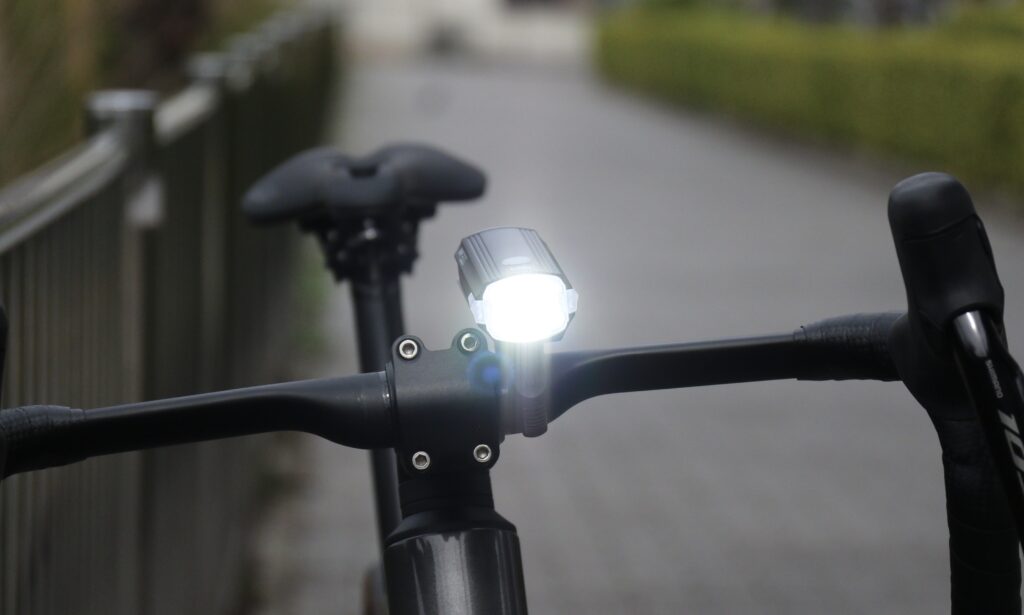
@TJCD to my 56 year old eyes, I have occasionally been surprised to pass pedestrians in dark clothes or I don't see their dog on a leash unless my light is in the 2000lumen setting. The light is several years old, so probably not putting out 2000lumens any more. When I replace that light, 2000lumen will be the minimum. That's why I read this article. I've also had good impression of CatEye products.
I have also tried commuting with my new Exposure Axis Mk10 (1300lumen) and it's not sufficient. I only use it for road bikepacking in case of tunnels, etc. and because it's sturdy and small.
For offroad, I think 4000lumen range is where you want to be.
@quiff Which stokes the headlight war even further, because to trigger the automatic system and avoid being blinded yourself, your bike light now has to be bright enough for it to recognise it. 🙃
Obviously police are going to go where the most crime is. Well, the most crime that's currently (un)fashionable with their bosses.
Cold comfort to path users though - "the number of reports of people being mauled by tigers remain relatively low when considered across the entirety of the route..."
But ... a good fraction of people are going to be traversing a chunk of the route Is imagine, not just crossing it.
And - it's a *route*. (Even allowing for the fact it actually goes round Bristol, not straight in...). Certainly far more appealing that the traffic-heavy junction-rich steeply-inclined roads thereabouts. (Not a local but have visited the area a few times now).
Apologies noted:
https://road.cc/news/cycling-live-blog-5-october-2026#Death%20taxes,%20Valterri%20Bottas%20doing%20something%20mad
Hmm - comment system is helpfully stripping off the anchor, but it's the second item down.
Yeah - that's kind of what I mean - it's the only photo there is - it's not like they have a bunch of these cameras at all different points and just chose to use the wrong one (because that would be... silly).
@I love my bike I just pulled the same info. We are underestimating the photographer's skill. It's a manual exposure of two seconds.
Two seconds is an appropriate exposure to replicate how it would look to a dark-adapted eye.
Kudos photographer. No post-processing needed.













11 thoughts on “Video: What happens when a TV helicopter gets a bit too close to a bike race?”
Helicopter incident at 44.25
Helicopter incident at 44.25 onwards.
it still looked quite high up
it still looked quite high up the draught must bee amazing to blow them off course.
billyman wrote:it still
It’s because the pilot had to change the pitch of the rotor and put more of an angle of attack into the blades to stop and hover. And, since he was right over the cyclists at the time, whoomp, there they go!
Just thought you might like to know…. :B
I’m sure it’s not the first
I’m sure it’s not the first time they’ve been blown off by someone with a big chopper.
ROFL
ROFL
Hahahaha! Awesome
Hahahaha! Awesome
Didn’t Moser use a helicopter
Didn’t Moser use a helicopter to win the Giro 😕
LOL, what an anticlimax of a
LOL, what an anticlimax of a finish.
Anything to win! Hover
Anything to win! Hover helicopters over your competition!
I don’t want to be picky,
I don’t want to be picky, but: The heli covering the race is a Eurocopter and the one being “apprehended” is a Robinson…Two completely different choppers. A Robinson couldn’t cut my grass if it tried….the Eurocopter is gas-turbine and a far more powerful. Just saying. B-)
No fair: a Robinson crashing
No fair: a Robinson crashing and burning would do a fine job of your grass!