



The Lazer Velovox On-Bike Communication Device is an interesting take. It has both merits and drawbacks, and depending on how you ride – and what you want it for – it might be a handy thing to have. But in my opinion the disadvantages outweigh the benefits, and for any given use case there’s likely to be a better option.
Lazer teamed up with Cardo, which makes a variety of comms devices, to launch the VeloVox. It’s a set of two transmitter/receiver units which attach to your helmet straps and allow you to talk to other riders (up to 32), get turn-by-turn instructions from the likes of Google Maps and Komoot, listen to music or podcasts, or take calls. I found the units easy to fit, although that wasn’t a universal experience: they require a certain amount of strap before the junction under your ear, which another rider’s setup just didn’t have.
The Velovox units need a mobile phone data connection to function: Your voice goes via Bluetooth to your phone, into the app, over the ether to the app on your friend’s phone, into their unit, then into their ears. This has advantages and disadvantages.
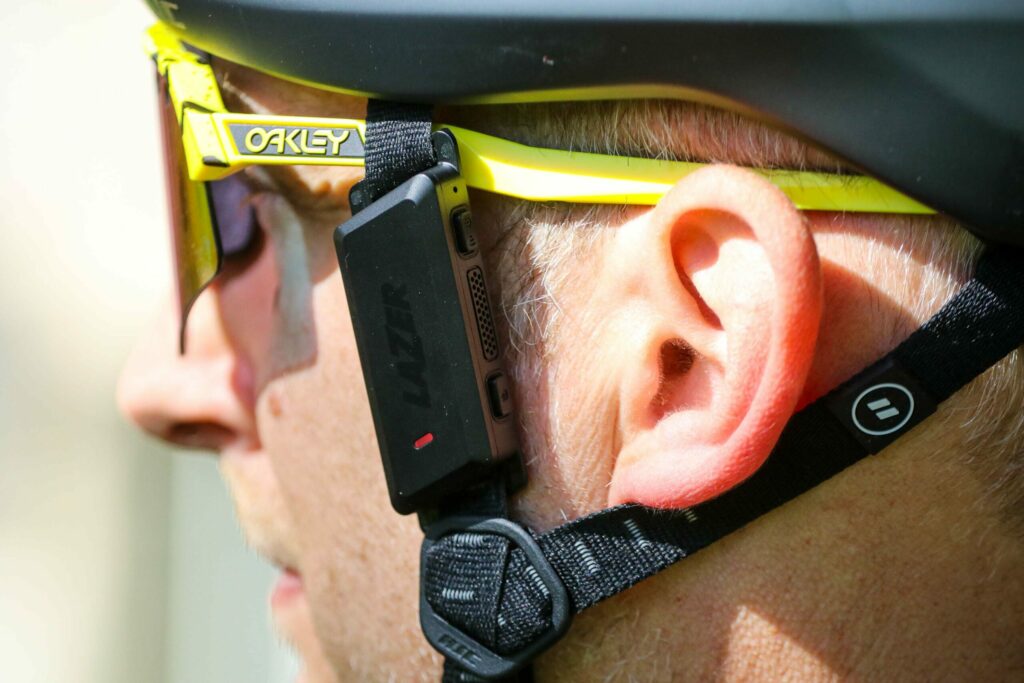
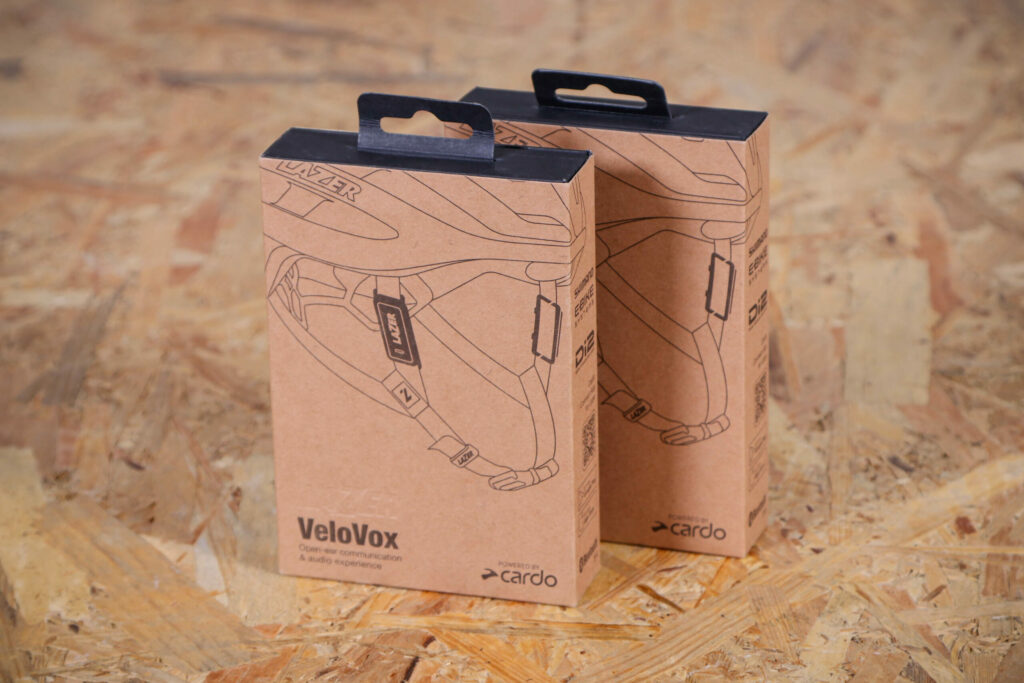
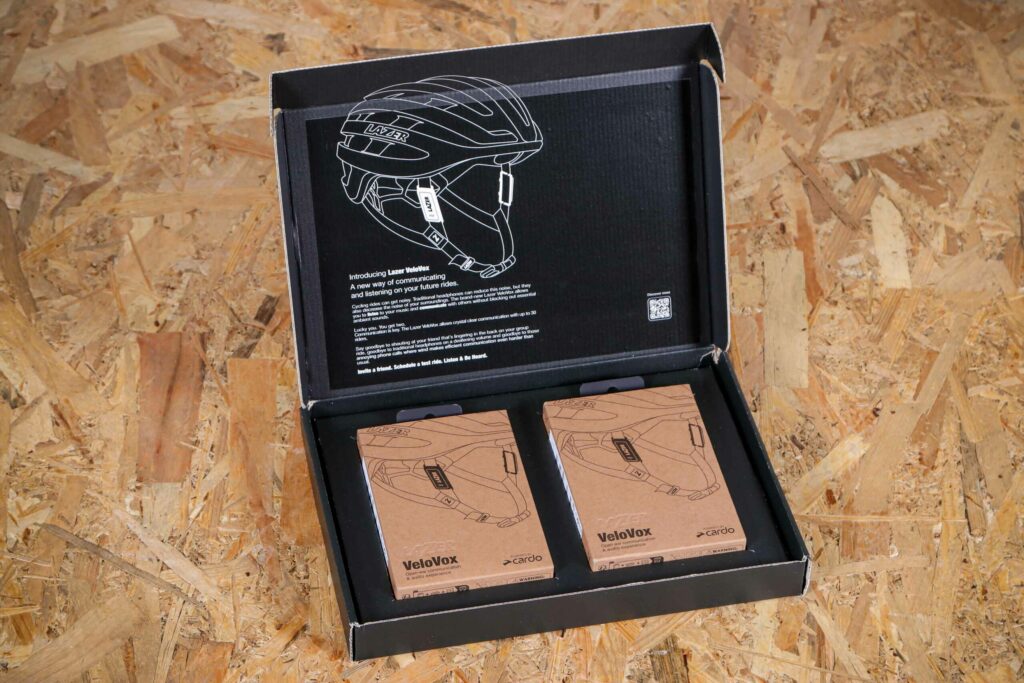
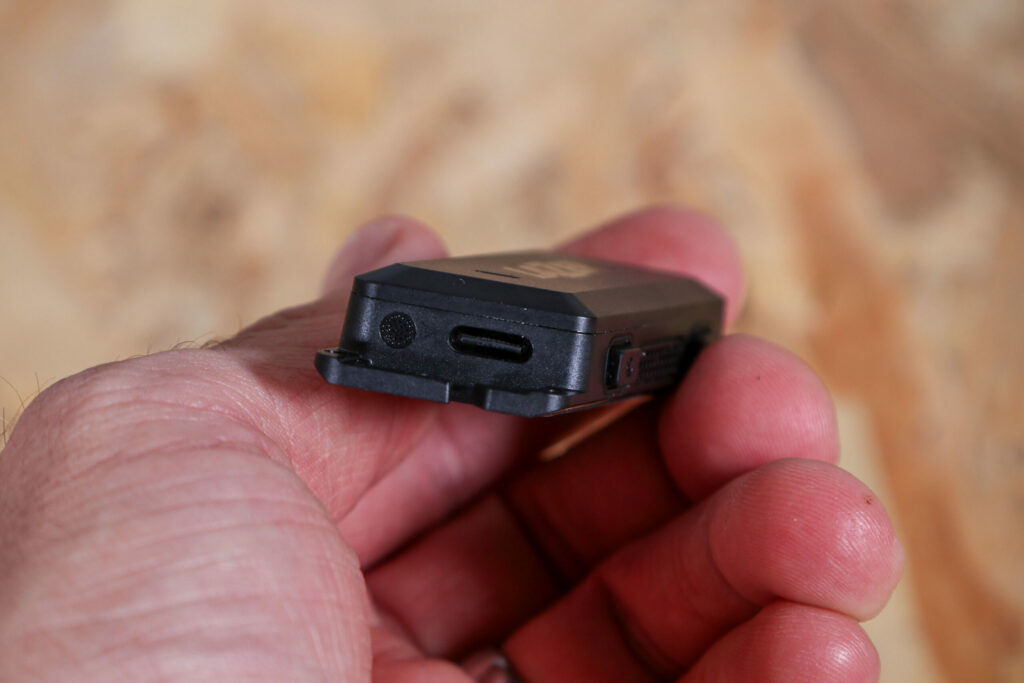
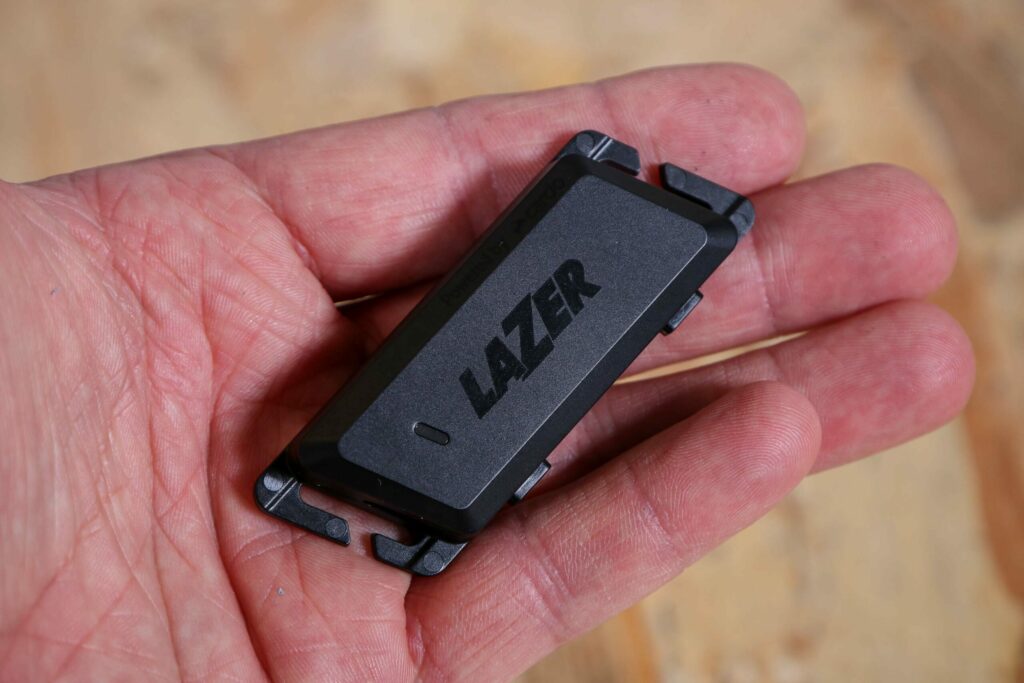
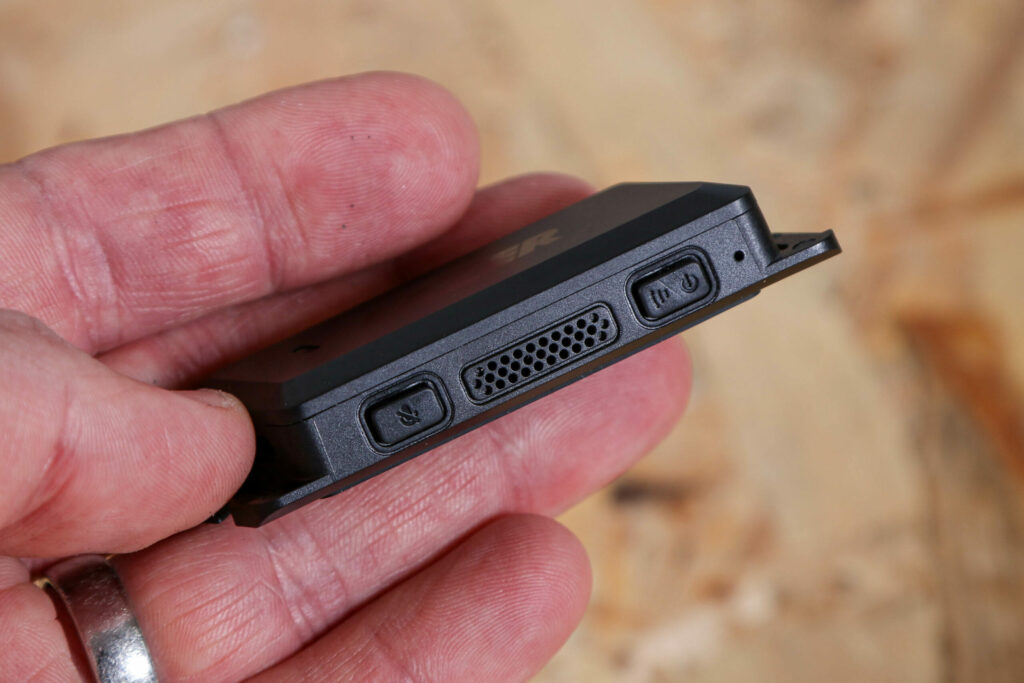
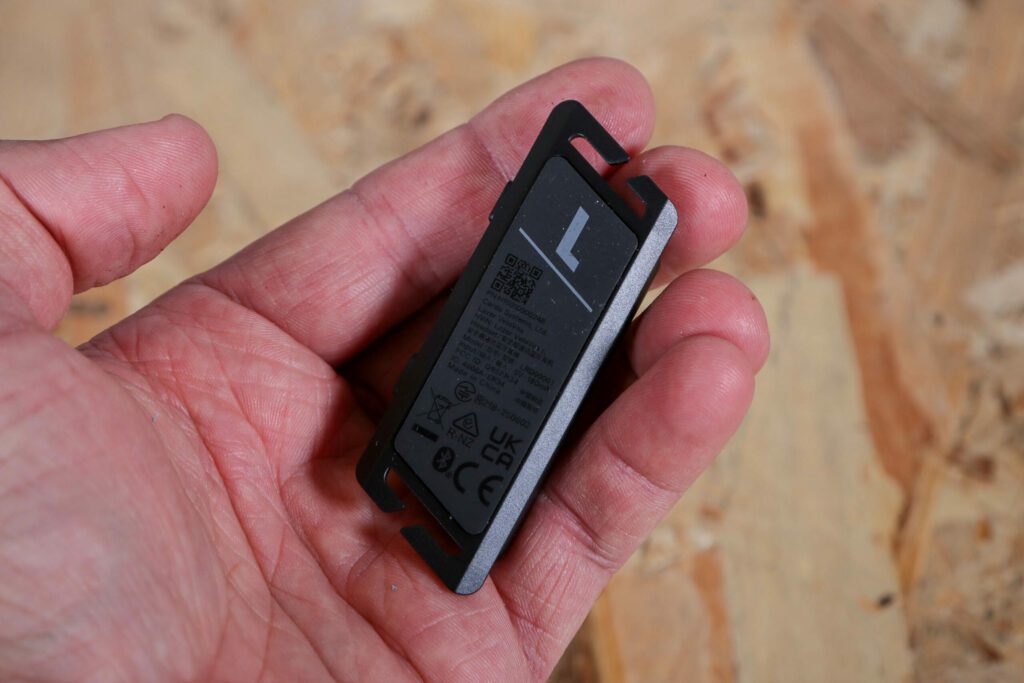
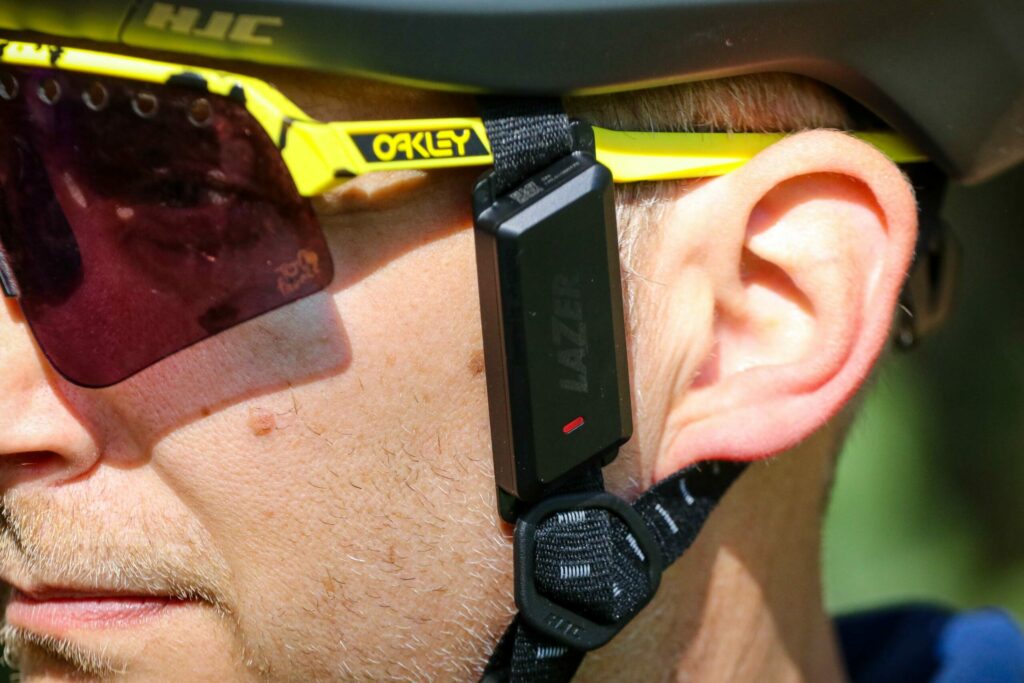
The main advantage is range. Any communication system that uses a direct paired connection between the units – be that Bluetooth, a mesh system or the 446 MHz UHF (PMR) band that walkie-talkies use – will have a fairly limited range. For Bluetooth that’s nominally about a kilometre in direct line of sight, which obviously you rarely get when riding. In reality a couple of hundred metres is as much as you can rely on: I’ve also been testing the Bluetooth-based Milo Action Communicators, and their range drops noticeably in busier environments.
Mesh systems like the Milo can extend the range by relaying through multiple devices, but it relies on them being evenly spread. A PMR system has greater range – in mixed terrain you’re looking at a kilometre or two – but in both these cases you’re also looking at significantly larger units. With a system like VeloVox, and assuming you both have signal, you could literally be on opposite sides of the globe and still have a natter.
How much does this matter? Well, it depends on your use case. If, for example, you want to ride with a friend at a big sportive, it’s easy to get separated and not know who’s in front and who’s behind: there might be a considerable amount of road between you. Similarly, if you’re a ride leader and you want to communicate with your sweeper, and it’s a mixed-ability group, then you might get pretty spread out. In both those cases the unlimited range might be very useful.
If you’re just riding with your mates and tend to keep together, then you may want to warn everyone that you’ve had a puncture, or you’ve been dropped on a climb, or you missed the lights, or a turn. But you’re unlikely to be very far away when you do so.
There are two main downsides to the reliance on phone signal. The first and most obvious is: if there’s no signal, you ain’t talkin’. If you’re on the Dragon Ride, puffing up the Devil’s Elbow in the middle of the Welsh hills, and wondering if your mate is in front of you or behind, the chances are you’re not going to find out. Even on my normal routes round Bath and Bristol, close to civilisation, there are plenty of signal dead spots. I had plenty of times during testing when I couldn’t talk because one of us didn’t have enough signal. Do you trade the extra range for that? Again, it depends what you want a system like this for.
The second issue is latency: there’s nearly a second between you speaking and the other person hearing, in my experience. If you’re out of earshot then that’s not an issue (unless you’re calling out potholes on a fast descent), but if you’re riding side by side then the constant echo is pretty annoying. To avoid it you have to turn the mic off and then remember to turn it back on again; there’s no push-to-talk.
I asked Lazer if it’s possible to implement that, and they said: “Technically it is possible, but push-to-talk is considered unsafe.” I can see how that would be an issue on a poor surface, but the reality is you’ll be pressing the button plenty anyway, because it’s just too annoying to have it on all the time. If you have a STEPS ebike or a Di2 bike you can assign a button on the bike as mute/unmute, which is a nice trick, but that’s obviously not a universal solution.
You can also use the VeloVox units as headphones, and they’re loud enough that if you like to listen to a podcast when you’re out and about – or to follow routes on your phone and get voice notifications for turns – they serve that purpose pretty well. They don’t really have the sound fidelity to handle music especially well, and are worse for that than open-ear headphones. The Velovox units share the same issues with wind noise as any other open-ear system: if you’re descending at speed, or you’re bashing into a block headwind, then you won’t be hearing all that clearly.
Having said that, voices are audible the majority of the time. The mic deals with wind noise pretty well, and even when you’re riding quickly you get decent voice clarity.
The units are rechargeable via USB-C, and you get a double-ended cable to charge them both at once. Lazer claims 11 hours, which I would say was accurate from my testing… although I never did an 11-hour ride with them. Call me lazy. Recharging takes 2.5 hours from flat to full, though 20 minutes will give you enough juice for two hours operation.
Did I find the VeloVox useful? Well, the answer to that is: sometimes. It’s quite handy to be able to chat in situations where it wouldn’t normally be possible, such as when you’re sitting behind others on a fast road, or when you get split up on a climb. In a ride leader/sweeper situation it can be handy. The ability to link up tens of units is kind of moot, though: a 20-way voice chat would be a mess, and even Lazer aren’t really pushing that as a benefit. It sees the system as suitable for pairs of riders, and even single riders who want to use the audio functions in a neatly discreet system.
Value
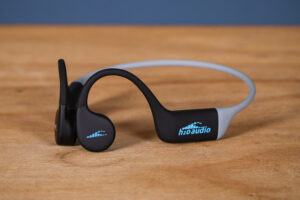
But – and it’s a pretty big but – the VeloVox isn’t really doing anything that a set of open-ear headphones won’t do. If there’s just two of you, you really want to chat and you’re happy to use your phone connection, a WhatsApp, Discord call or equivalent will do that for you. I habitually use a set of OpenRock X headphones which were a similar price to the Velovox (£169.99) when I reviewed them (they’re now £134.31), but you can get very decent units for a fraction of that. You can get a set of the OpenRock S2 buds, the successor of these ones I reviewed in 2023, for £73.87. With the inevitable discount such things permanently enjoy, you’ll realistically pay fifty quid.
Overall
The Velovox system is neat, and the helmet mounting is a good idea, but I’ve not had any issues using over-ear headphones with either helmets and glasses, so it’s less a solution to a problem than just a different way of doing things. If you’re riding on your own then VeloVox makes even less sense than headphones, as those you can use the rest of the time without walking around in your helmet.
Overall this is a decent enough system, and it’s well-executed, but it’s hard to see it offering enough advantages over more typical solutions for most people.
Test Report
What does the manufacturer say about this product?:
OPEN-EAR DESIGN FOR SAFETY AND COMFORT
Unlike traditional earbuds, which sit in your ear canal, open-ear listening transmits sound through the air eliminating the need to block the ear. This allows you to stay aware of your surroundings, increasing safety on the bike.
Open-ear design prioritizes comfort for long wear. Lazer VeloVox is designed to fit discretely on the helmet strap without interfering with eyewear. This alleviates pressure inside the ear to stay comfortable all ride long.
COMMUNICATE WITH UP TO 30 RIDERS
Whilst cycling in a group, communication with each other suffers under loud traffic noise, wind and distance between each other. Lazer VeloVox allows smooth communication with up to 30 riders. An easy mute and unmute button is available to choose when to stop and start communicating.
CRYSTAL CLEAR AUDIO WITH WIND AND NOISE CANCELLATION
When reaching higher speeds on the bike wind tends to block out noise from your music or phone calls. Wind and noise cancellation technology allows you to listen to crystal clear audio as well as have smooth phone calls. An IP54 rating shows that Lazer VeloVox is protected from dust and splashes water from all directions.
CONTROL THROUGH SHIMANO PRODUCTS
No more need for your hands to leave your handlebars. Lazer VeloVox’s design allows you to connect the device to Shimano DI2 and E-bike system for easy handling. With a simple click of a button communication can be muted, a phone call can be answered, or music can be stopped or skipped.
Tell us some more about the technical aspects of this product:
Key Features:
Hands-free communication with up to 30 riders
Be connected, listen to music, answer phone calls
Crystal clear audio with wind and noise cancellation
Open-ear design for safety and comfort
Compatible with most helmets
Secure fit and discreet positioning on the helmet strap
Fits with any eyewear
Use selected Shimano products (Di2, E-Bike Systems) to control the device
Cardo connect app
Create a group
Communicate with up to 30 riders
Answer phone calls
How does the price compare to that of similar products in the market, including ones recently tested?:
It’s reasonably expensive compared to open-ear headphones.
Did you enjoy using the product?
It was okay
Would you consider buying the product? No
Would you recommend the product to a friend? No
Use this box to explain your overall score
Decent overall but not really a big step forward, and for most people a set of open-ear headphones will do the same job for less.
About the tester
Age: 53Height: 189cmWeight: 104kg
I usually ride: whatever I’m testing…My best bike is: Dward Design Custom Audax, Lauf Úthald, Cannondale Topstone
I’ve been riding for: Over 20 yearsI ride: Every dayI would class myself as: Expert
I regularly do the following types of riding: Road racing, Gravel riding, Indoor riding, Indoor racing, Bikepacking, Commuting, Touring, Club riding, Audax, Fitness riding, Leisure riding

1 thought on “Lazer VeloVox On-Bike Communication Device”
Thanks, but no thanks. One of the core pleasures I get from cycling is not needing to talk to anyone else. It’s just me, in my own head-space, humming, “Weee, weee, weee!” Sometimes other things as well, but that mostly happens when fighting gravity.