




If you’re serious about improving your cycling and still haven’t invested in a power meter, it’s time to put power at the top of your wishlist before making any more upgrades. With expert insight from Favero, we’ll explain why power is your most crucial metric, and why a set of the latest Favero Assioma PRO power meter pedals are your accurate, convenient, and versatile key to unlocking your best performance on the bike.
Why are watts better than speed or heart rate data?
Of course, if you’re only just starting out on your cycling journey, it’s wise to keep things as simple as possible to begin with. A very basic cycling computer, or even a stopwatch, can chart progress on a local loop if you just note down your time, and try to get quicker whenever you head out. It makes sense to work on fundamentals such as your handling and position at this stage, making sure you’re comfortable on the bike as you increase the distance of your rides.
A heart rate monitor hooked up to your bike computer via Bluetooth or ANT+ can also help to gauge your effort, showing you how hard your heart has to work to maintain a set speed. Cadence is a very useful metric too, able to tell you how many revolutions per minute (RPM) you’re cranking out to find your optimal cadence, so you can work out which gears you need to use to maintain it.
While your current and average speeds, heart rate and cadence are all super useful, these metrics are heavily influenced by external factors. Your heart rate will run higher when it’s hot, and it may be lower when you’re fatigued; your optimal cadence on the flat is likely impossible to maintain on a 20% hill and likewise, obviously you can’t go out expecting your speed to be completely consistent throughout your ride, unless you’re in a velodrome.
This is where a power meter comes in…
Repeatable and objective data, in real time
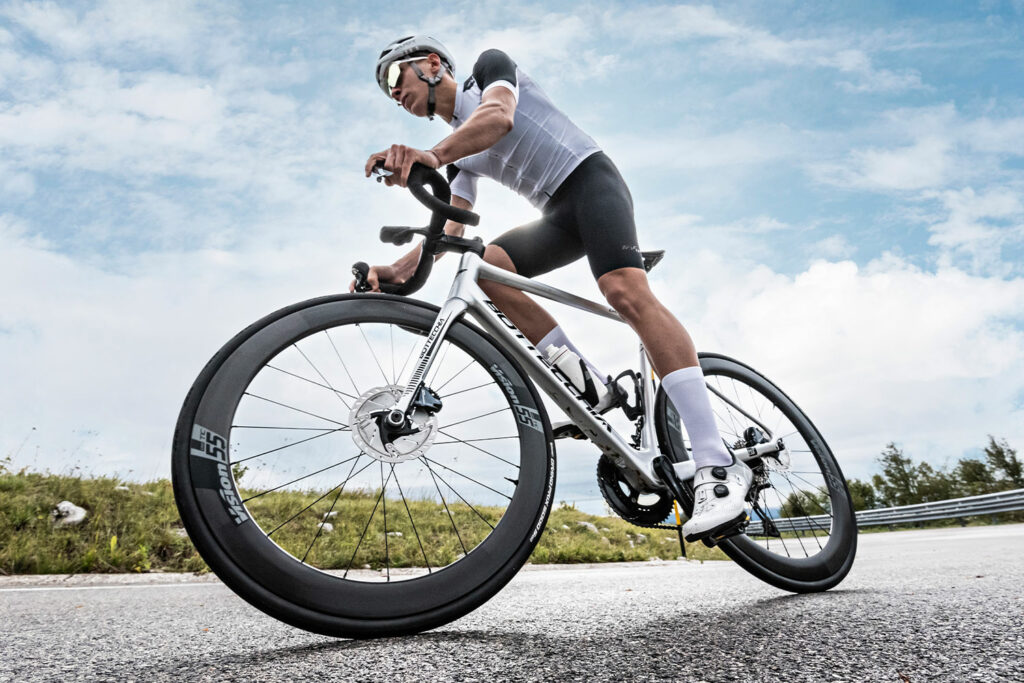
As Favero says: watts don’t lie! Your power, measured in watts, is an objective one-to-one ratio, and as long as the power meter you’re using is highly accurate – like Favero’s Assioma PRO RL or Assioma PRO RS pedals – the data can’t be compromised by temperature, terrain, or other factors.
More watts equals better performance, which is much easier to make sense of than relying on average speed to chart your progress. Even if you were to do the same ride every time you head out the door, factors such as wind or stopping at traffic lights could lead to large discrepancies. Your average speed could be faster on a perfectly calm day compared to a really windy one, but you may have laid down more power on the windy ride. Without a power meter, you wouldn’t know for sure.
Unlike heart rate monitors, power meters measure in real time, too. Pair your power meter pedals with your bike computer, and as soon as you start pedalling, the watts will show up on the screen. This means you can get highly accurate readings even for explosive sprints or intervals, which would be impossible to measure using heart rate or speed.
Properly manage your effort
Power is also the best metric to use in order to regulate your effort and energy levels. We’ve all had days where we feel great at the start of a ride, push too hard, and pay for it towards the end – by using watts to control the amount of power you’re putting out, you don’t have to rely on feels alone. Of course there will be some trial and error involved, so it’s important to experiment in training and work out the watts you can sustain for your target distance.
If you’re training for a 100-mile sportive, work out a number of watts you can easily sustain for multiple hours, and fuel accordingly so that number doesn’t feel difficult later into your ride. If it still feels tough when you’re very well fuelled, drop your power. If it starts to feel too easy (you’ll get better the more you ride) increase your target wattage.
Power is a particularly useful metric on hills, as it’s very easy to burn through your matches by going too hard uphill. A little increase is fine, but you want to ensure your power is fairly consistent for most types of road riding, from time trials to 100-milers. You can make use of a heart rate monitor here too, using watts and your target heart rate zones to prevent energy spikes that will lead to fatigue later on. If a little bit of a hill makes your wattage shoot up and puts your heart rate in the red zone, you’re overdoing it!
Set goals, make adjustments, and measure your post-ride and race performances accurately

The precise data from your power meter won’t just come in handy in real time either. The data from your power meter can accurately chart your journey of improvement on the bike, and help you and/or your coach to create personalised training plans. By using a power meter to record your functional threshold power (FTP) you can use this as a benchmark for setting your training zones and target power for training rides and races.
You can save the data from your power meter pedals and export them to your training app of choice, which will give lots of insight into how you’re responding to a training program, or how you performed in a race or event. Your power meter allows you to avoid overtraining and make the most of your time on the bike by following set wattages in training.
If you’re getting really serious about going faster and performing at your best, power meters can even be used for testing your equipment and position on the bike. Trying to control as many variables as possible, you can use your power meter to see if switching to a more aggressive position leads to faster speeds for the same power – you could also try this with equipment, such as testing a new set of wheels versus your current ones to see if you’re faster for the same power with your upgraded wheels.
Yes, there are devices out there that claim to measure your drag in real time – but they are very much in their infancy, and cost thousands! A set of Favero Assioma PRO RS or PRO RL pedals start at just £399.
It’s not just about the watts…
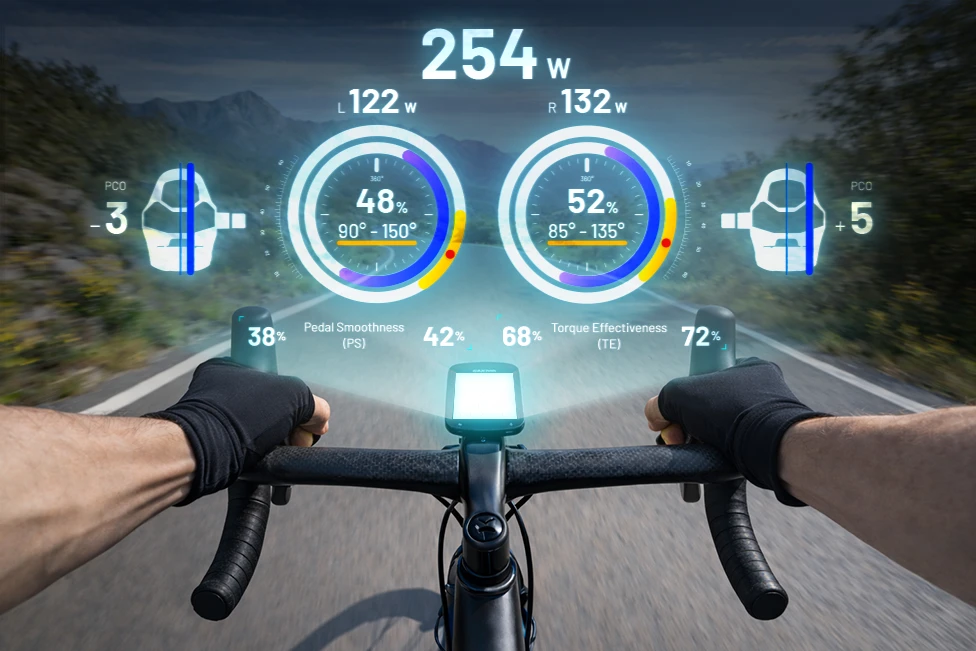
Advanced power meters like the Favero Assioma PRO RL and RS pedals offer other insightful metrics that can really help you dial in your performance on the bike. It’s handy that Favero’s power meters measure cadence, of course, but there’s plenty more impressive stuff you can measure and analyse.
Left/right balance is a particularly useful reading, as it tells you how much power is being produced by each leg. This can highlight weaknesses in either side, meaning you can adjust your technique to address dominance in one leg over the other.
Where it gets really clever is Favero’s IAV Cycling Dynamics. Detecting all pedalling variations and factoring this into your power calculation, this gives you a much truer picture of how your force is being distributed. With either a compatible Garmin device or on the Favero Assioma app, you can see, for example your power phase to understand where positive torque is being produced.
Only available on Favero’s PRO range is PCO (Platform Cenre Offset). PCO calculates how force is actually distributed across the pedal platform during the pedal stroke throughout a specific time period. This data can be used to understand where you’re applying the force relative to the centre of the pedal platform, so if it’s off, you can adjust your technique, or move your cleats to optimise your pedalling. It’s a gamechanger in helping cyclists to identify inefficiencies, poor cleat positioning, or muscle imbalances.
Favero Assioma PRO pedals can also calculate your torque effectiveness and pedal smoothness as percentages: how much of the power generated during the pedal stroke actually contributed to your propulsion, and how evenly distributed your power was through the pedal stroke, respectively. If your percentages are a long way off 100%, you know you need to work on being more forceful at the back of your pedal stroke, and try to pedal ’rounder’ for a smoother pedal stroke.
Why Favero’s Assioma pedals are setting the standard
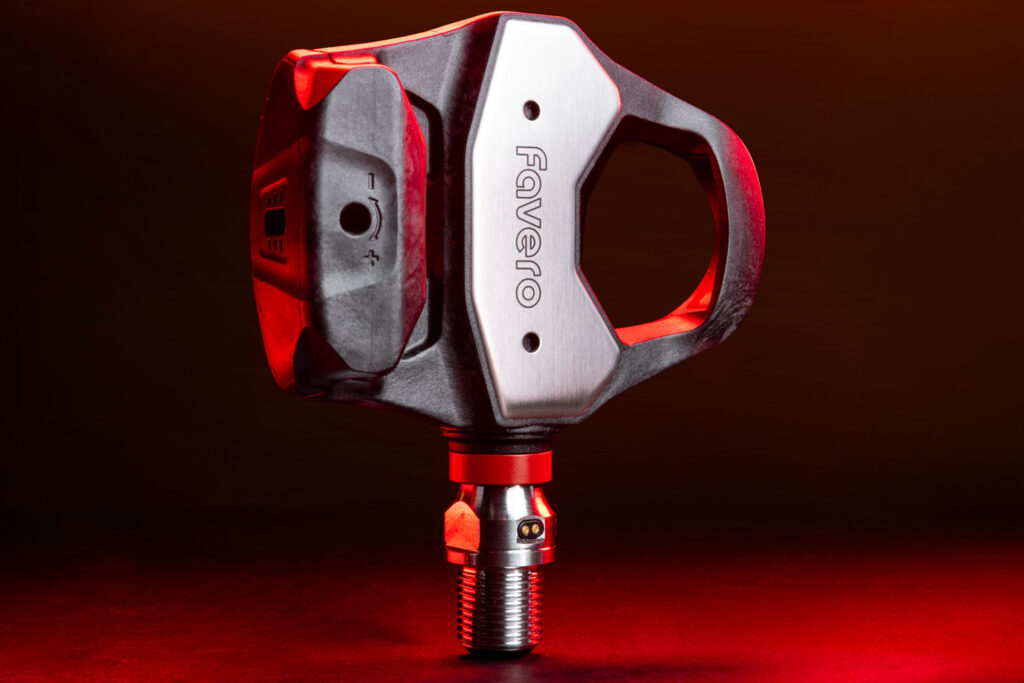
We’ve outlined plenty of reasons why Favero’s pedals are leading the way when it comes to advanced metrics already – but beyond the hard data, there are obvious practical advantages to the new Assioma PRO RL and PRO RS pedals.
The Assioma PRO RL – Favero’s latest release that is compatible with Look Keo cleats – offers a super wide contact surface at 755mm2 for a really stable platform that’s easy to clip into. You can adjust the release tension with just a simple key if you want to make your clipping in harder or softer.
If you prefer the Shimano SPD-SL cleat system, you’ll also be pleased to hear that the Assioma PRO RS is the lightest power meter pedal on the market. The dual-sided version is just 124.8g per pedal, making them easily the lightest power meter pedals you can buy.
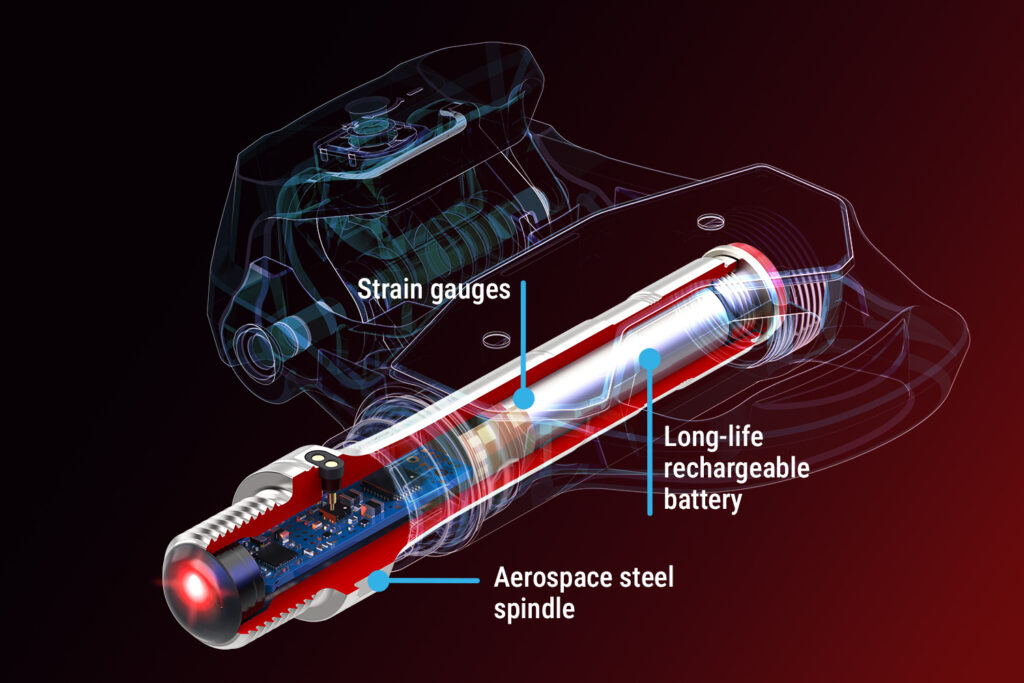
For the ultimate in practicality – and cost savings – you can also swap out the pedal bodies on Favero’s latest PRO range of pedals, because all the important tech is housed inside the spindle. Buy an Assioma PRO RS or PRO RL, and you can simply purchase the pedal bodies of the PRO MX (an additional £99) so you have a set of SPD-compatible pedals for mountain biking or gravel! The strain gauges and rechargeable battery are all housed safely inside the spindle – and that battery will now last you up to 160 hours or a single charge, thanks to Favero’s new and improved battery life with a recent firmware update.
Other highlights include Bluetooth and ANT+ device compatibility (with up to three Bluetooth connections at the same time), an IP67 waterproof rating, +/-1% accuracy, and the price point: £649 for the dual-sided models, £399 for the single-side PRO RL or PRO RS, and as we’ve mentioned already, you can buy additional pedal bodies for £99 to cover you on the road, gravel and trails.
No other power meter offers this much versatility – all you need is a 15mm open-ended wrench and a few seconds of your time to switch between bikes, and you have a reliable and accurate power meter that can be used on your entire fleet.
Made in Italy, honed over decades
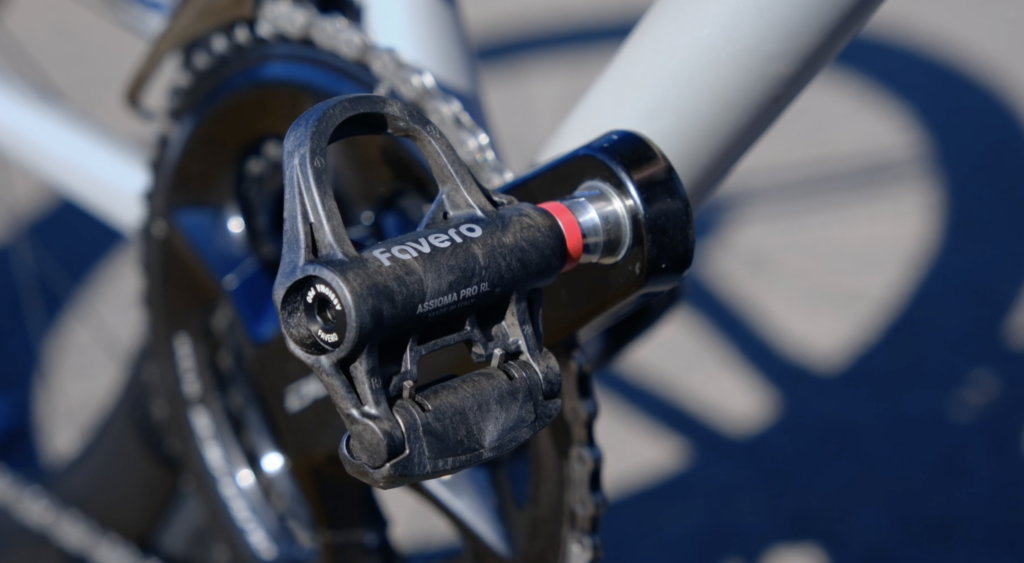
Favero still designs and produces everything in its Italian HQ, so you can be sure of high quality and attention to detail. 30 years in the electronics business and almost a decade since the first Assioma power meter pedals changed the cycling power meter market, Favero has proved impossible to match when it comes to accurate, affordable power meter pedals that lead the way when it comes to cutting edge tech.
Numerous rave reviews later, it’s difficult to see how the PRO RS and PRO RL can be improved upon right now, but Favero does say it has the appetite for “constant innovation” after all. While we wait to see what comes next, you can be sure that investing in these market-leading power meter pedals will be the smartest purchase you’ll make when it comes to improving your performance on the bike.
For more information on Favero’s class-leading Assioma PRO RL and PRO RS power meter pedals, head over to the Favero website now









2 thoughts on “If you want to unlock your true cycling potential, here’s why a power meter is now essential”
I would love to know what percentage of PM users/owners actually know how to use it properly to gain training value out of it.
I think the vast majority of people who own one – especially those who bought a bike with one as standard actually understand what it does and isnt just there to put a random value on their head unit/ Strava.
* Don’t understand it meant to say